Home Watch Videos Wars Movies Login

[🇧🇩] Insurgencies in Myanmar. Implications for Bangladesh

[🇧🇩] Insurgencies in Myanmar. Implications for Bangladesh
444
19K
More threads by Saif

G Bangladesh Defense

Rohingya repatriation needs more than diplomacy

Mohammad Mizanur Rahman and Md. Mofaq Kharul Islam (Taufiq)

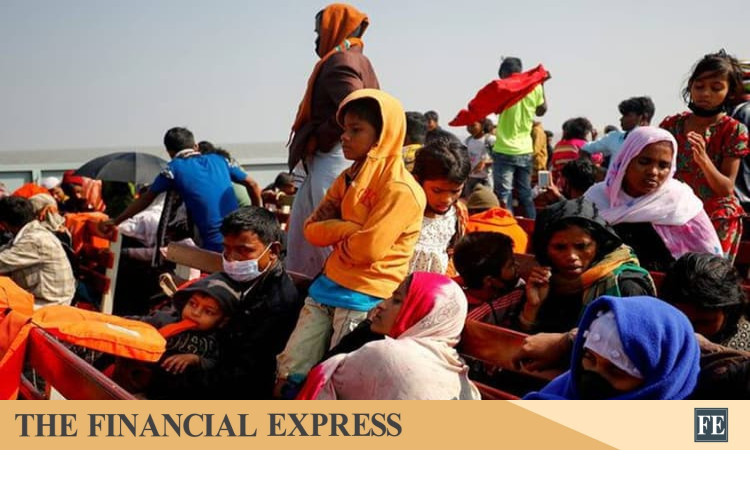
Nine years ago, in the last week of August 2017, Bangladesh opened its border to hundreds of thousands of Rohingya fleeing unimaginable violence and persecution. Within weeks, more than seven hundred thousand people had crossed over from Rakhine State. Cox’s Bazar, already one of the poorest districts in Bangladesh, became their refuge. Nine years later, the district continues to host them, alongside tens of thousands of children born in the camps since then.

While the response may not have been perfect, by any reasonable measure it has been an extraordinary humanitarian effort. Few countries anywhere in the world, and none in Asia, have hosted such a large refugee population for so long with so little in return. Fewer still have continued to shoulder that responsibility as global attention has shifted elsewhere and donor funding has declined year after year. Yet an uncomfortable question remains: beyond the vital task of ensuring the survival of the Rohingya as a people, what has nearly a decade of humanitarian assistance actually resolved?

The answer is: not the problem that matters most. Shelter, food rations, health clinics and camp schools have helped a persecuted people survive with some measure of dignity, but they cannot address the root cause of the crisis, which is fundamentally political rather than logistical. The Rohingya remain in Cox’s Bazar not because Bangladesh lacks the food, transport or logistical capacity to send them home. They remain because Myanmar has spent decades denying their place in its history and their right to belong. No amount of humanitarian assistance alone can resolve that fundamental political question.

With every year that passes without a political resolution, the situation worsens in ways that are rarely discussed. A generation of Rohingya children is now growing up in the camps who have never seen Rakhine, never walked its paddy fields or fishing villages, and are slowly losing their grip on the language, the songs and the oral history that their grandparents still carry. Aid has kept a body alive. What it cannot do is keep a people's memory of home alive.

With every year that passes without a political resolution, the situation worsens in ways that are rarely discussed. A generation of Rohingya children is now growing up in the camps who have never seen Rakhine, never walked its paddy fields or fishing villages, and are slowly losing their grip on the language, the songs and the oral history that their grandparents still carry. Aid has kept a body alive. What it cannot do is keep a people's memory of home alive. That work has to happen somewhere else.

The greatest obstacle to Rohingya repatriation has always been political: Myanmar's refusal to recognise the Rohingya as people who belong to the country. This is why attempts at Rohingya repatriation in 2018 and 2019 failed before a single family could return. Few would choose to go back to a country that still refuses to recognise their right to belong there.

If the obstacle is fundamentally political, then the solution must also be diplomatic. And effective diplomacy depends on evidence and leverage, not sympathy alone. This is where culture, memory and history become more than matters of identity; they can serve as powerful instruments of diplomacy and statecraft. A rights-based, voluntary and sustainable return requires Bangladesh and its international partners to demonstrate, rather than simply assert, the Rohingya's deep historical roots in Arakan. Evidence of those roots can be found in their distinct language, oral genealogies identifying specific villages and land, photographs, garments, maps and the testimonies of elders who still remember exactly where they lived. Individually, these may appear to be fragments of memory. Properly documented, preserved and archived, together they can form a body of evidence that courts, governments and international institutions can use.

This is not an abstract argument. In January this year, the International Court of Justice concluded three weeks of hearings on the merits of The Gambia's genocide case against Myanmar, including closed testimony from Rohingya survivors, with a judgment expected before the end of the year. Whatever the outcome, the proceedings underscore a fundamental point: in international legal and diplomatic forums, carefully documented evidence matters.

The experiences of other displaced peoples show what this can mean in practice. In Cambodia, a documentation centre established in the 1990s to record crimes committed during the Khmer Rouge era later provided a substantial body of documentary evidence used by the UN-backed tribunal that prosecuted and convicted senior Khmer Rouge leaders. What began as an effort to document and preserve memory eventually became an important source of evidence for an international justice process.

1787528540854.webp

Curated by Greg Constantine and organised by BRAC University’s Centre for Peace and Justice, the exhibition Ek Khaale: Once Upon a Time, held at BRAC University in August 2025, brought Rohingya history and memory to life through archives, photographs and historical dialogues, helping preserve the identity and dignity of a displaced people. Photo courtesy: Greg Constantine.


In Bosnia, the 1995 Dayton Agreement broke new ground by recognising not only the right of displaced people to return to their country, but also their right to return to their pre-war homes and reclaim their property. Within a decade, more than a million people had returned, while more than two hundred thousand properties had been restored. Implementing such a process would have been extraordinarily difficult without records establishing who had lived where and who had legitimate claims to property.

The lesson from both cases is straightforward. The pursuit of return and justice was strengthened because the difficult work of documenting histories, experiences, homes and rights had already been undertaken, often long before anyone knew precisely when or how that evidence would be needed.

It is through this lens that the proposed Rohingya History and Knowledge Centre (RHKC) in Camp 17 should be viewed: not simply as a museum or a cultural addition to the humanitarian response, but as an institution that can train Rohingya youth to record three-generation oral histories and preserve maps, artefacts and testimonies according to standards that can withstand international scrutiny. Such a centre could give Bangladesh something that appeals for additional humanitarian funding alone cannot provide: a body of community-sourced historical evidence that challenges Myanmar's claim that the Rohingya do not belong there. It could also give the international community an opportunity to see and hear that history directly. Just as importantly, it could give young Rohingya something particularly valuable in the confines of a refugee camp: the opportunity to become active custodians and documenters of their own history, rather than merely the subjects of narratives produced by others.

Such an institution would also send a broader message to the international community. It would demonstrate to donor governments and multilateral partners that Bangladesh is not simply managing a humanitarian emergency indefinitely, but is also helping to build the foundations for a political solution and, ultimately, sustainable Rohingya repatriation.

This is where culture, memory and history become more than matters of identity; they can serve as powerful instruments of diplomacy and statecraft. A rights-based, voluntary and sustainable return requires Bangladesh and its international partners to demonstrate, rather than simply assert, the Rohingya's deep historical roots in Arakan. Evidence of those roots can be found in their distinct language, oral genealogies identifying specific villages and land, photographs, garments, maps and the testimonies of elders.

The Government of Bangladesh should therefore consider institutions such as the RHKC as part of its broader Rohingya repatriation strategy rather than as separate cultural projects operating alongside it. The Office of the Refugee Relief and Repatriation Commissioner should continue to provide administrative support for this work rather than leaving NGOs and other organisations to sustain it on their own. Bangladesh's Foreign Ministry, in turn, should brief its counterparts at the UN, ASEAN and the OIC on what this documented material contains and how it can strengthen the historical, legal and moral case for a rights-based return.

International partners should also recognise heritage, historical documentation and the preservation of collective memory as important components of the broader humanitarian response. This work deserves a more central place in the long-term strategy than it currently occupies. Crucially, whatever institutions are created should remain rooted in Rohingya ownership, with the community itself playing the leading role in preserving its history, both in the camps and, eventually, after returning home.

Despite severe constraints, Bangladesh has already demonstrated an extraordinary humanitarian commitment to the Rohingya. This does not mean that the rights and empowerment of the Rohingya while they remain in Bangladesh should be sidelined in favour of an exclusive focus on repatriation. Rather, giving real meaning to the goal of sustainable repatriation requires another, quieter and in some ways more difficult undertaking: patiently documenting and preserving the evidence that a people Myanmar sought to erase from its national history never disappeared. If and when the political conditions for return finally emerge, the Rohingya should be able to return not as a people still struggling to prove their right to belong, but as a people whose history, identity and connection to their homeland have been carefully preserved.

Mohammad Mizanur Rahman (Additional Secretary) is the Refugee Relief and Repatriation Commissioner (RRRC) at the Office of the Refugee Relief and Repatriation Commissioner in Cox’s Bazar.

Md. Mofaq Kharul Islam (Taufiq) is Associate Director at the Centre for Peace and Justice (CPJ), BRAC University.​
 
Analyze

Analyze Post

Add your ideas here:
Highlight Cite Respond

Eighth anniversary of the Rohingya Genocide Remembrance Day
Myanmar's falsehoods, international accountability


1787613309267.webp


On the eighth anniversary of Rohingya Genocide Remembrance Day, instead of offering a viable plan to resolve the crisis, the Myanmar junta has renewed misrepresentation and falsehoods. On August 25, 2017, following horrific atrocities and genocide by the Myanmar military, hundreds of thousands of Rohingya fled to Bangladesh to seek refuge. The day is observed by the Rohingya community and their supporters worldwide to remember the widespread military crackdown against the Rohingya in Myanmar's Rakhine State. Through mass killings, rape, torture, village burning, looting, and destruction of homes, over seven hundred thousand Rohingya were forced to cross into Bangladesh within months. According to United Nations (UN) estimates, combined with previously displaced populations, the total number of Rohingya taking refuge in Bangladesh exceeds 1.1 million.

Eight years later, a permanent solution remains elusive. Fresh conflict, displacement, and human rights violations in Rakhine have further complicated the situation. In 2025, the UN warned that Rohingya and other civilians were caught in the crossfire between the Myanmar military and the Arakan Army, suffering severe abuses. Under these circumstances, viewing the Rohingya crisis merely as a humanitarian issue is insufficient; it is also a question of genocide, human rights, international law, regional security, and global justice.

BACKGROUND: Following attacks by the Rohingya armed group ARSA on August 25, 2017, the Myanmar army launched a security operation. The Myanmar government claimed it was a counter-terrorism operation. However, multiple UN investigations revealed the military campaign was widespread, organised, and targeted civilian Rohingya. Initial investigations by the UN Office of the High Commissioner for Human Rights uncovered credible evidence of village destruction, killings, mass rapes, and other severe human rights violations, describing these acts as pre-planned and coordinated.

Subsequently, the UN Independent International Fact-Finding Mission on Myanmar conducted a broader investigation. In its 2019 final report, the mission concluded on reasonable grounds that there were sufficient reasons to infer genocidal intent to destroy the Rohingya population within the state of Myanmar. The mission further stated that the remaining Rohingya in Myanmar faced a serious ongoing risk of genocide and that conditions for safe and sustainable repatriation were non-existent.

MYANMAR'S FALSEHOODS: Myanmar's official narrative on the Rohingya crisis rests on several core fabrications. It continually attempts to erase the historical ethnic identity of the Rohingya by labelling them as "Bengalis" or illegal immigrants. It projects false claims of stability to mislead the international community, concealing the ongoing civil war in Rakhine State and clashes between the Arakan Army and junta forces. It also denies genocidal intent before international courts. However, in 2020, the International Court of Justice (ICJ) found the right of the Rohingya to be protected from genocide to be "plausible" and ordered Myanmar to implement provisional measures to prevent genocidal acts. Disregarding over 1.2 million registered Rohingya in Bangladesh, Myanmar has offered an unrealistic proposal to take back only around 300,000 individuals. In August 2026, Myanmar reported verifying approximately 309,000 Rohingya as former Rakhine residents, offering repatriation only if security improves-a move that avoids recognising citizenship rights or guaranteeing comprehensive repatriation.

INTERNATIONAL LAW: In 2019, The Gambia filed a case against Myanmar under the Genocide Convention at the ICJ. In January 2020, the ICJ ordered Myanmar to prevent genocidal acts against the Rohingya, restrain its military and proxy forces, and preserve relevant evidence. Concurrently, the International Criminal Court (ICC) is investigating the situation regarding the mass deportation and persecution of the Rohingya. In November 2024, the ICC Prosecutor submitted an application for the first arrest warrant against Myanmar's top military leadership, marking a major milestone toward international accountability.

GROUND REALITY AFTER EIGHT YEARS: Bangladesh opened its borders on humanitarian grounds to host one of the world's largest refugee populations. However, the economic, social, environmental, and security costs continue to rise. The long-term presence of refugees in Ukhia and Teknaf has severely strained local host communities, impacting healthcare, education, water, energy, employment, and law enforcement. In the Joint Response Plan (JRP), the UN and partners requested $934.5 million for humanitarian assistance. A revised 2026 plan highlights the need for $710.5 million to assist 1.6 million people. Reductions in international aid will directly increase pressure on Bangladesh.

REPATRIATION AS THE ONLY SUSTAINABLE SOLUTION: Repatriation will not be sustainable without amending Myanmar's discriminatory 1982 Citizenship Law. So, guarantees for physical safety, freedom of movement, full citizenship or formal legal status, restoration of land and property rights, unhindered access to education and healthcare, non-discriminatory political and social rights, presence of international observers in Rakhine, and enforceable legal protections against future persecution for the repatriated Rohingyas are necessary.

Bangladesh also needs to actively support the ICJ and ICC by compiling and sharing evidence. Creating a centralised national database with survivor testimonies, witness accounts, satellite imagery, medical reports, and video documentation is vital. Bangladesh did not create the crisis, and its financial burden cannot be borne alone. The international community must pressure Myanmar through economic and arms embargoes on the junta and Arakan Army, travel bans on individuals implicated in international crimes, freezing assets of military leadership, and targeting military-owned commercial entities. Moreover, establishing a UN-backed "Safe Zone" in Rakhine State and forcing all warring factions to cease attacks on Rohingya civilians will be necessary. ASEAN should move beyond limited diplomacy to establish effective monitoring and mediation mechanisms to protect civilians and foster conditions for return in Rakhine.

However, decisions about the future of the Rohingya must not be made without their participation. Physical relocation without rights and legal protections offers no lasting resolution.

To counter Myanmar's false narratives, Bangladesh should leverage a factual international and also needs to propose an internationally recognised action plan. The country must complement bilateral dialogue with active multilateral diplomacy involving the UN, OIC, ASEAN, EU, US, UK, Canada, Japan, Australia, India, China, and Gulf nations. Given their strategic and economic influence in Myanmar, sustained engagement with China and India remains crucial.

Professor Sarwar Jahan is a University Teacher and SDG expert.​
 
Analyze

Analyze Post

Add your ideas here:
Highlight Cite Respond

Nine years on, Rohingya still stranded as Bangladesh’s diplomatic strategy comes under scrutiny


1787614020556.webp


Nine years after more than 1.2 million Rohingya fled Myanmar for Bangladesh, not a single refugee has been repatriated, raising increasingly uncomfortable questions about whether Dhaka’s diplomatic strategy has failed to deliver a durable solution to one of the world’s most protracted displacement crises.

The Rohingya exodus began in August 2017, when Myanmar’s security forces launched a brutal campaign in Rakhine State that UN investigators have described in terms of mass killings, sexual violence, torture and the systematic destruction of homes and livelihoods. Hundreds of thousands fled across the border into Bangladesh, joining earlier waves of Rohingya refugees.

Nine years on, they remain in camps in Cox’s Bazar and Bhasan Char, with little prospect of a safe and dignified return to Myanmar.

The crisis has also entered a more dangerous phase. Humanitarian funding is shrinking, Myanmar’s civil war has transformed the political and military landscape in Rakhine, and the Arakan Army now controls large parts of the territory from which the Rohingya were expelled.

The question facing Bangladesh is no longer simply how to sustain the refugees. It is whether Dhaka has a sufficiently ambitious diplomatic strategy to make their eventual return possible.

Speaking to the Financial Express on Monday at the Office of the Refugee Relief and Repatriation Commissioner in Cox’s Bazar, Foreign Secretary Asad Alam Siam said Bangladesh had consistently worked to keep the Rohingya crisis on the international agenda.

“We have been trying to keep the Rohingya issue surfaced in the international arena” in order to resolve the crisis, he said.

He acknowledged, however, that the decline in humanitarian support was a serious concern and said the government was seeking to mobilise additional resources from international partners.

But critics argue that humanitarian diplomacy alone is no longer enough.

Bangladesh has repeatedly sought international support, negotiated with Myanmar and accepted China’s involvement in efforts to broker repatriation. Yet the much-discussed tripartite mechanism involving Bangladesh, Myanmar and China has produced little beyond repeated assurances.

There have been several proposed repatriation attempts since 2018, but none has resulted in a sustainable return. The fundamental obstacles — citizenship, security, freedom of movement, political rights and the absence of guarantees that Rohingya will not again be subjected to persecution — remain unresolved.

Some analysts believe Dhaka should now build a broader coalition with Muslim-majority countries that have shown sympathy for the Rohingya, including Malaysia, Saudi Arabia and Turkey.

Such an alliance, they argue, could move the issue beyond the traditional humanitarian framework and generate greater diplomatic and political pressure on Myanmar.

The situation has become even more complicated since the Arakan Army emerged as the dominant force in much of Rakhine State.

With the Myanmar military no longer exercising effective control over large parts of the region, Bangladesh faces a new diplomatic reality. Yet Dhaka has so far struggled to establish a meaningful political understanding with the Arakan Army over the future of the Rohingya.

The interim government’s foreign affairs state minister, Shama Obaid, has recently suggested that the failure to achieve repatriation was partly the result of the previous Awami League government’s handling of the crisis.

International affairs expert Parvez Abbasi felt that the AL regime failed to internationalise the issue and its traditional ally, India, China and Russia discouraged it.

And to have some populist support from the Muslim world it initially allow the Rohingyas to take shelter in Bangladesh without thinking the consequence, Parvez, executive director of the centre for governance studies said.

International analysts say the change of government gives Bangladesh an opportunity to go beyond assigning responsibility for the past and rethink what it wants to achieve.

Sami Hamdi, a political analyst and journalist who has worked with the BBC and Al Jazeera, said Bangladesh should stop treating the Rohingya crisis primarily as an economic and humanitarian burden and instead recognise it as a source of diplomatic leverage.

The emergence of a new government, he said, offered Dhaka an opportunity to rethink its approach.

“Now in Bangladesh you have a new government. Now in Bangladesh you have what I would call a new imagination,” Hamdi said, referring to the student-led movement that eventually brought down the previous government.

For Hamdi, Bangladesh’s geographical position is itself a strategic asset. The country shares a border with Rakhine State and hosts more than a million Rohingya refugees, giving Dhaka a direct stake in the political future of the region.

Rather than allowing the issue to remain trapped in the language of humanitarian assistance, Bangladesh should develop a long-term political strategy whose ultimate objective is repatriation with rights.

“Bangladesh has the ability to create” the political conditions necessary for that, Hamdi said.

He also rejected the assumption that Myanmar necessarily holds greater diplomatic leverage.

“No one can say to me that Myanmar is superior politically to Bangladesh,” he said. “The reality is that Bangladesh does have cards that it can play.”

Hamdi believes the more important question is how Bangladesh can use its position to secure a political settlement.

“It’s a ticking time bomb if you view it short term,” he said. “It’s a golden opportunity if it’s viewed long term.”

He argued that the absence of alternative political ideas from Bangladesh, Malaysia and other Muslim-majority countries had allowed international organisations to dominate the narrative around the crisis.

“I think the ideas being presented are because of the absence of alternative ideas being presented by Bangladesh, Malaysia and the Muslim world,” he said during an interview on his first visit to Bangladesh.

According to Hamdi, Dhaka should pursue a more assertive diplomatic strategy, including international legal action against Myanmar and closer coordination with countries that have political and economic influence over the crisis.

The need for such a strategy has become more urgent as the humanitarian situation deteriorates.

The UN refugee agency has warned that Rohingya refugees continue to live with the trauma of the violence they experienced in 2017, while those still in Myanmar face serious threats, including sexual and gender-based violence and unlawful killings. Some have continued to undertake perilous sea journeys in search of safety.

The prospects of return are particularly bleak because Rakhine has itself been transformed by years of conflict. Rohingya communities have been devastated, homes and villages destroyed and land repurposed, while the political and military authority controlling the territory has shifted.

Mahmuda Khan, global CEO of the Human Concern International (HCI) called for sustainable effort to mobilise necessary support for the Rohingyas.

Talking to the FE after her visit to the Rohingya camps, she said the world must know how vulnerable and uncertain life, the Rohingyas are living in Bangladesh.

A Bangladeshi origin Canadian citizen, Ms Khan steered the HCI in remaining active in providing support for the Rohingyas.

She felt that the perpetrators in Myanmar who committed crimes against humanity against Rohingyas must be brought to justice.​
 
Analyze

Analyze Post

Add your ideas here:
Highlight Cite Respond

Rohingya genocide: Will the ICJ verdict bring justice?

Nasir Uddin


It was a historic moment when The Gambia, a small West African nation, submitted a petition to the International Court of Justice (ICJ) in November 2019, accusing Myanmar of perpetrating genocide against the Rohingya population in Rakhine State in 2017. This moment marked a significant development in international law and the global justice system because a country filed a case at the ICJ under the Genocide Convention to seek justice and accountability for genocide committed against the people of another nation. Furthermore, The Gambia’s case represents a form of legal recognition of the decades-long suffering and persecution of over 700,000 Rohingya who were displaced due to Myanmar’s military crackdown, known as the Clearance Operation, in northern Rakhine State in 2017 (Summary of the Judgment of 22 July 2022, 2022).

Now, the promise of justice may be nearing its conclusion, but much of the world appears to have moved on. In January 2026, the ICJ held hearings in The Hague for three weeks, during which it reviewed documentary evidence, expert testimony, and private witness statements concerning mass killings, systematic sexual violence, and the destruction of villages, referred to as domicide. The hearings concluded on January 29, 2026, and the Court began its deliberations.

1787615013478.webp

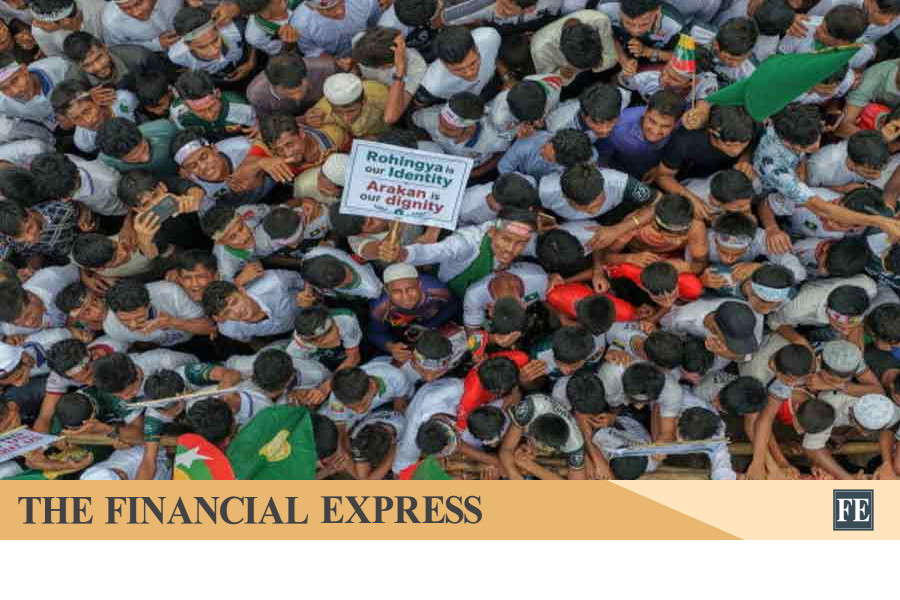
Thousands of Rohingya refugees rallied at a camp on August 25, 2019, to mark the second anniversary of the Myanmar military’s brutal crackdown that forced them to flee Rakhine State. Holding placards and chanting slogans, they reiterated their long-standing demands for justice, citizenship, safety, and the right to return to their original homes in Myanmar—demands that remain unmet to this day. Photo: Rajib Raihan/The Daily Star

Legal experts do not anticipate a decision for several months, possibly not until later in 2026. While the case once attracted major headlines and public attention, this year’s hearings received much less coverage than the 2020 provisional measures order. It appears that interest in the Rohingya issue at the global level is diminishing and disappearing from the list of priorities on the global agenda. This media fade is also part of the politics of denial driven by global powerhouses and their geopolitical interests. Yet, the Rohingya crisis has not ended; it has simply faded from the news.

A tenuous beginning

The ICJ promptly intervened, issuing an order for provisional measures less than three months after The Gambia submitted its application in November 2019. The case argued that all states party to the 1948 Genocide Convention must prevent and punish genocide, even if they are not directly harmed by or connected to the genocidal attacks. In January 2020, the Court unanimously ordered provisional measures, directing Myanmar to take all necessary actions to prevent genocidal acts against the Rohingya people, preserve evidence related to allegations of genocide, ensure that its military and irregular armed groups refrained from such conduct, and report on compliance every six months (The Gambia v. Myanmar case, provisional measures order, 2020).

The order was highly significant for those Rohingya who had experienced decades of suffering, persecution and statelessness, faced displacement following the 2017 military operation, and now live in Bangladeshi refugee camps. It was the first time an international judicial body such as the ICJ had acknowledged their suffering and experiences of persecution within the scope of the Genocide Convention. Besides, the provisional order constituted a formal and official recognition that many survivors felt was long overdue. However, the momentum quickly collided with events on the ground in Myanmar, as the military coup in February 2021 plunged the country into a broader civil war. Rakhine State, already scarred by the violence of 2017, turned into one of the country’s most contested and violent regions.

A 2026 UN investigation found that Myanmar’s military had escalated airstrikes against civilians on the ground, even as the case went on to become the ICJ’s first opportunity to decide the merits of a dispute brought by a non-injured state over mass human rights violations. Rights organisations have documented how abuses against the Rohingya who remained in Rakhine continued and, in some respects, worsened in the years following the coup, with accountability remaining elusive four years on. Meanwhile, over 1.2 million Rohingya living in the overcrowded camps of Cox’s Bazar continue to face little realistic prospect of safe, voluntary and dignified repatriation.

The gap between legal victory and lived reality has remained the case’s crucial tension. A provisional order, even though it was issued by the world’s highest court, cannot end a civil war, disarm a junta, restore democracy or guarantee citizenship to a stateless people.

The gap between legal victory and lived reality has remained the case’s crucial tension. A provisional order, even though it was issued by the world’s highest court, cannot end a civil war, disarm a junta, restore democracy or guarantee citizenship to a stateless people. Myanmar’s junta government has shown hardly any respect for the ICJ’s legal order, as it does not meaningfully recognise the Court’s authority within its own borders. Rather, its compliance reports to the Court have been treated by observers largely as a formality rather than as evidence of genuine change.

In 2022, the ICJ rejected Myanmar’s preliminary objections to its jurisdiction, holding that the Genocide Convention’s fundamental commitments gave The Gambia the right to bring proceedings against a fellow signatory due to the common interest of all signatories in preventing and punishing genocide. After years of written submissions, replies and rejoinders, the Court finally opened public hearings on the merits of the case on 12 January 2026, with eleven states intervening in the proceedings. The Gambia presented evidence of mass killings, physical harm, an ‘intent to destroy’ a community, systematic sexual violence, and planned village burnings before the Court, including closed-door testimony from Rohingya genocide survivors. The Court’s hearings continued for over three weeks, after which it began its formal deliberations on 29 January 2026. Legal experts anticipate a decision on the merits later in 2026, which could provide some recognition and reparation for the Rohingya, yet enforcing any ruling within Myanmar will remain extremely challenging.

The case has become an example of how the ICJ addresses the collective enforcement of human rights obligations under international law and within the global justice system. Through its legal reasoning, it is also influencing other ongoing cases related to genocide, such as South Africa’s case against Israel and Ukraine’s case against Russia. In fact, The Gambia’s case against Myanmar serves as a reminder that, despite its deficiencies, the legal process can have substantial consequences that the applicants themselves may never fully understand or experience.

Justice determined by geopolitics

This case lucidly demonstrates that recognising genocide is not merely a matter of evidence. It largely depends, in fact, on whether such recognition aligns with the interests of powerful states in the world system. Admittedly, The Gambia’s petition has set an example of how genocide allegations can reach international courts, thereby developing the legal framework for holding perpetrators accountable under the Genocide Convention. Yet, this instance unveils some discrepancies: some genocide allegations receive substantial global attention, immediate diplomatic support and widespread media coverage, while others, like the Rohingya genocide, receive comparatively less attention. Such marginalised cases are kept alive in the public eye primarily by human rights organisations and diaspora activists, rather than through sustained pressure from the so-called democratic and welfare states. The reason is deeply rooted in global geopolitics, as countries with strategic, economic and military interests in Myanmar have invariably refrained from applying meaningful and impactful pressure on Myanmar’s military government, prioritising trade relationships and regional stability over accountability.

The politics of denial, evident in international discourse, manifests itself in disputes over intentions, disagreements over casualty figures and outright diplomatic silence. Such selective treatment is not limited to Myanmar; it also unmasks a broader, uncomfortable reality about the global justice system. The promise of “never again,” made in the aftermath of the Holocaust, has proved to be conditional rather than universal. In fact, the politics of denial and non-recognition of genocide depend on existing geopolitical narratives rather than on the genuine claims of victims, hard evidence of genocide and solid arguments under the Genocide Convention. For the Rohingya, this means that even a landmark legal victory offers no guarantee that the world’s attention, or its pressure, will follow. Therefore, the question remains unanswered as to whether the ICJ’s verdict will bring any change to the lives of the Rohingya on the ground.

Would a verdict actually change anything?

If the ICJ eventually decides, based on the merits submitted by The Gambia, that Myanmar committed genocide against the Rohingya, what would actually change in Rakhine State or in the refugee camps of Cox’s Bazar the next day? It is well known that the ICJ has no police power or authority to enforce its verdicts. It cannot arrest generals, punish perpetrators or remove a military government. Its decision would have substantial symbolic and legal importance, possibly leading to reparations, serving as a precedent in future criminal cases, and reinforcing the rule against ethnic cleansing. However, symbolic decisions do not rebuild destroyed villages, provide the legal recognition needed to restore Rohingya citizenship, or ensure that even a single Rohingya family can return safely to their “motherland”.

Myanmar today is not the same country it was in 2019, due to the change in power in 2021. It is now plunged into civil war, with several resistance groups fighting in Rakhine State, any of which could threaten the Rohingya, no matter what the Court decides. There is still a risk that the ICJ could reach an opposite conclusion or issue a mixed judgment that finds violations but does not use the word genocide. This could give those who deny the events a rhetorical advantage and make the world even less likely to remain engaged.

1787615087497.webp

A house is seen on fire in Gawduthar village, Maungdaw township, in the north of Rakhine state, Myanmar September 7, 2017. Picture taken September 7, 2017. Photo: REUTERS.

A verdict matters but is not an ending

None of this lessens the significance of pursuing the case to its conclusion. Of course, legal accountability matters, even though it moves slowly, proves difficult to enforce, or fails to alter conditions on the ground in any immediate way. Regardless of what the ICJ ultimately decides, its ruling will become a permanent part of the historical record. This official recognition will carry the weight of international law and the global justice system, making it more difficult to dismiss or distort than political rhetoric.

However, it would be unwise to see the ICJ’s ruling as the final resolution of the Rohingya crisis; it is merely one chapter in a much longer story. The true significance of this trial will not be determined within the marble halls of the Peace Palace in The Hague. Instead, its impact will be felt in the overcrowded and muddy camps of Cox’s Bazar, in the villages and at the military checkpoints of Rakhine State, and in the continued global commitment to advocate for the Rohingya long after media attention fades and headlines change. While a judgment can identify a wrong, only sustained political will can begin to address it.

Nasir Uddin is a cultural anthropologist and Professor of Anthropology at the University of Chittagong. He is the author of The Rohingya: An Ethnography of ‘Subhuman’ Life (Oxford University Press, 2020).​
 
Analyze

Analyze Post

Add your ideas here:
Highlight Cite Respond

Missed strategy on Rohingya crisis and opportunity
1787615900903.webp

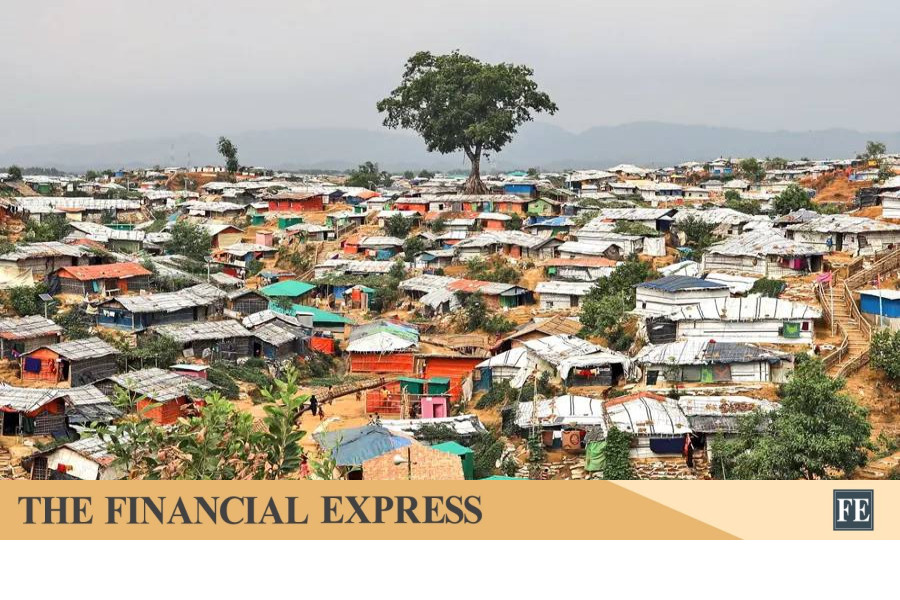
A view of the Kutupalong Rohingya camp in Ukhia, Cox’s Bazar. | Agence France-Presse/Munir uz Zaman

IN 2007, during a visit to Bangladesh, I met with the then secretary of foreign affairs and urged him to reconsider the policy of pushing Rohingya refugees back from the border. These were people fleeing state machinery already committed to ethnic cleansing with all the early signs of genocide. Allowing them refuge, I argued, was not only a humanitarian obligation but also a strategic opportunity. Bangladesh could use the crisis to galvanise international attention, demand accountability for Myanmar’s racial and religious fascism — aptly termed Myanmarism by fellow human rights activist Shwe Lu Maung — and push for diplomatic and legal pressure through global institutions.

The secretary rejected the idea outright. If Bangladesh opened its doors, he insisted, not a single Rohingya would remain in Myanmar, and the burden would overwhelm a poor country. I reminded him that refusing shelter to someone fleeing a knife-wielding attacker is not neutrality — it is complicity. Closing the door in such a moment can determine whether a person lives or dies. I warned that sealing the border would allow the genocide to escalate unchecked.

A decade later, in 2017, the worst-case scenario unfolded. Nearly a million Rohingyas were forced to flee after the Burmese military launched one of the most brutal campaigns of mass violence in recent history. Bangladesh could no longer say ‘no.’ What I feared most had come to pass. Yet even after the exodus, Bangladesh failed to play its cards well. It did not mobilise either the Muslim world or the member states of ASEAN, did not pursue legal action aggressively, and did not convert its moral position into diplomatic leverage. It is therefore unsurprising that it was not Bangladesh but the tiny nation of The Gambia that ultimately stepped forward to file the genocide case at the International Court of Justice — a role Dhaka was far better positioned to assume. The crisis, instead of becoming a platform for regional leadership, was allowed to remain framed almost entirely as a humanitarian burden rather than a geopolitical opportunity.

The missed opportunities did not end in 2017. Only after the interim government led by Muhammad Yunus came to power was a dedicated unit established under Khalilur Rahman to craft a roadmap for the dignified return of the Rohingya. At Khalilur Rahman’s invitation, I met him in early January of 2025 in Dhaka to discuss the matter face-to-face. His sincerity and determination were evident, and for the first time in years, there appeared to be an institutional effort to think beyond ad hoc humanitarian management. In March 14, at the invitation of Muhammad Yunus, UN secretary general Antonio Guterres visited Bangladesh. That day, they attended a massive Ramadan solidarity iftar with roughly 100,000 Rohingya refugees where Yunus pledged to work collectively with the United Nations to ensure that Rohingya refugees can return to Myanmar to celebrate Eid by the following year. Yet even this initiative struggled to gain the strategic clarity and diplomatic assertiveness the moment demanded.

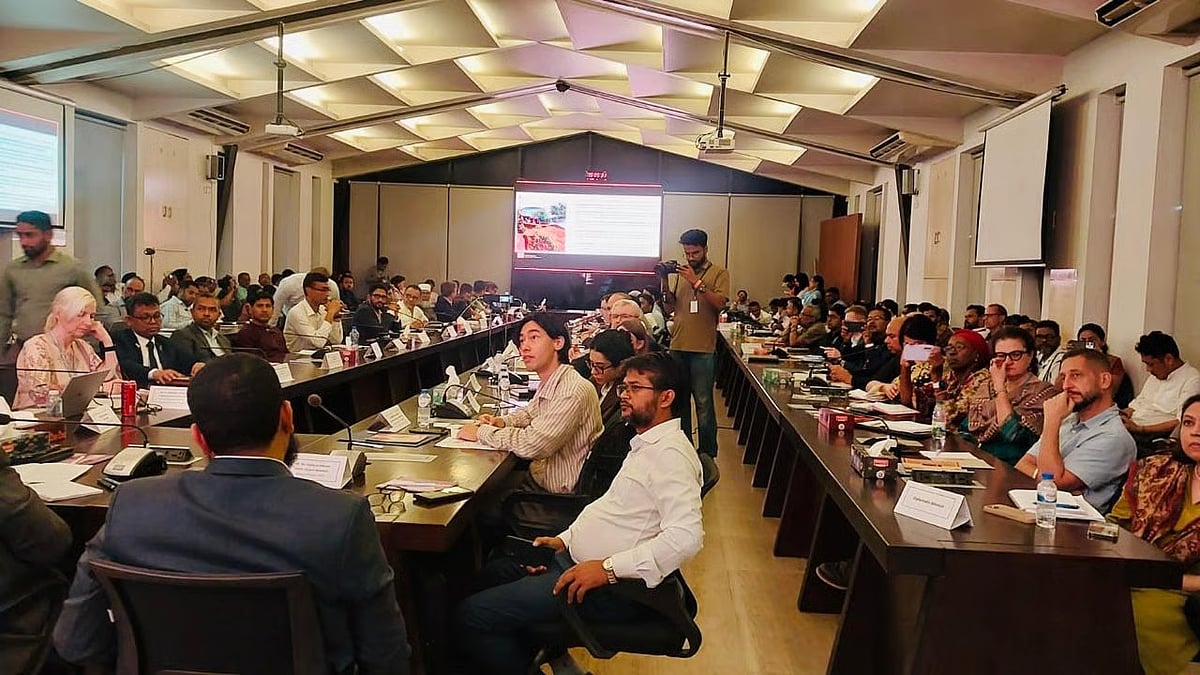
In August of that year, Bangladesh convened what it called a ‘stakeholders’ dialogue,’ jointly organised by the Office of the High Representative for the Rohingya Issue and the Ministry of Foreign Affairs. The event, held at Hotel Baywatch, Cox’s Bazar, was presented as a platform to engage global stakeholders in search of solutions to the protracted crisis. But the dialogue was high on rhetoric and painfully thin on substance. I was horrified to learn how ill-prepared the organisers were; some did not even grasp the basic principles of stakeholder analysis. The most glaring omission, however, was the absence of the principal stakeholder, Myanmar. What meaningful dialogue can take place when the central party to the conflict, the very perpetrator of the Rohingya crisis, is not even present? The exercise seemed more like a performance than a strategy.

These missteps reveal how far Bangladesh’s foreign policy establishment still has to go, especially when dealing with a brutal and deeply entrenched military regime that has perfected the art of ruling through fragmentation, perpetual conflict, and calculated delay. Engaging such a regime requires diplomatic sophistication, legal acumen, and geopolitical imagination — qualities Bangladesh has yet to cultivate at the scale required. Until Dhaka learns to navigate the complexities of a fractured Myanmar and the hardened mindset of its military rulers, efforts toward repatriation will continue to falter, no matter how many dialogues or committees are convened.

Nearly two decades later, international analysts are finally articulating the very strategy Bangladesh could have pursued all along. In a recent interview in Dhaka, political analyst Sami Hamdi echoed — almost verbatim — the warnings and proposals I raised in 2007. His analysis underscores how Bangladesh’s failure to act decisively has allowed others to shape the Rohingya narrative, and how a strategic opportunity remains largely unused.

Hamdi argues that Bangladesh should stop treating the Rohingya crisis solely as an economic and humanitarian burden and instead transform it into diplomatic leverage. With a new government and a politically awakened society, he says Bangladesh now has an opportunity for a fundamental rethink. Bangladesh’s geographic position bordering Rakhine (formerly Arakan) state gives it significant political cards to play, and the ultimate goal must be Rohingya repatriation with equal rights and political participation in Myanmar.

Hamdi warns that the absence of a clear strategy from Bangladesh and the wider Muslim world has allowed international actors, especially the United Nations, to frame the debate in ways that make permanent settlement in Bangladesh appear inevitable. To counter this, he urges Dhaka to adopt an assertive diplomatic posture, including pursuing a case against Myanmar at the International Criminal Court and mobilising Muslim majority countries behind it. Such pressure, he argues, could even open negotiation channels with China, which has considerable influence over Myanmar.

Hamdi believes Bangladesh is underusing its potential influence across the Muslim world, noting that solidarity from nearly two billion Muslims could be a powerful diplomatic tool. He cites Turkiye’s handling of Syrian refugees as an example of how a refugee burden can be turned into regional influence. While acknowledging the economic strain Rohingya refugees create, he argues that a long-term strategy — investing in the Rohingya and preparing them for eventual return — could transform a ‘ticking time bomb’ into a strategic asset. A politically empowered Rohingya population, he suggests, could become Bangladesh’s ally inside Myanmar.

His conclusion is clear: Bangladesh is not as weak as assumed. With imagination and assertiveness, it can turn the crisis into a source of regional power.

Hamdi’s evaluation confirms what I argued nineteen years ago: Bangladesh has consistently underestimated its leverage. The Rohingya crisis is not only a humanitarian tragedy but also a geopolitical moment that could reshape Bangladesh’s regional standing. The question now is whether the new government of Bangladesh will finally listen and — act.

Habib Siddiqui is a human rights activist and public intellectual.​
 
Analyze

Analyze Post

Add your ideas here:
Highlight Cite Respond

Latest Posts

Back
 
G
O
 
H
O
M
E