[🇧🇩] Intercity Highways, Rail links & Rural Infrastructure

[🇧🇩] Intercity Highways, Rail links & Rural Infrastructure
50
4K
More threads by Bilal9

G Bangladesh Defense

Bangladesh to issue 7-year Sukuk worth Tk 5,900cr for rural bridge project
United News of Bangladesh . Dhaka 01 May, 2026, 21:46

Bangladesh is set to issue its eighth government investment Sukuk worth Tk 5,900 crore to finance the construction and development of important bridges on rural roads under a revised project, according to an official statement. Diasporacommunity forum

The seven-year ‘CIBRR-1 Socio-Economic Development Sukuk’ will be issued under the project titled Construction of Important Bridges on Rural Roads (1st Revised). The prospectus and Shariah declaration of the Sukuk have already been finalised with approval from the Shariah Advisory Committee under the Debt Management Department.

The auction for the Sukuk will be held for the first time on May 13, using Bangladesh Bank’s in-house Shariah Securities Module system.

According to the prospectus, Sukuk will be issued through an auction-based lease structure with a face value of Tk 5,900 crore, maturing on May 14, 2033.

Investors will receive a total rental return of Tk 4,295.20 crore over seven years, equivalent to an annual return of 10.40 percent, payable on a semi-annual basis.

Banks and financial institutions having current or Al-Wadiah accounts with Bangladesh Bank will be eligible to participate directly in the auction. In addition, domestic and foreign individual investors, corporate bodies, investment companies, insurance companies, provident funds and deposit insurance funds may also participate through eligible banks and financial institutions maintaining accounts with Bangladesh Bank.

Investors will be able to submit bids online through the SSM system using their Sukuk Investor ID in multiples of Tk 10,000 between 10:00am and 3:00pm on May 13. Trendingnews digests

New investors must complete their SI ID registration through their respective banks by May 12.

The successful bidders will be informed of their allotted Sukuk amount through their respective accounts at 4:00pm on the auction day, the statement said.​
 

High-speed travel over Dhaka no distant dream now
Govt decides in principle to build East-West elevated expressway
Estimated cost of the project Tk 430b

FE REPORT

Published :
May 06, 2026 00:27
Updated :
May 06, 2026 00:27

1778024868779.webp


High-speed travel across Dhaka seems no distant dream now as a multifaceted elevated expressway over the crammed capital gets the go-ahead after an updated feasibility study that estimates the cost at Tk 430 billion.

The new government has in principle decided to construct the 39-kilometre Dhaka East-West Elevated Expressway (DEWEE) which is to connect three major national highways, including Dhaka-Chottagram with Dhaka-Aricha and Dhaka-Mawa through Narayanganj district, enabling traffic to pass through at a high speed.

Rail, Road Transport and Bridges and Shipping Minister Shaikh Rabiul Alam shared the BNP government's view on the megaproject at a stakeholder workshop organised Tuesday in the city to roll out the findings of the fresh feasibility study on the DEWEE.

State Minister for Road Transport and Bridges Razib Ahsan was also present as special guest.

The minister terms the project "highly necessary to bring positive transformation in the transport system" but lays importance on proper and timely implementation so the high-cost project does not become a burden on the country's economy.

"The nearly 39-kilometre expressway is expected play role in improving regional connectivity by linking Chattogram, Sylhet, Barishal and Khulna divisions with northern regions without requiring traffic to pass through the main Dhaka city," he adds

The updated feasibility study proposes estimated cost of the DEWEE around Tk 430 billion which, however, suggests change in its original design to develop the elevated corridor with high-speed travel of up to 120km/h.

Civil-work part of the DEWEE project would require Tk 220 billion while Tk 140 billion would be needed for land acquisition and rehabilitation as 84 per cent of 804.61 acres of land along the route will be privately owned.

Bangladesh Bridges Authority (BBA) organised the stakeholder workshop at a city hotel after Infrastructure Investment Facilitation Company (IIFC) submitted the report as the transaction adviser to update previous study report.

After the first FS was completed in 2017, the DEWEE project was approved from the Cabinet Committee on Economic Affairs to develop the corridor under public- private partnership (PPP). Initiative to conduct the fresh study resumed in December 2024.

While presenting the key features of the DWEEE, BBA Chief Engineer Quazi Ferdous said corridor is proposed to be developed from Hemayetpur in Savar to Langalbandh in Narayanganj via Savar, Keraniganj, Fatullah, Siddhirganj and Bandar upazila.

The minister said, "The BNP is committed to developing various infrastructures necessary for the country without misuse of government funds centering causes like delay in land acquisition and implementation."

Chaired by Bridges Division Secretary Mohammad Abdur Rouf, the workshop was also addressed, among others, by Panel of Experts Prof M Shamim Z Bosunia, Roads and Highways Department Chief Engineer Syed Moinul Hasan and Managing Director of Mass Rapid Transit COmpay Ltd Md Shaugatul Alam.

Representatives from different government agencies and private sectors, including Bangladesh University of Engineering and Technology, shared their views on the feasibility-study findings, lying importance on integration with the 20-year Updating Revised Strategic Transport Plan.

Professor Mohammad Hadiuzzaman stresses setting a standard of the expressway, including elevated one, and suggests planning the expressway corridor in a way to have link with other expressways.

Other stakeholders point out the scope of limiting the inner and outer ring road as per the URSPT as the corridor is suggested over it.​
 

Warranty for rural road construction


1791932996060.webp


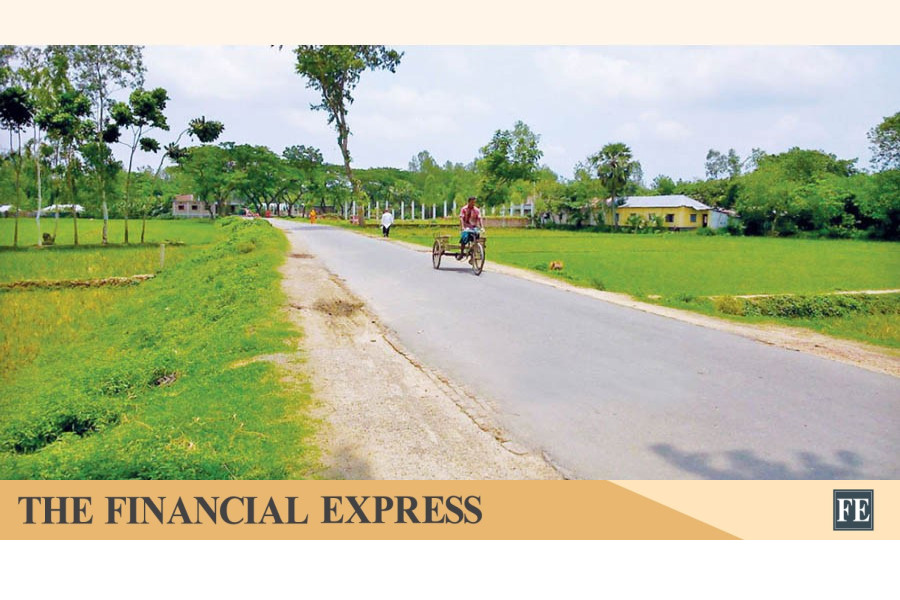
That rural roads fall into disrepair soon after construction or repair is a familiar experience. The resulting sufferings of villagers, especially farmers who depend on these roads to carry their produce to markets, are obviously enormous. Against this backdrop, the parliamentary standing committee on the Ministry of Local Government, Rural Development and Cooperatives (LGRD & C) has reportedly recommended retaining contractors' security deposits for three years as warranty to ensure quality of rural roads they build. The recommendation made at the committee's first meeting on Sunday (October 11), following Prime Minister Tarique Rahman's directive in this regard, is eminently well-taken. For the dilapidated condition of rural roads, many of which develop potholes and broken surfaces long before their expected service life, calls for a serious rethink of the prevailing construction and maintenance practices. Hopefully, the prime minister's direct intervention would help expedite implementation of this long overdue move to protect public resources.

Unlike in the case of roads in urban areas, construction of remote rural roads seldom comes under the scrutiny of higher authorities or media glare. Small wonder that contractors engaged in such works often find greater opportunities to compromise on the quality of materials, road foundations, carpeting and drainage. Such defects remain unnoticed until heavy rains expose the poor workmanship. The common people who have little say in the selection of contractors or supervision of their work are then left to suffer, while the public exchequer has again to bear the cost of fixing the broken down roads. So, the proposed three-year warranty provision, if properly enforced, can act as a deterrent against such malpractice. Knowing that their security money would remain at stake for three years, the contractors are expected to be more careful about the quality of work they deliver. But the provision alone cannot guarantee quality roadwork.

For poor construction cannot also be entirely blamed on the contractors. As the saying goes, it takes two to tango. In fact, there are other quarters who play no less a part in the irregularities that have long plagued rural infrastructure projects. Local musclemen enjoying the blessings of politically powerful quarters, sometimes even public representatives, are known to interfere with tenders, demand their share of project funds or pressure contractors into accommodating their interests. Add to that a section of corrupt government officials who award work orders, certify completion of work and clear bills also allegedly demand bribes at different stages. What then remains of the funds originally earmarked for building a durable road? Evidently, an honest contractor, too, may find it difficult to maintain standards when forced to meet such illegitimate demands. Therefore, the parliamentary committee should also issue clear directives to local administrations, ruling party functionaries and public representatives so that no vested quarters can interfere in road construction. At the same time, officials found soliciting illegal payments must face the consequence.

In this connection, the committee's call for stronger monitoring of road construction is equally well advised. But monitoring should not mean merely visiting a project site after work is over and signing a certificate of completion. The Local Government Engineering Department (LGED) needs to ensure regular inspection of materials, measurements and work at every stage, preferably with independent verification. Villagers should also have a channel to report irregularities without fear of reprisal. Where defects occur during the proposed warranty period due to substandard work, the contractor should be made to rectify those before the security deposit is released. Damage from floods or abnormal loads, however, needs to be distinguished from faulty construction through technical assessment. In fine, the proposed warranty will serve its purpose only if all those associated with awarding, supervising and executing rural road projects are held accountable. The government would do well to ensure that no undue political influence or official dishonesty defeats the initiative.​
 

Latest Posts

Back