[🇧🇩] Iran, US- Israel War: It's Impact On Bangladesh

[🇧🇩] Iran, US- Israel War: It's Impact On Bangladesh
72
2K
More threads by Saif

G Bangladesh Defense

US likely to extend Russian oil waiver to temper Iran war shock

REUTERS
Published :
Apr 11, 2026 20:30
Updated :
Apr 11, 2026 20:30

1775954002523.webp

US President Donald Trump's administration is likely to extend as soon as Friday a waiver allowing countries to buy some sanctioned Russian oil and petroleum products, two sources familiar with the matter told Reuters.

The US Treasury Department has allowed purchases of Russian oil and products at sea since mid-March with a 30-day waiver that expires on Apr 11, part of efforts to control global energy prices during the US-Israeli war with Iran.

Russia's presidential envoy Kirill Dmitriev had said the original waiver would free 100 million barrels of Russian crude, equal to almost a day's worth of global output.

US Treasury Secretary Scott Bessent met with Trump in the White House on Thursday to talk about extending the waiver, and they agreed it was a good idea, one of the sources said, asking not to be named.

Officials at the White House and Treasury Department did not immediately comment on the matter.

Oil prices LCOc1 have spiked since the start of the war due to the partial closure of the Strait of Hormuz, through which about 20 percent of the world's oil and gas had been shipped daily before the conflict. The war is creating the biggest oil supply disruption in history, the 32-nation International Energy Agency has said.

Rising fuel prices are a major concern for Trump and his Republican party leading into midterm elections in November.

The waivers have been criticized by politicians at home and abroad as they could complicate the West's efforts to deprive Russia of revenue for its war in Ukraine and put Washington at odds with its allies.

European Commission President Ursula von der Leyen has said now is not the time to relax sanctions against Russia.

Congressional Backlash

The US also waived sanctions on Iranian oil at sea on Mar 20 for 30 days, in an effort to control prices, spurring criticism from lawmakers from both political parties.

"Waiving oil sanctions now advantages the countries that wish to do us harm," Republican Senator Jerry Moran said last month, as he urged the administration to not renew the waivers. "Iran and Russia are actively working together to place Americans and other innocent lives at risk."

Senate Minority Leader Chuck Schumer and fellow Democratic Senator Jeanne Shaheen urged the administration on Friday not to renew the license on Russian oil. “It remains far from clear that the extraordinary step of providing sanctions relief to Russia provided any relief for US consumers or eased the global energy crisis," they said in a statement.

"Instead, even as Russia supported Iran in targeting Americans, the Trump Administration has rewarded the Kremlin while Russia has continued to launch strikes at Ukraine—including a barrage of 1,000 strikes in late March," they said.

India, a US ally vulnerable to fuel shocks resulting from the war, has expected Washington to renew the waiver on Russian oil.​
 

Stranded Bangladeshi ships to cross Strait of Hormuz very soon: Iran envoy

UNB
Published :
Apr 12, 2026 20:56
Updated :
Apr 12, 2026 20:56

1776039393717.webp


Iranian Ambassador to Bangladesh Jalil Rahimi Jahanabadi on Sunday said many ships are waiting in the Strait of Hormuz due to the war situation, and said he was hopeful that they will be able to cross the Strait ‘very soon’.

“Some Bangladeshi ships are also stuck in the Strait of Hormuz. We will cooperate with Bangladesh. We will make arrangements for the release of Bangladeshi ships. The ships will be able to cross the Strait of Hormuz very soon. We will take action in this regard after talking to the Bangladesh government,” said the Ambassador.

The Iranian Ambassador made the remarks while speaking as the chief guest at an anti-war crimes exhibition titled 'Remembering the Martyred Students of the Islamic Republic of Iran: Demanding Justice and Accountability for US-Israeli War Crimes' organized by the Revolutionary Students' Council at Dhaka University on Sunday.

The Ambassador said the relations between Bangladesh and Iran are good and they consider Bangladesh as a brotherly country. “We have no enmity with Bangladesh.”

Regarding the Pakistan-mediated talks between Iran and the United States, the Ambassador thanked Pakistan for arranging the talks, according to a media release.

“At the same time, I thank those who have cooperated with us, including Oman."​
 

War shock may drain $6b from reserves: BB

Inflation may rise to 11.7pc, it projects

Staff Correspondent 13 April, 2026, 00:37

1776043491804.webp

New Age file photo

Bangladesh faces a sharp escalation in inflation and foreign exchange pressure due to the Middle East war, with risks building across dollar market, reserves and external balance, according to the latest Bangladesh Bank assessment.

In its quarterly report for October-December 2025, the central bank used a structural vector autoregression model to simulate the impact of a severe geopolitical shock.

It projected that such a scenario could raise domestic inflation by nearly 2 percentage points and drain more than $6 billion from foreign exchange reserves by the end of 2026.

The report modelled a steep surge in global oil prices, assuming a 70-per cent increase in the first quarter of 2026 and a further 30-per cent rise in the following quarter, alongside a depreciation of the taka.

Under this combined shock, inflation is projected to climb from 9.6 per cent in early 2026 to 11.7 per cent by the end of the year, intensifying existing price pressures.

The Bangladesh Bank explained that exchange rate depreciation had an immediate impact on domestic prices by raising the cost of imports, including fuel, food and industrial inputs.

At the same time, higher oil prices gradually push up production and transport costs, feeding into broader inflation over several quarters.

The external sector faces equally strong pressure.

Gross foreign exchange reserves stood at $33.19 billion at the end of December 2025.

Under the simulated shock, reserves could fall to $26.06 billion by December 2026, a decline of $6.5 billion.

If the depreciation deepens further, reserves may drop to $24.24 billion, reflecting higher import payments and central bank intervention to stabilise the currency.

The report warned that the gains seen in recent months remained fragile.

The current account recorded a surplus of $476 million in the second quarter of FY26, supported by a 20 per cent rise in remittances to $8.68 billion.

However, the trade deficit widened to $5.8 billion, indicating underlying pressure from imports.

The Middle East conflict has already disrupted global energy and food supply chains.

Bangladesh’s dependence on imported fuel leaves it exposed to rising prices, while any disruption in Gulf labour markets could weaken remittance inflows, a key source of dollars.

Export earnings also remain vulnerable.

The readymade garment sector, which earned $9.75 billion in the second quarter, faces weaker demand from the United States and Europe amid global inflation and trade tensions.

The report outlined a policy dilemma.

If the government fully absorbs higher oil prices through subsidies, inflation may remain around 10.5 per cent, but fiscal costs could rise sharply.

Allowing partial pass-through would ease fiscal pressure but push inflation higher.

The Bangladesh Bank said that maintaining a contractionary monetary policy and allowing some exchange rate flexibility would be necessary to contain inflation and manage reserve losses.​
 

MV Banglar Joyjatra sets sail as Hormuz opens for commercial traffic

bdnews24.com

Published :
Apr 17, 2026 23:50
Updated :
Apr 17, 2026 23:54

1776470185138.webp


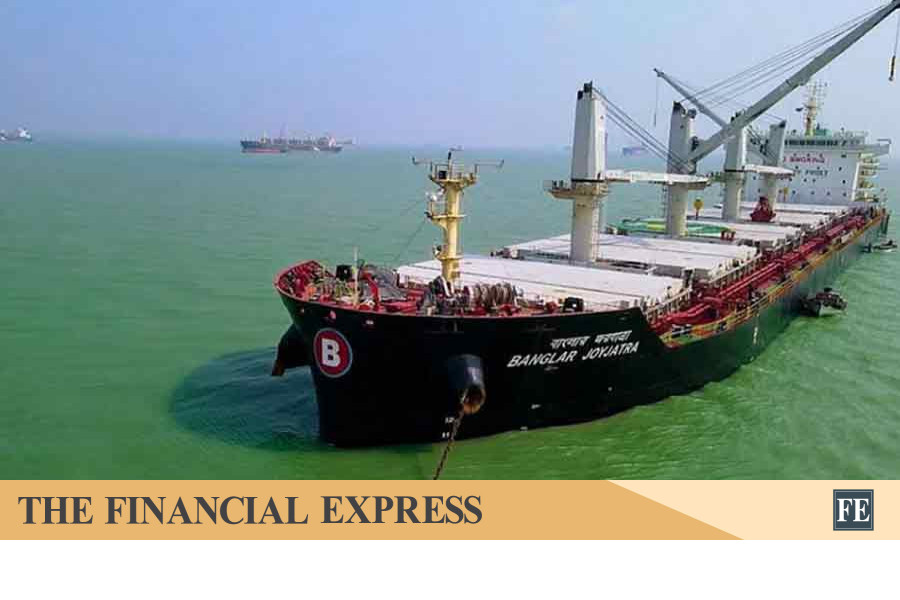
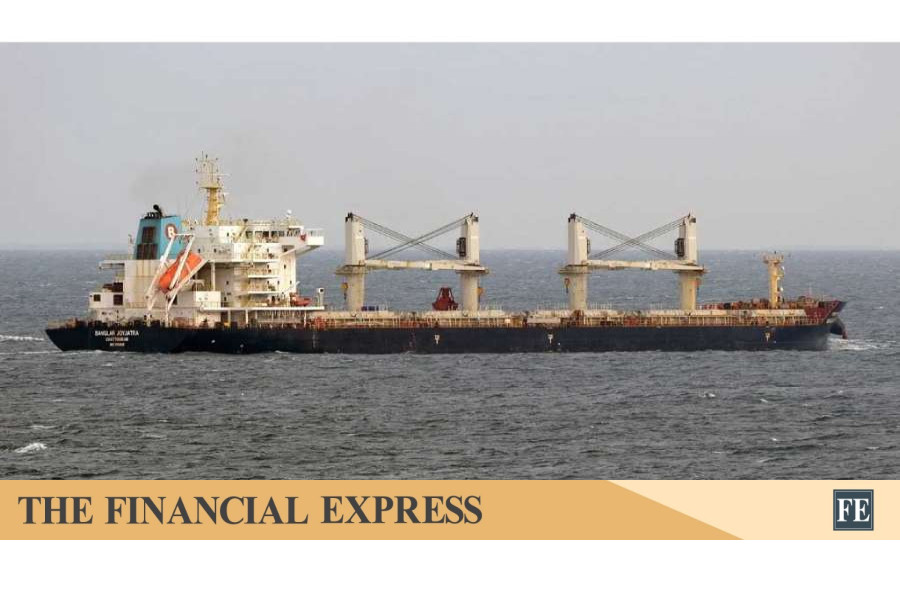
The Bangladesh-flagged vessel MV Banglar Joyjatra has set sail toward the Strait of Hormuz from the outer anchorage of Mina Saqr port in the United Arab Emirates, following an official announcement by Iran that the strategic waterway is fully open for commercial traffic.

The state-owned Bangladesh Shipping Corporation (BSC) confirmed that the vessel lifted anchor at approximately 9pm Bangladesh time on Friday.

Commodore Mahmudul Malek, managing director of BSC, said, "The ship is currently about 20 nautical miles from the Strait. We expect it to cross the passage tonight once final clearance is secured."

The vessel, carrying 37,000 tonnes of fertiliser, is en route to its next commercial destinations: Cape Town and Durban in South Africa.

The ship with 31 Bangladeshi crew members on board originally set sail from Saudi Arabia’s Ras Al Khair port on Apr 8, following a ceasefire, but was denied permission to enter the Strait.

Prior to that, the vessel attempted to depart from Jebel Ali port in the UAE but was forced to turn back by the UAE Coast Guard due to escalating regional hostilities following the US-Israel joint attacks on Iran.
The Joyjatra first entered Middle Eastern waters on Jan 26.

While stationed at Terminal 10 of Jebel Ali port in late February, the crew witnessed a drone attack on a nearby facility.

Just a day after docking, a missile struck an oil reservoir only 200 metres away from the ship, sparking a massive fire and leaving the crew in a state of constant anxiety.

"It felt like being trapped in a suffocating environment," one sailor remarked, describing the months spent watching missiles and drones streak across the sky while their departure was repeatedly delayed.

The Strait of Hormuz is one of the world's most critical maritime chokepoints.

Throughout the conflict, commercial shipping was virtually paralysed, forcing the Joyjatra to seek refuge in various territorial waters, including Sharjah, to wait for the passage to reopen.

Ship Captain Md Shafiqul Islam confirmed the vessel’s progress Friday night, saying: "We have lifted anchor and are steadily moving toward Hormuz."​
 

Global shocks: the economic impact

Hasnat Abdul Hye

Published :
Apr 19, 2026 00:46
Updated :
Apr 19, 2026 00:46

1776560337512.webp


It has become customary to disaggregate the impact of economic shocks on the global and national or regional economies. Needless to say that in broad terms the conclusions are the same in broad terms pointing to the same direction viz decline. While the world economy is the composite of all regional and country-wide developments, individual economies try to cope with the shock using their capacity for resilience. In the event, the world economy can do little on its own to change the emergent economic trends and depend on the performance of individual economies to make economic updates. Multi-lateral institutions like the world Bank, the International Monetary Fund (IMF), the World Trade Organization (WTO) and regional institutions like Asian Development Bank (ADB), African Development Bank (AfDB), BRICS etc can step in to perk up the world economy and thereby help individual economies to recover from the adverse impact of the shocks. But if the economic shocks emanate from geopolitical developments, prompt and united decisions in multilateral institutions are most likely to bog down.

Five global shocks: In the 21st century five economic shocks have been generated, four of which are ‘man- made’ and one natural. The first is the financial crisis of 2006-07 that broke out in America and Europe due to undue exuberance in investment banking in America’s mortgage sector. It was not of global import and was managed by co-ordinated policy interventions by G- 7 countries. The second economic shock came with the Covid pandemic in 2020 and its impact was global, leaving no country untouched and immune from its fallout. It was both natural and man-made in so far as the dissemination of the virus was due to human negligence. It battered all the economies in varying degrees and subsequently adversely impacted on global economy by disrupting the supply chains and increasing costs of shipping. Many countries are still struggling to recover from the ravages of Covid pandemic, so deep and wide-spread has been its impact. Even before the recovery from Covid was complete the global economy was suddenly subjected to a man- made catastrophe, the Ukraine war. It immediately adversely impacted the supply of gas, oil, fertilizer, wheat and corn, increasing their prices. Individual economies are still reeling from the blows dealt out by the Covid and Ukraine war.

The fourth economic shock of this century is entirely man-made and done in a most arbitrary manner. By raising tariff sky-high across the board and slapping it on all countries almost overnight, the Trump administration made mincemeat of rule-based global trade and made economies of individual countries hostages to an ultra- nationalist policy of balancing trade accounts by neo-mercantilist America. The global economy and the individual economies are still in the process of adjustments (mostly in the form of concessions made to strong arm tactics of American demands) and is now faced with an economic catastrophe of most serious consequences, the preemptive war against Iran by America and Israel .

ImPact on GLOBAL ECONOMY: The six weeks war in Iran, now in the last phase of a tenuous ceasefire, can have more far reaching consequences than all previous shocks to which the global economy has been exposed. This is because the Gulf countries are sources of supply of liquefied natural gas (LNG) to both European and Asian countries. Damages to LNG sites in the Gulf reportedly are so severe that resumption of exports after the war ends will take up to one year. Longer the war wages greater will be the time lag between reconstruction of facilities and resumption of supplies. The Gulf countries also export fertiliser to Europe, Africa and Asian countries. It is estimated that up to 46 per cent of global traded urea fertiliser is linked to Gulf producers. The shortages of fertiliser caused by the war in Iran have already led to estimates that these may reduce food production by as much as 25 per cent this year. Apprehending this, food markets have already registered 5 per cent higher prices.

Iran has the third largest oil reserves in the world, next to Saudi Arabia and Venezuela. It exports 90 per cent of its oil to China which accounts for 11 per cent of latter’s total requirement. Disruptions in this supply will have some impact on China’s economic growth. Other importers of Iranian oil like India, Bangladesh and Myanmar will also face similar problem. Besides Iran, the Gulf countries supply about 20 per cent of global oil through the Strait of Hormuz. After the start of the Iran war this supply has stopped, compounding the crisis in the global energy market. Price per barrel of Brent crude oil shot to $ 120 in the first week of the war and is now hovering around $100. Volatility in energy markets has severely jolted all the economies of the world.

Increase in the price of oil has led to increases of prices of almost all commodities causing rise in cost of living. Inflation, brought under control in many countries through tight monetary policy over the past several years, has staged a comeback. This in turn has made it difficult for central banks to lower the policy rate, a situation that is not conducive for investment. Inflation and high interest rate has affected stock markets adversely with investors switching from stocks to treasury bills and bonds.

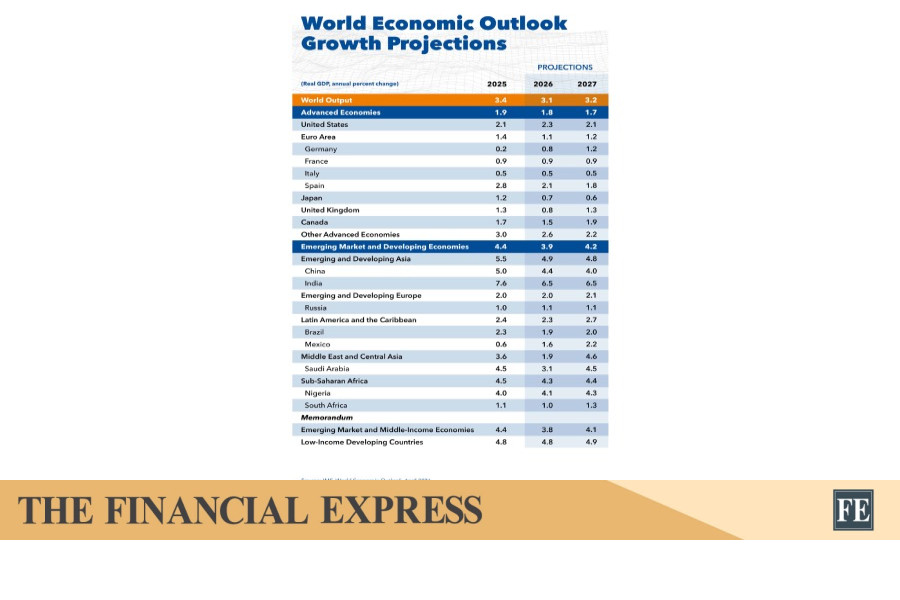
The cumulative effect of all the above has been reflected in a downgraded growth forecast for the world economy. For the current calendar year, the IMF has brought down the estimate for global growth from 4.0 per cent to 3.1 per cent. This is on the basis of the current state of the Iran war. If it prolongs and spreads out geographically, the growth prospect will worsen, requiring the rate to be further downgraded.

All global shocks do not affect every country to the same degree. Particularly vulnerable are the developing countries. While industrially developed countries have deep pockets or can borrow, developing countries can borrow only at the cost of inflation. Providing them with budgetary support in the form of soft loan can go a long way in helping them to cope with the economic shocks. The World Bank, the IMF and other multilateral institutions can play important roles in times of Economic crisis. This role becomes incumbent upon them once they update the economic outlook and downgrade growth estimates of individual countries..

Impact on regions: (A) The economic impact of the war launched by America and Israel been has been immediate and most extensive in Iran. Not only numerous military targets, including armament industries, have been destroyed by bombing, even civilian infrastructures like schools, hospitals, universities, scientific research facilities, bridges and rail tracks have not been spared. Donald Trump has publicly threatened to bomb Iran back to the stone age, a declaration unheard of from the head of a state before. According to Iran Revolutionary Guard Corps (IRGC) the country has already suffered a loss $22O billion as a result of bombings by America and Israel. In terms of loss of exports of oil, the estimated amount is about $276 million per day while total economic loss, including petrochemicals and knock-on effects is estimated to be $435 million dollars per day. If the war stops now it will take 10 years for Iran to complete reconstruction, costing between $300 to $400 billion, according to one estimate.

The oil and gas assets of Gulf countries and Saudi Arabia have been inflicted heavy damages by bombings by Iran as part of its asymmetric strategy. It is estimated that GDP of United Arab Emirate (UAE) and Saudi Arabia may decline by 3 and 5 per cent respectively. Kuwait and Qatar, on the other hand, will see greater decline in their GDP, by 14 per cent according to one estimate. Many of the Gulf countries are already facing economic recession as their tourism industry has collapsed after the war broke out. The investment climate in these countries has darkened as investors are retreating due to lack of trust and confidence. The greatest and long lasting damage suffered by the countries in the region, including Iran, will be environmental. As a result of bombings of oil refineries and gas fields toxic gas has already polluted air while chemicals (greenhouse gas amounting to 2000 million tons) used by American bombers have polluted surface water. It is suspected that uranium hexafluoride from Natanz nuclear enrichment facility may have polluted soil after bombing by America, making agriculture highly risky.

(B) The Asian Development Bank (ADB) has predicted the war in Iran is likely to drag on Asia’s economies over this year and next. It estimated the region’s growth at 5.1 per cent during this period. Growth predictions could fall to as low as 4.7 per cent for 2026 should the US-Israeli war with Iran drag on into the third quarter. ‘Most economies in developing Asia and Pacific will see their growth outlook worsen this year and in 2027’ has been the Bank’s stark assessment. The region’s status as a net energy importer left it particularly vulnerable to the wars’ fallout, said the ADB chief economist recently. Even after energy prices normalise, supply- chain disruptions, higher producer price and tighter financial conditions would prolong stagflationary pressures, he added. A more drawn-out conflict in the Middle-East could also see prices spike by as much as 5.6 per cent, the ADB report observed. Completed in March, the, Bank’s report had predicted price rise of 3.6 per cent in 2026 and 3.4 per cent in 2027 under what it described as ‘early stabilisation scenario’. The report noted that Iran’s squeeze on shipping route in the Strait of Hormuz, had ripple effects far beyond the gas pumps, including regional food security.

Bangladesh case: The World Bank has drawn a conservative economic outlook in its Bangladesh Economic Update released in the first week of April. it shows the country can grow at 3.9 per cent in the current fiscal for the compounding effects of the of the on-going Middle-East conflict and persistent domestic macroeconomic fragilities. But the ADB in its Asian Development Outlook (ADO) raises hopes that the on-going financial sector reforms aimed at enhancing stability, transparency and efficiency should support economic expansion. ADB’s ADO for April, 2026 says that following a period of recovery phase, GDP growth is expected to rise over the next two fiscal years. According to the ADO for April 2026, the country’s GDP is to grow 4.0 per cent in FY2026 and further accelerate to 4.7 per cent in FY2027, up from a sluggish 3.5 in FY2025. The ADB projection is too optimistic and does not chime with results of previous reform measures and growth performance. The World Bank estimate is more realistic, given our past experience.

According to newspaper report, the present government plans a big budget worth Tk 9.30 trillion for the next fiscal year for augmented funding of critically important sectors. In order to finance the substantially raised annual spending plan, the government has set a target to collect Tk 7.95 trillion as revenue in fiscal 2026-2027. (Financial Express, 13 April, 2026). Given the past record of public resource mobilisation one can safely conclude the government will have to resort to bank borrowing making the target of bringing down inflation to 7.9 per cent unrealistic. What is most glaring in these pre-budget deliberations is the absence of factoring in the Iran war in the sectors concerned and delineation of a plan action for each. The energy crisis created by the war is not only a problem of expanding subsidy to cushion the effects on consumers but also calls for support to producers, ranging from farmers to industrialists. A holistic study analysing the ramifications of the energy crisis is urgently called for. The next budget should focus on energy crisis and its ramifications in the economy.​
 

Bangladesh again seeks safe passage thru Hormuz
Khalilur meets Iranian minister in Turkiye

Staff Correspondent 21 April, 2026, 00:26

1776733108747.webp


Dhaka has once again urged the Iranian authorities to facilitate safe passage of vessels bound for Bangladesh, particularly those carrying fuel through the Strait of Hormuz, a major route for global energy supply, amid tensions due to the Gulf conflict.Maps

Bangladesh foreign minister Khalilur Rahman at a meeting with deputy foreign minister of the Islamic Republic of Iran Saeed Khatibzadeh on the sidelines of the Antalya Diplomacy Forum in Turkiye on Sunday evening renewed the call as Bangladesh-flagged ship Banglar Joyjatra had remained stranded near the waterway in the Persian Gulf since the outbreak of the war after the United States and Israel launched attacks on Iran on February 28 and Tehran retaliated.

‘The Bangladesh foreign minister also requested the Iranian deputy foreign minister to use his good offices to facilitate the safe passage of Bangladesh-flagged vessel Banglar Joyjatra through the Strait of Hormuz,’ said a foreign ministry statement issued in Dhaka on Monday.

Khalilur said, ‘We were very thankful when Iran included Bangladesh among the six countries whose vessels would be permitted to cross Hormuz.’

The two sides exchanged views on the evolving situation in the Gulf region and other issues of mutual interest, according to the statement.

During the meeting, the foreign minister reiterated Bangladesh’s consistent and balanced position on the ongoing developments, underscoring the importance of restraint by all parties and the resolution of differences through dialogue and diplomacy.

The Iranian deputy foreign minister appreciated Bangladesh’s constructive stance and expressed the hope that the foreign minister of Bangladesh would visit Tehran at a mutually convenient time, the statement mentioned.

The deputy foreign minister of Iran followed up on the matter immediately and informed Bangladesh foreign minister past night that while the situation continued to remain tense, necessary directives had been given to the authorities concerned in Iran.

The two leaders continue to maintain communication on the matter, the statement said.

Earlier, on April 5, foreign minister Khalilur at a meeting in Dhaka with Iranian ambassador to Bangladesh Jalil Rahimi Jahanabadi requested facilitation of safe passage for Banglar Joyjatra as well as another Bangladesh-bound vessel carrying crude oil.

The envoy conveyed that the Iranian authorities were being approached at appropriate levels in this regard.

He also appreciated Bangladesh’s balanced stance on the current crisis and expressed gratitude to the government of Bangladesh for adopting a condolence motion on the opening day of the 13th parliament session following the targeted assassination of Iran’s Supreme Leader, Ayatollah Ali Khameini, during the US-Israel joint strikes on Iran.

Foreign minister Khalilur noted at that meeting that he had sent an official letter to the Iranian foreign minister, thanking him for the support extended by the Iran government to safe passage of 186 Bangladeshis from Iran to Azerbaijan.

Khalilur on April 16 left the country for Türkiye to attend the three-day Antalya Diplomacy Forum that concluded on April 19.

After attending the forum, the foreign minister flew to Brussels of Belgium to attend the signing event on the ‘Framework Agreement on Comprehensive Partnership and Cooperation’ between Bangladesh and the European Union held on Monday.

On his way back home, Khalilur is expected to make a stopover in Ethiopia’s capital Addis Ababa before returning to Bangladesh on April 24.​
 

Economy faces risks from war on Iran, minister tells JS
Staff Correspondent 21 April, 2026, 00:39

1776733274111.webp

File photo

Commerce minister Khandker Abdul Muktadir on Monday told the Jatiya Sangsad that the ongoing instability in the Middle East had created multiple challenges for the global economy, with potential implications for Bangladesh’s trade, import costs, shipping, inflation and remittance inflow.

Replying to a question from Pabna-5 lawmaker Md Shamsur Rahman Shimul Biswas during the parliamentary question-and-answer session, the minister said that the recent geopolitical tensions in the region, particularly involving Iran and military developments linked to the United States and Israel, were likely to influence global energy prices and supply chains, with Bangladesh also exposed to the impact.

He said that the Middle East remained one of Bangladesh’s most important trading and labour markets, with exports of items, including readymade garments, pharmaceuticals, frozen food and leather products, to countries such as the United Arab Emirates, Saudi Arabia, Qatar, Kuwait and Oman.

Any disruption in the region, he said, could affect both export performance and remittance inflow.

The minister said that the current situation had already contributed to upward pressure on fuel prices globally, alongside rising import costs, shipping charges and insurance premiums.

He also warned of possible risks to export earnings from the Middle East market and broader inflationary pressures.

The minister informed the JS that the government was closely monitoring the evolving situation under the guidance of the prime minister and had taken a range of measures to safeguard economic stability.

According to the minister, Bangladesh is actively working to diversify export destinations beyond traditional markets by increasing shipments to India, Nepal and Bhutan as well as to East Asian countries and ASEAN members.

At the same time, efforts are under way to expand exports of pharmaceuticals, agricultural and agro-processed products, jute goods, plastics, frozen food, shrimp and fish, ICT services and light engineering products to reduce dependence on a single sector, he said.

The minister said that initiatives had also been taken to support sector-specific export growth, including allowing duty-free or free-of-charge import of raw materials for the shipbuilding and footwear industries.

In addition, exporters are being facilitated through the online issuance of Rules of Origin certificates to secure preferential market access, he said.

Muktadir said that Bangladesh was strengthening bilateral trade mechanisms through joint working committees and commerce secretary-level meetings with countries, including India, Bhutan, Nepal, Cambodia and Sri Lanka, to resolve trade-related issues.

The minister said that the negotiations on key trade agreements, including the Bangladesh-Korea Comprehensive Economic Partnership Agreement, the Bangladesh-Singapore Free Trade Agreement and the Bangladesh-UAE CEPA, were going on.

He also said that talks were continuing with Nepal on a preferential trade agreement and that cooperation with Bhutan was being expanded through scheduled high-level meetings in Dhaka.Maps

He informed the House that Bangladesh had already signed an economic partnership agreement with Japan, describing it as the country’s first-ever free trade-related agreement, with ratification procedures now under way.

The commerce minister said that in response to global uncertainty, the government was also taking precautionary domestic measures, including tightening market monitoring to prevent hoarding and artificial shortages, and ensuring stable supply of essential goods through coordination with key partner countries such as China, Malaysia and Indonesia.

He said that steps were being taken to promote energy efficiency and reduce wastage, including limiting unnecessary electricity use at markets, shopping malls, billboards and public events.

Authorities have also been instructed to close commercial lighting and events by 7:00pm where applicable.

The minister assured JS that the government remained prepared to take all necessary measures to protect trade flows and maintain macroeconomic stability amid external shocks arising from the Middle East situation.​
 

Iran says it will facilitate safe passage for Bangladeshi vessels through Strait of Hormuz

Diplomatic Correspondent
Dhaka
Published: 21 Apr 2026, 22: 23

1776817012673.webp

The Strait of Hormuz Reuters file photo

The Islamic Republic of Iran and the People’s Republic of Bangladesh enjoy longstanding, friendly, and brotherly relations founded upon mutual respect and shared values.

The Islamic Republic of Iran reaffirms its firm commitment to the principle of non-interference in the internal affairs of other countries, says a press statement of the embassy of the Islamic Republic of Iran in Dhaka.

The Embassy of the Islamic Republic of Iran in Dhaka welcomes the meeting held between Khatibzadeh, Deputy Foreign Minister of the Islamic Republic of Iran, and Khalilur Rahman, Foreign Minister of the People’s Republic of Bangladesh, on the sidelines of the Antalya Diplomacy Forum.

The Embassy will earnestly pursue the constructive and fruitful engagements and initiatives between the officials of the two countries and underscores the importance of further expanding bilateral relations across all areas of mutual interest.

The Islamic Republic of Iran appreciates the balanced and constructive position of the Government of Bangladesh in promoting peace and stability in the Middle East through dialogue and diplomacy, which remain essential for the region and the wider international community.

The Embassy also expresses its sincere appreciation for the messages of condolence conveyed by the Government of Bangladesh following the martyrdom of the Leader of the Islamic Revolution, the Leader of the Ummah and the great Leader of the Islamic Republic of Iran, Grand Ayatollah Khamenei (may his noble soul be sanctified).

Particular appreciation is extended for the adoption of a condolence motion at the opening session of the 13th Parliament, which constitutes a notable and exceptional gesture.

The Embassy further expresses its gratitude for the presence of a senior official of the Ministry of Foreign Affairs of Bangladesh at the Embassy of the Islamic Republic of Iran in Dhaka to sign the condolence book.

The Embassy also appreciates the decision of the Prime Minister of Bangladesh to send emergency medical assistance to the Islamic Republic of Iran through the Bangladesh Red Crescent Society.

The Islamic Republic of Iran, while appreciating the support of the Government and people of Bangladesh, expresses its heartfelt condolences over the loss of Bangladeshi nationals resulting from the war initiated by the United States and the Zionist regime and their unlawful aggression against the Islamic Republic of Iran, and wishes a speedy recovery to those injured in these unfortunate incidents.

The Embassy of the Islamic Republic of Iran will continue its efforts to facilitate the safe passage of Bangladeshi vessels through the Strait of Hormuz and has also facilitated the safe evacuation of 186 Bangladeshi nationals from Iran via the Republic of Azerbaijan.

The Embassy of the Islamic Republic of Iran in Dhaka expresses its dissatisfaction with the selective dissemination of excerpts from recent media interviews concerning developments in the Middle East, which have been republished by certain media outlets and social media platforms.

Such actions are deemed inconsistent with the friendly and brotherly relations between the two countries. These inaccurate and selective representations are regrettable and contrary to the principles of responsible media conduct.

The Embassy further reiterates its firm commitment to strengthening the close and amicable relations between the two nations and calls upon all concerned to refrain from any actions or statements that may create misperceptions, and to uphold the spirit of mutual respect that governs the enduring ties between the two brotherly nations.​
 

The rising cost of a distant war

Iran-US war is worsening our cost-of-living situation

1776818258578.webp

VISUAL: STAR

The prolonged war of choice initiated by the US and Israel against Iran has inflicted severe hardship on millions of already strained working people in Bangladesh and across the world. The situation is approaching a breaking point. Although there was a fragile two-week pause in hostilities, the mutual blockade and counter-blockade imposed by Iran and the US on commercial shipping through the Strait of Hormuz effectively disrupted a vital economic lifeline for countries across the Asia-Pacific that depend heavily on supplies from Gulf nations.

The conflict has not only disrupted global supply chains but also sharply increased shipping costs due to the lack of insurance coverage and the sudden surge in premium rates. Disruptions in oil and gas supplies have led to shortages, rising prices, and long queues at fuel stations in Bangladesh, resulting in lost work hours. The ripple effects are widespread: power generation has been curtailed, factories are either idle or operating at reduced capacity, and the agricultural sector faces mounting difficulties. Farmers are struggling to operate irrigation pumps due to diesel shortages, cannot secure essential fertiliser, and are sometimes being forced to let crops rot in the fields as transportation costs become prohibitive.

This war has come at an especially difficult time for Bangladesh, where ordinary people have already been grappling with repeated inflationary shocks. The lingering effects of Covid pandemic, coupled with domestic political instability, have deepened these challenges. Years of economic mismanagement and corruption under the previous administration, followed by a turbulent political transition and prolonged uncertainty, have further strained the economy. During this period, people have endured currency depreciation and stagnant wages. The finance minister recently said the ongoing conflict has already cost us an estimated $2 billion.

At the recent World Bank-IMF Spring Meetings in Washington, up to $150 billion in new financing was pledged to support developing countries most affected by the global energy price shock. Yet, financial leaders expressed concern at being drawn into yet another crisis triggered by geopolitical conflict. Reflecting the seriousness of the situation, the IMF has revised global growth projections downward to 2.5 percent, warning that a prolonged war could push the world economy into recession. The meeting underscored both the limited capacity of global financial institutions to offset such shocks and the urgent need for a resolution to the conflict.

In light of these unusually harsh conditions, a pragmatic policy response is essential. Our government must take all possible steps to ease the burden on low- and middle-income households. Recent increases in cooking gas prices have raised concerns that further price hikes may follow, which would inevitably drive up the cost of essential goods. Policymakers should therefore avoid making overly optimistic or unrealistic claims about inflationary pressures. For example, the commerce minister’s statement in parliament on Monday that fuel price hike is unlikely to stoke inflation is not supported by any evidence. A transparent acknowledgment of external factors driving the crisis would likely foster greater public understanding and trust, rather than creating false expectations.​
 

Iran war impact seeps ever deeper into global economy

REUTERS
Published :
Apr 23, 2026 23:17
Updated :
Apr 23, 2026 23:17

1776988226701.webp


An employee works on USB cables production at a plastic accessories factory, as rising oil prices drive up production costs for plastic manufacturers, in Dongguan, Guangdong province, China, Apr 2, 2026. Photo : REUTERS

The global economy is facing ever more tangible strains from the energy shock triggered by the Iran war as factories grapple with soaring production costs and activity weakens even in services sectors, major surveys showed on Thursday.

While much of the world's economy has shown resilience in the face of the worst disruption to energy supplies in modern times, the knock-on effects of the near-two-month conflict are starting to push up inflation while raising concerns about food supplies and prompting downgrades to economic growth.

This week has already seen a string of downbeat business and consumer morale readings and cautious outlooks from top listed companies. The closely watched set of S&P Global surveys of purchasing managers released on Thursday showed worse to come.

They pointed to the 21 countries of the euro zone as among the hardest hit, with the preliminary reading of its headline index for the region falling from 50.7 in March to 48.6 in April - a sub-50 tally that indicates a shrinkage in activity.

The input price index surged to 76.9 from 68.9, showing how euro zone factories are facing a jump in their production costs. The index covering the bloc's dominant services industry meanwhile sank to 47.4 from 50.2, well below a Reuters poll estimate of 49.8.

"The euro zone is facing deepening economic woes from the war in the Middle East," said Chris Williamson, chief business economist at S&P Global. "Increasingly widespread supply shortages meanwhile threaten to dampen growth further while adding more upward pressure to prices in the coming weeks."

Across the Atlantic, meanwhile, S&P's measure of US activity improved, but bore many of the same hallmarks of panic buying in the face of war-induced supply shortages and price pressures that had weighed on EU activity. Delivery times and output prices were the highest since the post-COVID supply chain snarls and inflation wave crested roughly four years ago.

The manufacturing PMI rose to a 47-month high of 54.0 from 52.3 in March, beating economists' expectations for a reading of 52.5. A measure of new orders received by factories jumped to 54.8 from 52.3 in March. The PMI for the vast services sector rebounded to a reading of 51.3 from 49.8 last month, which was the first contraction since January 2023.

The uptick in the headline US readings was hardly indicative of a bustling economy, S&P's Williamson said. "The April PMI is broadly consistent with the economy struggling to manage annualised growth in excess of 1 per cent, with the vast service sector acting as the principal drag."

Companies Warn Of Financial Hit From Conflict

Counter-intuitively, purchasing managers reported higher output levels in Japan, India, Britain and France - an effect that S&P in some cases attributed to companies speeding up production on concerns of greater supply chain disruption.

That notably meant that Japan saw the strongest expansion in its factory output since February 2014 even as input costs rose at their sharpest rate since early 2023.

If such "front-loading" is happening, that would be akin to the effect seen early last year when companies raced to push out their products ahead of a rise in US trade tariffs - and implying a commensurate drop in activity later on.

The PMI readings tallied with cautious statements around first-quarter earnings this week, with companies from French food group Danone to elevator-maker Otis Worldwide citing war-related shipment disruption.

According to a Reuters review of 166 company statements since the start of the war, 26 companies have withdrawn or cut financial guidance, 38 have signaled price hikes and 32 have warned of a financial hit from the conflict.

The rising cost of fuel has led automatically to increases in the headline rate of inflation, with US consumer prices up by the most in nearly four years in March and rises in Britain and across the euro zone. So-called core inflation rates excluding fuel have not seen such sharp increases, at least so far.

Tech And Finance Among The Rare Outliers

There are a few stark outliers. The global surge in AI investment continues to benefit technology activity while the sheer volatility on world markets is a boon to trading firms.

South Korea, for example, delivered its fastest growth in nearly six years last quarter thanks to a jump in chip exports, while the tech sector is seen leading US first-quarter earnings higher.

London Stock Exchange Group said earlier on Thursday it expects annual revenue growth at the upper end of its forecast range after posting record first-quarter revenue boosted by a surge in trading activity.

With no clear prospect as to how the conflict initiated by US and Israeli strikes on Iran will end, the future impact on the world's economy remains dependent on how long it continues to logjam shipping through the Strait of Hormuz.

The International Monetary Fund last week cut its global growth outlook to 3.1 per cent for this year but warned the world was already drifting toward a more adverse scenario - including outright recession if the disruptions continue.

Jamie Thompson, head of macro scenarios at Oxford Economics, said its review of the scarring impacts of previous energy shocks from the Yom Kippur War of the early 1970s to the 2022 invasion of Ukraine by Russia showed lingering impacts on inflation, investment and energy production years later.

He said one-in-four businesses surveyed by Oxford now believed that disruptions would be felt beyond the end of this year. "This evidence highlights the risk of an abrupt adjustment in sentiment," he concluded.​
 

Bangladesh, Oman call for peaceful resolution of conflict in the Gulf

Diplomatic Correspondent
Dhaka
Published: 23 Apr 2026, 21: 33

1776990063403.webp


Bangladesh Foreign Minister Khalilur Rahman held a meeting with Sayyid Badr bin Hamad Al Busaidi, Foreign Minister of Oman, today, Thursday in Muscat. Collected

Bangladesh Foreign Minister Khalilur Rahman held a meeting with Sayyid Badr bin Hamad Al Busaidi, Foreign Minister of Oman, today, Thursday in Muscat.

Both sides called upon the concerned parties to continue to engage in dialogue and diplomacy to find a durable solution of the ongoing conflict in the Gulf, says a press release.

The Bangladesh Minister conveyed the sincere thanks of Prime Minister Tarique Rahman to Sultan Haitham bin Tarik for his important role in bringing the crisis to a peaceful and early end.

Foreign Affairs Adviser to the Prime Minister, Humaiun Kobir, was also present at the meeting.

Foreign Minister Rahman expressed sincere appreciation to the government of Oman for hosting over 700,000 Bangladeshis in Oman.

The Omani Minister lauded the role and contribution of Bangladeshis to Oman's daily life and progress.

The two sides exchanged views on greater bilateral economic and business cooperation, including expanding mutual collaboration in pharmaceuticals, food and agriculture and port logistics.

Bangladesh Foreign Minister extended an invitation to his Omani counterpart to visit Bangladesh at a convenient time.​
 

Middle East crisis hits businesses hard, small entrepreneurs deeply worried

Shovongkor Karmakar
Dhaka
Published: 26 Apr 2026, 18: 16

1777248535894.webp

Zihan Plastic Industries managing director Md Sumun Collected

At Keraniganj’s Zihan Plastic Industries, a factory producing plastic toys and employing around 800 workers, the impact of the Middle East crisis is already severe.

Prices of raw materials used in plastic toy manufacturing have risen sharply in the global market, driven by the turmoil, forcing the company to reduce imports. At the same time, worsening power shortages in the country have led to increased load-shedding in recent months. As a result, the factory’s output has fallen by half, while sales have dropped by 40 to 50 per cent compared with normal times.

Mohammad Sumun, managing director of the company, recently told Prothom Alo that soaring prices of plastic raw materials in the Middle East had compelled the company to cancel several import orders.

He also alleged that syndicates in the local market had also pushed up raw material prices.

“In addition, we are facing six to seven hours of load-shedding day and night. Diesel is also unavailable,” Sumun said. “Wholesale sales have fallen because shops are required to close in the evening. If the war in the Middle East drags on, shutting down the factory may be the only option left.”

Like Suman, small entrepreneurs scattered across the country have, to varying degrees, been grappling with mounting challenges triggered by the Middle East war that broke out after the US and Israel carried out an attack against Iran.

With no certainty yet over a resolution to the Middle East crisis, which has persisted for nearly two months, business owners say they are deeply anxious about the future.

Wholesale sales have fallen because shops are required to close in the evening. If the war in the Middle East drags on, shutting down the factory may be the only option left------Mohammad Suman, managing director of Jihan Plastic Industries.

Conversations with several small entrepreneurs across the country suggest they are broadly facing four major problems: rising raw material prices and supply shortages; production disruptions caused by electricity load-shedding; higher production costs driven by fuel shortages and increased prices; and a collapse in sales following the mandatory closure of shops in the evening.

Entrepreneurs say the crisis has become so acute that meeting wages and other operating costs is increasingly difficult.

After war broke out between Iran and Israel–United States forces on 28 February, the Strait of Hormuz, a vital route for global fuel transport, was effectively shut down. That pushed crude oil prices in the international market above US$100 a barrel.

Faced with supply shortages and soaring prices, the government introduced fuel rationing last month. Since then, motorists have been forced to queue for long periods at filling stations, and many have had to return without fuel.

Compounding the strain, the Energy and Mineral Resources Division raised fuel prices by Tk15 to Tk20 per litre last Saturday night.

Small entrepreneurs under pressure

Handicrafts firm Hat Bakso produces miniature replicas, fridge magnet replicas, frames, paperweights, card holders, desk calendars, lapel pins, coat pins, tie pins, cufflinks, key rings and luggage tags, among other products. Although corporate institutions make up its main customer base, the company also sells to retail customers online.

The war has pushed up the price of resin, the principal raw material used in its replicas, by 20 per cent. Transport costs have also risen due to higher fuel prices.

The reason is that fuel infrastructure in Middle Eastern countries has been damaged by the war. That means the government no longer has the scope to rely only on short-term measures. To ensure affordable energy in the future, dependence on fossil fuels must be reduced and solar power generation expanded-------Khondaker Golam Moazzem, research director at CPD.

Shafat Kadir, chief executive officer of Hat Bakso, told Prothom Alo that the surge in raw material prices had increased production costs.

“As corporate orders account for 65 to 70 per cent of our business, and we have no scope to raise prices on orders already taken, we are incurring losses,” he said. “Online sales have also fallen by 20 to 30 per cent since Pahela Baishakh.”

In Gopalpur, Faridpur, RK Metal manufactures agricultural machinery including onion storage equipment, grass cutters, rice threshers and maize threshers. The firm’s business has been poor for two years, and the Middle East crisis has worsened the situation further. Sales of agricultural machinery have now fallen by half.

Confirming the downturn, RK Metal managing director Paritosh Kumar Malo told Prothom Alo: “Two years ago, 25 to 30 workers were employed at my factory. Now only eight to ten remain. With business shrinking, we have been forced to reduce manpower.”

He further said the war had driven up the prices of raw materials, while electric motors had become significantly more expensive. Many government projects were currently on hold, and farmers, deprived of subsidies, were reluctant to purchase new machinery.

Asked about the broader outlook, Khondaker Golam Moazzem, research director at the Centre for Policy Dialogue (CPD), said that even if the Iran war ended today, it would take more than a year for fuel supplies to return to normal.

“The reason is that fuel infrastructure in Middle Eastern countries has been damaged by the war,” he said. “That means the government no longer has the scope to rely only on short-term measures. To ensure affordable energy in the future, dependence on fossil fuels must be reduced and solar power generation expanded.”​
 

Global shocks put economy at renewed risk: GED

FE REPORT

Published :
May 01, 2026 08:53
Updated :
May 01, 2026 08:53

1777679167164.webp


Rising global energy costs and escalating tensions in the Middle East (ME) are posing renewed risks to Bangladesh's key macroeconomic indicators, including inflation, trade deficit, and exchange rate stability, according to the latest publication of the General Economics Division (GED) of the Planning Commission.

The April issue of the Economic Update and Outlook says the external sector is cushioned by relatively strong foreign exchange reserves and steady remittance inflows, although exports are under pressure from weak global demand and higher energy costs.

The report, released on Thursday, recommends a cautious policy framework to restore macroeconomic stability by addressing the ongoing energy crisis.

Headline inflation eased slightly in March 2026, declining to 8.71 per cent from 9.13 per cent in February, mainly due to a moderation in food prices driven by falling rice costs, it says.

Food inflation dropped to 8.24 per cent, while non-food inflation remained persistently high at 9.09 per cent, indicating continued underlying price pressures.

1777679195736.webp


Despite a little drop in rice prices, inflationary pressures persisted in key food categories, with meat inflation rising sharply and fish and vegetables continuing to contribute significantly due to seasonal supply gaps and higher transportation costs linked to the energy situation.

The report warns that despite the recent easing, inflation remains vulnerable to external shocks, particularly from rising global commodity prices, higher energy import bills, and exchange rate pressures.

Wage growth continues to lag behind inflation, although the gap narrowed marginally in March as inflation declined and wages edged up slightly.

However, real incomes remain under pressure, raising concerns about household purchasing power, according to the publication.

The report says growth remained strong in the banking sector, reflecting improved confidence, while public sector credit growth accelerated sharply, partly due to increased government borrowing to meet rising fiscal needs, including energy-related expenditures.

Private sector credit growth remained subdued.

The report has expressed concern regarding lower revenue mobilisation, saying that collection by the National Board of Revenue (NBR) continued to fall short of targets.

In March, collections reached Tk 335.21 billion against a revised target of Tk 532.90 billion, highlighting persistent weaknesses in revenue mobilisation despite modest improvement over the previous month.

On the external front, foreign exchange reserves showed a strengthening trend in early 2026, remaining at comfortable levels despite some monthly fluctuations.

The report notes that reserves continue to provide a critical buffer against global uncertainties.

Remittance inflows remained robust, recording strong year-on-year growth and playing a key role in supporting the external sector by easing pressure on the balance of payments and boosting reserve accumulation.

However, export performance weakened in recent months, reflecting subdued global demand and rising production costs linked to higher energy prices.

Both readymade garment (RMG) and non-RMG exports showed signs of pressure, indicating broader challenges in the external sector.

Imports indicated resilient domestic demand, although a slight decline in capital machinery imports suggested cautious investment sentiments amid global uncertainties and rising costs.

The exchange rate remained broadly stable in nominal terms against the US dollar, though movements in real effective terms indicated underlying pressures.

The GED recommends adopting a cautious and coordinated policy framework to address the ongoing

energy crisis and restore macroeconomic stability.

It calls for prudent fiscal and monetary management to contain inflationary pressures, alongside careful handling of energy pricing and subsidies to reduce fiscal stress.

The GED also stresses the need to strengthen external sector buffers by sustaining foreign exchange reserves and remittance inflows, while providing targeted support to exports amid weak global demand and rising production costs.

In addition, it underscores the importance of improving efficiency in public expenditure and accelerating development project implementation to support overall economic stability.​
 

Bangladesh's growth story caught in the oil crossfire

Serajul I. Bhuiyan

Published :
May 04, 2026 00:20
Updated :
May 04, 2026 00:20

1777853452265.webp


“Energy is the lifeline of modern society. Without energy, economic systems collapse and development comes to a halt,”—Daniel Yergin.

The essence of energy permeates every facet of economics and societal life worldwide. Countries require reliable, cost-effective energy sources to drive their economies forward and meet basic necessities. However, when geopolitics enters the equation, all this stability comes crashing down, with consequences for those economies at risk. Bangladesh is a case in point. The economy of Bangladesh has achieved significant progress in a short span of time, despite its extreme vulnerability due to reliance on oil imports. Consequently, it is highly vulnerable to external disturbances, underscoring the urgent need to diversify its energy sources.

CONTEXT OF AN INCREASING PROBLEM: In the past few years, Bangladesh has become recognised as a development success story. It has experienced continuous economic growth, thriving exports largely driven by the booming ready-made garment industry, and improving human development indicators. Unfortunately, despite all this prosperity, Bangladesh remains highly vulnerable. Its stability depends heavily on the political situation in the Persian Gulf region, which is known for instability.

THE PROBLEM OF IMPORTED ENERGY: Central to this issue is the large share of energy sources that must be imported into Bangladesh. Oil from countries such as Saudi Arabia, the UAE, and Kuwait is a major source of Bangladesh’s energy. Bangladesh becomes vulnerable because the situation in these countries can become unstable at any moment.

Any conflict or disruption may cause fluctuations in global oil prices, and because Bangladesh lacks large oil deposits, such events will lead to higher energy import costs and, consequently, larger foreign debts.

LESSONS FROM THE PAST: This is not a new challenge for Bangladesh. The country has repeatedly faced the consequences of global energy shocks. However, it can be argued that the 1973 oil shock hit the economy at one of its weakest moments, driving up inflation and rapidly depleting its already scarce foreign exchange reserves. A similar pattern reappeared during the Gulf War and continued through the energy price surges of the 2000s and the post-pandemic period, as external shocks once again translated quickly into domestic economic strain.

Even so, Bangladesh has shown a strong capacity to endure. In fact, there have been improvements in upgrading the energy sector, greater reliance on natural gas, and the adoption of certain policies and subsidy programs. The contributions of foreign nations and institutions, such as the IMF, have helped address such crises.

However, a significant limitation remains: most of these measures have been reactive rather than transformative. Although it has managed to overcome various shocks before, its dependence on energy imports remains high, leaving its core weakness untouched.

INFLATION AND BUDGET PRESSURES: Higher energy prices affect all levels of the economy. Higher fuel prices increase transportation costs, which in turn raise prices for goods and services. This inflationary pressure affects low- and middle-class families most severely, reducing their buying power and increasing social inequality.

The government faces an equally tough task. Fuel subsidies, as well as energy subsidies, offer temporary relief but come at a huge financial cost. The resources that should have been invested in education and healthcare have been diverted to solve emergencies.

IMPACT ON INDUSTRY AND TRADE: The industries of Bangladesh, especially garment manufacturing, which depend on exports, are extremely sensitive to energy prices. The availability of cheap energy will ensure efficient production while helping the nation maintain its competitiveness in international markets.

Furthermore, an energy crisis will result in power cuts and disruptions, causing inefficiencies and harming Bangladesh’s image as a reliable producer, ultimately forcing international clients to seek alternatives.

EFFECT ON EXCHANGE RATE AND FOREIGN BALANCE: Apart from increasing energy costs, high oil prices put the country’s foreign balance under further pressure, as energy imports become costlier and, consequently, demand for foreign exchange grows, weakening the domestic currency. Even though a weak currency helps exports, it also makes imports expensive.

To address the problem, the central bank usually uses its foreign exchange reserves. This process tends to weaken the country’s financial cushions and diminish its capacity to respond to future shocks.

BROADER DEVELOPMENTAL CHALLENGES: Beyond immediate economic indicators, energy shocks pose bigger risks to Bangladesh’s long-term development goals. The construction of infrastructures is likely to be expensive and could experience delays. Other goals, such as industrial diversification and technological development, would be constrained by financial limitations.

Policy-makers are now faced with challenging decisions. Domestic adjustments to fuel prices will achieve fiscal balance but will create public displeasure. On one hand, subsidies keep the system stable but fail to consider future sustainability. In a time of geopolitical uncertainty, making such decisions is tough.

NEED FOR ENERGY DIVERSIFICATION: The situation is evident: Bangladesh requires diversification of its energy sources. Investments in renewable energy sources, such as solar and wind, offer a promising path forward. Expanding liquefied natural gas infrastructure and strengthening regional energy cooperation particularly with neighbors like India and Nepal can further enhance resilience. At the same time, improving energy efficiency and governance will be crucial in optimizing existing resources.

STRATEGIC DIPLOMACY AND GLOBAL POSITIONING: The question of energy security is not only an economic one; rather, it is also a diplomatic one. Bangladesh needs to consider that the Gulf is not the only option; on the contrary, it should make efforts to build new alliances in other parts of the world.

As geopolitical tensions among the world’s leading players influence the energy market, it will become essential for Bangladesh to adjust and respond strategically to safeguard its economic stability.

CONCLUSION: The prevailing uncertainty in the Gulf region is not merely a challenge but a test of Bangladesh’s economic robustness. Although there is much to applaud about its success story, the future of Bangladesh hinges on how well it will survive an age of constant shocks.

Past experience offers both reassurance and warning. Bangladesh has repeatedly demonstrated its capacity to endure crises, yet the recurring nature of energy shocks highlights the need for bigger structural change. Moving from reactive responses to proactive strategies—centred on diversification, fiscal discipline, and strategic engagement will be essential.

In a world defined by uncertainty, resilience must go beyond recovery; it must encompass anticipation and preparedness. For Bangladesh, the challenge and opportunity lies in transforming energy vulnerability into a foundation for sustainable and independent growth.

Dr. Serajul I. Bhuiyan, Professor and Former Chair Department of Journalism and Mass Communications Savannah State University.​
 

State Minister Shama Obaed voices concern, hopes for peace in West Asia

UNB

Published :
May 11, 2026 00:27
Updated :
May 11, 2026 00:27

1778464739100.webp


State Minister for Foreign Affairs Shama Obaed Islam on Sunday expressed concern over the ongoing conflict in West Asia/Middle East, and hoped for the early restoration of peace and stability in the region.

She made the remarks when Dr Wisam Hussein Ali Al Ithawi, Chargé d’Affaires of the Embassy of Iraq in Dhaka, paid a courtesy call on her at the Foreign Ministry.

The state minister appreciated the Government of Iraq for hosting Bangladeshi nationals and ensuring their welfare and safety.

She also conveyed appreciation to the Iraqi leadership and government for congratulating the BNP-led government following its victory in the 13th parliamentary election. Shama Obaed recalled with gratitude Iraq’s recognition of Bangladesh in 1972 as the first Arab country to do so.

During the meeting, the two sides discussed bilateral cooperation, manpower, trade and regional issues.

They also explored ways to enhance bilateral trade and economic cooperation in sectors including pharmaceuticals, leather goods, ready-made garments, ceramics and agro-products.

The state minister thanked Iraq for supporting Bangladesh’s candidacy for the presidency of the 81st session of the United Nations General Assembly (UNGA).

Both sides reaffirmed their commitment to further strengthening Bangladesh-Iraq relations and cooperation at bilateral and multilateral forums.​
 

Labour migration drops by 50pc due to ME war: RMMRU
Staff Correspondent 13 May, 2026, 23:51

1778718813325.webp


Overseas jobs decreased by 50 per cent in March 2026 compared with the same period past year amid conflicts across the Gulf states, the Refugee and Migratory Movements Research Unit, a non-governmental organisation, said on Wednesday.

At a press conference at the National Press Club in the capital Dhaka, the RMMRU also said that the migrant workers staying in the Gulf countries were facing uncertainty over their jobs and safety due to the war on Iran.Maps

RMMRU founding chair Tasneem Siddiqui urged the government special initiatives to safeguard migrant workers during the war.

‘There should be a separate line in the government budget to support expatriate workers in wartime situations. There needs to be a specific fund or budget structure, which would be state-run, to ensure rapid assistance in such crises,’ she said.

RMMRU research fellow Mohammad Jalal Uddin Sikder, also associate professor at North South University, read out the written statement in which he placed short-, mid- and long-term recommendations.

The recommendations included special migrant crisis response cells at Bangladeshi embassies in GCC countries, along with 24/7 Bangla-language hotlines, emergency food, shelter and mental health support for stranded workers, crisis alert systems in Bangla via WhatsApp and SMS and diversification of Bangladesh’s overseas labour markets beyond the Gulf in the long term.Cultural Event Listings

The RMMRU said that prolonged conflict could trigger widespread instability in the Gulf labour market, threatening employment opportunities for lakhs of Bangladeshi workers.

An estimated 70 lakh Bangladeshi migrant workers are staying in the Middle East countries, including the Kingdom of Saudi Arabia, the United Arab Emirates, Qatar, Kuwait, Bahrain and Lebanon.

‘The number of overseas job clearances from Bangladesh declined by 50 per cent in March compared with the same period past year,’ the RMMRU said quoting Bureau of Manpower Employment and Training data.

At least 10 Bangladeshi migrants have so far died and over 35 have been injured in the war that began on February 28 with the United States and Israel launching attacks on Iran and Tehran’s retaliatory strikes on the US bases across the Arab Gulf states.

The RMMRU said that the war had already disrupted business and economic activities across the Gulf areas.

‘The uncertainty could affect Saudi Arabia’s Vision 2030 mega projects which were expected to generate long-term jobs for Bangladeshi workers in construction and services,’ according to the RMMRU.

The RMMRU also expressed concern over the possible expansion of the conflict to the UAE, noting that its involvement alongside the US and Israel could expose it to retaliatory attacks from Iran, which could put the lives and livelihoods of nearly two million Bangladeshis in the UAE at risk.

The RMMRU criticised the government for lacking a comprehensive crisis response mechanism, saying there was no dedicated emergency fund for migrant workers affected by the war, including those who lost jobs, were injured or forced to return home.

The RMMRU also raised concern over domestic workers, describing them as among the most isolated and vulnerable migrant groups, often outside emergency communication networks.​
 

The U.S. war on Iran pushing global economy to the brink

Muhammad Mahmood

Published :
Jun 06, 2026 23:52
Updated :
Jun 06, 2026 23:52

1780876568147.webp


The 2026 war with Iran has triggered a global energy shock, disrupted international trade, and increased the risk of a broad recession. Now inflation rates are surging, interest rates are rising and growth is faltering. Sparked by joint U.S. and Israeli strikes on Iranian infrastructure, the conflict has interrupted key trade routes and sent economic shockwaves far beyond the Middle East. It is difficult to be certain, but the impacts could persist for years. What is already clear is that economic, political and geopolitical consequences will last for at least several years.

The main driver of the crisis is the disruption of energy transit routes. Even before the full effects of the impact of Trump's war on Iran flow through the global economy, it is already showing signs of the stresses of the global energy shock the war precipitated. According to the International Energy Agency (IEA), Iran's suppression of oil traffic through the Strait of Hormuz has removed over 10 million barrels per day, or roughly 10 per cent of total global supply, from the world market-the largest supply disruption ever recorded.

The war with Iran has ushered acute uncertainty into global energy markets, disrupting flows through the Strait of Hormuz and triggering sharp price volatility and supply shocks. Beyond hydrocarbons, the conflict is reverberating across a wider set of commodities, exposing the depth of global dependence on Gulf supply chains.

While oil prices have fallen back from their post-war highs as the talks about a deal to end the war drag on, the full effect of the war on oil prices have yet to be reflected in the currently available data. Even if the war were to end this week, there could be massive depletion of global oil inventories.

Last week, the heads of the IEA, IMF, WTO, and World Bank said global oil inventories were being depleted at a record pace, posing a serious threat to the world economy. The oil shock continues to intensify, pushing up fuel prices and raising the cost of everyday goods.

Trump and his ally, Israeli Prime Minister Benjamin Netanyahu, failed to topple the government that came to power after Iran's 1979 revolution. Instead, they strengthened it by enabling Tehran to turn its control of the Strait of Hormuz into a strategic weapon capable of triggering a global energy crisis and worldwide recession. Economists are now increasingly warning of stagflation-slowing growth, rising unemployment, and persistent inflation. The self-proclaimed dealmaker appears unable to stop undermining his own negotiations.

Consumer prices in the US and elsewhere, even before the war, are edging up because of Trump's tariffs on everyone and almost everything. Central banks are struggling to manage the sudden strain on an interconnected global economy. Rising inflation has forced lenders to raise mortgage rates repeatedly, crimping consumer spending and threatening a combination of high inflation and weak growth.

The World Trade Organisation (WTO) estimates that persistently high energy prices could cut projected global GDP growth in 2026 by 0.3 per cent. The WTO estimates that prolonged high energy prices could shave 0.3 per cent off 2026 forecast of global GDP growth. Rising global tensions, strategic decisions and geopolitical pressure may create serious uncertainty moving forward.

The U.S. is the world's leading oil producer-and a net petroleum exporter-but U.S. consumers are just as exposed to the Iran war oil price shock as everyone else, thanks to the global nature of the oil market. The U.S. economy that shows that the prolonged war in the Middle East is reigniting inflation, disrupting supply chains, and dampening hopes of a tax-cut-fuelled growth spurt this year.

Workers' share of US economic output has fallen to its lowest level since the government began keeping records in 1947, according to data released by the US Commerce Department recently. The share captured by corporate profits rose to the highest since 1950.

For the first time since the Second World War, excluding the COVID-19 pandemic, public debt in the United States has surpassed the entire economy's GDP. As of late March, debt held by the public reached $31.27 trillion, just ahead of the GDP of $31.22 trillion. This threshold is often treated as a long-term fiscal issue, but the economic costs of this debt are now moving to the forefront. The most immediate pressure comes from the possibility that major foreign holders of American assets begin pulling capital out of U.S. markets.

The U.S. economy relies heavily on stretched asset valuations-elevated prices in stocks, bonds, and real estate that far exceed their underlying fundamentals. When confidence breaks and these inflated markets correct, prices can collapse rapidly-just as they did during the 2008 financial crisis-and the real economy ultimately bears the cost.

The U.S. has limited options to prevent foreign investors from selling. The freedom to enter and exit what the Federal Reserve Bank calls "the deepest and most liquid fixed income market in the world" is exactly what makes U.S. assets attractive. That same openness creates a structural vulnerability. As leveraged institutions see their balance sheets weaken, they cut borrowing and sell assets. This pushes prices down further, setting off a chain reaction that spreads financial stress globally.

Iran has openly tried to bypass U.S. sanctions by trading oil and gas in alternative currencies. It has notably accepted Chinese yuan for transit through the Strait of Hormuz. The U.S. and Israeli war against Iran are putting growing pressure on the petrodollar system-the decades-old arrangement under which global oil is priced in U.S. dollars and revenues are recycled into U.S. Treasury securities.

This arrangement sustains global demand for the dollar, reduces U.S. borrowing costs, and strengthens its status as the world's reserve currency. It also enables the United States to borrow cheaply and run large deficits without triggering rapid currency depreciation. If this system weakens, the result could be higher inflation, sharply rising interest rates, and a diminished U.S. global position.The war is also driving broader shifts across global energy and financial markets.

The end of the petrodollar era would have major consequences for both the U.S. and the global economy: higher domestic interest rates would raise borrowing costs and mortgage payments; a weaker dollar would increase living costs by making imported goods, food, and energy more expensive for U.S. households, adding to inflation; geopolitical leverage would decline and the world would likely shift towards a more multipolar system where the global economy would become more fragmented, with different regions relying on the euro, yen, or local currencies for energy trade and other commerce.

The underlying US economic picture now is not different from that of the EU and UK or indeed much of the rest of the world where Trump's trade war or his war on Iran have lowered growth prospects and pushing up inflation rates.

Import-dependent countries such as Bangladesh have been forced to expand fuel subsidies despite already strained public finances. Since the outbreak of the war with Iran, Bangladesh's energy sector has come under severe pressure. Because the country imports about 95 per cent of its oil and liquefied natural gas (LNG), the rise in global oil prices to more than $100 a barrel has created an unprecedented subsidy burden. To help offset those costs, the government has raised fuel prices several times, including two recent increases that significantly lifted petrol and diesel prices.

The Bangladesh government is significantly dependent on migrant workers' remittances as merchandise exports have slowed due to weak global demand. Around 15 million Bangladeshis live and work abroad, with significant concentrations in the Middle East. Although remittances have not yet been severely affected, there is growing concern that a wider war with Iran could cause job losses and major disruptions.

Rising fuel and fertiliser import costs are putting heavy pressure on Bangladesh's foreign exchange reserves. The government faces an estimated $1.07 billion in LNG subsidies for a single quarter. To avoid defaulting on energy bills and to fund these subsidies, Bangladesh has sought approximately $2 billion in emergency loans from multilateral agencies like the World Bankand the International Monetary Fund (IMF).

According to 2026 reports from the World Bank and IMF, although agricultural production in Bangladesh is stabilising, high food prices and climate vulnerability continue to threaten food security for low-income households. According to the World Food Programme (WFP) roughly 15-16 million people in Bangladesh face high levels of acute hunger, placing Bangladesh among the top 10 countries with the most severe food crises.

The U.S. war on Iran is harming people worldwide by driving up food and fuel costs and pushing more households into poverty. Higher borrowing costs will have a disruptive impact on almost every country, business and household. A rise in interest rates hits financial markets already experiencing a degree of fragility due to surge in government debt. Higher oil prices have increased transport and production expenses, while fertiliser shortages threaten crop yields and rural livelihoods. The crisis is also weakening labour markets, with low-skilled and informal workers losing income. Energy shortages have forced industrial shutdowns and caused job losses.​
 

Iran war & rising cost of living in Bangladesh

Muhammad Mahmood

Published :
Jun 13, 2026 23:37
Updated :
Jun 13, 2026 23:37

1781407432157.webp


Bangladesh’s point-to-point inflation rose to 9.42 per cent in May 2026 from 9.04 per cent in April and 8.71 per cent in March, driven by higher prices for food, housing, and transport. According to the Bangladesh Bureau of Statistics (BBS), the increase was mainly due to rising global energy costs, which pushed up imported fuel prices. Food inflation reached 9.04 per cent in May from 8.39 per cent in April while non-food inflation rose to 9.71 per cent from 9.57 per cent.

BBS data showed that inflation in Bangladesh eased to 8.71 per cent in March 2026, down from 9.13 per cent in February, despite severe fuel shortages that affected the prices of food and other essential goods. Food inflation also fell, dropping to 8.24 per cent in March from 9.30 per cent the previous month. This decline in the Consumer Price Index (CPI) came at a time when inflation was rising in most advanced economies like the United States, prices increased by 0.9 per cent on a seasonally adjusted basis from February to March 2026, while annual inflation reached 3.3 per cent, up from 2.4 per cent in February. In the United Kingdom, inflation rose to 3.3 per cent in March as higher fuel prices linked to the Middle East crisis pushed up supply costs.

Despite the monthly increase, inflation in April 2026 remained slightly below the 9.17 per cent recorded in April 2025. BBS data, like most government statistics, are often seen as questionable and may not fully reflect conditions on the ground. This perception is reinforced by the worsening living conditions of Bangladesh’s workers and the rural and urban poor.

Although rising global energy prices and supply disruptions have contributed to domestic inflation, governance failures have also played a major role, particularly the failure to curb market cartels that manipulate the supply and prices of essential goods. By creating artificial shortages and fixing prices, these groups often cause sudden increases in the cost of living. Additional costs also stem from protection rackets linked to whichever political party is in power. Together, these factors have pushed up the prices of essential goods and services.

Bangladesh’s food outlook for 2026 is under pressure from high fertiliser prices, climate-related production challenges, and rising grain import needs, especially for wheat. The country also faces long-term food security risks driven by rapid population growth, shrinking arable land, and climate-related disasters such as floods and salinity, compounded by the current global energy and fertiliser crisis.

According to 2026 reports from the World Bank and IMF, although agricultural production in Bangladesh is stabilising, high food prices and climate vulnerability continue to threaten food security for low-income households. According to the World Food Programme (WFP) roughly 15-16 million people in Bangladesh face high levels of acute hunger, placing Bangladesh among the top 10 countries with the most severe food crises.

Bangladesh is now facing a severe fuel supply crisis and increased import costs due to Trump’s war on Iran forcing the government to seek alternative sources to ensure energy security and support agriculture. It is estimated that $2.61 billion in extra foreign exchange is required by June 2026 for surging fuel and fertiliser imports. Bangladesh imports 80-90 per cent of its refined fuel, amounting to over 6 million tonnes of petroleum products per year. About 23 per cent of fuel imports pass through the Strait of Hormuz, where war-related disruptions have caused shipment delays. Elevated dependence on imported fossil fuels has boosted electricity generation costs by 83% over the past five years. The diesel crunch for irrigation poses a 20-30 per cent reduction risk to rice yields.

Bangladesh is a major global fertiliser importer, importing roughly $2.04 billion in 2024 (9th largest globally) and requiring about 7 million tons annually, with domestic production covering only about 1 million ton. Farmers in Bangladesh, like their counterparts across the world, are confronting soaring fuel and fertiliser costs that threaten to slash agricultural production and deepen the food security crisis affecting millions.

Rising fuel and fertiliser import costs are putting heavy pressure on Bangladesh’s foreign exchange reserves. To secure fuel and LNG imports, the country is seeking more than $2 billion in urgent external financing from lenders such as the IMF and ADB amid an energy crisis worsened by Trump’s war on Iran. The package is expected to include $1.3 billion from the IMF and about $250 million to $500 million in additional funding from the ADB.

The Bangladesh government is significantly dependent on migrant workers’ remittances as merchandise exports have slowed due to weak global demand. Around 15 million citizens live and work abroad, with significant concentrations in the Middle East. $32.8 billion was remitted in 2025, a 22 per cent increase from 2024, aided by increased use of formal banking channels. Expatriate income is a crucial, high-volume source of foreign exchange. Remittances act as a major pillar alongside exports to bolster foreign exchange reserves.

Although remittances have not yet been severely affected, there is growing concern that a wider war with Iran could cause job losses and major disruptions. Bangladesh’s heavy reliance on expatriate income also highlights deeper structural weaknesses in the economy. Since independence, these weaknesses have been rooted in a state-controlled system that has shaped the market through so-called economic planning, largely directed by the bureaucracy.

This state-led model of managing the market and directing development is also weakened by Bangladesh’s political patronage system, which rewards personal loyalty over merit and leads to corruption and inefficient use of resources. In this clientelist system, benefits are distributed to supporters, undermining long-term development goals.

Overall, the state-managed market system failed to build either a competitive manufacturing base or a strong agricultural sector, leaving the country dependent on exporting poorly protected labour, including women employed as domestic workers, mostly to medieval Gulf monarchies.

The latest World Bank Bangladesh Development Update projects growth to slow to 3.9 per cent in FY26, though this forecast may prove too optimistic. ADB President Masato Kanda warned that the region is facing a “deepening crisis,” saying, “We are confronting systemic, long-lasting disruption to global energy and trade networks, not just temporary volatility.”

In its Update the World Bank has further added that a protracted conflict in the Middle East could have significant implications for Bangladesh, including higher inflation, reduced fiscal space from rising energy subsidies, and a weaker current account due to higher import costs, weaker exports, and lower remittances. With thin foreign exchange buffers, tight fiscal and monetary conditions, and a fragile banking sector, Bangladesh has limited capacity to absorb a prolonged shock and to mitigate its impact on its people, notably the most vulnerable.

In the first half of the 2025-26 fiscal year (July–December 2025), Bangladesh’s food grain imports surged by 42 per cent compared to the same period the previous year and the data shows substantial increases in imported volumes, particularly wheat, which was 84 per cent of food grain imports. In 2024, Bangladesh imported $2.26 billion worth of foodstuffs.

Now the closure of the Strait of Hormuz which handles about 30 per cent of globally traded fertiliser poses a very significant challenge for Bangladesh. Shortages and rising fertiliser prices could lead to reduced usage causing lower crop yields. Already global food prices are showing a rising trend, especially for basic staples like wheat, rice and vegetable oil and this will pose very a serious challenge for a food importing country like Bangladesh.

The closure of the Strait of Hormuz has created an energy crisis, escalating transportation costs and feeding into high cost-push inflation. Poor households, which spend a large portion of their income on food are hit hardest underscoring the sharp erosion of living standards.

As of 2026, the taxation system in Bangladesh is characterised by a reliance on indirect taxes, weak administrative capacity, and high levels of exemption. Bangladesh’s tax-to-GDP ratio was only 6.7 per cent in FY25, less than half of the 15 per cent widely considered the minimum needed to meet essential development needs. The country’s tax system is complex and distortionary, with multiple rates and large, regressive exemptions on consumption (VAT) and income taxes. Its heavy reliance on trade-related taxes also discourages trade, a key driver of economic growth. High tariffs and supplementary duties further create an anti-export bias, helping keep Bangladesh’s tax-to-GDP ratio among the lowest.

In the 2026–27 budget, Bangladesh aims to raise its tax-to-GDP ratio to 8 per cent. To cut the budget deficit and increase revenue, the government is likely to raise tax rates, widen the tax base, and rely more on indirect taxes, including higher VAT on staple foods such as rice, wheat, potatoes, and lentils, alongside changes to direct taxes. However, heavier reliance on indirect taxes would place an even greater burden on an already impoverished population.

While Bangladesh has achieved reductions in poverty, with extreme poverty dropping to 5.6 per cent and moderate poverty to 18.7 per cent by 2022, yet roughly one-third of the population (about 62 million people) remains vulnerable to falling back into poverty due to economic shocks or natural disasters. Recent reports indicate an economic slowdown has raised extreme poverty to approximately 9.3 per cent by 2025. Growth has become less inclusive, with income benefits favouring wealthier families, and the pace of poverty reduction slowing down post-2016.

The Iran war is severely affecting people in Bangladesh by driving up food and fuel prices and pushing more households into poverty. Higher oil prices have raised transport and production costs, while fertiliser shortages threaten crop yields and rural livelihoods. The crisis is also hurting the labour market, with low-skilled and informal workers losing income. Energy shortages have led to industrial shutdowns and job losses, and conflict in the Gulf could further reduce remittance inflows, a vital source of support for many low-income Bangladeshi families.​
 

Bangladesh faces $4.12b extra import burden amid Middle East crisis: Prof Titumir


1791589343158.webp


Prime Minister’s Adviser on Finance and Planning Prof Rashed Al Mahmud Titumir on Friday said Bangladesh faces an additional $4.12 billion burden on energy and fertiliser imports over seven months due to the Middle East crisis.

“If this war continues, then we have to count almost $600 million per month,” he said, stressing that developing countries should not be left to bear the costs of global crises without adequate international support.

The PM’s adviser made the remark, addressing a high-level conference titled ‘An Asia for Everyone: Public Services, Social Protection and the Promise of Shared Prosperity’ at Chulalongkorn University in Bangkok, Thailand, just ahead of the World Bank and IMF Annual Meetings.

He said the international community must take responsibility for the economic costs borne by developing countries through no fault of their own.

Titumir said Bangladesh would need an additional $1.82 billion for liquefied natural gas (LNG) imports, around $70 million for fertiliser and $2.21 billion for oil during the seven months from March to September due to the crisis.

“But we don't see multilateralism. We don't see international voices. We don't see action, we see inactions,” he said, criticising what he described as the lack of effective action by the international community and civil society to address the economic consequences of the crisis for countries that were not responsible for it.

He urged international organisations and civil society groups to make the issue a priority during the upcoming World Bank and IMF meetings in Bangkok.

He pointed out the non-action of the global community and a government that is counting the cost.

The adviser said inequality was not simply a matter of differences in people's living conditions but was also created and sustained by public policies and the distribution of political power.

“If we are to deal with it, then we must deal with the politics of it and political settlement of it, which means that we have to deal with how power is skewed,” he said.​
 

Shama: Middle East conflict may hit remittance inflows; new markets being explored

She says a crisis in one region has far-reaching, lasting consequences for others


1791867272844.webp

Photo: Courtesy

State Minister for Foreign Affairs Shama Obaed Islam on Monday acknowledged that the conflict could have an immediate impact on remittances as many Bangladeshi workers in the Middle East have lost their jobs, while some have been forced to return home and others are struggling to remain in the region without employment.

Such disruptions could affect remittance inflows, she said, noting that Saudi Arabia alone hosts more than three million Bangladeshis.

Responding to a question after attending a seminar, Shama, however, expressed optimism that the government would be able to overcome the challenges in the long run by exploring new overseas employment markets.

The Expatriates' Welfare and Overseas Employment Ministry and the Ministry of Foreign Affairs are working to identify new destinations for Bangladeshi workers.

The government also aims to create employment opportunities for those who have returned home after losing their jobs abroad, she added.

Shama said Prime Minister Tarique Rahman has emphasized skilled migration and technical education to expand legal overseas employment and curb irregular migration.

She expressed hope that Bangladeshi workers would be able to access new job markets through improved skills and technical training.

Mentioning the recent attacks in Saudi Arabia, Shama said Bangladesh has lost two nationals in the incidents over the past two days, while at least 24 other Bangladeshis are receiving treatment at different hospitals in the country. Several of them are in intensive care units (ICUs), she said.

“We hope this situation will come to an end soon and the war will stop, as ordinary people are being killed and families are being destroyed,” the state minister said.

She said the government is closely monitoring the situation and hoped the conflict would end soon to prevent further casualties and suffering.

Energy security

Asked about the possible impact of the conflict on Bangladesh's energy security, Shama said the government has long been working to achieve greater self-sufficiency in the energy sector by exploring alternative sources.

Under the leadership of Prime Minister Tarique Rahman, the energy ministry has been working to identify new sources of energy, she said.

State Minister for Power, Energy and Mineral Resources Aninda Islam Amit is currently in Saudi Arabia to discuss energy cooperation between Bangladesh and the kingdom, Shama added.

She, however, said she has not received any indication of an immediate problem in the country's energy sector due to the conflict.

“This is not my department. You will get a better understanding if you speak to the energy minister,” the state minister said, expressing hope that the ministry's preparations and plans would help Bangladesh cope with any potential disruption.

If the war creates problems for Bangladesh, she said, the impact would not be confined to the country, as nations across the world could face similar difficulties. “We do not see ourselves in that situation at this moment,” she added.

No decision yet to join Mecca Pact

Asked whether Bangladesh would send troops to Saudi Arabia if requested, Shama said Bangladesh has not yet joined the Mecca Pact.

“You can say that a decision has been taken only when it is formally announced. We have not joined the Mecca Pact yet, so the question of sending troops does not arise at this moment,” she said.

Shama said Bangladesh stood in solidarity with the Saudi government and people and wanted an immediate end to the attacks.

Responding to a question about the security of Mecca and Madinah, the state minister said the issue carried both diplomatic and emotional significance for Muslims around the world.

She said Bangladesh, where the majority of the population is Muslim, would not remain unmoved if the two holy cities faced a threat, adding that the country would extend a helping hand in such a situation.

Living in a global turmoil

The state minister said the increasingly complex international order, intensifying strategic rivalries and regional conflicts underscore the need for a foreign policy that responds to emerging realities while remaining firmly anchored in Bangladesh’s national interests.

“In this interconnected world, a crisis in one region has far-reaching and lasting consequences for others,” she said, noting that decisions taken in one capital can shape trade flows across continents, while geopolitical rivalries among major powers can influence the strategic choices available to countries far beyond their immediate neighborhood.

Speaking at the seminar, Shama said the evolving international landscape has made the discussion particularly timely.

Referring to the ongoing conflicts and growing instability around the world, the state minister said Bangladesh is also facing the consequences of the unfolding global turmoil.

“We are actually living in a global turmoil,” she said, highlighting the far-reaching implications of international conflicts.

She said Bangladesh needed a foreign policy that was not only responsive to emerging international realities but also guided by its national interests as the global landscape continued to evolve.

PM holds discussion with MPs

Shama also thanked the prime minister for holding a three-hour open discussion with over 200 members of parliament, allowing them to raise issues concerning their constituencies and the country as a whole.

She said the prime minister urged lawmakers to remain vigilant to ensure that the upcoming Durga Puja was celebrated peacefully across the country.

Given the sensitivity surrounding the festival, she said, lawmakers have been asked to work in their respective constituencies to maintain peace and communal harmony.

She alleged that elements associated with the previous fascist regime and other groups could attempt to disrupt the celebrations, stressing the need for vigilance to prevent any untoward incident.

On local government elections, Shama said there is no need for fresh instructions, adding that the ruling BNP would consider its position regarding candidates in union parishad elections and by-elections when those polls are held.

Asked about India, she said Bangladesh has no assessment to offer at the moment, describing the matter as an internal issue of India.

Bangladesh Institute of International and Strategic Studies (BIISS) organized the seminar titled “Foreign Policy of Bangladesh: Navigating Pathways in a Shifting World” at the BIISS auditorium.

BIISS Director General Major General A S M Ridwanur Rahman began the session with welcome remarks and chaired it.

Four papers were presented by BIISS researchers Dr Mahfuz Kabir, Research Director, Dr Sufia Khanom, Research Director, ASM Tarek Hassan Semul, Research Fellow, and Ayesha Binte Towhid, Research Fellow.

The speakers explored the importance of advancing a national interest-driven foreign policy responsive to emerging geopolitical realities while safeguarding national sovereignty and strategic autonomy.

Particular emphasis was placed on aligning foreign policy with contemporary defense and security priorities to address emerging challenges and preserve regional stability.

The program examined ways to prioritize Bangladesh’s economic interests within an increasingly uncertain multilateral system, notably amidst the rapid growth of AI, with a view to strengthening economic resilience and expanding international cooperation.

Significance of upholding ideological commitments and principled values in shaping a consistent credible foreign policy was underscored.

Discussions stressed on the need of building a balanced, pragmatic, and forward-looking foreign policy framework that would advance Bangladesh’s national interests while reinforcing its role as a responsible actor in the global arena.

Senior officials from different ministries of Bangladesh, foreign diplomatic missions, media, businesspeople, teachers and students from various universities, researchers, representatives from various think tanks were present.​
 

Remittance and fuel: Bangladesh's double exposure to the Gulf crisis

How a Houthi strike in Riyadh is already being felt in Bangladesh

Tanim Ahmed


1792022712317.webp

Houthi supporters carry weapons as they gather in solidarity with the movement as fighting intensifies across several fronts, in Sanaa, Yemen, October 7, 2026. Photo: REUTERS/Mohammed al-Mahdi

While the direct impact of the Houthi missile strike in Riyadh is being clearly felt in Dhaka with the suspended flights and long queues at the airport, the longer term repercussions are likely to be more debilitating for the economy.

Saudi Arabia, home to around 3.5 million Bangladeshi expatriates, is Bangladesh’s largest single source of remittances, accounting for about a fifth of inflows during July-September. If a stronger Houthi presence translates into control over the crucial Bab el-Mandeb Strait, a key Red Sea chokepoint, it could have serious implications for global oil markets.

This would effectively mean that Iran exercises control over two straits (Hormuz and Bab el-Mandeb) that are crucial not just for Saudi oil but also for all kinds of fuel from the Persian Gulf. The ongoing war in the Persian Gulf has also affected Bangladesh's exports, directly by way of shutting down export destinations in the region, and indirectly by way of more expensive energy prices.

The missile strike, which killed two Bangladeshis and critically injured several others, also underscored the extent of Bangladesh’s integration with both the global economy and the international energy order. Ironically, Riyadh was hosting the World Energy Congress at the time, with several ministers attending virtually and the chief executives of ExxonMobil, TotalEnergies, BP and Shell cancelling their trips.

The energy minister, Abdulaziz bin Salman, an elder step-brother of the all powerful Saudi crown prince, did not mention the strikes as he addressed the gathering but expressed his dismay that some of the invitees could not join because of certain safety concerns.

Mohammad bin Salman, the crown prince, had waded into this conflict in Yemen soon after his father had ascended to the throne and appointed him defence minister in January 2015. More than a decade later, it is evident that try as they might, the Saudis are not going to be able to root out the Houthis short of putting ground troops in Yemen with military muscle on their own. If anything, the Houthis have only become battle-hardened and perhaps more resolute in the meantime.

But this is not just a rebel group trying to run over the Saudi-backed government. There are other factors as well. The Houthis are backed by Iran and, by extension, Russia and China. The one in government, supported by Saudi, is also supported by the US. Then there are the recent parties of the Makkah agreement, Pakistan and Turkey to consider.

Notably, Turkey has clarified that it will not deploy troops for an offensive into Yemen but will actively defend the oil-rich kingdom. To a large extent, this tangled web of interests and allegiances within and among these countries could be resolved if the US and Israel cease their attacks on Iran.

Now that the Houthis have brought the war right inside his home, the crown prince will discover that it is no longer possible to extricate Saudi Arabia, without resolving what US and Israel had started. He is most likely going to become another one in a long line of people impressing upon the Trump administration that the impasse needs to be resolved.

And given the repercussions Bangladesh is feeling already, that resolution will be in Saudi interest as much as it will be in ours.​
 

Middle East crisis and the future of Bangladesh

AKM Ahsan Ullah


1792369013305.webp

Saudi Arabia-bound passengers remain stranded at the Hazrat Shahjalal International Airport in Dhaka on October 13, 2026, after their flights were cancelled a day after a Houthi strike at Riyadh’s international airport. | New Age/Tahiyat Nazifa Noor.

WHEN a Saudi oil installation catches fire, the consequences do not stop at the Arabian Peninsula. They can reach a village household in Bangladesh through higher fuel prices, a migrant worker’s unpaid wages, or the collapse of an overseas employment opportunity financed by debt. International relations help us understand these connections between distant events and ordinary lives.

Security asks how effectively states and people are protected within them. The Houthi-Saudi confrontation in October brings these connections into sharp relief. Recent Reuters reporting describes attacks on Saudi airports and oil infrastructure, disruption to aviation and renewed Saudi military operations in Yemen. This is therefore much more than a conflict across a shared border. It connects regional power struggles with global commerce, economic development and household livelihoods.

Why a shared faith does not produce political unity

ONE distinction is essential. Saudi Arabia is a state; the Houthis, formally known as Ansar Allah, are an armed political movement in Yemen. They do not represent all Yemenis. Nor does the Muslim world constitute a single political community with uniform interests. A shared religion does not erase differences in national priorities, political authority or historical experience.

Arabic is the principal language of both Saudi Arabia and Yemen and Islam is deeply embedded into both societies. Yet a common language facilitates communication without necessarily reconciling competing interests. Religion can provide an ethical foundation for solidarity, but it cannot automatically resolve disputes over borders, resources, representation and power. Iran, meanwhile, is predominantly Muslim but not an Arab country. The region’s conflicts cannot be understood simply as quarrels among people who share a language.

The Sunni-Shia divide matters, but it is insufficient as an explanation. Houthi political ambitions, Yemen’s history of exclusion, Saudi border security and Iranian regional influence must all be considered. Reducing the conflict to religious difference obscures responsibility for political decisions. It makes a crisis shaped by human choices appear to be an inevitable confrontation between religious communities.

The unfinished war behind the present crisis

THE current confrontation has its roots in Yemen’s failed political transition and the fragmentation of state authority. In March 2015, a Saudi-led coalition intervened militarily in support of Yemen’s internationally recognised government. A UN-brokered truce reduced violence in 2022. By late 2023, the parties had made commitments concerning a nationwide ceasefire, public-sector salaries, oil exports and a political process. Translating these commitments into a durable settlement, however, remained unfinished.

This illustrates a fundamental lesson of international relations: stopping a war and resolving its causes are different achievements. Weapons may fall silent while disputes over power, security and economic rights remain unsettled. A new regional confrontation can then reactivate an older conflict.

The Chinese-facilitated agreement to restore Saudi-Iranian diplomatic relations in 2023 demonstrated that even entrenched rivals can negotiate when their interests converge. But improved relations between two capitals cannot, by themselves, settle the calculations of local armed actors. Regional accommodation must be accompanied by an inclusive political settlement within Yemen.

The vulnerabilities of a powerful state

SAUDI security concerns are understandable. No state can lightly dismiss missile and drone threats originating across its borders. Yet military responses that increase civilian suffering in Yemen may generate further resentment and resistance. Equally, although the Houthis portray themselves as a resistance movement, attacks on airports, commercial vessels and civilian infrastructure endanger ordinary people. Claims of insecurity do not give either side an unrestricted licence to use force.

The confrontation illustrates the security dilemma: measures one side takes to protect itself can appear to the other as preparations for aggression. Each side consequently pursues greater security in ways that make both less secure.

Military expenditure also offers no simple measure of protection. Saudi Arabia must defend an extensive network of oil facilities, airports, ports and urban infrastructure. An attacker need not succeed everywhere. A small number of successful strikes can create substantial economic uncertainty. The capacity to purchase sophisticated weapons is therefore different from the capacity to protect every strategically important installation.

The double threat to Saudi Arabia’s economy

IT WOULD be irresponsible to predict that prolonged fighting will inevitably destroy the Saudi economy. The kingdom possesses substantial financial resources, productive capacity and infrastructure-repair capabilities. Recent reporting on Aramco’s restoration of operations following attacks also indicates significant operational resilience. Resilience, however, does not make a country immune to the cumulative costs of conflict.

The economic threat operates on two fronts. Damage to oil installations and transport routes can undermine existing revenues. At the same time, insecurity can weaken the confidence required to attract tourism, international business and foreign investment. Conflict can therefore make the transition beyond oil dependence more difficult precisely when diversification is most necessary.

The losses extend beyond the replacement cost of damaged buildings. A delayed project means postponed employment; a suspended investment means income that may never materialise. Prolonged confrontation can also increase pressure to redirect resources from education, healthcare and economic transformation towards defence and reconstruction. Insecurity gradually consumes opportunities that would otherwise shape the country’s future.

Yemen’s suffering must nevertheless remain central. A World Bank assessment published in May 2026 estimated that nearly three-quarters of its population lived below the poverty line. For many Yemenis, the immediate cost of war is not a postponed investment but the loss of tomorrow’s meal.

The costs to the Muslim world and beyond

FOR the Muslim world, the long-term damage extends beyond wasted resources. Repeated conflict can erode the credibility of regional institutions and deepen dependence on external security providers. As mistrust grows, purchasing weapons becomes a politically convenient response, while building institutions for negotiation receives less attention. Collective capacity to address other humanitarian emergencies, including Palestine, may also diminish.

It would be equally simplistic to assume that everyone outside the region benefits. Some arms suppliers or alternative energy producers may gain, while import-dependent economies, transport networks and consumers bear substantial costs. If insecurity in the Red Sea forces ships onto longer routes, higher freight and insurance charges can eventually appear in the price of everyday goods. A geographically concentrated war can have a remarkably wide economic reach.

Why Bangladeshi workers belong at the centre of this debate

FOR Bangladesh, Saudi Arabia is both a diplomatic partner and a crucial labour market. Reporting citing a senior official of the Bureau of Manpower, Employment and Training indicates that more than 750,000 Bangladeshis went to Saudi Arabia for work in 2025. Such a large annual deployment represents considerable opportunity, but it also reveals the depth of Bangladesh’s exposure to a single destination.

Prolonged conflict could reduce recruitment, slow construction projects and make wages and earnings less reliable. For workers who borrowed heavily to migrate, even a few months without income can become a household crisis. Domestic workers and those in isolated workplaces may face additional difficulties accessing reliable information and assistance.

The effects would not be uniform. Repair work, healthcare, transport and emergency supplies may continue to require labour. Bangladesh therefore needs preparation informed by sectors and locations: updated embassy contact networks, mechanisms to recover unpaid wages, arrangements for evacuation where necessary and support for returning workers. These measures should accompany sustained investment in skills and alternative destinations. Excessive dependence on one labour market leaves both families and the national economy vulnerable.

Three broad futures remain possible: contained confrontation, a wider war, or a negotiated accommodation. Lasting peace will require border security, safe navigation, Yemeni political participation and livelihoods to be addressed together. Shared faith can supply a moral appeal for peace; institutions, accountability and credible guarantees must give that appeal practical force. A security order that leaves a neighbour’s children hungry and a distant migrant worker’s family destitute cannot provide enduring security for its own people.

Dr AKM Ahsan Ullah is a professor of international relations, security and migration at Universiti Brunei Darussalam, Brunei.​
 

Middle East conflict could hit Bangladesh remittances: Fitch
Staff Correspondent . Dhaka


1793406207489.webp


Fitch Ratings, an American-British credit rating agency, has warned that a prolonged Middle East conflict could reduce Bangladesh’s remittance inflows as migrant workers return home, weakening the country’s external liquidity position.

In a revised assessment published on October 29, Fitch said Bangladesh’s exposure to the conflict was significant because remittances accounted for 36 per cent of current external receipts in the fiscal year 2024-25.

Remittances from Gulf countries accounted for nearly 46 per cent of Bangladesh’s total remittance inflows in 2025, according to the agency.

‘Although remittances have held up well, we see a risk that in case of a prolonged conflict, they could decline on account of workers returning from the Middle East,’ Fitch said.

‘Lower remittances could markedly weaken the external liquidity position.’

Fitch also warned that a prolonged energy shock could increase pressure on the country’s external balances by raising import costs. Crude oil accounts for nearly 15 per cent of Bangladesh’s total imports, it said.

According to the agency’s estimates, a $10-per-barrel increase in oil prices could raise Bangladesh’s annual oil-related import bill by $1.2 billion, equivalent to 0.2 per cent of gross domestic product.

Fitch said continued support from bilateral and multilateral sources could help ease liquidity pressures.

The agency revised the outlook on Bangladesh’s long-term foreign-currency issuer default rating to negative from stable in May 2026, citing rising external and economic vulnerabilities linked to the Middle East conflict and limited progress on key reforms.

It said a prolonged conflict could also affect economic growth and inflation through energy shortages and higher import costs.

Nearly 40 per cent of Bangladesh’s electricity is generated using liquefied natural gas, while Qatar accounts for nearly 70 per cent of the country’s LNG imports.

Bangladesh’s economic growth slowed to 2.2 per cent year-on-year in the first quarter of 2026, partly due to the conflict, before recovering to 4.6 per cent in the second quarter, Fitch said.

Inflation remained elevated, averaging 8.8 per cent in the first nine months of 2026. Prices of housing, water, electricity, gas and other fuels rose 9.1 per cent, with the category accounting for about 15 per cent of the consumer price index basket.

Fitch warned that sustained high import costs and currency weakness could fuel further inflation, eroding household purchasing power and weighing on economic growth.

Government spending on LNG and electricity subsidies also increased between July and September 2026, potentially adding to fiscal pressures if the conflict continues.

The agency said Bangladesh’s reform outlook remained uncertain. A key initiative to separate the policy and revenue-collection functions of the National Board of Revenue stalled, while comprehensive asset-quality reviews of banks remained incomplete.

Although the newly elected administration has adopted a five-year strategic framework for July 2026 to June 2031 to pursue broad-based reforms, Fitch cautioned that implementation could prove challenging.​
 
Back
Top