New Tweets

[🇧🇩] Iran, US- Israel War: It's Impact On Bangladesh

G Bangladesh Defense
[🇧🇩] Iran, US- Israel War: It's Impact On Bangladesh
13
65
More threads by Saif


Iran war threatens our energy lifeline

Govt must urgently plan to manage potential LNG shortages

5 March 2025, 19:30 PM
UPDATED 10 hour(s) ago

1772758013894.webp

VISUAL: STAR

As conflict fractures the Middle East following US and Israeli strikes on Iran and the subsequent closure of the Strait of Hormuz, economic repercussions are no longer confined to the Gulf. The shockwaves are already reaching South Asia, including Bangladesh. Faced with the prospect of a severe squeeze on fuel supplies, the government appears to be shifting from caution to urgency. Officials are reportedly preparing sector-wise rationing and potential power cuts to manage dwindling energy availability. The message to the public is simple: use energy sparingly, or be prepared to go without it.

To understand the scale of the threat to Bangladesh is to recognise the fragile, hyper-connected architecture of the modern energy market. According to a recent analysis by BRAC EPL Stock Brokerage, every $10 increase in global oil prices raises Bangladesh’s monthly import bill by roughly $80 million. That vulnerability is particularly acute given that the country imports the overwhelming majority of its petroleum. Bangladesh spends about $1 billion annually to bring in about 60 lakh tonnes of petroleum products, mostly through the Strait of Hormuz. Oil markets are already reacting. Brent crude, the benchmark for roughly two-thirds of the world’s internationally traded oil, has climbed past $82 a barrel. Analysts warn that a prolonged blockade of Hormuz could easily push prices beyond the $100 mark. New price levels will sharply increase energy costs for Bangladesh, which purchased crude oil at an average price of about $72 per barrel in 2025.

The more immediate vulnerability, however, lies in liquefied natural gas. Bangladesh meets nearly 30 percent of its gas demand through imported LNG, making it highly exposed to volatility in global spot markets. Petrobangla recently issued two tenders for LNG purchases—the new government’s first attempt to procure cargoes from the spot market—but suppliers appear to be holding back, betting that prices will climb further.

The consequences could quickly spill over into the broader economy. Persistently higher energy costs would feed inflationary pressures just as policymakers hope to stabilise prices. If that happens, the central bank may be forced to reconsider its plans for monetary easing, slowing growth at a delicate moment when the economy is attempting to regain momentum.

The government should move swiftly to activate contingency plans that can temporarily offset LNG shortages. Ensuring adequate dollar liquidity for commercial banks will be equally important so that letters of credit for essential imports—particularly fuel—continue to flow. At the same time, tighter restrictions on luxury imports may be necessary to conserve foreign exchange reserves. The current crisis also exposes a deeper structural weakness. Bangladesh’s long-delayed transition towards renewable energy has now become an economic imperative. For decades, policymakers have tethered the country’s growth model to imported fossil fuels, assuming global supply chains would remain uninterrupted. The closure of Hormuz is a reminder that such assumptions can collapse overnight.​
 
Analyze

Analyze Post

Add your ideas here:
Highlight Cite Respond

US-ISRAELI WAR ON IRAN

Tehran expects strong Dhaka statement


Staff Correspondent 05 March, 2026, 21:39

1772758773541.webp

Representational image. | Collected photo.

The Iranian embassy in Bangladesh on Thursday expressed disappointment over Dhaka’s statement against escalating conflict across Gulf states following a joint attack by the United States and Israel on Iran, killing more than a thousand Iranianse, including its supreme leader in the past six days.

‘We expect a strong statement from Bangladesh making a clear stance as the US and Israel launched attacks on Iran targeting civilians in violation of all international laws,’ said cultural counsellor of the embassy of Iran Seyed Reza Mirmohammadi in a conversation with reporters in Dhaka.

He said that the people of Bangladesh always stood by the people in Iran and had been rallying against the US aggression on the Gulf Arab country since the attack began on February 28 with retaliatory strikes from Tehran on the US bases across the Gulf region.

The diplomat said that Bangladesh’s new government was expected to make statements upholding the sentiment of its people.

He, however, lamented that the Muslim world was not united although the peoples in the Muslim countries were protesting at the US aggression.

Hours after Iran’s supreme leader Ayatollah Ali Khamenei was killed in a massive US and Israeli attack, Bangladesh on March 1 condemned the violation of sovereignty in several Gulf Arab states, including Bahrain, Iraq, Jordan, Kuwait, Qatar, Saudi Arabia and the United Arab Emirates, which hosts US bases targeted by Iran in retaliatory attacks.

It also expressed concerns over the safety and security of Bangladesh nationals residing in Iran in the wake of the attacks on that country, according to Sunday’s press release issued by the foreign ministry in Dhaka.

Amid criticisms, the government in a fresh statement on Monday said that the assassination of Iran’s supreme leader, Ayatollah Ali Khamenei, was a violation of international laws and norms.

Responding to a question regarding deaths of two Bangladeshi citizens — one in the United Arab Emirates and the other in Bahrain in retaliatory strikes from Tehran, the Iranian diplomat expressed condolences, saying that Iran was only targeting the US bases across the region, not any civilians.

He said that Bangladeshis living in Iran were safe so far.

The Iranian diplomat identified four reasons — Iran’s revolution, geopolitical location, 6,000-year-old civilisation and its development in science and technology — behind the US attack.

After the assassination of the supreme leader, a three-member Shurah was now running the country as none was selected yet to replace Ali Khamenei, he added.

Seyed Reza alleged that the US and Israel had conspired to topple the Islamic republic for decades, but failed.

‘They will fail again. Israel’s recent attack that lasted for 12 days failed to make any impact on Iran’s leadership...Iranians will never surrender to any foreign power. Iran will win in the long run,’ he said.

Ali Khamenei was assassinated in his office, he said, adding that the supreme leader never went into hiding, he said.

Earlier in June 2025, Israel launched bomb attacks, joined by the US, on nuclear facilities in Iran. Iran also retaliated for the strikes during a 12-day war.​
 
Analyze

Analyze Post

Add your ideas here:
Highlight Cite Respond

Middle East conflict triggers economic alarm in Bangladesh: Import costs surge and supply chains fracture

UNB
Published :
Mar 06, 2026 13:02
Updated :
Mar 06, 2026 13:02

1772843063015.webp


The escalating military tensions in the Middle East centered around Iran, Israel, and the United States have sent shockwaves through the Bangladeshi economy, sparking a sharp rise in energy costs and leaving thousands of tons of export goods stranded.

As the conflict threatens the vital Strait of Hormuz, economists and business leaders warn of a multi-dimensional crisis involving fuel shortages, record-high shipping costs, and a potential spike in domestic inflation.

President of the Bangladesh Garment Manufacturers and Exporters Association (BGMEA) Mahmud Hasan Khan said that all entrepreneurs are concerned about export and import in the Middle East conflict.

“We are talking with the government and foreign buyers on export shipment, along with watching the situation,” he said.

The same opinion was echoed by the president of Bangladesh Knitwear Manufacturers and Exporters Association (BKMEA), Muhammad Hatem, who said that export is also involved with import. So, both need a sustainable environment for smooth business.

Any kind of disruption in export-import or energy supply uncertainty will affect business severely, he said.

On Wednesday (March 4), global oil prices hit their highest levels since early 2025. Brent crude rose to US $82.53 per barrel, while West Texas Intermediate (WTI) climbed to $75.37.

For Bangladesh, which relies on the Middle East for nearly 90 percent of its fuel imports, the stakes are high. The Strait of Hormuz serves as the gateway for one-fifth of the world’s oil and significant LNG supplies. Any prolonged disruption here directly impacts Bangladesh’s power generation, transport costs, and foreign exchange reserves.

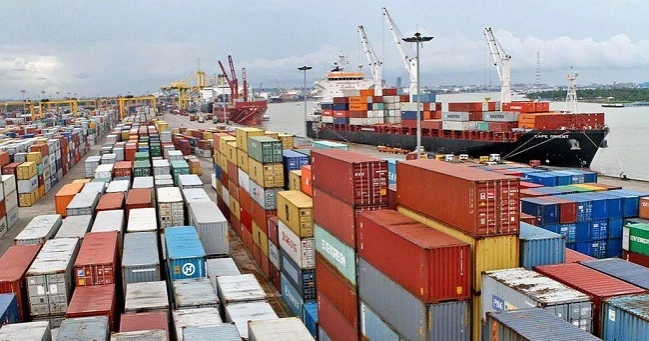
The conflict has created a logistical nightmare at Hazrat Shahjalal International Airport and Chittagong Port. Major airlines from Qatar, Kuwait, Oman, and the UAE have suspended cargo operations from Dhaka. Over 1,200 tons of export goods, primarily Ready-Made Garments (RMG), are currently stuck at the airport.

Shipping lines, including the Mediterranean Shipping Company (MSC), have halted new bookings for Middle East-bound containers. Over 1,000 containers filled with frozen fish, processed food, and plastic goods are stranded across various ports.

The "war premium" is already being felt in the kitchen market. Importers report that the cost of transporting palm oil from Malaysia and Indonesia has jumped by $8-$10 per ton.

"The war’s duration is uncertain, but the impact is immediate," says Dr. Mustafizur Rahman, Distinguished Fellow at CPD.

"While the initial hiccup is in logistics, the long-term threat is energy security. We must prepare an emergency roadmap for alternative sourcing,” he added.

The conflict exposes several critical vulnerabilities for Bangladesh, such as supply chain rerouting. Vessels are being forced to take the Cape of Good Hope route, adding 5,000 kilometers to journeys, significantly increasing freight charges and delivery times.

The textile industry faces delays in importing cotton from Western markets, while the plastic sector is struggling with blocked petrochemical shipments.

Beyond trade, the safety and stability of the millions of Bangladeshi expatriates working in the Gulf remains a looming concern for the country’s remittance inflow.

Business leaders and economists, including Dr. Selim Raihan of SANEM, are urging the government to engage in immediate tripartite consultations with researchers and traders.

While the government maintains that there are several weeks of fuel and grain reserves, experts argue that "strategic stockpiling" and "source diversification" are no longer optional. If the tensions in the Persian Gulf do not subside quickly, Bangladesh may face a period of forced austerity and heightened economic volatility.​
 
Analyze

Analyze Post

Add your ideas here:
Highlight Cite Respond

Finance ministry weighs impacts of ME war on economy

Syful Islam
Published :
Mar 06, 2026 10:57
Updated :
Mar 06, 2026 10:57

1772843209349.webp


Officials at the ministry of finance have started assessing the possible impacts of the ongoing war in the Middle East on Bangladesh's economy and ways to manage the potential financial burden arising from it, sources said.Financial literacy course

The ministry launched the study on Thursday following instructions from the government high-ups.

Officials said the ministry has been asked to submit a report before the next cabinet meeting, where the issue will be discussed to decide the next course of action.

On February 28, Israel and the United States launched airstrikes on Iran, and the attacks have continued for six days as of Thursday. Iran has retaliated by targeting Israeli positions and US military bases in several Middle Eastern countries, spreading the conflict across the Gulf region and leaving hundreds dead.

Enraged by US-Israel joint attacks, Iran has closed the Strait of Hormuz, a narrow waterway between the Persian Gulf and the Gulf of Oman that serves as the only sea route from the Persian Gulf to the open ocean. It is one of the world's most strategically important chokepoints.

As a result, the movement of ships -- particularly those carrying gas and petroleum products from Gulf nations -- has been completely suspended. Moreover, several major liquefied natural gas (LNG) producers, including Qatar, have halted LNG production and supply following missile attacks launched by Iran, further intensifying concerns over global energy supplies.

Bangladesh is heavily dependent on Gulf countries for imports of liquefied natural gas (LNG) and petroleum products to meet its growing energy demand amid shortage of domestic gas production.

Due to the Middle East crisis, prices of both LNG and crude oil have gone up significantly, raising concerns among import-dependent countries.

Data shows that LNG prices in Asian markets have surged to a three-year high following a production halt in Qatar, while oil prices rose by more than 1.0 per cent in early Asian trading on Thursday.

"The major concern is the possible impact of rising oil and gas prices as the Middle East war nears a week," said a senior official of the finance division involved in the study.

He said there are concerns that petroleum fuels and gas could become scarce due to the war, and even if available, buyers may have to pay higher prices.

"This will cause a significant fiscal burden for the country, especially if the war lingers," the official added.

According to officials, the cabinet division has asked the finance division to examine how much additional funding may be required and identify possible sources of funds to meet the demand.

The report will outline the potential economic impacts of the war and recommend measures to successfully manage the situation, they said.

The finance division has already asked the energy division officials to provide statistics on the demand for fuel oil and LNG as well as the current supply situation.

The Power Division has also been asked to provide data on the power generation capacity of coal-fired plants, the present coal stock and the demand pattern for coal in order to assess alternative options if LNG and fuel oil supply dries up.​
 
Analyze

Analyze Post

Add your ideas here:
Highlight Cite Respond

Bangladesh after Middle East fires

1772845953205.webp

A navy vessel is sailing in the Strait of Hormuz, a vital waterway through which much of the world’s oil and gas passes on March 1. | Agence France-Presse/Sahar Al Attar

THERE is a particular smell that accompanies the collapse of strategic illusions. It is not the acrid smoke of burning oil terminals or the metallic scent of missile fragments scattered across desert airfields. It is subtler than that. It is the smell of systems failing — the quiet realisation that doctrines polished in policy papers have collided with the stubborn physics of geography.

The recent confrontation involving the United States, Israel and Iran has reminded the world of a lesson long understood by naval officers, logistics planners and port engineers: wars are not decided by the flash of missiles, but by the control of switches.

Not metaphorical switches. Real ones. Switches that close ports. Switches that interrupt insurance coverage. Switches that halt fuel flows, disrupt shipping schedules and freeze finance.

Beneath the language of treaties and ‘freedom of navigation,’ the modern global economy remains wired through a small number of mechanical chokepoints. Turn the wrong switch, and the effects propagate far beyond the battlefield.

The fires in the Middle East have illuminated this reality with unusual clarity. But their lesson does not belong only to the Persian Gulf. It reaches just as surely into the muddy, restless delta of Bangladesh.

Yet the events surrounding Iran are not merely strategic signals about energy routes or naval deployments. They reveal something deeper — a slow erosion of the international order itself. The system that once promised to restrain power through norms and institutions is beginning to fray.

The modern international order was built on the promise that power would be restrained by rules, institutions and shared principles. That promise now feels like a relic of a more hopeful century. Across continents, from the crisis in Venezuela to the confrontation with Iran, the world is witnessing not simply the clash of nations but the gradual collapse of the very norms meant to govern their conduct.

The architecture of global governance still stands, but its foundations are quietly eroding.

A world where rules no longer rule

THE post-war international system imagined by Franklin Roosevelt and Harry Truman rested on a deceptively simple conviction: that states, even powerful ones, must submit to processes larger than themselves.

Institutions such as the United Nations, the International Court of Justice and an expanding web of treaties were meant to transform power into something predictable. Diplomacy would replace conquest; law would temper ambition.

For decades the system appeared to work — imperfectly, but sufficiently to maintain stability.

Today that conviction is fraying.

The Venezuelan crisis demonstrated how geopolitical blocs increasingly treat sovereignty as a negotiable commodity. Accusations of narcotics trafficking and the labelling of political actors as criminal networks became tools of geopolitical pressure rather than instruments of impartial justice.

The confrontation with Iran revealed something even more troubling: how quickly long-standing diplomatic frameworks can be abandoned when they cease to align with strategic ambitions.

In both cases the institutions designed to mediate conflict were sidelined. Decisions were shaped not through collective deliberation but through unilateral declarations, sanctions regimes and displays of military power.

The message was unmistakable. Rules are optional. Power is not.

The Hormuz lesson: disruption as power

FOR decades western military doctrine has been seduced by the fantasy of precision.

Smart bombs. Surgical strikes. Decapitation operations.

Yet recent events have exposed the flaw in this thinking. Precision does not eliminate consequences; it merely displaces them. A missile strike on a radar site does not remain confined to that installation. Its effects ripple outward through shipping markets, insurance premiums, freight schedules and fuel availability.

When those ripples reach the Strait of Hormuz, the consequences cease to be military. They become planetary.

Hormuz is not merely a narrow passage between Iran and Oman. It is the valve through which nearly a fifth of the world’s traded oil flows.

What the recent confrontation demonstrated is that this valve does not need to be formally closed to exert power. It only needs to be made uncertain.

A few mines. Sporadic missile launches. Persistent rumours of drone swarms.

Insurance markets respond faster than navies. Premiums surge. Ships hesitate. Cargoes stall. And without a single declared blockade, the artery of global energy begins to clot.

This is the Hormuz model of power: dominance through disruption rather than conquest. Geography weaponized by uncertainty.

For Bangladesh, the significance of this lesson is not abstract. It is a preview.Bangladesh country politics

Erosion of trust and instrumentalisation of institutions

THE weakening of international norms is not only a geopolitical phenomenon; it is also a crisis of public trust.

Across many societies, revelations about elite networks, opaque influence structures and politicised legal processes have deepened the perception that global governance operates less as a system of law than as a theatre of privilege. Highprofile investigations, selective sanctions and sealed proceedings — regardless of their formal legal outcomes — have reinforced the belief that accountability is unevenly applied.

The Venezuelan crisis illustrates this dynamic with particular clarity. Competing claims of legality, sovereignty and criminality were deployed not to resolve conflict but to delegitimise adversaries and justify external pressure. Legal language became a strategic instrument rather than a neutral arbiter. The result was not institutional resolution, but paralysis — and a population left suspended between competing narratives of legitimacy.

When institutions appear compromised, their authority dissolves. And when authority dissolves, norms soon follow.

The deeper problem is not simply that rules are being broken. It is that fewer people believe the rules were ever applied equally. In such an environment, international law becomes fragile, diplomacy becomes transactional and alliances harden into temporary conveniences rather than enduring commitments.

The system does not collapse. It drifts.

Logistics: power without spectacle

IN THE spectacle driven world of modern geopolitics, logistics is an unfashionable word. Politicians prefer narratives. Television prefers explosions.

Yet logistics — the disciplined movement of fuel, spare parts, food, data and freight — remains the true skeleton of power. Military effectiveness is shaped less by how many platforms a state possesses than by how many remain operational under stress. That operational readiness depends not on rhetoric, but on port throughput, fuel availability, maintenance cycles, insurance continuity and inventory discipline.

Wars collapse when supply chains collapse. Empires erode when logistics fail.

In today’s interconnected world, logistics has evolved into something even more consequential: diplomacy by other means. Ports are no longer neutral infrastructure. They are instruments of influence. Shipping corridors are political levers. Insurance markets and regulatory regimes now shape outcomes as decisively as fleets or battalions.

The recent Middle East crisis did not merely expose military tensions. It revealed a global competition over who controls the switches of supply chains — and who bears the cost when those switches are disrupted.

Rejection of restraint and return of uncertainty

THE current strategic moment is marked by a growing assertiveness among political actors who treat institutional constraints as obstacles rather than safeguards.

Abrupt policy reversals. Withdrawals from multilateral agreements. Dismissals of diplomatic mechanisms built over decades.

Predictability — the lifeblood of diplomacy — is evaporating.

The danger of this shift is not merely conflict, but miscalculation. When norms weaken, signals become ambiguous. When signals become ambiguous, crises escalate faster and resolve more slowly. The international system begins to resemble the unstable strategic landscape of the nineteenth century — an era of power politics with fewer restraints and far higher tolerance for risk.

Bangladesh and the geography of consequence

BANGLADESH sits at the edge of the Bay of Bengal — a maritime crossroads linking South Asia, Southeast Asia and the energy routes of the Indian Ocean.

For centuries, this delta was treated by great powers as peripheral. Today, it has become something else entirely. It is a hinge.

Energy flows from the Gulf pass nearby. Container traffic linking East Asia to Europe skirts its maritime approaches. Submarine cables and data corridors cross its seabed. At the same time, Bangladesh occupies one of the most fragile geopolitical neighbourhoods in the world — bordered by India’s strategic weight, Myanmar’s internal collapse and China’s expanding maritime reach.

In such an environment, the lesson of Hormuz cannot be ignored.

For Bangladesh, however, the primary challenge is not external pressure alone. It is internal capacity.

Citizens, capacity and strategic vulnerability

PERHAPS the most corrosive dimension of the current global drift is the sense of helplessness felt by ordinary citizens.

Across societies, people find themselves caught between polarised narratives, institutional paralysis and political cultures increasingly shaped by spectacle rather than substance. Liberal values — rule of law, transparency, pluralism, restraint — are not being defeated primarily by external enemies. They are being eroded from within.

Cynicism replaces participation. Fatigue replaces vigilance. Exceptionalism replaces principle.

When societies lose faith in their institutions, the international order built upon those institutions cannot endure.

For smaller states, this erosion carries a specific danger. Every chokepoint attracts attention — military, commercial and strategic. When external powers begin to view a region primarily through competition, domestic institutions are placed under immense strain. Ports become political battlegrounds. Infrastructure becomes diplomatic currency. Governance itself becomes contested terrain.

The central question for Bangladesh in the coming decade is not whether it can avoid geopolitical competition. That is impossible.

The real question is whether its institutions are strong enough to manage that competition without being captured by it.

Managing the switches: a policy imperative

THE fires in the Middle East have revealed a truth that policy makers can no longer afford to treat as abstract theory.

Power in the twentyfirst century resides less in territory than in systems — energy systems, shipping systems, financial and insurance systems — and in the capacity to keep them functioning under pressure.

For Bangladesh, this reality demands a shift in strategic thinking.

The country cannot rely on geography alone as protection, nor can it assume that global norms will reliably cushion external shocks. The lesson of Hormuz is not that chokepoints invite conflict; it is that uncertainty itself has become a weapon. In such an environment, resilience is not a passive condition. It is a policy choice.

Managing the switches, therefore, requires more than diplomatic balance. It requires state capacity deliberately aligned with logistics and infrastructure governance.

Ports must be treated not merely as commercial assets but as instruments of national strategy. Regulatory coherence, insurance continuity, cyberphysical security and crisis coordination between civilian authorities and maritime forces are no longer peripheral concerns. They are the foundation of economic sovereignty.

Equally critical is institutional credibility. External powers do not exploit weak states primarily through force; they exploit administrative opacity, fragmented authority and policy inconsistency. A state that cannot reliably regulate its own logistics corridors will inevitably find those corridors regulated by others — through contracts, conditional financing or strategic dependency.

Bangladesh’s strategic task, therefore, is not to choose sides in greatpower competition, but to raise the cost of coercion by reducing points of internal failure. That means investing in port governance, professional logistics management and regulatory institutions capable of functioning under stress rather than only in normal times.Bangladesh country politics

History rarely announces turning points with clarity. More often, it reveals them in hindsight, once systems fail and options narrow. The erosion of international norms is not a distant philosophical concern; it is a practical warning that the external environment is becoming less forgiving of institutional weakness.

The monsoon storms of the Bay of Bengal remind sailors of an unforgiving truth: survival depends not on favourable currents, but on mastery of the vessel. The strongest ships are not those that avoid storms, but those whose crews understand their machinery and maintain it relentlessly.

Nations are no different.

Bangladesh now stands at a juncture where logistics, governance and strategy converge. It can drift through the currents of greatpower rivalry, reacting to disruptions after they arrive — or it can learn to command the switches that determine its own resilience.

Abdul Monaiem Kudrot Ullah, a retired captain of the Bangladesh navy, is an informed voice on institutional reform, geo-strategy, strategic governance and supply chain management.​
 
Analyze

Analyze Post

Add your ideas here:
Highlight Cite Respond

Confirmed: Iran destroys $300 million US radar in just one hit on American base in Jordan​


Iran has reportedly destroyed a key high-value U.S. missile defense radar, dealing a major blow to Washington’s air-defense network in the Gulf. According to a Bloomberg report citing a U.S. official, the $300 million radar — part of the AN/TPY-2 Radar used by the THAAD Missile Defense System — was taken out during the opening phase of the conflict. The radar provided critical tracking data to guide missile interceptors and detect incoming ballistic threats. Without it, interception duties could fall heavily on MIM-104 Patriot Missile System batteries, which rely on PAC-3 missiles already in limited supply. Commercial satellite imagery cited by CNN showed the radar and support equipment destroyed at Muwaffaq Salti Air Base in Jordan, with U.S. officials later confirming the damage. Data compiled by the Foundation for Defense of Democracies indicates two Iranian strikes targeting sites in Jordan in late February and early March.


Analyze

Analyze Post

Add your ideas here:
Highlight Cite Respond

Members Online

Latest Posts

Back
PKDefense - Recommended Toggle