Bangladesh Defense
Saif
Senior Member
- Jan 24, 2024
- 21,580
- 9,791
- Nation

- Residence
- Axis Group


Economy faces risks from war on Iran, minister tells JS
Commerce minister Khandker Abdul Muktadir on Monday told the Jatiya Sangsad that the ongoing instability in the Middle East had created multiple challenges for the global economy, with potential implications for Bangladesh’s trade, import costs, shipping, inflation and...
 www.newagebd.net
Economy faces risks from war on Iran, minister tells JS
Staff Correspondent 21 April, 2026, 00:39
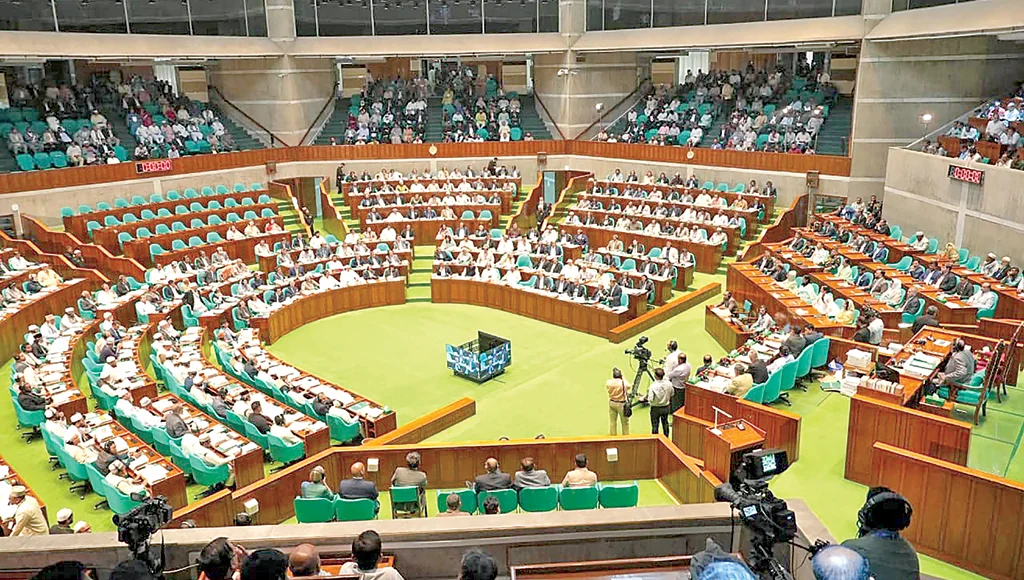
File photo
Commerce minister Khandker Abdul Muktadir on Monday told the Jatiya Sangsad that the ongoing instability in the Middle East had created multiple challenges for the global economy, with potential implications for Bangladesh’s trade, import costs, shipping, inflation and remittance inflow.
Replying to a question from Pabna-5 lawmaker Md Shamsur Rahman Shimul Biswas during the parliamentary question-and-answer session, the minister said that the recent geopolitical tensions in the region, particularly involving Iran and military developments linked to the United States and Israel, were likely to influence global energy prices and supply chains, with Bangladesh also exposed to the impact.
He said that the Middle East remained one of Bangladesh’s most important trading and labour markets, with exports of items, including readymade garments, pharmaceuticals, frozen food and leather products, to countries such as the United Arab Emirates, Saudi Arabia, Qatar, Kuwait and Oman.
Any disruption in the region, he said, could affect both export performance and remittance inflow.
The minister said that the current situation had already contributed to upward pressure on fuel prices globally, alongside rising import costs, shipping charges and insurance premiums.
He also warned of possible risks to export earnings from the Middle East market and broader inflationary pressures.
The minister informed the JS that the government was closely monitoring the evolving situation under the guidance of the prime minister and had taken a range of measures to safeguard economic stability.
According to the minister, Bangladesh is actively working to diversify export destinations beyond traditional markets by increasing shipments to India, Nepal and Bhutan as well as to East Asian countries and ASEAN members.
At the same time, efforts are under way to expand exports of pharmaceuticals, agricultural and agro-processed products, jute goods, plastics, frozen food, shrimp and fish, ICT services and light engineering products to reduce dependence on a single sector, he said.
The minister said that initiatives had also been taken to support sector-specific export growth, including allowing duty-free or free-of-charge import of raw materials for the shipbuilding and footwear industries.
In addition, exporters are being facilitated through the online issuance of Rules of Origin certificates to secure preferential market access, he said.
Muktadir said that Bangladesh was strengthening bilateral trade mechanisms through joint working committees and commerce secretary-level meetings with countries, including India, Bhutan, Nepal, Cambodia and Sri Lanka, to resolve trade-related issues.
The minister said that the negotiations on key trade agreements, including the Bangladesh-Korea Comprehensive Economic Partnership Agreement, the Bangladesh-Singapore Free Trade Agreement and the Bangladesh-UAE CEPA, were going on.
He also said that talks were continuing with Nepal on a preferential trade agreement and that cooperation with Bhutan was being expanded through scheduled high-level meetings in Dhaka.Maps
He informed the House that Bangladesh had already signed an economic partnership agreement with Japan, describing it as the country’s first-ever free trade-related agreement, with ratification procedures now under way.
The commerce minister said that in response to global uncertainty, the government was also taking precautionary domestic measures, including tightening market monitoring to prevent hoarding and artificial shortages, and ensuring stable supply of essential goods through coordination with key partner countries such as China, Malaysia and Indonesia.
He said that steps were being taken to promote energy efficiency and reduce wastage, including limiting unnecessary electricity use at markets, shopping malls, billboards and public events.
Authorities have also been instructed to close commercial lighting and events by 7:00pm where applicable.
The minister assured JS that the government remained prepared to take all necessary measures to protect trade flows and maintain macroeconomic stability amid external shocks arising from the Middle East situation.
Staff Correspondent 21 April, 2026, 00:39
File photo
Commerce minister Khandker Abdul Muktadir on Monday told the Jatiya Sangsad that the ongoing instability in the Middle East had created multiple challenges for the global economy, with potential implications for Bangladesh’s trade, import costs, shipping, inflation and remittance inflow.
Replying to a question from Pabna-5 lawmaker Md Shamsur Rahman Shimul Biswas during the parliamentary question-and-answer session, the minister said that the recent geopolitical tensions in the region, particularly involving Iran and military developments linked to the United States and Israel, were likely to influence global energy prices and supply chains, with Bangladesh also exposed to the impact.
He said that the Middle East remained one of Bangladesh’s most important trading and labour markets, with exports of items, including readymade garments, pharmaceuticals, frozen food and leather products, to countries such as the United Arab Emirates, Saudi Arabia, Qatar, Kuwait and Oman.
Any disruption in the region, he said, could affect both export performance and remittance inflow.
The minister said that the current situation had already contributed to upward pressure on fuel prices globally, alongside rising import costs, shipping charges and insurance premiums.
He also warned of possible risks to export earnings from the Middle East market and broader inflationary pressures.
The minister informed the JS that the government was closely monitoring the evolving situation under the guidance of the prime minister and had taken a range of measures to safeguard economic stability.
According to the minister, Bangladesh is actively working to diversify export destinations beyond traditional markets by increasing shipments to India, Nepal and Bhutan as well as to East Asian countries and ASEAN members.
At the same time, efforts are under way to expand exports of pharmaceuticals, agricultural and agro-processed products, jute goods, plastics, frozen food, shrimp and fish, ICT services and light engineering products to reduce dependence on a single sector, he said.
The minister said that initiatives had also been taken to support sector-specific export growth, including allowing duty-free or free-of-charge import of raw materials for the shipbuilding and footwear industries.
In addition, exporters are being facilitated through the online issuance of Rules of Origin certificates to secure preferential market access, he said.
Muktadir said that Bangladesh was strengthening bilateral trade mechanisms through joint working committees and commerce secretary-level meetings with countries, including India, Bhutan, Nepal, Cambodia and Sri Lanka, to resolve trade-related issues.
The minister said that the negotiations on key trade agreements, including the Bangladesh-Korea Comprehensive Economic Partnership Agreement, the Bangladesh-Singapore Free Trade Agreement and the Bangladesh-UAE CEPA, were going on.
He also said that talks were continuing with Nepal on a preferential trade agreement and that cooperation with Bhutan was being expanded through scheduled high-level meetings in Dhaka.Maps
He informed the House that Bangladesh had already signed an economic partnership agreement with Japan, describing it as the country’s first-ever free trade-related agreement, with ratification procedures now under way.
The commerce minister said that in response to global uncertainty, the government was also taking precautionary domestic measures, including tightening market monitoring to prevent hoarding and artificial shortages, and ensuring stable supply of essential goods through coordination with key partner countries such as China, Malaysia and Indonesia.
He said that steps were being taken to promote energy efficiency and reduce wastage, including limiting unnecessary electricity use at markets, shopping malls, billboards and public events.
Authorities have also been instructed to close commercial lighting and events by 7:00pm where applicable.
The minister assured JS that the government remained prepared to take all necessary measures to protect trade flows and maintain macroeconomic stability amid external shocks arising from the Middle East situation.