☕ Support Us
[🇧🇩] - Judiciary of Bangladesh. | Page 7 | PKDefense

[🇧🇩] Judiciary of Bangladesh.

Reply (Scroll)
Press space to scroll through posts
G Bangladesh Defense
[🇧🇩] Judiciary of Bangladesh.
63
2K
More threads by Saif


Judiciary’s call for independence no bid for hegemony: CJ
Staff Correspondent 10 August, 2025, 20:42

1754963547113.png

Syed Refaat Ahmed | Collected photo

Chief justice Syed Refaat Ahmed on Sunday emphasised that the judiciary’s demand for an independent Supreme Court secretariat should not be read as a bid to grab power, but rather as part of a long-standing struggle for institutional parity with the executive and the legislature.

‘The call for independence does not stem from hegemonic ambition,’ the chief justice said, adding, ‘It arises from the need to function without undue influence. The historical record does not support the dystopian notion of the judiciary unilaterally imposing its will on the state.’

He was speaking at an event commemorating the contribution of former attorney general and senior BNP lawyer AJ Mohammad Ali held at the Supreme Court Bar Association auditorium.

The event was chaired by former High Court judge Md Sharifuddin Chaklader and attended by former speaker Mohammad Jamiruddin Sircar, attorney general Md Asaduzzaman as the special guest and senior lawyer Zainul Abedin as the chief discussant.

AJ Mohammad Ali, a prominent figure in Bangladesh’s legal history, died on May 2, 2024, following a prolonged battle with cancer.

Speakers at the event recalled Mohammad Ali’s contributions to the legal profession, including his role in many landmark cases.

One such case was a writ petition challenging the cancellation of BNP chair Khaleda Zia’s nomination for a national election — where Justice Refaat, then a High Court judge, ruled in favour of allowing her to contest, though his junior colleague on the bench dissented.

In his address, the chief justice firmly stated that judicial independence was not same as isolation. ‘It is a pillar of balanced democracy, not a threat to it,’ he said, stressing that the judiciary must be structurally empowered to safeguard its constitutional role.

‘For more than 50 years, the judiciary has remained the least dominant of the three equal co-branches of the state,’ he noted.

Yet, at times of constitutional crisis and political instability it has often been the only fully functional organ of the state. This does not reflect dominance, but resilience, he said.

‘The real dangers in the past came from unholy alliances — when a dominant executive co-opted a weakened judiciary,’ he said.

‘Those episodes, often facilitated by questionable rulings, were constitutional misadventures — not assertions of judicial independence.’

The chief justice argued that the demand for a separate secretariat was aimed at creating the institutional framework necessary to ensure judicial autonomy — not to sever cooperation with other branches.

To support this point, he cited the UK Constitutional Reform Act of 2005 as a model.

The Act, he said, introduced meaningful reforms without dismantling inter-branch collaboration. It replaced the Lord Chancellor’s role as intermediary, created a separate Supreme Court, and formed the Judicial Appointments Commission — all while preserving structured communication between the judiciary, executive, and legislature.

‘An empowered judiciary can still maintain engagement with its counterparts in the government,’ the chief justice said, referring to routine meetings between the UK’s Lord Chief Justice and the Prime Minister, consultations with the Chancellor, and appearances before parliamentary committees.

He also pointed to accountability mechanisms like the Judicial Appointments and Conduct Ombudsman and the Judicial Investigations Office, which enhance internal oversight without compromising independence.

‘Institutional separation does not mean a breakdown of communication,’ he concluded. ‘It ensures that the judiciary can perform its constitutional duties with confidence — being free from influence, but never being detached from the state.’​
 

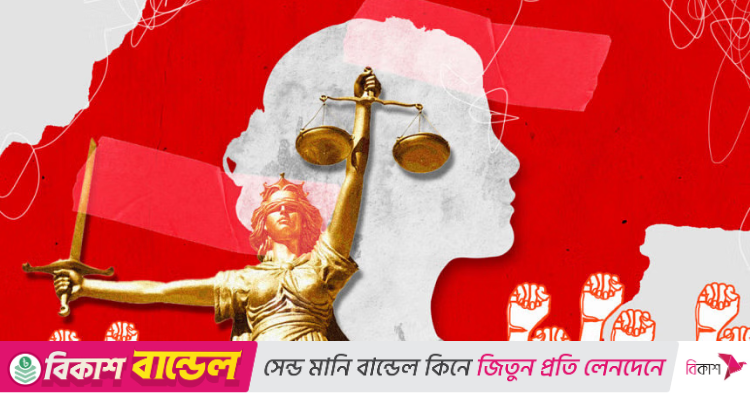
The dream of an independent judiciary
It is near at hand, but can still slip away

1764898626912.webp

VISUAL: ANWAR SOHEL

Nothing reveals the story of why we failed to institutionalise democracy in Bangladesh better than our failure to build an independent judiciary. Though it is clearly stated in our constitution, it took us 53 years or so to lay its final foundation stone. What edifice we will build on this foundation lies in our future.

With so many things we have criticised the interim government for, the separation of the judiciary is one area where it deserves our praise. Without a separate secretariat under the authority of the chief justice—for which an ordinance has been recently issued—the judiciary would never have come out of the dominance of the executive branch, and especially of the law ministry, which resulted in the total destruction of the legal system in the country. Thanks are due to Prof Yunus, the head of the government, and Asif Nazrul, the law adviser. Praise must also be extended to the current chief justice, whose relentless work behind the scenes brought about the present reality.

What must not be overlooked is that none of our democratically elected governments—led by Khaleda Zia and Sheikh Hasina—or the military governments of General Ziaur Rahman and General H M Ershad did anything to set up an independent judiciary.

Three events—one judgment (1999), one initiative by a caretaker government (Fakhruddin Ahmed, 2007), and another by the present interim government (Prof Yunus, 2025)—have finally removed all the legal hurdles and paved the way for the establishment of an independent judiciary.

In 1995, Md Masder Hussain, then a district judge, on behalf of 441 subordinate judges, lodged a petition challenging government control over recruitment, transfer, placement, promotion, etc of judges. On May 7, 1997, the High Court delivered a judgment with eight directives. The government appealed and the Appellate Division delivered a historic verdict on December 2, 1999, outlining 12 directives. The judgment recommended the creation of a separate judicial service; establishment of a judicial service commission; separate service rules under Article 115 of the constitution; a judicial pay commission; financial and administrative autonomy to reduce executive interference in the judiciary, etc. This was, however, not followed through properly.

In 2007, during the caretaker government headed by former Bangladesh Bank governor Fakhruddin Ahmed, the long-awaited steps to set up the Judicial Service Commission, the judicial service rules, and the Judicial Pay Commission were taken. On November 1, 2007, the caretaker government formally separated the lower judiciary from the executive, as a major part of implementing the 1999 Appellate Division verdict. But the dream of a full separation remained elusive.

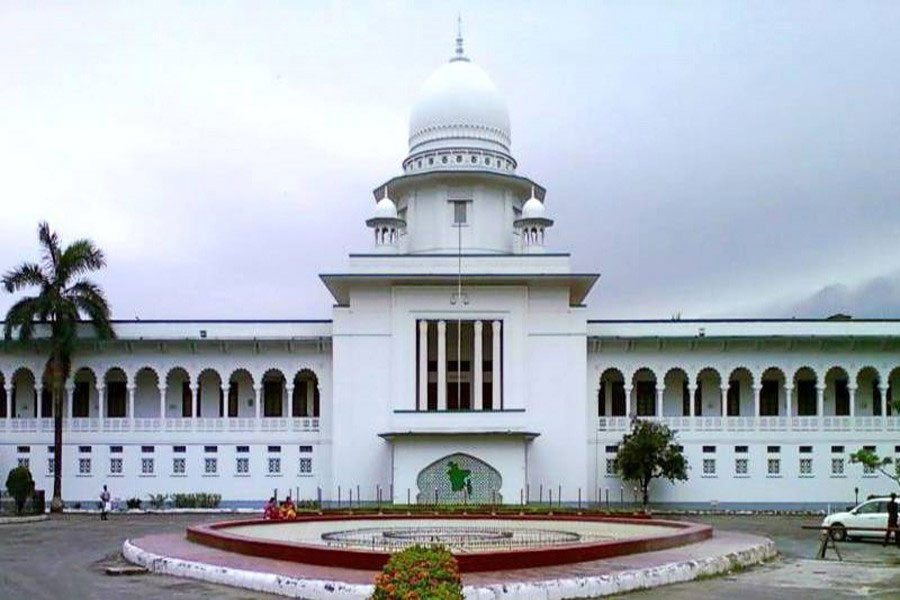
On November 30, 2025, the current government issued the Supreme Court Secretariat Ordinance, formally establishing a separate secretariat for the judiciary, the most vital of steps for an independent judiciary.

So why did it take 53 years to do something so clearly spelt out in Part II of the constitution under the Fundamental Principles of State Policy, that "the State shall ensure the separation of the judiciary from the executive organs of the State"?

There are two basic reasons: first, our political culture of non-accountability and, second, a bureaucratic stranglehold that never allows the growth of independent institutions, especially those that can question their authority.

From the start, we favoured a powerful government and brought in a constitution in which the distribution of power among the three organs of the State—the legislature, judiciary, and executive—favoured the last. We misinterpreted Lincoln's dictum of a "government of the people, by the people and for the people" to mean that as long as a government is elected, whatever it does reflects the "will" of the people and must therefore be allowed a free hand in running public affairs. In forming a powerful government, we missed the chance for an accountable one.

As for the legislative branch, from the very start, we did not allow it to evolve as an independent institution. It has always acted as a rubber stamp of the majority party in parliament. The fact that we never separated the role of the Leader of the House from that of the head of government—the prime minister—brought the House directly under the control of the latter.

First in Pakistan and later in Bangladesh, Quaid-e-Azam Mohammad Ali Jinnah and Bangabandhu Sheikh Mujibur Rahman, founders of the two states respectively, chose to occupy the highest executive office. This made the legislature totally subservient to the head of government. In both Jinnah's and Mujib's cases, the same person held the positions of Leader of the House, head of the government, and head of their party. This did not provide the opportunity for the House to emerge with any real degree of independence. In Pakistan's case, Jinnah chose to be governor-general—the post that Lord Mountbatten had held—instead of being prime minister, as Nehru did in India, thus diminishing the prospect of the rise of a parliamentary system of government in Pakistan for which the struggles continue even today.

Mujib, on the other hand, opted to be prime minister—although he was president of the government-in-exile—and thereby shifted the focus to the elected House. However, he did not show the foresight to appoint a separate Leader of the House and a different party president. Combining the three posts—prime minister, leader of the House, and party chief—created a lethal convergence of power that inevitably led to centralisation in governance that proved disastrous and found its ultimate expression under Sheikh Hasina.

The role of the Speaker was always that of a lackey rather than an independent manager of parliamentary proceedings. If we examine the type of individuals who were "appointed" as Speakers, it becomes clear that none had either the personality or the intention to uphold the interests of the House above those of the ruling party, and especially the prime minister. Most of them owed their positions to the PM—in the case of Shirin Sharmin, the last of them, she was not even an elected MP but a chosen one from the reserved seats for women—and hence they tended to serve the chief executive rather than the highest seat of law-making.

As for elected MPs, they rarely gave importance to the voters who elected them after the polls. Instead, their allegiance shifted almost entirely to the party that nominated them. This was due to the perks, development funds, and various executive powers that came only from the ruling party and government, and not from voters, resulting in further erosion of the legislature.

It was the judiciary that had some chance of keeping the executive accountable, and hence everything was done to clip its wings in every way possible. Here, the role of bureaucrats was critical. Not only did they act on their own to subvert the rise of an independent judiciary, but they also advised politicians that such an institution would pose a threat to the government's freedom to act.

There is also the fact that members of the judiciary itself, both at junior and higher levels, contributed to its subservience. There is not a single instance of a judge resigning in protest against the misuse of the justice system. On the contrary, several examples show that the judiciary, far from resisting, actually welcomed executive interference. Through denial of bail, jailing dissenters, permitting the misuse of remand, not questioning the merit of frivolous cases at the very outset, and not upholding an individual's right to liberty and protection from legal harassment, members of the judiciary often allowed the executive to flaunt its power and intimidate the people. They conveniently, and sometimes self-servingly, forgot that the law exists for justice. When its application compromises justice, a judge must opt for justice, not an interpretation that serves the government over citizens.

The law, for example, clearly states that only one case may be lodged for a particular crime, yet dozens—sometimes hundreds—were permitted. Why did the judiciary never question this? When denying bail, the court rarely seems to reflect on the fact that a person's liberty, guaranteed by the constitution, is being taken away. The misuse of remand barely enters a judge's mind. The handling of cases involving political opponents of past governments stands as the most shameful abdication of the courts' role. Regrettably, elements of this pattern remain even today, which we hope will soon cease.

The instances of naming hundreds of accused and, in many cases, arresting them without a shred of evidence have reduced the image of the judiciary to that of an extension of government. The judiciary may argue that these are abuses by law enforcement agencies and fall outside its purview. But when the misuse and abuse of the law denigrate the judiciary as a whole, should it not publicly condemn such practices or urge the government to stop them? The higher judiciary, especially the chief justice, can and should express such views. The moral and ethical values of their profession oblige this role.

The point we wish to emphasise is that even after all the rules are passed and judicial independence is formally guaranteed, its actual implementation will require moral courage from judges themselves. They must adhere to the spirit of dispensing justice, rather than just mechanically interpreting the law, and certainly not serving the executive branch or the "privileged accused." Under various legal loopholes, cases remain pending for years. The misery this causes for the poor, ordinary people, and the amount of money and time they have to spend to appear at each hearing, seems to elicit little concern from our judges.

So, judges, especially those of the High Court and the Appellate Division, must always uphold the supremacy of the judiciary and never do anything that directly or indirectly denigrates this revered institution. We think the most shameful insult that the higher judiciary inflicted upon itself was when five Appellate Division judges stood on their knees instead of their feet in compliance with the wishes of the then prime minister to oust a sitting chief justice, SK Sinha. The reason? Because he refused, on constitutional grounds, to do what Sheikh Hasina wanted. Instead of standing with the chief justice, they declared that they would henceforth not work with him. The credibility and prestige of the Appellate Division stood shattered.

An immediate test of the coming elected executive will be how quickly and faithfully it passes into law the elements of judicial independence that have so far been put in place through ordinances. We also expect that future MPs will demonstrate greater respect for their voters, and not merely engage in habitual genuflection to their party, especially to its chief.

With the final guaranteeing of judicial independence, we hope this vital institution of modern civilisation will finally emerge with the glory and prestige it deserves by serving the people rather than the government of the day.

If the executive operates within its limits, the legislature—especially MPs— restrains itself to build a transparent and accountable governance framework instead of advancing partisan interests or chasing so-called development projects, and the judiciary truly distinguishes itself in the service of accountability and justice for all, especially the poor, then—and only then—will we have a real chance to build a genuine democracy in this beloved country of ours.

Mahfuz Anam is the editor and publisher of The Daily Star.​
 

Bangladesh Judiciary has entered a ‘new institutional era’, says Chief Justice Refaat

bdnews24.com
Published :
Dec 06, 2025 19:48
Updated :
Dec 06, 2025 19:48

1765069610342.webp


Bangladesh’s judiciary has entered what the Chief Justice Syed Refaat Ahmed has described as a “new institutional era”, marking a fundamental shift in how the justice system operates over the past 18 months.

Speaking at a seminar in Chattogram on Saturday, he said the transformation achieved through collective effort and constitutional clarity stands as a milestone in the country’s judicial history.

The seminar was organised jointly by the Supreme Court of Bangladesh and the United Nations Development Programme (UNDP), according to a Supreme Court media statement.

Refaat said the reform roadmap he unveiled on Sept 21, 2024, has served as a guiding commitment to ensure full judicial independence and reinforce public confidence in the courts.

With the enactment of the Supreme Court Secretariat Ordinance 2025, the longstanding dual administrative structure has been removed, giving the Supreme Court full administrative and financial autonomy for the first time, he added.

He said this shift now allows the judiciary to make its own staffing decisions, draft, and manage its budget, design training programmes, and formulate policies that can carry judicial reforms forward in a sustainable and long-term manner.

The chief justice added that the business community had long sought a dedicated commercial court for faster and modern resolution of commercial disputes, a demand that is now on the verge of being realised.

He said a Supreme Court research team drafted the initial commercial court law, which was later refined through roadshows across the country, close engagement with BIDA, and inputs from business law experts and commercial stakeholders.

“The European Union also provided crucial technical support,” he added. “After further review by the law ministry, the draft is now final and received cabinet approval on the 4th of December.”

Refaat said the draft legislation contains a clear definition of commercial disputes, provisions for establishing an adequate number of commercial courts, a separate appeal bench in the High Court, mandatory mediation, limited adjournments, summary procedures, transparent data publication, and specialised training for judges and lawyers.​
 

A new chapter for judiciary

Published :
Dec 11, 2025 23:55
Updated :
Dec 11, 2025 23:55

1765500414740.webp


Bangladesh's judiciary is poised to enter a new era of institutional independence and operational efficiency with the promulgation of the Supreme Court Secretariat Ordinance 2025-a long-anticipated reform that grants the Supreme Court financial and administrative autonomy. This landmark measure fundamentally reshapes how the judicial system is managed, funded and supervised, removing decades-old constraints that tied the apex court's operations to the executive branch. Issued by the Ministry of Law, Justice and Parliamentary Affairs on November 30, pursuant to a presidential order, the Ordinance follows the interim government Advisory Council's approval of the draft on November 20. Its core objective is to establish a separate Supreme Court Secretariat empowered to perform supervisory and disciplinary functions over the subordinate courts. More importantly, it aims to reinforce the independence of the judiciary-an essential pillar of democratic governance.

The Ordinance rests on a simple but powerful premise: true judicial independence is inseparable from financial autonomy. When an institution as crucial as the highest court of law depends on another arm of government for its budgetary and administrative needs, a degree of subordination becomes inevitable. Such dependence not only undermines the spirit of judicial independence but also restricts the institution's ability to function promptly and effectively.

Until now, the budget of the judiciary was prepared by the Ministry of Law, Justice and Parliamentary Affairs and the Supreme Court registry received only a consolidated allocation for routine expenditures. Even these funds often remained underutilised due to bureaucratic delays and approval bottlenecks. For example, in FY25 the registry received Tk 2.52 billion, and Tk 2.50 billion in FY26, but could not fully utilise either allocation because of slow approval processes and procedural constraints. These delays affected administrative efficiency, hampered development initiatives and diminished the court's capacity to respond to the increasing demands of justice delivery. The new Ordinance directly addresses these long-standing challenges. Section 11(7) unambiguously states that no prior government approval will be required for expenditures from funds allocated to the Supreme Court or the Supreme Court Secretariat under the national budget. This provision alone marks a decisive shift away from the dual administration system that has historically constrained the judiciary's autonomy. Equally significant is the empowerment of the chief justice to approve up to Tk 1.0 billion for development and non-development projects for the judiciary, without seeking clearance from the Executive Committee of the National Economic Council (ECNEC) or the Finance Division. This streamlines administrative processes, reduces dependence on the executive and allows the judiciary to manage its affairs with greater responsiveness and accountability.

Chief Justice Dr Syed Refaat Ahmed has rightly hailed the Ordinance as "the most decisive institutional breakthrough", calling it "a single legal instrument that has finally lifted the long-standing constraints of dual administration in the judiciary." His remarks capture the transformative significance of the reform. The Supreme Court Secretariat Ordinance 2025 thus marks a major step towards a more robust, independent and efficient judiciary-one better equipped to uphold the rule of law and meet the evolving aspirations of the people.​
 

Members Online

Latest Posts

Latest Posts