Bangladesh Defense
Saif
Senior Member
- Jan 24, 2024
- 21,040
- 9,686
- Nation

- Residence
- Axis Group

Undeterred Trump opts for more aggressive tariffs
With the US Supreme Court (SC) upholding the lower court ruling that the reciprocal tariffs President Trump imposed under the International Emergency Economic Powers Act (IEEPA) is illegal, its fallouts were supposed to be sobering enough to dissipate the turmoil in global trade the tariff policy c
Undeterred Trump opts for more aggressive tariffs
Neil Ray
Published :
Feb 22, 2026 23:12
Updated :
Feb 22, 2026 23:12

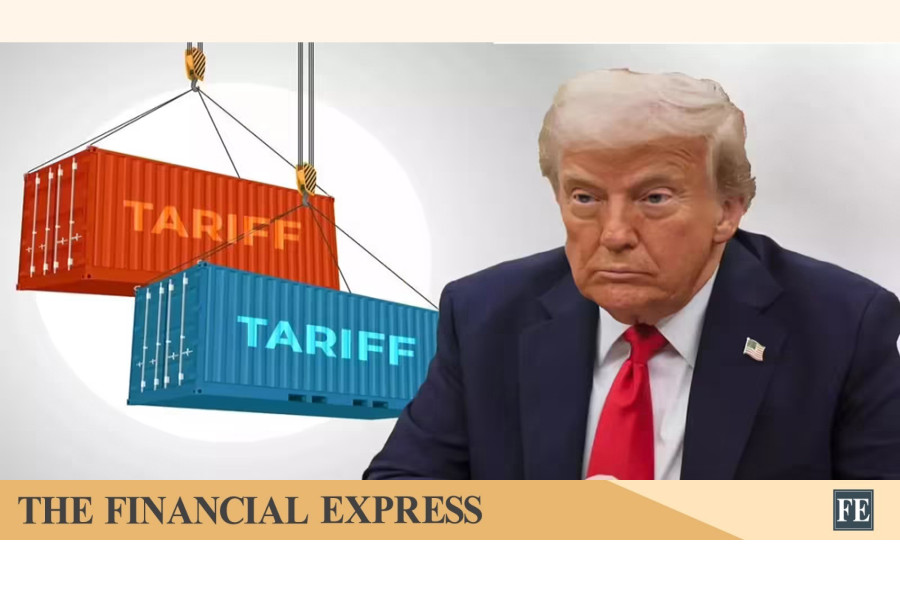
With the US Supreme Court (SC) upholding the lower court ruling that the reciprocal tariffs President Trump imposed under the International Emergency Economic Powers Act (IEEPA) is illegal, its fallouts were supposed to be sobering enough to dissipate the turmoil in global trade the tariff policy caused. But when a man of Trump's ilk is in the White House, it would be too much to expect. No sooner had the US SC ruled the use of the president's executive power under the IEEPA illegal, than he announced imposition of 10 per cent global tariff under the Trade Act of 1974. Even this decision was changed within hours to raise the rate of tariff to 15 per cent. What is most worrying is the fact that the new tariff rate will come into effect from tomorrow.
The question now is, after the ruling of the US court, will the agreements signed earlier with different countries including Bangladesh remain valid or not? Since Trump has called the SC ruling 'a disgrace' because, according to him, foreign interests have given priority to that of America and he has invoked other laws to protect his 'America First' policy, the trade agreements the US signed with other countries have become null and void. Naturally, the same should happen to the agreement signed between the US and the interim government only three days before the election.
Before aggressive tariff war launched by Donald Trump, the average tariff rate on Bangladeshi products exported to America was 15 per cent. However apparel exports faced duties starting from zero per cent to over 32 per cent. If the new countervailing tariff rate is imposed from tomorrow, the average duty rate will be 30 per cent. But what the duty rate would be for specific goods such as readymade garment is yet to be known. In the just struck down agreement reached between US and Bangladesh, there was provision to the effect that apparels made from cotton imported from America would enjoy duty-free access to that country. If this privileged option is retained, Bangladesh is unlikely to suffer much as the RMG export fetches 82-84 per cent of the total revenue earned by the country.
Experts in Europe claim that the latest decision to use the 1974 Trade Act by Trump will also be brought under court scrutiny. What happens then can have its bearing on the global trade. Meanwhile, another question raised by trade experts is worth noting. This is the fate of the duty already paid according to the terms and conditions of the agreements enforced under the IEEPA. Will the money be refunded to the US importers and the exporters of the source countries?
Trump and his treasury secretary are buoyant that the use of sections of the 1974 Trade Act for enacting the new tariffs "will result in virtually unchanged tariff revenue in 2026". Well, that may be to the advantage of America but small countries like Bangladesh may have to bear the brunt if the difference is on the higher side by just five per cent. If it is 15 per cent higher, the rate would be unaffordable for Bangladesh.
Here is a US president who is hell-bent on carrying out any programme he once sets his eyes on. However, the irony is that many of his executive orders somehow could not be implemented because of a lack of congress and senate support. There lies the beauty of check and balance in democracy. Unfortunately, this does not happen all the time. The presidential prerogative prevails and insanity gets the better of rationality.
Now the question of refund process has been dismissed by Trump. But what if the SC rules that the duty US importers paid has to be repaid! In that case, Trump indicated, "We'll end up being in court for the next five years". This is exactly how he wants to stall payment of the already realised duty. This shows how desperate the US president is to go about the business of protecting his country's interests. Let the rest of the world suffer but America must stand tall and unscathed. Such a partisan view is against the cooperative and collaborative spirit that has helped maintain a kind of global order and peace following the World War II.
Neil Ray
Published :
Feb 22, 2026 23:12
Updated :
Feb 22, 2026 23:12
With the US Supreme Court (SC) upholding the lower court ruling that the reciprocal tariffs President Trump imposed under the International Emergency Economic Powers Act (IEEPA) is illegal, its fallouts were supposed to be sobering enough to dissipate the turmoil in global trade the tariff policy caused. But when a man of Trump's ilk is in the White House, it would be too much to expect. No sooner had the US SC ruled the use of the president's executive power under the IEEPA illegal, than he announced imposition of 10 per cent global tariff under the Trade Act of 1974. Even this decision was changed within hours to raise the rate of tariff to 15 per cent. What is most worrying is the fact that the new tariff rate will come into effect from tomorrow.
The question now is, after the ruling of the US court, will the agreements signed earlier with different countries including Bangladesh remain valid or not? Since Trump has called the SC ruling 'a disgrace' because, according to him, foreign interests have given priority to that of America and he has invoked other laws to protect his 'America First' policy, the trade agreements the US signed with other countries have become null and void. Naturally, the same should happen to the agreement signed between the US and the interim government only three days before the election.
Before aggressive tariff war launched by Donald Trump, the average tariff rate on Bangladeshi products exported to America was 15 per cent. However apparel exports faced duties starting from zero per cent to over 32 per cent. If the new countervailing tariff rate is imposed from tomorrow, the average duty rate will be 30 per cent. But what the duty rate would be for specific goods such as readymade garment is yet to be known. In the just struck down agreement reached between US and Bangladesh, there was provision to the effect that apparels made from cotton imported from America would enjoy duty-free access to that country. If this privileged option is retained, Bangladesh is unlikely to suffer much as the RMG export fetches 82-84 per cent of the total revenue earned by the country.
Experts in Europe claim that the latest decision to use the 1974 Trade Act by Trump will also be brought under court scrutiny. What happens then can have its bearing on the global trade. Meanwhile, another question raised by trade experts is worth noting. This is the fate of the duty already paid according to the terms and conditions of the agreements enforced under the IEEPA. Will the money be refunded to the US importers and the exporters of the source countries?
Trump and his treasury secretary are buoyant that the use of sections of the 1974 Trade Act for enacting the new tariffs "will result in virtually unchanged tariff revenue in 2026". Well, that may be to the advantage of America but small countries like Bangladesh may have to bear the brunt if the difference is on the higher side by just five per cent. If it is 15 per cent higher, the rate would be unaffordable for Bangladesh.
Here is a US president who is hell-bent on carrying out any programme he once sets his eyes on. However, the irony is that many of his executive orders somehow could not be implemented because of a lack of congress and senate support. There lies the beauty of check and balance in democracy. Unfortunately, this does not happen all the time. The presidential prerogative prevails and insanity gets the better of rationality.
Now the question of refund process has been dismissed by Trump. But what if the SC rules that the duty US importers paid has to be repaid! In that case, Trump indicated, "We'll end up being in court for the next five years". This is exactly how he wants to stall payment of the already realised duty. This shows how desperate the US president is to go about the business of protecting his country's interests. Let the rest of the world suffer but America must stand tall and unscathed. Such a partisan view is against the cooperative and collaborative spirit that has helped maintain a kind of global order and peace following the World War II.