As an ending, it was the height of dignity. Hundreds of thousands of Bangladeshis from across the country gathered to pay their last respects, alongside foreign delegates, as she was laid to rest with full state honours beside her husband. This collective act of homage stood as a final testament to
thefinancialexpress.com.bd
Dignified farewell to Begum Zia
SYED MUHAMMED SHOWAIB
Published :
Jan 03, 2026 00:15
Updated :
Jan 03, 2026 00:15
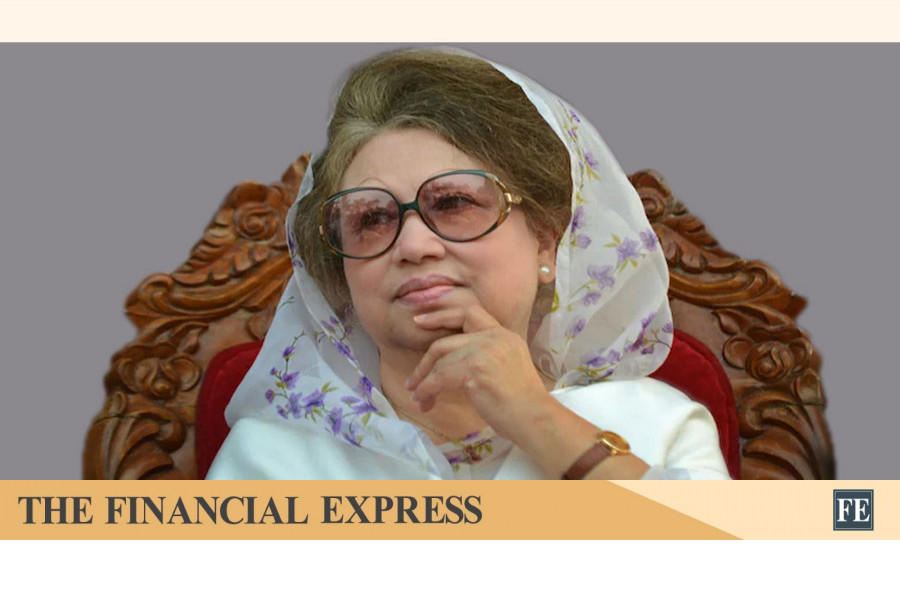
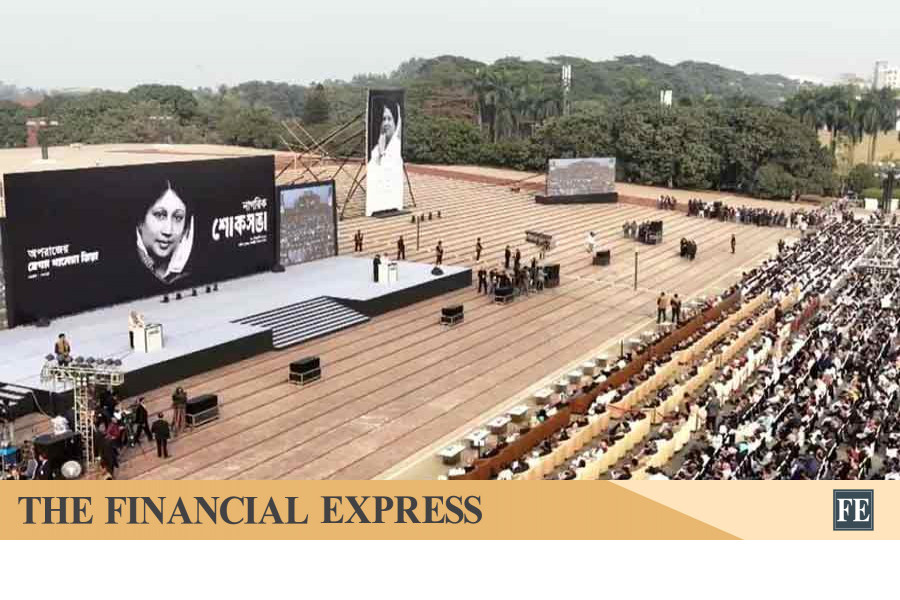
As an ending, it was the height of dignity. Hundreds of thousands of Bangladeshis from across the country gathered to pay their last respects, alongside foreign delegates, as she was laid to rest with full state honours beside her husband. This collective act of homage stood as a final testament to the deep and lasting regard she held in the public imagination. Yet just two years ago, such a moment of national reverence would have seemed almost unimaginable, especially given the relentless political persecution she had endured.
Before the interim government rose to power following a popular mass uprising, she was effectively a prisoner of the state. Despite serious health complications requiring advanced treatment abroad, she was denied permission to leave the country by the regime. The home where she had lived since 1981, legally acquired after her husband's assassination, was seized by force. This eviction was orchestrated as a public spectacle of humiliation. A teary-eyed Khaleda Zia later told reporters that security personnel assaulted her household staff, removed her from her bedroom and forced her into a car. She also witnessed her son Tarique Rahman being driven into exile in an ambulance after enduring severe physical torture. Her party's leaders and activists were imprisoned or trapped in case after case while much of the media remained silent or tightly constrained. Even her husband's burial site where she has now been laid to rest was not spared from controversy. At that stage, almost every instrument of the state appeared to have been deployed to erase her presence, her memory and her political legitimacy.
The fact that she was later honoured by the state and mourned across political divides highlights not only how circumstances had changed but how artificial that earlier erasure truly was. In her final years, Khaleda Zia witnessed a Bangladesh gradually returning to democratic norms after fifteen years of authoritarian rule. She lived to see a freer media environment in which journalists and commentators could evaluate her records openly and discuss about her virtues and failures alike. In death, she left a political culture that was, perhaps for the first time in years, at least permitted to attempt a more honest conversation.
For the Gen-Z generation that unleashed the mass uprising, Khaleda Zia was not a governing figure they experienced directly, as her years in office and her street leadership as opposition belonged to an earlier era. Older generations, however, remember her for the remarkable decency and graciousness she displayed throughout her political career. Even amidst intense provocation, she was never known to resort to vulgarity or undignified language against opponents. Tellingly, following the 2024 uprising that toppled the previous regime, she uttered no bitter recriminations or calls for retribution, demonstrating that true triumph lies in civility rather than vengeance. In a political culture where invective has long been mistaken for strength, her restraint was exceptional. It showed that political struggle need not be anchored in hatred and that dignity itself can be a form of resistance.
If civility defined her temperament, firmness defined her politics. Khaleda Zia was known above all for her uncompromising decision-making, earning the epithet "the uncompromising leader." In 1986, when some opposition leaders opted to participate in elections under military ruler HM Ershad, she refused to lend legitimacy to the authoritarian rule. She chose confrontation over accommodation, a decision whose wisdom became clearer with time. A similar resolve emerged during the military backed caretaker government of 2007. Arrested and imprisoned amid speculation that both major political leaders would be exiled, she refused to leave the country. According to widely circulated accounts, she declared that she had no address abroad and would rather die on her own soil than live in exile. That refusal is widely believed to have played a critical role in frustrating plans to implement "minus two formula" aimed at removing both female leaders from politics.
Like her late husband President Ziaur Rahman, Khaleda Zia cultivated a personal image of integrity despite operating in a political environment rife with corruption. Prolonged investigations by rival governments which held power for nearly two decades produced only weak cases including the notorious Zia Charitable Trust case, indicating a scarcity of substantive evidence against her personally. Yet this personal probity contrasted with broader governance challenges during her tenure, including unchecked corruption among party associates and public servants, which contributed to Bangladesh being ranked among the world's most corrupt nations for several years. Militant violence also marked one phase of her administration, though her government later implemented policies that significantly curtailed extremism. These shortcomings remain part of her record and must be acknowledged candidly.
Her tenure as the country's first woman prime minister was consequential for women's advancement. As the country's first female prime minister, she expanded access to education by making schooling compulsory for girls up to the eighth grade. Her administration took an unusually assertive stance against child marriage, empowering magistrates to intervene directly. Legal measures addressing domestic violence were strengthened through specialised tribunals that led to the precautionary jailing of many accused husbands. Crucially, because it originated from a leader trusted by conservative constituencies, it faced less backlash than it might have otherwise, making their impact deeper and more enduring.
Khaleda Zia possessed the wisdom to recognise that leaders cannot be experts in every field. She valued capable individuals and took expert advice seriously when making decisions. This willingness to defer to knowledge, while retaining ultimate responsibility, enabled her to compensate for an unconventional political entry and to manage crises that might have overwhelmed a less adaptive leader.
The journey of Khaleda Zia mirrors the tumultuous course of modern Bangladesh itself. It spanned the heights of power, the depths of persecution and finally culminated in a dignified farewell of national respect. More than a record of offices held or battles fought, her life demonstrated that politics grounded in resolve, restraint and respect can withstand even the harshest attempts to undermine it. Her name is not inscribed on many buildings or monuments, but the quiet dignity with which she conducted herself has a lasting impact. That's something people will always remember.
BNP Acting Chairman Tarique Rahman said on Saturday his family has been deeply moved by the continued outpouring of condolences and prayers from across the country and abroad following the death of his mother and former Prime Minister Khaleda Zia. In a post on his official Facebook page, “As
thefinancialexpress.com.bd
Family moved by nation’s outpouring of grief for Khaleda Zia: Tarique
Published :
Jan 03, 2026 20:13
Updated :
Jan 03, 2026 20:13
BNP Acting Chairman Tarique Rahman said on Saturday his family has been deeply moved by the continued outpouring of condolences and prayers from across the country and abroad following the death of his mother and former Prime Minister Khaleda Zia.
FE
In a post on his official Facebook page, “As the three-day national mourning period for Begum Khaleda Zia comes to a close, our family has been deeply moved by the continued outpouring of condolences and prayers from across the country and from friends abroad.”
The BNP leader said the three days of mourning showed how his mother meant different things to different people, often in ways the family did not fully know or see, UNB reports.
He said to many, she has symbolised the courage to stand up for what one truly believes in and remain steadfast in conviction despite hardship, and the lesson resonates far beyond politics, touching people wherever they are, whoever they may be.
Tarique said they are eternally thankful to the interim government, and to Professor Muhammad Yunus and his Cabinet, whose leadership and swift coordination made it possible to arrange such an honourific farewell in a short time.
“To the international community, our neighbours, friends, diplomats, and partners around the world, you have warmed our hearts with your compassion and solidarity. The presence of dignitaries at the funeral, the letters and messages of condolence, the words written in condolence books, the countless expressions shared through social media, and official statements by leaders, local missions in Bangladesh, and organisations across the country has been incredible to see,” he said.
Once again, the BNP leader said, they are deeply grateful to all the servicemen and women involved, across the armed forces and law-enforcement agencies, across coordinating administrations and ministries.
“My family and I were truly touched by your sense of duty and care during my mother’s final farewell. We remain grateful to all who helped ensure these days of mourning were conducted with dignity and care,” he said.
Tarique said that he wished to offer special thanks to the President Guard Regiment, whose solemn guard of honour and final salute paid the highest tribute to his mother’s life and service. “By escorting Begum Khaleda Zia with such respect to her final resting place, you embodied the nation’s reverence and ensured that her last journey was marked with the honour it deserved.”
The BNP leader said he is also mindful that many others, whose names or roles may not have been mentioned, contributed in countless ways to ensuring the day unfolded seamlessly.
“To all who served behind the scenes or beyond public view, please accept my heartfelt thanks. Your efforts made it possible, Alhamdulillah, for our family and for the nation to honour her memory with dignity,” he said.
Tarique said, finally, to the people of Bangladesh, seeing so many from every corner of the nation gather in reverence for his mother was something his family could never have anticipated.
He said it was a powerful and unifying moment that reflected the compassion and shared humanity of the country’s people.
“On behalf of our family and the Bangladesh Nationalist Party, we thank everyone who stood with us in grief and remembrance. Your kindness and solidarity have been a source of comfort and strength, and we carry them forward with gratitude,” Tarique said.
In the 55 years since Bangladesh’s independence, the processes of state-building, political transformation, and economic reconstruction have been deeply interconnected. During this period, the country has passed through multiple political turning points, each of which has had a profound impact...
en.prothomalo.com
Khaleda Zia's economic legacy and the road ahead
Fahmida Khatun
Updated: 04 Jan 2026, 21: 35
In the 55 years since Bangladesh’s independence, the processes of state-building, political transformation, and economic reconstruction have been deeply interconnected. During this period, the country has passed through multiple political turning points, each of which has had a profound impact on the nation’s economic direction and institutional framework. Within this long history, Begum Khaleda Zia’s tenure represents a significant chapter, particularly in terms of economic reforms and policy restructuring.
Firstly, Khaleda Zia’s leadership came at a time when Bangladesh was gradually moving away from a state-controlled economic structure toward a market-based, export-oriented development model. This was not merely a period of policy change; it was a critical phase of restructuring the interrelationship between the state, the market, and society. To properly assess Khaleda Zia’s economic role, it must be viewed within the broader context of national evolution and as part of an ongoing process of transformation.
Secondly, the country had just transitioned from military rule to a democratic system when her party BNP came to power in 1991. At that time, the economy was still burdened with limited productive capacity, a weak revenue structure, and restrictive regulatory policies. In this context, Khaleda Zia’s government chose a different path, one that recognised the private sector as the primary driver of development.
This approach was not an abrupt transformation but a gradual, step-by-step process. Its core philosophy was to expand the role of the market, create an investment-friendly environment, and position the state as a supportive force rather than a direct regulator. From this period onward, the foundations for long-term growth in Bangladesh began to take shape.
Thirdly, the most visible aspect of Bangladesh’s economic transformation was the rise of the ready-made garment (RMG) industry. Although the industry had its beginnings in the mid-1980s, it received structural support during the 1990s. The government provided effective assistance to exporters through measures such as bonded warehouse facilities, back-to-back letters of credit, cash incentives, and trade facilitation policies.
These policies were not part of any ambitious industrial strategy but rather practical solutions to real problems. As a result, Bangladesh quickly established a significant position in the global garment supply chain. This success continued to drive the country’s growth in the following decades.
Fourthly, one of the most important initiatives of Khaleda Zia’s first term was the enactment of the 1991 Value Added Tax (VAT) law.
This represented a fundamental transformation of Bangladesh’s tax system. It aimed to replace a limited and inefficient tax structure with a modern, broad-based revenue system. Although implementation faced various obstacles and subsequent reforms were required, the initiative laid a strong foundation for revenue administration. Such structural reforms were essential for development spending, social protection, and infrastructure investment.
Fifthly, two significant changes occurred in the foreign exchange system during Khaleda Zia’s administration. In 1994, current account convertibility was introduced, which made import-export activities more dynamic. Later, in 2003, Bangladesh adopted a floating exchange rate system. This brought greater flexibility to foreign trade and monetary policy and enhanced the country’s economic integration with the global economy.
Sixthly, financial sector reform was one of the most important yet complex chapters of this period. Through the enactment of the Bank Companies Act (1991) and the Financial Institutions Act (1993), efforts were made to strengthen the regulatory framework. At the same time, with support from development partners including the World Bank, financial sector reform programmes were implemented.
The aim of these reforms was to improve banking efficiency, ensure credit discipline, and strengthen supervision. Although full success was not achieved, the structural foundations were established during this period. The formation of the Bangladesh Securities and Exchange Commission (BSEC) was also a key reform initiative, providing an institutional basis for the development of the capital market.
Seventhly, during this period, economic growth, export expansion, and remittance inflows helped create employment opportunities. From the 1990s to the mid-2000s, the poverty rate declined significantly. It should be noted that these achievements were not the result of a single government but rather a product of consistent policy. However, the policy stability under Khaleda Zia helped accelerate this process.
Eighthly, beyond the economy, Khaleda Zia’s tenure is also remembered for significant initiatives in social policy. Special emphasis was placed on expanding female education. In 1994, policies providing scholarships and support to continue education at the secondary level significantly increased girls’ school participation.
To reduce poverty, the scope of rural employment programmes, food security initiatives, and targeted assistance was expanded. Simultaneously, the coverage of social safety programmes was gradually extended to strengthen state support for vulnerable and poor populations. These initiatives helped lay the foundation for social progress.
Many such positive economic and social policies and reforms form Khaleda Zia’s economic legacy. The policies implemented during her tenure strengthened Bangladesh’s economic foundations. While these initiatives faced structural limitations and implementation challenges, they remain an important chapter in the country’s continued social development.
Even today, weaknesses in Bangladesh’s governance system persist. Lack of discipline in the banking sector, political influence, and weak enforcement mechanisms have slowed reform efforts. These problems are structural and long-term. This reality reminds us that reform is not merely a matter of policy-making; it requires political will, institutional continuity, and a coordinated long-term vision.
#Fahmida Khatun is Executive Director, Center for Policy Dialogue
Pakistan Prime Minister Muhammad Shehbaz Sharif on Monday visited the Bangladesh High Commission in Islamabad to offer condolences over the death of former Prime Minister Begum Khaleda Zia. During the visit, the Pakistan prime minister wrote his remarks in the visitors’ book, paying tribute
thefinancialexpress.com.bd
Pakistan PM pays tribute to Khaleda Zia at Bangladesh mission
BSS
Published :
Jan 05, 2026 20:12
Updated :
Jan 05, 2026 20:12
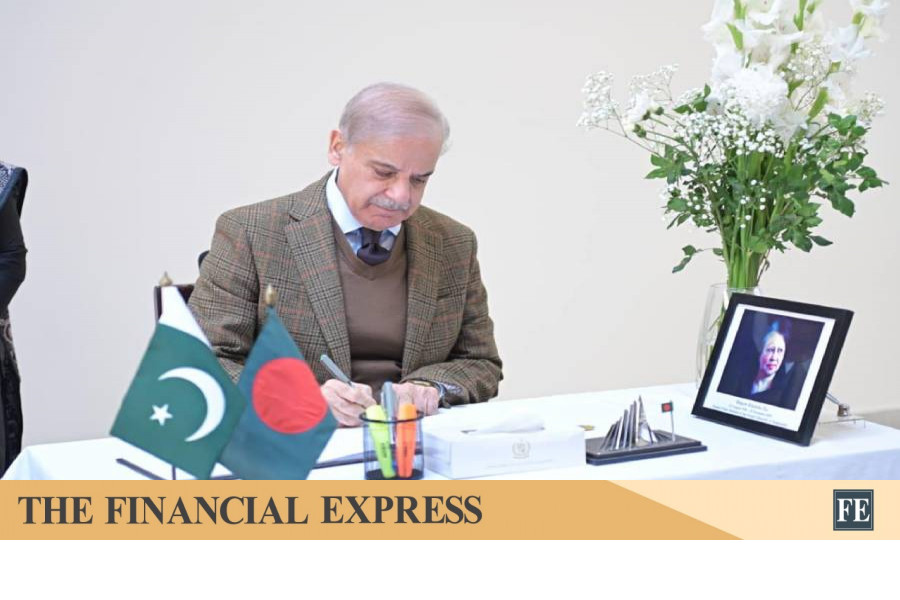
Pakistan Prime Minister Muhammad Shehbaz Sharif on Monday visited the Bangladesh High Commission in Islamabad to offer condolences over the death of former Prime Minister Begum Khaleda Zia.
During the visit, the Pakistan prime minister wrote his remarks in the visitors’ book, paying tribute to the late leader, who also served as chairperson of the Bangladesh Nationalist Party, according to a message received.
Begum Khaleda Zia, the first female Prime Minister of Bangladesh, breathed her last on December 30, 2025 at the age of 80 while undergoing treatment at Evercare Hospital in the city.
BNP senior leader and former minister Dr Abdul Moyeen Khan has said that serving in the cabinet of former prime minister Begum Khaleda Zia was the most significant and rewarding opportunity of his life. “A dignified and just prime minister like the late Begum Khaleda Zia may not come to Bang
thefinancialexpress.com.bd
‘Best Opportunity of My Life’: Moyeen Khan on working with Khaleda Zia
UNB
Published :
Jan 11, 2026 23:51
Updated :
Jan 11, 2026 23:51
BNP senior leader and former minister Dr Abdul Moyeen Khan has said that serving in the cabinet of former prime minister Begum Khaleda Zia was the most significant and rewarding opportunity of his life.
“A dignified and just prime minister like the late Begum Khaleda Zia may not come to Bangladesh again,” he said.
Dr Moyeen Khan made the remarks while addressing a discussion and prayer meeting in her memory, organized by the Saudi Arabia-Bangladesh Chamber of Commerce and Industries (SABCCI) in Dhaka on Sunday.
Former State Minister for Education Dr ANM Ehsanul Haque Milon was present as the special guest, while SABCCI President Ashraful Haque Chowdhury delivered the welcome speech.
Recalling his experience working with Begum Khaleda Zia, Dr Moyeen Khan shared an emotional anecdote about being called to the Prime Minister’s Office after she had appointed a new secretary. “She asked me the name of the official and whether I had any objection to their appointment,” he said.
Dr ANM Ehsanul Haque Milon said all the reforms in the education system during her tenure were driven by Begum Khaleda Zia. “If the ideals she left behind are implemented, true respect will be paid to her,” he added.
BNP advisor Enamul Haque Chowdhury, former senior secretary Shamsul Alam, and Atish Dipankar Science and Technology University Board of Trustees Chairman Shamsul Alam Liton also spoke at the event. Engineer Enayetur Rahman, Secretary General of SABCCI, thanked the participants.
Dr FM Siddiqui, one of the physicians who treated Khaleda Zia, has demanded an investigation into what he described as “deliberate negligence” in her medical care at the Bangladesh Medical University. He raised the allegation on Friday while speaking at a citizens’ condolence mee
thefinancialexpress.com.bd
‘Deliberate negligence’ in Khaleda’s treatment: Dr FM Siddiqui
bdnews24.com
Published :
Jan 16, 2026 20:05
Updated :
Jan 16, 2026 20:05
Dr FM Siddiqui, one of the physicians who treated Khaleda Zia, has demanded an investigation into what he described as “deliberate negligence” in her medical care at the Bangladesh Medical University.
He raised the allegation on Friday while speaking at a citizens’ condolence meeting for the former prime minister at the South Plaza of parliament complex.
Siddiqui said the “indescribable suffering” Khaleda endured in the final phase of her life as a result of medical negligence was something she did not deserve.
He recommended forming a legally empowered high-level committee to conduct a detailed investigation into three key areas of Khaleda’s medical care.
“First,” he said, “who were the members of the government-formed medical board, and on what basis did they recommend shifting Khaleda’s treatment to the medical university? Does responsibility lie with them for failing in their duties?”
“Second, which doctors were involved during her hospitalisation, and is there evidence of negligence in her care?”
“Third, when Khaleda Zia, through her lawyers, requested that her personal physicians be included on the medical board, why was it not allowed, and who obstructed it?”
He also urged that all her medical records from Bangladesh Medical University be legally seized for investigation.
‘DELIBERATE NEGLIGENCE’
Khaleda was imprisoned on Feb 8, 2018, after being sentenced to five years in the Zia Orphanage Trust corruption case, later increased to 10 years by the High Court.
She received another seven-year sentence in the Zia Charitable Trust corruption case and remained at the Nazimuddin Road jail in Old Dhaka.
After falling ill in prison, she was admitted on Apr 1, 2019, to the then Bangabandhu Sheikh Mujib Medical University Hospital, where a government-appointed medical board oversaw her treatment. The BNP had raised objections at the time.
Following the COVID-19 outbreak, then-prime minister Sheikh Hasina suspended her sentence for six months at the family’s request in 2020. Khaleda was temporarily released on Mar 25 that year and returned to her Gulshan residence.
Siddiqui alleged, “During her treatment at the medical university, there was deliberate negligence. There was neglect in administering medication for her liver disease, failure to conduct necessary tests, and clear evidence of negligence in managing her diabetes and arthritis.”
Detailing her medical journey, he said he had been involved in her care for 12 years, assuming overall responsibility with a team in April 2021 when she was admitted to Evercare Hospital with COVID-related complications.
“To my astonishment, tests revealed [Khaleda] was suffering from liver cirrhosis,” he said.
“The government-appointed doctors at the medical university had her take a tablet called methotrexate, instructed to be taken regularly. They continued administering this drug for as long as she remained under their care.”
Siddiqui explained the risks: “Patients with rheumatoid arthritis need methotrexate, but it is critical to regularly test the liver to ensure no damage.
“Yet, during her time at the university, her liver function tests consistently showed deterioration, but not even an ultrasonography was conducted over a year and a half.”
Addressing possible objections, he said: “Yes, she might have initially resisted ultrasonography. But even under my care, she had to be counselled repeatedly, and then she agreed to investigations.”
He added: “After repeated liver dysfunction signs, she repeatedly requested that her preferred physicians handle her care.
“A lawyer approached the court, but documents submitted by the medical university made no mention of her liver disease -- either they did not know or deliberately concealed it.”
On whether this constituted “slow poisoning”, Siddiqui said: “Methotrexate was the drug that accelerated her fatty liver into cirrhosis. In that context, it acted as a slow poison.”
Reflecting on her legacy, he said: “There is deep regret in the hearts of the nation. A person who sacrificed her life for democracy, for the people, and for voting rights -- if she had lived a little longer to see people exercising their votes freely, how joyful it would have been.”
He concluded: “Madam Khaleda Zia’s treatment… this negligence rapidly worsened her liver and pushed her towards death. This was deliberate negligence. It is an unforgivable crime. Whether it was part of a far-reaching plan to kill her must be investigated.”

 Bangladesh Defense