Home Watch Videos Wars Movies Login

[🇧🇩] LDC Graduation For Bangladesh

[🇧🇩] LDC Graduation For Bangladesh
134
4K
More threads by Saif

G Bangladesh Defense

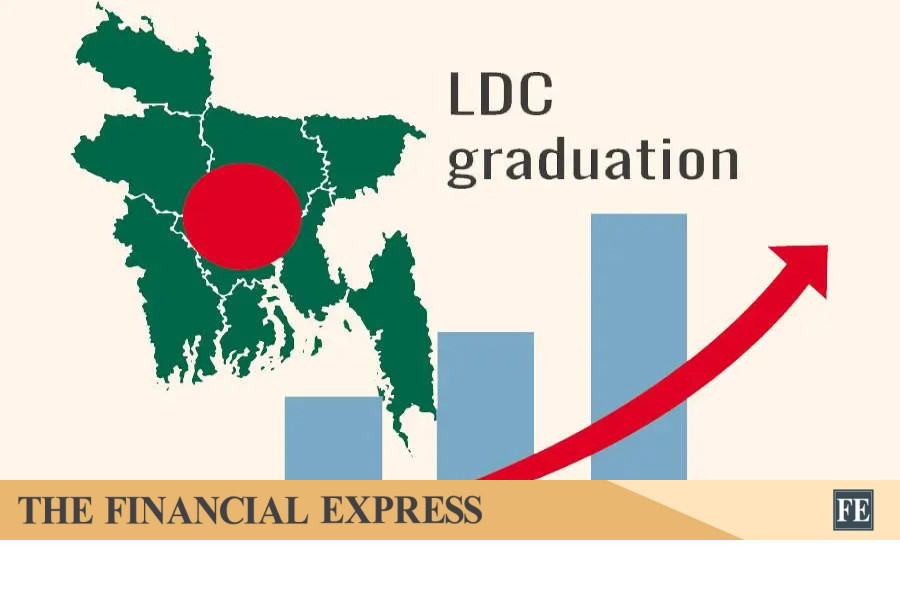
LDC graduation: WTO chief backs 'reasonable' transition time

1789701197445.webp

Dr Ngozi Okonjo

Bangladesh's graduation from the least-developed-country (LDC) category should be viewed positively as it requires a reasonable transition period to adjust the changes to be unleashed.

World Trade Organisation (WTO) Director-General Dr Ngozi Okonjo-Iweala made the observation Thursday, as Dhaka has petitioned the United Nations for extending the graduation process.

"First, I have to congratulate Bangladesh. Graduation is a good thing. It means that your economy is doing well and that you're coming out of the category of least developed," the WTO chief told The Financial Express at her office in the global-hub Swiss city.

"Nobody wants, I hope no country wants, to remain a least- developed country forever. So, it's a good thing. It should be seen in a positive light," the DG added.

The WTO chief, however, stressed that graduation should not result in an abrupt withdrawal of support and that graduating countries should be given adequate time to adjust.

In this connection, she notes that the WTO is not the only multilateral institution where countries graduate from special categories. "You also have graduation in other multilaterals, the World Bank, the IMF, UN and so on. So, I think we need to look at this issue in a broader light."

According to Okonjo-Iweala, it is appropriate for graduating countries or members to have a period during which they can transition gradually, rather than facing an immediate change in their treatment.

"It's absolutely appropriate that graduating countries or graduating members should have a period of time over which they are allowed to transition," the WTO chief said.

The purpose, the director-general explained, is to prevent a sudden change that could expose a graduating country to economic shocks.

"You don't graduate today and because of shocks you're back into the category the next day. So, it's appropriate."

The key issue, however, is determining the length of the transition period, according to the WTO chief.

"I think that that's the issue at the WTO," the director-general said, adding that LDCs are negotiating over how long the transition should last and under which agreements it should apply.

She also said the organisation has been working closely with LDCs to help streamline their requests concerning graduation while also engaging with other WTO members to encourage them to consider those demands.

"We've been working very hard with the LDCs. I'm a strong supporter to explain to them how to streamline their requests with respect to all the things they want for graduation," the director-general said.

"At the same time, we're also trying to talk to other members to be open to some of the LDC requests."

The world trade-body chief was of the view that a compromise could eventually be reached on the duration of the transition period.

"I think it's going to be some kind of compromise where LDCs will have a period of time. Some three years has been negotiated, and that's the normal -- that's the norm elsewhere in other organisations,."

LDCs have already requested the WTO members to allow at least six to maximum 12 years of transition period. In response, the General Council adopted a decision in October 2023 encouraging preference-granting members to provide a smooth transition period before withdrawing duty-free and quota-free market access for LDCs after graduation.

"If we can come to some agreement on this, then the transition period, I think, will be something that everybody can respect," the WTO DG added.

Bangladesh is scheduled to graduate from the world's poor-country club in November this year. The government has, however, submitted a formal request for deferring the gradation for three more years. If approved by the United Nations, the country will have a breathing space in troubled times to graduate in 2029.

Bangladesh's upcoming LDC graduation makes managing a smooth transition vital as it stands to lose special trade preferences and international support following the status change.

There are currently 44 LDCs, of which 14 are on the path to graduation. Of these, 12 are WTO members: Bangladesh, Cambodia, Comoros, Djibouti, Lao PDR, Myanmar, Nepal, Rwanda, Senegal, Solomon Islands, Tanzania and Uganda.

The 13th Ministerial Conference (MC13) has provided graduating LDCs additional time to align with WTO disciplines on dispute- settlement system and also be eligible for LDC-specific technical assistance and capacity building for three years.

Bangladesh has already prepared a smooth transition strategy to cope with the post-graduation challenges.​
 
Analyze

Analyze Post

Add your ideas here:
Highlight Cite Respond

Smooth transition legitimate request from Bangladesh


1789702043448.webp


Bangladesh's request for a smooth-transition mechanism after the graduation from the least-developed-country (LDC) category is "legitimate", says WTO deputy chief Xiangchen Zhang about the country's move for getting the process deferred.

The country will face changes in preferential treatment and new obligations under World Trade Organisation (WTO) rules after the graduation.

The Deputy Director-General (DDG) of the global trade body expressed his opinion here Wednesday at a training session titled 'The WTO's Work on Trade and development' held at the WTO headquarters in Geneva with participation of journalists from different countries. The session was organised under the Journalist Programme on Global Trade Polices in the context of the WTO Public Forum 2026.

"LDC graduation is an important subject in the WTO. Bangladesh, together with some other LDCs like Cambodia and Nepal, will graduate from the group. First of all, it is a subject for celebration. It is a demonstration of the progress you have made," Zhang said.

At the same time, he noted, graduating LDCs have legitimate grounds to seek a smooth transition to help them adjust to the changes arising from the loss of LDC-specific trade benefits.

Eligibility for LDC-specific support measures for a period beyond graduation is referred to as a smooth-transition period.

Bangladesh is scheduled to graduate from the world's poor-country club in November this year. The government has, however, submitted a formal request for deferring the gradation for three more years. If approved by the United Nations, the country will graduate in 2029.

Zhang drew an analogy with policies in China, saying that some regions below a certain poverty line receive additional government support and preferential treatment. When those regions move above the threshold, the benefits are withdrawn, which is a sign of progress but can also justify a transitional period.

"In China, our policy is that we give those countries some transitional period of time -- five years -- to continue to enjoy the preferential treatment," he told the journalists.

He said some WTO members had already responded positively to calls for extending preferential treatment for graduating LDCs for an additional three years. He mentions the European Union, the United Kingdom, Australia and Japan. "Not all the countries did the same," Zhang said, adding that the LDC Group, led by Bangladesh, is continuing to push for a smooth transition while the WTO is facilitating discussions among members.

There are currently 44 LDCs on the United Nations (UN) list of which 37, including Bangladesh, have become WTO members to date. Four LDCs are negotiating to join the WTO now.

The 13th Ministerial Conference (MC13) has provided graduating LDCs additional time to align with WTO disciplines on dispute- settlement system and also be eligible for LDC-specific technical assistance and capacity building.

Referring to his visit to Bangladesh two years ago, Zhang said he had witnessed the country's economic progress and the development of emerging industries, including the pharmaceutical sector.

He said graduating LDCs should also focus on specific areas where the impact of graduation could be significant, particularly emerging industries.

Bangladesh needs to understand the implications of new obligations arising from graduation, particularly those relating to the WTO's Agreement on Trade-Related Aspects of Intellectual Property Rights (TRIPS), he said.

"The TRIPS obligations are important for this new emerging industry," Zhang said, referring to Bangladesh's pharmaceutical sector.

He notes that Bangladesh had requested WTO assistance and training on intellectual-property rules for both government officials and entrepreneurs.

"I think it is the right approach."

In 2026, the organisation has conducted training on the TRIPS Agreement and Bangladesh's LDC graduation, focusing on intellectual property-related issues and the obligations that will become relevant after graduation.

Zhang has previously highlighted the need for graduating LDCs to prepare for changes in areas that include TRIPS, agricultural policies and non-agricultural subsidies, while stressing the role of WTO technical assistance in supporting the transition.

Meanwhile, Wednesday was the second day of the public forum, WTO's biggest annual outreach event. This year forum focuses on the fast-growing diversification of the trade in services.​
 
Analyze

Analyze Post

Add your ideas here:
Highlight Cite Respond

LDC graduation must strengthen, not constrain development: Titumir


1790055455553.webp


PM’s Finance and Planning Adviser Dr. Rashed Al Mahmud Titumir has stressed that graduation and sustainable graduation are different, saying that LDC graduation should strengthen, rather than constrain, a country’s development trajectory.

He made the remarks at the LDC-GIF Mechanism Introduction & High-Level Dialogue at the United Nations Headquarters in New York on Monday.

Dr. Titumir said graduating countries continue to face structural impediments and limited productive capacity, compounded by geopolitical conflicts, supply-chain disruptions, trade uncertainty, inflation and domestic shocks.

He emphasised that graduation must therefore be supported by adequate measures to ensure a smooth, sustainable and irreversible transition through industrialization, integrated approaches, energy transition and job creation.

The Adviser also called for stronger financial, technological and capacity-building support for LDCs, noting that actual technology transfer remains modest compared with their needs.

He expressed hope that the LDC Green Industrialisation Facilitation (LDC-GIF) mechanism would accelerate technology transfer, deployment and industrial application, while supporting productive capacity, structural transformation and sustainable graduation.​
 
Analyze

Analyze Post

Add your ideas here:
Highlight Cite Respond

LDC graduation deferment confirmation unlikely during this UNGA session

Decision may come in next meet in October or Nov

1790466424114.webp


Bangladesh's much-sought-after LDC-graduation deferment is unlikely to be confirmed during the ongoing United Nations General Assembly (UNGA) session, which Prime Minister Tarique Rahman just addressed.

The decision is likely to be come in the next meeting of the UNGA, to be held in October or early November this year at the UN headquarters, says a senior Economic Relations Division (ERD) official.

This UNGA is seen as very important for Bangladesh as PM Tarique Rahman is participating in the UN session in New York this year.

"The decision may not come in this session as the ECOSOC will not place the gradation proposal this time. The proposal for Bangladesh and Nepal is likely to be placed in the next session in October or early November," the ERD official told The Financial Express.

Bangladesh and Nepal are likely to get three-year extension for graduation from the least-developed-country (LDC) status as the United Nations Economic and Social Council (ECOSOC) is going to recommend it to the General Assembly, officials said.

They expect both the South Asian nations are going to receive three years more time up to November 2029 for the transition as well taking preparation for the graduation to a developing nation.

The decision was taken during an ECOSOC session in New York on July 21 last, ERD officials said.

Originally scheduled to graduate in November 2026, Bangladesh and Nepal sought the timeline adjustment to cushion their economies against persistent global and domestic headwinds.

The ERD official said: "The ECOSOC's recommendation will be finalised in the UNGA. The 192-member UNGA will finalise the extension proposal."

Meanwhile, Bangladesh has already sat with most of the 192 UN member-countries at home and abroad for getting their support at the next UNGA session for the graduation deferment.

A high-powered Bangladeshi team also sat with representatives of the 54 ECOSOC member-countries as the UN social council is to take decision on the deferment of Bangladesh's LDC graduation date.

Under the extended timeline, Bangladesh will retain its duty-free and quota-free (DFQF) market access across major global markets, including the European Union, the United Kingdom, and Canada, for an additional three years.

Businesspeople say an immediate graduation in 2026 would have triggered a sharp rise in export tariffs, particularly for the ready-made garment (RMG) sector, which accounts for over 80 per cent of the nation's total export earnings.

Exporters warn that sudden tariff hikes could have compromised Bangladesh's competitive edge against global rivals.

While Bangladesh comfortably met all three UN criteria for graduation-Gross National Income (GNI), Human Assets Index (HAI), and Economic Vulnerability Index (EVI)-the macroeconomic landscape has shifted drastically since its initial recommendation in 2021.

A severe Gulf and Ukraine war impact, foreign-exchange crunch, persistent domestic inflation, volatile energy prices, and recent domestic political transitions have strained the national economy.

The three-year window is viewed by international partners not as a pause but as a critical transition period to execute deep fiscal and structural reforms, diversify exports, and stabilise the banking sector.​
 
Analyze

Analyze Post

Add your ideas here:
Highlight Cite Respond

LDC deferment proposal gaining major support, Titumir says

Refayet Ullah Mirdha

1790467958534.webp


Bangladesh is gaining support from major countries and trade blocs for the country’s proposed LDC graduation deferment at the 81st UN General Assembly (UNGA) session, adviser to the prime minister on the ministries of finance and planning Rashed Al Mahmud Titumir said yesterday.

The LDC group, China, and the G-77 -- which consists of 134 countries -- have agreed to support the LDC graduation deferment in informal consultation meetings at the UNGA, according to Titumir.

Next, the countries and trade blocs that have agreed to support the deferment will formally vote in favour at a session of the 81st UNGA. Qatar has been negotiating with different countries and trade blocs to form a consensus in favour of the deferment, he told The Daily Star over the phone.

However, the adviser could not specify the date and time the proposal will be placed on the 81st session of the UNGA. However, he said the proposal will certainly be resolved in this session, which started on September 8 and will continue for two months.

Titumir claimed that Bangladesh has sought an extension of the LDC graduation preparatory period for transition from the UN, not a deferment of the LDC graduation itself.

When asked about when Bangladesh’s proposal may be placed on the session, Commerce Secretary Md Ataur Rahman Khan said he was not aware either.

However, he said that Bangladesh has left no stone unturned to secure support from other countries and regional trade blocs.

For instance, Bangladesh has sought cooperation from the European Union (EU), the UK, New Zealand, Australia, and the G-77. African and Asian nations have committed to supporting Bangladesh in the deferment pledge, the commerce secretary said.

Md Hafizur Rahman, former director general of the WTO Cell of the commerce ministry who dealt with Bangladesh’s LDC graduation affairs earlier, said the majority of present members’ votes will decide the deferral proposal.

Once passed, the Economic and Financial Committee (Second Committee) of the UNGA will formally place it before the UNGA for final approval, he said, adding that if any major country, such as the US, does not object, Bangladesh should face no trouble in getting the deferment.

Hafizur, also a former additional secretary at the commerce ministry, said the US may not object as Bangladesh has a warm relationship with the country, having signed a trade agreement and committed to purchasing aircraft, soybean products, wheat, and other goods.​
 
Analyze

Analyze Post

Add your ideas here:
Highlight Cite Respond

Building stronger institutions is key to post-LDC growth

Christian Brix Møller and Fahmida Khatun

1790725052827.webp

FILE VISUAL: ALIZA RAHMAN

Since independence, Bangladesh has transformed from one of the world’s poorest nations into a more stable and diversified economy driven by manufacturing, exports, remittances, and services, alongside notable social progress. But its development momentum has slowed significantly in recent years. Growth has declined, inflation remains high, private investment is weak, revenue collection is poor, and banking-sector vulnerabilities have grown. The national poverty rate increased from 18.7 percent in 2022 to 21.4 percent in 2025, while about 62 million people—roughly one third of the population—are vulnerable to falling back into poverty. By June 2026, non-performing loans made up 32.78 percent of the total disbursed loans, and the tax-to-GDP ratio is projected to be only 8.55 percent in FY2026. These pressures are unfolding amid persistent geopolitical tensions, global trade uncertainties, and energy-market fallouts, limiting policy options to mitigate further shocks.


Against this backdrop, Bangladesh has requested a three-year extension to its timeline for graduation from the United Nations’ Least Developed Country category, which is likely to be resolved in the coming weeks. Through its roadmap for 2026-2029, the government is determined to use the period to tackle structural weaknesses and strengthen Bangladesh’s readiness for graduation. The agenda is to restore macroeconomic stability, strengthen institutions, raise productivity, diversify exports, and build a more resilient, inclusive, and sustainable economy.

This is also the central focus of the SDG Facility Project—a partnership between the embassy of Denmark and the Centre for Policy Dialogue (CPD)—implemented in 2025-26. The project established a platform for evidence-based, multi-stakeholder policy dialogue on governance, institutions, inclusion, and sustainable development. It reflects the view that Bangladesh’s success in using its preparatory period and eventually graduating depends not only on strong economic policies but also on the institutions that implement them.

Denmark brings a particular perspective to this discussion. Political scientist Francis Fukuyama used the expression “getting to Denmark” as a metaphor for one of development’s central challenges: building a society characterised by capable government, the rule of law, accountability, and effective institutions. Denmark is not a model that Bangladesh should simply replicate, but the underlying principle matters: sustainable prosperity rests on institutions that citizens and businesses can trust.

Denmark’s experience illustrates how strong institutions, public trust, and sustainable development can reinforce one another. Denmark sits at the top of the global Liberal Democracy Index. It has ranked first in Transparency International’s Corruption Perceptions Index for eight consecutive years, and topped Robeco’s latest Country ESG Ranking. But such rankings should be treated with care. No society is perfect, and Denmark continues to face its own political, economic, and social challenges. Therefore, Bangladesh must find its own path, rooted in its own political economy, social structures, and development experience. Reform is part of its economic agenda, as strong institutions are essential to mobilise revenue, allocate finance, ensure efficient investment, and provide transparent, fair and predictable taxation, customs, regulation, and enforcement.

What does smooth graduation look like?

Bangladesh’s graduation date matters because trade preferences, transition periods, and international support affect the economy. However, delaying graduation will not solve structural challenges. The key is how Bangladesh uses the additional time. Its next transformation requires shifting from an economy reliant on low-cost labour and preferential access to one focused on productivity, skills, technology, diversification, and innovation.

If Bangladesh strengthens institutions, gains investor trust, creates better jobs, mobilises local resources, and promotes greener, inclusive growth, graduating from LDC status could signify more than a classification change. It may mark a new phase of development with prosperity rooted in the capabilities of its people, strong institutions, and confidence in the future.

Over the years, as Bangladesh’s economy expanded and its development priorities changed, the relationship between Denmark and Bangladesh has gradually moved beyond traditional development cooperation towards a broader partnership encompassing trade and investment, the green transition, renewable energy, labour rights, responsible business practices, and institutional cooperation. This reflects a wider change in Bangladesh’s engagement with international partners. As the country now moves towards a more productive, diversified, and competitive economy, cooperation will increasingly focus on trade, investment, technology, knowledge, skills and institutional strength, while retaining targeted development support where it is still needed.

Denmark is well positioned to support this transition due to its expertise in renewable energy, energy efficiency, green technologies, sustainable production, and responsible business. Collaboration on labour standards and responsible practices is also increasingly vital as markets prioritise ESG standards. Stronger partnerships can support Bangladesh’s competitiveness and sustainable development.

Although graduation marks a significant achievement, the gradual erosion of trade preferences and other support measures will pose new challenges. International cooperation will remain important for expanding productive capacity, diversifying exports, attracting investment, transferring technology, developing human capital and strengthening institutions. Such partnerships should ultimately help Bangladesh build its capabilities and resilience.

Why dialogue matters?

The collaboration between the Embassy of Denmark and the CPD shows how a partnership can support better policymaking through inclusive, multi-stakeholder dialogue. The discussions addressed various development challenges: reducing food loss through improved infrastructure, regulation, and farmer empowerment; enhancing industrial sustainability through worker safety, representation, and social dialogue; strengthening land governance, justice, Indigenous rights, and accountability in the Chittagong Hill Tracts; advancing women’s rights through family law reform and anti-discrimination measures; and promoting energy sovereignty through renewable energy, affordable financing, and better governance.

Through a series of multi-stakeholder dialogues and public-facing events, the programme brought together policymakers, government officials, diplomats, researchers, civil society organisations, trade unions, private sector representatives, journalists, development partners, and representatives of affected communities. The discussions covered interconnected issues related to human rights-based development, democratic reform, and sustainable economic growth.

One clear lesson from the series is that complex development challenges cannot be addressed effectively from a single institutional or sectoral perspective. The dialogues connected policy questions with implementation challenges, institutional accountability, and the experiences of people directly affected by public decisions. They also sought to generate practical recommendations, while media engagement helped carry key messages beyond the immediate participants. After all, sustainable reform needs more than good policy; it requires coordination, participation, transparency, accountability, and the capacity to turn recommendations into results.

Bangladesh has repeatedly demonstrated resilience, adaptability, and ambition. Its next transformation will depend on whether its institutions support these qualities by fostering innovation, attracting productive investment, creating better jobs, and maintaining public trust. Denmark and Bangladesh can continue to work together towards that goal. Graduation will change Bangladesh’s status; stronger institutions will determine its future.

Christian Brix Møller is ambassador of Denmark to Bangladesh.

Dr Fahmida Khatun is an economist and distinguished fellow at the Centre for Policy Dialogue.​
 
Analyze

Analyze Post

Add your ideas here:
Highlight Cite Respond

Growing out of LDC status: Bangladesh’s real negotiation at COP31

Subail Bin Alam

It is disorienting to watch a nation grow up, and Bangladesh will feel that twice this November. From 9 to 20 November, the 31st United Nations Climate Change Conference (COP31) will be held in Antalya. In an unusual arrangement for a COP summit, Turkey will host while Australia will lead the negotiations, and the preparatory meetings will be held thousands of miles away in the Pacific, in Fiji and Tuvalu. Organisers call it the “Implementation COP”: a summit meant to deliver on previous commitments rather than make new ones. In the same month, Bangladesh will formally graduate from the least developed country (LDC) category and move up a level in the international hierarchy.

For many years now, we have told ourselves that graduating from the LDC category is good news, a recognition of Bangladesh’s difficult journey upward. It is. Yet for anyone who has worked on climate and infrastructure finance for years, examining how the money is raised, structured and spent, the coincidence of the two events sends a clear message. Most of the concessional support available to Bangladesh so far, including finance, special market treatment and technical assistance, has come through the “least developed” doorway. As Bangladesh graduates, those doorways begin to close one by one. That is the central issue for Bangladesh at Antalya.


1790812546692.webp

At COP31, Bangladesh should push for predictable climate finance, adaptation grants, and faster support for loss and damage. Visual: Official COP31 poster

The paradox we carry

Bangladesh’s income is rising, but the vulnerability that actually counts has not changed: the country still ranks seventh in the world in one of the best-known climate risk indices. We continue to emit less than half of one per cent of global greenhouse gases. Rising per capita incomes do not reduce the amount of water coming over a coastal dyke. They also do not slow down a riverbank collapsing into the Jamuna River, nor do they push salt back out of a farmer’s fields in southern Bangladesh. The first demand Bangladesh should make at COP31 is therefore simple: let eligibility for climate finance be based on risk, not income. And because graduation should not be a penalty, we should request a transitional window of five to seven years, during which we retain access to concessional climate finance on terms comparable to today’s.

The character of the money, not its size

My second argument is one I often repeat because it gets lost in the headlines. We treat climate finance as a question of arithmetic: how much money arrived. The more relevant question is what kind of money it is: grants or loans? The finance goal set over the past two summits, $300 billion a year within a broader ambition of $1.3 trillion a year by 2035, sounds enormous. However, if the majority of that money arrives as debt, then a country responsible for almost none of this crisis will borrow to survive it. That is not fair. It is an ugly accounting practice.

Under our National Adaptation Plan, which runs to 2050, the cost of adapting to climate change is estimated at approximately $230 billion, with about $6 billion per year in external funding needed. Given the scale of the need, Bangladesh should insist that adaptation and loss and damage finance be provided as grants or highly concessional funding, so that today’s disaster does not become tomorrow’s sovereign debt. That makes it all the more damaging that COP30 quietly extended the deadline for tripling adaptation finance from 2030 to 2035. For families flooded this year, a five-year wait is a luxury they cannot afford. Meanwhile, the World Bank appears to be signalling lower climate targets, and one of the largest economies at the table has indicated that it will cut its contributions. What Bangladesh most needs from Antalya, then, is not another large number but predictability: money it can rely on over a horizon long enough to plan against.

From paper to hands

It is a common mistake to confuse adapting to the crisis with being destroyed by it. Raising a dyke to reduce flood damage is an adaptation. But when a char vanishes in a flood, taking homes, graves and a lifetime of memories into the river, that is loss, and nothing can replace it. The international fund established to help cover such losses exists on paper, but the money has not yet reached the people it is meant to help. Bangladesh should demand that these funds be usable nationally and disbursed as soon as possible. Families whose entire villages are lost in a single night do not have time to wait two or three years for various committees to approve proposals. They need a rapid-response mechanism. The fund must also learn to recognise losses that are difficult, if not impossible, to quantify on a spreadsheet: the language, culture and sense of place that disappear when communities are broken apart.

1790812601628.webp

Rising incomes do not protect Bangladesh from coastal flooding, erosion, and saltwater intrusion, the risks that climate finance must address. Photo: Star

None of this should obscure the main point: adaptation is our real fight. Salt-tolerant crops, embankments, urban drainage, freshwater supply and the relocation of people already displaced by climate change are part of everyday life here, not a distant prospect. In negotiations on the Global Goal on Adaptation and its indicators, Bangladesh should push for locally led adaptation. What households in Satkhira or Kurigram know about protecting themselves may be far more valuable than decisions made in conference rooms in Dhaka.

The challenge we did not see coming

Then there is a challenge that has been almost absent from our previous positions, even though it strikes at the heart of our economy. On 1 January this year, the European Union’s carbon border levy took full effect, initially for cement, fertiliser, steel and aluminium. By 2030, it could be extended to many more imported goods, potentially including ready-made garments. When four-fifths of Bangladesh’s exports consist of clothing, and more than half of that clothing goes to Europe, this stops being an environmental footnote and becomes a question of economic survival. By some estimates, including garments in the levy could add around five per cent to costs. Combined with the tariffs Bangladesh will face once LDC graduation ends its duty-free access, the total could approach seventeen per cent.

Graduation and carbon pricing will, then, hit at the same time. Bangladesh’s stance at COP31 should be clear: cutting greenhouse gas emissions should not become another trade barrier for developing nations. Bangladesh is prepared to “green” its industries, but it needs technology, finance and enough time to make the transition. Friction over the levy at COP30 has already led to an annual forum on trade and climate, which began in June this year. That is precisely the forum where Bangladesh should push for fair financial assistance to transition sectors such as garments, leather and cement. The transition must also be equitable. Women workers, who make up a large share of the factory workforce, must be protected, not sacrificed, in the move to a green economy; their livelihoods should be built into the agreement from the start.

Selling carbon credits may generate some foreign currency in the short term, but our coastal forests and the mangroves of the Sundarbans should not be turned into cheap offsets for a distant company’s accounts.
Carbon markets also call for caution. Selling carbon credits may generate some foreign currency in the short term, but our coastal forests and the mangroves of the Sundarbans should not be turned into cheap offsets for a distant company’s accounts. Our green resources are capital for our own future, not commodities.

Asking, and showing

The questions will also get harder. Contributors, including investors, increasingly want to know whether their money will be used fairly and transparently to meet measurable objectives. Our newest climate pledge targets a quarter of our electricity to come from renewable sources by 2035. Yet renewables today make up less than five per cent of the mix, and achieving most of that target depends on outside help. To close that gap, we must first develop a pipeline of investment-ready projects and track them through a reporting and verification process that others can rely on.

Climate diplomacy is increasingly investment diplomacy. Instead of a list of complaints, let us bring a portfolio of bankable projects to Antalya: rooftop solar on factories, modernised transmission grids, energy storage and cleaner industrial technology, each supported by a credible financial model.

The government has already formed a committee to draft Bangladesh’s national position paper for COP31. I hope the paper is evidence-driven and that stakeholders, rather than external donors, have a meaningful role in shaping it. I also hope it addresses not just how much we need, but where the money will go once it arrives and who will be held accountable.


1790812647455.webp

Bangladesh should seek climate finance based on risk, not income, as LDC graduation threatens its access to concessional support. Visual: Aliza Rahman

Where Bangladesh sits

At COP31, Bangladesh can enter the meeting room as more than a supplicant. Although we are graduating from the LDC group, our membership of the G77 and the Climate Vulnerable Forum will remain significant because of our history of struggle and the moral influence we hold. Several small island states face threats similar to our own, rising seas among them, which gives Bangladesh an opportunity to build a coalition for survival at the pre-summit meetings in Fiji and Tuvalu. If Bangladesh can emerge from this COP with a unifying message that we are not only victims of climate change but also partners in solving it, then perhaps that alone will have made the journey worthwhile.

This is when Bangladesh comes of age, and we should arrive in Antalya with that self-assurance. Our prospects may be rising, but our vulnerability is not falling. What is falling, and must keep falling, is everyone else’s justification for looking the other way. If we can win recognition of that single point at the bargaining table, along with the finance and fairness that should follow from it, our diplomacy in Antalya this November will have succeeded.

Subail Bin Alam is an engineer-economist. He is the Chief Operating Officer of Rancon Infrastructures and Engineering Limited, a Director of the Bangladesh Sustainable and Renewable Energy Association, a guest faculty member at ULAB, a Trustee of the Panam Institute, and is associated with the Centre for Science, Technology and Policy Diplomacy.​
 
Analyze

Analyze Post

Add your ideas here:
Highlight Cite Respond

Latest Posts

Back
 
G
O
 
H
O
M
E