Home Watch Videos Wars Movies Login

[🇧🇩] LDC Graduation For Bangladesh

[🇧🇩] LDC Graduation For Bangladesh
71
2K
More threads by Saif

G Bangladesh Defense

High tariff rates being reduced as they cannot be maintained after LDC graduation: NBR Chairman

Staff CorrespondentDhaka
Published: 25 Jan 2026, 19: 49

1769390940640.webp

NBR chairman Md Abdur Rahman Khan addresses a press conference held at the National Revenue Building in Agargaon, Dhaka, on the occasion of International Customs Day 2026 on 25 January 2026 Prothom Alo

Following Bangladesh’s graduation from the Least Developed Country (LDC) category, it will no longer be possible to maintain high tariff rates. Taking this reality into account, tariffs are being reduced gradually, National Board of Revenue (NBR) chairman Md Abdur Rahman Khan has said.

The NBR chairman said that tariffs had not been increased over the past one and a half years to boost revenue; rather, duties on several essential commodities had been reduced in consideration of public interest.

He made the remarks at a press conference held at the National Revenue Building in Agargaon, Dhaka, on the occasion of International Customs Day 2026 on Sunday afternoon.

To mark the day, a seminar will be organised at the NBR on Monday. In addition, discussions will be held at various customs houses and customs stations across the country.

Speaking at the press conference, Abdur Rahman Khan said that in certain cases tariffs are increased solely to protect specific domestic industries.

He added that in today’s world, customs duties are no longer a major source of revenue in any country. Instead, the primary responsibilities of customs authorities are to prevent the import of illicit goods and to curb capital flight through false declarations. In the 2024–25 fiscal year, customs duties accounted for 27 per cent of total revenue collection.

Responding to a question, the NBR chairman said that regular operations were being conducted at airports to curb the inflow of foreign cigarettes.

He also stated that under-invoicing and over-invoicing would be dealt with strictly.

Regarding delays in the clearance of goods, the NBR chairman said that 90 per cent of consignments are cleared within a single day. However, goods are held in some cases if physical inspection is required or if there is intelligence information.

In certain instances, consignments declared as fabric are found to contain narcotics, he stated.

Meanwhile, the NBR chairman informed the media that software is being developed to further streamline the clearance of goods.

The World Customs Organization (WCO) has declared 26 January as International Customs Day. As a member of the organisation, Bangladesh observes the day each year.​
 
Analyze

Analyze Post

Add your ideas here:
Highlight Cite Respond

LDC graduation and unfinished business of clean energy

1769393140273.webp


AS BANGLADESH marks the International Day of Clean Energy this January, the observance arrives at a moment of unusual historical weight. In November this year, the country is set to graduate from the United Nations’ list of Least Developed Countries. This transition is widely framed as a marker of success — a recognition of economic growth, improved infrastructure and rising industrial capacity. Yet the symbolism of graduation sits uneasily beside a less comfortable reality: Bangladesh is entering its post-LDC era just as the global energy system undergoes its most disruptive transformation in a century.Bangladesh travel guides

For decades, development in Bangladesh meant access — roads where there were none, electricity where darkness prevailed, power generation by whatever means could meet immediate demand. That logic is no longer sufficient. In an era defined by climate crisis, volatile fuel markets and diminishing concessional finance, development is no longer about whether power exists, but whether it can be sustained — economically, environmentally and politically. Bangladesh’s energy choices in the years immediately following graduation will determine whether growth remains resilient or becomes dangerously brittle.

The country’s energy landscape in early 2026 reflects both progress and constraint. Renewable energy remains a modest share of total generation, but its composition has evolved. Solar power dominates the green portfolio, driven by a mix of utility-scale projects and decentralised systems that continue to serve off-grid and hard-to-reach communities. Wind energy, long dismissed as unviable, has begun to register meaningfully following the operation of the Cox’s Bazar wind project, challenging earlier assumptions about Bangladesh’s wind profile. Hydropower, however, remains limited domestically, constrained by geography and the ecological costs associated with large dams.

More consequential than any single domestic project is the quiet shift now under way beyond Bangladesh’s borders. Electricity imported from Nepal’s hydropower plants through regional grid arrangements has introduced a new dimension to national energy planning. This development is not merely symbolic. For a land-scarce delta struggling to balance agriculture, settlement and energy infrastructure, access to clean baseload power generated elsewhere offers a rare structural advantage. Regional power trade, once discussed largely in theory, has begun to materialise as a practical tool for decarbonisation and energy security.

Yet the broader policy environment remains conflicted. The Integrated Energy and Power Master Plan, backed by international development partners, reflects a pragmatic but contested attempt to navigate uncertainty. By expanding the definition of ‘clean energy’ to include technologies such as ammonia co-firing, hydrogen and carbon capture, the plan leaves room for continued reliance on fossil fuels under the banner of technological transition. Critics are right to question whether this framing risks locking Bangladesh into expensive and unproven pathways while delaying a decisive break from imported coal and LNG. The reluctance to retire fuel-oil plants, often justified by grid instability and storage limitations, further underscores the tension between ambition and execution.

These tensions are not abstract. They manifest in three structural challenges that now define Bangladesh’s clean energy transition. The first is land. As one of the world’s most densely populated countries, Bangladesh cannot treat land as an expendable input for energy projects. Large-scale solar parks increasingly compete with agriculture, triggering resistance and project delays. This is not a technical failure but a political one: food security and energy security are being placed in false opposition. The more viable path lies above ground rather than across it. Rooftop solar, particularly in industrial zones, and agrivoltaic models that allow farming and power generation to coexist are no longer optional innovations; they are necessities. If renewable targets are to be met, they will be realised through dispersed infrastructure, not land-intensive megaprojects.Bangladesh travel guides

The second challenge is the grid itself. Bangladesh’s transmission system was designed for a different era — one dominated by centralised, predictable generation. Renewable energy disrupts that logic. Solar and wind fluctuate; grids must respond dynamically. Without significant investment in grid modernisation, digital management systems and battery storage, scaling up renewables carries real operational risk. This is not an argument against clean energy, but a warning against treating generation targets as sufficient in isolation. The transition will fail if infrastructure reform lags behind capacity expansion.

The third, and perhaps most politically sensitive, challenge is finance. Graduation from LDC status narrows access to concessional lending at precisely the moment when capital needs are rising. Clean energy is capital-intensive, front-loaded and increasingly exposed to currency volatility. As cheap finance recedes, Bangladesh must compete for private investment in a crowded global market. This reality exposes a deeper vulnerability: green transitions are not only technological shifts but credit-dependent processes. Without credible financing instruments — including well-designed green bonds and risk-sharing mechanisms — ambition will remain rhetorical.

Navigating this terrain requires a recalibration of priorities. Regional energy connectivity must move from experimentation to strategy. Power imports from Nepal and, potentially, Bhutan offer scale without land conflict and stability without emissions. Solarisation of agriculture presents another immediate opportunity. Replacing diesel-driven irrigation pumps with solar alternatives reduces fuel imports, lowers farmer costs and delivers emissions reductions without new grid strain. These are not long-term visions but implementable interventions.

The ready-made garment sector, often criticised for its environmental footprint, also holds untapped potential. Bangladesh’s dominance in green-certified factories positions it uniquely to attract climate-linked investment. As global brands push for decarbonised supply chains, renewable energy infrastructure can become a competitive asset rather than a regulatory burden — provided policy frameworks actively support this shift.

Even nuclear power, contentious as it remains, cannot be dismissed from the conversation. In a system constrained by land and intermittency, the Rooppur plant will play a central role in reducing reliance on coal-based baseload generation. The challenge lies not in whether nuclear fits into the mix, but in ensuring that its costs, safety oversight and long-term waste management are addressed transparently rather than absorbed silently by the public.

Underlying all these debates is a broader question of justice. Bangladesh has contributed a negligible share of historical global emissions, yet it faces some of the harshest climate impacts. The clean energy transition here is not a moral exercise in global responsibility; it is a matter of national survival. It concerns the easy-bike driver dependent on stable charging, the factory worker whose livelihood hinges on uninterrupted power and the farmer whose harvest depends on affordable irrigation.

Graduation from the LDC category should not be mistaken for the end of vulnerability. It marks the beginning of a more exposed phase, where policy missteps carry higher costs and safety nets grow thinner. Bangladesh’s clean energy transition will not be judged by declarations or targets, but by whether it can deliver reliable power without deepening inequality or dependency. The turbines turning on the coast and the electricity flowing from Himalayan rivers signal possibility, but possibility alone does not guarantee progress. What comes after graduation will depend on whether energy policy confronts constraint honestly, or continues to disguise it as ambition.

James Rana Baidaya is a humanitarian and social development worker.​
 
Analyze

Analyze Post

Add your ideas here:
Highlight Cite Respond

LDC GRADUATION
Country not yet ready to absorb aftershocks
Key sectors like banking-finance, manufacturing see looming challenges, stakeholders forewarn


FE REPORT
Published :
Jan 28, 2026 00:43
Updated :
Jan 28, 2026 00:43

1769561724573.webp


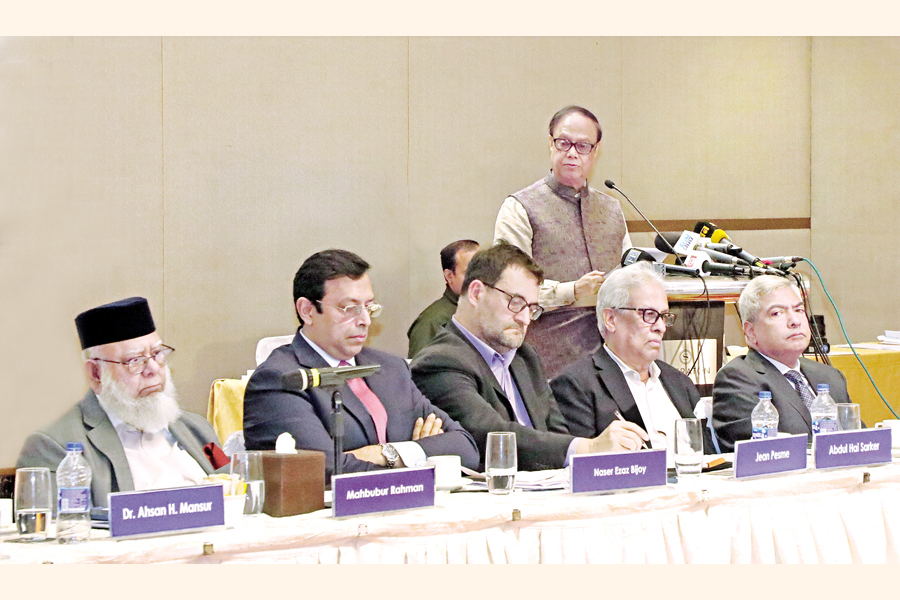
Bangladesh Bank Governor Dr Ahsan H Mansur speaks at a roundtable titled "Implications of LDC Graduation for the Banking Industry: Bangladesh Perspective," organised by the International Chamber of Commerce Bangladesh (ICCB) at a city hotel on Tuesday. ICCB President Mahbubur Rahman moderated the event. — FE Photo

Bangladesh is not yet fully prepared to absorb the aftershocks from least-developed country (LDC) graduation with key sectors like banking and finance and manufacturing staring at significant challenges looming large.

Economists, business leaders and experts came up with such forewarning at a roundtable discussion Tuesday, as the cutoff time for UN certification for the country's status change keeps nearing now.

They said following the graduation set for November 2026, such sectors would face difficulties adjusting the loss of preferential treatment and increased competitive pressure on the global market.

They have cautioned that without swift reforms along with adequate preparation, the transition could strain the financial system and undermine economic stability.


The speakers, mostly bankers, representatives of financial institutions and corporate executives, were speaking at the roundtable titled 'Implications of LDC Graduation for the Banking Industry: Bangladesh Perspective', organised by the International Chamber of Commerce Bangladesh (ICCB) at a city hotel.

1769561777636.webp


.President the ICCB Mahbubur Rahman moderated discussions and shared the concerns raised at the meet.

Bangladesh Bank Governor Dr Ahsan H. Mansur attended it as chief guest while Dr Shah Md Ahsan Habib of Bangladesh Institute of Bank Management presented the keynote.

The speakers said the policymakers must now focus on enhancing competitiveness, strengthening institutional capacity and diversifying its export basket to navigate the post-LDC environment successfully.

While speaking as chief guest, the central bank governor said Bangladesh's development trajectory and its graduation from LDC status were closely linked and should be viewed as complementary processes.

"Bangladesh's development and LDC graduation go hand in hand," said Dr Mansur, urging the relevant stakeholders to look ahead and focus on long-term structural reforms and ensure sustainability.


He stressed the need for raising efficiency across the economy, improving logistics, strengthening road and port infrastructures, and investing more in education and healthcare.

Development partners, he mentions, have already been treating Bangladesh as a developing country since 2015.

The governor also underscores the importance of restoring macroeconomic stability, particularly by curbing inflation and lowering the rate of interest.

Bangladesh has historically experienced inflation in the range of 6.0-7.0 per cent, the central bank's chief executive said, but stressed that it must be brought down to 2.0-3.0 per cent to support sustainable growth.

"Inflation expectations have now become a key barrier…Local policy focus should centre on reducing inflation and borrowing costs," he told the audience.

Dr Mansur said Bangladesh could improve efficiency by as much as 30 per cent through better policy coordination and reforms.

The interim government, he mentions, has already passed several reforms, including promulgating the Bank Resolution Ordinance 2025, though some measures remain pending and are necessary to further stabilise and strengthen the financial sector.

Managing Director and CEO of Mutual Trust Bank PLC Syed Mahbubur Rahman, Managing Director and CEO of Prime Bank PLC Hassan O. Rashid, Managing Director of Plummy Fashions Limited Md. Fazlul Hoque, Deputy Managing Director of Picard Bangladesh Amrita Makin Islam, and Managing Director of Eskayef Pharmaceuticals Ltd. Simeen Rahman were panel discussants.


Besides, Chairman of Bangladesh Association of Banks (BAB) Abdul Hai Sarker, World Bank country Director Jean Pesme, ICCB Vice-President A K Azad, Chairman of Bengal Commercial Bank PLC Md. Jashim Uddin, Vice President of ICCB and Chief Executive Officer of Standard Chartered Bank Naser Ezaz Bijoy, ICC Bangladesh Secretary-General Ataur Rahman, and representatives from the World Bank, the UN, UNDP and IFC were also among others present.

1769561832332.webp


The ICCB President, Mr. Mahbubur Rahman, said with graduation, scheduled to take place in November this year, Bangladesh would gradually lose LDC-specific benefits such as preferential market access, concessional financing, and certain policy flexibilities.


"These changes will place new pressures on the economy-and in particular, on our financial system," he told the meet.

"Bangladesh's graduation, therefore, is not merely a celebratory moment--it represents a structural shift. In this transition, the role of the central bank becomes even more consequential," he added.

From a banking perspective, LDC graduation will reshape the operating environment in three fundamental ways.

From ICC Bangladesh's perspective, the post-LDC era calls for a qualitative transformation of the banking sector, guided by sound regulation and credible supervision.

The ICCB Vice President and Managing Director of Ha-Meem Group of Industries, AK Azad, vented concern about monetary policy.

"Only tightening monetary policy will not reduce inflation in the country, because it is related to many other issues, including revenue," he said.

As a result of tightening monetary policy, 1.2 million people have already lost their jobs and another 1.2 million may lose their jobs in the next six months, he added.

He also mentions that the private sector has taken only 6.0 per cent of loans from banks, while the government has taken 27 per cent which may reach 32 percent in the future.

He thinks it is not possible to manage the economy through monetary policy alone without increasing investment and employment.

He laments that although attempts were made to explain the impact of LDC graduation to the current government, they did not agree, and said, 'These problems must be brought before them immediately after the formation of the new government.'

Group Chief Executive Officer of the country's leading conglomerate - Transcom Group - Ms. Simeen Rahman said LDC graduation is not merely a change in economic classification, it represents a structural shift that will reshape policy, space, and competitiveness, particularly in sectors that directly affect people's lives.

Ms. Rahman, also managing director of Eskayef Pharmaceuticals Ltd, said pharmaceutical is one of such sectors that play a unique and critical role bridging public-health priorities and industrial capability of a country.

She underscores the need for local production of API as one of the preparatory measures.

Muhammad A. (Rumee) Ali said there had been a lot of discussions on the impact of graduation on different sectors of the economy but he did not see much discussion or pre-emptive policy suggestions on this imminent risk with any level of urgency or concerns by the banking industry.

Managing director and CEO of private commercials bank Mutual Trust Bank PLC Syed Mahbubur Rahman said the graduation process reflects decades of progress in poverty reduction, human development, and economic resilience.

"But, let us be clear, we are graduating into a world that is far more complex, competitive, and unforgiving than the one we entered as an LDC."

And it is being done at a time when the country's banking sector is under immense strain as well as the economy.

He further said Bangladesh's LDC graduation is not the end of its development journey rather it is the beginning of a new chapter-one that demands maturity, discipline, and vision.

"The banking sector must not be a passive observer in this transition. It must be an active architect of a more resilient, inclusive, and globally competitive Bangladesh," he said.

Managing director and CEO of Prime Bank PLC Hassan O. Rashid said the impact on bank will also leave impact on the capital market as there are a number of listed banks.

Underscoring the need for independence of the central bank he said: "I think this is extremely important because to tackle the headwind, we need a stable economic policy, monetary policy, stable exchange rate, inflation and interest rate."

Former president of Bangladesh Knitwear Manufacturing and Exporters Association Fazlul Hoque thinks the country is not well prepared to embrace the graduation right now.

As a private-sector representative, he says, they are not feeling very comfortable at this juncture to have the graduation in November to 2026.

For the good health of banking sector, he underscores the need for an independent and free central bank to regulate the country's banking sector.

Deputy Managing Director of Picard Bangladesh Ms. Amrita Makin Islam underscored the need for export diversification from RMG that constitutes almost 80 per cent of total export receipt.

She also points out Bangladeshi exporters, compared to the peer countries, face additional burden like extended lead time in export and poor backward linkage that need serious attention.

Former President of Dhaka Chamber of Commerce and Industry (DCCI) Rizwan Rahman, CEO and Managing Director of Renata PLC Syed S. Kaiser Kabir, and BGMEA Director Faisal Samad also spoke, among others, in the open-floor discussion session.​
 
Analyze

Analyze Post

Add your ideas here:
Highlight Cite Respond

LDC graduation will expose economy to serious risks
Business leaders and bankers say Bangladesh is not yet ready for post-LDC challenges

By Star Business Report

1769564358343.webp


Bangladesh Bank Governor Ahsan H Mansur is seen with business leaders, bankers, senior executives and members of the board of directors of the ICCB at a roundtable on LDC graduation challenges for banking industry at Sheraton Dhaka in Banani yesterday. Photo: ICCB

Bangladesh is not fully prepared to face the economic and institutional challenges that will follow its graduation from the least developed country (LDC) category later this year, business leaders and bankers said yesterday, warning that it could expose the economy to serious risks.

Speaking at a roundtable on the implications of LDC graduation for the banking sector, they cautioned that Bangladesh will gradually lose preferential market access, concessional financing and policy flexibilities, while facing intensified global competition, pressure on exports and rising living costs.

Google News LinkFor all latest news, follow The Daily Star's Google News channel.
These changes will place new pressures on the economy, particularly on the financial system, ICCB President Mahbubur Rahman said at the event organised by International Chamber of Commerce-Bangladesh (ICCB).

Noting that the graduation should be seen as a structural shift rather than a symbolic milestone, he added, “In the post-LDC era, a strong, credible, and autonomous central bank will be the anchor of financial stability and confidence.”

AK Azad, vice-president of ICCB, said there were real post-graduation impacts on exports and other sectors. “We clearly presented these to the interim government, but they did not agree.”

He urged the next government to take up the issue with urgency, as understanding and addressing the realities of LDC graduation would take time.

Simeen Rahman, chief executive officer of Transcom Group, said graduation would reshape Bangladesh’s policy space and competitiveness, particularly in sectors directly affecting people’s lives.

Emphasising the pharmaceutical industry, she said coordinated policy, regulatory efficiency, financial support and adequate transition time were crucial to preserving domestic strength and export potential. Local production of active pharmaceutical ingredients (APIs), she added, was a key preparatory step.

“If we place people’s health, industrial strength and financial stability at the centre of this transition, Bangladesh will graduate not only with pride but with confidence,” she said.

Former BKMEA president Fazlul Hoque said while graduation was welcome, the private sector remained deeply uneasy about preparedness. “The reality is that we are not well prepared. That is why we have been advocating for an extension,” he said.

However, he warned that even a two- or three-year extension would be meaningless without concrete action.

“We already had eight years to prepare… There were many meetings and seminars, but little real progress. If we waste the next few months, even with an extension, we will simply repeat the same discussions,” he said.

Muhammad A (Rumee) Ali, chairman of the ICCB Banking Commission, said despite extensive discussion of graduation’s sectoral impacts, the banking industry had lacked urgency and proactive policy dialogue.

Syed Mahbubur Rahman, managing director of Mutual Trust Bank, said LDC graduation marked a new phase of development that demands maturity, discipline and vision.

“The banking sector must not remain a passive observer; it must act as an active architect of a more resilient, inclusive and globally competitive Bangladesh,” he said.

Meanwhile, offering a contrasting view, Bangladesh Bank Governor Ahsan H Mansur urged stakeholders not to frame graduation narrowly as a matter of tariff or trade privileges.

“It is part of a larger economic transformation,” he said, adding that Bangladesh must decide whether it wants to remain among fragile economies or aspire to stand alongside emerging and developed nations.

“Graduation is inevitable. The policies we need for graduation are the same policies we need for development – growth, human development, a strong currency and a resilient financial system,” he said.

Diversification, better logistics, improved ports, roads, communications, ICT, education and healthcare were all integral to both development and graduation, he added.

“Unfortunately, we have downsized the debate to protecting market access. That is not the core issue. Graduation and development go hand in hand,” he said.

Mansur also defended recent reforms, including contracts with global port operators, acknowledging that resistance was inevitable but necessary to ensure continuity. “The government decided to sign the contracts to preserve continuity for the future.”

He also criticised sections of the business community for supporting policies such as interest-rate caps that weakened the financial system.

“They never protested when bureaucrats siphoned money abroad. Where was the business community then? They were happy,” he said.

“We need vibrant associations, not puppet ones -- associations that speak the truth without hesitation. Otherwise, democracy becomes little more than voting every few years while business continues as usual,” he added.​
 
Analyze

Analyze Post

Add your ideas here:
Highlight Cite Respond

LDC graduation: The truth that is not spoken

Syed Abul Basher
Published: 31 Jan 2026, 19: 12

1769907558834.webp


In the upcoming November, Bangladesh will formally ''graduate'' from the list of Least Developed Countries (LDCs)—this fact is now widely known. The government, international organisations, and mainstream media are portraying it as a ''milestone of development.''

However, beneath this narrative of apparent success lie some uncomfortable truths that are rarely discussed. From the credibility of information to the nature of labour exploitation, the depth of inequality, and institutional weaknesses, questions arise in every aspect: are we truly prepared, or has merely a ''narrative'' been constructed?

The first and most fundamental question regarding LDC graduation concerns the integrity of data. According to recent white papers and reports from multiple research institutions, the data from the Bangladesh Bureau of Statistics (BBS) has been distorted for a long time under political pressure.

Questions have been raised about critical indicators such as GDP growth, inflation, and population. A report mentions that the ''GDP growth rate was predetermined, and then back-calculations were used to reconcile the figures.'' Both the World Bank and the Asian Development Bank have repeatedly highlighted significant discrepancies between Bangladesh's official statistics and their projections.

Questions have been raised about critical indicators such as GDP growth, inflation, and population. A report mentions that the ''GDP growth rate was predetermined, and then back-calculations were used to reconcile the figures.'' Both the World Bank and the Asian Development Bank have repeatedly highlighted significant discrepancies between Bangladesh's official statistics and their projections.

This data crisis is not just an academic debate. Each of the three criteria for LDC graduation—per capita income, human asset index, and economic and environmental vulnerability index—relies on this data. If the foundational data is questionable, then how strong is the claim of ''graduation''? There is controversy over the population figures as well. Many experts believe the actual population is 15 to 20 per cent higher than the official estimates, which artificially inflates the per capita income calculation.

The second often-overlooked issue is who really bears the cost of Bangladesh's export success. The narrative that the ready-made garments (RMG) sector accounts for 84 per cent of total exports and has qualified the country for LDC graduation is prevalent everywhere. However, it is seldom discussed that this success is built on one of the lowest wages in the world.

According to recent research by Nottingham University and GoodWeave International, 32 per cent of adult garment workers receive less than the minimum wage. Child labour, particularly in subcontract factories, is still ongoing. In a survey, all underage workers were found to be employed illegally.

Here a structural contradiction is evident: Bangladesh's ''comparative advantage'' actually lies in its ability to supply cheap labour. As per the Economics Observatory, ''Bangladesh's success in the global market has always relied on providing the lowest possible labour costs.'' The current minimum monthly wage is approximately $113, while a minimum of $460 is needed according to local living costs. This gap is not just a statistic; it reflects the daily deprivation of millions of families.

The third uncomfortable truth is the growing depth of inequality. According to the Global Inequality Report 2026 by the Paris School of Economics, the top 10 per cent of households in Bangladesh control 58 per cent of the total wealth, while the top 1 per cent alone holds almost a quarter. On the other hand, the bottom 50 per cent of people own only 4.7 per cent of the wealth. This inequality has not decreased over the past decade; rather, it has slightly increased. The Gini coefficient rose from 0.46 in 2010 to 0.57 in 2022.

Understanding the political economy of these statistics is essential. Bangladesh's development strategy largely depended on export-oriented industrialisation and the ''trickle-down'' theory. But in reality, the benefits of growth have ''trickled up''—not down but moved upward. Even when high GDP growth was being shown, employment was not increasing at the same rate. This is a classic example of ''jobless growth.''

Here a structural contradiction is evident: Bangladesh's ''comparative advantage'' actually lies in its ability to supply cheap labour. As per the Economics Observatory, ''Bangladesh's success in the global market has always relied on providing the lowest possible labour costs.'' The current minimum monthly wage is approximately $113, while a minimum of $460 is needed according to local living costs. This gap is not just a statistic; it reflects the daily deprivation of millions of families.

The fourth overlooked issue is the future of the pharmaceutical industry after LDC graduation. Bangladesh’s pharmaceutical sector meets 98 per cent of the country’s drug demand and exports to over 150 countries. This success is due to a special waiver under the World Trade Organisation's TRIPS agreement, which allows LDC countries to replicate patented drugs and produce generics. After graduation, this waiver will end in 2026, even though the original term was until 2033. This could significantly increase the prices of life-saving drugs like insulin and cancer medications, potentially placing them beyond the reach of ordinary people.

The fifth rarely discussed issue is the crisis of climate financing. Bangladesh is one of the most climate-vulnerable countries in the world, yet its contribution to global emissions is only 0.4 per cent. While under LDC status, Bangladesh received concessional financing from various funds including the Green Climate Fund and LDC Fund. After graduation, these benefits will reduce or cease.

The IMF report clearly states, ''After graduation, Bangladesh may lose access to concessional climate financing.'' At the same time, Bangladesh’s tax-to-GDP ratio is only 8 to 9 per cent, far below the developing countries’ average of 15 per cent. In this situation, how will the enormous cost of climate adaptation be borne?

The sixth and perhaps the most sensitive issue is the political use of LDC graduation. The current government has used this ''graduation'' as the centerpiece of their development narrative.

Slogans like ''Role Model of Development,'' ''Developed Country by 2041'' have been crafted around this graduation. But questions are now arising about how reliable was the data on which this narrative was built? The white paper states, ''The story of development from a statistical perspective was exceptional, but they were a deception on the public.''

The seventh overlooked issue is the deep deficit in institutional capacity. According to the World Bank index, Bangladesh lags behind in regulatory quality and government effectiveness. Non-performing loans in the banking sector have exceeded $25 billion. The business environment is still entangled in complex bureaucratic processes. One expert comments, ''When it comes to reforms, the pace is painfully slow, and here lies the real risk.'' The preparedness score for graduation is only 4.2 out of 10.

The eighth neglected aspect is the failure to diversify exports. Despite decades of talking about export diversification, in reality, 84 per cent of total exports still come from ready-made garments. Leather, IT, light engineering—none of these sectors have yielded the expected results. Export destinations are also limited: most exports go to only 9 to 10 countries. More worrying is that 93 per cent of total exporters are low-tech producers, compared to 33 per cent in Vietnam and 21 per cent in India.


The ninth issue is the geopolitical reality. Bangladesh's graduation is happening at a time when the global trade system itself is in crisis. The United States' reciprocal tariff policy, Europe's Carbon Border Adjustment Mechanism (CBAM), and overall protectionist tendencies—all pose challenges to Bangladesh's export-dependent model. One analyst comments, ''LDC graduation and geo-economic competition—the intersection of these two disruptive forces has created a complex challenge on Bangladesh''s path to development.''

The tenth and perhaps the most fundamental question is: for whom is the LDC graduation? What change will this ''graduation'' bring to a worker who still receives a quarter of the living wage? What will happen to the farmer who is affected by climate change every year when concessional funding ends? How much will the costs increase for the patient who used to buy generic medicines at affordable prices after TRIPS compliance? These questions are often absent in mainstream discussions.

In reality, LDC graduation is merely an administrative classification. It is not an indicator of a country's actual development, improvement in people's quality of life, or structural transformation. The United Nations Committee for Development Policy itself acknowledges that the criteria for graduation ''cannot capture many underlying weaknesses—structural vulnerabilities, weak industrial base, low skills, low productivity of labour and capital.'' Moreover, average numbers conceal vast inequalities.

Critics often argue that graduation should be deferred. But this argument also has flaws. If deferred, Bangladesh will remain on the LDC list in this region with only Afghanistan—which is not desirable for international image; rather, the real need is to accelerate structural reforms in anticipation of graduation and to find alternatives for the benefits being lost.

A significant absence in the discussion of LDC graduation is the question of ''whose development.'' Bangladesh’s growth has primarily concentrated wealth in the hands of a specific class. Discussion is held on illicit financial flows, capital flight, tax evasion—but effective measures remain limited. An Al Jazeera report mentions that 11 Bangladeshis were named in the Pandora Papers, who have hidden assets in offshore accounts. If these fleeing assets had remained in the country, the picture of development might have been different.

Finally, if we honestly assess LDC graduation, it is simultaneously an achievement and a warning. An achievement in the sense that progress has been made on some indicators, a warning in the sense that the basis of this progress is shaky. The credibility of data is questionable, growth is not inclusive, labour exploitation continues, institutional capacity is weak, and diversification has failed. Acknowledging these realities and moving forward will be a sign of true maturity—not just the certificate of graduation.

The real question is, will we view this ''graduation'' as a beginning or a destination? If we see it as a beginning, then rigorous reforms must begin now—in the tax system, labour rights, governance, export diversification. If seen as a destination, then we’ll just change an administrative label, and the real problems will remain hidden. The decision is ours.

#Syed Abul Basher is an economist and former professor of East West University.​
 

Analyze Post

Add your ideas here:
Highlight Cite Respond

Policy reforms, ethical business key to competitiveness after LDC graduation: Business leaders

Published :
Feb 05, 2026 18:53
Updated :
Feb 05, 2026 18:53

1770339079896.webp


Analysts and business leaders on Thursday said comprehensive policy reforms, stronger institutional efficiency and an uncompromising commitment to ethical business practices are crucial for Bangladesh to sustain its competitiveness in the post-LDC graduation era.

The observations came at a high-level discussion titled “Business Climate in Bangladesh: Issues and Challenges of Ethical Practice”, jointly organised by the Federation of Bangladesh Chambers of Commerce and Industry (FBCCI) and the International Business Forum of Bangladesh (IBFB) at the FBCCI office in Motijheel, UNB reports.

Presenting the keynote paper, Dr Khondaker Golam Moazzem, Research Director of the Centre for Policy Dialogue (CPD), called for urgent ‘business process re-engineering’ to lower the cost of doing business and enhance the efficiency of government agencies.

He said streamlining core services such as licensing, registration and customs clearance must go hand in hand with strengthening integrity and accountability among public officials to remove systemic bottlenecks.

During the open discussion, business leaders said creating a genuinely investment-friendly environment requires swift implementation of digitalisation, automation and a fully functional single window system to ensure transparency and predictability.

IBFB Director M S Siddiqui noted that several existing regulatory frameworks remain misaligned with ease-of-doing-business objectives, which can deter both domestic and foreign investment.

Responding to the concerns, Anti-Corruption Commission (ACC) Secretary Mohammad Kaled Rahim acknowledged procedural complexities in the system but reiterated the commission’s commitment to simplifying processes.

He urged members of the business community to report specific instances of harassment or irregularities to the authorities.

Foreign Secretary Dr Md Nazrul Islam said the interim government has already initiated complex institutional reforms, but emphasised that broad-based “behavioural reform” across both public and private sectors has now become a critical priority.

IBFB President Lutfunnisa Saudia Khan said ethical business practices are the foundation of inclusive growth and a stronger global image for Bangladesh.

She stressed that collective responsibility, transparency and continuous dialogue are as important as legal frameworks in addressing the challenges faced by entrepreneurs.

FBCCI Administrator Md Abdur Rahim Khan assured participants that the private sector’s recommendations would be formally conveyed to the government.

He also urged entrepreneurs to uphold responsible and ethical business conduct.

Former FBCCI directors, general body members, FBCCI Secretary General Md Alamgir, Head of FBCCI International Affairs Wing Md Zafar Iqbal, Adviser of FBCCI Safety Council Brig Gen (retd) Abu Nayeem Md Shahidullah, along with leaders from IBFB and various chambers and trade associations, attended the event.​
 
Analyze

Analyze Post

Add your ideas here:
Highlight Cite Respond

UK’s trade preference shift offers Bangladesh rare post-LDC relief

1770513227201.webp


Amid Bangladesh’s fragmented preparation for LDC graduation, and at a time when unpredictable global geopolitical dynamics are reshaping competitiveness, some quietly consequential and rather rare good news has emerged from the United Kingdom. It relates to recent changes under the UK’s Developing Countries Trading Scheme, known as the DCTS. The changes mean that even after graduation, Bangladesh will continue to access the UK apparel market on the same terms it currently enjoys as an LDC. Yet this development has attracted little attention, despite potentially far-reaching implications for Bangladesh’s post-graduation export competitiveness.

What changes after graduation and why it matters

Like the EU’s GSP system, the DCTS is a tiered arrangement, with different levels of market access linked to income level and development status. At the top tier are LDCs, which qualify for Comprehensive Preferences, offering duty-free market access with the least restrictive rules of origin, including single-stage transformation for apparel. The second tier, Enhanced Preferences, is intended for economically vulnerable non-LDC countries. It provides duty-free access to most products, but with tighter conditions. The third tier, Standard Preferences, applies to other countries and offers more limited tariff reductions.

LDC graduation means Bangladesh moves from Comprehensive to Enhanced Preferences. Earlier, the UK announced that there would be no safeguard mechanism attached to a non-LDC beneficiary receiving duty-free access for apparel under Enhanced Preferences. By contrast, under the EU system, non-LDC countries with a large share of EU apparel imports face automatic safeguard measures.

This means that even if Bangladesh qualifies for GSP Plus after graduation, its apparel exports could still face MFN tariffs.

Until recently, however, the UK, like the EU GSP Plus, applied double-transformation rules of origin for apparel. Countries under Enhanced and Standard Preferences were required to undertake both fabric production and garment assembly domestically to qualify for duty-free access. The latest changes allow Enhanced Preferences beneficiaries to source up to 100 percent of apparel inputs from abroad while still qualifying for duty-free entry to the UK.

This shift is particularly significant given the UK’s expanding network of free trade agreements with countries such as India and Vietnam, which have large-scale and deeply integrated supply capacities. Without greater flexibility, post-LDC countries like Bangladesh would have faced a far tougher competitive environment, where nominal duty-free access coexisted with binding origin constraints, while FTA partners benefited from full tariff elimination and stronger backward linkages. Such an outcome would risk turning LDC graduation into an economic penalty, contrary to long-standing commitments to ensure smooth transitions.

WHAT THIS MEANS FOR EXPORTS AND JOBS

The UK is Bangladesh’s third-largest export market, accounting for about 10 percent of total merchandise exports. Apparel makes up more than 90 percent of these shipments. In 2024, Bangladesh exported roughly $3.3 billion worth of clothing to the UK, including $2 billion in knitwear and $1.3 billion in woven garments.

This distinction matters. Knitwear benefits from stronger domestic backward linkages and generally meets origin requirements. Woven apparel depends heavily on imported fabrics and is therefore far more exposed to restrictive rules of origin.

Under double-transformation requirements, a large share of woven exports would fail to qualify for preferences and face standard tariffs. Extending single-stage transformation under Enhanced Preferences substantially reduces post-graduation risks and moderates competitive pressure from other exporters gaining tariff-free access through UK trade agreements.

Quantitative modelling by Research and Policy Integration for Development (RAPID) shows that rules of origin matter at least as much as tariffs in determining competitiveness. Under a counterfactual scenario with double-transformation requirements, annual apparel export losses were estimated at $283 to $350 million, mainly in woven garments. The UK’s decision removes this barrier and averts these losses.

General equilibrium simulations using the GTAP framework suggest that without the DCTS changes, Bangladesh’s apparel exports to the UK could have fallen by more than 25 percent as graduation coincided with stronger competition from FTA partners. With single-stage transformation retained, projected losses fall from about $1.18 billion to around $150 million, reflecting competition rather than binding origin rules.

Based on current employment intensity, this policy shift is estimated to safeguard close to 100,000 jobs, more than half held by women. This is significant amid a sharp decline in female participation in manufacturing over the past decade.

WHAT THE UK GOT RIGHT

Allowing single-stage transformation under Enhanced Preferences reduces the risk of abrupt export losses after LDC graduation and supports a more predictable adjustment. It sets a constructive benchmark for post-LDC trade engagement and offers a reference point for discussions with other partners, particularly the European Union.

Rules of origin flexibility, however, should be seen as a transition tool rather than an endpoint. Long-term competitiveness will still depend on strengthening domestic textile capacity and backward linkages.

The UK’s approach shows that LDC graduation need not be economically punitive if trade preferences are designed with the evolving competitive landscape in mind. It also raises the bar for other partners, where rigid origin rules risk turning graduation into a disruptive shock rather than a managed transition.

The author is an economist and chairman of Research and Policy Integration for Development (RAPID).​
 
Analyze

Analyze Post

Add your ideas here:
Highlight Cite Respond

LDCs' key challenges decoded

Asjadul Kibria
Published :
Feb 15, 2026 00:01
Updated :
Feb 15, 2026 00:01

1771116040354.webp


Though the services sector has become a leading source of growth and employment in the least developed countries (LDCs), it has yet to provide adequate, productive, and formal jobs. Instead, service-centric jobs in these countries are clustered in low-productivity and informal sectors, leading to limited income gains.

These are some of the key findings of the Least Developed Countries Report 2025, released by UN Trade and Development (UNCTAD) last week. The report seeks to answer the central question: 'Are services the new path to structural transformation?' To do so, it explored various aspects of service-related economic activities in LDCs and their impacts on the development journey of these countries.

The United Nations (UN), in its System of National Accounts, defined services as "the result of a production activity that changes the conditions of the consuming units or facilitates the exchange of products or financial assets." Simply put, services are intangible economic activities provided by one party to another. The activity usually involves an act or experience and is consumed at delivery. It cannot be owned, kept, or carried like physical products. Services require human work, knowledge, and engagement to address specific needs. Because services span a wide range of activities across the economy, they are sometimes difficult to define precisely.

The report focuses on five core areas. First, despite the growing role of services, average per capita growth in least developed countries remained weak. The report showed that average per capita growth in LDCs was just one per cent in 2024, leaving them further behind other developing economies.

Second, though services have absorbed a major share of the growing workforce in these countries, earnings remain low. There are 44 LDCs, including Bangladesh, and services account for nearly half of these countries' average gross domestic product (GDP). Nevertheless, agriculture remains the largest employer in LDCs, accounting for around half of total jobs in 2023. Low productivity has limited the potential of the services sector. Labour productivity is the amount of output produced per unit of labour, typically measured as output per worker or per hour worked. The report calculated the median real labour productivity in constant prices using purchasing power parities (PPPs). It showed that productivity in LDCs increased from $5,430 in 1991 to $8,579 in 2024, with a compound annual growth rate of 1.4 per cent during the period under review.

Fourth, despite tourism becoming the leading export sector for LDCs and digital delivery services rising, these countries are falling short of potential gains. According to the report, tourism contributed more than 5 per cent of GDP in most LDCs, although high revenues do not automatically translate into jobs or value retention. UNCTAD noted that the dominance of travel and transport in LDC services exports has created structural vulnerabilities. In 2024, travel accounted for 36.9 per cent of exports and transport for 31.7 per cent, but LDCs' combined share of global travel and transport exports was just 1.1 per cent, reflecting limited competitiveness. LDCs' share in the global digitally deliverable services trade was only 0.16 per cent in 2024. These exports are concentrated in a few LDCs led by Bangladesh, Ethiopia, Senegal, Nepal, Cambodia, and Uganda.

Fifth, weak and inadequate data on the sector continue to limit effective policymaking to tap the prospects of the services trade. Trade in services is generally defined as the exchange of intangible products across borders, which can occur directly or indirectly, and includes services embodied in traded goods or provided through foreign investment in affiliates. Unlike trade in goods, trade in services is complex and sometimes difficult to measure.

The share of services in total global exports increased to 22 per cent in 2019-2023, from 18 per cent on average in 2005-2009. It stood at around 24 per cent last year. In line with the global trend, LDCs' services exports grew 13.5 per cent in 2022-2024 on average, according to UNCTAD. In nominal terms, services exports by LDCs reached $52.1 billion last year, up from $12.1 billion in 2005. During these two decades, LDCs' combined merchandise exports increased to $274 billion from $74 billion. Bangladesh was the top merchandise exporter among the LDCs in 2024, according to the World Trade Organization (WTO). WTO estimates also showed that Ethiopia was the largest exporter of commercial services in 2024, followed by Tanzania and Bangladesh. Trade in commercial services is determined by subtracting government goods and services from total trade in services. The share of government services in total trade in services is quite small.

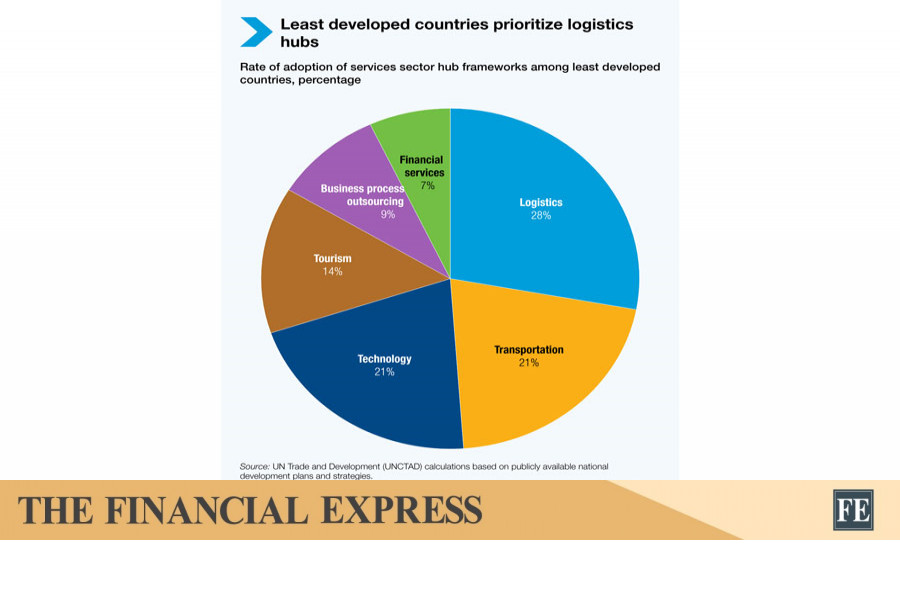
Overall, the UNCTAD publication outlined the challenges facing LDCs and provided policy guidelines to overcome them. For instance, it noted that LDCs are increasingly adopting hub strategies, meaning they are concentrating investment and policy support in specific services or locations. It found that LDC policymakers have prioritised logistics hubs, followed by transportation and technology hubs. Logistics covers the management of goods and information flows across the supply chain, while transportation refers to the physical movement of goods. The report confined maritime port-linked strategies to logistics hubs and dry port or road network strategies to transportation hubs. The UN agency also cautioned that hub strategies may be costly and deepen debt vulnerabilities. At present, around half of the LDCs are in debt distress.

Between 1994 and 2024, only eight countries emerged from the LDC category. Now, four more countries are in the final phase of graduation: Bangladesh, the Lao People's Democratic Republic and Solomon Islands are scheduled for graduation this year; and Solomon Islands is scheduled for graduation next year. As LDC-graduation appears as a critical challenge for these countries, the Least Developed Countries Report 2025 is a timely document to guide these countries to thoroughly examine their services sectors. It will also help them prepare to cope with post-graduation challenges.​
 
Analyze

Analyze Post

Add your ideas here:
Highlight Cite Respond

Members Online

Latest Posts

Back
 
G
O
 
H
O
M
E