Bangladesh Defense
Saif
Senior Member
- Jan 24, 2024
- 21,040
- 9,686
- Nation

- Residence
- Axis Group

LDC graduation no guarantee for socio-economic justice
Bangladesh's graduation from its least developed country (LDC) status to a developing nation has become highly contentious. While the interim government is in favour of maintaining the timeline for the graduation scheduled for November, 2026, the private sector opposes such a move arguing that the
LDC graduation no guarantee for socio-economic justice
Nilratan Halder
Published :
Nov 14, 2025 00:10

Bangladesh's graduation from its least developed country (LDC) status to a developing nation has become highly contentious. While the interim government is in favour of maintaining the timeline for the graduation scheduled for November, 2026, the private sector opposes such a move arguing that the country is ill prepared to embrace the proposed transition. Businesses which keep the wheels of the country's economy running have instead sought a deferral of the graduation by five to six years.
The government side's argument, as presented by commerce secretary Mahbubur Rahman at a seminar titled "LDC Graduation: Challenges and Prospects" organised by the Bangladesh-Malaysia Chamber of Commerce and Industry (BMCCI), is that the administration is working on minimising the trade-related shocks. He explains that the government is 'taking steps to secure trade privileges and ensure a smooth transition after 2026". This sounds more like customary official jargon. In fact, the challenges facing the country in the post-graduation time are crucial issues to be addressed.
It appears that the commerce secretary banks on the generalised system of preferences (GSP) the country's trade partners will grant for three more years after the graduation. He should be aware of the fact that the USA, the single largest destination of the number one exportable from Bangladesh, readymade garment that is, has not granted this trade privilege. But he argues that the European Union, the largest market of apparel from this country, will continue to offer duty-free access until 2029. The EU market accounts for around 45 per cent of export from Bangladesh. Currently, the country enjoys similar trade privileges with 38 countries. But the key trade partners like the UK, Japan, Canada and Australia, besides the EU, have confirmed the three-year LDC preferences for Bangladesh until 2029. South Korea and China also offer different forms of preferential access to Bangladesh's commodities. All these importing nations together account for 90 per cent of this country's exports.
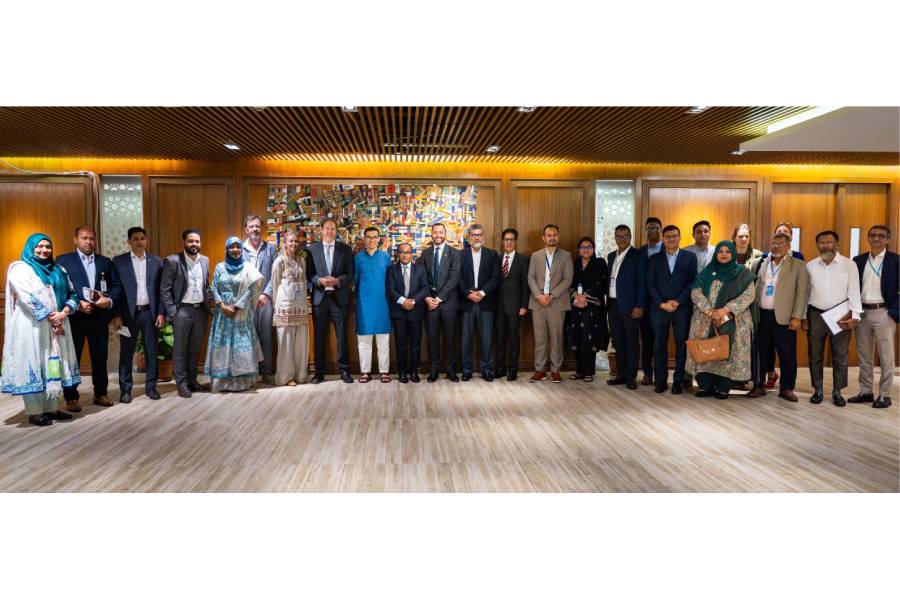
So the crucial point here is, if Bangladesh can manage to be competitive enough in the three-year grace period on the global market and justify its transition to a developing nation. At a meeting with the three-member top-level United Nations (UN) team in the UN House in Gulshan on Sunday last, business leaders in the country state point blank that the country is far from being ready for the transition. The country's macroeconomic stress, high bank interest rates, inflated or distorted growth data under the deposed government, years of loan scams, fallouts of the pandemic and Russia-Ukraine war do not quite allow it at this stage to qualify for a smooth transition to a sustainable developing nation. An underprepared country runs the risk of falling into the middle-income or vulnerability trap or, worse still, witnessing reversal of progress. Development stagnation that a lack of preparedness leads to is the last thing this nation will find desirable. But any scenario of reversal of progress will be a national disaster and disgrace. Even after the takeover by the interim government, it has failed to sufficiently address the country's endemic problems like the official corruption culture, fiscal mismanagement and promotion of elitism at the cost of common people's right to equity.
The country's fractious politics has led to an uncertainty about the underprivileged segment's integration into mainstream society. The current row over the July Declaration has further exposed the rift between the privileged and the underprivileged classes and social stability. The sign is clear now that the July-August uprising is heading for yet another failure to the distress of the depraved and deprived citizens of this country. Once again, it is likely to miss the opportunity for narrowing down the gap between the poor and the rich, the underprivileged and the privileged.
The internal socio-economic inequality and disparities will make the graduation to a developing country meaningless. This will continue to undermine any progress because of the accumulation of wealth by a few at the cost of the majority of the people's interests. The business leaders can bargain for their interests and as a result the UN delegation has asked them to prepare a roadmap of a smooth transition strategy (STS) in case of a deferment. It is against this backdrop, the voice of the underprivileged section remains silent and unheard. But had they also been active participants in the development process, the country did not have to hesitate about the scheduled graduation. The free-market economy is more about macroeconomic flourishing rather than collective prosperity of the people.
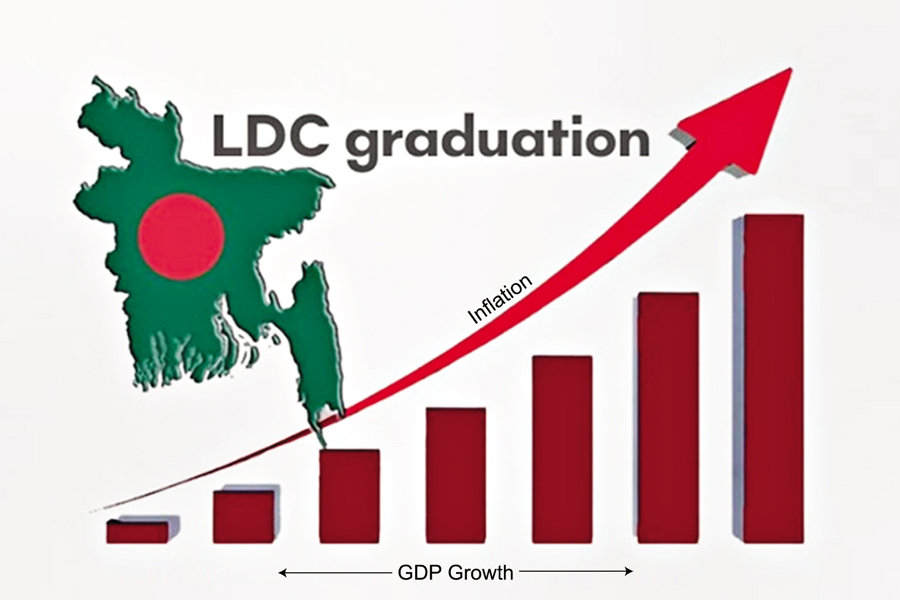
Now the ball is in the court of businesspeople who will have to devise a strategy for STS---one that is convincing enough to justify a deferral to another UN delegation to visit Bangladesh in mid-January next year for the final evaluation of the ground reality. Delayed or not, it is immaterial to the poor and the marginal people who are unlikely to benefit from macroeconomic progress. The trickle-down benefits that reach these underprivileged segments are eroded by rising inflation. No political party including the National Citizen Party (NCP) has espoused the agenda of the underclass's fair share of opportunities and wealth. This indifference to their cause is crystal clear. Graduation from the LDC to the status of a developing nation bypassing a significant proportion of the people will thus hardly make sense and bring peace and stability to society.
Nilratan Halder
Published :
Nov 14, 2025 00:10
Bangladesh's graduation from its least developed country (LDC) status to a developing nation has become highly contentious. While the interim government is in favour of maintaining the timeline for the graduation scheduled for November, 2026, the private sector opposes such a move arguing that the country is ill prepared to embrace the proposed transition. Businesses which keep the wheels of the country's economy running have instead sought a deferral of the graduation by five to six years.
The government side's argument, as presented by commerce secretary Mahbubur Rahman at a seminar titled "LDC Graduation: Challenges and Prospects" organised by the Bangladesh-Malaysia Chamber of Commerce and Industry (BMCCI), is that the administration is working on minimising the trade-related shocks. He explains that the government is 'taking steps to secure trade privileges and ensure a smooth transition after 2026". This sounds more like customary official jargon. In fact, the challenges facing the country in the post-graduation time are crucial issues to be addressed.
It appears that the commerce secretary banks on the generalised system of preferences (GSP) the country's trade partners will grant for three more years after the graduation. He should be aware of the fact that the USA, the single largest destination of the number one exportable from Bangladesh, readymade garment that is, has not granted this trade privilege. But he argues that the European Union, the largest market of apparel from this country, will continue to offer duty-free access until 2029. The EU market accounts for around 45 per cent of export from Bangladesh. Currently, the country enjoys similar trade privileges with 38 countries. But the key trade partners like the UK, Japan, Canada and Australia, besides the EU, have confirmed the three-year LDC preferences for Bangladesh until 2029. South Korea and China also offer different forms of preferential access to Bangladesh's commodities. All these importing nations together account for 90 per cent of this country's exports.
So the crucial point here is, if Bangladesh can manage to be competitive enough in the three-year grace period on the global market and justify its transition to a developing nation. At a meeting with the three-member top-level United Nations (UN) team in the UN House in Gulshan on Sunday last, business leaders in the country state point blank that the country is far from being ready for the transition. The country's macroeconomic stress, high bank interest rates, inflated or distorted growth data under the deposed government, years of loan scams, fallouts of the pandemic and Russia-Ukraine war do not quite allow it at this stage to qualify for a smooth transition to a sustainable developing nation. An underprepared country runs the risk of falling into the middle-income or vulnerability trap or, worse still, witnessing reversal of progress. Development stagnation that a lack of preparedness leads to is the last thing this nation will find desirable. But any scenario of reversal of progress will be a national disaster and disgrace. Even after the takeover by the interim government, it has failed to sufficiently address the country's endemic problems like the official corruption culture, fiscal mismanagement and promotion of elitism at the cost of common people's right to equity.
The country's fractious politics has led to an uncertainty about the underprivileged segment's integration into mainstream society. The current row over the July Declaration has further exposed the rift between the privileged and the underprivileged classes and social stability. The sign is clear now that the July-August uprising is heading for yet another failure to the distress of the depraved and deprived citizens of this country. Once again, it is likely to miss the opportunity for narrowing down the gap between the poor and the rich, the underprivileged and the privileged.
The internal socio-economic inequality and disparities will make the graduation to a developing country meaningless. This will continue to undermine any progress because of the accumulation of wealth by a few at the cost of the majority of the people's interests. The business leaders can bargain for their interests and as a result the UN delegation has asked them to prepare a roadmap of a smooth transition strategy (STS) in case of a deferment. It is against this backdrop, the voice of the underprivileged section remains silent and unheard. But had they also been active participants in the development process, the country did not have to hesitate about the scheduled graduation. The free-market economy is more about macroeconomic flourishing rather than collective prosperity of the people.
Now the ball is in the court of businesspeople who will have to devise a strategy for STS---one that is convincing enough to justify a deferral to another UN delegation to visit Bangladesh in mid-January next year for the final evaluation of the ground reality. Delayed or not, it is immaterial to the poor and the marginal people who are unlikely to benefit from macroeconomic progress. The trickle-down benefits that reach these underprivileged segments are eroded by rising inflation. No political party including the National Citizen Party (NCP) has espoused the agenda of the underclass's fair share of opportunities and wealth. This indifference to their cause is crystal clear. Graduation from the LDC to the status of a developing nation bypassing a significant proportion of the people will thus hardly make sense and bring peace and stability to society.