Donate ☕
201 Military Defense Forums
[🇧🇩] - LDC Graduation For Bangladesh | Page 12 | PKDefense
Home Login Forums Wars Watch Videos
Serious discussion on defense, geopolitics, and global security.

[🇧🇩] LDC Graduation For Bangladesh

Reply (Scroll)
Press space to scroll through posts
G Bangladesh Defense
[🇧🇩] LDC Graduation For Bangladesh
63
2K
More threads by Saif

Bangladesh prioritises smooth LDC graduation, says Salehuddin
FE ONLINE DESK
Published :
Nov 10, 2024 22:28
Updated :
Nov 10, 2024 22:28

1731287594863.webp


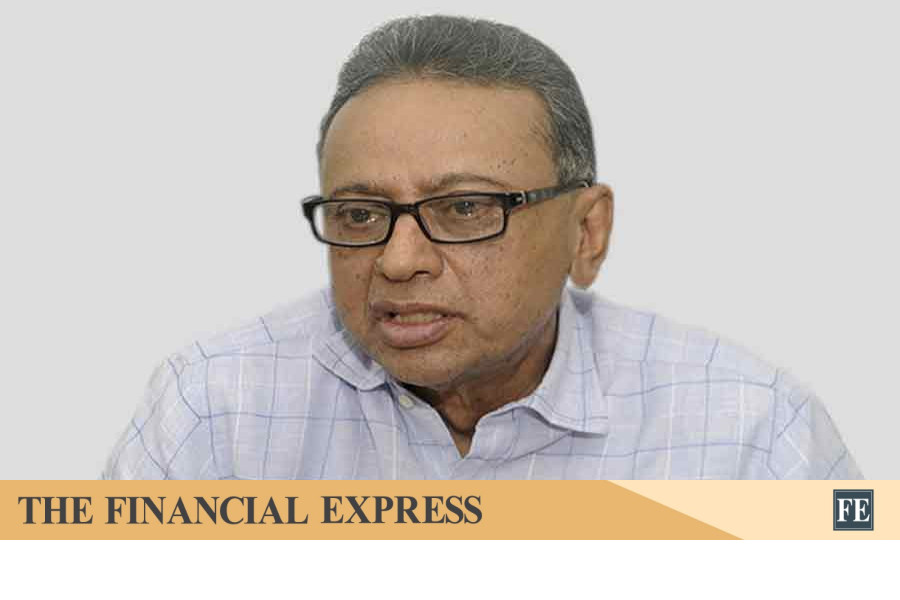
Adviser to the interim government on the Ministries of Finance and Commerce Dr Salehuddin Ahmed has said Bangladesh is prioritising to ensure smooth and sustainable graduation from the Least Developed Country (LDC) category.

“Bangladesh will prioritise smooth graduation from LDC. It will not happen suddenly.

It will happen at a reasonable time. The graduation will be in the interest of Bangladesh, in the interest of the people,” he said.

Salehuddin came up with the comments while speaking at the negotiation launching ceremony of the Bangladesh-Singapore Free Trade Agreement (FTA) at the Ministry of Commerce in Dhaka on Sunday, reports BSS.

“The decision will be taken considering the situation that can be overcome easily,” he said about the country’s graduation from the LDC.

Salehuddin said the government will take initiatives to sign FTA with as many countries as possible.

He mentioned that Singapore is a potential country for Bangladesh's trade expansion. “In addition to products, there is also the possibility of developing Bangladesh's relations with Singapore in the service and investment sectors,” he added.

He said the initiative to sign a FTA has been taken initially with an aim to increase the trade and investment between the two countries.

High Commissioner of Singapore in Dhaka Derek Loh said that Bangladesh, especially Chattogram, is very important for Singapore due to its geographical location.

Singaporean shipping company PSA is investing in Chattogram Terminal, which will become a major international port through Bay-Terminal Transformation, he added.

Based on this, the trade between the two countries will increase, he opined.

Chief adviser’s Special Envoy on International Affairs Lutfe Siddiqui, Bangladesh Investment Development Authority (BIDA) Executive Chairman Chowdhury Ashik Mahmud Bin Harun and Secretary of the Ministry of Commerce Md Selim Uddin, among others, spoke on the occasion.

Earlier, Singapore’s High Commissioner Derek Loh had a courtesy call on Salehuddin Ahmed in his secretariat office​
 
Analyze

Analyze Post

Add your ideas here:
Highlight Cite Fact Check Respond
  • Like (+1)
Reactions: Bilal9

Why we need to revisit the LDC paradigm

1764812640635.webp


It has been more than five decades since the UN established the Least Developed Countries (LDC) category, in 1971, identifying these countries as facing the most severe roadblocks to sustainable development.

LDC status unlocks international support measures (ISMs) including trade preferences, concessional finance, technical assistance, and prioritisation in aid allocation. Buffering against shocks and creating openings for investment, trade, and institutional strengthening, these measures are a lifeline for countries facing vulnerabilities due to geography, climate exposure, fragility, or conflict. The ultimate goal is "graduation" from LDC status, which triggers a transition period during which countries prepare to phase out ISMs.

This framework was designed to help countries move out of extreme structural disadvantage. But has it worked? The picture is mixed: today, some LDCs have advanced toward graduation, but many remain stuck. LDCs host about 12 percent of the world's population, including 27 percent of its refugees, but generate less than 2 percent of global GDP and 1 percent of world trade.

These imbalances reveal the limits of the current graduation model, which overlooks the structural realities keeping many trapped in underdevelopment. To be truly fit for purpose, the LDC paradigm must be updated to better reflect these vulnerabilities, recognise diverse trajectories, and align support with today's challenges.

THE UNEVEN PATH OF GRADUATION PROGRESS

To determine whether countries should retain LDC status or be considered for graduation, the UN Committee for Development Policy (CDP) reviews the list of LDCs every three years, using three criteria: income level, measured by gross national income per capita; human assets, assessed through health, nutrition, and education indicators; and environmental and economic vulnerability, captured through the Environmental Vulnerability Index (EVI). Countries qualify for graduation after meeting thresholds in two of the three categories in two consecutive reviews. As of late 2025, only eight countries have managed to exit the group of LDCs; 44 remain.

Six countries, Bangladesh, Lao PDR, Nepal, Solomon Islands, Cambodia and Senegal, have confirmed exit years and are preparing transition plans.

Comoros, Myanmar, Djibouti, Kiribati and Tuvalu have met the graduation criteria but deferred their exit due to political or structural challenges. Kiribati and Tuvalu, both Small Island Developing States (SIDS), have remained in the graduation pipeline for nearly two decades, reflecting the compound effects of remoteness, small size and exposure to climate risks.

Despite meeting thresholds in all three categories since 2018, Myanmar's graduation has been held back by protracted political instability. The graduations of Comoros and Djibouti, which became eligible in 2024, were deferred due to political uncertainty and weak institutions.

Rwanda, Uganda and Tanzania are the newest additions to the graduation pipeline, having met the thresholds for the first time in 2024.

Thirty LDCs (the "holdover" LDCs) have never qualified for graduation. Of these, 26 are in Africa. The remaining four, Afghanistan, Timor-Leste, Yemen and Haiti, face instability and isolation. About 40 percent of holdover LDCs are landlocked, limiting opportunities for connectivity and integration into global markets. Around 60 percent are conflict-affected or institutionally weak; nearly 93 percent fail to meet the EVI threshold. They are also home to 17 percent of the world's refugees. These pressures deepen fiscal strain and weaken state capacity, making progress toward graduation even more challenging.

THE LIMITS OF THE LDC PARADIGM

The slow pace of graduation is not a function of inadequate effort on the part of LDCs. Rather, it reflects the weaknesses of the model itself.

Specifically, the graduation criteria reward relatively short-term gains in economic and social indicators and downplay the impact of conflict exposure, remoteness, climate and peace-and-security risk — all realities many LDCs face. The EVI threshold, while helpful, does not necessarily fully capture these dimensions, either. ISMs likewise fall short, focusing heavily on trade preferences and concessional finance rather than addressing the challenges that impede sustainable progress. By penalising countries for conditions they cannot easily change, the LDC paradigm keeps them at the bottom of the development ladder.

TOWARD A NEW LDC FRAMEWORK

Graduation must reflect a country's capacity to absorb shocks, recover and sustain progress despite conflict, climate exposure or geographic disadvantage. Here are some elements that policymakers at national, regional and global levels should prioritise to create a more responsive and equitable framework.

Modernise how vulnerability is measured. A more comprehensive risk and resilience index would better identify structural weaknesses and guide targeted ISMs that strengthen long-term preparedness and adaptive capacity. The UN-CDP along with UNCTAD should revisit how the EVI captures risk, ensuring that conflict, fragility, climate exposure and refugee inflows are adequately reflected.

Promote a cross-pillar approach to resilience. The LDC agenda must move beyond economic metrics to integrate climate action, governance, peace and security, and social inclusion as equal pillars of progress. This would better capture the links between economic performance, environmental stability and institutional strength, aligning international support with the ambitions of the 2030 Agenda.

Strengthen international support measures and link them to resilience-building. ISMs must go beyond trade preferences and concessional finance to address structurally weak and conflict-ridden economies. Climate funds, debt relief, governance support and peacebuilding should be strategically linked.

Domestic reforms such as stronger institutions, fiscal discipline and diversification are also vital to ensure lasting gains.

This reimagined framework cannot be one-size-fits-all: the experience of many LDCs makes clear that the graduation trajectories of landlocked developing countries, SIDS, conflict-affected or climate-vulnerable economies must be considered separately.

There are some positive signs that support for this approach is growing. The UN-CDP has introduced supplementary graduation indicators (SGIs) to allow greater flexibility in evaluating country progress. The Doha Programme of Action (2022, 2031) recognises the diversity of LDCs and calls for tailored support that reflects distinct vulnerabilities.

These are welcome steps, but more work is needed to ensure that global frameworks evolve to match the complex realities of the countries left behind. It is time to rethink the LDC paradigm, aligning measures of progress and support with today's structural, climate, governance and peace-security challenges.

Debapriya Bhattacharya is a distinguished fellow at Centre for Policy Dialogue, and Mamtajul Jannat is a senior research associate at Centre for Policy Dialogue​
 
Analyze

Analyze Post

Add your ideas here:
Highlight Cite Fact Check Respond

Bangladesh needs strong diplomatic engagement to delay LDC graduation, says RAPID chief

FE ONLINE REPORT
Published :
Dec 15, 2025 14:29
Updated :
Dec 15, 2025 14:32

1765846339580.webp

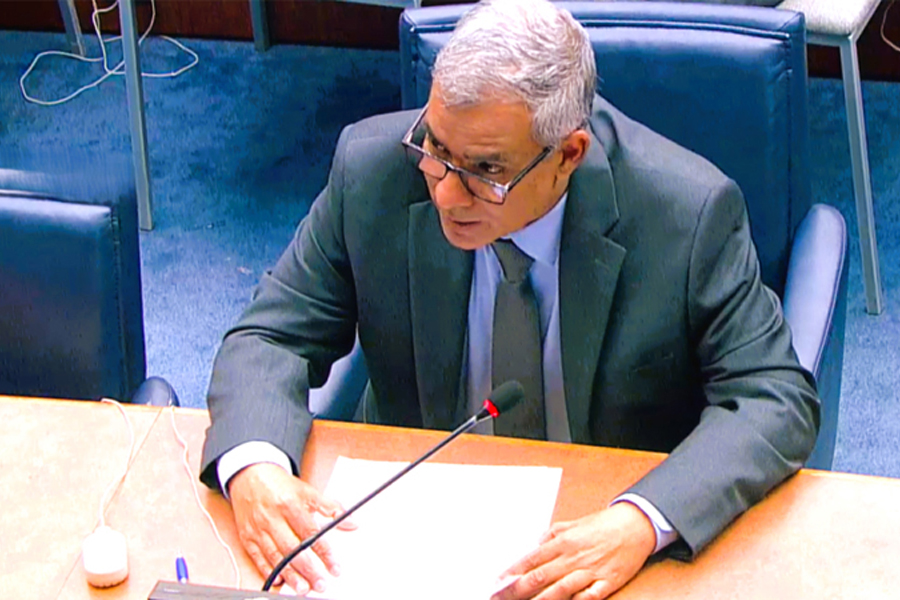
File photo of Dr Mohammad Abdur Razzaque

Bangladesh needs strong diplomatic engagement to delay its graduation from the Least Developed Country (LDC) category, as the country is likely to face multiple post-graduation challenges without adequate preparation, said Dr Mohammad Abdur Razzaque, chairman of the Research and Policy Integration for Development (RAPID), on Monday.

He made the remarks at a seminar titled ‘Socio-economic Priorities for the Next Government’, held at the CIRDAP Auditorium in Dhaka.

Dr Razzaque noted that the next government’s first major test would be crisis management, leaving limited scope for articulating long-term vision statements in the early phase of its tenure.

“Immediate challenges related to inflation, banking sector stability, foreign exchange reserves, and LDC graduation will shape the entire term of the next government,” the economist said.

He stressed that the incoming administration must prioritise securing the EU’s GSP+ facility, implementing the ninth five-year plan with a strong focus on job creation, ensuring energy security to support urban development and manufacturing industries, enhancing export competitiveness, attracting greater foreign direct investment (FDI), and strengthening human resource development.

Dr Razzaque warned that failure to act promptly would narrow the policy space and lead to more costly adjustments later, adding that while structural reforms are crucial, they can only succeed if short-term macroeconomic stability is ensured.

“Credible actions taken within the first year can help restore confidence among households, investors, and development partners,” he said.

The seminar was attended by National Board of Revenue (NBR) Chairman Md Abdur Rahman as the chief guest. Other speakers included former caretaker government adviser Rasheda K Chowdhury, RAPID Executive Director Dr M Abu Eusuf, Bangladesh Chamber of Industries President Anwar Ul Alam Parvez, among others.​
 
Analyze

Analyze Post

Add your ideas here:
Highlight Cite Fact Check Respond

Export diversification crucial in post-LDC Bangladesh: roundtable
Staff Correspondent 18 December, 2025, 23:40

Experts on Thursday said that export diversification, industrial upgrading and linking external support with national strategies are crucial for the country’s development after its upgradation from the Least Developed Country status.

In the event hosted by Centre for Governance Studies at a Dhaka hotel, people related to private sector, national economy and development partners discussed how development partners could better coordinate with government agencies when the LDC-specific benefits phased out from the country.

A press release issued on the day said that private sector representatives, talking about the issue, highlighted the need for targeted reforms and support to strengthen capacity for sustainable growth in post-LDC graduation.

The roundtable titled Strengthening Bangladesh’s institutional capacity for a smooth LDC graduation: priorities, sequencing, and strategies to avoid the middle-income trap, was aimed at identify practical and coordinated measures to safeguard the country’s competitiveness and resilience.

Addressing challenges like the loss of trade preferences and higher financing costs in Bangladesh, foreign development partners and diplomatic missions staff also shared their financial assistance strategies and plans to adjust cooperation frameworks, the press release said.

Moderated by CGS president Zillur Rahman and executive director Parvez Karim Abbasi, the roundtable was addressed by Centre for Police Dialogue’s distinguished fellow Professor Mustafizur Rahman, Apex Footwear managing director Syed Nasim Manzur, Dhaka University’s economics teacher Professor Selim Raihan, World Bank’s senior economist Nazmus Sadat Khan, The Asia Foundation’s chief strategy and legal adviser Michael Kim McQuay, Delegation of the European Union’s deputy head of mission Baiba Zarina, among others.​
 
Analyze

Analyze Post

Add your ideas here:
Highlight Cite Fact Check Respond

LDC exit nears but trade deals stayed in waiting mode in 2025

1766452742905.webp


As 2025 winds down, Bangladesh is staring at an approaching deadline with growing concern.

Less than a year remains before the country formally graduates from the least developed country (LDC) club in November 2026. For an economy built on garment exports, this milestone is not just symbolic; it comes with the real risk of losing duty-free access to major markets.

The government has intensified trade talks with key partners to preserve preferential market access, guided by the Smooth Transition Strategy (STS) -- a policy roadmap designed to soften the graduation shock.

Yet, despite nearly two decades of negotiations, most agreements are still in early stages. Apart from a small number of exceptions, few have reached enforcement, leaving exporters in a state of limbo.

Over the years, some progress has been made. One notable breakthrough came yesterday as Bangladesh and Japan concluded negotiations on a bilateral Economic Partnership Agreement (EPA). The deal, once signed and ratified, will grant duty-free access to 7,379 Bangladeshi products to Japanese market, including ready-made garments, while Bangladesh will offer zero-duty entry to 1,039 products from the island nation.

The agreement also covers services, with Bangladesh opening 97 sub-sectors and Japan 120, creating scope for investment and technology transfer. The EPA will now move towards formal signing and approval by Japan's parliament, the Diet, before it comes into force.

South Korea is another relative bright spot.

According to Commerce Secretary Mahbubur Rahman, talks on a separate EPA with Seoul are close to a conclusion. The authorities hope for a near-term signing.

Apart from Japan and South Korea, Bangladesh is juggling preliminary discussions with a number of partners, including the European Union, the Regional Comprehensive Economic Partnership (RCEP), Asean countries, China, India, Australia and the United Arab Emirates.

However, having so many talks has not accelerated progress. In many cases, Dhaka is still waiting for dates to sit across the table from prospective partners.

For slow progress, economists point to structural constraints at home.

For example, the average import tariff of Bangladesh is more than 28 percent, far higher than regional peers such as Malaysia, where rates are around 5 percent.

"High protection discourages potential partners from committing to comprehensive trade agreements," said Zaidi Sattar, chairman of local think tank Policy Research Institute of Bangladesh (PRI).

While lowering tariffs could speed up negotiations, it runs into fiscal realities. Import duties are still a major source of government revenue. Trade policy reform is therefore politically and economically sensitive.

According to the PRI chairman, institutional capacity also poses a barrier.

Bangladesh often does not have sufficient negotiating manpower, and key export-import policy documents are not always available in English. These issues limit the accessibility of foreign counterparts.

Meanwhile, the business community watches the developments anxiously.

High interest rates, inconsistent energy supplies, rising production costs and inflation are already squeezing enterprises, making the timing of LDC graduation particularly challenging.

"Trade agreements take time, and we had urged the government to seek a deferment of LDC graduation," said Anwar-ul Alam Chowdhury (Parvez), president of the Bangladesh Chamber of Industries.

"This is not the right moment for graduation, given the economic pressures businesses are facing," added the business leader.

Garment exporters, who are the backbone of the country's export sector, are especially concerned.

Inamul Haq Khan, senior vice-president of the Bangladesh Garment Manufacturers and Exporters Association (BGMEA), said businesses are critical stakeholders whose concerns often go unheard.

Industry leaders have repeatedly called for a six-year deferment of graduation, citing the absence of major trade agreements and limited preparedness on both public and private fronts.

"The country is going to graduate next year, but it is very unfortunate that we have yet to sign any trade agreements to retain the major trade partners," Khan said.

He warned that the loss of duty-free access could put exports under severe pressure.

"Export incentives have already been reduced, and while government support schemes aim to boost competitiveness, their impact may not be enough to offset the loss of LDC benefits," he added.

Other sectors are also facing the pinch.

Showkat Aziz Russell, president of the Bangladesh Textile Mills Association (BTMA), said primary textile manufacturers are already under strain.

"Cheap yarn imports from India have surged, rising 137 percent over the past year, squeezing domestic spinning mills grappling with inadequate gas supply."

He warned that any setback in the garment sector could jeopardise roughly $25 billion invested in the country's primary textile industry.

Despite the challenges, some policymakers see opportunities.

Mohammad Abdur Razzaque, chairman of local think tank Research and Policy Integration for Development (RAPID), described the Japan EPA as a meaningful milestone.

He said that RCEP has requested documentation to assess Bangladesh's eligibility for membership in January, alongside Hong Kong, Chile and Sri Lanka.

If approved, it would give Bangladesh access to the world's largest trade bloc, added Razzaque.

He said negotiations with the EU should secure the GSP Plus facility, preserving access to European markets.

The stakes are high. At present, about 73 percent of Bangladesh's exports rely on LDC-related duty-free access to 38 countries. Studies suggest losing these preferences could slash up to 14 percent of exports, roughly $8 billion annually.

As the year ends, the status of trade negotiations is clear.

Bangladesh has opened channels, laid out strategies, and crossed a few important milestones. Yet the distance between negotiation and enforcement remains the defining challenge on the country's trade frontier.​
 
Analyze

Analyze Post

Add your ideas here:
Highlight Cite Fact Check Respond

Is Bangladesh ready for LDC exit?

SYED MUHAMMED SHOWAIB
Published :
Dec 26, 2025 22:16
Updated :
Dec 26, 2025 22:16

1766796389260.webp


After decades on the global list of the poorest economies, Bangladesh is now set to cross an important economic threshold as it prepares to graduate from the Least Developed Country (LDC) category in November, 2026. This status change follows the country meeting all three United Nations graduation criteria including per capita gross national income, the human assets index and the economic and environmental vulnerability index on two consecutive occasions. While this progress reflects years of steady growth, graduation also brings in new challenges, particularly the phasing out of international support measures that have played an important role in that journey. Acknowledging this concern, the United Nations General Assembly resolution 59/209 emphasises that graduation must not derail development and urges a carefully managed transition to minimise the fallout from the loss of LDC-specific privileges.

The economic transformation that has paved the way for this graduation is hard to dispute. Over the decades, Bangladesh has undergone a fundamental shift in its economy, with agriculture's share of GDP falling from nearly 60 per cent in the early 1970s to just 11 per cent in 2022-23. Over the same period, merchandise exports expanded dramatically, rising from less than two billion dollars in the early 1980s to more than 43 billion dollars in 2022-23, driven largely by the export-oriented readymade garments sector. Today, Bangladesh is the world's second-largest apparel exporter, supplying more than a tenth of global demand.

This economic progress has been recognised on its achievement of various international milestones. In 2015, Bangladesh transitioned from low-income to lower-middle-income status according to World Bank classifications. This was soon followed by meeting the criteria for LDC graduation in 2018 and again in 2021, and the UNGA subsequently decided that Bangladesh's graduation would take effect on 24 November 2026 following a five-year preparatory period.

Graduation, however, will fundamentally reshape the external conditions under which these gains were made. This is because, unlike most least developed countries, Bangladesh has been the single largest beneficiary of LDC-specific international support measures, particularly unilateral trade preferences. Nearly three-quarters of its merchandise exports currently enjoy LDC-related tariff preferences. In major markets such as Australia and the European Union, more than 90 per cent of Bangladesh's exports enter duty-free, while in Canada, the Republic of Korea and the United Kingdom the share exceeds 80 per cent. The readymade garment sector, which has been the main engine of this preference-driven export growth, is therefore likely to face significant changes in importing countries' trade regimes after graduation, with tariffs rising sharply.

The World Trade Organisation has estimated that the loss of preferential market access could reduce Bangladesh's exports by more than 14 per cent. This risk is especially troubling because the country's economic transformation has so far relied heavily on a narrow comparative advantage built on low wages, limited regulation and cost minimisation. Graduation now makes it imperative for Bangladesh to move away from a trade-preference-dependent, low-wage export model and towards one grounded in higher productivity, innovation and quality, rather than price competitiveness alone.

The most immediate challenge centres around trade preferences, especially in the European Union, Bangladesh's largest export destination. RMG sector has prospered in the EU taking advantage of the EU's Everything But Arms (EBA) facility designed for LDCs. After graduation, Bangladesh will lose these EBA benefits and might be replaced by standard GSP for which tariff preferences are limited. Another option is to apply for the GSP+ scheme which offers duty-free access to 66 per cent of EU tariff lines including textiles and clothing. Even then, Bangladesh's apparel exports could still be subject to EU safeguard measures as the country already accounts for a large share of GSP-covered apparel imports. In such a scenario, Bangladeshi clothing exports to the EU could lose all tariff preferences and face an average duty of around 11.5 per cent.

Such an outcome would place Bangladesh at a significant disadvantage relative to competitors. Vietnam, for example, already benefits from a free trade agreement with the EU under which apparel tariffs are being phased out. By the time Bangladesh completes its transition period, Vietnamese garments are expected to enjoy zero duty access, creating strong incentives for buyers to shift sourcing away from Bangladesh. This risk of trade diversion is real and could undermine employment in a sector that employs millions, particularly women, and forms the backbone of the country's manufacturing base.

Any access to GSP preferences after LDC graduation will come with far more demanding rules of origin. For non-apparel products, exporters will be required to achieve at least 50 per cent domestic value addition while apparel exports will need to meet a double-stage transformation requirement, assuming the relevant safeguard provisions are amended. Although Bangladesh has built relatively strong backward linkages in knitwear, the woven garment segment remains heavily reliant on imported fabrics. As a result, complying with stricter origin criteria will be difficult without substantial investment in upstream industries or adjustments to the rules themselves. Moreover, all preference schemes are conditional and can be temporarily suspended if trading partners conclude that commitments related to labour standards or human rights are not being adequately upheld.

These requirements for double transformation in apparel and high domestic value addition for non-apparel exports are quite stringent. Under the current global system driven by value chain-led trade where countries specialise in just one or a few components of the overall production of final items, fulfilling such high rules of origin requirements is extremely difficult, especially for capacity-constrained countries transitioning out of LDC status.

At this stage, it is clear that Bangladesh is only partially prepared for graduation and remains far from insulated against its risks. The country has repeatedly defied expectations in the past, but the challenges it will face in 2026 are qualitatively different from those encountered before. This is because the heavy economic concentration in the ready-made garments sector that previously fuelled rapid growth now emerges as a key vulnerability. Graduation, therefore, should be seen not as an endpoint but as a deadline. Whether it serves as a springboard towards a more resilient and sustainable economy or becomes a source of significant disruption will hinge on the urgency, depth and seriousness with which policymakers address the post-LDC realities.​
 
Analyze

Analyze Post

Add your ideas here:
Highlight Cite Fact Check Respond

Members Online

⤵︎

Latest Posts

Latest Posts