[🇧🇩] Manpower Export: Prospects and Challenges.

[🇧🇩] Manpower Export: Prospects and Challenges.
57
2K
More threads by Saif

G Bangladesh Defense
Bangladesh migrants face a precarious situation: Migration experts

Staff Correspondent Dhaka
Published: 15 Jan 2026, 22: 25

1768524811711.webp


Migration experts attend a National Consultation for Shadow Report on GCM Implementation. WARBE Development Foundation oranised it at the BIISS Auditorium in the capital on Thursday. Collected

Rights activists have expressed grave concerns over the violation of rights of migrants workers who are sending huge amount of remittance to the country annually.

They made the remarks at a National Consultation for Shadow Report on GCM Implementation. WARBE Development Foundation oranised it at the BIISS Auditorium in the capital on Thursday.

RMMRU executive director Tasneem Siddiqui moderated the event. Migration expert and national consultant Asif Munier presented a report.

WARBE Development Foundation Chairman Syed Saiful Haque said they would submit a shadow report to the UN Migration Network through the IOM. The report will be presented at the International Migration Review Forum 2026 alongside the government’s submission.

Bangladesh Labour Federation (BLF) General Secretary Shakil Akhter Chowdhury said that although there have been many discussions on labour migration, no visible progress has been made in the sector.


“We are earning 30 billion US dollars from this sector. What is the government’s contribution to the welfare of migrant workers?” he asked.

Shakil Akhter Chowdhury urged the government to create a comprehensive database of migrants, noting that the existing database is incomplete. He also said the government should improve consular services for migrants and ensure social protection for all migrant workers.

Former Secretary of the Ministry of Expatriates’ Welfare and Overseas Employment Salim Reza highlighted some good practices in overseas employment. He noted that migrants are going to Japan as technical interns without incurring any migration costs, and that similar good practices are being followed in employment to South Korea. However, he did not provide statistics on employment in those countries.

Salim Reza said that many Bangladeshis migrate to Saudi Arabia—the largest labour market for Bangladesh—but many of them fail to secure jobs or receive regular salaries there. He also stressed the need to hold joint working group meetings regularly to address migrants’ issues.

Policy Adviser at the Ministry of Expatriates’ Welfare and Overseas Employment Zia Hassan said various steps have been taken to improve migrant welfare, but obstacles often arise during implementation.

1768524865505.webp


Migration experts attend a National Consultation for Shadow Report on GCM Implementation. WARBE Development Foundation oranised it at the BIISS Auditorium in the capital on Thursday. Collected

Citing an example, Zia Hassan said phone numbers had been provided so members of the diaspora could contact officials when they faced problems. However, officials were reluctant to share WhatsApp numbers, fearing an overwhelming volume of calls.

WARBE Development Foundation Chairman Syed Saiful Haque said the government should recognise and consider the voices of migrant workers and civil society organisations.

IOM deputy chief of mission in Bangladesh, Catherine Northing, Stakeholder advisory group Mahjabeen Khaled and WARBE director Jasiya Khatoon, among others, spoke at the consultation.​
 

Saga of hapless migrant workers

SYED FATTAHUL ALIM
Published :
Jan 26, 2026 00:02
Updated :
Jan 26, 2026 00:02

1769389910564.webp


The authorities must work together to alleviate the sufferings of the Bangladeshi migrant workers in Malaysia — Collected

Past and present governments of Bangladesh have traditionally been very effusive in praising the hard work the migrant workers do abroad and send home their precious dollars. But they have not been equally concerned about what these foreign-bound job-seekers go through once they are in the hands of the recruiting agents, both genuine and fake, and then what happens to them either at home or when they reach their host country. It is not that the government and the public are not aware about reports on how migrant workers are pushed around from the very beginning of the recruiting procedures till they reach their foreign destinations and meet their employer. In fact, each step of their journey is slippery and except the lucky ones, the migrant workers, in overwhelming numbers, are at best subjected to exploitation and at worst to outright fraudulence. According to a recent report, two Bangladeshi migrant workers, on behalf of 93 of their compatriots, filed a case with the Malaysian police against their employer, a gloves manufacturing company named Medicerem. The allegations were about serious violation of labour laws and breach of contract. Their employer, the allegation went, illegally confiscated their passports and failed to renew work permits. Mediceram terminated 170 workers as the latter held protest demonstrations against these instances of injustice. The employer also cancelled visas of 16 workers and influenced the Malaysian authorities to deport them to Bangladesh.

It was further reported that since the beginning of their recruitment in that factory, they were deprived of their wages month after month. Their work permits oftentimes faced inordinate delays. But each of these workers had to pay from Tk 450,000 to 600,000 to get the job. Instances of such maltreatment of Bangladeshi migrant workers in host countries abound. There are other cases where migrants workers were victims of digital scams. They found job opportunities from ads on their smartphones. The job offers appeared too good to be true, but they still believed and fell for those. Seeking jobs overseas through fake online recruitment schemes, falling into betting traps, becoming victims of identity theft through mobile apps, messaging platforms, social media and so on became widespread between 2022 and 2024. More than 48,000 Bangladeshi migrant workers entered Malaysia during this period. Many of them were victims of online recruitment scam. As noted in similar cases in the foregoing, they paid from Tk450,000 to Tk600,000 for jobs that were nonexistent. In fact, a syndicate was involved in trafficking those workers to Malaysia where it (the syndicate) engaged the workers into forced labour. In this way, the syndicate made billions of dollars through ripping off the hapless overseas job-seekers. Many rural youths with poor level of digital literacy, especially less familiar with mobile financial services and digital banking, fall prey to cybercriminals. Digital fraudulence apart, the very recruiting system itself is a veritable minefield of informal channels that include personal connections and brokers or dalals.

Even jobs are offered on the basis of verbal assurances. The job-seekers are so desperate to get a job that they agree to any conditions. So, a lack of experience to distinguish between a fake and a genuine job source, digital or otherwise, land them in trouble . Moreover, the very eagerness to get an overseas job by hook or by crook make the youths, mostly from rural backgrounds, fall into the hands of fraudsters. Even the US-based news agency Bloomberg recently (on January 23) published a damning investigative report on how the corruption-ridden, syndicate-controlled recruitment channels are trapping Malaysia-bound Bangladeshi migrant workers into cycles of exploitation through forced and debt bondage. The Bloomberg report narrated the fate of a Bangladeshi worker named Shofiqul who fell prey to such a gang of scamsters, lost US$4,400 in the hope of getting a construction job in Malaysia and landed in a 'run-down building outside Kuala Lumpur'. His contact person dropped him at that dormitory and vanished. The promised job was not forthcoming. With no means to survive in a foreign land, Shofiqul ultimately died in that dormitory after suffering from convulsions. He was one of more than 80,000 Bangladeshi workers who had been duped over the last one decade into accepting job offers in Malaysia.

But in many cases, the job promises were fake. The Bloomberg report, as could be learnt, was based on the interviews of '100 people including current and former government officials, labor analysts, recruitment agents and Bangladeshi migrants'. The report dwells in detail on the recruitment process that is 'shaped by entrenched corruption and designed to extract as much money as possible from desperate workers often leading to debt bondage, forced labor and human trafficking.' Worse yet, the report added that people at the highest levels of government were aware of these incidents, but did not address them because 'the recruitment fees line pockets of everyone involved. Bangladeshi migrant workers, who make up 20 per cent of Malaysia's foreign labourers, are the easiest victim of the fraudulent recruitment racket. As found out through Bloomberg report, people at high places in both Malaysia and Bangladesh know about this. But nothing has been done so far to alleviate the sufferings of victim migrant workers like Shofiqul. Even UN human rights experts in Geneva (according to a report published on 21 November, 2025) did express concern about what they said, 'fraudulent recruitment and the exploitation of migrants remain widespread and systemic in Malaysia'. The UN human rights experts further noted that a small number of recruiting agencies operate as a closed syndicate sustained by corruption, lack of transparency, and systemic corruption. At the same time, the UNHCR experts reminded the governments of both Bangladesh and Malaysia that they (the governments) had an obligation to ensure that labour migration was governed in a rights-based, transparent, and accountable manner.

Malaysia is but one of the destinations of Bangladeshi migrant workers. The largest number of them, however, work in the Middle East. Few are interested to know about the untold stories of sacrifice the foreign-bound workers make for their families and the state. The government should not limit itself to only counting the dollars the migrant workers remit. Their stories of misfortune need also to be heard and a mechanism devised for redress.​
 

Need for comprehensive data on migrant workers

Wasi Ahmed
Published :
Feb 10, 2026 23:42
Updated :
Feb 10, 2026 23:42

1770770469845.webp


The country continues to witness steady growth in outbound migration, accompanied with record-breaking remittance earnings. Yet behind the encouraging headline figures lies a significant blind spot: the absence of comprehensive data on returnee migrant workers. The lack of systematic information on how many migrants return, the reasons behind their return, and the extent of issues related to sickness, injury, or death creates a serious void in understanding the country's overall migration situation.

According to the International Organisation for Migration (IOM), Bangladesh is currently the sixth largest migrant-sending country in the world, with more than 11 million Bangladeshis working overseas. Migration has long been promoted as a pathway to employment, poverty reduction and foreign currency inflow. However, migrant rights organisations argue that this one-sided focus on outward flows and remittances overlooks a large and vulnerable group-migrants who return home under dismal circumstances. Despite their immense contribution to national development, returnee migrants receive limited policy attention and inadequate institutional support.

Official figures reflect the continued upward trend in overseas employment. Citing government data, the Refugee and Migratory Movements Research Unit (RMMRU) reported that outbound migration increased by 12 per cent in 2025, reaching 1.13 million workers, compared with 1.01 million in 2024. This surge translated into a historic US$32.82 billion in remittances in 2025, representing a 22 per cent rise from the previous year. These numbers are frequently highlighted by policymakers as evidence of the success of Bangladesh's labour migration strategy.

Yet, experts caution that these figures tell only part of the story. Shakirul Islam, chairperson of the Ovibashi Karmi Unnayan Programme (OKUP), argues that government negligence lies at the heart of the problem. He notes that while authorities celebrate the rising number of outbound migrants, they fail to monitor how many return prematurely after becoming victims of fraud, job mismatches, work permit rejections, health or fitness complications, workplace injuries, or even unnatural deaths. "If accurate data on returnees existed, the government would be compelled to expand services for them," he told the media. Referring to a 2024 study, he said that around 6.0 per cent of migrants returned home within the first three months of 2022 after failing to secure employment abroad. Alarmingly, he claims that the government remains largely unaware of this trend due to the absence of a robust tracking mechanism. According to him, Bangladesh's migration data is fundamentally "incomplete," and it is the responsibility of the state to ensure that all relevant data and documentation are updated and that due service was provided to migrant workers throughout the migration cycle, including after their return.

One of the most troubling aspects of Bangladesh's migration narrative is the high number of migrant deaths abroad. Each year, an estimated 4,000 to 5,000 bodies of migrant workers are repatriated. Data from the Wage Earners' Welfare Board (WEWB) show that in 2024 alone, a record 4,813 deceased migrants were returned to their families, up from 4,552 in 2023. Despite the scale of these deaths, many remain shrouded in mystery. In most cases, bodies do not undergo postmortem examinations upon arrival in Bangladesh, leaving families without clear answers and limiting the state's ability to investigate unsafe working conditions, employer negligence, or potential rights violations abroad.

Beyond deaths, the reasons for migrants' return remain poorly documented. At present, sporadic media reports appear to be the primary source of information on why workers come back. A 2023-24 study by OKUP found that 60 per cent of returnee migrants cited health-related issues as the main reason for their return. This highlights the physical and mental toll of overseas employment, often carried out in hazardous environments with limited access to healthcare.

Health data further underscore the vulnerability of returnee migrants. According to the Directorate General of Health Services (DGHS), about 15 per cent of newly diagnosed HIV-positive individuals in Bangladesh in 2024 were returnee migrants. This statistic points to serious gaps in health awareness, prevention, and screening mechanisms both before departure and after return, as well as the stigma and lack of support many returnees face once back home.

Despite the commendable contribution of migrant workers to Bangladesh's economy, the authorities concerned appear ill-equipped to develop a comprehensive database that captures all relevant aspects of migration. A holistic migration management system would require integrating data on recruitment, overseas employment conditions, return patterns, health outcomes, injuries, deaths, and reintegration challenges. Without such data, policy responses remain fragmented and reactive, leaving returnee migrants largely invisible.

Experts argue that addressing this gap is not merely a technical issue but a matter of rights and accountability. Migrant workers are often hailed as "remittance heroes," yet their struggles, particularly upon return, receive little recognition. Strengthening data collection, ensuring transparency, and expanding reintegration services would not only provide a clearer picture of Bangladesh's migration landscape but also honour the sacrifices made by millions of workers who sustain the economy through their labour abroad.

Ultimately, ensuring the sustainability of Bangladesh's migration-driven growth requires shifting the policy lens beyond departure figures and remittance volumes to the full migration cycle. Returnee migrants-whether they come back successful, unemployed, sick, injured, or deceased-are an integral part of this cycle and deserve institutional recognition and support. Developing a comprehensive, centralised database on return migration, strengthening coordination among relevant agencies, and investing in health screening, legal aid, and reintegration programmes are critical steps forward. Without addressing these gaps, Bangladesh risks overlooking the human cost behind its migration success story, undermining both the welfare of migrant workers and the long-term resilience of the sector that contributes so significantly to national development.​
 

What we miss when we talk about migrant labour

25 February 2026, 15:53 PM
Habiba Zaman

Migration is as ancient as evolution of human society. In times immemorial, people chose to move for sustenance or for natural disasters or for war. People travelled vast stretches by foot, by sea or over mountains. In the twentieth century, the two World Wars, the breakup of empires that caused the birth of numerous nation-states have intensified migration. A classic example is the partition of the Indian subcontinent in 1947. This monumental event displaced millions, killed countless people irrespective of religion, families migrated from Bengal and Punjab across the newly drawn borders, altered their lives forever by uprooting them from their ancestral homes.

With the growth and advancement of capitalism, migration has been further accelerated due to the demands for various kinds of labour ranging from skilled labour to all sorts of caregivers to low-skilled labour to manual labour. Migration today is no longer just a story of survival, but a testament to the power of labour, identity, and resilience. Of the Asian countries, the Philippines and Bangladesh are the two topmost labour sending countries and Pakistan is the third labour sending country in 2023, according to a 2024 joint report by the Asian Development Bank (ADB), International Labor Organization (ILO), and Organisation for Economic Co-operation and Development (OECD).

It is argued that three major elements of globalisation such as structural adjustment policies (SAP), trade liberalisation, and technological transformation have intensified global migration. One of the classic examples of SAP is devaluation of national currency, together with drastic reduction in public expenditures on essential services such as, health, education, and social sectors.

The report finds labour migration from Nepal, Indonesia and the People’s Republic of China is on the rise. It further points out increased labour migration from India, Sri Lanka, Viet Nam, and Thailand. Even during the Covid-19 pandemic, which temporarily halted labour migration globally for couple of years, could not stop the tide. As the borders reopened in post-Covid period, migration surged anew.

The link between migration and globalisation has fascinated academics and policy makers for years. Migration is thus frequently linked with globalisation in academic writings although both are complex processes. It is argued that three major elements of globalisation such as structural adjustment policies (SAP), trade liberalisation, and technological transformation have intensified global migration. One of the classic examples of SAP is devaluation of national currency, together with drastic reduction in public expenditures on essential services such as, health, education, and social sectors. These steps further followed by repressive measures such as intensified police and military powers in some countries in Asia. As a result, people were pushed or forced to leave their countries of origin either for economic or political reasons. This trend of migration goes beyond the popular notion of ‘individual rational choice’ and household’s ‘cost-benefit analysis.’

My definition of trans-migrants is comprehensive and thus include migrants who migrate as permanent residents commonly labelled as “immigrants” in Australia and Canada, naturalised citizens, temporary workers, short-term contract labour, students, work-permit holders, refugees, asylum seekers, “illegal” or undocumented migrants, and so on. Australia and Canada are two major immigrant-receiving countries since their birth from British colonial power. Both Australia and Canada not only have annually targeted immigrants, but they also receive immigrants albeit migrants every year from all over the world. Asian countries are on the top for sending migrants to Australia and Canada. This flow of migration has dawn from the beginning of 21st Century due to Asia’s vast number of youth population, skilled workers, and technocrats.

Many countries in Asia have labour export policies and well-established labour-export programs, such as Philippines, Bangladesh, Vietnam, Sri Lanka, Cambodia, Nepal, Pakistan, and so on. The governments in those countries have promoted the export of labour, making it a crucial economic pillar, which continues to grow further. Until the 1997 Asian economic crisis, the “tiger economies,” namely Japan, Hong Kong, China, the Republic of Korea, Singapore, and Taiwan in conjunction with Indonesia, Malaysia and Thailand, were major short-term migrant-receiving countries from countries within Asia.

1772068218915.webp


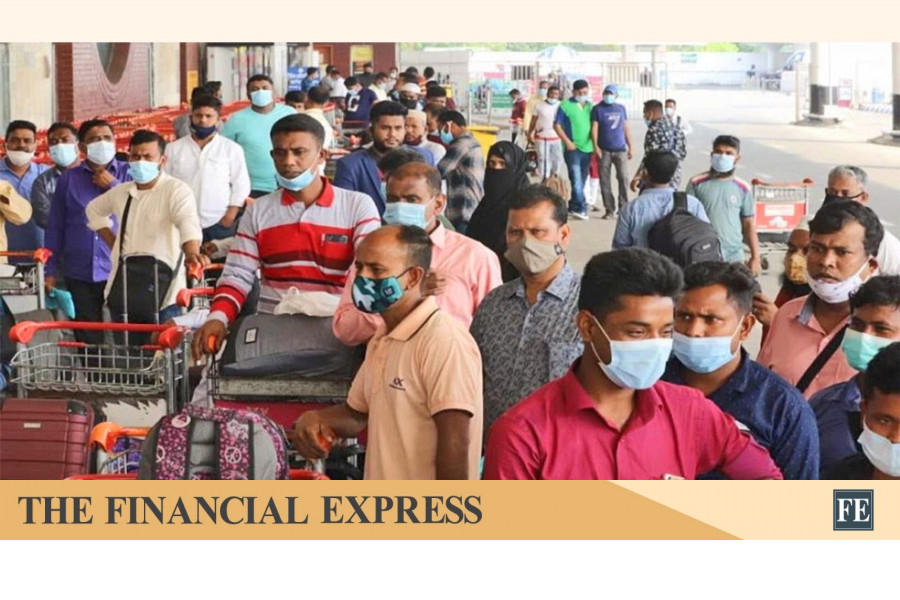
Migrant workers waiting at Hazrat Shahjalal International Airport. File Photo: Prabir Das

Consider my own story as a young international student - like so many others – from Bangladesh who migrated to Canada. Carrying study and work permits in 1981, the passage from international student to permanent resident, i.e., immigrant to Canadian citizen was a twisting, often distressed road, echoing the experience of countless migrants since the independence of Bangladesh in 1971. These journeys are not only individual tales; they are also collective transformations. Today, Bangladeshi graduates, professionals, entrepreneurs are thriving across continents. The trend of migration continues, as undergraduate students and contract workers—men and women alike—depart for Saudi Arabia, the United Arab Emirates, the Persian Gulf, Italy, Singapore, Malaysia, Thailand and countries in the West. Indeed, we live in an “Age of Migration.” In my own research, I identify all categories of transnational migrants as “migrants” and hardly make any distinctions between immigrants and asylum seekers. My thoughts have been deeply influenced by liberal welfare ideology and practices that must provide basic security to all residents without any discrimination based on citizenship status.

Migration is not simply about finding a job. It is deeply connected to systems of power, identity, and belonging. The terms—transnational migration, international migration, economic migration, global migration, political migration, environmental migration, and regional migration are now used interchangeably. These lexicons are recurrently exercised without an investigation of their underlying assumptions and far-reaching meanings. I find effective to use the term transnational migration and its multi-layered processes that highlight existing power relationships between receiving and sending countries as well as social identities of migrants. A classic example is the Philippines. Since 1974, the country is aggressively promoting labour-export policy primarily to reduce high unemployment rate, and to recover from a sluggish economy and national debt. Today, thousands of migrant workers leave the Philippines daily.

The Filipino story – for example, is also tied to Canada’s significant labour shortage of caregivers, because of inadequate support by the Canadian government for all sorts of caregiving services including childcare, eldercare, care for the disabled, and so on. Neither Canadian citizens nor permanent residents/immigrants are available to fill the shortages for childcare, more specifically, live-in-caregiving work. To meet the shortages of the caregivers, Canadian immigration policy has overtly focused on the need for a cheap labour pool. Thus, the combination of the Canadian Live-in-Caregiver Program or LCP (1992-2014) and the Philippine’s Labour Export Policy (since 1974) resulted in an influx of Filipino migrant workers to Canada as live-in-caregivers. Live-in-caregiver workers must live in their employer’s home and provide services for children, elders, severely disabled persons and so on. Within four years of their live-in migrant status, the Filipino caregivers are entitled to apply for permanent residency/immigrant status. Almost all Filipino caregivers under the LCP receive immigrant status, and then, citizenship in Canada. This convergence of national policies created a gendered pattern of employment, as most live-in caregivers are women. My own research with Filipino migrant workers in Canada underscore how labour migration intersects with gender, policy, and national needs.

In 1999, Bangladeshi immigrants in Canada played a crucial role, with support from Government of Bangladesh, Canada, and several other countries, in convincing UNESCO to recognise 21st February as the International Mother Language Day. These actions demonstrate the organisational strength and agency of transmigrants, who are not passive subjects but active contributors to their host and home countries. This also proves the strength of social identities of transmigrants and their grassroots actions.

Transnational migrants are popularly viewed as uprooted and transient people. On the contrary, transnational migrants maintain ties to their countries of origin in numerous ways and their migratory patterns are intersected with local, regional, and national identities. The identities are often layered—neither completely surrendered nor entirely defined by their new homes. Many transmigrants ultimately become immigrants and then citizens in the host countries. These people, however, do not forgo one national identity for another. National identity across borders also plays a pivotal role in organising transmigrants on a single issue. For example, Filipino transmigrants were a significant force in toppling down the US backed military dictator Ferdinand Marcos (1965-1986) and were instrumental in changing political scenario in the Philippines. In 1999, Bangladeshi immigrants in Canada played a crucial role, with support from Government of Bangladesh, Canada, and several other countries, in convincing UNESCO to recognise 21st February as the International Mother Language Day. These actions demonstrate the organisational strength and agency of transmigrants, who are not passive subjects but active contributors to their host and home countries. This also proves the strength of social identities of transmigrants and their grassroots actions.

In recent years, many countries – for instance, the United States, have taken hardline on the rights of transnational migrants, resulting in economic, social, and political uncertainties as well as physical, mental, and sexual threats and tortures. We find more emphasis on security and border control over transmigrants’ rights or well-being, including deportation of asylum seekers and ‘overstayers’, to countries such as Bangladesh, India, Iran, and other countries. Thousand have been deported in recent months in shackles. In Bangladesh, such forced returnees are receiving emergency support, shelter and transport from NGOs such as the BRAC. The right-wing populism and xenophobia still loom large in the US, threatening to force more migrants back to uncertain futures.

1772068254082.webp

Bangladesh ranks among the top ten remittance-receiving countries in the world with a vast number of migrant workers working globally. File Photo: Prabir Das

The importance of labour migration is perhaps most vividly seen in economic terms. Bangladesh ranks among the top ten remittance-receiving countries in the world. The money sent home by migrants—alongside the earnings from domestic garment workers—fuels the nation’s Gross Domestic Product and keeps its economy vibrant. Filipino migrant workers have established grassroots migrant workers’ organisation around the world. The Migrante International, an umbrella organisation, has been established to protect the rights, dignity, and welfare of Filipinos and their families. Bangladeshi migrant workers lack such structures, leaving less-skilled and manual labourers particularly vulnerable to abuse and exploitation. Existing informal networks offer some support regarding accommodation, food, and so on, but these are no substitute for grassroots organisations that can advocate for rights, dignity, and well-being. Recognising local and global vulnerabilities, Bangladesh enacted the 2013 Overseas Employment and Migrants Act to regulate agencies and protect migrant rights. However, the effectiveness of measures like this depends on implementation and innovation, especially as the number of returning migrants grow.

We should not forget that the movement of labour across borders is not merely an economic phenomenon; it is a force that shapes identities, countries, and the very fabric of our shared global existence. As we consider the realities faced by migrants, their power to organise, and the significance of their contributions, it becomes clear that migration is not a problem to be solved but a dynamic process to be understood and respected. Bangladesh needs to set examples in this regard due to its large numbers of migrant workers globally. It is high time for communities, governments, employers and corporations to recognise migrant workers as integral, valued members of society, deserving both rights and dignity.

Habiba Zaman is a Professor Emerita in the Department of Gender, Sexuality, and Women’s Studies at Simon Fraser University, British Columbia, Canada. Her most recent book is titled Reframing My Worth: Memoir of a Bangladeshi-Canadian Woman (Friesen Press, 2024).​
 

Walking a fine line over Gulf crisis

SYED FATTAHUL ALIM
Published :
Mar 03, 2026 00:05
Updated :
Mar 03, 2026 00:05

1772497897831.webp


The war in the Gulf region has put Bangladeshi migrant workers in their host countries in great jeopardy. It is not just about their safety and security due to the war raging through the region. Iranian drone and missile attacks on the US military installations including air and seaports, oil installations and commercial facilities in the UAE were hit. Qatar, Oman, Bahrain, Iraq, Kuwait and Saudi Arabia have also been affected causing huge infrastructural damage in those countries.

That is reason for concern. There is also serious concern about the fate of the Bangladesh-origin migrant workers employed in those facilities. Notably, between 2.5 to 3 million Bangladeshi workers are employed there. And the remittance money from those expatriate workers constitute a major source of the hard currency earned by the country. So, the first priority at the moment is to ensure physical safety of the migrant workers staying in the Gulf countries. Bangladesh's diplomatic missions in those countries will have to keep close contact with those workers and remain updated about their present conditions and try to coordinate with the host governments and provide as much assurance and help as possible to those affected by the war. The government at home needs also to be kept constantly informed of their (the workers') situation. It is reassuring to learn at this point that prime minister Tarique Rahman expressed concern about the well-being of the expatriate workers in the Middle East and has given necessary instructions to the ministries concerned in this regard.

Considering the importance of the Gulf nations in our national economy, the policies of the government need to be carefully calibrated in response to the situation evolving there following February 28's US-Israeli joint attack on Iran, a major Gulf nation. No doubt, Bangladesh has a huge stake in seeing that the ongoing war in the Middle East comes to an end as soon as possible and the issues between Iran and the US are settled diplomatically through dialogues. In this connection, Bangladesh government needs to demonstrate necessary diplomatic acumen in dealing with the evolving situation in the region, especially when it comes to taking sides in the war. There is no question that the government's first priority should be protecting the country's interests, which include ensuring overall safety and job security of the Bangladeshi migrant workers staying there. And one cannot also overemphasize the need to ensure continued supply of energy from the Gulf countries. In that case, country's economic interests should take precedence over everything else.

But at the same time, the government has to maintain a principled stand in relation to the emerging crisis in the Middle East, the Gulf region to be specific. That is crucial both for the country's economic interest and its image before the rest of the world. So, our diplomatic stance in response to the fast changing political dynamics of the Gulf region amidst the ongoing war should maintain strategic ambiguity. The issue of who is violating whose sovereignty is a very sensitive one and our diplomats would be well-advised to avoid committing in favour of or against any side in the war in their haste. It is believed, the government, particularly its foreign minister, given his long experience in serving at the UN, is up to the task and can navigate through the diplomatic sensitivities of the situation and craft Bangladesh's policy accordingly.

Notably, Persian Gulf's place in the global energy landscape is immense as about half of the world's proven crude oil reserves lie in the region. Most importantly, the Strait of Hormuz in the Persian Gulf between Iran and Oman is is a vital choke point to the global oil route as it carries about one-fifth of global oil supply. Small wonder that it is a hotspot of world power rivalry. So, Bangla can ill afford to get sucked into the big power rivalry in the region.​
 

Adopting a clear strategy for manpower export

FE
Published :
Mar 13, 2026 21:40
Updated :
Mar 13, 2026 21:40

1773447630412.webp


Of the two main sources of the country's hard currency, migrant workers' remittances constitute the second largest after commodity export earnings. But since the Covid-19 pandemic in 2020, Bangladesh's main destination of migrant workers, the Middle Eastern nations, was never under greater threat than now with the devastating war between Iran and Israel plus the USA raging through the Middle-Eastern countries since the end of last month. It is not only the flow of money that the migrant workers send home, which amounted to US$32.8 billion last year (2025), is in jeopardy, the personal safety of the workers, let alone the jobs, is now in real danger due to the war. For instance, Saudi Arabia, which hosts from 3.0 million to 3.5 million Bangladeshi workers sending around US$5.0 billion home annually, is under attack. So, is the UAE, which is the second largest destination of Bangladeshi workers, is being severely impacted by the war. The conditions of other migrant labour destinations including Qatar, Kuwait, Bahrain and Oman are no better.

Against this backdrop, the newly elected government of Bangladesh will face yet another major challenge of ensuring security of the workers employed in those countries. Since most of the Bangladeshi workers in those countries are engaged in low-skilled jobs in the informal sectors, they are in the worst kind of predicament with their jobs as well as personal safety. Reports coming in this connection are concerning. So far, according to this paper, the war reportedly claimed the lives of at least four Bangladeshi migrant workers. In the circumstances, the government should be in close touch with developments through the respective embassies as well as the various international bodies concerned with migrant workers' welfare in those countries to identify the victims and extend necessary support to have their bodies returned home.

At the moment, it would be too early to assess the overall situation and take any firm decision in this connection. The lesson, if any, learnt from the current war in the Middle East is that Bangladesh can no longer depend on a single destination such as the oil-rich Middle East, for its remittance. Neither should it count on the earnings of the unskilled and low-skilled workers employed abroad. In times of emergency caused either by diseases, natural disasters or wars, it is low or unskilled workers who are the first casualties, as it happened with the start of the present war, as reported in last Monday's issue of this paper in the case of some Bangladeshi workers. For their Egyptian employer left Saudi Arabia, their host country, leaving them high and dry. But they would not be in such predicament had they been employed with projects of the Saudi government or of any corporate private company of repute. But in that case, they would require adequate educational background as well as the necessary skills for their jobs. By an estimate, of all the Bangladeshi migrant workers employed overseas, 70 to 74 per cent are semi-skilled or low-skilled ones.

So, it is time the incumbent BNP government vigorously looked for alternative job markets for Bangladeshi migrant workers as well as adopted a clear-cut strategy about developing manpower and its export abroad as a viable source of foreign currency. In fact, what is going on at present in the name of employment of migrant workers abroad is not sustainable.​
 

Flight disruptions worry stuck migrant workers
Rashad Ahamad 16 March, 2026, 00:09

1773622830997.webp


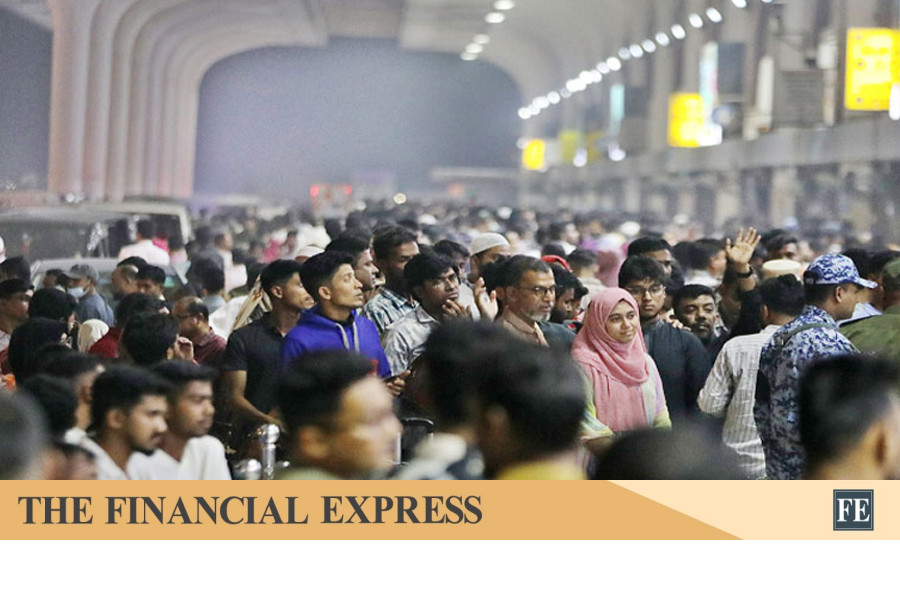
Several thousand Bangladeshi migrant workers bound for Gulf countries are passing their days in uncertainty after flights have been suspended following the Middle East conflict.Local business directory

Since the United States and Israel launched attacks on Iran on February 28, at least 539 flights from Bangladesh to major migrant worker destinations in the Gulf have been cancelled, officials said.

Authorities estimate that more than 30,000 Bangladeshi migrant workers have been stranded in the country, while many newly recruited workers have also failed to join their jobs abroad on time due to flight disruptions.

Many migrant workers fear losing their jobs as their visas or entry permits are nearing expiry or have already expired, while the situation in the region remains volatile.

State minister for the expatriates’ welfare and overseas employment Md Nurul Hoque said that four destination countries — Kuwait, Qatar, Bahrain, and the United Arab Emirates — had assured Bangladesh that migrant visas would be extended by one month.

Other Gulf countries, including the Kingdom of Saudi Arabia and Oman, however, have yet to clarify their positions.

‘We are in communication with them in all possible ways and they are positive but did not confirm us anything,’ he told New Age on Sunday.Science technology updates

Amid such uncertainties, the expatriates’ welfare ministry on Saturday issued a public notice asking stranded migrants bound for Saudi Arabia, Kuwait, Qatar, the UAE, Oman, and Bahrain to apply for visa extensions if their documents had already expired or were about to expire.

Meanwhile, the foreign ministry spokesperson and also director general of the Public Diplomacy Wing, SM Mahbubul Alam, said that they were in touch with the authorities in the Gulf countries so that the migrant workers failing to reach the destination countries before expiry of their visas did not face any problem due to flight disruptions amid the ongoing conflict across the Gulf.

‘The foreign ministry is jointly working with the expatriates’ welfare ministry on this particular issue so that our migrant workers don’t face any problem due to the cancellation of flights to their destination countries in the Middle East,’ he said.

Wage Earners’ Welfare Board director general Barrister Md Golam Sorwar Bhuiyan said that over 300 stranded migrants had contacted them so far over their flight problems.

Since the migrants are already aware about the flight suspensions and the crisis in Middle East they were waiting, he said.

‘Once the flights start we would get to know the accurate number of the stranded migrants,’ he added.

The Middle East remains the principal destination for Bangladeshi migrant workers, with about 60 lakh people of the country having migrated to the region over decades.

Refugee and Migratory Movements Research Unit founding chair and Dhaka University political science professor Tasneem Siddiqui urged the government to intensify diplomatic efforts with destination countries to protect the migrants’ jobs.

‘If the government can’t handle the situation properly, the migration-based employment sector might face another major setback,’ she warned.Politics

Data from the Wage Earners’ Welfare Board show that the highest number of flight suspensions occurred on routes to Saudi Arabia, where 145 flights were cancelled. Saudi Arabia alone employs about 67 per cent of the Bangladeshi migrant workers.

Flights to other destinations were also heavily disrupted, including 129 flights to the UAE, 62 to Qatar, and 35 to Kuwait as of Saturday.

Many migrants who travelled back to Bangladesh for short vacations have also been unable to return to their workplaces.

Md Imran Hossain, 43, a Bangladeshi migrant worker in Qatar from Faridganj in Chandpur, said that he came home on February 22 on a 12-day vacation.

‘I rescheduled my flight three times till March 11, but I still could not return to Qatar because flights kept getting cancelled,’ he said.

After working abroad for three years, Imran said that he had hoped to spend some quality time with his family during the vacation.

‘Now everything has turned uncertain. I am worried about returning to my job. If I can’t go back, it will severely affect my life and livelihood,’ he said.

Other migrants also expressed deep anxiety over the uncertain situation, saying that they had no clear information about when flights would resume or whether their visas would remain valid.

They urged the government to intensify negotiations with destination countries so that migrants stranded due to the war were granted flexibility regarding visa validity and job permits.

Sheikh Mehedi Hasan, another Bangladeshi migrant from Narail who secured a job in Kuwait, said that he had spent about Tk 8 lakh to obtain the employment.Local business directory

‘Everything was fine until March 3, when my flight was cancelled,’ he said.

His visa is scheduled to expire on March 13, raising fears that he may lose the opportunity to join the job.

‘I have invested a huge amount of money to get this job. If I can’t join my work on time, it will cause a massive financial loss to me,’ Mehedi said.

Officials said that the government was closely monitoring the situation and communicating with destination countries.

Meanwhile, the conflict has already affected Bangladeshi migrants living in the ME region.

So far, four Bangladeshi nationals have been killed and 23 others injured in missile or drone attacks in different Gulf countries since the hostilities began.

Iran launched retaliatory strikes after large-scale attacks on its territory by the United States and Israel on February 28. The conflict has since continued across the region.

Reports indicate that at least 1,300 people have been killed and many others injured in the ongoing hostilities, raising concerns about the safety of millions of migrant workers, including Bangladeshis, across the Middle East.​
 

Govt should make labour migration fair, humane

THE overseas labour migration sector has almost always been mired in problems. The sector now appears not to be able to withstand the pressure of its own growth. Official documents show that the number of recruiting agencies has almost tripled, from 923 in 2015 to 2,677 now, the highest among the countries that send migrant workers overseas. The sector has, thereby, added to corruption, riding on the indolence or unwillingness of the government to ensure effective oversight. Migrant workers have, thus, continued to pay costs much higher than what the government sets and to be cheated. Whilst the Middle East has been the prime destination of migrant workers, this puts them at further risks in the event of geopolitical shocks, as is happening now centred on the US-Israel war on Iran. About six million workers living in the Middle East have faced uncertainty since February 28, when the US-Israel attacks broke out in Iran, creating concern about disruption in remittance inflow, a mainstay of the economy. More than 15 million workers are now employed overseas, mainly in low-skilled jobs in low-paid sectors, who send some $20 billion in remittances a year.

The recruiting agencies have also largely failed to discharge their core responsibilities of diversifying overseas labour markets and producing skilled human resources. The Overseas Employment and Migrants (Amendment) Act 2023 requires recruiting agencies to send at least 100 workers overseas a year and to arrange for at least 20 per cent of the jobs on their own, meant to explore new labour markets. Whilst an increased number of agencies has made regulation difficult, such a large number of agencies has created an unhealthy competition among the agencies as one or two countries, or even a single region, have been the only destinations in the absence of any efforts to freshly create labour markets. The government has, meanwhile, continued issuing licences for the agencies without ensuring effective oversight. Political consideration is also reported to be involved. The interim government, which ended its tenure on February 17, for example, licensed 282 recruiting agencies in two phases while it suspended 191 licences and cancelled 188 licences in its tenure. As some families own licences for multiple recruiting agencies, the suspension and cancellation of licences hardly make any effective change in the situation as many continue to run their trade under other licences. Such a situation has only added to the structural weaknesses of the overseas labour migration sector.Politics

Experts say that the labour migration sector has become a cash cow rather than a system that would ensure fair labour migration. The government should, therefore, not only step up oversight of the sector but also issue licences after adequate scrutiny. The government should make labour migration fair and humane.​
 

Latest Posts

Back