Home Watch Videos Wars Movies Login

[🇧🇩] Artificial Intelligence-----It's challenges and Prospects in Bangladesh

[🇧🇩] Artificial Intelligence-----It's challenges and Prospects in Bangladesh
125
5K
More threads by Saif

G Bangladesh Defense

AI can transform our health system, but are we ready for it?

Sumit Banik

1786492291866.webp

Visual: Representational image generated through AI

Bangladesh’s healthcare sector has long grappled with severe structural limitations—acute physician shortages, a massive rural-urban divide, rising burdens of non-communicable diseases, and high out-of-pocket medical expenses that push vulnerable families into poverty. Traditional models of healthcare delivery are struggling to keep pace with these challenges. In this context, digital transformation can help build a resilient health system. By strategically integrating Artificial Intelligence (AI) not as a replacement for human clinicians, but as an interactive public educator and a clinical co-pilot, public health awareness and the knowledge levels of our healthcare workers can be elevated.

For decades, the primary bottleneck in Bangladesh’s public health has been a profound lack of health literacy. Misinformation, reliance on uncertified local healers, and social stigma frequently delay critical diagnoses. Here, interactive AI applications and localised digital health assistants can serve as the first line of defence. By translating complex clinical jargon into accessible, culturally resonant Bangla, AI can empower citizens to make informed decisions about their well-being.

Consider the country's silent mental health crisis. Data from the 2019 National Mental Health Survey indicates that nearly 19 percent of the adult population in Bangladesh suffers from mental health disorders. Yet, due to severe social stigma and a chronic shortage of psychiatric professionals—with only 1.17 mental health workers per 100,000 people—over 90 percent of those needing care receive no formal treatment. AI-powered conversational interfaces and virtual health assistants can bridge this massive gap. An anonymous, text-or-voice-based AI tool can provide individuals with a safe, stigma-free environment for basic mental health screenings and preliminary guidance. Far from replacing psychiatrists, these digital touchpoints act as empathetic navigators, educating users about their symptoms and actively directing them to professionals when necessary.

However, the health system will not be efficient if its primary workforce remains overwhelmed and under-equipped. In Bangladesh, primary care doctors and community health workers face gruelling workloads with limited access to continuous medical education or real-time diagnostic support. This is where clinical AI can be put into use. Studies show that these advanced systems can analyse clinical images, laboratory markers, and historical patient records simultaneously, mirroring the complex decision-making of real-world medicine.

However, a pioneering study titled “Physician perspectives on utilization of AI for medical assistance in Bangladesh: Knowledge, attitudes, and practices” found that while theoretical awareness of AI is high among local clinicians, practical integration remains heavily constrained by a lack of structured training and institutional support. This is further reinforced by another localised study, “Evaluating the Acceptance and Awareness of GPT-Based AI for Health Assistance in Clinical Practice among Registered Physicians of Bangladesh,” which revealed that while 71.11 percent of surveyed physicians are aware of generative AI tools, only 26.13 percent actively accept or utilise them in their clinical workflows.

To bridge this gap, AI must be reframed as an educational asset. A rural practitioner can use an AI-assisted diagnostic tool to evaluate a chest X-ray for tuberculosis or analyse an electrocardiogram (ECG) for cardiovascular anomalies, to discern subtle patterns and gather evidence-based clinical reasoning. Over time, this collaborative workflow can act as a form of continuous, on-the-job training. By assisting with diagnostic triaging and administrative paperwork, AI will free up valuable time, allowing doctors to focus on patient interaction and complex clinical decision-making.

The true test of healthcare equity in Bangladesh lies in our rural sub-districts, where specialised doctors are rarely available. AI can serve as a powerful equaliser to bridge this rural-urban healthcare divide. Studies have found that AI-enabled portable ultrasound technology can revolutionise maternal healthcare. By utilising handheld devices equipped with diagnostic algorithms, local, mid-level community healthcare workers can conduct essential obstetric screenings in remote villages. AI will automatically flag high-risk factors, such as placental abnormalities or breech presentations, allowing rural workers to refer expectant mothers to tertiary facilities well ahead of complications.

However, for Bangladesh to successfully transition into an AI-enabled healthcare ecosystem, a robust regulatory and educational framework must be established. We cannot build a high-tech health system on a fragile legal foundation. First, the government must address the legal vacuum surrounding health data and enact comprehensive health privacy or data protection laws before these technologies are deployed at scale. Clinical AI relies on vast pools of sensitive patient data; without strict guidelines on consent, data anonymisation, and security, basic patient rights and confidential medical records will remain at risk of exposure.

Besides, the critical issue of clinical liability must be addressed. If an automated algorithm fails to spot a life-threatening anomaly, or if a physician over-relies on a flawed recommendation due to "de-skilling," it must be clearly defined who bears the legal responsibility. Finally, the Bangladesh Medical and Dental Council (BMDC) must take a proactive role by integrating basic medical informatics, digital ethics, and AI literacy into the undergraduate medical curriculum, training doctors not to fear AI as a threat to their livelihood, but to master it as a clinical tool.

The future of Bangladeshi healthcare does not lie in a binary choice between human touch and cold algorithms. AI possesses the computational speed to analyse billions of data points, detect subtle patterns, and deliver rapid educational insights to both patients and providers, but lacks the empathy, ethical judgment, and deep contextual understanding that define the art of healing. By deploying it to raise public health literacy and support our frontline healthcare workers, we can construct a more equitable, proactive, and resilient health system.

Sumit Banik is a public health professional and content writer focusing on human rights, equity, and compassionate healthcare.​
 
Analyze

Analyze Post

Add your ideas here:
Highlight Cite Respond

Is Bangladesh going the wrong way on AI?

Md Mabrur Husan Dihyat

Bangladesh is beginning to think seriously about artificial intelligence. Recent discussions have focused heavily on attracting investment in AI data centres and building sovereign computing capacity. That ambition is welcome. Access to computing power will increasingly shape which countries can build competitive technology companies, conduct advanced research and deploy AI at scale.

But I think we are starting with the wrong question.

Instead of asking how many AI data centres Bangladesh can build, we should ask something more fundamental: how can a Bangladeshi engineer, company or researcher access the same computing capabilities as their counterparts in London, Singapore or San Francisco?

1786664036938.webp

Storing data physically inside Bangladesh does not automatically make it secure. Visual: Anwar Sohel


Much of that infrastructure already exists. Global cloud hyperscalers such as AWS, Microsoft Azure and Google Cloud offer computing resources that would be extremely expensive for Bangladesh to replicate independently. A Bangladeshi startup should not need Bangladesh to build its own hyperscaler before it can compete globally.

Our first priority should therefore be to remove unnecessary barriers to using the infrastructure that already exists.

Bangladesh Bank has already moved in this direction. In October 2024, it issued rules allowing authorised dealers to make outward remittances for cloud services, IT infrastructure and remote software applications. The framework was subsequently incorporated into Bangladesh Bank's broader foreign exchange rules.

This matters because cloud computing is no longer an occasional technology purchase. For a modern software company, cloud infrastructure, databases, cybersecurity services and AI compute are basic operating expenses. As the company grows, these costs grow with it. A Bangladeshi technology business should not face unnecessary financial or regulatory friction simply because the infrastructure it needs happens to be billed from abroad.

Data sovereignty is, however, a legitimate concern.

Bangladesh Bank's cloud guidelines state that financial and other sensitive customer data generally cannot be hosted on a cross-border public cloud, except in exceptional circumstances with prior approval. The same guidelines also require institutions to classify information according to its sensitivity.

That second principle is the one Bangladesh should build upon.

Not all data is equal. A government website, an internal administrative system, citizens' financial records and military intelligence should not automatically have identical hosting requirements.

The sensitivity of the data should determine where it can be stored and what security controls are required.

The UK provides a useful example. British government information is classified into OFFICIAL, SECRET and TOP SECRET, with progressively stronger protections depending on the consequences of compromise. UK government guidance explicitly states that OFFICIAL information, including information carrying the SENSITIVE marking, can be stored or processed in overseas cloud regions where appropriate legal, security and data protection safeguards are in place. There is no universal requirement for OFFICIAL government information to remain physically inside the UK. Public cloud is not considered suitable for SECRET and TOP SECRET information without additional specialised arrangements.

Geography is one security control. Encryption, access management, monitoring, operational expertise, backups and cybersecurity practices also determine whether a system is genuinely secure.
Bangladesh does not need to copy the British model. It needs its own classification system based on its own risks. But the principle is sound: Classify the risk first. Choose the infrastructure second.

This also challenges another misconception. Storing data physically inside Bangladesh does not automatically make it secure. Geography is one security control. Encryption, access management, monitoring, operational expertise, backups and cybersecurity practices also determine whether a system is genuinely secure.

None of this means Bangladesh should abandon domestic data centres. We need sovereign computing capacity for genuinely critical workloads, and we should actively encourage established global infrastructure companies to increase their presence in Bangladesh as the market grows.

But there is another constraint that cannot be ignored: electricity.

The International Energy Agency projects that electricity consumption by data centres worldwide will more than double by 2030, reaching around 945 terawatt-hours, driven largely by the rapid growth of AI.

Bangladesh already has serious power reliability challenges. A recent World Bank assessment found unreliable electricity supply to be the most commonly cited business constraint among firms in Bangladesh, while the Bank has repeatedly identified improved electricity reliability as critical to private-sector growth. It is therefore reasonable to question proposals for AI campuses that would require 100 or 200 megawatts of uninterrupted electricity.

The answer should not be to reject data centres. It should be to demand that major projects make economic and infrastructural sense. If an investor requires enormous amounts of reliable power, we should ask how additional generation and grid capacity will be created, who will pay for it, how cooling and water requirements will be managed, and what economic value Bangladesh will receive in return.

We should also be selective about investors. A multibillion-dollar AI infrastructure proposal should require clear evidence of financing, technical capability and previous delivery at a comparable scale. Terms such as "sovereign AI", "AI factory" or "quantum-ready" should never substitute for due diligence.

The better strategy is a hybrid one.

1786664097244.webp

Bangladesh should develop purpose-built sovereign infrastructure for systems where national security genuinely requires domestic control. Visual: Salman Sakib Shahryar

Bangladeshi businesses should have easy access to global hyperscalers wherever security requirements permit. The government should create the regulatory, connectivity and energy conditions that make Bangladesh increasingly attractive to established cloud providers. At the same time, Bangladesh should develop purpose-built sovereign infrastructure for systems where national security, legal or strategic considerations genuinely require domestic control.

Bangladesh does need data centres. It does need sovereign computing capability. What it does not need is to confuse physically owning servers with technological independence.

The objective should be simpler and more ambitious: A Bangladeshi engineer should have access to world-class computing power without unnecessary friction, while genuinely critical national data remains appropriately protected.

That would be more valuable than simply being able to say that Bangladesh has built an AI data centre.

It would mean Bangladesh has developed an actual compute strategy.

Md Mabrur Husan Dihyat works at Amazon Web Services (AWS) in London and has experience in cloud infrastructure, AI, security and enterprise technology. The views expressed in this article are entirely his own and do not represent those of his employer.​
 
Analyze

Analyze Post

Add your ideas here:
Highlight Cite Respond

Should you replace your partner with AI as soon as possible?

K T Humaira

1786664348804.webp

Representational image — AI-generated

As a generation, we have transitioned from “Google knows everything” to “AI is the one who truly understands me.” Although this may sound cringe and comical equally, it is what the recent data says.

Travis Butterworth, a leathermaker from Colorado, USA, made headlines a few years back when he fell in love with a pink-haired Replika chatbot named Lily Rose during the 2020 COVID-19 lockdowns, eventually having a digital wedding, which was approved by his human wife, no less. Yes, that is what you can call a modern love story!

In early 2026, a 32-year-old woman named Yurina Noguchi decided to marry her machine intelligence generated partner, Klaus, whom she designed using ChatGPT after a rough real-world relationship. And these are just the two cases among the dozens.

Well, once, dating required exceptional fashion sense, charismatic communication skills with the perfect sprinkle of humour, and most importantly, a colossal dose of courage. You had to make an effort to approach someone, say something slightly unsmart, withstand the possibility of rejection, and then spend hours analysing every moment to extract some semblance of wisdom.

So, we thought we had had enough of that, and designed a much simpler alternative: the AI.

That never says anything mean or leaves you on “seen”, neither does it take an eternity to reply. No matter what happens, your chatbot is always sitting there patiently (at least as long as there is Wifi and enough credits) to listen to your breakdown, and to validate all of your feelings with beautifully structured answers, remembering your preferences from past chat sessions.

1786664383907.webp

Photo: Collected / Microsoft copilot / Unsplash

Honestly, the competition is unfair. We human beings haul around emotional baggage that seems to get heavier as we age, whereas the digital companions simply get an update every now and then, and gradually gets better at “understanding” human feelings.

But let’s pause for a moment.

Automated intelligence is, in many ways, the ultimate low-maintenance partner of your dreams. Except, there is one tiny problem. It is not your partner. That sweet, compassionate text you receive is not from someone who is thinking about you. The chatbot is probably sending an empathetic text to you, recipes to someone else, and recommending ointments for a rash to another at the very moment. Talk about commitment issues!

But in earnest, what we must not forget is that treating chatbots as a romantic partner has its own downsides as well. These are perpetually available, agreeable, and designed to be pleasant to interact with, which subtly reshape the expectations of real relationships, making the frictions and unpredictability of human connection feel unappealing in comparison.

Also, did you know that excessive time spent with a virtual assistant can deepen loneliness? Especially for people already prone to loneliness or isolation, since time and emotional energy spent on an AI relationship often substitutes for, rather than supplements, human contact.

There is also a risk of emotional dependency: the robot in your phone can not independently verify a person's situation, hold them accountable, or offer the grounded, external perspective that friends or family can.

To be true, in this era, the real reason dating is exhausting is not that humans are badly designed. It is because we are complicated creatures.

We sometimes (or often) misunderstand and disappoint each other without knowing, change our minds, and act irrationally when we have terrible days. But that is also what makes human connections meaningful. Your synthetic sweetheart can give you the perfect response, whereas a human can give you an unexpected one. And sometimes that unexpected response is exactly what you need.

But then again in all seriousness, if dating apps continue churning out conversations that begin with: “Kaman asan?” I would say the artificial intelligence certainly has a bedazzling future in dating.​
 
Analyze

Analyze Post

Add your ideas here:
Highlight Cite Respond

AI poses challenge to original writing
1787354213291.webp


The use of various artificial intelligence (AI) tools for writing and editing has grown rapidly over the last couple of years due to innovations by technology giants. Following the big techs, even several start-ups have joined the rally, developing AI tools for various types of writing, proofreading, and editing. In this process, AI-generated or AI-assisted texts have become a serious challenge for newspapers worldwide. From news reports to opinion pieces - all are severely affected by the expansion of AI, as a growing number of writers and reporters are resorting to AI tools to develop their pieces.

Use of AI is, however, not new. Since the introduction of the internet, coupled with search engines like Yahoo and Google, there has been a gradual rise in the use of these virtual tools to collect and verify information and conduct preliminary research. Those were the early days of seeking assistance from AI for writing an article, preparing a journal paper, developing an opinion piece and generating a news report.

With the rapid advancement of technology, especially over the last one and a half decades, AI has become accessible to all. Besides providing convenience in searching, gathering, and sorting necessary information, AI tools also assist writers in revising and improving their writing. At the same time, AI tools are used to generate texts, draft articles and produce essays.

For newsroom managers and editorial teams in newspapers and periodicals, AI thus poses a daunting challenge to identification of the real contributions of writers and reporters. In Bangladesh, the situation is also becoming more complex, especially in English-language newspapers and magazines. Many writers are using AI to develop their pieces and submitting those to newspapers for publication. Experienced editorial teams sometimes detect AI-generated or copied pieces. Nevertheless, sometimes it becomes tough to detect, and editorial staff needs help from AI tools to detect plagiarism or machine-generated text. Interestingly, AI is being used to identify AI contributions in human work.

Using tools like Grammarly to correct or edit English-language writing is now common. From university teachers to school students, from corporate leaders to clerks, from newspaper editors to junior reporters, the use of grammatical error-correction software is widespread. The advanced version of the software also helps to rewrite, improve, streamline and recreate texts.

A deficit-of-trust environment builds up. Allegation and counter-allegations have also been intensifying professional jealousy, though both parties are using AI in various ways.

Reviewers and editors are struggling to draw the red lines of AI tools' use in write-ups and articles. As using AI support is now the new normal, the extent to which it is acceptable has become a matter of debate. Some argue that fixing typos and structural mistakes with the help of AI is fine, but gross revision is unacceptable. Some are, however, ready to accept revision or rewriting by AI of a piece as long as it does not produce an entirely new text. For instance, an AI tool's conversion of passive sentences into active ones is acceptable to many.

One way to address the problem of AI-generated or AI-backed text is to use references in relevant parts of an article or essay. But a reference-burdened short article or opinion piece is not worth it for newspaper readers. Only long essays, journal papers or books can absorb a long list of references.

Acknowledgement of AI assistance at the end of the article may be an option. Again, it will also raise further questions among many about the extent to which, or for which parts of the piece, the writer takes assistance from AI. Moreover, many writers and editors may use such assertions to justify the extensive use of AI-generated texts.

So, the challenges posed by AI to writing and editing will increase in the days to come, and it will become harder to address them. Creative writers will face difficulty to establish the originality of their works; translators will come under scrutiny for the extent to which they do not use AI in translation; copy editors will be in trouble fixing the pieces. It is going to be a new era, still unknown.

Postscript: This scribe uses an AI tool to check the draft of the piece before the final human touch for editing.​
 
Analyze

Analyze Post

Add your ideas here:
Highlight Cite Respond

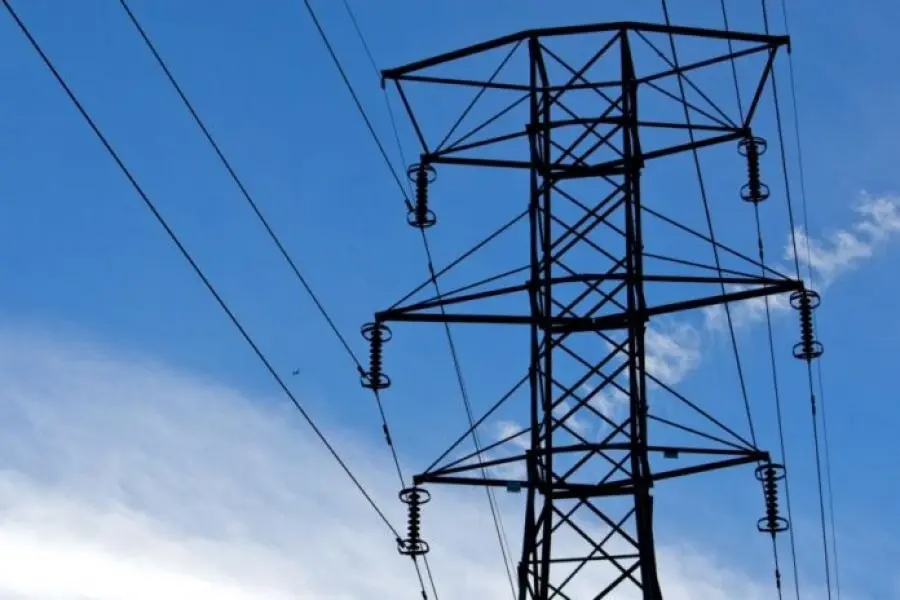
Can AI help keep Bangladesh’s lights on?


1787355478984.webp


Bangladesh is once again confronting a familiar energy crisis. Gas shortages are limiting electricity generation, load-shedding has increased, and the government has had to ask shops and markets to close earlier in an effort to conserve power.

Yet there is a deeper contradiction at the heart of the crisis. Bangladesh now has an installed generation capacity of 32,322 MW, while the highest electricity generation ever served was 17,200 MW on May 20, 2026, according to Power Cell data. The country has invested heavily in generation, transmission and distribution, but whenever gas supply falls, a significant share of that capacity becomes unusable.

That suggests our problem is not simply a shortage of power. It is also a question of how intelligently we produce, distribute and consume the energy already available to us.

This is where artificial intelligence could make a practical difference.

Bangladesh’s gas demand is around 3,800 mmcfd, while recent supply has fallen to roughly 2,100 mmcfd. The Daily Star recently reported that the electricity supply gap at one point this month reached 3,592 MW, with demand at 17,523 MW against supply of only 13,931 MW.

We cannot produce an additional 1,500 mmcfd of gas overnight, and we cannot build a new power plant overnight. What we can do is make better decisions with the gas, electricity and infrastructure we already have.

One of the most immediate applications is demand forecasting. Electricity demand is not random. It changes with temperature, humidity, working hours, industrial production, irrigation, holidays, Ramadan, air-conditioning use and even the times when households charge batteries and other devices.

An AI-based forecasting system can analyse large volumes of such data and estimate demand hour by hour. If system operators can see at 2pm that demand is likely to cross 18,000 MW at 8pm, they have six hours to prepare. That is far more useful than responding only after the shortage has already begun.

A second opportunity lies in the use of scarce gas. When gas supply is tight, allocation should not simply follow yesterday’s schedule. The better question is where each unit of gas can produce the greatest value for the power system.

AI can continuously compare the efficiency, heat rate, operating condition and fuel requirement of gas-fired power plants. It can then help operators determine which plants should run, at what level and in what sequence. If one plant can produce more electricity from the same quantity of gas than another, that difference should matter when fuel is scarce.

This is not a futuristic idea. The International Energy Agency estimates that widespread use of existing AI applications in power-sector operations and maintenance could generate up to US$110 billion in annual savings by 2035, largely through lower fuel use and operating costs.

Predictive maintenance offers another important benefit. Transformers, turbines, substations and transmission equipment often show warning signs before they fail. Temperature, vibration, voltage and current patterns can begin to change well before a major breakdown occurs.

An AI system can detect those changes early and alert engineers to inspect the equipment. Preventing a failure is far cheaper and less disruptive than waiting for a transformer or other critical asset to break down and leave thousands of consumers without electricity.

The same logic applies to Bangladesh’s transmission and distribution networks. The country now has nearly 18,000 circuit-km of transmission lines and more than 657,000 km of distribution lines. Managing a network of that scale is an enormous operational challenge. Power Cell data show that official distribution losses stood at 7.38% in June 2025.

By analysing real-time grid data, AI can help identify overloaded lines, abnormal voltage, technical losses and potential faults. The IEA estimates that AI-enabled fault detection can reduce outage duration by 30% to 50%. It also says that improved monitoring and AI-based grid management could unlock as much as 175 GW of additional transmission capacity globally from existing lines, without constructing new ones.

Bangladesh would not need to achieve the full global potential for this to matter. Even modest gains in efficiency, reliability and fault response could have a meaningful impact on a system operating under fuel and infrastructure constraints.

Electricity theft and abnormal consumption are another area where data can improve enforcement. With smart meters, utilities can compare the electricity entering a transformer with the amount being consumed and billed in the area it serves. Unusual patterns can be flagged automatically, helping inspection teams focus on places where the data indicates a genuine problem.

That is a much more efficient approach than trying to inspect every location with equal intensity.

AI can also help shift demand instead of simply cutting it. Not every factory, commercial building, water pump or battery charger needs to operate at maximum load during the same peak hours.

Some demand is flexible. Refrigeration cycles can be adjusted, EV and battery charging can move to off-peak periods, and commercial buildings can optimise cooling without compromising basic comfort or productivity. The objective is not to ask people to consume less at any cost. It is to use electricity at the right time and reduce unnecessary pressure on the system during peak periods.

The same intelligence can support renewable energy integration. As rooftop solar expands, AI can use weather data to forecast solar generation and coordinate it with battery storage, grid supply and conventional power plants. This becomes increasingly important as the power system grows more complex and more distributed.

Bangladesh has already begun to recognise this opportunity. In October 2025, the Asian Development Bank approved a US$1 million technical-assistance project to support AI-enhanced distribution grids in Bangladesh. The initiative is intended to pilot AI technologies and develop an AI-based energy management system for distribution companies.

The debate, therefore, is no longer about whether AI has a place in Bangladesh’s energy sector. The more important question is whether the country can deploy it at the scale and speed that the present crisis requires.

A practical next step would be a National Energy AI Platform connecting BPDB, PGCB, Petrobangla, gas distribution companies and electricity distribution utilities. Its initial priorities should be straightforward: forecast demand more accurately, optimise gas allocation, predict equipment failures, reduce grid losses and manage peak demand.

Over time, that platform could evolve into a national AI-powered energy control centre capable of running ‘what-if’ scenarios before major operational decisions are made. System operators could test the likely impact of a gas shortage, a plant outage, a heatwave or a sudden rise in demand before choosing how to respond.

None of this means AI can replace gas exploration, LNG imports, renewable energy, transmission investment or new generation capacity. Those investments remain essential.

But Bangladesh has already spent billions of dollars building energy infrastructure. The next challenge is to make that infrastructure work more intelligently.

For decades, the standard response to an electricity shortage has been to build another power plant. The energy crisis now gives us a reason to broaden that approach. The next major investment should not only add more megawatts. It should add intelligence across the entire power system.

In the energy system of the future, one of the most valuable ‘power plants’ may not be made of steel and concrete. It may be built from data, algorithms and better decisions.

- The writer is a policy analyst specialising in digital governance and public-sector reform​
 
Analyze

Analyze Post

Add your ideas here:
Highlight Cite Respond

Bangladesh signed up for AI-enabled healthcare, what should that actually mean?

Farjana Yesmin

1787528012872.webp

Image created with AI assistance

In December 2025, in a conference room in Tokyo, Bangladesh signed a document that researchers in my field had been waiting years to see. The National Health Compact, agreed at the UHC High-Level Forum, lists six pillars for reforming the country's health system by 2030 (National Health Compact, Bangladesh, UHC High-Level Forum, Tokyo, December 2025).

Tucked into the sixth one is a line that most readers probably skimmed past: the government commits to supporting "the scale-up of digital health solutions, AI-enabled tools, and other emerging technologies that enhance equitable, efficient, and high-quality service delivery."

I read that sentence more than once. It's the first time I've seen AI named directly in a Bangladeshi health policy document rather than treated as something for another country to figure out first. But a compact is not a blueprint. It says AI-enabled tools should scale up. It doesn't say which tools, for which pillar, solving which specific problem. That gap is where my own work sits, and I think it's worth spelling out what filling that gap could actually involve.

Why the gap matters more here than elsewhere
Bangladesh's public health spending was 0.40 per cent of GDP as of 2021, well behind Bhutan at 2.21 per cent, Nepal at 1.80 per cent, and even Pakistan at 0.84 per cent. Out-of-pocket costs make up 73 per cent of total health spending, one of the highest shares in South Asia, and that burden has been pushing people into poverty. Health costs pushed 3.74 per cent of the population below the 2.15 dollar a day poverty line in 2016, up from 3.11 per cent in 2010. The health budget for FY2024-25 came to just 0.74 per cent of GDP (Centre for Policy Dialogue, Policy Brief 2025(2), April 2025).

In a system this constrained, a badly targeted tool doesn't just underperform. It actively wastes money the country doesn't have to waste. That's the argument for getting the "how" right before scaling anything up.

Where the compact's pillars point
The compact's second pillar calls for expanding community-based and telehealth service delivery, especially in hard-to-reach areas. I built a chatbot for dengue symptom triage in Bangladesh, designed to run on simple decision-tree logic in low-bandwidth clinical settings in Bengali and English. In testing on 2019-2023 case data, the model correctly flagged severe cases well enough to be useful as a first filter, and in a small pilot with 50 users, three in four said they were satisfied with it. It''s a small example, but it points at something the compact gestures toward without detailing: triage tools that work where the internet is slow and the nearest doctor is an hour away, not just in Dhaka.

The third pillar talks about redesigning the Essential Service Package around life-course prevention, including maternal health. My colleagues and I built a tool for maternal health risk prediction that combines two approaches: a set of medical rules a doctor would recognise, and a machine-learning model trained on patient data. We tested it against clinical data and then asked actual doctors, 14 of them, to review its recommendations. When we showed them the combined version, the one that explains its reasoning in terms they recognize rather than just a risk score, more than half said they would trust it enough to use in practice. That distinction between a tool that shows its work and one that doesn't seems small on paper. To a doctor deciding whether to refer a patient, it isn't.

The fifth pillar is where things get more complicated, and more interesting. It commits to establishing a National Health Security Office to manage a National Health Fund and lead what it calls strategic purchasing, while targeting vulnerable groups, urban slum residents, widows, people over 70, people with disabilities, for prioritized services.

This is not a new idea in Bangladesh. A draft National Health Protection Act has existed since 2014, proposing something similar: a National Health Protection Authority, a health card system, and lists sorting citizens into income categories, below poverty, marginal income, middle income, and above, to determine who gets subsidized care (Draft National Health Protection Act, 2014). The draft law even requires annual audits and treats misuse of the system as a punishable offense. More than a decade later, the compact is effectively picking up where that draft left off, this time with an actual signed commitment and a 2030 deadline attached.

Here's the part I keep coming back to. Any list sorting citizens into income categories is a judgment call, whether or not anyone calls it that. Someone, or something, decides who counts as "below poverty level" versus "marginal income," and that decision determines who gets a subsidized health card and who doesn't. If this system gets digitized without checking for bias first, and I've seen this exact pattern before in disaster aid allocation, it risks locking in existing unfairness at a much larger scale and a much faster pace than a paper-based system ever could. The bias-correction techniques I used to fix historical unfairness in post-flood aid rankings, adjusting a model so it stops treating location as a shortcut for actual need, apply directly to this kind of eligibility list too.

I want to be careful here about a second idea some of my recent work touches on: using AI to flag suspicious claims once a national health fund is up and running. That's a real and useful application in principle. But I''ll say plainly that my own research on this, which mixes rule-based logic with pattern recognition, has so far been tested only on simulated financial data built for a research paper, not on real claims from any health system, and my own paper is explicit that those results shouldn't be read as proof the method works on real-world fraud. It's a promising direction. It is not a finished tool, and Bangladesh shouldn't wait for it to be one before doing the more basic work of auditing its eligibility data for bias.

Bangladeshi researchers have working models for triage, maternal risk prediction, and privacy-preserving collaboration across institutions, at different stages of readiness. None of this needs to be imported or reinvented from scratch.

The piece nobody wants to think about until it breaks

The compact's first and sixth pillars also call for modernizing infrastructure and expanding private sector participation, including private diagnostic centers. Bangladesh's health data will increasingly sit across public hospitals, NGO clinics, and private providers that have no particular incentive to share patient records with each other, and plenty of legal and ethical reasons not to.

This is the kind of problem a technique called federated learning is built for, where separate institutions train a shared model together without any of them handing over their raw patient data. I built a framework called MedHE to test exactly this idea, combining that data-sharing approach with encryption strong enough that even the central server coordinating the process can't read what any single institution contributed. In our tests, simulating five separate clients working together on a health-related text classification task, the encrypted, privacy-protected version performed statistically as well as an ordinary shared model, while cutting the amount of data that needed to move between institutions by more than 97 per cent.

It's still a research demonstration rather than something running across real Bangladeshi hospitals, but it shows the privacy problem and the efficiency problem can be solved together, not traded off against each other. Bangladesh's own Digital Health Strategy, in place since 2023, will need something in this direction eventually if it's serious about connecting a fragmented network of providers without asking any of them to give up their patients' privacy first.

What would actually make this real

The compact already has a monitoring framework with real targets: raising the UHC service coverage index from 54 to 65 by 2030, cutting the share of households facing catastrophic health spending from 42 per cent to 35 per cent, and more (National Health Compact, Bangladesh, 2025). A few additions would make the AI-enabled tools commitment more than a sentence in a document.

First, any tool used to determine eligibility or priority for the National Health Fund should be checked for bias before it goes live, the same way financial and clinical outcomes are already tracked.

Second, fairness and explainability deserve their own line in the compact''s list of indicators, not just a mention under one pillar. What gets measured tends to be what gets built.

Third, the government should draw on the research already happening inside the country. Bangladeshi researchers have working models for triage, maternal risk prediction, and privacy-preserving collaboration across institutions, at different stages of readiness. None of this needs to be imported or reinvented from scratch.

Fourth, the long-dormant National Health Protection Act should be revisited with this compact in mind. A legal framework for a health card system already exists in draft form. Updating it with explicit rules for checking algorithms for bias would save the country from relearning lessons other systems have already paid for.

I think about the years between that 2014 draft act and this 2025 compact, and how much could have been built in between if the tools had been treated as ready rather than hypothetical. Some of them are ready now. Others still need more testing before anyone should trust them with real decisions, and it matters to be honest about which is which. Bangladesh has already signed the intention. What remains is turning one sentence in a Tokyo hotel conference room into something that actually makes a difference to a patient in Sunamganj or Satkhira.​
 
Analyze

Analyze Post

Add your ideas here:
Highlight Cite Respond

Latest Posts

Back
 
G
O
 
H
O
M
E