| Global Defense, OSINT & Geopolitics Wire

[🇧🇩] Monitoring Bangladesh's Economy

[🇧🇩] Monitoring Bangladesh's Economy
1K
57K
More threads by Saif

G Bangladesh Defense

Business activities yet to come back on track

1725061973812.webp

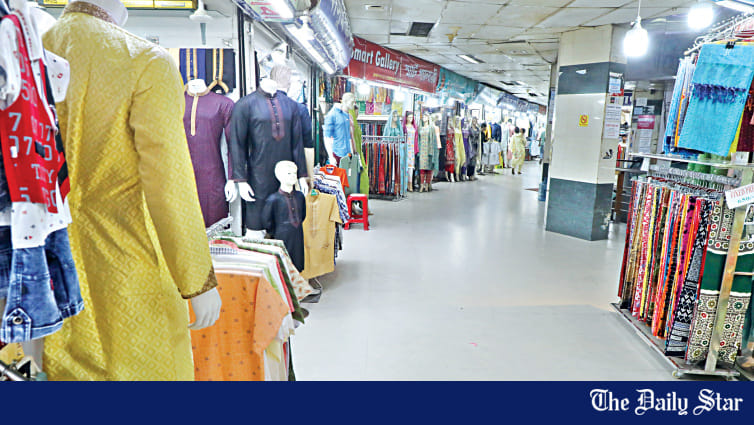
Although the unrest stemming from nationwide protests is fading and shopping centres have opened their doors, customer footfall has not picked up. Recent floods, alongside persistently high inflation, have also impacted consumer behaviour. As such, shopping centres and malls remain relatively desolate. The photos were taken in Farmgate yesterday. Photo: Prabir Das

Flash floods across parts of the country, the lingering effects of recent nationwide political upheaval, and persistent inflationary pressure have prevented business activities from getting back on track, according to businesspeople.

As uncertainty and fear are still clouding people's minds, they are not interested in shopping, businesspeople said.

However, they believed business activities would gradually return to normalcy, saying that there was no alternative but to wait for better days.

"The months-long political unrest stemming from the student movement, coupled with recent floods, caused sales and demand to drop to inadequate levels. So, businesses are enduring a difficult time," said Tapan Sengupta, deputy managing director of BSRM, a leading steel manufacturer.

He said that sales of construction materials usually decline in the rainy season, with demand for steel significantly reduced during the monsoon months.

"However, various elements have emerged and hampered business in nearly all sectors."

Since demand from clients and dealers has declined substantially, BSRM has only been partially running its production units in order to avoid a stockpile of goods, he informed.

Sales will not improve until consumer confidence is restored, and development projects are resumed, he opined.

Rupali Chowdhury, managing director of Berger Paints Bangladesh, said domestic consumption of fast-moving consumer goods and construction materials has declined significantly since last year.

"The recent unrest added to this, which is unfavourable for business growth," she said.

Consumers are uninterested in spending money on non-essential products in the current situation, she noted.

Chowdhury, also a former president of the Foreign Investors' Chamber of Commerce and Industry (FICCI), said all multinational companies were facing the same situation.

"The economy is not in a positive state due to the political changeover and recent flash floods while people are yet to mentally recover from recent turmoil," Chowdhury said.

"So, businesses are passing a transitional period. As a result, business activities have been hindered."

Arfanul Hoque, director (retail) at the Bata Shoe Company (Bangladesh) Ltd, said footfall at their outlets slowed since the start of this year.

He said high inflationary pressure is a fundamental reason for the decline in sales.

Inflation hit 11.66 percent in July this year, the highest in at least 13 years, while food inflation soared to at least a 10-year high of 14.1 percent, according to the Bangladesh Bureau of Statistics.

"Later, unrest and flash floods exacerbated the situation," he said.

However, Hoque believes the situation will gradually improve as the political situation becomes more stable.

Mohammed Amirul Haque, managing director of Premier Cement Mills PLC, said the business situation had been beyond anyone's control since mid-July.

"Demand declined significantly due to the monsoon season and also because customers are yet to regain confidence. In this situation, we are running the manufacturing units partially," he said.

"Despite having no control over the situation, we are trying to do our best to handle the challenges," Haque added.

He also stressed the need for policy support from the interim government.

MA Jabbar, managing director of DBL Group, said factories in Mymensingh's Bhaluka area and Gazipur's Kashimpur locality are contending with an acute gas and power supply crisis.

"In this situation, we are running the factories with diesel to ensure power, which increases the cost of production," he said.

Although demand is slow at the moment, manufacturers may be unable to ensure adequate supply as production is being hampered due to the gas crisis, he added.

Jabbar said such issues had become a new headache for investors, adding that they would think several times before expanding their businesses or making fresh investments.

Khourshed Alam, director of sales and marketing at Akij Ceramics Ltd, said the business situation is yet to come back on track as the overall condition is not suitable for customers.

"There were no sales between July 15 and August 15 due to the student movement. Recently, flash floods also impacted businesses," he added.

Alam hopes that business activities will come back on track within one-and-a-half months.​
 

Fall of a titan: Looking for the economic tinderbox

1725233083539.webp

Inflation must be tamed in the shortest possible time, or else it will remain a keg in the economic tinderbox. FILE PHOTO: AMRAN HOSSAIN

Just when the Hasina regime was imbued with an aura of invincibility, the ground finally shifted on August 5, 2024, and the 15-year-old regime collapsed like a house of cards. This regime change, and the process that led to it, will be recorded in blood-letters, once again, in the annals of Bangladesh history. To the nation's advantage and to restore stability, we had someone of the stature of Nobel laureate Dr Muhammad Yunus, widely respected nationally and internationally, who was unanimously offered the high task of leading the nation onwards.

Bangladesh is no stranger to national student movements and violent transitions. A peaceful transfer of state power has eluded this country for much of its 53-year existence. But it was for the first time that a student movement toppled an apparently powerful government. Political analysts around the world will now have to sift through their books to ascertain the theoretical underpinnings that best fit the latest transformative developments. Suffice it to say that the end of a long-running progressively authoritarian regime was inevitable, albeit unpredictable. The nagging question was when… and how?

Since early July, Bangladesh has gone through what can aptly be called a youth-driven mass uprising that toppled a regime that had lost touch with the people. But, for such a movement to change a regime that appeared fully ensconced in the saddle of government, there has to be some lethal and explosive spark that removes the ground from underneath the holders of state power. I am no political scientist, but I would like to argue that in a situation where one political party and its cronies share much of the wealth creation that has indeed happened over the past decade and a half, then it is the exclusion of the vast swath of the population (an overwhelming majority), not connected with the ruling elites or their henchmen, that presents a classic case for a political explosion to unravel.

It is true that, as a consequence of the Covid pandemic and subsequent Russo-Ukraine war, the economy was treading a rough terrain, putting a damper on the notion of a fairytale economy of Bangladesh. To make matters worse, there was an inexcusable mishandling of the internal and external challenges afflicting the economy that triggered something of an "economic tinderbox," a concoction of Lutfey Siddiqi, a talented professor of Bangladeshi origin at London School of Economics (LSE). Was there an "economic tinderbox?" The answer, in my view, is yes and no. To be objective, one needs to take a closer look.

Most certainly, inflation, a rise in the general price level, remains a ticking time bomb. Ordinary citizens are suffering from serious diminution of their purchasing power from double-digit inflation that has stubbornly persisted for over 18 months. If not handled deftly and fast, it could be the cause of another implosion in the future. It is therefore reassuring to see the appointment of a highly competent professional economist like Dr Ahsan Mansur (former IMF Division Chief and Executive Director, PRI) at the helm of Bangladesh Bank. His immediate task is to bring inflation under control and restore sanity in the financial sector. But the challenges should not be underestimated.

Orthodox monetary management, which is now in full swing and seems to be intensified (by raising interest rates a few notches) may take too long for the patience of ordinary citizens to last. This inflation is not just an excess demand phenomenon which can be quashed by restraining demand through monetary tightening. There is a significant cost-push element arising from exchange rate depreciation (raising import prices) and hike in domestic energy tariffs that triggered the first inflationary spike in domestic prices in 2022. Then, there is the need to give a deflationary shock to prices, particularly to essential food items such as sugar, edible oils, onions, wheat, spices, etc. Import prices of intermediate and capital goods also need a reprieve in order to reduce production costs that have risen as a consequence of the 36 percent exchange rate depreciation that occurred over the past 18 months or more. What are the options?

Bangladesh presents a unique case of possible inflation control via long-pending tariff rationalisation in a high tariff economy. This presents an opportunity to kill two birds with one stone. What is not known to most experts in the country is that the 36 percent exchange rate depreciation has raised already high tariffs by exactly 36 percent, across-the-board. It is high time to shave off at least half of that, an action that will provide the dis-inflationary trigger to domestic prices.

Another point to note is that even if inflation were to decline to 6-7 percent due to monetary contraction, from the current level of more than 11 percent, over the next 6-9 months, that will not bring down market prices from current levels. This is the reality. You can't reduce prices by imposing pricing caps either. So, it is critical to come up with every possible ammunition in the economic policy package to reduce market prices to tolerable levels. The tariff handle is one such instrument. Tariff rationalisation has been a long-pending agenda. Its time has come. The National Tariff Policy 2023 has all the right policies waiting to be implemented. Budget and balance of payments support from IMF-WB could assuage any adverse impacts on revenue or balance of payments.

Bottom line: inflation must be tamed in the shortest possible time, or else it will remain a keg in the economic tinderbox.

Next off, it is the massive misgovernance in the banking and financial sector that needs immediate attention and redress. Needless to give details, all of which are now in the open. Some of the big guns involved in mega-theft (no better word to describe what has happened) of banks are in custody or on the run. The malaise runs deep and is a signature outcome of crass cronyism of the worse kind. What a mockery of the banking supervision rules. Setting up a banking commission and publishing a white paper on the state of the financial sector is a high priority and acknowledged by the interim government. Governance reforms in this sector simply cannot wait. Given the depth of the malaise, it is a tall order but one that deserves not words but action. Or else, here is one more keg in the tinderbox that could lead to a meltdown of the overall economy, simultaneously bringing both political and economic distress.

Since the outbreak of the Russo-Ukraine war the economy has been reeling under a balance of payments shock out of which it is yet to recover fully. Mismanagement of foreign exchange reserves and mishandling of exchange rate policy led to sharp depletion of forex reserves that were in highly comfortable range until 2022. After inexplicable delays, the exchange rate was substantially depreciated. A flexible exchange rate policy has been adopted—a crawling peg system—which has had the intended impact of stabilising forex reserves while minimising the divergence between the bank rate and the kerb market rate, thus incentivising and redirecting remittances through official channels.

Now comes the hard part. Restoring forex reserves to comfortable levels exceeding 5-6 months of import cover will need robust export performance for which a competitive exchange rate will play its part. This is where the interim government needs to exude signals of stability to the world community with laser-focus on reforms that bring dynamism to our export-oriented economy. That will then attract rising amounts of export-seeking foreign direct investment (FDI) bringing capital and technology and creating jobs with upskilling of workers aimed at markets of the future.

Thankfully, the nation can reap enormous dividends from the leadership that Nobel laureate economist Dr Muhammad Yunus brings to the table. Having received messages of continuing support from the multilateral institutions like the UN, World Bank, and IMF, there is increasing prospect of receiving higher balance of payments and budget support to backstop much needed reforms in financial, trade, and tax systems. Though not perfect, Bangladesh presents a notable example of effective aid utilisation where official development assistance has been a catalyst for its rapid progress.

To conclude, despite the youth-driven upheaval, the key drivers of the economy remain very much intact and ready to take the economy to new heights. First, the readymade garment industry has by and large remained unscathed with export prospects unaltered and perhaps better in the coming year as China+1 geoeconomics, a global strategy of diversifying supply chains, takes deeper root. Second, remittances are already showing signs of resurgence to be commensurate with the fact that departure of migrant workers has doubled in recent years. Third, agriculture, a sector that has taken the country towards food self-sufficiency, is also transforming itself into a mechanised and viable commercial enterprise of the future. Fourth, NGO-GO partnership for health, education, and human services for which Bangladesh is recognised the world over, gets a new boost with an NGO pioneer at the helm of affairs. These key drivers present challenges, with occasional hiccups, but no tinderbox-like phenomenon.

No doubt, there was a pent-up demand in the country for regime change. The youth have delivered where politicians failed. If this event can be called a "second independence", the nation indeed gets another chance to firmly establish itself as a "success story of development" that Oxford University professor and leading development economist, Stefan Dercon, thinks it is.

Dr Zaidi Sattar is chairman of Policy Research Institute of Bangladesh (PRI).​
 

IMF positive about lending additional $3b

1725233431792.webp


The International Monetary Fund (IMF) is positive about lending an additional $3 billion to Bangladesh but the multilateral lender wants to know what reforms the interim government is planning to take.

The topic came up during Finance Adviser Salehuddin Ahmed's maiden meeting with the Washington-based lender on Thursday.

Chris Papageorgiou, chief of the IMF staff mission that is overseeing the $4.7 billion loan programme for Bangladesh, led the IMF team at the virtual meeting, which was also attended by Finance Secretary Khairuzzaman Mozumder.

Speaking with journalists at the Secretariat yesterday, Salehuddin said the IMF wanted to know about reform plans and whether the tax-to-GDP ratio would increase.

"I told them 'definitely'," he added.

He said the Bangladesh Bank has already moved for the $3 billion loan proposal, adding that details would be discussed when an IMF mission visits Bangladesh later this month.

Following his appointment as Bangladesh Bank governor last month, Ahsan H Mansur initiated talks over an additional loan from the IMF to repay foreign liabilities and boost foreign exchange reserves.

IMF officials informed the finance ministry and central bank officials that they are assessing how much it can lend to Bangladesh without exceeding the quota for the country.

According to finance ministry calculations, Bangladesh can take another $3 billion without exceeding the quota.

A meeting on the loan arrangement could be held on the sidelines of the World Bank-IMF annual meeting in Washington in October, an event Bangladesh's finance adviser and central bank governor are likely to be a part of.

The IMF has so far released $2.3 billion under the $4.7 billion loan programme since it was approved in January last year.

The interim government took charge amid high inflation and depleting foreign currency reserves, issues that have been prevalent for almost two years.

Inflation remained high in July, with the consumer price index rising by 1.94 basis points to 11.66 percent while food inflation crossed 14 percent in July for the first time in 13 years.

Meanwhile, Bangladesh's foreign exchange reserves, which stood at more than $40 billion in July 2022, almost halved to $20.5 billion on August 21, according to the IMF's BPM6.

The interim government has taken some measures to tackle the situation, such as hiking the policy rate and implementing some strict measures for the banking sector.

Earlier, the IMF mission suggested various reform measures.

Considering Bangladesh's low tax-to-GDP ratio, the multilateral lender said it is imperative to prioritise sustainable revenue generation to bolster investments in social welfare and development initiatives.

To this end, tangible tax policy and administrative measures should be incorporated in the FY25 budget to augment tax revenues by 0.5 percent of the GDP, it added.

At the same time, a medium-and-long-term revenue strategy, with an accompanying implementation framework, should guide future reforms.

The IMF also recommended that reducing subsidies, improving expenditure efficiency, and managing fiscal risks will allow for additional spending on social safety nets and growth-enhancing investment.

"Reducing banking sector vulnerabilities remains a priority. Efforts to implement the non-performing loan reduction strategy should help support the growing financing needs of the economy," it said.

At the same time, the Bangladesh Bank should continue the transition to risk-based supervision to enhance financial sector resilience while continuing legal reforms to improve corporate governance and regulatory frameworks, it added.

Looking ahead, domestic capital market development will be instrumental in mobilising long-term financing to support growth, it further said.

ROOPPUR PLANT REPAYMENT PERIOD MAY BE EXTENDED

Finance Adviser Salehuddin also shared yesterday that Russia is positive about extending the loan repayment period for the Rooppur Nuclear Power Plant project.

However, they will only make a decision after the plant begins operations, he said.

Following a recent reshuffle to the advisory council of the interim government, Salehuddin was additionally charged with the Ministry of Science and Technology.

He started holding meetings with ministry officials yesterday.

Last week, Russian Ambassador to Dhaka Alexander A Nikolae paid a courtesy call to Salehuddin.

Responding to a query from journalists on the loan repayment schedule for the Rooppur plant, Salehuddin said: "We told them about the issue, and they told us to start operations [of the plant]."

Asked whether any cost-cutting initiatives would be taken, he said they are yet to assess it. He added that the plant would be operational soon.

The total loan for the project is $12.65 billion, according to an agreement signed with Russia in 2016.

At present, Bangladesh is paying $110 million yearly in two instalments with interest.

The 10-year grace period for the loan will end in March 2027. After that, Bangladesh must pay $390 million in two instalments every six months against the principal amount.

Recently, Bangladesh proposed to start making repayments against the principal amount in 2029 instead of 2027.​
 

Earning remittance senders' trust
Published :
Sep 03, 2024 23:03
Updated :
Sep 03, 2024 23:03

1725430983049.webp


Remittance, the second biggest source of Bangladesh's foreign currency earning after exports, the expatriate workers send home may vary in amounts from time to time. The variation depends on multiple factors. Last month, for instance, the homebound remittance recorded a 39 per cent rise in comparison to what it was in August 2023 at US$2.22 billion. An immediate explanation for this surge in remittance receipt may be the change in government following the ouster of thes former government. Notably, in July last, when the deposed Hasina government was still in power and, in a bid to suppress the student movement, shut down broadband internet service for five consecutive days, the homebound remittance flow took a jolt as it recorded a receipt of 10 months' low at US$1.90 billion. Also, the mobile internet service was shut off for 10 days in a row.

To make matters worse, the banks also remained closed between July 19 and July 23. No doubt, disruption of the internet service and bank closure played a part in reduced receipt of remittance from overseas migrant workers. But there were also reports that the expatriate workers as a show of solidarity with the agitating students stopped sending remittance. Whatever the case may be, the surge in remittance inflow is indeed a good augury for the incumbent interim government of Dr Yunus. With the remittance flow looking up, this may be considered a sign of the expatriate workers' confidence in the new interim government.

Political changes apart, there are also other issues that might have factored in this welcome boost to the homeward remittance flow. The measure that the Bangladesh Bank (BB), adopted shortly after the interim government's taking office did also contribute to increased remittance flow. This included the BB's raising the price of USD by 2.5 per cent with the result that the greenback's value increased by Tk 3.0 to Tk120. Obviously, this higher exchange rate did encourage remitters to send more money through the official channel instead of hundi. It is worth noting here that on May 8 last, the BB withdrew the then-prevailing fixed exchange rate regime and introduced the so-called crawling peg system for buying and selling US dollars on the spot market in Bangladesh Taka (BDT) and set the mid-rate at Tk117 for every USD. However, under the changed political circumstances last month, commercial banks, both state-owned and private, received their shares of remittance dollars in varied amounts that in some cases reflected the remitters' outlook towards the recipient banks in question. Six private banks owned by the notorious S. Alam group, for instance, reportedly, recorded 85 per cent drop in the receipt of remittance money. Most state-owned banks, on the other hand, reported an impressive growth in remittance receipts last month.

Overall, these developments have definitely come as a relief for the economy, particularly at a time when the country's foreign exchange reserve has been under strain. Now the latest BB data released on Sunday last show that the country's forex reserves recorded a rise by US$110 million from US$20.49 billion to US$20.60 billion within a span of four weeks between July 31 August 28. Admittedly, this is a significant development given that in May last the forex reserves fell to US$18.72 billion. However, remittance inflow is prone to fluctuations, so it would be prudent to observe the trend for some time to reach a firm conclusion. Meanwhile, the interim government would do well to improve service for the expatriate workers at the embassies in host countries and the airports at home. That would help build their trust in the present government.​
 

No action plan yet to explore blue economy
Wasi Ahmed
Published :
Sep 03, 2024 22:58
Updated :
Sep 03, 2024 22:58

1725431093609.webp


Quite a few years have passed since the settlement of maritime disputes with neighbours in the designated international court. Still, there is nothing in view to suggest any mentionable work programme to explore the vast resources of the ocean- blue economy as it is fondly dubbed. Clearly, what the international court's verdict implied was a horizon waiting to be explored and exploited with well planned policies and actions.

This has not happened. Up until now, there has not been any move forward except for a small 'cell' set up under the Energy Division of the government. The cell -- Blue Economy Cell (BEC) -- was set up on a temporary basis under the Energy Division. The BEC remains a small organ headed by a director general with only a few officials and employees appointed on temporary basis.

Terming it a frustrating situation, energy experts have said that this is because of the lack of interest in exploring resources including oil, gas and fisheries in the bay. They stressed the need for multi-client seismic survey in offshore areas. Without acquiring seismic data, according to them, it is impossible to make any headway in the assessment of our share in the resources in the Bay of Bengal.

It may be recalled that Bangladesh got 19,467 square kilometres out of the 25,602 sq km disputed area from Indian claimed area in the Bay of Bengal. In addition, the country sustained a claim to 200 nautical miles for exclusive economic zone and territorial rights in the Bay against Myanmar's claim. But things have not moved farther in terms of preparations, and needless to say, the subject demanding high level of expertise should have been left to experts to suggest how to go about it. The former government reportedly formed a 25-member 'Coordination Committee on Sea Resources Exploration and Fair Management' headed by Principal Secretary to the Prime Minister's Office years ago for taking up strategic planning in this regard. The committee, comprising top government officials and representatives from relevant organisations, was supposed to sit every three months, but it is not known whether it framed any framework for strategies. On the other hand, the BEC, too, could not make any worthwhile move.

There are talks of setting up a blue economy authority to deal with the massive development activities required in this regard in a planned way. Experts opine that moving ahead methodically and meaningfully could generate businesses worth $40 billion in the coming days from untapped sea resources. Globally, according to experts, blue economy has resources worth $24 trillion, but so far only around $3.0 trillion worth of resources has been utilised.

Ocean economy is an integral part of today's development paradigm, emphasising greener and more sustainable and inclusive economic development paths consistent with the 2030 Agenda for Sustainable Development and the Sustainable Development Goals (SDGs), especially Goal 14 (conservation and sustainable use of oceans, seas and marine resources for sustainable development).

The need for a well-empowered authority for methodical exploration of the sea resources cannot be overemphasised. Experts strongly support the idea because besides putting in place a general framework of activities including implementation and monitoring, a high level body such as the blue economy authority could be the appropriate agency to specifically outline proper business modules for investors in a planned way. Many sectors of the economy can immensely benefit from the marine resources. These include -- fisheries, mineral resources, pharmaceuticals, transportation, energy, foods, health and tourism etc. According to experts, the country's expanded sea area is almost 81 per cent of the entire mainland. The country has a total of 660 km-long sea boundary, but the fishing vessels cannot catch fish beyond 70 km. It means we have no access to almost 600 km. That's why fishing vessels from India and Myanmar often come to catch fishes from our territory. Not only that, our fishing net cannot go below 200 feet of water, whereas the high-valued fishes like Tuna and Swordfish are available in the deep water.

In this connection, it may not be out of place to mention that the UNCTAD has come up with some proactive moves to facilitate countries in need of financial and technical resources to seek assistance under what is called OETS (ocean economy and trade strategy) project. The OETS project aims to support developing countries in realising economic benefits from the sustainable use of marine resources. It will assist coastal and developing countries in promoting sustainable trade of products and services in ocean-based economic sectors by analysing, elaborating and adopting evidence-based and policy-coherent ocean economy and trade strategies and contribute to building national capacities to implement them. Some countries have already expressed interest to be part of the project. Bangladesh may also like to examine the scope for reaping benefits from the UNCTAD project.​