Donate ☕
201 Military Defense Forums
[🇧🇩] - Monitoring Bangladesh's Economy | Page 23 | PKDefense
Home Login Forums Wars Movies Watch Videos
Serious discussion on defense, geopolitics, and global security.

[🇧🇩] Monitoring Bangladesh's Economy

Reply (Scroll)
Press space to scroll through posts
G Bangladesh Defense
[🇧🇩] Monitoring Bangladesh's Economy
948
25K
More threads by Saif

Challenges on the road to becoming the 28th largest economy​


1707959861055.webp

Investment, both domestic and foreign, plays a pivotal role in fostering economic growth. PHOTO: REUTERS

Bangladesh undeniably stands out as one of the most promising economies in the region. Despite facing resource constraints, the country has made commendable economic and social progress since independence. This success is a testament to the indomitable spirit of the Bangladeshi people, their relentless struggle for survival, and their remarkable commitment, determination, and entrepreneurial spirit. With an average annual GDP growth of six percent since the 2000s, Bangladesh currently holds the 35th position among global economies, and it is projected to become the 28th largest economy by 2030. However, this ambitious journey toward economic advancement is not without its challenges. The critical hurdles on our path include tackling poverty, addressing income inequality, managing high inflation and external debt burden, attracting foreign investment, improving resource mobilisation, addressing foreign exchange shortages, curbing corruption, ensuring the stability of the financial sector, and others.

In recent years, Bangladesh has borrowed heavily to finance various mega projects. Consequently, annual debt servicing has been on the rise, which now constitutes a substantial share of the government's expenditures. According to data from the Bangladesh Bank, the total government debt, comprising both domestic and foreign, reached around the $100-billion mark at the end of June 2023. While some of these projects may yield long-term benefits, the immediate requirements for debt servicing pose a challenge for the government's financial capacity. Currently, Bangladesh has to repay foreign loans ranging from $2-2.76 billion annually, and this amount is expected to rise in the coming years. According to a finance ministry projection, foreign debt repayments, including interests, will reach $4.5 billion in 2025-2026. The increasing external debt service payments are straining the country's foreign exchange reserves.​

1707959897795.webp

With an average annual GDP growth of six percent since the 2000s, Bangladesh currently holds the 35th position among global economies. VISUAL: TEENI AND TUNI

Concurrently, debt-service payments are diverting already scarce fiscal resources from critical sectors such as healthcare, education, social assistance, and infrastructure development. While experts argue that Bangladesh's current debt-GDP ratio is not a cause for concern, it shouldn't be seen as a green light for indiscriminate loan accumulation. To secure the nation's economic future, it is crucial for policymakers to prioritise projects by carefully assessing payback periods, thus preventing potential debt traps. Ensuring the efficient utilisation of borrowed funds is paramount to sustaining the economic cycle in the face of challenges.

Investment, both domestic and foreign, plays a pivotal role in fostering economic growth, improving the skills of the local workforce through the transfer of technology, leading to job creation, higher incomes, and improved standards of living. Research shows that to transform Bangladesh into a high-income country, it would need to raise its investment-to-GDP ratio to around 40-44 percent of GDP. Regrettably, private investment has shown little growth, hovering at around 23-24 percent of GDP for the past decade, as reported by the Bangladesh Bureau of Statistics (BBS). We are also lagging behind in attracting foreign direct investment (FDI). While even during the pandemic (2020) FDI flow to developing countries in Asia increased by four percent to $535 billion, according to figures from the UN Conference on Trade and Development (UNCTAD), Bangladesh could not achieve the expected FDI. As per Bangladesh Bank's data for the fiscal year 2023, the nation attracted approximately $3.2 billion in foreign direct investment. The rate of FDI inflow in Bangladesh is only around one percent of GDP, one of the lowest in Asia.

1707959948717.webp

ILLUSTRATION: Salman Sakib Shahryar

It's crucial to recognise that the level of convenience in doing business holds significant importance for foreign investors when deciding where to invest. The ease of doing business and global competitiveness are key factors influencing their investment choices. Investors assess various aspects, including the clarity of existing policies, reliability of government officials, taxation policies, adherence to rules and regulations and, most importantly, the security provided for their investments.

Regrettably, in the case of Bangladesh, investors often express frustration due to bureaucratic hurdles that impede smooth business operations. These challenges include bureaucratic red tape, inadequate socio-economic and physical infrastructure, inconsistent energy supply, corruption, underdeveloped money and capital markets, a complicated tax system, along with delays in decision-making processes. Furthermore, hidden costs related to procedures, policies, laws, and infrastructure significantly impact the overall cost of doing business.

Therefore, in light of the current economic challenges, it is essential to boost investment inflow by making timely adjustments to policies. The government should remove the impediments that are responsible for the high cost of investment and promptly take measures to improve public goods and services, including roads, electricity, gas, water, and sewerage. Additionally, the government should implement business-friendly policies safeguarding the rights of enterprises, workers, consumers, the environment and, most importantly, ensure a stable political environment to attract both domestic and foreign investments.

1707959994813.webp

Bangladesh undeniably stands out as one of the most promising economies in the region. VISUAL: REHNUMA PROSHOON

Bangladesh's export portfolio is primarily dominated by its ready-made garments (RMG) sector. In the fiscal year 2022-2023, the total export from Bangladesh amounted to $55.56 billion, with RMG exports contributing $46.99 billion. Currently, the RMG sector accounts for 85 percent of the country's total exports, with primary destinations being the European Union and the United States. The RMG sector has played a transformative role in shaping our economy, job market, and income, but due to ongoing global geopolitical conflicts, energy price hike, domestic political unrests, currently, the RMG sector is in a sluggish state. Hence, for Bangladesh to sustain its growth trajectory, diversification of the export basket and tapping into new markets is imperative.

Industry insiders say that there are promising export sectors such as pharmaceuticals, bicycles, shipbuilding, leather and leather goods, frozen and live fish, terry towels, furniture, and agricultural products, if the government provides adequate policy support, similar to what is offered to the RMG sector.
1707960028547.webp

According to a finance ministry projection, foreign debt repayments, including interests, will reach $4.5 billion in 2025-2026. VISUAL: TEENI AND TUNI

Foreign remittance is Bangladesh's lifeline. Despite an increasing number of Bangladeshis leaving for jobs abroad, in recent times, the remittance inflow has been decreasing at an alarming rate. In September 2023, migrant workers sent home $1.34 billion—the lowest since April 2020, according to data from Bangladesh Bank. Large remittances are sent through informal channels like hundi despite a 2.5 percent incentive for the remitters through the banking channel. Many argue that the widening gap between official and unofficial exchange rates, lack of motivation, and institutional barriers such as high transaction costs and formalities for sending remittances through formal channels hinder remitter's use of banking services. Currently, Bangladesh is struggling with a prolonged dollar crisis and is compelled to restrict imports due to falling reserves. Remittances play a vital role in growing foreign exchange reserves and economic growth. Hence, an urgent policy focus is required to shift remittances from informal to formal channels.

One of the biggest concerns for the economy is our ailing banking sector, which has, on numerous occasions, been tarnished by unwanted malpractices. It is now an open secret that the country's banking sector has been entangled in a series of scams and irregularities, such as the funnelling of loans worth billions of taka by violating banking rules and procedures to influential people known for lax repayments. Unfortunately, violators of banking norms and regulations are hardly ever punished, and they are allowed to continue to default on loans with impunity. As a result, at the end of FY 2022-23, defaulted loans in the banking sector stood at a record Tk 156,040 crore.

Banks are the lifeblood of the economy; therefore, regulators should take pre-emptive measures to control the current situation before it worsens and gets out of control. A combination of strong policy reforms and good governance in the banking sector is the need of the hour. Measures should include legal action against wilful loan defaulters, enhanced banking regulation and supervision, addressing banking sector weaknesses, tighter criteria for loan rescheduling/restructuring, and improved legal systems to accelerate loan recovery. If enforcement authorities take these measures with the right intentions, Bangladesh will embark on a path to creating a stronger economy.
1707960065757.webp

A vendor sells fish at a market in Dhaka. PHOTO: REUTERS

Over the past decade, Bangladesh has consistently demonstrated impressive economic growth. However, one may ask: has everyone been able to share its benefits equally? The answer, sadly, is "no." The growth has, unfortunately, bypassed the majority of the population while higher-income groups have been its main beneficiaries. The country has experienced a rapid increase in income inequality, with 10 percent of the population owning 40 percent of the national income, while the bottom 50 percent possess only 19.05 percent of GDP. The primary factors which deprive poor and vulnerable people of their most elementary rights—and which lead to greater income inequality—are unequal access to education and employment opportunities, low-wage jobs, unchecked corruption and systemic irregularities (such as those enabling the various scams in the banking sector), tax evasion, money laundering, and so on.

The growing gap between the rich and poor not only hinders sustainable growth but also increases the risk of social and political unrest. As such, it's essential for our policymakers to stop favouring the wealthy and start focusing on fair treatment for everyone. The main goal should be to achieve inclusive growth. We need to address issues like wealth sharing, good governance, and social policies that promote fairness and equality. It may be noted that a society that is happy, equal, and just will always experience peace and prosperity.

Inflation has been adversely affecting the common people in Bangladesh. Prices of daily essentials, including eggs, chicken, onions, potatoes, sugar, and oil, have consistently increased, contrasting with the global trend of decreasing prices. Purchasing daily necessities has become increasingly challenging, as highlighted in a recent report by the World Bank. According to the report, 71 percent of families are being affected by rising food prices. This alarming statistic implies that out of the 4.10 crore families, almost 2.91 crore are facing food insecurity, a matter of grave concern. If the current trajectory of inflation and escalating living costs persists, there is a significant risk of more families falling into poverty.

1707960125820.webp

VISUAL: STAR

Experts say that soaring food inflation rates in the country are linked to flawed government policies, poor market management and the profit-seeking behaviours of certain businessmen involved in syndicates. Moreover, the control of essential commodity imports by powerful businesses has resulted in market monopoly. The government has to address all the underlying reasons behind food inflation through a well-formulated action plan.

The need for continued investment in education and skill development is another challenge that Bangladesh must address. Over the past few years, numerous experiments have been carried out in the name of modernising and updating our primary, secondary, and higher secondary education. Yet, the existing education curriculum is not aligned with industry needs. While educational institutions worldwide emphasise soft skills like team-building, problem-solving, critical thinking, communication, negotiation, and decision-making, our education system is still stuck in the past.

So, often, we hear complaints from the business community about their inability to find skilled workers, leading them to hire foreign professionals due to a lack of efficient local human resources. This not only hampers the country's job market but also increases the strain on Bangladesh's depleting foreign-currency reserves.

Regrettably, our education budget doesn't reflect the urgency of developing human resources. The country spends around two percent of its GDP on education, which is the lowest among South Asian countries. It is high time for Bangladesh to focus on enhancing its education system, ensuring that the workforce is equipped with the skills necessary for the evolving job market. A well-educated and skilled population is not only vital for fostering innovation but also for attracting high-value industries and investments.

It's unfortunate that, even after 52 years of independence, the country's healthcare sector is in shambles. It is shameful that a nation on the path to becoming the 28th largest economy in the world still witnesses a substantial number of its citizens, including politicians, businessmen, and ordinary people, seeking medical treatment abroad each year. This trend reflects a lack of confidence in our own healthcare system. While individuals choosing overseas medical care may argue that they owe no public explanation, the scenario takes a more alarming turn when Bangladeshi leaders and politicians follow suit. Their decision to seek medical treatment abroad is not just a personal matter but a cause for concern, as they bear the responsibility for the development of a robust healthcare system for their fellow citizens.

This prevailing culture needs to be transformed urgently, given its detrimental impact on our hard-earned foreign currency reserves and the nation's image. The government should prioritise and guarantee equitable access to high-quality health services for all citizens. Failing to improve our health sector not only jeopardises the well-being of our population but also threatens to erode the significant economic gains Bangladesh has achieved over the years. Therefore, concerted efforts are imperative to instigate a paradigm shift and ensure that the healthcare system becomes a source of pride and reliability for every citizen, discouraging the need for seeking medical treatment abroad.

Corruption is a global problem, and Bangladesh is no exception to this pervasive issue. While the country holds the 147th position out of 180 countries in the Corruption Perceptions Index (CPI) for 2022, according to Transparency International, it is important to recognise that this ranking does not implicate every citizen in the web of corruption. I firmly believe that the majority of Bangladeshis are honest and possess integrity. Nevertheless, the harsh reality persists that a handful of people within key sectors such as government offices, businesses, healthcare, education, and political institutions are involved in corrupt practices such as bribery, embezzlement of public funds, bank loan scams, money laundering, under/over invoicing, adulteration of food and drugs, and various forms of cheating.

It is unfortunate that despite governmental claims of zero tolerance for corruption, there is a disconcerting trend where powerful individuals often escape accountability. It should be noted that instances of overlooking or condoning corrupt practices among associates, friends, and political supporters erode public trust, perpetuating a culture where dishonesty might be perceived as justifiable. The need to break free from this complacency is urgent. Holding wrongdoers accountable and instituting stringent measures against corruption are imperative. Currently, the absence of severe consequences for influential figures engaged in corrupt activities not only perpetuates a cycle of impunity but also undermines public confidence in the democratic process. It is time to revisit and reinforce our commitment to eradicating corruption.

Effective law enforcement is a critical pillar in ensuring that the corrupt face justice and that the culture of impunity is dismantled. However, punitive measures alone are insufficient, a comprehensive approach that includes legal reforms, institutional strengthening, and increased societal awareness is indispensable to combatting corruption. These measures are not only vital for sustained economic growth but are also fundamental for elevating Bangladesh's standing on the international stage.​
 

Analyze Post

Add your ideas here:
Highlight Cite Respond

LDC graduation: ADB for promoting export diversification
FTAs within a short period of time will not be feasible for Bangladesh, it says
FE ONLINE DESK
Published :
Apr 30, 2024 13:33
Updated :
Apr 30, 2024 13:33


1714779790673.webp


The Asian Development Bank (ADB), in its latest policy brief, has given several recommendations for promoting export diversification of Bangladesh.

Given the urgency of the current economic situation, focusing on trade policy issues and improving export competitiveness should be a central part of Bangladesh's reform agenda, it said.

In the context of Bangladesh's upcoming LDC graduation in 2026 and the current economic challenges, there is a growing realisation that policy reforms to enhance export competitiveness might receive stronger domestic support than in the past, ADB said.

While national planning documents like the 6th, 7th, and 8th Five-Year Plans have recommended relevant reforms, these have not been adequately prioritised for implementation, according to the document, reports UNB.

The policy brief, "Expanding and Diversifying Exports in Bangladesh: Challenges and the Way Forward", is authored by Mohammad Abdur Razzaque, an economist (Consultant), South Asia Department (SARD), ADB; Rabiul Islam Rabi, Research Analyst (Consultant) SARD, ADB; and Barun Kumar Dey, Senior Economics Officer, SARD, ADB.

Despite the success in garments exports, Bangladesh's overall export volume remains modest and suffers from a staggering concentration.

Recent unfavourable macroeconomic developments and the impending graduation from least developed country (LDC) status, underscore the importance of expanding and diversifying exports.

High tariff protection favouring import-competing sectors, coupled with weak domestic product standards and compliance, have created policy-induced disincentives for non-readymade garments exports.

With over 70 per cent of Bangladesh's exports benefiting from LDC-specific trade preferences, graduation could impact export competitiveness.

Improving export competitiveness and achieving diversification will necessitate various actions, including tackling policy induced anti-export bias, enhancing product quality and standards, attracting foreign direct investment to connect with global supply chains, conducting prudent exchange rate management to promote external competitiveness, dealing with sector-specific supply-side constraints, and addressing the high business costs.

Proactively seeking trade preferences post-LDC graduation is also crucial for sustaining export competitiveness.

POLICY RECOMMENDATIONS

Tackling policy-induced export disincentives is crucial for export diversification. Bangladesh's protective measures, through high tariffs and para-tariffs, encourage a focus on the domestic market over exports, creating an anti-export bias.

Tariff rationalisation is thus critical in dealing with this policy-induced bias. Lowering tariffs can stimulate domestic manufacturing, potentially balancing any revenue loss from reduced import tariffs.

Enhancing the export performance of non-RMG sectors requires eliminating discriminatory access to policy incentives. The bonded warehouse facilities, in particular, should be granted to all export sectors and units irrespective of whether they are 100% export-oriented or not. Many firms can serve both domestic and international markets, and requiring separate production facilities for exports to access bonded warehouses is impractical. Instead, all exporting firms should have access to bonded warehouses, with import duties adjusted later based on the proportion of goods for domestic and export use. In getting finance, subsidised loans, and other policy support measures, non-RMG sectors should be given equal access.

For non-RMG export items, enhancing product quality and meeting international standards are key for market expansion, as higher standards often yield higher prices. Investing in capacity building to meet international quality and safety standards is essential for potential exporters. Acquiring relevant certifications is critical for building credibility and trust in global markets.

The government can further aid businesses by establishing or supporting accessible testing and certification facilities. Strengthening institutions responsible for quality control and compliance is also crucial, which involves investing in laboratories, equipment, and skilled personnel for efficient testing and certification.

Attracting foreign direct investment can be a driver of export growth and diversification. It can facilitate knowledge and technology transfers and better management practices.

FDI firms are well-integrated into global value chains and can command higher export prices. Bangladesh needs to improve its investment climate, streamline investment procedures, and promote sustainable investment practices to attract foreign investors.

Tackling the high cost of doing business is critical for boosting investment and trade competitiveness. Bangladesh faces a significant disadvantage due to the high cost of doing business.

Weak infrastructure, inefficient inland road transport, complex customs procedures, inadequate port facilities, and inefficient trade logistics contribute to longer lead times and higher costs, which undermine competitiveness.

The two-way shipping costs for exporters importing raw materials and exporting final products exacerbate the problem. Addressing these infrastructural and logistical inefficiencies presents an opportunity to offset some of the losses from the withdrawal of LDC trade preferences and to improve Bangladesh's standing in international markets.

A prudent exchange rate management strategy could significantly enhance export competitiveness, benefiting sectors beyond the RMG industry. Maintaining a competitive and stable exchange rate ensures that exports remain attractively priced in international markets.

This is particularly beneficial for non-RMG exporters who may be trying to establish a foothold in global markets and are more sensitive to price competitiveness. An effectively managed exchange rate can offset some of the cost disadvantages faced by these sectors, making their products more appealing to international buyers.

Addressing the sector-specific supply-side constraints can help with export response from non-RMG sectors. To enhance the supply response of potential export sectors in Bangladesh, it is recommended to address sector-specific supply-side issues through a time-bound action plan.

This plan should be based on the constraints identified in studies like the Diagnostic Trade Integration Study and its 2023 update. The action plan should include specific measures tailored to the unique challenges of each sector, setting clear timelines and responsibilities for implementation.

This targeted approach will ensure that interventions are focused and effective, directly addressing the issues that hinder the productivity and competitiveness of these sectors on the global stage. By systematically tackling these identified constraints, Bangladesh can significantly improve its export performance in these key sectors.

Devising WTO-consistent export-incentive mechanisms is crucial for Bangladesh, given its impending LDC graduation. As export subsidies may not be possible after LDC graduation, learning from non-LDC countries can guide in formulating effective support measures. For example, how the PRC and Vietnam support their export industries can provide important lessons for Bangladesh. Complying with WTO guidelines, especially regarding subsidies and sector-specific support should be important.

Seeking trade preferences beyond LDC graduation comprises an important strategy for export competitiveness. Graduating from the LDC group does not imply the cessation of preferential treatment altogether.

The UK's Developing Countries Trading

Scheme, for instance, will continue to provide improved market access even after LDC graduation. Proactive engagements with the EU may be critical to secure similar preferences. Seeking unilateral trade preferences in the post-graduation period will be essential for Bangladesh, as many competitor countries have taken advantage of free trade agreements (FTAs) to obtain preferential market access.

For instance, Vietnam has secured FTA arrangements with Canada, the EU, and the UK; Cambodia, Myanmar, and Vietnam benefit from duty-free access in India due to the Association of Southeast Asian Nations (ASEAN) free trade agreement; and in Japan and the PRC under the Regional Comprehensive Economic Partnership, among others.

For Bangladesh, striking FTAs within a short period of time will not be feasible. Thus, a renewed focus on retaining trade preferences will be an utmost policy priority.

In preparation for Bangladesh's upcoming LDC graduation, strengthening trade policy and negotiation capabilities to support the export sector is important.

This involves developing a comprehensive capacity-building strategy that focuses on enhancing the skills and knowledge of trade officials, negotiators, and policymakers. It is also important to enhance the capacity of the private sector so it can comprehend the changes in trade preferences and policy space following LDC graduation and thus can take other measures for improving firm-level competitiveness​
 
Analyze

Analyze Post

Add your ideas here:
Highlight Cite Fact Check Respond

Navigating development pathways in the evolving global order

1714865710421.webp

VISUAL: REHNUMA PROSHOON

The world, at present, is in an indeterminate state. Covid-19 reaffirmed that no event can be predicted with certainty, and that the entire continuum of any event occurring is possible. There could be known-knowns, known-unknowns, unknown-knowns and unknown-unknowns. Thus, any projected outcomes can be inconclusive, uncertain, chaotic or stochastic. Maximum likelihood estimation or thought experiment could end up like the proverbial Schrödinger's cat—dead and/or alive. A paradoxical trajectory is also a possibility.

The known-unknown quandary has become subtle, with geopolitics and geo-economics added into the development discourse. Thus, knowns and unknowns characterise the global order. The prevalent known-unknown quandary, however, could also create perplexing situations.

These provoke, and agitate us with, many questions. Some of them are: What are the transformational strategies to navigate complexities of the evolving global order? What could be the ways to overcome democratic deficit and governance failure? What are the appropriate approaches for economic diversification for achieving equitable and sustainable development? How will the developing world attain green transition amidst geopolitical tensions and energy politics by charting a path for a planetary resilience? How would such a task be financed?

The fundamental principles of a country's development policy originate from the aspirations of the people through their struggles. Hence, an aspirational development policy is an understanding of the type of society people want to live in. The transformation is deeply rooted in economy, society and polity. There are, therefore, unceasing contradictions and struggles between the two polar opposites: aspirations vis-à-vis impositions.

In recent years, both state and market have become more coercive and unaccountable. Markets have adopted predatory routes. Again, states have been more coercive, and violated their constitutions from which they derive their power. The fragile social contract, consequentially, alienates the state from its citizens. Societal norms and values, over the years, have made citizens conform to discrimination, precipitating clientelist networks to accumulate power.

The configuration of power determines allocation and distribution of public resources. A rentier political settlement dismantles institutions in the absence of accountability, and thus, vested interest is prioritised over citizens' welfare.

The well-being of people is contingent upon "public society." Public society emerges when power lies in the median population, similar to the normal distribution. In reality, though, there is a skewed distribution.

The Covid-19 pandemic exposed fault lines, triggered significant income erosion, and gnawed away at the standard of living due to the absence of social protection, while governments were at a loss, exacerbating the economic divide. The ongoing conflicts have exasperated the woes further. The gap between the income groups is widening.

Some countries are recovering relatively quicker than others owing to existing social coping mechanisms—universal social security, well-structured healthcare, fiscal capacity and technological advancement. Most LDCs are stagnating, even recoiling in their path towards achieving the SDGs and struggling to address the new poor and defenceless population. Hence, between and within countries, the recovery is taking the shape of a diverging K-curve due to the disproportionate policies and embedded structural differences in economic, social and geospatial vulnerabilities.

Many developing countries are yet to acknowledge healthcare, education and social security as people's rights. Many constitutions endorse these as fundamental principles, with no obligation on the state. There is silence about establishing healthcare, education and social security as citizens' rights.

A skewed political settlement breeds unequal economic opportunities. Often, policies, in effect, bail out the very system that causes the crisis in the first place. The rent-distributing government favours Wall Street over Main Street, rescuing financial institutions and patronising ruling elites using public money as opposed to provisioning equal rights to all. Ill-fated citizens, consequentially, suffer through losses of their jobs, savings, and homes.

Old orthodoxies are breaking down, necessitating a new paradigm of development and a new form of cooperation for a course correction from the reversal of the gains made in socio-economic progress in the last three decades. A new social contract amongst and within nations could lead to having a greener, safer and better future for the people and the planet.

The asymmetries—like Covid-19 and artificial intelligence—have stirred public debates in favour of fostering socio-economic, financial and technological resilience against future complex shocks and uncertainties. In order for a transformative change with inter-generational equity, policies require addressing compound risk multipliers such as climate change vulnerabilities, economic and financial shocks, ecological damages, technological uncertainties, and public health emergencies. The world is far away from convergence and entitlements of equality, human rights and social justice.

Bangladesh has travelled over 50 years as an independent state. From the infamous "basket case," the country has transformed into a curious case of "development surprise." Alongside the achievements, major challenges loom large.

Bangladesh is the eighth most populated country in the world, although it ranks 94th in terms of geographic size. Most of the land area is bordered by India and some parts by Myanmar, with China in close vicinity. It occupies a strategically significant position in the Bay of Bengal. It lies at the centre of South and Southeast Asia, and is a source of connecting China's southern landlocked region. The Bay is also a reservoir of huge natural resources. Bangladesh, having experience in engagements with actors in the region and beyond, is now passing a critical moment in its quest for prosperity.

The rise and fall of civilisations, based on scientific historiography, can be a pointer. The grain-based agriculture connected civilisations of Asia, joining civilisations of different geographies. Not only did the two different monsoons help in growing crops—the summer blowing from the southwest, and the winter from northeast—but also allowed for the shipping of goods.

Rice, the monsoon's product, linked Asia. Rice is the least allergenic of grains and produces significant calories per hectare, feeding densely populated societies. Nevertheless, institution and political settlement are key. For example, in Angkor, the hydraulic system broke down and the empire fell.

A recent systematic archaeobotanical evidence, from Wari-Bateshwar ruins in Bangladesh, found Japonica rice, indicating diffusion from the East. This indicates the two-way connectivity of the past. This could herald an optimistic future since the aspirations of the people of Bangladesh are immense.

This article is an abridged version of a presentation prepared for the First Development Studies International Conference, to be held on May 5-6, 2024 by the Department of Development Studies, University of Dhaka, and daily Bonik Barta.

Dr Rashed Al Mahmud Titumir is Professor and Chairman, Department of Development Studies, University of Dhaka.​
 
Analyze

Analyze Post

Add your ideas here:
Highlight Cite Fact Check Respond

Taka to trade more freely by next month
BB to introduce crawling peg system to give more freedom to exchange rate

1714949592226.webp

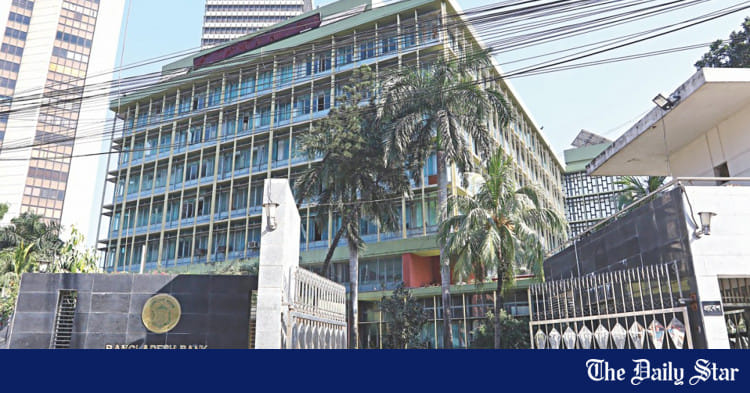
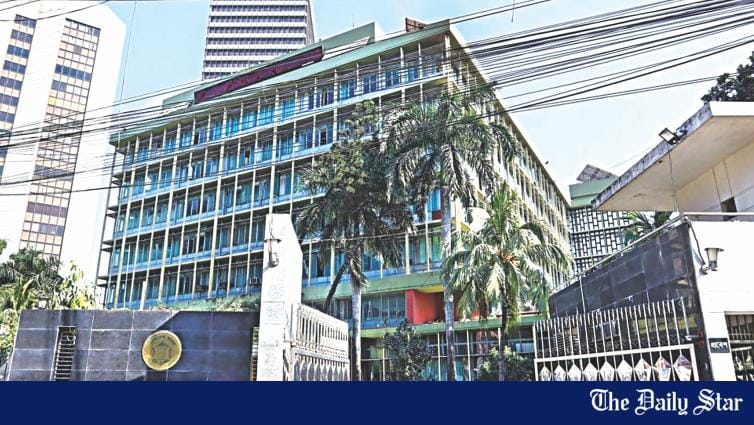
The Bangladesh Bank headquarters in Dhaka.Photo: Star

Bangladesh will introduce a crawling peg system by next month to make the exchange rate more flexible and improve the foreign currency reserves, a key prescription from the International Monetary Fund.

The crawling peg system is a method of exchange rate adjustments in which a currency with a fixed exchange rate is allowed to fluctuate to some extent. Typically, the system helps control currency swings, usually during threats of devaluation. Currency pegs are established by developing economies whose currencies are linked to the dollar or the euro.

Bangladesh Bank has already informed the IMF about the system being implemented for the taka.

Bangladesh entered an IMF loan programme for $4.7 billion in January last year. An IMF mission has been in Dhaka since April 24 to review the economic health of the country and whether it is meeting the loan conditions before the third tranche is released. The mission will also finalise new or revised conditions, which could include a lower reserves target.

A central bank high official said they were hopeful of launching the crawling peg system by June, as preparations were at the final stages. Since November last year, the IMF has urged Bangladesh to go for the system.

"I think where Bangladesh was struggling a little bit was the fact that while the current account was adjusting well, partly because they were restraints on imports and so on, the financial account wasn't doing very well," Krishna Srinivasan, IMF director of the Asia and Pacific, said on April 30 during a virtual briefing.

"You could see that in the bleeding of reserves and the taka coming under pressure. Now, it's important that the next stage of the reform agenda is to allow greater exchange rate flexibility, which would help you address the problems in the external sector in the financial account," he said. "Once you do that, you'll see a greater sense of stability coming back in the external accounts."

Although the central bank in its Monetary Policy Statement (MPS) in January mentioned introducing the crawling peg system, there had been no visible step in this regard.

The crawling peg system would be linked to a carefully selected set of currencies and operate within a predefined exchange rate band. This strategy is aimed at tempering unusual fluctuations in the currency's value.

"The central bank would establish a stable benchmark while retaining the flexibility to intervene in the market as necessary to maintain the currency within the designated boundaries," Bangladesh Bank said.

On paper, the central bank introduced the market-based exchange rate in July last year. In practice, however, the exchange rate is fixed by the Bangladesh Foreign Exchange Dealers' Association and the Association of Bankers, Bangladesh on unofficial instructions from the central bank.

The existing exchange rate was fixed about three months ago.

According to the central bank statistics, during the July-February period of the current fiscal year, the current account balance, a major component of the Balance of Payment (BoP), was in surplus by $4.7 billion.

In contrast, the financial account, another key part of the BoP that includes foreign direct investments and short-, medium-, and long-term loans, suffered an $8.3 billion deficit.

This is nearly four times the deficit from the same period a year ago, as shown by the central bank.

On the other hand, the net trade credit deficit stood at $10.75 billion in the same period, which was $3.55 billion in the same period of the last fiscal year.

According to the IMF assessment, the exchange rate not being market-based is the reason behind the deficit in the financial account. As a result, export proceeds were not coming to the country while remittances were coming through unofficial channels.

Since the launch of the IMF's loan programme, Bangladesh has been unable to meet the conditions set for net international reserves.

As Bangladesh could not meet the target set for June last year, the country had to get a waiver to secure the second tranche.

For the third tranche, the net international reserves target was revised down to $17.78 billion for December, but the country fell short by $58 million.

For the fourth tranche, the IMF set the net international reserves target for June this year at $20.1 billion.

Bangladesh is unlikely to meet the target.

In this context, the country has sought IMF's consideration to lower the latest net international reserves target as well. A central bank official said the visiting IMF mission, which leaves on May 8, has agreed to revise down the target. However, the figure has not been fixed yet.​
 
Analyze

Analyze Post

Add your ideas here:
Highlight Cite Fact Check Respond

IMF to make concession once again
Staff Correspondent 06 May, 2024, 23:58

1715040000639.webp


The Bangladesh Bank is likely to get concession in maintaining the net international reserve once again under the current $4.7 billion loan programme with the International Monetary Fund.

The forex reserve requirement may be revised down to around $18 billion from $20.10 billion for the deadline of June this year, said Finance Division officials.

They said that the IMF mission, now in the capital to review the criteria until December for the disbursement of the third tranche by this month, has given green signal for readjustment of the forex reserve requirement linked to the disbursement of the next tranche in December.

During the previous review held in October, the international lender also brought down the forex reserve requirement to $17.78 billion from $26.8 billion for the deadline of December following requests by the government .

But the BB failed to achieve due to a shortfall of around $58 million.

The IMF mission is likely to meet with the BB governor today to finalise the readjustment of the forex reserve targets under the programme that will expire in May 2026.

The government sought the IMF loan to tackle the shortage of foreign currencies as well as downturns in the overall economic activities.

The Washington-based multilateral lender has already disbursed $1.1 billion in two installments.

Forex reserve requirement is one of the main criteria of the IMF loan agreement.

The lender has been suggesting the BB to introduce the proposed crawling peg for determining the exchange rate and ease pressure on forex reserves.

The central bank sold $11.67 billion from the forex reserves between July and April.

Finance ministry officials said that the IMF has also agreed to give concession on the revenue collection target set under the June performance indicators.

The revenue collection target set at Tk 3.94 lakh crore is likely to be revised down by around Tk 10,000 crore.

The National Board of Revenue, however, exceeded its revised target in collecting taxes in the July–December period of FY24 in which it collected Tk 1,65,630 crore against the revised target of Tk 1,43,640 crore.​
 
Analyze

Analyze Post

Add your ideas here:
Highlight Cite Fact Check Respond

Three difficult choices to heal economy
Central bank devalues local currency by Tk 7, raises key policy rate and makes lending rates fully market-based

1715234561501.webp

The Bangladesh Bank headquarters in Dhaka.Photo: Star

Bangladesh yesterday made three major decisions to cushion the economy against critical risks such as stubborn inflation and depletion of foreign currency reserves.

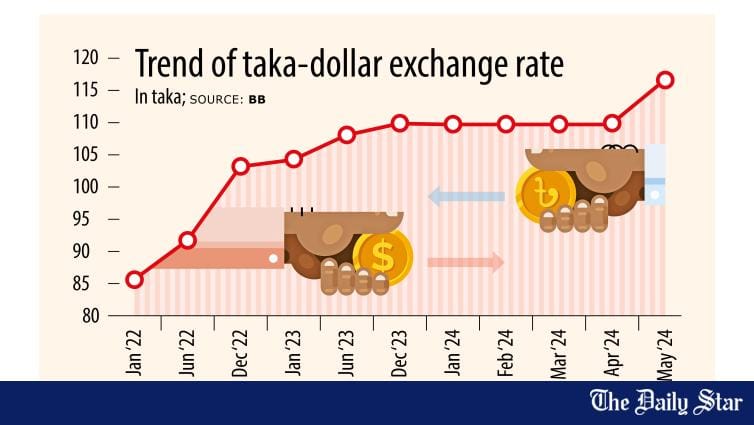
In a rare move, the central bank devalued the local currency by Tk 7 to Tk 117, the steepest slide in a day against the mighty dollar. What is more, it loosened its age-old grip on the taka as it will now follow the crawling peg, a flexible exchange rate system.

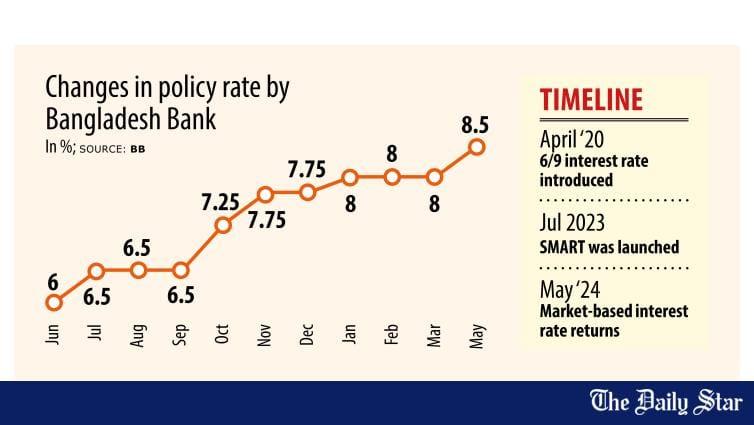
Bangladesh Bank has also made lending rates fully market-based, abandoning a treasury bill-linked formula for banks. This marks a major shift from the command-and-control mechanism imposed on banks four years ago.

The monetary authority also raised the overnight repurchase agreement rate, a form of short-term borrowing cost for banks, by 50 basis points to 8.5 percent, the second straight hike this year.

The three decisions coincided with the International Monetary Fund's pledge to give Bangladesh $1.15 billion in loans. The steps reflect the authorities' struggle to bring the economy back on track.

IMF Loan to Bangladesh: IMF recommends calibrated monetary tightening, exchange rate flexibility

According to the monetary policy committee of the BB, the economy faced two critical challenges -- persistently high inflation and depleting foreign exchange reserves.

Although the BB and the government have taken various measures to curb inflation, stabilise the exchange rate and protect the erosion of foreign exchange reserves, inflation remains stubbornly high and the foreign exchange reserve situation is not improving to the desired level, the central bank said.

Inflation has stayed above 9 percent since March last year, and the local currency weakened by 35 percent against the US dollar in the past two years. The country's reserves have more than halved, bringing about one of the worst economic crises for the low-middle-income nation. It has been struggling to raise enough taxes to meet its growing expenses.

The central bank's decisions came as an IMF team, led by Chris Papageorgiou, wrapped up its 15-day visit to Bangladesh yesterday. During the visit, it discussed economic and financial policies in the context of the second review of the loan programme.

In a statement, Chris Papageorgiou described the BB's actions as bold, which are aimed at realigning the exchange rate and simultaneously adopting a crawling peg regime.

Talking to The Daily Star, Syed Mahbubur Rahman, managing director of Mutual Trust Bank, welcomed the scrapping of the SMART formula. "Now, the interest rate will be market-driven," he said.

Since the policy rate has been revised upwards and the reference lending rate, known as SMART, has also been scrapped, the interest rate may rise. This will make funds costlier, which may help the central bank contain the demand but deal a blow to borrowers.

Similarly, the spike in the exchange rate may come as a boon for exporters and remitters because they will get a better US dollar rate whereas importers will have to pay more to buy goods and inputs from the global market.

"The flexible exchange rate was necessary for us as the cost of doing business has risen significantly due to increasing gas and power tariffs. The government also reduced the cash incentive on export receipts," said SM Mannan Kochi, president of the Bangladesh Garment Manufacturers and Exporters Association.

Ashraf Ahmed, president of Dhaka Chamber of Commerce and Industry, said the move towards a market-based exchange rate was a step in the right direction.

Subir Kumar Ghose, chief executive officer of Partex Petro Ltd, predicts that the interest rate in the banking sector may soar up to 20 percent.

The average lending rate was less than 14 percent yesterday.

Humayun Rashid, managing director of Energypac Power Generation, said the rate of interest will go up immediately as banks are collecting deposits at higher rates.

Selim RF Hussain, chairman of the Association of Bankers Bangladesh, thinks the flexible interest rate and the exchange rate would help reduce capital flights from Bangladesh.

Ahsan H Mansur, executive director of the Policy Research Institute, said the spike in interest rates may slow the economy further. "But it is necessary to overcome the challenges."

He said the introduction of the crawling peg would stabilise the taka-dollar exchange rate and improve foreign exchange reserves.

"The taka may depreciate further," he said, urging the government to discontinue the subsidy on remittances.

Asked whether the measures will bring back stability to the economy, the former economist of the IMF, said, "These are necessary steps, but not sufficient. However, without these steps, it will not be possible to help the economy overcome the crisis."

Zahid Hussain, a former lead economist at the World Bank's Dhaka office, said that of the three BB steps, the abolition of the SMART system was the most significant.

"The market-based interest rate is nothing new for us. Bangladesh has been following it since the economic liberalisation in the 1990s. Therefore, there is nothing to be worried about, and banks and other financial institutions are well-experienced in running operations under such a system."

The former WB official thinks the spike in the policy rate is appropriate, and it has to be kept at an elevated level until inflation comes down.

Hussain, however, said he was confused about the crawling peg system.

He said the central bank has narrowed the gap between the official exchange rate and the prevailing market rate by setting the dollar rate at Tk 117.

"With this, we have just moved from one exchange rate to another.

"Importers were already paying around Tk 120 per dollar before the crawling peg was introduced. So, the latest move might not be helpful. Rather, it might backfire," he added.

Speaking at a media briefing at the finance ministry, Chris Papageorgiou said the reserves have been declining for a real confluence of external shocks such as the Ukraine war, hike in interest rates globally and higher commodity prices.

The higher prices have trickled down to the economy more quickly than other economies, raising inflation to a decade-high, he said.

The authorities took a bold action -- a package of real reforms to deal with the current situation, he noted.

Papageorgiou said the introduction of a new flexible exchange rate and the elimination of SMART could help create more flexibility.

The IMF official mentioned that for many decades, the country has had a tax-to-GDP ratio of about 10 percent, one of the lowest in the world. "We think that there is room for improvement."

The IMF said it is imperative to prioritise sustainable revenue generation to bolster investments in social welfare and development initiatives.​
 
Analyze

Analyze Post

Add your ideas here:
Highlight Cite Fact Check Respond

Members Online

⤵︎

Latest Posts