Donate ☕
201 Military Defense Forums
[🇧🇩] - Monitoring Bangladesh's Economy | Page 24 | PKDefense
Home Login Forums Wars Movies Watch Videos
Serious discussion on defense, geopolitics, and global security.

[🇧🇩] Monitoring Bangladesh's Economy

Reply (Scroll)
Press space to scroll through posts
G Bangladesh Defense
[🇧🇩] Monitoring Bangladesh's Economy
948
25K
More threads by Saif

Challenges on the road to becoming the 28th largest economy​


1707959861055.webp

Investment, both domestic and foreign, plays a pivotal role in fostering economic growth. PHOTO: REUTERS

Bangladesh undeniably stands out as one of the most promising economies in the region. Despite facing resource constraints, the country has made commendable economic and social progress since independence. This success is a testament to the indomitable spirit of the Bangladeshi people, their relentless struggle for survival, and their remarkable commitment, determination, and entrepreneurial spirit. With an average annual GDP growth of six percent since the 2000s, Bangladesh currently holds the 35th position among global economies, and it is projected to become the 28th largest economy by 2030. However, this ambitious journey toward economic advancement is not without its challenges. The critical hurdles on our path include tackling poverty, addressing income inequality, managing high inflation and external debt burden, attracting foreign investment, improving resource mobilisation, addressing foreign exchange shortages, curbing corruption, ensuring the stability of the financial sector, and others.

In recent years, Bangladesh has borrowed heavily to finance various mega projects. Consequently, annual debt servicing has been on the rise, which now constitutes a substantial share of the government's expenditures. According to data from the Bangladesh Bank, the total government debt, comprising both domestic and foreign, reached around the $100-billion mark at the end of June 2023. While some of these projects may yield long-term benefits, the immediate requirements for debt servicing pose a challenge for the government's financial capacity. Currently, Bangladesh has to repay foreign loans ranging from $2-2.76 billion annually, and this amount is expected to rise in the coming years. According to a finance ministry projection, foreign debt repayments, including interests, will reach $4.5 billion in 2025-2026. The increasing external debt service payments are straining the country's foreign exchange reserves.​

1707959897795.webp

With an average annual GDP growth of six percent since the 2000s, Bangladesh currently holds the 35th position among global economies. VISUAL: TEENI AND TUNI

Concurrently, debt-service payments are diverting already scarce fiscal resources from critical sectors such as healthcare, education, social assistance, and infrastructure development. While experts argue that Bangladesh's current debt-GDP ratio is not a cause for concern, it shouldn't be seen as a green light for indiscriminate loan accumulation. To secure the nation's economic future, it is crucial for policymakers to prioritise projects by carefully assessing payback periods, thus preventing potential debt traps. Ensuring the efficient utilisation of borrowed funds is paramount to sustaining the economic cycle in the face of challenges.

Investment, both domestic and foreign, plays a pivotal role in fostering economic growth, improving the skills of the local workforce through the transfer of technology, leading to job creation, higher incomes, and improved standards of living. Research shows that to transform Bangladesh into a high-income country, it would need to raise its investment-to-GDP ratio to around 40-44 percent of GDP. Regrettably, private investment has shown little growth, hovering at around 23-24 percent of GDP for the past decade, as reported by the Bangladesh Bureau of Statistics (BBS). We are also lagging behind in attracting foreign direct investment (FDI). While even during the pandemic (2020) FDI flow to developing countries in Asia increased by four percent to $535 billion, according to figures from the UN Conference on Trade and Development (UNCTAD), Bangladesh could not achieve the expected FDI. As per Bangladesh Bank's data for the fiscal year 2023, the nation attracted approximately $3.2 billion in foreign direct investment. The rate of FDI inflow in Bangladesh is only around one percent of GDP, one of the lowest in Asia.

1707959948717.webp

ILLUSTRATION: Salman Sakib Shahryar

It's crucial to recognise that the level of convenience in doing business holds significant importance for foreign investors when deciding where to invest. The ease of doing business and global competitiveness are key factors influencing their investment choices. Investors assess various aspects, including the clarity of existing policies, reliability of government officials, taxation policies, adherence to rules and regulations and, most importantly, the security provided for their investments.

Regrettably, in the case of Bangladesh, investors often express frustration due to bureaucratic hurdles that impede smooth business operations. These challenges include bureaucratic red tape, inadequate socio-economic and physical infrastructure, inconsistent energy supply, corruption, underdeveloped money and capital markets, a complicated tax system, along with delays in decision-making processes. Furthermore, hidden costs related to procedures, policies, laws, and infrastructure significantly impact the overall cost of doing business.

Therefore, in light of the current economic challenges, it is essential to boost investment inflow by making timely adjustments to policies. The government should remove the impediments that are responsible for the high cost of investment and promptly take measures to improve public goods and services, including roads, electricity, gas, water, and sewerage. Additionally, the government should implement business-friendly policies safeguarding the rights of enterprises, workers, consumers, the environment and, most importantly, ensure a stable political environment to attract both domestic and foreign investments.

1707959994813.webp

Bangladesh undeniably stands out as one of the most promising economies in the region. VISUAL: REHNUMA PROSHOON

Bangladesh's export portfolio is primarily dominated by its ready-made garments (RMG) sector. In the fiscal year 2022-2023, the total export from Bangladesh amounted to $55.56 billion, with RMG exports contributing $46.99 billion. Currently, the RMG sector accounts for 85 percent of the country's total exports, with primary destinations being the European Union and the United States. The RMG sector has played a transformative role in shaping our economy, job market, and income, but due to ongoing global geopolitical conflicts, energy price hike, domestic political unrests, currently, the RMG sector is in a sluggish state. Hence, for Bangladesh to sustain its growth trajectory, diversification of the export basket and tapping into new markets is imperative.

Industry insiders say that there are promising export sectors such as pharmaceuticals, bicycles, shipbuilding, leather and leather goods, frozen and live fish, terry towels, furniture, and agricultural products, if the government provides adequate policy support, similar to what is offered to the RMG sector.
1707960028547.webp

According to a finance ministry projection, foreign debt repayments, including interests, will reach $4.5 billion in 2025-2026. VISUAL: TEENI AND TUNI

Foreign remittance is Bangladesh's lifeline. Despite an increasing number of Bangladeshis leaving for jobs abroad, in recent times, the remittance inflow has been decreasing at an alarming rate. In September 2023, migrant workers sent home $1.34 billion—the lowest since April 2020, according to data from Bangladesh Bank. Large remittances are sent through informal channels like hundi despite a 2.5 percent incentive for the remitters through the banking channel. Many argue that the widening gap between official and unofficial exchange rates, lack of motivation, and institutional barriers such as high transaction costs and formalities for sending remittances through formal channels hinder remitter's use of banking services. Currently, Bangladesh is struggling with a prolonged dollar crisis and is compelled to restrict imports due to falling reserves. Remittances play a vital role in growing foreign exchange reserves and economic growth. Hence, an urgent policy focus is required to shift remittances from informal to formal channels.

One of the biggest concerns for the economy is our ailing banking sector, which has, on numerous occasions, been tarnished by unwanted malpractices. It is now an open secret that the country's banking sector has been entangled in a series of scams and irregularities, such as the funnelling of loans worth billions of taka by violating banking rules and procedures to influential people known for lax repayments. Unfortunately, violators of banking norms and regulations are hardly ever punished, and they are allowed to continue to default on loans with impunity. As a result, at the end of FY 2022-23, defaulted loans in the banking sector stood at a record Tk 156,040 crore.

Banks are the lifeblood of the economy; therefore, regulators should take pre-emptive measures to control the current situation before it worsens and gets out of control. A combination of strong policy reforms and good governance in the banking sector is the need of the hour. Measures should include legal action against wilful loan defaulters, enhanced banking regulation and supervision, addressing banking sector weaknesses, tighter criteria for loan rescheduling/restructuring, and improved legal systems to accelerate loan recovery. If enforcement authorities take these measures with the right intentions, Bangladesh will embark on a path to creating a stronger economy.
1707960065757.webp

A vendor sells fish at a market in Dhaka. PHOTO: REUTERS

Over the past decade, Bangladesh has consistently demonstrated impressive economic growth. However, one may ask: has everyone been able to share its benefits equally? The answer, sadly, is "no." The growth has, unfortunately, bypassed the majority of the population while higher-income groups have been its main beneficiaries. The country has experienced a rapid increase in income inequality, with 10 percent of the population owning 40 percent of the national income, while the bottom 50 percent possess only 19.05 percent of GDP. The primary factors which deprive poor and vulnerable people of their most elementary rights—and which lead to greater income inequality—are unequal access to education and employment opportunities, low-wage jobs, unchecked corruption and systemic irregularities (such as those enabling the various scams in the banking sector), tax evasion, money laundering, and so on.

The growing gap between the rich and poor not only hinders sustainable growth but also increases the risk of social and political unrest. As such, it's essential for our policymakers to stop favouring the wealthy and start focusing on fair treatment for everyone. The main goal should be to achieve inclusive growth. We need to address issues like wealth sharing, good governance, and social policies that promote fairness and equality. It may be noted that a society that is happy, equal, and just will always experience peace and prosperity.

Inflation has been adversely affecting the common people in Bangladesh. Prices of daily essentials, including eggs, chicken, onions, potatoes, sugar, and oil, have consistently increased, contrasting with the global trend of decreasing prices. Purchasing daily necessities has become increasingly challenging, as highlighted in a recent report by the World Bank. According to the report, 71 percent of families are being affected by rising food prices. This alarming statistic implies that out of the 4.10 crore families, almost 2.91 crore are facing food insecurity, a matter of grave concern. If the current trajectory of inflation and escalating living costs persists, there is a significant risk of more families falling into poverty.

1707960125820.webp

VISUAL: STAR

Experts say that soaring food inflation rates in the country are linked to flawed government policies, poor market management and the profit-seeking behaviours of certain businessmen involved in syndicates. Moreover, the control of essential commodity imports by powerful businesses has resulted in market monopoly. The government has to address all the underlying reasons behind food inflation through a well-formulated action plan.

The need for continued investment in education and skill development is another challenge that Bangladesh must address. Over the past few years, numerous experiments have been carried out in the name of modernising and updating our primary, secondary, and higher secondary education. Yet, the existing education curriculum is not aligned with industry needs. While educational institutions worldwide emphasise soft skills like team-building, problem-solving, critical thinking, communication, negotiation, and decision-making, our education system is still stuck in the past.

So, often, we hear complaints from the business community about their inability to find skilled workers, leading them to hire foreign professionals due to a lack of efficient local human resources. This not only hampers the country's job market but also increases the strain on Bangladesh's depleting foreign-currency reserves.

Regrettably, our education budget doesn't reflect the urgency of developing human resources. The country spends around two percent of its GDP on education, which is the lowest among South Asian countries. It is high time for Bangladesh to focus on enhancing its education system, ensuring that the workforce is equipped with the skills necessary for the evolving job market. A well-educated and skilled population is not only vital for fostering innovation but also for attracting high-value industries and investments.

It's unfortunate that, even after 52 years of independence, the country's healthcare sector is in shambles. It is shameful that a nation on the path to becoming the 28th largest economy in the world still witnesses a substantial number of its citizens, including politicians, businessmen, and ordinary people, seeking medical treatment abroad each year. This trend reflects a lack of confidence in our own healthcare system. While individuals choosing overseas medical care may argue that they owe no public explanation, the scenario takes a more alarming turn when Bangladeshi leaders and politicians follow suit. Their decision to seek medical treatment abroad is not just a personal matter but a cause for concern, as they bear the responsibility for the development of a robust healthcare system for their fellow citizens.

This prevailing culture needs to be transformed urgently, given its detrimental impact on our hard-earned foreign currency reserves and the nation's image. The government should prioritise and guarantee equitable access to high-quality health services for all citizens. Failing to improve our health sector not only jeopardises the well-being of our population but also threatens to erode the significant economic gains Bangladesh has achieved over the years. Therefore, concerted efforts are imperative to instigate a paradigm shift and ensure that the healthcare system becomes a source of pride and reliability for every citizen, discouraging the need for seeking medical treatment abroad.

Corruption is a global problem, and Bangladesh is no exception to this pervasive issue. While the country holds the 147th position out of 180 countries in the Corruption Perceptions Index (CPI) for 2022, according to Transparency International, it is important to recognise that this ranking does not implicate every citizen in the web of corruption. I firmly believe that the majority of Bangladeshis are honest and possess integrity. Nevertheless, the harsh reality persists that a handful of people within key sectors such as government offices, businesses, healthcare, education, and political institutions are involved in corrupt practices such as bribery, embezzlement of public funds, bank loan scams, money laundering, under/over invoicing, adulteration of food and drugs, and various forms of cheating.

It is unfortunate that despite governmental claims of zero tolerance for corruption, there is a disconcerting trend where powerful individuals often escape accountability. It should be noted that instances of overlooking or condoning corrupt practices among associates, friends, and political supporters erode public trust, perpetuating a culture where dishonesty might be perceived as justifiable. The need to break free from this complacency is urgent. Holding wrongdoers accountable and instituting stringent measures against corruption are imperative. Currently, the absence of severe consequences for influential figures engaged in corrupt activities not only perpetuates a cycle of impunity but also undermines public confidence in the democratic process. It is time to revisit and reinforce our commitment to eradicating corruption.

Effective law enforcement is a critical pillar in ensuring that the corrupt face justice and that the culture of impunity is dismantled. However, punitive measures alone are insufficient, a comprehensive approach that includes legal reforms, institutional strengthening, and increased societal awareness is indispensable to combatting corruption. These measures are not only vital for sustained economic growth but are also fundamental for elevating Bangladesh's standing on the international stage.​
 

Analyze Post

Add your ideas here:
Highlight Cite Respond

Market-driven interest rate returns after four years

1715235790004.webp

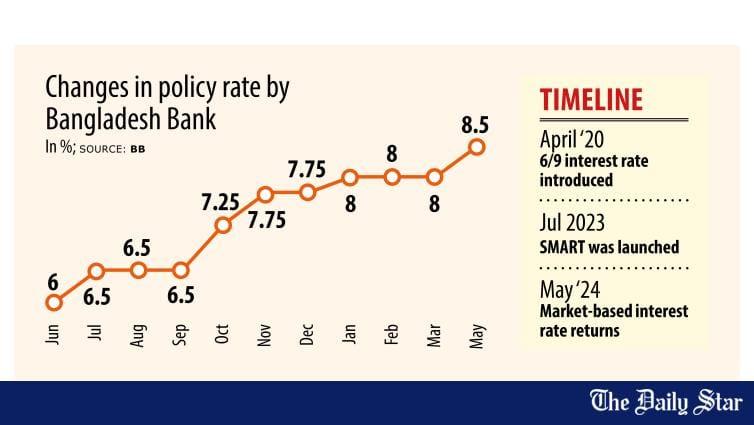
After a gap of four years, the banking sector in Bangladesh has returned to a market-driven interest rate regime at the prescription of the International Monetary Fund (IMF), in order to step up its fight against elevated level of inflation.

The central bank also raised the policy rate by 50 basis points to 8.5 percent, aiming to make money costlier.

The central bank took the decision as people have been struggling with the high level of prices for around two years.

Analysts expect the interest rate in the banking sector to rise in the upcoming days and inflationary pressures to ease.

The move to a market-based lending rate was one of the conditions for the IMF's $4.7 billion loan to Bangladesh, the third tranche of which is expected soon.

Bankers welcomed the decision, opining that the lending rate may rise initially and a market-based rate was necessary to reduce inflationary pressures and make the banking sector healthy.

Selim RF Hussain, chairman of the Association of Bankers Bangladesh (ABB), told The Daily Star that adopting a market-based interest rate was a bold step.

Hussain, also the managing director of BRAC Bank, said when the government interferes in the economy, the market can become unstable.

The new decision will bring governance to the economy, he said.

"The flexible interest rate and the exchange rate will also help reduce capital flight from Bangladesh. This is good news for the economy."

Now, the interest rate will be fixed based on the bank-client relationships and the demand for loans and the supply of loanable funds in the banking sector.

"Inflation will also come down to the expected level due to the hike in the policy rate," Hussain added.

Syed Mahbubur Rahman, managing director and CEO of Mutual Trust Bank, welcomed the central bank's decision to scrap the rates based on the Six-months Moving Average Rate of Treasury bills, abbreviated as SMART, and opt for a market-based interest rate.

In July last year, the central bank introduced the SMART rate, withdrawing the 9 percent lending rate cap and 6 percent deposit rate cap which it had imposed in April 2020. Under the SMART formula, banks were not allowed to raise the interest rate after a certain point.

Now, the banks can impose the interest rate considering their costs of fund. So, the interest rate will be market-driven. "Bankers always want the market to determine the interest rate," Rahman said.

He thinks the interest rate will not rise significantly after the withdrawal of the SMART rate. Moreover, as the central bank has hiked the policy rate, it will make money costlier.

As both policy changes came simultaneously, the interest rate may rise for a few days but not to a major extent.

Rahman, also a former chairman of the Association of Bankers' Bangladesh, said raising the policy rate was an expected move as the central bank announced a contractionary monetary policy last January to tame inflation.

The policy rate, the rate at which the central bank lends to financial institutions, was the ninth straight spike since the tightening cycle began in May 2022, as inflation showed no signs of cooling.

Stock market analysts also welcomed BB's decisions.

Shahidul Islam, chief executive officer of VIPB Asset Management Company, said macroeconomic stabilisation is a pre-condition for a good stock market.

"The new decisions will be helpful for macroeconomic stabilisation, so it will be helpful for the market in the long-run. The market-based interest rate will make loans available to those who need them."

Subir Kumar Ghose, chief executive officer of Partex Petro Ltd, said it was really tough to instantly predict the impact of the decision.

However, he opined that interest rates would increase initially, which would impact overall business negatively.

Ghose also said it would depend on supply and demand of loans.

He assumed the interest rate may grow to 18 to 20 percent and would be reflected by higher costs of production.

"But ultimately the burden will fall on the shoulders of the consumers as businesses will pass on the rise in costs to consumers."

Regarding the crawling peg exchange rate system, Ghose said it was a good solution to stabilise the exchange rate and appreciated that banks could no longer charge as per their wishes.

According to him, banks had charged higher rates for US dollars than the rate fixed by the government, causing importers to suffer when opening letters of credit.

Humayun Rashid, managing director and CEO of Energypac Power Generation, thinks the interest rate would go up immediately because banks would look to increase the lending rate since they are paying higher interest for deposits.

"The market-based interest rate would definitely increase the cost of doing business. Against this backdrop, investment will slow as businessmen will be discouraged from investing in new projects, which in turn will narrow employment opportunities."

Rashid expressed concerns over the crawling peg, saying although the export sector would benefit, it would increase import costs.

Amirul Haque, managing director of Premier Cement Mill, said the central bank relinquished the control to private banks since the BB will no longer have any say about interest rates.

This system can also lead to all kinds of investment getting stuck as investors who took the initiative to expand or adopt new plans will not implement them due to high interest rates, he added.

"As a result, money will flow to unproductive sectors and economic growth will be hampered greatly."​
 
Analyze

Analyze Post

Add your ideas here:
Highlight Cite Fact Check Respond

Forex reserves decline by $133 million in a week
The reserves hit $19.83 billion on May 8

1715295847894.webp


Bangladesh's foreign currency reserves declined by $133 million to $19.83 billion on May 8 in the span of a week, central bank data showed.

The reserves stood at $19.96 billion on April 30. The forex figure is based on the balance of payments and investment position manual (BPM6) of the International Monetary Fund (IMF).

Wednesday's figure means the reserves have stayed at less than $20 billion for nearly a month as inflows have not improved in line with outflows.

Since the reserves are not picking up, the IMF has drastically slashed the Net International Reserves (NIR) requirement for Bangladesh for the fourth tranche of the $4.7 billion loans.

The Washington-based multilateral lender had given the country a target to maintain $20.11 billion for June. But after its 15-day review mission in Dhaka that ended on Wednesday, it has reduced the NIR threshold for the central bank to $14.76 billion.

It came as exports and remittances inflows are not showing much improvement.

The country shipped products worth $3.91 billion last month, down 0.99 percent year-on-year. However, remittance inflow rose 21.31 percent to $2.04 billion thanks to Eid-ul-Fitr as the country's migrant workers typically send more money home ahead of the major religious festival for Muslims.

Because of higher commodity prices driven by the supply chain disruptions caused by the coronavirus pandemic, the Russia-Ukraine War, and the latest Middle East Crisis, the forex reserves of Bangladesh, an import-dependent nation, have been declining since August 2021 from the record level.

According to the IMF manual, gross foreign reserves include gold, cash US dollars, bonds and treasury bills, reserve position in the IMF, and special drawing rights holdings.

The NIR is defined as reserves assets minus reserve liabilities to residents and non-residents, including commitments to sell foreign exchange arising from derivatives and all credit outstanding with the IMF.

Thus, the NIR is usually lower than the gross reserves.​
 
Analyze

Analyze Post

Add your ideas here:
Highlight Cite Fact Check Respond

'Evaluate country's debt sustainability to avoid debt-trap'
FE ONLINE REPORT

Published :
May 07, 2024 15:04
Updated :
May 07, 2024 15:06

Dr Debapriya Bhattacharya, the distinguished fellow of the Centre for Policy Dialogue (CPD), addressing 'Moazzem Hossain Commemorative Lecture' on 'Macroeconomic challenge and way forward', organized by Economic Reporters Forum (ERF) at its premises in Dhaka on Tuesday –FE photo

For all latest news, follow The Financial Express Google News channel.
Country's debt sustainability needs proper assessment as it has been failing to address repayment issues tarnishing its long-established reputation on payback.

Dr Debapriya Bhattacharya said the repayment period for the Rooppur power plant has been awaiting an extension by another two years while footing the airlines fuel bills became irregular.

Such incidents of defaulting the loans like Rooppur may appear again as the country may fall into a debt trap by 2026 due to showing inflated economic growth with poor domestic revenue, he said.

"Economic Relations Division (ERD) is designated to assess the debt sustainability but it can be questioned whether it is coming out with real data or compromising it to satisfy politicians," the Distinguished fellow of the Center for Policy Dialogue (CPD) said at 'Moazzem Hossain Commemorative Lecture', on 'Macroeconomic challenge and way forward', organized by Economic Reporters Forum (ERF) at its premises.

It is the second programme honouring the contribution of the late Moazzem Hossain, former editor of the Financial Express, and former ERF President.

Incumbent editor of the FE Shamsul Huq Zahid also attended the programme and spoke on the contribution of Mr Hossain to developing the country's economic reporting area.

ERF President Refayet Ullah Mirdha and General Secretary Abul Kashem also attended the programme.

On recent restrictions in the Bangladesh Bank (BB) for journalists, Dr Bhattacharya said something is fishy in the BB prompting it to impose the ban.

"It seems as if economic journalists' access to information may cause sabotage if transparency is ensured," he added.

Such restrictions in access to data contradict the government's vision to build a smart Bangladesh, he said.​
 
Analyze

Analyze Post

Add your ideas here:
Highlight Cite Fact Check Respond

Exporters cheer weaker taka

1715417143372.webp


In a historic move, the central bank of Bangladesh has depreciated the local currency against the US dollar mainly to make the country more competitive in international trade, a move that exporters and businesses welcomed.

In fact, the taka has been losing ground over the past three years, both during and after the Covid-19 pandemic, as Bangladesh's banking system struggled to supply dollars as per surging demand.

Owing to a chaotic and volatile exchange rate, local exporters were desperate for the introduction of a floating exchange rate so they could draw more money and be more competitive.

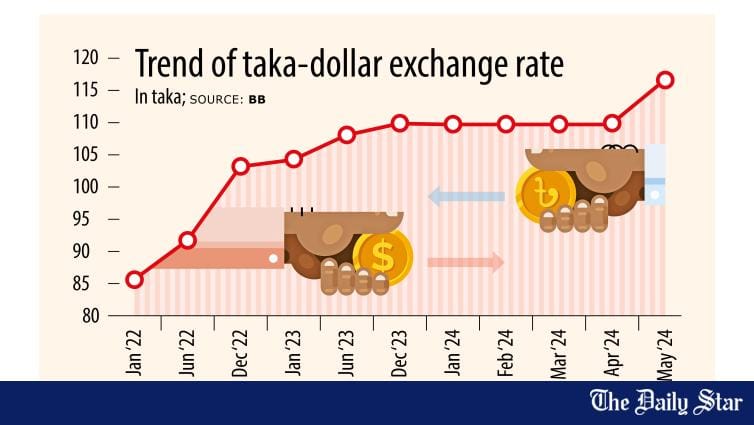
The taka stayed firm at Tk 85 per dollar for over a decade, but started weakening amid increasing pressure on the foreign exchange reserves.

The local currency depreciated 28 percent, to Tk 110 per dollar, between January 2022 and April 2024. In informal curb markets, the rate even crossed Tk 120 per dollar

Following the latest depreciation through the crawling peg, which was introduced for the first time in the history of Bangladesh, the taka lost 6.36 percent of its value, falling to Tk 117 per dollar.

Including yesterday's depreciation, the taka has lost 36 percent of its value against the greenback since January 2022.

However, exporters welcomed the decision to introduce the crawling peg, which saw the exchange rate hiked to Tk 117 per dollar from Tk 110, as it will make them more competitive.

It will provide a boost as the government has already reduced incentives on export receipts as the country is going to graduate from least developed country status in 2026.

Under the rules of the World Trade Organisation, developing and developed countries cannot directly provide subsidies on export receipts. But the government can offer benefits indirectly, such as by hiking the exchange rate, providing policy support or offering technological upgradation or skill development funds to make export-oriented sectors more competitive.

"It was necessary for us as the cost of doing business rose significantly due to increasing gas and power tariffs. The government also reduced the cash incentive on export receipts," said SM Mannan Kochi, president of the Bangladesh Garment Manufacturers and Exporters Association (BGMEA).

A suffocating situation was created for garment exporters because of the higher cost of doing business and the latest move by the central bank will provide some relief, Kochi said.

But exporters will have to keep in mind that they must negotiate higher prices from international retailers and brands so they are not deprived of the benefits provided by such a decision, the BGMEA chief also said.

Ashraf Ahmed, president of the Dhaka Chamber of Commerce and Industry (DCCI), said it was a proper step towards a market-based exchange rate.

"We expect this move to ease the balance of payment pressure despite its impact on costs. We hope this will precipitate a single exchange rate across the board," the DCCI chief said.

Mohammad Hatem, executive president of the Bangladesh Knitwear Manufacturers and Exporters Association (BKMEA), said: "I welcome the move to introduce the crawling peg, which will eventually make us strong in exchange rate of dollar and taka."

However, if the exchange rate for remittances is higher than for exports, there will a problem, he said. Hatem added that if the new exchange rate could be standardised in the banking system, it would be better.

But if the rate varies between Tk 120 and Tk 122 per dollar in case of buying dollars to open letters of credit, then exporters will face difficulties.

Hatem also urged the government to ease business rules and reduce harassment of exporters to facilitate more trade. Reducing harassment would also work as an incentive for businessmen, he added.

Mohammad Ali Khokon, president of the Bangladesh Textile Mills Association, also welcomed the move.

"In fact, I have been talking about introducing the crawling peg for many months as businessmen have been getting less due to the exchange rate," Khokon told The Daily Star over phone.

He added that the government should not interfere with the crawling peg system directly or indirectly.

Bangladesh adopted a floating exchange rate regime in May 2003 as part of a comprehensive medium-term economic programme to promote growth and alleviate poverty, according to the International Monetary Fund.

However, the floating rate was on paper as the central bank officially or unofficially directed the course of the exchange rate.​
 
Analyze

Analyze Post

Add your ideas here:
Highlight Cite Fact Check Respond

Will BB steps build up reserves? Not so soon

1715418074009.webp

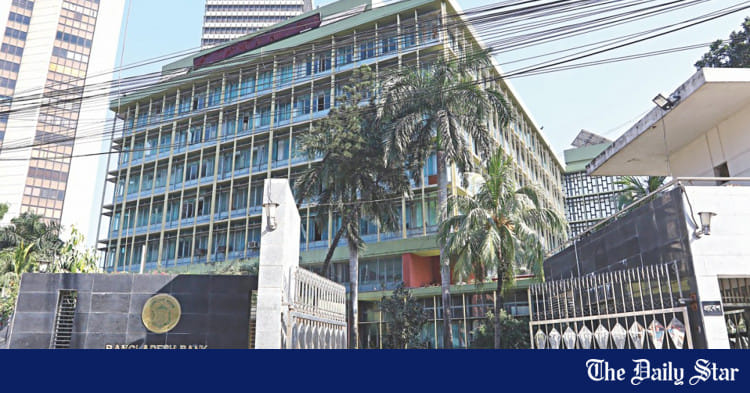
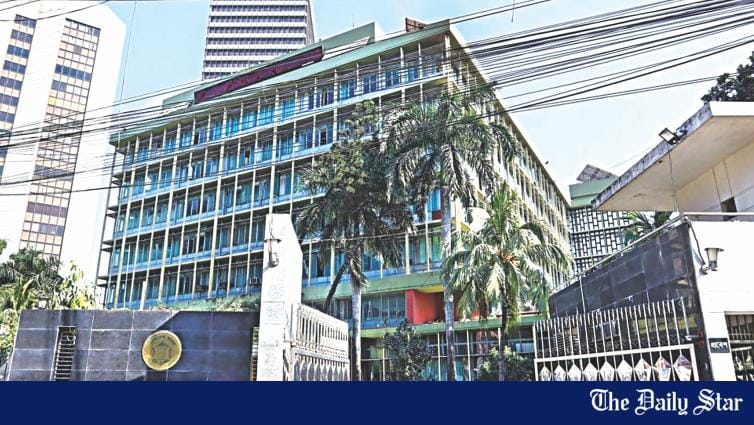
The Bangladesh Bank headquarters is seen in Dhaka. Photo: Star/File

Bangladesh Bank's steps to boost the country's foreign currency reserves will not yield any positive results overnight.

According to the government and IMF projections, the reserves will not increase until June next year despite the latest measures taken in line with the International Monetary Fund prescriptions.

Bangladesh's net international reserves (NIR) will be between $14 billion and $16 billion till March next year, according to the projections.

In June next year, the NIR might be close to $20 billion. This means the country's gross reserves could be around $25 billion at that time.

The NIR refers to gross reserves (based on the International Monetary Fund method) minus the central bank's forex liabilities and reserves earmarked for quasi-fiscal activities that involve state-owned banks and enterprises.

Speaking at a press briefing in the capital on Wednesday, IMF mission chief Chris Papageorgiou said Bangladesh will need some time to get the expected results from the BB steps.

He said the authorities have now taken "bold actions", a package of reforms.

"So, all of the measures, I think, will create more flexibility, more return. We see Bangladesh slowly coming out of these challenges," he added.

Talking to The Daily Star, Ahsan H Mansur, executive director of the think-tank Policy Research Institute (PRI), said it might take six to nine months to get the expected results from the BB's new measures given that the policy is implemented properly.

In a rare instance, the BB on Wednesday devalued the local currency by Tk 7 to Tk 117, the steepest fall in a day against the dollar. Moreover, the central bank loosened its age-old grip on the taka as it will now follow the crawling peg, a flexible exchange rate system.

The BB also made lending rates fully market-based and raised the overnight repurchase agreement rate, a form of short-term borrowing cost for banks, by 50 basis points to 8.5 percent.

Seeking anonymity, a central bank official said the new system will allow authorised dealers to trade with clients and between themselves at freely negotiated rates.

People will be able to buy and sell foreign currency at a price which reflects the current market supply and demand.

The new crawling peg regime will help rebuild reserves, added the official.

Ahsan H Mansur said the new system's success will depend on how efficiently and successfully the government and the central bank execute it.

"New systems are introduced in this country at different times, but those are not implemented properly," he said.

The latest system has brought about a unified exchange rate, removing the previous distortions. This will slightly incentivise export and remittance which will produce a positive result, he added.

However, it will take time to have a positive impact on the huge deficit in the financial account of the balance of payment because exporters and foreign investors will want to see how efficiently the new system is implemented, he noted.

If the new system stabilises the exchange rate, money will start flowing into the country in the next six to nine months, he further said.

"This means it will take some time for the new policy to produce results."

Finance division and central bank officials said the budget support will increase because of the bold actions.

Officials said these reforms, backed by the development partners, will help Bangladesh reach its full potential under the IMF programme.

On Wednesday, the IMF agreed to provide Bangladesh with $1.15 billion in the third tranche under the $4.7 billion loan programme.

Of the amount, about $932 million will be under the Extended Credit Facility (ECF)/Extended Fund Facility (EFF) and about $220 million under the Resilience and Sustainability Facility (RSF).

Earlier, Bangladesh got $462 billion in the second tranche under the ECF/EFF.

BB officials said the total loan amount will remain the same -- $4.7 billion.

The IMF, however, has agreed to pay an instalment in advance with the third tranche to support the package reform programme.​
 
Analyze

Analyze Post

Add your ideas here:
Highlight Cite Fact Check Respond

Members Online

⤵︎

Latest Posts