Bangladesh Defense
Saif
Senior Member
- Jan 24, 2024
- 21,655
- 9,794
- Nation

- Residence
- Axis Group

Map out economic priorities
The head of DCCI has urged the government to map out its economic priorities once the committee to prepare a white paper on the economy, and other task forces on various reform agendas finish their jobs.
Map out economic priorities
DCCI chief Ashraf Ahmed says a roadmap will help businesses set the direction of their action plans

The head of DCCI has urged the government to map out its economic priorities once the committee to prepare a white paper on the economy, and other task forces on various reform agendas finish their jobs.
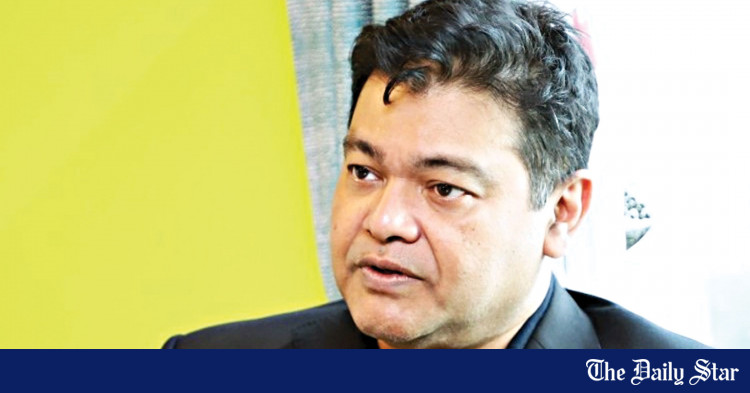
"Such a roadmap will set the direction of economic action plans [for businesses]," Ashraf Ahmed, president of Dhaka Chamber of Commerce and Industry (DCCI), said in an interview with The Daily Star last week.
"For example," he added, "We already know the government is emphasising investments in education and healthcare instead of large infrastructure projects.
"This can generally indicate slower growth in the building material industry, but higher growth in education- and healthcare-related businesses," the DCCI chief said.
He talked about the importance of creating a friendly environment for business, the missing link between employment and education, challenges facing businesses, and other aspects of the economy.
He said building confidence among entrepreneurs by restoring law and order and lowering the cost of financing is a must to bring fresh investments to the economy.
Uncertainty in economic policy direction over the short, medium and long terms is likely to make investors "very cautious and conservative", Ahmed said.
Such uncertainty will lead them to take a wait-and-see approach and delay investment decisions, he said in the interview on October 23.
On the other hand, if the government remains firm in its commitment to building a better business environment, it will help reduce uncertainty in policy directions and encourage new ventures, according to the DCCI chief.
"Confidence in the government's commitment to building a better business environment is a pre-condition for sustainable investment and economic growth."
EDUCATION AND JOBS
Ahmed said the country saw rapid growth in the economy as well as in the education sector in the last decades.
"Our numbers are our biggest strength, but it cannot be put to effective use unless we create the right environment and can invest in it."
Every year lakhs of new graduates enter the job market, but finding the right jobs for them has emerged as a major challenge, Ahmed pointed out.
A recent World Bank study says that overall unemployment is about 5 percent, which is an acceptable level. But nearly a third of those who graduated in recent years have remained unemployed, which is too high.
The DCCI chief said the current education programmes are not based on demand for skills, but focuses on a traditional system that does not change with the industry's demand.
A vast majority of graduates study liberal arts, where skills are not employable. As a result, jobseekers are not getting offers for the skills they have, he said.
Youths with tertiary (post-secondary) education are needed in larger numbers for the service sector, which is already the largest contributor to the economy. But the country has not yet been able to become a large service exporter, except in the freelancer segment of the ICT industry, according to Ahmed.
"We possibly need to focus on building a skill-based education system to compete with the others, especially in areas with opportunities such as accounting and IT," the DCCI president said.
In the short term, he suggested expanding the post-graduate diploma and training or introducing supplementary courses in tertiary education with the focus on job skills.
CHALLENGES
Ahmed sees many challenges ahead for the private sector, but pointed out three key areas that require immediate attention — law and order, energy and finance.
First, the law-and-order situation, which has improved significantly, is still a major concern. Order and discipline, especially in the industrial areas, is important to maintain production capacity and proper functioning of the industrial ecosystem, Ahmed said.
"The ability of businesses to continue operations uninterrupted is critical to achieve growth targets," he said.
Secondly, concerns over gas supply are impacting industrial production heavily, according to him. "If energy supply is not ensured, production will be hampered."
"If we have to use alternatives like diesel, the cost becomes exorbitant even when it is available. When costs increase, demand and sales fall because of high prices."
The third challenge is finance, as interest rates have increased to an "almost unsustainable level" of around 15 percent for the smaller businesses in the past few months, Ahmed said.
"This has tightened credit flow to SMEs. When interest rates rise, investment falls."
He said private sector growth depends on policy support, incentives, and infrastructure services. If these are ensured efficiently, the country will have a better business environment, according to him.
"The bottleneck is created mostly by procedures, regulations, and duplication of a paper-based system where the government machinery operates on the basis of, in some cases, century-old laws."
Ahmed criticised the central bank's conservative monetary policy, which focuses on raising interest rates to reduce demand and contain inflation.
This is effective in the short term, but in the long run, this will damage production capacity, according to him.
To control inflation, he suggested other measures such as a contractionary fiscal policy, and reduction of budget deficit and import duty.
"These may reduce government revenue, but will eventually bring relief to the common people," Ahmed said.
DCCI chief Ashraf Ahmed says a roadmap will help businesses set the direction of their action plans
The head of DCCI has urged the government to map out its economic priorities once the committee to prepare a white paper on the economy, and other task forces on various reform agendas finish their jobs.
"Such a roadmap will set the direction of economic action plans [for businesses]," Ashraf Ahmed, president of Dhaka Chamber of Commerce and Industry (DCCI), said in an interview with The Daily Star last week.
"For example," he added, "We already know the government is emphasising investments in education and healthcare instead of large infrastructure projects.
"This can generally indicate slower growth in the building material industry, but higher growth in education- and healthcare-related businesses," the DCCI chief said.
He talked about the importance of creating a friendly environment for business, the missing link between employment and education, challenges facing businesses, and other aspects of the economy.
He said building confidence among entrepreneurs by restoring law and order and lowering the cost of financing is a must to bring fresh investments to the economy.
Uncertainty in economic policy direction over the short, medium and long terms is likely to make investors "very cautious and conservative", Ahmed said.
Such uncertainty will lead them to take a wait-and-see approach and delay investment decisions, he said in the interview on October 23.
On the other hand, if the government remains firm in its commitment to building a better business environment, it will help reduce uncertainty in policy directions and encourage new ventures, according to the DCCI chief.
"Confidence in the government's commitment to building a better business environment is a pre-condition for sustainable investment and economic growth."
EDUCATION AND JOBS
Ahmed said the country saw rapid growth in the economy as well as in the education sector in the last decades.
"Our numbers are our biggest strength, but it cannot be put to effective use unless we create the right environment and can invest in it."
Every year lakhs of new graduates enter the job market, but finding the right jobs for them has emerged as a major challenge, Ahmed pointed out.
A recent World Bank study says that overall unemployment is about 5 percent, which is an acceptable level. But nearly a third of those who graduated in recent years have remained unemployed, which is too high.
The DCCI chief said the current education programmes are not based on demand for skills, but focuses on a traditional system that does not change with the industry's demand.
A vast majority of graduates study liberal arts, where skills are not employable. As a result, jobseekers are not getting offers for the skills they have, he said.
Youths with tertiary (post-secondary) education are needed in larger numbers for the service sector, which is already the largest contributor to the economy. But the country has not yet been able to become a large service exporter, except in the freelancer segment of the ICT industry, according to Ahmed.
"We possibly need to focus on building a skill-based education system to compete with the others, especially in areas with opportunities such as accounting and IT," the DCCI president said.
In the short term, he suggested expanding the post-graduate diploma and training or introducing supplementary courses in tertiary education with the focus on job skills.
CHALLENGES
Ahmed sees many challenges ahead for the private sector, but pointed out three key areas that require immediate attention — law and order, energy and finance.
First, the law-and-order situation, which has improved significantly, is still a major concern. Order and discipline, especially in the industrial areas, is important to maintain production capacity and proper functioning of the industrial ecosystem, Ahmed said.
"The ability of businesses to continue operations uninterrupted is critical to achieve growth targets," he said.
Secondly, concerns over gas supply are impacting industrial production heavily, according to him. "If energy supply is not ensured, production will be hampered."
"If we have to use alternatives like diesel, the cost becomes exorbitant even when it is available. When costs increase, demand and sales fall because of high prices."
The third challenge is finance, as interest rates have increased to an "almost unsustainable level" of around 15 percent for the smaller businesses in the past few months, Ahmed said.
"This has tightened credit flow to SMEs. When interest rates rise, investment falls."
He said private sector growth depends on policy support, incentives, and infrastructure services. If these are ensured efficiently, the country will have a better business environment, according to him.
"The bottleneck is created mostly by procedures, regulations, and duplication of a paper-based system where the government machinery operates on the basis of, in some cases, century-old laws."
Ahmed criticised the central bank's conservative monetary policy, which focuses on raising interest rates to reduce demand and contain inflation.
This is effective in the short term, but in the long run, this will damage production capacity, according to him.
To control inflation, he suggested other measures such as a contractionary fiscal policy, and reduction of budget deficit and import duty.
"These may reduce government revenue, but will eventually bring relief to the common people," Ahmed said.