Bangladesh Defense
Saif
Senior Member
- Jan 24, 2024
- 20,857
- 9,685
- Nation

- Residence
- Axis Group

Govt employees' pay hike and economic challenges
The Ninth National Pay Commission report, as submitted on Wednesday (January 21), is learnt to have recommended a sweeping hike in the basic salaries of government servants. Evidently, implementation of this new pay structure is going to cost the state exchequer a humongous sum of additional Tk 1.0
Govt employees' pay hike and economic challenges
FE
Published :
Jan 23, 2026 23:28
Updated :
Jan 23, 2026 23:28

The Ninth National Pay Commission report, as submitted on Wednesday (January 21), is learnt to have recommended a sweeping hike in the basic salaries of government servants. Evidently, implementation of this new pay structure is going to cost the state exchequer a humongous sum of additional Tk 1.06 trillion, the pay commission chair, a former finance secretary, reportedly told journalists. It is worthwhile to note that the government at present spends Tk 1.31 trillion as salaries and allowances for its 1.4 million employees and some 0.9 million pensioners. Notably, the commission kept the existing 20-grade pay structure unchanged in its recommendations where the minimum salary grade (the 20th grade) would see the highest raise at 142 per cent, while the topmost grade (1st grade) would experience a hundred per cent hike. In this connection, the finance adviser reportedly informed that a committee would be formed to work on the method of executing the recommended pay scale. Since the incumbent interim government, which has practically no time in its hand to carry out the task of implementing the new pay sale, it is obviously going to be a responsibility of the next government to be elected on February 12 to do the job. Obviously, this is going to put an added financial burden on the government at a time when economy is facing challenges from inflation, stagnated real wage and eroding purchasing power of the people.
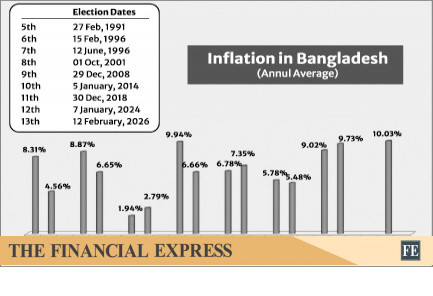
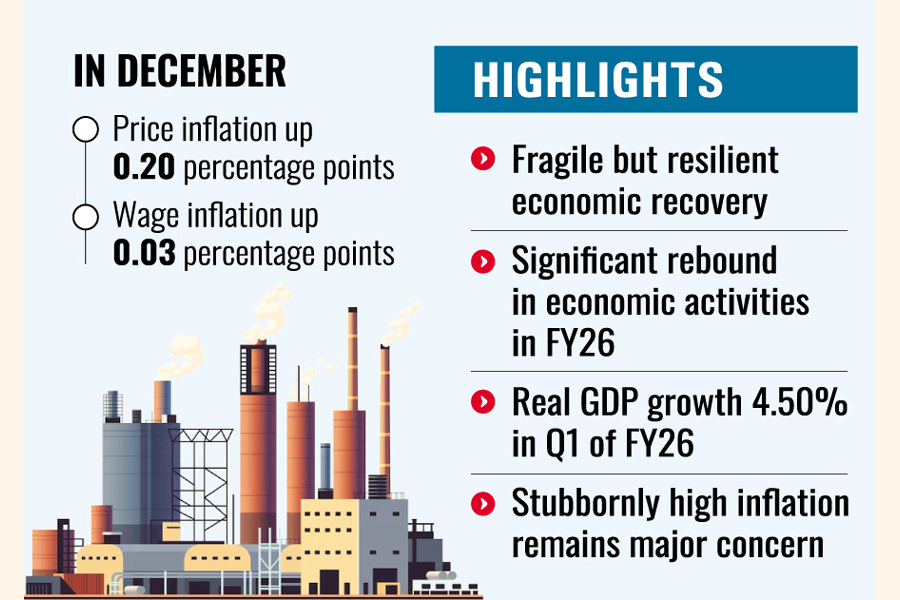
However, there is no question that the government servants deserve an increase in their salaries since they have not seen any enhancement of their pay packages since the eighth pay commission which came more than a decade back in 2013. By this time the cost of living has experienced a significant rise, thanks to the depreciation of Bangladesh Taka (BDT) against the US dollar and an attendant rise in the prices of essential commodities. Add to that the pressure of inflation, which saw a surge in 2022 and the upward trend continued until it reached its highest point during the July 2024 upsurge. However, of late, it has eased slightly at around 8.49 per cent. This is cold comfort for the overall condition of the economy. Under the circumstances, the government had fewer options but to increase the salaries of its employees.
But at the same time, the government will be in a predicament regarding execution of the new pay scale. Where is this additional amount of more than one trillion taka, coming from? As estimates go, implementation of the new pay scale will account for more than 11 per cent of the total national budget and 14 per cent of the revenue budget. But so far, the government's revenue mobilisation has not seen any marked improvement. Also, every time there is a pay hike of government servants, the kitchen market turns volatile. Perhaps, the essentials' market has already stared to become unstable in response to the government's latest move to hike up its employees' salaries. Despite such concerns, some positive development to note so far, has been improvements in the flow of homebound remittances that helped foreign exchange reserves to rise to a comfortable level. That apart, the private sector, that creates employment, saw little growth and no foreign investment was forthcoming. But despite the challenges, it is commendable that the interim government could finally come up with a recommendation for pay hike of the government servants. Hopefully, the next elected government would be able to fulfil the remaining part of the interim administration's work in this regard.
FE
Published :
Jan 23, 2026 23:28
Updated :
Jan 23, 2026 23:28
The Ninth National Pay Commission report, as submitted on Wednesday (January 21), is learnt to have recommended a sweeping hike in the basic salaries of government servants. Evidently, implementation of this new pay structure is going to cost the state exchequer a humongous sum of additional Tk 1.06 trillion, the pay commission chair, a former finance secretary, reportedly told journalists. It is worthwhile to note that the government at present spends Tk 1.31 trillion as salaries and allowances for its 1.4 million employees and some 0.9 million pensioners. Notably, the commission kept the existing 20-grade pay structure unchanged in its recommendations where the minimum salary grade (the 20th grade) would see the highest raise at 142 per cent, while the topmost grade (1st grade) would experience a hundred per cent hike. In this connection, the finance adviser reportedly informed that a committee would be formed to work on the method of executing the recommended pay scale. Since the incumbent interim government, which has practically no time in its hand to carry out the task of implementing the new pay sale, it is obviously going to be a responsibility of the next government to be elected on February 12 to do the job. Obviously, this is going to put an added financial burden on the government at a time when economy is facing challenges from inflation, stagnated real wage and eroding purchasing power of the people.
However, there is no question that the government servants deserve an increase in their salaries since they have not seen any enhancement of their pay packages since the eighth pay commission which came more than a decade back in 2013. By this time the cost of living has experienced a significant rise, thanks to the depreciation of Bangladesh Taka (BDT) against the US dollar and an attendant rise in the prices of essential commodities. Add to that the pressure of inflation, which saw a surge in 2022 and the upward trend continued until it reached its highest point during the July 2024 upsurge. However, of late, it has eased slightly at around 8.49 per cent. This is cold comfort for the overall condition of the economy. Under the circumstances, the government had fewer options but to increase the salaries of its employees.
But at the same time, the government will be in a predicament regarding execution of the new pay scale. Where is this additional amount of more than one trillion taka, coming from? As estimates go, implementation of the new pay scale will account for more than 11 per cent of the total national budget and 14 per cent of the revenue budget. But so far, the government's revenue mobilisation has not seen any marked improvement. Also, every time there is a pay hike of government servants, the kitchen market turns volatile. Perhaps, the essentials' market has already stared to become unstable in response to the government's latest move to hike up its employees' salaries. Despite such concerns, some positive development to note so far, has been improvements in the flow of homebound remittances that helped foreign exchange reserves to rise to a comfortable level. That apart, the private sector, that creates employment, saw little growth and no foreign investment was forthcoming. But despite the challenges, it is commendable that the interim government could finally come up with a recommendation for pay hike of the government servants. Hopefully, the next elected government would be able to fulfil the remaining part of the interim administration's work in this regard.