Home Login Watch Videos Wars Movies

[🇧🇩] Press Freedom in Bangladesh

[🇧🇩] Press Freedom in Bangladesh
52
2K
More threads by Saif

G Bangladesh Defense

Attacks on media houses, unruly politics, and the new democratic risk

1766710650358.webp

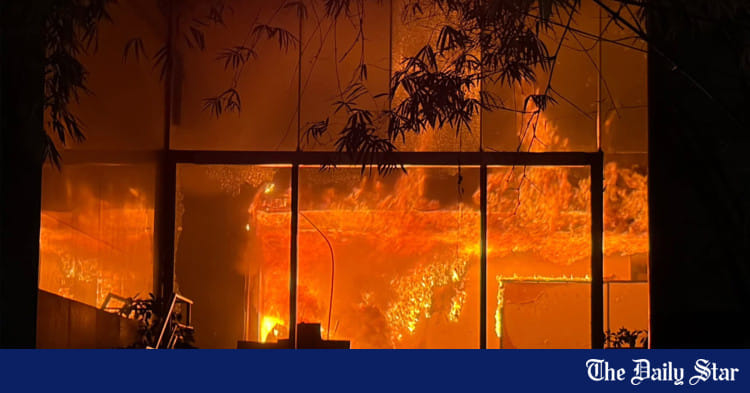
'The fire in Karwan Bazar was not just an attack on two newspaper buildings; it was also an attack on press freedom.' FILE PHOTO: MD ABBAS

The smoke that rose from Karwan Bazar during the early hours of December 19 did not begin with fire. It started with grief, or so it seemed, apparently over the tragic killing of young leader Sharif Osman Hadi that shook the entire nation. In reality, that grief was exploited by vested quarters to do what many believe they wanted to do for long. Thus, the attacks on the offices of Prothom Alo and The Daily Star, along with the unruly behaviour directed at New Age editor Nurul Kabir, were not spontaneous outbursts borne out of mourning. They were the result of a political atmosphere in which anger is weaponised and violence is quietly rationalised as moral action. Hadi's killing became the emotional trigger, but the target was the press. That shift tells us something deeply unsettling about how dissent, grief, and power are being managed today.

When the state cannot clearly and forcefully defend journalists, it sends a message that some forms of violence are tolerable, even if they are officially condemned. Democracy does not collapse all at once. It erodes slowly, through moments when the state hesitates and non-state actors step forward to fill the space.

The most troubling feature of these attacks is that they were carried out by groups that do not formally control the state, yet claim moral authority over it. These actors claim to defend national interest, religious values, or popular sentiment. In reality, they operate outside the law while masquerading as patriots or devotees. This is a classic pattern seen in fragile democracies. When unruly groups begin to decide who is loyal and who is a traitor, the rule of law is replaced by sheer misjudgement.

Hadi's killing intensified this process. His death created a powerful emotional narrative, especially among a section of young people who already distrust institutions. Instead of channelling that grief towards demands for investigation, accountability, and reform, influential voices redirected it towards media houses. They were accused of distortion, bias, or silence. Whether these accusations are fair or not became irrelevant. What mattered was that the press had become a symbol, and symbols are easily burned.

This redirection did not happen organically. A significant role was played by online figures operating from outside the country. These digital actors speak loudly but risk nothing. From safe distances in Europe or North America, they frame events in moral absolutes and encourage confrontation. They do not face tear gas, arrest, or retaliation. Those consequences fall on young men on the streets, many of whom believe they are acting heroically. In this sense, the violence against media houses was due as much to local anger as to outsourced radicalisation.

At the heart of this lies a dangerous misunderstanding of how media power actually works. Many attackers seem to believe that newspapers possess an almost magical ability to shape public opinion and fate, as if a single headline can sway the thoughts of millions overnight. This belief comes from an outdated view of communication, one that treats audiences as passive and the media as all-powerful. Modern research shows the opposite. Media influence is limited, filtered through personal beliefs, social networks, and digital algorithms. People choose what they consume. They argue, reject, remix, and ignore.

In today's Bangladesh, newspapers are no longer the dominant source of information. Social media platforms shape opinion far more aggressively and far less responsibly. Rumours spread faster than facts, and outrage travels further than evidence. If the genuine concern were manipulation, attention would be directed towards unregulated digital ecosystems. Burning newspaper offices does nothing to solve that problem. It only creates fear and silence.

Yet, defending the press does not mean denying its weaknesses. Major media houses in Bangladesh have often failed to communicate effectively with the public, particularly with younger generations. They often speak in formal language, remain distant during crises, and assume that credibility speaks for itself. In a polarised environment, that assumption can be fatal. When accusations of being "anti-state" circulated, media institutions responded slowly and defensively. They did not explain their editorial processes. They did not humanise their tone. They did not actively engage in online narratives that were turning hostile.

This gap made it easier for non-state actors to define the media before the media could define itself. Silence was interpreted as arrogance or guilt. In an age where perception moves faster than truth, that silence became dangerous.

To understand why this moment matters, it is helpful to consider a simple model of media attacks by non-state actors. The process usually unfolds in five stages. First, a triggering event occurs, often involving death, injustice, or humiliation. Hadi's killing fits this stage. Second, emotional narratives spread rapidly, amplified by social media and external influencers. Third, the media is framed as an enemy, accused of betrayal or distortion. Fourth, symbolic violence is carried out against media institutions to demonstrate power and unity. Ultimately, fear sets in, leading to self-censorship and a weakening of accountability.

This model shows why such attacks are not isolated incidents. They are structural threats to democracy. Bangladesh is now witnessing the emergence of non-state actors hell-bent on threatening media freedom.

The state's response at this stage is crucial. Condemnation without enforcement is not enough. The interim government must make it unmistakably clear that violence against the press is a red line. That means arrests, prosecutions, and public accountability, regardless of who the perpetrators claim to represent.

At the same time, media institutions must change. They cannot afford to remain insulated silos. They must engage directly with citizens, especially young people. They must explain why journalism matters, how stories are verified, and where mistakes are acknowledged and corrected. Trust cannot be assumed. It must be rebuilt, patiently and publicly.

Hadi's death should have led to national reflection and institutional reform. Instead, it was weaponised to justify attacks on the very institutions that could have helped uncover the truth and demand justice. That inversion is the real tragedy. When grief is turned into violence and journalism becomes the enemy, democracy stands on fragile ground.

The fire in Karwan Bazar was not just an attack on two newspaper buildings; it was also an attack on press freedom. It was a signal that showed how quickly anger can be redirected, how easily non-state actors can shape political action, and how vulnerable democratic institutions become when both the state and the media fail to act decisively. If this moment is not taken seriously, the next crisis will be worse. And the subsequent fire may not stop at media houses.

Dr S M Rezwan-Ul-Alam is associate professor of media, communication, and journalism at North South University.​
 
Analyze

Analyze Post

Add your ideas here:
Highlight Cite Fact Check Respond

Unity urged to remove barriers to free media
Staff Correspondent 17 January, 2026, 15:30

1768699832601.webp


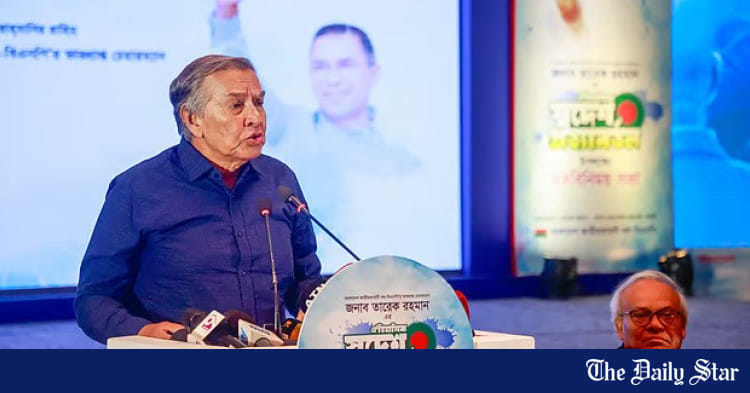
Senior journalists and newspaper owners along with their fellows pose for a group photo at the Media Convention 2026, organised to protest against attacks on freedom of expression, at the Krishibid Institute auditorium in Dhaka on Saturday. | Sony Ramany

Senior journalists at a media convention on Saturday called for unity in the journalist community to remove both legal and extra-legal impediments to democratic freedom of the mass media.

They said that independent journalism was not a privilege but a constitutional necessity for democracy, accountability, and social justice.

Speakers made the call at the Media Convention 2026, jointly organised by the Newspaper Owners’ Association of Bangladesh and the Editors’ Council at the Krishibid Institution, Bangladesh auditorium in Dhaka.

Journalists also stressed the need for internal reforms within the media houses to strengthen professionalism, accountability, and ethical standards.

They emphasised the importance of establishing standardised media outlets with transparent ownership, fair practices, and clear editorial policies to ensure credible and responsible journalism.

According to The Daily Star editor Mahfuz Anam, independent journalism is a constitutional necessity while he warned that treating the media as a purely profit-driven industry would erode public trust in the media and democratic values.

Journalism, he said, is a social service rooted in ethics, honesty, and integrity, noting that the constitution protected only two independent institutions — the judiciary and the media — because of their critical role in safeguarding democracy and citizen rights.

Mahfuz urged the judiciary to ensure that powers such as contempt of court were not misused to silence independent journalism, stressing that a free press and an independent judiciary were mutually reinforcing pillars of democracy.

He also called on journalists and editors to uphold the highest ethical and professional standards, cautioning media owners against narrow commercial interests and urging the adoption of clear codes of conduct for media ownership.

Stressing that independent journalism is essential for holding the power to account, he said that the post-July uprising period offered a crucial opportunity to rebuild a democratic, ethical, and courageous media.

Prothom Alo editor Matiur Rahman emphasised an urgent need for unity among journalists across ideological, political and institutional lines.

He said that journalists must stand by one another on issues of press freedom, professional safety and personal security, regardless of difference of opinions.

He warned against assuming that an elected government alone would ensure press freedom, recalling repeated instances of repression under various regimes since the independence in 1971, including the closure of newspapers in 1975 and pressures during both military and civilian governments.

Editors’ Council president and New Age editor Nurul Kabir in his opening address said that journalism driven by democratic aspirations could never be treated as a crime, warning that attacks or attempts to silence media institutions ultimately obstructed the rights of society as a whole.English language tutoring

He said that journalists were committed to democracy, human rights, equality, and a non-communal society.

The use of legal and extra-legal measures, Nurul Kabir cautioned, to suppress democratic institutions reflects a dangerous trend requiring unity and collective resistance.

Referring to recent attacks on The Daily Star and Prothom Alo, Nurul Kabir said that violence was being carried out in the name of democracy during the country’s transition from authoritarian rule following the July uprising.

He alleged the misuse of the movement’s spirit to justify such attacks.

Describing the attack on The Daily Star office as barbaric, he said that trapping journalists inside a building and setting fire around it reflected medieval brutality.

He said that if newspapers and other media outlets cannot function independently or remain active or speak out freely fundamental rights across society will inevitably diminish.

Media development and democratic development, he observed, are deeply interconnected worldwide.

Jai Jai Din editor Shafik Rehman called for professional independence in journalism and the avoidance of personality worship.

Describing journalism as a moral responsibility, he stressed the need for financial and intellectual self-reliance and urged journalists to develop alternative professional skills to avoid compromise.

He also proposed forming a standard committee to set editorial and professional norms.

National Press Club president Hasan Hafiz termed the recent attack on media houses unprecedented and called for ensuring independent journalism in a democratic environment.

Expressing frustration over the non-implementation of the recommendations of the Media Reform Commission, including the enactment of a safety act for journalists, commission chair Kamal Ahmed said that the government would have to take the responsibility for attacks on media and journalists.

Bangladesh Federal Union of Journalists secretary general Kader Gani Chowdhury said that unity was the only path to saving the mass media, urging journalists to overcome divisions and partisan attitudes and resist any attacks on the press.

Dhaka Union of Journalists president Shahidul Islam said that attackers would not dare target the media if journalists were united, warning that division only encouraged repeated attacks.

Broadcast Journalists Centre president Rezwanul Haque said that no government genuinely wanted independent journalism, adding that political affiliation among journalists remained the key obstacle to unity.

Financial Express publisher Syed Nasim Manzur said that ordinary citizens and businesspeople wanted fair and professional media houses that enhanced accountability in the country.

Nari Sangbadik Kendra (women journalists centre) vice-president Monema Sultana said that media houses faced numerous internal problems and required reforms to ensure responsible and professional journalism.

MA Malek, editor of the Chattogram-based daily Azadi, said that blocking genuine journalism created an information vacuum filled by fake news that misled people and increased social instability.

He said that the gathering on journalism was not against anyone but aimed to keep the path of truthful journalism open so that responsible media could operate fearlessly and without obstruction.

Journalists from outside Dhaka, along with editors, publishers, invited media professionals and columnists, also joined the event, which aimed to project a united stance in support of independent, responsible, and courageous journalism.

Earlier in the day, the convention was started with the singing of the national anthem while Bonik Barta editor and Editors’ Council general secretary Dewan Hanif Mahmud conducted the event.​
 
Analyze

Analyze Post

Add your ideas here:
Highlight Cite Fact Check Respond

Political pressure, economic insecurity threaten media freedom: Speakers

Published :
Jan 27, 2026 23:30
Updated :
Jan 27, 2026 23:30

1769560748676.webp


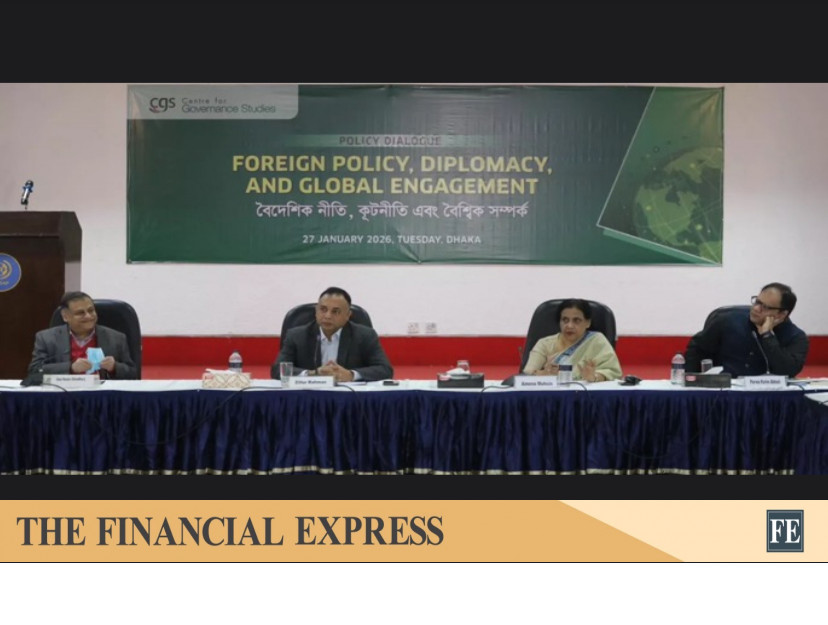
Speakers at a dialogue on media reform on Tuesday expressed concern over safety, political interference and economic vulnerability of journalists

The dialogue, titled “Media Reform in Bangladesh: Between Freedom, Responsibility and Power,” was held at the CIRDAP Auditorium to discuss key challenges and reform priorities in the mass media sector, UNB reports.

Centre for Governance Studies (CGS) in Dhaka organised the dialogue where speakers warned that the country’s media space is increasingly constrained despite its vital role in a democratic society.

Former head of the Media Reform Commission Kamal Ahmed spoke as the guest of honour.

CGS president Zillur Rahman said despite the Chief Adviser’s rhetoric of “three zeros,” he sees little substance on the ground. Referring to recent arson incidents at the offices of Prothom Alo and The Daily Star and the harassment of a senior editor critical of the government, he questioned the state of media freedom.Online newspaper reader

He also noted that a government representative at a CGS event refused to describe the incidents as “mob attacks,” claiming it would undermine the spirit of the mass uprising.

New Age Editor Nurul Kabir said mobs are generally viewed as chaotic forces, but the attacks he observed were organised and premeditated, alleging government patronage behind them.

He said although the Chief Adviser’s press secretary initially denied the allegations, a subsequent Facebook post contradicted that claim.

He added that corruption in journalism cannot be attributed solely to low pay, noting that some financially well-off journalists are also involved.

“Real journalists question power, those who don’t act as public relations officers,” he said.

Kamal Ahmed criticised the government’s last-minute rush to pass ordinances near the end of its tenure, expressing doubts about their sustainability.

He said recently introduced ordinances on the Information Broadcasting Commission and Media Commission appeared to be patchwork initiatives that lacked proper consultation.

He urged media owners to ensure fair financial benefits for journalists.Personal finance advice

Dhaka University Professor Robaet Ferdous emphasised the need for effective accountability of both parliament and media to maintain checks and balances, warning that the absence of a culture of accountability has weakened democratic oversight.

DU Professor S M Shameem Reza said the media must engage in self-criticism and acknowledge past professional failures to ensure future independence.

He also highlighted issues related to journalists’ salaries, safety, protection laws, the effectiveness of the Press Council and repressive legislation.

Socialist Party of Bangladesh General Secretary Bazlur Rashid Firoz called for the withdrawal of harassing cases against journalists and urgent solutions to their financial crisis, warning against the culture of flattering those in power.

CPB Central Committee member Dr Sajedul Huq Rubel said media freedom often depends on the nature of the ruling political force, adding that while responsibility for provocative speech exists, little action has been taken against the spread of incitement from abroad through social media in recent months.

Executive Editor of Dhaka Tribune Reaz Ahma said the Media Reform Commission had done commendable work despite limited time and resources, but regretted that the government had taken little initiative to implement its recommendations. “Only time will tell how committed the next government will be to media reform,” he said.

Other speakers included Executive Editor of Bangladesh Protidin A K M Manjurul Islam; Head of English Web of Prothom Alo Ayesha Kabir; G-9 General Secretary Dr Sakhawat Hossain Sayantha; University of Dhaka Professor Dr S M Shameem Reza; Special Content Editor of The Daily Star Shamsuddoza Sajen; senior journalist Zahid Newaz Khan; political analyst Zahed Ur Rahman; freelance journalist Kazi Jesin; and Senior Reporter of The Daily Star Zyma Islam.​
 
Analyze

Analyze Post

Add your ideas here:
Highlight Cite Fact Check Respond

Members Online

Latest Posts

Back
PKDefense
G
O
 
H
O
M
E