[🇧🇩] Energy Security of Bangladesh

[🇧🇩] Energy Security of Bangladesh
607
21K
More threads by Saif

G Bangladesh Defense

Govt to import another 300,000 tonnes of diesel to meet ‘emergency demand’

bdnews24.com
Published :
Apr 08, 2026 20:26
Updated :
Apr 08, 2026 20:26

1775693841928.webp


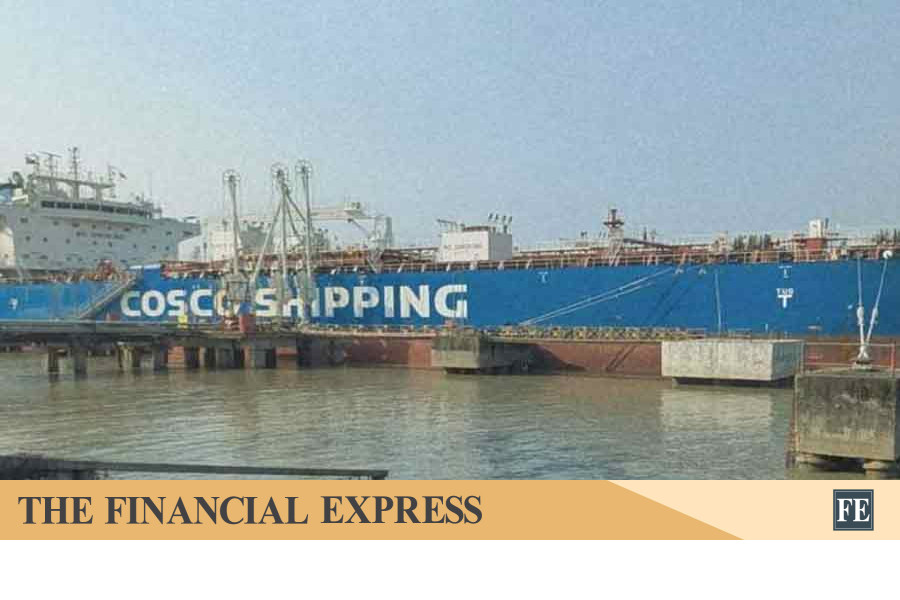
The government has decided to import an additional 300,000 tonnes of refined diesel to mitigate the fuel supply crisis triggered by the Iran war.

A media statement from the finance ministry issued on Wednesday said the Cabinet Committee on Economic Affairs granted in-principle approval for the import to "meet emergency demand”.

The government faced significant pressure concerning fuel oil supplies after shipping through the Strait of Hormuz effectively ceased due to the Middle East conflict.

Despite efforts to maintain supplies by importing from various sources, long queues have been visible at petrol stations for over a month.

Global energy markets also saw a surge in prices, leading the government to consider a potential price hike in May.

US President Donald Trump, however, announced a two-week ceasefire following Iran's agreement on Tuesday to reopen the Strait of Hormuz.

Consequently, global oil prices have retreated below $100.

Despite this drop, prices remain higher than they were prior to the start of the war on Feb 28, when oil was trading at approximately $70 per barrel.

Amidst this volatility, the government decided on Saturday to import 100,000 tonnes of refined diesel from Kazakhstan.

The finance ministry confirmed the decision following an emergency meeting of the Cabinet Committee on Government Purchase held on that evening.

During that meeting, the Ministry of Power, Energy and Mineral Resources proposed importing 1.7 million tonnes of oil to address the "emergency energy demand" arising from the unstable geopolitical situation.

The proposal suggested procuring the fuel via the direct purchase method from the United Arab Emirates, Kazakhstan, and Oman.

Of this, 500,000 tonnes from Kazakhstan had earlier received approval from the economic affairs committee, although the purchase committee has so far approved 100,000 tonnes.

The remaining 1.6 million tonnes will be procured based on "requirement”.

Following those decisions, Wednesday’s meeting of the economic affairs committee sanctioned the import of another 300,000 tonnes of diesel.

The committee also gave in-principle approval for the Bhola-Barishal bridge project, which is set to become the country’s longest bridge at around 11km.

A feasibility study for the bridge over the Tetulia River was completed between 2022 and 2024, and the project had been awaiting approval from the committee.

It was previously included in the Annual Development Programme (ADP) and will now proceed to final approval under the programme.​
 

Energy security: What energy strategy is needed to reduce geopolitical risks
The world is once again facing a new energy crisis, much like in the 1970s. However, while that crisis disrupted only oil supply, the current one is affecting both oil and gas simultaneously.

Moshahida Sultana
Published: 08 Apr 2026, 14: 18

1775695401903.webp

Fuel oil File photo

The world is once again facing a fresh energy crisis reminiscent of the 1970s. But while that crisis was driven solely by disruptions in oil supply, today both oil and gas supplies are being affected simultaneously.

The energy crisis of the 1970s was primarily an oil crisis. Following the Yom Kippur War in 1973, when Egypt and Syria fought against Israel, the United States felt compelled to reduce its dependence on Middle Eastern oil. It began searching for alternative sources of oil. Not only the United States, but many other countries also started seeking alternatives to Middle Eastern oil.

As part of this effort, foreign companies began oil exploration in Bangladesh, but instead discovered gas fields. Throughout the 1980s and 1990s, Bangladesh’s dependence on natural gas steadily increased. At the same time, the use of gas also expanded in Britain and across Europe. The United States, too, gradually increased gas production as an alternative energy source.

Europe eventually became heavily dependent on Russian natural gas. At that point, it became difficult for the US to shift Europe’s gas market away from Russia. This is because exporting gas from the United States requires liquefaction (LNG) and transport across the Atlantic, which is far more expensive than pipeline gas.

LNG requires specialised technology and large infrastructure. Gas must first be liquefied, then transported by cargo ships, and upon reaching its destination, it must be regasified and distributed through pipelines. Despite these complexities and costs, the United States began to treat LNG as a strategic fuel, rather than focusing solely on price.

In countries that have their own gas, coal, or nuclear resources, it is difficult to create a market for LNG. However, in countries facing acute energy shortages and seeking alternatives to Middle Eastern supply, establishing LNG trade is comparatively easier.

From 2010, Bangladesh began formulating its power “master plan” with assistance from Japan. The 2010, 2016, and 2023 versions all emphasised increasing dependence on LNG and coal.

At that time, strategic partnership with Japan provided a major opportunity for the United States in developing LNG technology. Japan needed energy, while the United States needed a reliable partner to advance LNG technology.

As a close ally, Japan began working on LNG technology development. It also played a significant role in building LNG infrastructure in Middle Eastern countries such as United Arab Emirates, Qatar, and Oman. Later, encouraging gas exports to other Asian countries also became important.

Meanwhile, as pressure to reduce environmental pollution and carbon emissions increased, many countries began moving away from coal. Concerns over nuclear accidents and waste management also grew. In this context, many countries followed the United States in viewing LNG as a “strategic fuel.” The LNG market expanded rapidly in the 2010s, and this trend reached Bangladesh as well.

1775695436142.webp

Moshahida Sultana

From 2010, Bangladesh began formulating its power “master plan” with assistance from Japan. The 2010, 2016, and 2023 versions all emphasised increasing dependence on LNG and coal.

Following this path, Bangladesh, with support from the United States, gradually increased its reliance on LNG. At the same time, throughout the 2010s, the country built coal-based power plants with a total capacity of around 5,500 megawatts, relying on imported coal.

During the recent crisis, Bangladesh had to seek US approval to import energy from Russia. This indicates that due to import dependence, Bangladesh has already become “hostage” to geopolitics.

To maintain geopolitical balance, projects had to involve Japanese, Indian, and Chinese companies. At the same time, Russia was engaged through the construction of the Rooppur Nuclear Power Plant.

Energy crisis and proposals by interest groups

Like the 1970s, the world is once again facing a new energy crisis. But while earlier only oil supply was disrupted, now both oil and gas supplies are being affected simultaneously. The post-Covid economic shock, the Russia-Ukraine War, and tensions involving Iran, the United States, and Israel have collectively created a deep energy crisis.

In this situation, the US is in the most secure position. As LNG prices rise, the United States benefits, while import-dependent countries face severe crises. Developed countries that have the capacity to store oil and LNG suffer comparatively less. But import-dependent countries like Bangladesh, lacking financial and infrastructural capacity for storage, are being pushed toward economic strain as they are forced to buy energy at higher prices.

According to one estimate, Bangladesh will need to spend 40 per cent more on energy this year compared to 2025. The country has become LNG-dependent largely because it failed to prioritise new gas exploration over the past decades.

Some question how quickly solar capacity can be expanded. The example of Vietnam shows that it is possible. Starting from zero in 2018, Vietnam built 16,500 megawatts of solar capacity by the end of 2020—about 25 per cent of its total capacity.

Bangladesh now has two LNG terminals. During the tenure of the interim government, construction of two more terminals was initially suspended, but later resumed. It appears that the then National Security Adviser’s visit to the United States played a role in this decision.

Last year, it suddenly emerged that Bangladesh had signed an LNG import agreement with the United States. Just three days before the election, a commercial agreement was signed. Among several conditions for reducing an additional 19 per cent reciprocal tariff on the garment sector to zero, a key condition is that Bangladesh must purchase $1 billion worth of LNG annually from the US for the next 15 years.

Notably, during the recent crisis, Bangladesh had to seek US approval to import energy from Russia. This indicates that due to import dependence, Bangladesh has already become “hostage” to geopolitics.

The ongoing conflict in the Middle East has once again demonstrated the range of risks Bangladesh faces due to increased LNG dependence. If this dependence continues, it will be difficult for the country to escape this trap. In the past, in seeking quick solutions during crises, Bangladesh has become overly dependent on foreign energy technologies. If it continues on this path, breaking free from such dependence will become even harder in the future.

Now, citing cost savings, some interest groups are again proposing coal extraction in Phulbari. However, such solutions have long been proven unacceptable. At a time when the government is preoccupied with sourcing oil and LNG on a daily basis, discussions of coal extraction are highly irrelevant. In particular, extracting coal in Phulbari would severely damage agricultural land and water resources, destroying livelihoods and causing significant environmental harm. Ultimately, the project would prove extremely costly for society as a whole.

Many fail to account for social and environmental costs when calculating project expenses. They do not include social losses alongside land value, nor do they consider future agricultural income. As a result, domestic coal appears cheaper. But once these costs are included, it becomes clear that extracting coal in Phulbari would threaten not only the environment but also national income, food security, and social stability.

Whenever a crisis arises in the energy sector, certain groups attempt to exploit the situation to advance the interests of foreign companies. The renewed push for coal extraction reflects such priorities. Yet, there are faster and less harmful alternative solutions available.

What could be Bangladesh’s energy strategy?

For Bangladesh, a long-term solution lies in state-led gas exploration in offshore areas. However, this will take time. As an immediate solution, large-scale solar power implementation is essential.

This includes utility-scale solar projects, rooftop solar, and solar-powered irrigation. Most of the panels used in these projects are imported from China. Land acquisition, verification, and price reassessments for many projects have already been completed. Now, what is needed is clear government incentives and policy support for rapid implementation.

Some question how quickly solar capacity can be expanded. The example of Vietnam shows that it is possible. Starting from zero in 2018, Vietnam built 16,500 megawatts of solar capacity by the end of 2020—about 25 per cent of its total capacity.

In 2020 alone, it added around 11,000 megawatts to the grid, 48 per cent of which came from rooftop solar. During that time, as part of my PhD research, I visited Vietnam and spoke with experts, researchers, and investors.

The key driver behind Vietnam’s success was government intervention and “feed-in tariff” incentives. A feed-in tariff is a policy that guarantees renewable energy producers a fixed price, typically higher than the market rate, for each unit of electricity supplied to the grid over a certain period.

My research found that if such incentives had been offered over a longer timeframe, the rapid achievement would not have been possible. The Vietnamese government announced that only those who could connect solar power to the grid by December 2020 would receive guaranteed pricing for 20 years. At that time, solar technology costs were falling daily, so investors might have preferred to wait. But the fixed deadline and assured long-term returns encouraged immediate investment. This policy not only achieved its target but exceeded it by attracting additional investment.

Conclusion

Since the crisis began, it has become evident that countries with higher shares of renewable energy are saving more money. Beyond European nations, China, India, Vietnam, and Pakistan have set examples. By expanding solar power, Pakistan alone has saved $12 billion.

To cope with war, uncertainty, and imperial aggression, reducing import dependence is essential. Achieving self-reliance through coal extraction—at the cost of livelihoods, environmental degradation, and social insecurity—is not a sustainable solution. Geopolitical risks also remain significant in coal and nuclear sectors controlled by foreign companies. In the case of coal, future carbon taxes could again lead to foreign exchange losses.

On the other hand, the $6 billion spent annually on LNG subsidies could have been invested in state-led gas exploration, significantly boosting domestic production capacity by now. Additionally, providing incentives for renewable energy would not only save costs but also strengthen Bangladesh’s bargaining position in geopolitics.

Therefore, to reduce geopolitical risks, Bangladesh must develop a strategy centered on renewable energy and domestic gas exploration and production.

* Moshahida Sultana is an energy researcher and a faculty member in the Department of Accounting at the University of Dhaka​
 

Experts suggest building strategic energy reserve
Staff Correspondent 09 April, 2026, 00:09

1775697744842.webp


Experts focused on energy sourcing and the importance of building a strategic reserve, describing it as one of the most effective tools to mitigate Bangladesh’s energy challenges.

They also said that a well-designed strategic reserve could act as a national insurance policy for critical energy resources during any energy supply crises.

They were speaking at a seminar titled ‘Mitigating Economic Fallout of Middle East War in Bangladesh’, organised by the Bangladesh Institute of International and Strategic Studies at its office in the capital on Wednesday.

The speakers at the event also said that the recent ceasefire in tensions between the United States and Iran, declared on Wednesday, is certainly a welcome development.

However, it would be premature to assume that this alone has resolved the broader risks; if the ceasefire fails and the war is prolonged further, it would pose a greater risk, they said.

In his keynote presentation, Professor Ijaz Hossain, chairman of the ESTex Foundation, said that Bangladesh remains heavily dependent on fossil fuels, with only about 2.3 per cent of total energy coming from renewable sources.

Moreover, the country’s gas production peaked in 2015–16 and has since declined, forcing increasing reliance on imported LNG to meet growing demand.

He said that Bangladesh sources most of its crude oil from the Middle East, while refined fuels such as diesel are largely imported from Singapore and Malaysia.

‘However, these countries depend on imported crude themselves and cannot guarantee supply during global disruptions, like the ongoing crisis in the Middle East,’ he added.

He also said that Bangladesh spent about $13.2 billion on energy imports in 2024, with an additional $5 billion potentially required due to rising global prices.

‘Combined with other payments such as capacity charges, the total foreign exchange requirement for the energy sector exceeds $20 billion annually, putting significant pressure on the balance of payments,’ he added.

Against this backdrop, he strongly advocated establishing a strategic energy reserve, noting that such reserves are widely used globally, particularly for petroleum products.

‘Countries maintain stockpiles of crude oil, diesel, gasoline, and sometimes LNG or LPG to stabilise markets and manage supply shocks,’ he added, saying that Japan maintains reserves for up to 200 days, while many countries follow a 90-day standard under international guidelines.

Although maintaining such reserves involves high costs, he argued that they should be viewed as an investment rather than a burden.

‘By adopting a counter-cyclical strategy — purchasing fuel when global prices are low and releasing it when prices are high — Bangladesh could both stabilise domestic markets and save foreign exchange,’ he added.

In his speech as the chief guest, Rashed Al Mahmud Titumir, the prime minister’s adviser on the Finance and Planning Ministry, said that Bangladesh has yet to ensure energy security or establish a strategic reserve in the sector.

‘The country lacks a clear benchmark or indicator defining how much fuel should be kept in reserve to safeguard against supply disruptions,’ he added, saying that there is no defined standard specifying the number of days of fuel security the country should maintain.

‘The Eastern Refinery Ltd once provided close to 30 days of fuel security, which has now declined to around 17 days. Despite an annual subsidy of about Tk 60,000 crore in the energy sector, no sustainable buffer stock has been developed,’ he added.

Although energy security has been widely discussed in policy documents and plans, implementation has lagged behind, he added.

‘We inherited a fragile economy alongside a stressed energy sector, compounded by global volatility in energy markets and ongoing geopolitical tensions,’ he added.

The past fascist regime emphasised expanding power generation, but overlooked foundational aspects of energy security.

‘To address the situation, the government is pursuing short-, medium- and long-term plans aimed at ensuring stability and sustainability in the energy sector,’ he added.

Immediate efforts focus on maintaining an uninterrupted supply, while medium-term measures aim to stabilize the system, and long-term strategies seek to build a resilient energy framework.

He outlined five key priorities guiding the approach— diversifying energy sources to reduce dependence, building a strategic buffer stock, ensuring sustainable financing for imports and supply, expanding the use of renewable and alternative energy, and adjusting prices in line with global markets while considering domestic inflation and purchasing capacity.

He also said that strengthening the energy mix and gradually increasing the share of renewable energy is essential for both environmental sustainability and long-term economic stability, and they are working on it.

Inamul Haq Khan, senior vice-president of the Bangladesh Garment Manufacturers and Exporters Association, emphasised the urgent need for trade and market diversification, warning that Bangladesh’s export-led economy remains highly vulnerable to global energy shocks and geopolitical uncertainties.Politics analysis

He also said that although the recent ceasefire between the United States and Iran had eased tensions and brought some stability to global energy markets, the economic shocks triggered by the conflict were still unfolding.

He said that the Middle East crisis had evolved beyond a geopolitical issue into a full-scale energy shock with far-reaching global economic consequences.

‘While key routes such as the Strait of Hormuz remained operational following the ceasefire, recent volatility exposed the fragility of global supply chains, with disruptions likely to persist for months,’ he added.

Mahfuz Kabir, research director of BIISS, also presented a keynote where Major General ASM Ridwanur Rahman, director general of BIISS, delivered the welcome address and chaired the session.​
 

Energy is the new gold in an uncertain world

Manmohan Parkash

Published :
Apr 10, 2026 00:23
Updated :
Apr 10, 2026 00:23

1775780898851.webp


The era of predictable energy markets is coming to an end. Recent tensions in the Middle East are not an isolated disruption-they reflect a deeper transformation in how energy shapes economic stability.

Energy is no longer just a commodity. It is a strategic asset. In an uncertain global economy, access to reliable and affordable energy is increasingly defining economic resilience, policy choices, and long-term growth.

For decades, the global economy operated on an assumption of energy stability. Oil moved through predictable routes, supply chains functioned with remarkable efficiency, and markets absorbed shocks with relative ease. That foundation is now under strain.

Today, even the possibility of disruption is enough to move markets. The Middle East accounts for roughly one-third of global oil production, and nearly a fifth of global supply passes through the Strait of Hormuz. When tensions rise, so do prices, insurance costs, and uncertainty-transmitting shockwaves across economies far removed from the conflict.

These effects are immediate. They surface in higher fuel prices, rising transport costs, and mounting pressure on household budgets. Inflation, once thought to be under control in many economies, re-emerges with renewed force.

For energy-importing countries, the impact is particularly acute. Across much of Asia, dependence on imported oil and gas remains high. In many economies, energy accounts for 20-30 per cent of total import bills, leaving them highly exposed to global price volatility.

This dependence quickly translates into domestic economic stress. Governments are forced into difficult choices: pass on higher costs and risk social pressure, or absorb them through subsidies and weaken already constrained fiscal positions.

But energy shocks do not stop at fuel.

They cascade through supply chains. Higher shipping costs affect trade flows. Industries that rely on energy-intensive processes-from manufacturing to fertiliser production-face rising input costs. Food systems, closely linked to energy through fertilisers and transport, begin to feel the strain.

What begins as a geopolitical disruption soon evolves into an economic challenge-and, increasingly, a social one.

This is why the current moment demands a shift in thinking.

For years, economic policy prioritised efficiency. Supply chains were optimised, inventories minimised, and production distributed globally. That model delivered growth-but it also created vulnerabilities.

Today, resilience must take equal priority.

Energy security can no longer be treated as a narrow sectoral concern. It sits at the intersection of economic policy, national security, and development strategy. While this recognition is growing, the pace of adjustment must accelerate.

Diversifying energy sources is essential-but it is not sufficient.

The more immediate and often overlooked opportunity lies in using energy more efficiently. The most secure unit of energy is the one that is never consumed. Every unit saved reduces import dependence, lowers infrastructure needs, and eases fiscal pressure.

Yet inefficiencies remain widespread. Transmission and distribution losses continue to be high in many economies. Ageing infrastructure, weak grid management, and inadequate metering systems contribute to avoidable waste.

Addressing these gaps is no longer optional-it is an economic imperative.

Modernising power systems can deliver rapid gains. Smart grids, advanced metering, and digital technologies can improve load management and reduce losses. Artificial intelligence can enhance demand forecasting and optimise supply in real time. Retrofitting older power plants and improving plant load factors can increase efficiency without requiring entirely new capacity.

At the same time, the composition of energy itself must evolve.

Renewable energy-solar, wind, and hydropower-is no longer just an environmental choice; it is increasingly a strategic one. Local energy sources reduce exposure to global volatility and strengthen long-term resilience.

Regional cooperation offers additional opportunities. South Asia's hydropower potential, particularly in Nepal and Bhutan, remains underutilised. Southeast Asia's river systems and geothermal resources offer similar promise. Harnessing these through cross-border energy trade can reduce dependence on distant and uncertain supply chains.

Urban design and behaviour matter more than is often acknowledged. Energy-efficient buildings, better use of natural light, and climate-responsive design can significantly reduce consumption over time. Small changes, when scaled across cities and economies, can produce large cumulative gains.

The objective is not simply to generate more energy-it is to use less energy per unit of growth.

In a world of rising uncertainty, efficiency itself becomes a form of resilience.

The geopolitical dimension of energy is also evolving. In an uncertain global order, energy is not merely traded-it is leveraged. Countries with secure and diversified energy systems gain strategic flexibility. Those heavily dependent on external sources face increasing constraints.

This shift is already reshaping global economic relationships. Long-term supply agreements, strategic reserves, and diversified partnerships are becoming central to policy.

For policymakers, energy policy can no longer be separated from broader economic strategy.

The global economy is entering a phase where shocks will be more frequent, more interconnected, and more difficult to absorb. Energy disruptions, supply chain breakdowns, and financial volatility will increasingly reinforce one another.

In this environment, preparedness is not optional-it is essential.

Energy is the new gold-not because it is scarce, but because it underpins stability in an uncertain world.

But unlike gold, energy is not passive. It must be produced, managed, and used wisely.

Countries that invest in efficiency, diversify their energy mix, and strengthen regional cooperation will be better positioned to navigate this new reality.

Those that do not will remain exposed.

In an uncertain global economy, energy security will increasingly define economic strength-and shape the trajectory of growth itself.

Manmohan Parkash is a former Senior Advisor in the Office of the President and former Deputy Director General for South Asia at the Asian Development Bank (ADB).​
 

First octane shipment arrives in Bangladesh since outbreak of war

Staff Correspondent
Chattogram
Published: 09 Apr 2026, 15: 18

1775782042092.webp

Vessel MT Central Star, carrying 26,000 tonnes of octane, reached Chittagong Port on 9 April 2026 Courtesy Marine Traffic

The first shipment of octane has arrived in Bangladesh since the outbreak of war in the Middle East. The vessel MT Central Star, carrying 26,000 tonnes of octane, reached Chittagong Port this afternoon, Thursday.

According to sources at the Bangladesh Petroleum Corporation (BPC), the consignment was supplied by Vitol, a Singapore-based international energy company. The fuel is from Malaysia.

The responsibility for unloading and distributing the octane from the newly arrived vessel lies with the state-owned oil company Meghna Petroleum Limited.

Its Managing Director, Md. Shahirul Hasan, told Prothom Alo that there is currently no shortage of octane in the country, adding that with the arrival of another shipment, the unloading process is expected to be completed within two days.

Octane is primarily used as fuel for motorcycles, cars, and microbuses. Since the outbreak of war following the US and Israel’s attack on Iran on 28 February, a “shortage” of this fuel has been observed at various filling stations.

In many cases, motorists were unable to obtain octane even after waiting in queues for hours, while numerous stations displayed “No Octane” signs.

Although a month has passed, the situation is yet to return fully to normal. However, BPC officials believe that the arrival of the new shipment will provide some relief to the supply system.

BPC is the country’s sole state-owned fuel importer. According to its publication “BPC Batayon”, octane accounted for 6 per cent of the total fuel supplied in the 2024–25 fiscal year.

The corporation’s latest annual report states that 415,000 tonnes of octane were sold during that period, nearly half of which was produced domestically, with the remainder imported.

As of 6 April, the country’s octane stock stood at 10,526 tonnes. In March, the average daily sale was 1,222 tonnes; however, due to supply constraints, the daily average in April has been reduced to 1,114 tonnes.

Following the onset of the war, 10 vessels carrying diesel, jet fuel, and furnace oil arrived in March, while a further seven scheduled shipments could not be delivered.

Notably, there had been no scheduled octane shipments for the previous month.​
 

Renewable energy training facility inaugurated
Staff Correspondent 10 April, 2026, 00:15

Bangladesh Power Management Institute on Thursday inaugurated Renewable Energy Training Facility at its Purbachal Campus aiming at helping the country’s transition to the sustainable and climate-resilient energy future.Politics analysis

Bangladesh strives to meet target of 30 per cent renewable energy in the power mix by 2040 under the Renewable Energy Policy, 2025, for which, a competent workforce capable of maintaining and scaling modern green technologies is urgent.

Supported by German Development Cooperation through Skills Development for Sustainable Energy Solutions, the project implemented by Deutsche Gesellschaft für Internationale Zusammenarbeit (GIZ) is designed to directly address the critical shortage of technical expertise that currently hinders the country’s ambitious green energy expansion, said a GIZ press release on the day.

The BPMI was established in 2017 by the Power Division, with the objective of developing technical and managerial capability and improving the quality of the human resources employed in the power sector.

The new facility includes specialised laboratories for renewable energy simulation and Photovoltaics, alongside a dedicated weather station for wind energy resource assessment.

Beyond the physical labs, the collaboration has resulted in the modernisation of training curricula, covering advanced solar PV modelling and wind energy feasibility.

To ensure long-term sustainability, the Skills4SE project has already facilitated the specialised training of 52 instructors through comprehensive training of trainers programmes, ensuring that high-quality technical knowledge is passed on to the next generation of energy professionals, said the press release.

At the inauguration ceremony, Md Sobur Hossain, rector of BPMI, said that the upgraded resources would allow BPMI to play a more effective role in supporting the country’s transition towards sustainable energy.

He highlighted that the integration of advanced technology with practical training was essential for achieving national energy security and environmental goals.

Ulrich Kleppmann, counsellor, head of German Development Cooperation, Embassy of the Federal Republic of Germany, who was present at the ceremony, said that a sustainable energy transition was not just about technology but about people.

By investing in industry-relevant skills, particularly for women and young professionals, German Development Cooperation ensures that Bangladesh’s move toward green energy is both inclusive and economically resilient, he said.

The inauguration was also attended by Muzaffar Ahmed, chairman of the Sustainable and Renewable Energy Development Authority, and reflected the continued and deepening collaboration between the governments of Bangladesh and Germany in advancing skills development aligned with national energy priorities.​
 

Govt must plan, invest in strategic energy reserve

VULNERABILITY to external energy shocks has once again come into sharp focus amid the ongoing Israeli-US war on Iran and its fallout on the Middle East. The country’s heavy reliance on imported fossil fuels, particularly from the geopolitically sensitive Middle East, leaves it exposed to sudden supply disruptions and price volatility. Although the recent ceasefire between the United States and Iran offers temporary relief, it would be imprudent to interpret it as a lasting solution to deep structural risks. Global energy markets still remain fragile and Bangladesh, with its limited domestic production and declining gas reserves, is particularly vulnerable. Given this vulnerability, energy experts at a seminar that the Bangladesh Institute of International and Strategic Studies organised on April 8 have rightly talked about the urgent need for building a strategic energy reserve. The experts say that the reality is stark, with the gas production having declined remarkably, renewable energy having a negligible share and dependence on imported liquefied natural gas and refined fuels continuing to rise. In such a context, a strategic energy reserve is not a luxury but an essential safeguard. It can function as a form of national insurance, ensuring continuity during crises and stabilising domestic markets when external shocks occur.

Without such a buffer, the country is likely to face repeated economic disruptions, inflationary pressure and pressure on foreign exchange reserves, which will undermine both growth and stability. The annual energy import bill, already exceeding $13 billion, is estimated to rise further amid global price fluctuations, putting immense pressure on balance of payments. Combined with capacity charges and subsidies, the total financial burden becomes unsustainable. A well-managed reserve, however, could offset this vulnerability. By adopting, what experts say, a counter-cyclical purchasing strategy by buying fuel when prices are low and using reserves when prices surge, the country could reduce import costs, ensure domestic price stability and save foreign exchange. Many countries maintain reserves covering at least 90 days of consumption while some, like Japan, extend this to 200 days. By contrast, Bangladesh’s limited buffer has declined in recent years. Despite significant subsidies in the energy sector, the absence of a sustainable stockpile and required refining capacity highlights a failure of long-term planning. Although establishing a strategic reserve would certainly require substantial initial investment, infrastructure development and institutional coordination, the costs are prudent expenditure rather than a fiscal burden. In an era of recurring geopolitical instability, resilience is built not through reactive measures but through anticipatory planning.

The authorities should, therefore, recognise the urgency of strategic energy reserve as part of a broader vision for energy security. Energy security cannot be compromised and strategic reserves are indispensable for achieving it. Diversifying energy sources and expanding renewable capacity are crucial, but without a reliable buffer, these efforts remain incomplete.​
 
My suggestion to Bangladesh. Go for solar in big way. Tariff in India has reached almost Rs 2 per KWH. If BD goes for solar in big way, BD can reach Rs 3 per unit.With cheap power, BD can can sufficiently power it's industries at a very competitive rate. Cheap power is a very important factor of production.
 

Latest Posts

Back