[🇧🇩] Monitoring Bangladesh's Economy

Afghanistan Albania Algeria Andorra Angola Antigua Austria Azerbaijan Bahamas Bahrain Bangladesh Barbados Canada China Egypt Finland Germany India Iran Israel Japan Lebanon North Macedonia Pakistan Palestine Qatar Russia Syria Turkey Ukraine United Kingdom United States Yemen
[🇧🇩] Monitoring Bangladesh's Economy
1K
41K
More threads by Saif

G Bangladesh Defense

A higher growth target without credible reform will remain elusive

Selim Raihan

1784593580677.webp

FILE VISUAL: SHAIKH SULTANA JAHAN BADHON

The government has set a target of 6.5 percent GDP growth for FY2026-27. The International Monetary Fund, by contrast, expects growth of only 3.5 percent and warns that this could fall below 3 percent over the medium term if revenue, banking, and other structural reforms remain stalled. The gap is too wide to be seen as a routine disagreement over forecasting. It also raises the question of what will drive growth when inflation remains high, private investment is weak, banks cannot support productive firms, and the government has little fiscal room.

Of course, the IMF may prove too pessimistic, just as government projections have often proven too optimistic. But the warning cannot be ignored. The World Bank has also projected weak growth, while Fitch Ratings has cautioned that delayed reforms may reduce Bangladesh’s long-term growth potential. Its revision of the sovereign rating outlook from stable to negative signals declining confidence in the pace and credibility of reform.

The core concern is that Bangladesh’s slowdown began before the latest global shocks. The Middle East conflict, higher energy prices, and supply disruptions have only worsened the pre-existing situation. The shocks are raising import costs, adding to subsidy pressures, and creating new risks for inflation, exports, and remittances. But these shocks have essentially hit an economy that was already losing momentum. And recovery cannot happen by treating every domestic weakness as the result of an external crisis.

Inflation remains the most immediate constraint as it has reduced real wages, weakened household consumption, and forced monetary policy to remain tight. If inflation stays close to 9 percent, the government’s target of 7.5 percent will appear increasingly unrealistic. High interest rates may be necessary to contain demand and stabilise the exchange rate, but they also raise working-capital costs and discourage investment. Premature easing could renew pressure on prices and the taka. Excessive tightening—without addressing food market distortions, energy shortages, and fiscal indiscipline—could suppress production without solving the causes of inflation.

The burden is also unevenly distributed. Low growth combined with high inflation limits employment while eroding people’s purchasing power. Poor and lower-middle-income households are hit first. Small businesses face higher borrowing and input costs. Salaried households cut consumption. Young people encounter fewer job opportunities. A growth strategy that overlooks these effects may produce an attractive aggregate target, but it will not restore confidence in the economy.

The banking sector is perhaps the largest domestic threat to economic recovery. Non-performing loans (NPLs) reached alarming levels by the end of 2025, while private sector credit growth slowed sharply. This reveals a broken transmission mechanism between savings and productive investment. Politically connected borrowers, weak boards, repeated rescheduling, and regulatory tolerance prevent bank resources from flowing efficiently to viable firms. Productive businesses face costly and scarce credit, while failed borrowers continue to receive concessions. The recent trend suggests that Bangladesh’s major conglomerates are increasingly borrowing abroad as foreign loans come far cheaper than local credit, even though a weaker taka could raise repayment burdens.

Banking reform must go beyond merging weak institutions or changing their names. Banks need credible asset-quality reviews, adequate provisioning, and time-bound restructuring plans. Public recapitalisation, where unavoidable, should be conditional based on changes in ownership, boards, and management. Wilful defaulters should not receive another blanket rescheduling facility. Bangladesh Bank must also have the operational independence to enforce rules without political interference. Otherwise, the cost will eventually be transferred to taxpayers, depositors, and responsible borrowers.

The fiscal constraint is equally serious. Bangladesh has entered the current period with one of the world’s lowest tax-to-GDP ratios, yet the budget assumes a sharp revenue increase. But if that target is missed, the expected response will be to compress development expenditure to keep the deficit within limits. This may protect the headline fiscal number, but it ultimately weakens infrastructure, health, education, and future growth.

Revenue reform cannot mean imposing more withholding taxes, higher indirect taxes, and additional compliance burdens on formal businesses, as such measures discourage investment and push smaller firms further into informality. The tax base must be broadened through better information systems, fewer discretionary exemptions, stronger property and income taxation, and firmer action against large-scale evasion. The question is not only how much revenue is collected, but from whom and at what cost to production and equity.

The external sector offers some relief, but there isn’t a durable growth strategy. Strong remittance inflows have supported reserves and domestic demand. But remittances can never substitute for export competitiveness, investment, and productivity. Bangladesh remains heavily dependent on RMG, while export diversification has moved slowly. Foreign direct investment remains low, and firms continue to face unreliable energy, costly logistics, customs delays, and regulatory uncertainty. These are longstanding issues, but what is changing is investors’ declining tolerance for promises without implementation.

The policy response should begin with a realistic two-year recovery programme. Inflation control, banking resolution, revenue reform, energy security, export competitiveness, and social protection should be treated as connected parts of one strategy. The government should publish measurable quarterly milestones, identify the institutions responsible, and report progress publicly. Public investment should protect projects with clear economic returns while suspending politically attractive but low-productivity schemes.

Energy price and subsidy reforms may be necessary, but abrupt increases without targeted support could intensify hardship. Bank closures or mergers must protect small depositors. Tax reform should begin with wealthy individuals, property, exemptions, and large-scale evaders before placing further pressure on compliant small businesses. Social protection should also be made more responsive to inflation, unemployment, and external shocks.

Every government supports reform in principle, but becomes resistant to reforms which threaten influential borrowers, protected industries, tax privileges, opaque contracts, or politically allocated expenditure. Bangladesh’s growth problem is therefore not merely technical, but rooted in the distribution of economic power and in the state’s repeated inability to impose discipline on groups that benefit from institutional weakness.

A return to 6 or 7 percent growth remains possible: Bangladesh has a large workforce, a strong entrepreneurial base, an established export sector, and substantial scope for productivity gains. But the old growth model—based on cheap labour, protected markets, weak banks, low taxation, and infrastructure expansion—appears to have reached its limit. The next phase will require better institutions, more competition, export diversification, human-capital investment, and a financial system that rewards productivity over political connections.

Bangladesh must surely pursue higher growth. But is the government prepared to undertake the reforms without which that growth will remain a number in the budget speech? Growth cannot be declared or budgeted into existence. It must be earned through credibility, investment, productivity, and institutional change.

Dr Selim Raihan is professor in the Department of Economics at the University of Dhaka, and executive director at South Asian Network on Economic Modeling (Sanem).​
 

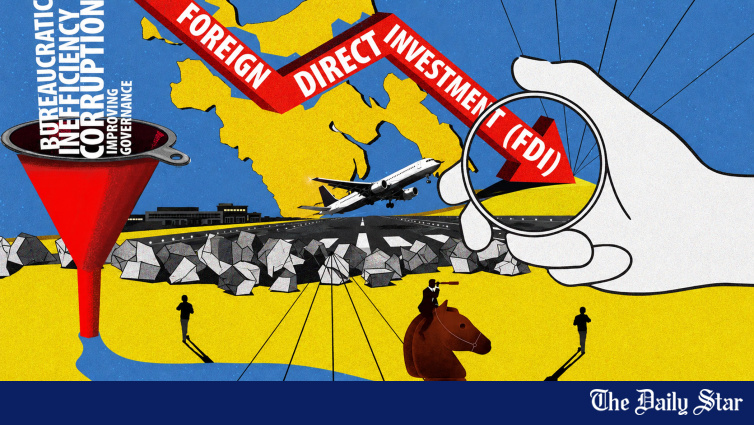
Good governance, not just incentives, will improve Bangladesh’s investment climate

Abu Afsarul Haider

1784764429509.webp

VISUAL: ANWAR SOHEL

Recently, to support investors and present Bangladesh more competitively as an investment destination, parliament passed the Invest Bangladesh Bill, 2026, merging the Bangladesh Investment Development Authority (Bida), the Bangladesh Economic Zones Authority (Beza), and the Public-Private Partnership Authority (PPPA) into a single agency, Invest Bangladesh. The question is whether this merger will improve Bangladesh’s investment climate. To answer that, let us try to see Bangladesh through the eyes of a potential foreign investor.

Imagine the investor landing at Hazrat Shahjalal International Airport for the first time. He has heard encouraging stories about Bangladesh’s remarkable economic progress, its emergence as the world’s largest garment manufacturing hub, its market of more than 17.5 crore people, its strategic location between South and Southeast Asia, and the young workforce. He arrives with genuine optimism.

His first impression, however, is not formed in a corporate meeting room. It is formed at the airport, the country’s foyer. Just as visitors often judge a home within moments of entering it, investors begin judging a country before attending a single meeting. He notices that the arrival hall is crowded and disorganised. He joins a long queue at immigration and, after completing the formalities, proceeds to collect his luggage and look for a trolley, several of which are either damaged or unusable. Then he finds that at customs, almost every passenger must have their luggage scanned, creating another long queue. He notices a sign “Foreign Investors’ Desk,” but finds little evidence of an active service to guide or assist prospective investors.

Of course, none of these inconveniences is serious enough to deter a multimillion-dollar investment. Yet, together they create a lasting impression. An international airport is more than a transport terminal; it is the first demonstration of how a country organises itself. Long before an investor visits a factory site, he begins asking a simple question: if this is how the country’s principal gateway functions, how efficiently will the rest of the system work?

Outside the airport, another picture begins to emerge. Vehicles of every description, including buses, trucks, cars, motorcycles, auto-rickshaws, rickshaws and pushcarts, compete for the same road space with little regard for traffic rules. Buses stop wherever passengers wave them down. Motorcycles weave between vehicles, and pedestrians jaywalk even on arterial roads. A journey that should take less than an hour takes more than two. For the people of Dhaka, this is part of everyday life. For a foreign investor, it is something else entirely. He is not merely observing traffic. He is subconsciously evaluating systems. If movement through the capital is so unpredictable, he wonders, what might this mean for transporting raw materials, delivering finished products, or meeting shipping schedules? Every delay represents time, and in business, time is money.

The following morning, he travels to Gazipur with a local business partner to inspect a proposed factory site. Halfway there, traffic comes to a complete standstill because several hundred factory workers have blocked the road after not being paid their wages. Waiting for several hours on the road, the potential investor finally abandons his planned visit and returns to his hotel.

Later that evening, he meets executives from foreign companies that are already operating in Bangladesh. They praise the country’s hardworking people, entrepreneurial spirit, and long-term potential. But they also describe having to obtain licences from multiple government agencies through repeated visits and unnecessary paperwork; delays in obtaining utility connections; complicated tax administration; congestion at ports; inconsistent implementation of rules; the prolonged delays in resolving commercial disputes—all of which increase operating costs. Investors in most developing countries face similar challenges. However, in Bangladesh, these issues compound and shape one of the most important considerations in any investment decision: confidence.

Governments frequently assume that investors are attracted primarily by tax holidays, subsidised land, or generous incentives. Such measures may encourage companies to examine a country more closely, but they rarely determine the final decision. Investors are willing to pay higher wages, higher taxes, or even higher land prices if they know the business environment is predictable, institutions are dependable, and decisions are made within predictable timeframes. What they struggle to accommodate is uncertainty. Every manufacturing project begins with assumptions. Construction schedules assume that permits will be issued on time. Financial projections assume that utility connections will be available as promised. Export contracts assume that goods will move efficiently through ports without unnecessary delays. When those assumptions prove unreliable, the economics of the entire investment begin to change.

This is why investors comparing Bangladesh with Vietnam, Indonesia, or India ask questions that seldom appear in investment brochures. Can a factory be built on schedule? Will imported machinery clear customs quickly? Will electricity and gas be available when needed? Can business disputes be resolved within a reasonable time? Will policies remain broadly consistent throughout the life of the investment?

The quality of a country’s institutions matters to investors besides labour costs and tax incentives. Bangladesh has made remarkable progress over the past two decades. Modern bridges, expressways, metro rail and power projects have transformed the country’s infrastructure. These achievements deserve recognition. But infrastructure alone does not create an attractive investment climate. Roads must move traffic efficiently. Ports must operate predictably. Customs must facilitate trade. Public services must be reliable, and government decisions must be timely and transparent.

The creation of Invest Bangladesh may simplify investors’ first point of contact with government. However, there are dozens of other investment-related services spread across more than 50 public institutions. The merger of just three is unlikely to considerably reduce the number of licences and permits investors require from multiple government agencies. Therefore, the investment decision will still depend on how efficiently these agencies function. This is why improving the investment climate should not be viewed as the responsibility of a single agency. Every immigration officer, customs official, tax administrator, utility engineer, port operator, traffic police, and judge becomes part of the country’s investment promotion effort. Every interaction either strengthens or weakens an investor’s confidence.

Now imagine the same investor returning to Bangladesh a few years from now. Immigration is efficient. Customs procedures are quick. The Foreign Investors’ Desk welcomes business visitors and connects them with the right agencies. Traffic moves more smoothly, travel times are predictable, and other foreign investors he meets in Bangladesh speak not of administrative delays or unnecessary paperwork but of expansion. Upon returning home, when he presents his report to the company’s investment committee, he does not say Bangladesh offered the lowest taxes or other incentives. He says something far more valuable: “The system works.”

That simple sentence is worth more than any investment summit, advertising campaign, or promotional brochure. Because, in the end, governments may persuade investors to visit a country. Only good governance persuades them to stay.

Abu Afsarul Haider is an entrepreneur.​
 

Economy and foreign trade in a changing world


1785109805372.webp


Bangladesh now faces a fundamental choice: continue relying on low-cost, labour-intensive production or move towards a technology-driven, high-value-added economy, writes MM Shahidul Hassan

BANGLADESH is entering a new phase of economic development that demands a fundamental rethinking of its growth and foreign trade strategy. The country must adopt an economic strategy that sustains growth, strengthens competitiveness and responds to rapid global and technological change.

History shows that every industrial revolution reshapes economies, societies and education systems. Today’s transformation, driven by technological innovation, global interconnectedness and integrated supply chains, demands that countries learn from one another rather than formulate economic policies in isolation.

Over the past three decades, Bangladesh has achieved impressive economic progress through its labour-intensive ready-made garment industry, which accounts for more than 80 per cent of merchandise exports, employs nearly 4.4 million workers and generated about $39.35 billion in export earnings in fiscal year 2025. But as Asian economies increasingly adopt automation, artificial intelligence and smart manufacturing, cheap labour alone can no longer ensure long-term competitiveness. Bangladesh must accelerate its transition to a technology-driven, innovation-based economy.

Although the United States and Europe remain Bangladesh’s principal export markets, this article focuses on Asia because the region offers the most relevant lessons in industrial transformation, regional value chains and technology-driven growth.

LDC graduation and the fourth industrial revolution

WHETHER Bangladesh graduates from least developed country status in 2026 or the transition is extended to 2029, the country will face a new reality in foreign trade and industrial policy. As duty-free and quota-free market access gradually declines, competitiveness will depend increasingly on productivity, technological capability, innovation, product quality and supply chain efficiency.

At the same time, the fourth industrial revolution is transforming manufacturing, agriculture, logistics, healthcare and services. Automation, robotics, AI and digital technologies are reducing demand for routine work while increasing demand for technical, analytical and creative skills.

These twin challenges require Bangladesh to rethink its traditional growth strategy. The country needs a new development model built on modern agriculture, technology-driven manufacturing, SMEs, IT-enabled services and innovation-led entrepreneurship. Equally important, education and skills development must be aligned with the needs of the emerging economy. The labour market of the future will reward workers who are technologically literate, adaptable, creative and committed to lifelong learning.

Bangladesh and China: a strategic but unequal partnership

CHINA is Bangladesh’s largest trading partner and the principal source of industrial raw materials, machinery, electronics and capital equipment. Bilateral trade exceeds $24 billion annually, but it is heavily imbalanced: Bangladesh exports only about $700–800 million to China while importing more than $23 billion.

Despite this large trade deficit, China remains a vital partner in Bangladesh’s industrialisation through infrastructure investment and manufacturing. The challenge is not to reduce imports from China but to expand exports, attract more Chinese investment in high-value industries and integrate Bangladesh more deeply into regional and global value chains.

India, Japan and regional partnerships

INDIA is Bangladesh’s largest neighbour and an important economic partner. Bilateral trade reached about $11.4 billion in fiscal year 2024–25, although Bangladesh continues to run a substantial trade deficit. A Comprehensive Economic Partnership Agreement (CEPA) could expand Bangladeshi exports, attract investment, improve logistics and deepen regional economic integration.

Japan presents another significant opportunity. Through its ‘China Plus One’ strategy, Japanese firms are diversifying manufacturing locations beyond China. Bangladesh can benefit by improving infrastructure, developing skilled workers, simplifying regulations and creating a more attractive investment climate.

The opportunity extends well beyond garments. Bangladesh has considerable potential to expand exports of pharmaceuticals, leather goods, agricultural and processed food products, information technology and digital services and light engineering products. Japan’s ageing population and growing labour shortages may also create opportunities for Bangladesh in areas such as manufacturing, skilled services and overseas production partnerships. By aligning its export diversification strategy with Japan’s evolving economic needs, Bangladesh could attract greater Japanese investment while building a more diversified and resilient export base.

Lessons from emerging Asia

SOUTH Korea’s transformation from a poor agrarian economy into a global leader in semiconductors, electronics, automobiles and shipbuilding underscores the importance of investing in education, research, technology and export-oriented industrialisation. Its greatest lesson is that skilled human resources are the foundation of economic transformation. Strong links among schools, universities, research institutions, and industry enabled the country to move from labour-intensive production to innovation-driven growth.

Vietnam offers another compelling example. Through long-term industrial policies, administrative efficiency, investment promotion and effective trade diplomacy, it has become one of the world’s leading export-oriented manufacturing economies. In 2025, its exports exceeded $475 billion, driven largely by foreign-invested enterprises in the electronics and technology sectors.

For Bangladesh, Vietnam’s experience highlights the importance of export diversification, attracting foreign direct investment, creating an investor-friendly business environment, improving administrative efficiency and integrating more deeply into global value chains.

Thailand, Malaysia and Indonesia also offer valuable lessons. Thailand developed strong capabilities in automobile manufacturing, Malaysia in electronics and petrochemicals and Indonesia in digital industries and resource-based manufacturing. Despite their different development paths, all recognised that industrial transformation requires parallel investment in education and workforce skills.

Bangladesh and global value chains

MODERN manufacturing increasingly operates through global value chains, where design, components, production and assembly occur across multiple countries. Integration into these networks has become essential for competitiveness.

To participate effectively, Bangladesh must strengthen infrastructure, ports, logistics, customs procedures and industrial capabilities while developing a technology-enabled workforce. At the same time, the education system must equip students with the knowledge and skills required for the twenty-first-century economy.

Towards a new economic framework

BANGLADESH now faces a fundamental choice: continue relying on low-cost, labour-intensive production or move towards a technology-driven, high-value-added economy.

Export diversification into electronics, medical equipment, automobile components, software and digital services, together with stronger economic partnerships with Japan and other Asian economies, should become central pillars of this strategy. Yet infrastructure and trade agreements alone will not be enough. Bangladesh must also transform its education system and strengthen collaboration among universities, industry and government to develop the skilled workforce required for the future.

The economies that succeed in the twenty-first century will not be those with the cheapest labour, but those with the most skilled people, strongest institutions and greatest capacity for innovation.

MM Shahidul Hassan is distinguished professor at Eastern University and former vice chancellor of East West University, Bangladesh.​
 

Govt engages global partners for $1t economy roadmap
Staff Correspondent 27 July, 2026, 01:09

1785110389572.webp


The foreign ministry on Sunday brought together foreign diplomats, multilateral lenders and development partners in a fresh push to strengthen economic diplomacy and attract greater foreign investment to support Bangladesh’s ambition of becoming a $1 trillion economy by 2034.

The high-level roundtable, titled The Capital Dialogue, focused on investment, economic reforms and financing priorities as Bangladesh prepares for graduation from the least developed country category.

Finance and planning adviser to the prime minister Rashed Al Mahmud Titumir said the government had adopted short-, medium- and long-term strategies to transform Bangladesh into a $1 trillion economy by 2034.

State minister for foreign affairs Shama Obaed Islam said foreign investment would be central to achieving the country’s economic objectives under prime minister tarique rahman’s ‘Bangladesh First’ policy.

In her opening remarks, Shama Obaed reaffirmed the government’s commitment to revitalising the economy and said Bangladesh’s missions abroad would play a greater role in promoting economic diplomacy and expanding foreign direct investment.

She said that strengthening investment partnerships would remain a key priority in accelerating sustainable economic growth.

Titumir said investor confidence was being rebuilt through closer coordination between fiscal and monetary policies.

He identified three key reforms underpinning the government’s investment strategy: safeguarding the autonomy of Bangladesh Bank, establishing a stable long-term tax regime and carrying out forensic audits to identify non-performing loans as part of a broader bank recapitalisation plan.

He said these measures were aimed at creating a transparent, rules-based and competitive investment climate capable of attracting long-term foreign capital.

The dialogue was attended by the foreign secretary, senior officials from the ministries of commerce, finance, the SME Foundation and Bangladesh Bank.

Also present were representatives of foreign missions in Dhaka and international organisations, including the Embassy of Indonesia, the British High Commission, the Canadian High Commission, the United Nations, the International Monetary Fund, the International Finance Corporation, UNOPS, UNDP, UNESCO, GIZ Bangladesh, the Overseas Chinese Association in Bangladesh, the Aga Khan Development Network and the Islamic Development Bank.​
 

Attachments

  • 1785110389572.webp
    1785110389572.webp
    156.5 KB · Views: 1

Removing barriers to achieving goal of a trillion-dollar economy

1785452775841.webp


The Bangladesh government is determined to build a US$1 trillion economy by 2034, and Prime Minister Tarique Rahman has invited foreign investors to partner in the country's economic transformation.

Highlighting Bangladesh's strengths, the Prime Minister emphasised that the country's large and expanding domestic consumer market, sizeable young workforce, and strategic geographical location offer significant opportunities for investors. He also noted that the government is modernising the regulatory framework by strengthening investor protection, improving the legal system for business dispute resolution, simplifying tax and VAT administration, and enhancing the overall ease of doing business.

The Prime Minister further reiterated that both foreign and domestic investors are being offered attractive incentive packages for investments in priority sectors, including renewable energy, electronics, digital services, pharmaceuticals, agro-processing, advanced textiles, healthcare, and logistics.

Economists believe that Bangladesh will require substantial domestic and foreign investment to achieve the government's ambitious economic targets. According to Rupali Chowdhury, President of the Foreign Investors' Chamber of Commerce and Industry (FICCI), quality foreign direct investment (FDI) will be critical for sustaining economic growth, generating employment, and strengthening Bangladesh's global competitiveness.

However, Bangladesh continues to lag behind many of its regional competitors in attracting foreign investment. Published reports indicate that the country received only US$1.78 billion in FDI during the last fiscal year, compared with US$38.89 billion in India, US$21.44 billion in Indonesia, US$20.35 billion in Vietnam, US$5.10 billion in Cambodia, and US$1.85 billion in Pakistan.

FICCI has identified nine major barriers that foreign investors commonly encounter throughout the investment lifecycle-from market entry and business establishment to operations and eventual exit. According to FICCI officials, these challenges stem from an "interconnected web of obstacles."

Among the most significant impediments are lengthy approval processes, port inefficiencies, and chronic natural gas shortages. Business approvals often take between six and twelve months, while land title transfers typically require around 260 days. Shipping containers remain at Chattogram Port for eight to ten days between unloading and exit, compared with only three to four days in Vietnam.

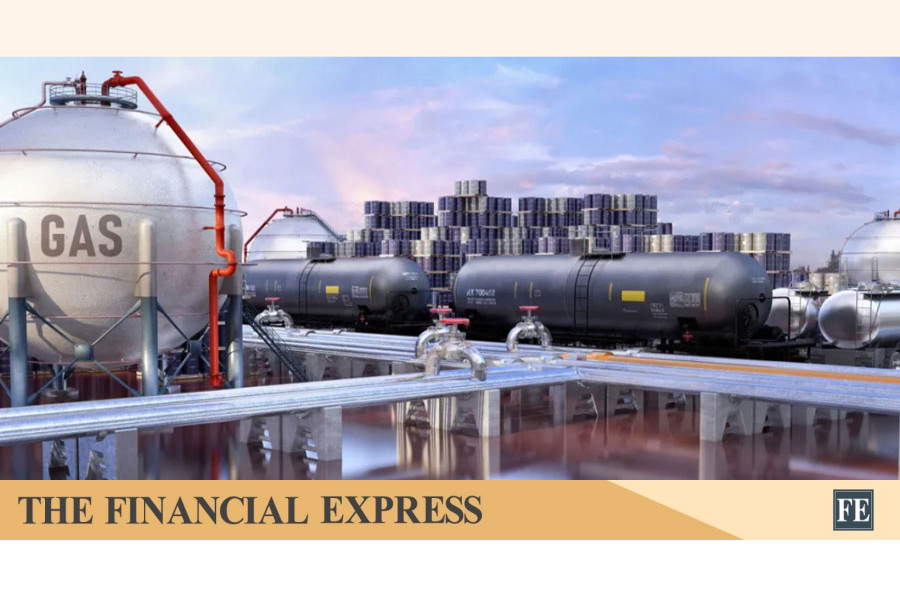
The country's persistent natural gas shortage has become one of the most serious constraints on industrial expansion. Daily demand is estimated at 3,800-4,000 million cubic feet (mmcfd), whereas supply remains limited to approximately 2,500-2,800 mmcfd. The situation has worsened following a technical failure at the Moheshkhali Floating Storage and Regasification Unit (FSRU), which has removed an additional 450 mmcfd from the national gas grid.

The resulting gas shortages have led to low gas pressure, power disruptions, lengthy queues at CNG filling stations, production interruptions across industries, idle imported machinery, and rising operational risks for businesses.

Trust Bank Managing Director Ahsan Zaman Chowdhury estimates that the gas crisis has left Tk. 7,000-8,000 crore in stranded industrial loans and warns that the prolonged energy shortage could eventually affect the banking sector.

Similarly, Mostofa Kamal, Chairman of MGI Group, argues that the gas crisis, combined with administrative bottlenecks, is discouraging new investment while threatening the viability of existing industries. He noted that delayed gas connections and inadequate supply have stalled project implementation despite nearly US$600 million in financing from the International Finance Corporation (IFC), the World Bank, and other international lenders.

Titas Gas Transmission and Distribution PLC Managing Director Shahnewaz Parvez has acknowledged that the company cannot provide new industrial gas connections until the national gas supply situation improves.

The Bangladesh Investment Development Authority (BIDA) also identifies energy scarcity as the single largest deterrent to both domestic and foreign investment. According to Simeen Rahman, CEO of Transcom Group, modern manufacturing requires not only sufficient energy availability but also reliable and quality power supply.

FICCI further points to weaknesses in Bangladesh's financial sector. Investors continue to face challenges arising from banking sector fragility, where non-performing loans have reached 32.26 percent.

Institutional coordination remains another major obstacle. Investors often need approvals from 23 separate government agencies, making the investment process slow, uncertain, and burdened by excessive bureaucracy and red tape.

The chamber also highlights a significant skills and productivity gap. Bangladesh ranks 96th out of 100 countries on the relevant global productivity index, undermining its competitiveness as an investment destination. Furthermore, although the statutory corporate tax rate stands at 27.5 per cent, FICCI estimates that the effective tax burden on foreign investment companies can rise to 43-48 per cent, significantly reducing investment attractiveness.

Beyond these structural challenges, Bangladesh also suffers from a perception problem that negatively influences investor confidence and investment decisions.

Nevertheless, FICCI believes these challenges are far from insurmountable. With focused, sequenced, and sustained reforms, Bangladesh can transform its existing constraints into competitive advantages and establish itself as a credible destination for quality foreign investment.

Achieving the government's vision of a US$1 trillion economy by 2034 will depend not only on ambitious policy commitments but also on the successful implementation of reforms that improve energy security, streamline regulations, strengthen institutions, and restore investor confidence. If these challenges are effectively addressed, Bangladesh will be far better positioned to attract the scale of domestic and foreign investment necessary to sustain long-term economic growth.

Mushfiqur Rahman is a mining engineer. He writes on energy and environment issues.​
 

The political economy of financial sector reform

1785629472793.webp

Representational image

The proposed BDT 9.38 trillion national budget for Bangladesh for fiscal year 2026–27 is the largest in the country's history. It presents a roadmap for economic restructuring, administrative reform, social protection, and long-term growth.

The government has set a revenue target of BDT 6.95 trillion, with a budget deficit of BDT 2.43 trillion, equivalent to 3.6 per cent of GDP.

It aims to achieve 6.5 per cent GDP growth, contain inflation at 7.5 per cent, and raise the tax-to-GDP ratio to 6.8 per cent.

The budget has been proposed at a time when Bangladesh is grappling with persistent inflation, pressure on foreign exchange reserves, sluggish investment, a weak tax base, and slow employment growth.

At the same time, the fragility of the banking sector has emerged as one of the country's most pressing challenges. This is no longer simply a crisis affecting a few banks; it raises broader questions about the relationship between the state, the market, and political power.

To restore stability, the government has proposed reducing non-performing loans (NPLs), strengthening regulatory capacity, accelerating digital transformation, restructuring and merging weak banks, and providing capital support where necessary.

While these measures are economically necessary, an important question remains: Who should bear the cost of financial stability?

If banks weakened by poor governance, political influence, regulatory failure, and rising defaulted loans are ultimately rescued with taxpayers' money, does this represent financial stability?

Bank bailouts: Stability or impunity?

The most serious weakness of Bangladesh's banking sector is the growing volume of non-performing loans.

Official figures place the NPL ratio at 35.73 per cent, meaning that nearly BDT 36 out of every BDT 100 lent by banks is at risk.

This weakens banks' capital base, restricts new lending, and discourages investment. By comparison, a healthy banking system generally maintains an NPL ratio of 3 to 5 per cent.

According to Bangladesh Bank, distressed banks have received more than BDT 760 billion in liquidity support. Of this, BDT 172.5 billion was provided during the Awami League government and BDT 510 billion under the interim government through repo facilities, special liquidity assistance, interbank support, and other policy measures. However, liquidity support alone cannot resolve a structural crisis.

Internationally, bank bailouts have remained controversial since the 2008 Global Financial Crisis, when governments in the United States, the United Kingdom, and Europe spent enormous public resources to prevent the collapse of major financial institutions. Although these measures restored short-term stability, they reinforced the notion of institutions being 'Too Big to Fail.'

Consider a bank that extends thousands of crores of taka in loans to influential groups. When those loans are not repaid, they are repeatedly rescheduled instead of being classified as non-performing, while new loans are issued to service old debts.

Although the bank appears solvent on paper, its capital continues to erode. Eventually, the government is forced to intervene. In effect, profits remain private, while losses are transferred to the public.

This illustrates the distinction between bailouts and bail-ins. A bailout rescues banks with taxpayers' money, whereas a bail-in requires shareholders, major investors, and subordinated creditors to absorb losses first.

Following the 2008 financial crisis, many countries adopted bail-in mechanisms to reduce the burden on taxpayers and strengthen financial accountability.

Bangladesh, however, has made only limited progress in this direction. The expectation persists that large financial institutions will ultimately receive government support.

Such expectations create moral hazard. If banks believe they will always be rescued, they have fewer incentives to maintain prudent lending practices, ensure sound corporate governance, or resist politically motivated lending.

Over the past decade, Bangladesh has witnessed a steady rise in non-performing loans. At the same time, repeated loan rescheduling, regulatory forbearance, and policy concessions have concealed the true extent of financial risk.

The banking crisis is therefore not merely a financial problem but also a crisis of political economy, shaped by the interaction of political power, business interests, and regulatory institutions.

The banking crisis cannot be understood solely as a failure of financial management.

Governments generally have two options: restructure, merge, or close weak banks, or sustain them with public funds.

While the first option may be difficult, the second imposes a long-term burden on society.

Public revenue is collected to finance education, healthcare, infrastructure, and social protection. Repeatedly using these resources to rescue poorly governed banks raises both economic and ethical concerns.

Liquidity crisis or insolvency?

For years, Bangladesh's banking problems have largely been described as a liquidity crisis. In many cases, however, the challenge is one of insolvency rather than liquidity.

A liquidity crisis refers to a temporary shortage of cash. In contrast, insolvency means that the real value of a bank's assets has deteriorated to the point where it can no longer meet its obligations.

The two situations require different policy responses.

Liquidity shortages may be addressed through short-term central bank support.

Insolvency, however, requires transparent asset quality assessments, recapitalisation, governance reforms, changes in ownership, and, where necessary, the merger or closure of distressed banks.

Recapitalisation should never substitute for structural reform.

Before providing any public capital support, an independent Asset Quality Review (AQR) should be conducted to determine the true scale of non-performing loans, capital deficiencies, and managerial responsibility.

Banks are indispensable to the economy, but citizens are more important than financial institutions.

Financial stability must therefore be built on transparency, accountability, and fairness. While using public funds to rescue banks may sometimes be necessary to prevent systemic collapse, taxpayers' money should never be used to shield those responsible for institutional failure from accountability.​
 

Dollar continues to gain against taka

Star Business Report

1785630878427.webp


The US dollar continues to gain against the taka amid increased demand for foreign currency to clear import bills.

On July 13, the weighted average rate of the greenback hit Tk 123 per dollar in interbank trading. The rate, after remaining steady for three days, began to increase gradually.

On July 30, the taka-dollar exchange rate rose to Tk 123.82 per dollar in the interbank market. On the spot market, the dollar was traded at Tk 123.88 each on the same day, according to Bangladesh Bank (BB) data.

“We are seeing increased pressure for import payments, particularly for the import of fuel and fertiliser by government agencies. Overall, imports have increased too,” said a top executive of a private bank.

During the July-May period, Bangladesh’s imports grew 6.26 percent year-on-year to $64 billion. By contrast, exports declined 2 percent year-on-year to $40 billion, according to BB.

Bankers said that although the country received a record $35.5 billion in remittances sent by migrant workers and Bangladeshis living abroad, the inflow has slowed recently as the two major festivals -- Eid-ul-Fitr and Eid-ul-Azha -- have already been celebrated.

“It appears exports are likely to remain dull. The fresh escalation of the war in the Middle East and the consequent spike in oil prices have also raised concern,” said another banker. “It appears that the taka will remain under pressure for some time.”

However, there is a flip side. A weaker taka will enhance the competitiveness of exports, bankers said.

As demand for foreign currency increases, BB has stopped buying US dollars from the market since June 8. The central bank bought $6.4 billion from the market between July 2025 and June 2026 as part of its effort to build foreign exchange reserves.​
 

Predictable policies key to attracting FDI

FICCI President Rupali Chowdhury says implementation matters more than new policies

Jagaran Chakma

1785632083191.webp

Rupali Chowdhury

Despite its large market and young workforce, Bangladesh trails regional peers in attracting foreign direct investment due to policy uncertainty, weak logistics and unreliable energy, according to Rupali Chowdhury, president of the Foreign Investors’ Chamber of Commerce and Industry (FICCI).

Foreign investors increasingly compare Bangladesh with competitors such as Vietnam, Indonesia, India, and Pakistan, where projects move faster, and government services are more predictable, she said in an interview with The Daily Star.

“Investors do not compare Bangladesh with its own past. They compare us with competing destinations,” Rupali said.

Her remarks came as FICCI launched its report, FDI for a New Bangladesh: Roadmap for a $15 Billion Vision, which argues that Bangladesh continues to lag behind its regional peers in attracting investment despite decades of economic growth.

The report shows Bangladesh’s FDI-to-GDP ratio stood at just 0.29 percent in 2024, compared with 4.23 percent in Vietnam, 1.74 percent in Indonesia and 0.72 percent in Pakistan. It identifies policy uncertainty, logistics bottlenecks, infrastructure shortages, financial sector weaknesses, tax complexity and weak investor protection as the main barriers to investment.

Rupali said logistics remains one of Bangladesh’s biggest competitive disadvantages.

1785632120200.webp


“It is not only about roads. It is the entire supply chain,” she said, referring to port congestion, traffic bottlenecks and delays in moving goods between Chattogram and Dhaka.

She said these bottlenecks raise transport costs and delay deliveries, undermining Bangladesh’s competitiveness. Addressing them requires better coordination among government agencies and sustained investment in transport infrastructure.

Another major challenge is the slow automation of public services.

Rupali said customs, regulatory approvals and other government services still rely heavily on manual processes.

“We need seamless automation,” she said. “If manual processes remain, businesses will continue to face delays.”

Automation must go beyond online systems by eliminating unnecessary physical interactions, she said. The FICCI report echoes this, citing lengthy approval procedures, overlapping regulations and poor inter-agency coordination as factors that increase costs and uncertainty.

Rupali suggested such reforms be designed and implemented in consultation with businesses.

“We have identified the problems. The government now needs to address them, while involving the private sector because businesses are the end users of these systems,” she said.

As an example, Rupali cited the Bangladesh Economic Zones Authority’s (Beza) limited authority to ensure supporting infrastructure and utility services in the industrial zones it allocates. “If one agency has to depend on several others to deliver services, investors continue to face delays,” she said.

She added that this lack of coordination increases uncertainty for investors planning large manufacturing projects that depend on timely access to utilities and transport infrastructure.

Rupali said reliable energy supply has become one of the first issues raised by prospective investors considering Bangladesh.

“If we cannot assure investors of reliable energy, it becomes difficult to convince them to establish new industries here,” she said.

The financial sector is another concern. The FICCI chief said high lending rates have significantly increased the cost of new investments.

“When borrowing costs rise to 14 or 16 percent, businesses naturally become more cautious about making fresh investments,” she said.

She also cited exchange-rate volatility as another factor making investment decisions harder, particularly for companies that depend heavily on imported machinery and raw materials.

According to the report, weaknesses in the banking sector, including high levels of non-performing loans and limited access to long-term financing, have further undermined investor confidence.

Despite these challenges, Rupali said Bangladesh retains significant strengths, including a large consumer market, an expanding manufacturing base and a young labour force.

She said global manufacturers are increasingly diversifying production under the “China Plus One” strategy, creating opportunities for Bangladesh to attract new investment.

However, those opportunities will not last indefinitely if competing countries continue to move ahead with reforms, she said.

The FICCI report notes that multinational companies now place greater emphasis on policy predictability, efficient logistics, legal protection and institutional quality than on low labour costs alone. It says countries such as Vietnam and India have strengthened industrial policies and logistics networks to capture a growing share of global investment flows.

Rupali said implementation is more important than announcing new policies.

“Bangladesh has many strengths. What investors want now is timely implementation, predictable policies and reliable institutions,” she said.

FICCI estimates that, if these reforms are implemented consistently, Bangladesh could increase annual FDI inflows from about $1.7 billion to $15 billion by 2030, raising the FDI-to-GDP ratio from around 0.36 percent to 2.5 percent.

The report says achieving that target will require sustained policy consistency, stronger institutions and closer collaboration between the government and the private sector.​
 

Latest Posts

Back