[🇧🇩] Monitoring Bangladesh's Economy

[🇧🇩] Monitoring Bangladesh's Economy
948
25K
More threads by Saif

G Bangladesh Defense

Challenges on the road to becoming the 28th largest economy​


1707959861055.webp

Investment, both domestic and foreign, plays a pivotal role in fostering economic growth. PHOTO: REUTERS

Bangladesh undeniably stands out as one of the most promising economies in the region. Despite facing resource constraints, the country has made commendable economic and social progress since independence. This success is a testament to the indomitable spirit of the Bangladeshi people, their relentless struggle for survival, and their remarkable commitment, determination, and entrepreneurial spirit. With an average annual GDP growth of six percent since the 2000s, Bangladesh currently holds the 35th position among global economies, and it is projected to become the 28th largest economy by 2030. However, this ambitious journey toward economic advancement is not without its challenges. The critical hurdles on our path include tackling poverty, addressing income inequality, managing high inflation and external debt burden, attracting foreign investment, improving resource mobilisation, addressing foreign exchange shortages, curbing corruption, ensuring the stability of the financial sector, and others.

In recent years, Bangladesh has borrowed heavily to finance various mega projects. Consequently, annual debt servicing has been on the rise, which now constitutes a substantial share of the government's expenditures. According to data from the Bangladesh Bank, the total government debt, comprising both domestic and foreign, reached around the $100-billion mark at the end of June 2023. While some of these projects may yield long-term benefits, the immediate requirements for debt servicing pose a challenge for the government's financial capacity. Currently, Bangladesh has to repay foreign loans ranging from $2-2.76 billion annually, and this amount is expected to rise in the coming years. According to a finance ministry projection, foreign debt repayments, including interests, will reach $4.5 billion in 2025-2026. The increasing external debt service payments are straining the country's foreign exchange reserves.​

1707959897795.webp

With an average annual GDP growth of six percent since the 2000s, Bangladesh currently holds the 35th position among global economies. VISUAL: TEENI AND TUNI

Concurrently, debt-service payments are diverting already scarce fiscal resources from critical sectors such as healthcare, education, social assistance, and infrastructure development. While experts argue that Bangladesh's current debt-GDP ratio is not a cause for concern, it shouldn't be seen as a green light for indiscriminate loan accumulation. To secure the nation's economic future, it is crucial for policymakers to prioritise projects by carefully assessing payback periods, thus preventing potential debt traps. Ensuring the efficient utilisation of borrowed funds is paramount to sustaining the economic cycle in the face of challenges.

Investment, both domestic and foreign, plays a pivotal role in fostering economic growth, improving the skills of the local workforce through the transfer of technology, leading to job creation, higher incomes, and improved standards of living. Research shows that to transform Bangladesh into a high-income country, it would need to raise its investment-to-GDP ratio to around 40-44 percent of GDP. Regrettably, private investment has shown little growth, hovering at around 23-24 percent of GDP for the past decade, as reported by the Bangladesh Bureau of Statistics (BBS). We are also lagging behind in attracting foreign direct investment (FDI). While even during the pandemic (2020) FDI flow to developing countries in Asia increased by four percent to $535 billion, according to figures from the UN Conference on Trade and Development (UNCTAD), Bangladesh could not achieve the expected FDI. As per Bangladesh Bank's data for the fiscal year 2023, the nation attracted approximately $3.2 billion in foreign direct investment. The rate of FDI inflow in Bangladesh is only around one percent of GDP, one of the lowest in Asia.

1707959948717.webp

ILLUSTRATION: Salman Sakib Shahryar

It's crucial to recognise that the level of convenience in doing business holds significant importance for foreign investors when deciding where to invest. The ease of doing business and global competitiveness are key factors influencing their investment choices. Investors assess various aspects, including the clarity of existing policies, reliability of government officials, taxation policies, adherence to rules and regulations and, most importantly, the security provided for their investments.

Regrettably, in the case of Bangladesh, investors often express frustration due to bureaucratic hurdles that impede smooth business operations. These challenges include bureaucratic red tape, inadequate socio-economic and physical infrastructure, inconsistent energy supply, corruption, underdeveloped money and capital markets, a complicated tax system, along with delays in decision-making processes. Furthermore, hidden costs related to procedures, policies, laws, and infrastructure significantly impact the overall cost of doing business.

Therefore, in light of the current economic challenges, it is essential to boost investment inflow by making timely adjustments to policies. The government should remove the impediments that are responsible for the high cost of investment and promptly take measures to improve public goods and services, including roads, electricity, gas, water, and sewerage. Additionally, the government should implement business-friendly policies safeguarding the rights of enterprises, workers, consumers, the environment and, most importantly, ensure a stable political environment to attract both domestic and foreign investments.

1707959994813.webp

Bangladesh undeniably stands out as one of the most promising economies in the region. VISUAL: REHNUMA PROSHOON

Bangladesh's export portfolio is primarily dominated by its ready-made garments (RMG) sector. In the fiscal year 2022-2023, the total export from Bangladesh amounted to $55.56 billion, with RMG exports contributing $46.99 billion. Currently, the RMG sector accounts for 85 percent of the country's total exports, with primary destinations being the European Union and the United States. The RMG sector has played a transformative role in shaping our economy, job market, and income, but due to ongoing global geopolitical conflicts, energy price hike, domestic political unrests, currently, the RMG sector is in a sluggish state. Hence, for Bangladesh to sustain its growth trajectory, diversification of the export basket and tapping into new markets is imperative.

Industry insiders say that there are promising export sectors such as pharmaceuticals, bicycles, shipbuilding, leather and leather goods, frozen and live fish, terry towels, furniture, and agricultural products, if the government provides adequate policy support, similar to what is offered to the RMG sector.
1707960028547.webp

According to a finance ministry projection, foreign debt repayments, including interests, will reach $4.5 billion in 2025-2026. VISUAL: TEENI AND TUNI

Foreign remittance is Bangladesh's lifeline. Despite an increasing number of Bangladeshis leaving for jobs abroad, in recent times, the remittance inflow has been decreasing at an alarming rate. In September 2023, migrant workers sent home $1.34 billion—the lowest since April 2020, according to data from Bangladesh Bank. Large remittances are sent through informal channels like hundi despite a 2.5 percent incentive for the remitters through the banking channel. Many argue that the widening gap between official and unofficial exchange rates, lack of motivation, and institutional barriers such as high transaction costs and formalities for sending remittances through formal channels hinder remitter's use of banking services. Currently, Bangladesh is struggling with a prolonged dollar crisis and is compelled to restrict imports due to falling reserves. Remittances play a vital role in growing foreign exchange reserves and economic growth. Hence, an urgent policy focus is required to shift remittances from informal to formal channels.

One of the biggest concerns for the economy is our ailing banking sector, which has, on numerous occasions, been tarnished by unwanted malpractices. It is now an open secret that the country's banking sector has been entangled in a series of scams and irregularities, such as the funnelling of loans worth billions of taka by violating banking rules and procedures to influential people known for lax repayments. Unfortunately, violators of banking norms and regulations are hardly ever punished, and they are allowed to continue to default on loans with impunity. As a result, at the end of FY 2022-23, defaulted loans in the banking sector stood at a record Tk 156,040 crore.

Banks are the lifeblood of the economy; therefore, regulators should take pre-emptive measures to control the current situation before it worsens and gets out of control. A combination of strong policy reforms and good governance in the banking sector is the need of the hour. Measures should include legal action against wilful loan defaulters, enhanced banking regulation and supervision, addressing banking sector weaknesses, tighter criteria for loan rescheduling/restructuring, and improved legal systems to accelerate loan recovery. If enforcement authorities take these measures with the right intentions, Bangladesh will embark on a path to creating a stronger economy.
1707960065757.webp

A vendor sells fish at a market in Dhaka. PHOTO: REUTERS

Over the past decade, Bangladesh has consistently demonstrated impressive economic growth. However, one may ask: has everyone been able to share its benefits equally? The answer, sadly, is "no." The growth has, unfortunately, bypassed the majority of the population while higher-income groups have been its main beneficiaries. The country has experienced a rapid increase in income inequality, with 10 percent of the population owning 40 percent of the national income, while the bottom 50 percent possess only 19.05 percent of GDP. The primary factors which deprive poor and vulnerable people of their most elementary rights—and which lead to greater income inequality—are unequal access to education and employment opportunities, low-wage jobs, unchecked corruption and systemic irregularities (such as those enabling the various scams in the banking sector), tax evasion, money laundering, and so on.

The growing gap between the rich and poor not only hinders sustainable growth but also increases the risk of social and political unrest. As such, it's essential for our policymakers to stop favouring the wealthy and start focusing on fair treatment for everyone. The main goal should be to achieve inclusive growth. We need to address issues like wealth sharing, good governance, and social policies that promote fairness and equality. It may be noted that a society that is happy, equal, and just will always experience peace and prosperity.

Inflation has been adversely affecting the common people in Bangladesh. Prices of daily essentials, including eggs, chicken, onions, potatoes, sugar, and oil, have consistently increased, contrasting with the global trend of decreasing prices. Purchasing daily necessities has become increasingly challenging, as highlighted in a recent report by the World Bank. According to the report, 71 percent of families are being affected by rising food prices. This alarming statistic implies that out of the 4.10 crore families, almost 2.91 crore are facing food insecurity, a matter of grave concern. If the current trajectory of inflation and escalating living costs persists, there is a significant risk of more families falling into poverty.

1707960125820.webp

VISUAL: STAR

Experts say that soaring food inflation rates in the country are linked to flawed government policies, poor market management and the profit-seeking behaviours of certain businessmen involved in syndicates. Moreover, the control of essential commodity imports by powerful businesses has resulted in market monopoly. The government has to address all the underlying reasons behind food inflation through a well-formulated action plan.

The need for continued investment in education and skill development is another challenge that Bangladesh must address. Over the past few years, numerous experiments have been carried out in the name of modernising and updating our primary, secondary, and higher secondary education. Yet, the existing education curriculum is not aligned with industry needs. While educational institutions worldwide emphasise soft skills like team-building, problem-solving, critical thinking, communication, negotiation, and decision-making, our education system is still stuck in the past.

So, often, we hear complaints from the business community about their inability to find skilled workers, leading them to hire foreign professionals due to a lack of efficient local human resources. This not only hampers the country's job market but also increases the strain on Bangladesh's depleting foreign-currency reserves.

Regrettably, our education budget doesn't reflect the urgency of developing human resources. The country spends around two percent of its GDP on education, which is the lowest among South Asian countries. It is high time for Bangladesh to focus on enhancing its education system, ensuring that the workforce is equipped with the skills necessary for the evolving job market. A well-educated and skilled population is not only vital for fostering innovation but also for attracting high-value industries and investments.

It's unfortunate that, even after 52 years of independence, the country's healthcare sector is in shambles. It is shameful that a nation on the path to becoming the 28th largest economy in the world still witnesses a substantial number of its citizens, including politicians, businessmen, and ordinary people, seeking medical treatment abroad each year. This trend reflects a lack of confidence in our own healthcare system. While individuals choosing overseas medical care may argue that they owe no public explanation, the scenario takes a more alarming turn when Bangladeshi leaders and politicians follow suit. Their decision to seek medical treatment abroad is not just a personal matter but a cause for concern, as they bear the responsibility for the development of a robust healthcare system for their fellow citizens.

This prevailing culture needs to be transformed urgently, given its detrimental impact on our hard-earned foreign currency reserves and the nation's image. The government should prioritise and guarantee equitable access to high-quality health services for all citizens. Failing to improve our health sector not only jeopardises the well-being of our population but also threatens to erode the significant economic gains Bangladesh has achieved over the years. Therefore, concerted efforts are imperative to instigate a paradigm shift and ensure that the healthcare system becomes a source of pride and reliability for every citizen, discouraging the need for seeking medical treatment abroad.

Corruption is a global problem, and Bangladesh is no exception to this pervasive issue. While the country holds the 147th position out of 180 countries in the Corruption Perceptions Index (CPI) for 2022, according to Transparency International, it is important to recognise that this ranking does not implicate every citizen in the web of corruption. I firmly believe that the majority of Bangladeshis are honest and possess integrity. Nevertheless, the harsh reality persists that a handful of people within key sectors such as government offices, businesses, healthcare, education, and political institutions are involved in corrupt practices such as bribery, embezzlement of public funds, bank loan scams, money laundering, under/over invoicing, adulteration of food and drugs, and various forms of cheating.

It is unfortunate that despite governmental claims of zero tolerance for corruption, there is a disconcerting trend where powerful individuals often escape accountability. It should be noted that instances of overlooking or condoning corrupt practices among associates, friends, and political supporters erode public trust, perpetuating a culture where dishonesty might be perceived as justifiable. The need to break free from this complacency is urgent. Holding wrongdoers accountable and instituting stringent measures against corruption are imperative. Currently, the absence of severe consequences for influential figures engaged in corrupt activities not only perpetuates a cycle of impunity but also undermines public confidence in the democratic process. It is time to revisit and reinforce our commitment to eradicating corruption.

Effective law enforcement is a critical pillar in ensuring that the corrupt face justice and that the culture of impunity is dismantled. However, punitive measures alone are insufficient, a comprehensive approach that includes legal reforms, institutional strengthening, and increased societal awareness is indispensable to combatting corruption. These measures are not only vital for sustained economic growth but are also fundamental for elevating Bangladesh's standing on the international stage.​
 

Analyze Post

Add your ideas here:
Highlight Cite Respond

Window for easy loans narrowing​

Market-based interest rates raise govt’s development expenses

1711231840304.webp


Bangladesh's access to cheap loans is closing in with its rising per capita income, making foreign borrowing costlier.

The country now has to go for borrowing at the costlier market-based rates to keep up development spending, according to a report of the Economic Relations Division.

The interest rate risk is high when the debt portfolio is dominated by market-based rates as the size of interest payment is based on the vagaries of the global economy.
For instance, Bangladesh's cost of foreign loans has been on the rise in recent times as the interest rates have shot up globally.

In 2023, the government borrowed about $2.6 billion at the market-based rate, which accounted for 30.7 percent of the total committed loans. In 2022, it was $3.42 billion, which was 43.9 percent of the total.

Take the case of the World Bank, one of the major lenders of Bangladesh. Until 2018, its loans carried no interest; all the government had to bear was a 0.75 percent service charge, which was sometimes waived.

When the country's status was upgraded to a lower middle-income country in October 2018 from a low-income nation, the WB fixed a 2 percent interest rate and the repayment period was adjusted downwards to 25 years from 30 years previously. The grace period was halved from 10 years.

The reason for the tougher loan terms is Bangladesh is now a "GAP" country, meaning the country is currently at a stage where it can borrow at a market-based interest rate if it wants.

It is the same in the case of the Asian Development Bank, another major development partner, which allocated loans at a fixed and low-interest rate previously. Before 2000, the interest rate was only 1 percent, which jumped to 2 percent in 2013.

From January 2022 to July 2023, the government signed loan deals worth $4.4 billion with the ADB, with 54.5 percent of the amount taken at market-based interest rates.

Bangladesh started borrowing from the Asian Infrastructure Investment Bank since its inception in 2016 and the Beijing-based lender ramped up lending during the pandemic to help the economy recover from the shock by the way of extending budgetary support.

As of June 2023, the government secured $3.4 billion from the bank and the interest rate on the loans is market-based.

A portion of the market-based loans from the ADB and AIIB are budget support taken during the pandemic.

Russia lent about $11.9 billion for the country's biggest infrastructure project: the Rooppur nuclear power plant. The interest rate is Libor plus 1.75 percent.

The London Interbank Offered Rate (Libor) was a benchmark interest rate before it was phased out in June last year and replaced by the Secured Overnight Financing Rate (SOFR).

The SOFR stands at more than 5 percent currently whereas it was less than 1 percent before the latest surge in the cost of funds.

Moscow has already disbursed about $6.5 billion.

Some additional charges take the borrowing rate to 8 to 9 percent, finance ministry officials said.

Japan, the largest development partner of Bangladesh among the bilateral donors, gave out loans at less than 1 percent before it changed its official development assistance policy to increase the interest rate for low-middle-income countries in October 2023.

As a result, the new deals with Japan were signed at a 1.6 percent interest rate.

The upward revision of the interest rate also came as development partners have taken into account the country's growing repayment capacity manifested from the growing per capita income.

In the last fiscal year, the per capita income rose to $2,765 from $1,130 in fiscal 2011-12.

As of January, the total outstanding external loans of the government were $66.8 billion, with about 61 percent of the sum disbursed in the last three fiscal years.

Usually, the loan repayment starts after a loan matures, but the interest payments begin immediately after the release of the funds. Since the loan portfolio has ballooned, the debt servicing has widened simultaneously.

Foreign loan repayments rose 32.4 percent in fiscal 2022-23 while interest payments surged 88.8 percent.

The trend has continued into the current fiscal year: loan payments climbed 44.5 percent and interest servicing rocketed 108.2 percent in the first seven months.

Annual loan repayment was less than $2 billion before fiscal 2021-22. In fiscal 2022-23, it rose to $2.67 billion.

As per the finance ministry projection, $3.57 billion will be required this fiscal year to service debts and $4.5 billion in the next fiscal year.

If the interest rate and loan utilisation keep increasing, repayment will cross $5 billion by that time, said a finance ministry official.

The escalating interest spending will put pressure on the budget.

"We pay Tk 1 as an interest payment for every Tk 4 expenditure from our budget. Therefore, if we can't increase the revenue mobilisation, our budget will be under pressure," said Zahid Hussain, a former lead economist of the World Bank's Dhaka office.

In recent times, the government has taken various steps to raise taxes.

Still, at less than 9 percent, Bangladesh has one of the lowest tax-to-GDP ratios in the world.

To keep the risks stemming from rising debt servicing under check, the government now has two options: one is to collect more revenue or to take on more loans.

"The government should take the decision now. Besides, it should reduce its expenditure. We need to make our state-owned enterprises profitable, cut illogical subsidies and allocate more foreign loans to development projects on a priority basis," Hussain said.

Complicating matters for the government is the unprecedented appreciation of the dollar. The greenback has gained by as much as 30 percent against the taka in the past two years.​
 
Analyze

Analyze Post

Add your ideas here:
Highlight Cite Fact Check Respond

Steps needed to enjoy LDC-like benefits after graduation: experts
Staff Correspondent | Published: 22:23, Mar 24,2024


1711320026088.webp

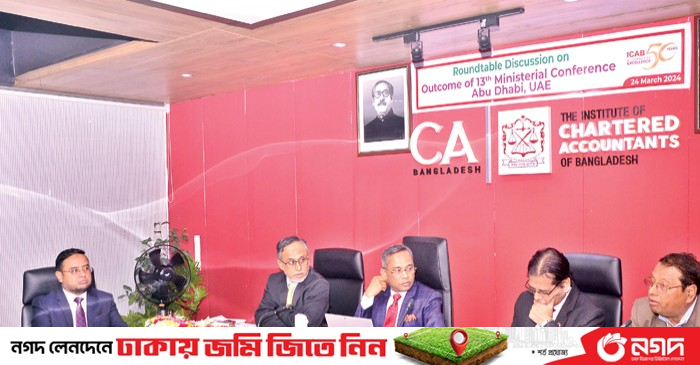
Centre for Policy Dialogue distinguished fellow Mustafizur Rahman and Institute of Chartered Accountants of Bangladesh president Mohammed Forkan, among others, are present at a roundtable discussion organised by ICAB at CA Bhaban, Karwan Bazar in the capital Dhaka on Sunday.— New Age photo

In order to enjoy benefits of a least developed country, Bangladesh needs to think from three perspectives – as an LDC, graduating from LDC and as a developing country, to negotiate the benefits to the country’s side, said Mustafizur Rahman, distinguished fellow of the Centre for Policy Dialogue.

During a roundtable discussion on Sunday, he said that benefits enjoyed by LDCs, such as duty-free access and preferential treatment on the international markets, will go away once Bangladesh graduates from the list in November 2026,

The roundtable discussion titled ‘Outcome of 13th Ministerial Conference, Abu Dhabi, UAE’ was organised by the Institute of Chartered Accountants of Bangladesh at CA Bhaban, Karwan Bazar in the capital Dhaka.

‘Product diversification in the export sector is required for the survival of the sector after graduating from the LDCs. We need to sign more free trade agreements and comprehensive trade agreements and development of transport sector should be used to establish economic corridors,’ he added.

He further said that action must be taken to transform comparative advantage into competitive advantage.

ICAB president Mohammed Forkan Uddin said, ‘We need to think about the situation after LDC graduation, in terms of preferential market access, preferential treatment for services and service suppliers and special treatment regarding obligations and flexibilities under WTO rules.’

Federation of Bangladesh Chambers of Commerce and Industries adviser Manzur Ahmed said that foreign trade should be integrated through regional agreements, bilateral agreements and some alternative commercial agreements. In future, Bangladesh needs to pay particular attention to the implementation of multilateral trade, he added.

Former ICAB president and taxation and corporate laws committee chairman Md Humayun Kabir moderated the discussion with other government officials, researchers and experts present.​
 
Analyze

Analyze Post

Add your ideas here:
Highlight Cite Fact Check Respond

Govt aims for a cashless economy by 2031​

BB official tells BASIS workshop

1711404534845.webp

Photo: Amran Hossain

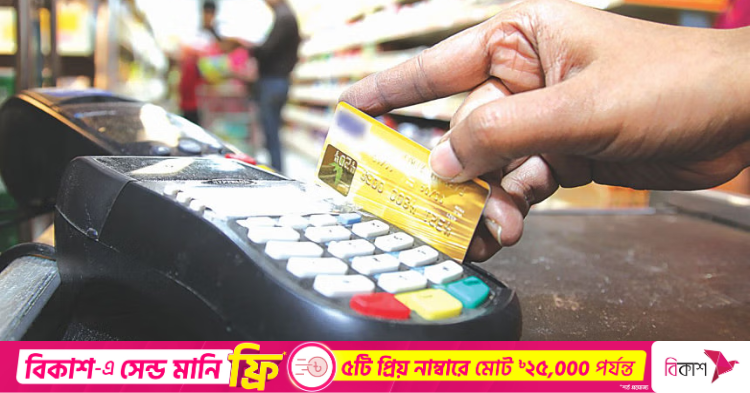
The government has set a target to transform the country into going completely cashless, that is when payments will be made solely online, by 2031, said a top official of Bangladesh Bank.

"The honourable prime minister has set a target of achieving 30 percent of transactions in the cashless format by 2025 and 100 percent by 2031," said Md Mezbaul Haque, executive director of the central bank.

The cabinet has assured the banking regulator of its support through interventions wherever necessary, he told a workshop titled "Way Forward to Increase Cashless Payment" organised by the Bangladesh Association of Software and Information Services (BASIS) on its Dhaka premises.

Haque criticised banks' app promotional initiatives, saying that most of their Dhaka branch officials do not know anything about their own apps.

"I acknowledge that many banks have very beautiful apps…they are not marketing it. The use of apps is mainly confined to fund transfers. But the smoothest service is over making payments, which is not being used," he said.

That means customers are being taught only to transfer money and so, banks have a role to play in this regard, he said, adding that bank officials would also have to learn how to make cashless payments.

Haque criticised some banks for failing to generate any transaction in spite of acquiring merchants, saying that their efforts to go cashless such as developing apps and acquiring merchants have now become a ceremonial function.

"I want to be very clear with you that I don't believe in ceremonial activity. If you think that you are making losses (by going cashless), we will make every service costlier for you too," he said.

"You (banks) get many services free of cost (from Bangladesh Bank)…Why are we giving this free of cost service? It's for the customers. So, if the customers are not served, why should we give you free of cost services," he asked.

If customers do not get digital payment services, Bangladesh Bank will discontinue some of the free of cost services, he said.

He urged banks and fintech institutions to assist the government in in achieving its goal of expanding cashless transactions in Bangladesh, assuring that the central bank would provide necessary policy support.

There needs to be more coordination between Bangladesh Bank and the National Board of Revenue (NBR), said Fahim Mashroor, chairman of the BASIS standing committee on fintech and digital payment.

"Some of the recent rules and actions of the NBR are discouraging people from making digital payment and causing them to opt for cash transactions only," he said.

He also suggested greater collaboration between banks and fintech companies to jointly promote digital payment.

Representatives from banks, mobile financial service and payment service providers, payment system operators as well as representatives of small, medium and large retail businesses and networks participated in the workshop.

To popularise BB's uniform digital payment method Bangla QR, every bank should introduce a mobile app for customers while existing apps should be simplified and made more user-friendly to encourage greater usage, they said.

Small shop owners should ensure that digital payments received from customers can be seamlessly transferred to suppliers or wholesalers without cash involvement while digital funds should be easily withdrawable just as cash, they added.

Bangladesh Bank needs to ensure real-time payments and interoperability among different payment systems, they said.

Waseem Alim, CEO of online grocery and food provider Chaldal, said although he was witnessing more digital transactions on the Chaldal platform, 75 percent of payments were still being made in the form of cash.

"Also, as a merchant I am incentivised to use cash because my cost is 0.6 percent, which includes maintaining a cashier at 19 locations in an AC room, cost of transporting cash etc," he said.

But the cost of mobile financial service is 1.5 per cent and card is 2.5 percent. So digital transaction cost needs to be less than 0.6 percent, he added.

Mohammad Arif Hossain, CEO of payment service provider Dmoney, said if the government gives merchants a 1 percent incentive and customers a 2 percent cashback, it could yield big results.

"This move would boost government revenue through higher VAT and tax collections. It would also make transactions easier to track, promoting honesty and transparency," he added.

Moderating the event, Syed Mohammad Kamal, country manager for Bangladesh at Mastercard, said incentives were crucial at both the consumer and small merchant ends for encouraging digital payments.​
 
Analyze

Analyze Post

Add your ideas here:
Highlight Cite Fact Check Respond

Devalue taka for exchange rate stability​

Experts tell BIDS seminar

1711491197398.webp


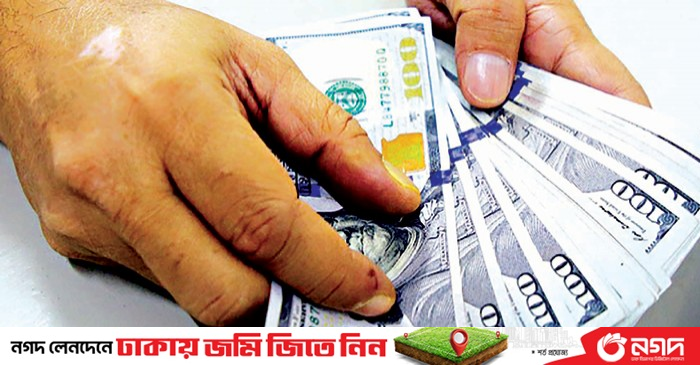
Researchers and economists yesterday suggested that the local currency be devalued further by 10 percent to 15 percent against the US dollar to match unofficial exchange rates and restore market stability.

The exchange rate was kept almost fixed artificially till 2022 and it did not follow the market trend. But as the foreign exchange reserves dwindled owing to higher US dollar outflows compared to inflows, the taka has lost its value by about 30 percent in the past two years.
Still, the exchange rate stability is yet to be there.

"The exchange rate situation worsened due to faulty macroeconomic management while the interest rate, inflation and international reserve management contributed to the current crisis," said Monzur Hossain, a research director of the Bangladesh Institute of Development Studies (BIDS), while presenting a keynote paper.

He spoke at a seminar on "Unpacking the Economic Manifesto of the Awami League: Trends and Challenges for Tomorrow's Bangladesh" organised by the BIDS on its premises in the capital.

Speaking at the event, researchers and economists said allowing the Bangladesh Foreign Exchange Dealers Association (Bafeda) and the Association of Bankers Bangladesh (ABB) to fix the exchange rate is unacceptable.
Foreign exchange management must be under Bangladesh Bank's jurisdiction, added the experts.

The analysts also recommended a dynamic exchange rate management with indicative adjustments following the real effective exchange rate (REER) and accommodative monetary policy with interest rate deregulations.

The REER is a measure of the value of a currency against a weighted average of several foreign currencies divided by an index of costs.

"Efficient management of authorised dealers' banks is needed for exchange rate stability," said Hossain.

"Policies to sell foreign currencies through money exchanges need to be revisited while they can be replaced by bank booths."

He said strict enforcement of laws must be ensured against loan defaulters, money launderers and financial irregularities to boost the confidence of customers.

Hossain welcomed the mergers and acquisitions move initiated by the central bank. He, however, warned decisions must be taken carefully and loan rescheduling and write-offs need to be discouraged.

He thinks a banking commission comprising experts, economists and policymakers could be useful in fulfilling reforms in the sector.

"New banks should not be allowed at least for the next five years."

Regarding the current problems of the financial sector, Hossain highlighted the high non-performing loans, inadequacy in capital requirements and the sorry state of a good number of private banks.

He also blamed weak regulatory control over some banks, weak corporate governance in the banking sector, politically active board members and owners and a lack of enforcement of laws.

On the post-pandemic crisis, Hossain cited multiple exchange rates, restrictions on imports, sharp depletion of reserves and rising inflation amidst a depreciating taka as the major reasons.

While presenting a keynote paper, Binayak Sen, director general of the BIDS, focused on nine priority issues for tomorrow's Bangladesh, including educational quality and equality and drawing in more foreign direct investment.

He said more efforts are needed in a shift from import tariffs and trade taxes to direct taxes.

"We need a 15 percent to 17 percent tax-to-GDP ratio to be consistent with the middle-income status and we have to increase the latter at half a percentage point every year."

Planning Minister Maj Gen (retd) Abdus Salam was the chief guest at the seminar's first session titled "Macroeconomic Stability, Fiscal Efforts and Agriculture" while Mashiur Rahman, economic affairs adviser to the prime minister, spoke as the special guest.​
 
Analyze

Analyze Post

Add your ideas here:
Highlight Cite Fact Check Respond

Foreign loan commitment jumps 300% in Jul-Feb​

Disbursement rises 2%

1711664665110.webp


Although foreign aid commitments made to Bangladesh by global lenders surged more than 300 percent year-on-year in the first eight months of the current fiscal year of 2023-24, disbursement has remained almost flat.

In the July-February period, loan commitments from development partners increased to $7.2 billion, up 304 percent, according to the Economic Relations Division (ERD) of the finance ministry.​

Around $6.74 billion came in the form of loans while the remaining $461.14 million were grants.
But at a time when Bangladesh is badly in need of foreign currencies, the loan disbursement stood at $4.99 billion, only up by 2 percent from that in the same period a year ago.

Lower disbursement of foreign assistance is a perennial problem for Bangladesh, driven by the country's failure to implement projects on time and meet conditions attached to loans by lenders.

The lower release of funds has prompted the government to order ministries to accelerate the use of loans to give a much-needed fillip to the foreign exchange reserves, which have halved in a span of two years.

Besides, the country's foreign debt servicing rose by 43 percent in the first eight months of the current fiscal year, which was mostly driven by rising interest rates.

In the July-February period, the government paid $2.03 billion for interest and principal payments to international lenders, up from $1.42 billion in the same period of the previous year.

The finance ministry projects that foreign debt repayments, including interest, will reach $4.5 billion in 2025-26.

In the current fiscal year, repayments are likely to jump by 33.52 percent to $3.57 billion, crossing the target of $2.79 billion set in the national budget.

Asian Development Bank (ADB) released most of the money in the eight-month period, totalling $1.30 billion, followed by America and Japan of a total of $1.04 billion.

Furthermore, World Bank disbursed $877.87 million, Russia $807.50 million, and China $361.71 million.
In terms of commitment, the ADB also secured the top position with $2.62 billion, followed by America and Japan with $2.02 billion.​
 
Analyze

Analyze Post

Add your ideas here:
Highlight Cite Fact Check Respond

Members Online

Latest Posts

Back
Top
PKDefense
G
O
 
H
O
M
E