☕ Support Us
[🇧🇩] - Monitoring the political activities of BNP | Page 4 | PKDefense

[🇧🇩] Monitoring the political activities of BNP

Reply (Scroll)
Press space to scroll through posts
G Bangladesh Defense
[🇧🇩] Monitoring the political activities of BNP
348
7K
More threads by Saif


Tarique Rahman’s make-or-break moment
HM Nazmul Alam 30 September, 2024, 00:00

1727659749339.png

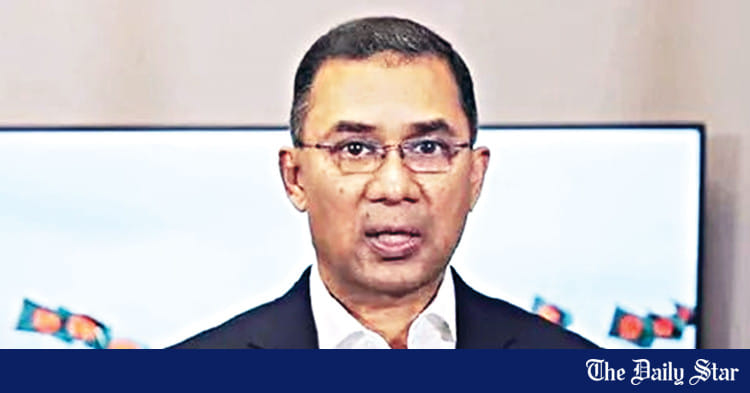
The Bangladesh Nationalist Party acting chairman Tarique Rahman. | Agence France-Presse/Henry Nicholls

AS BANGLADESH navigates through one of the most transformative political transitions in its history, Tarique Rahman, the acting chairman of the Bangladesh Nationalist Party, finds himself at the centre of this unfolding drama. The fall of Sheikh Hasina’s 16-year autocratic regime, led by a student-mass uprising, has created a political vacuum and the possibility of long-overdue reforms. In this turbulent time, all eyes are on Tarique Rahman, and questions are being asked: Can he evolve beyond the shadows of his family’s political legacy? Will he embrace the demands of a new generation, particularly Gen Z, who are at the forefront of this political revolution?

Tarique Rahman’s political journey has been anything but conventional. From being labelled as an heir to a political dynasty to spending years in exile, he has witnessed both the pinnacles of power and the depths of political isolation. Now, in a Bangladesh that is fractured but full of hope, he is called upon to redefine not just his own political narrative but that of the entire nation. This is a moment that demands political maturity and an understanding that the rules of the game have changed. The aspirations of the younger generation — those who have grown up amid the frustrations of corruption, authoritarianis and economic disparity — are far different from those of previous generations.

Crossroads of a political career

At this crucial juncture, Tarique Rahman faces a challenge unlike any other. He is not merely being called upon to lead a political party; he is being asked by many to steer a nation. The recent student-led uprising, which resulted in the ousting of the Awami League government, was not just a rejection of one party but a resounding cry for a new kind of politics — one that is transparent, inclusive and forward-thinking.

Tarique Rahman’s recent actions and speeches, especially during and after the Anti-Discrimination Student Movement, demonstrate a shift in his political approach. This is not the Tarique Rahman of the past, often accused of being entangled in the politics of revenge and patronage. Rather, this is a leader who appears to understand the pulse of the people and the urgency of addressing their needs.

His messages on social media, particularly his congratulatory message to the students and protesters after the fall of Sheikh Hasina’s regime, reflect a leader who is learning to speak the language of the new generation. By acknowledging the power of the people and emphasising the courage and sense of justice that fuelled the uprising, Tarique Rahman is positioning himself as a leader who values the collective will of the people over personal vendettas.

But words alone will not suffice. The road ahead for Tarique Rahman is fraught with challenges, and he must prove that he is capable of rising above the old political narratives that have dominated Bangladeshi politics for decades. In a nation weary of dynastic politics, corruption and authoritarianism, there is little room for the mistakes of the past. The question is: Can Tarique Rahman break free from the legacy of his predecessors and chart a new course for Bangladesh?

New generation, new politics

Perhaps the most significant factor in Tarique Rahman’s political evolution will be his ability to connect with Gen Z. This generation, born in the late 1990s and early 2000s, has grown up in a vastly different world from the one in which Tarique’s father, Shaheed President Ziaur Rahman, or his mother, former prime minister Khaleda Zia, governed. They are digital natives, shaped by social media, global movements for democracy and social justice, and a growing awareness of environmental and economic issues.

Gen Z in Bangladesh, like their counterparts around the world, are disillusioned with traditional politics. They have seen how corruption, authoritarianism and cronyism have stifled their country’s potential. They have witnessed the erosion of democratic institutions and the suppression of dissent. For them, politics is not just about power; it is about representation, justice and the protection of freedoms.

Tarique Rahman must recognise that the politics of the past, built on patronage networks, loyalty to party leaders and the manipulation of state institutions, will no longer resonate with this generation. Gen Z demands accountability, transparency and a politics that prioritises the common good over individual gain. They want leaders who can address pressing issues like justice, unemployment and social inequality and who are willing to embrace innovation in governance, including the use of technology for greater citizen engagement.

In his recent statements, Tarique has hinted at understanding this shift. His call for ensuring every citizen’s right to vote, his emphasis on free and fair elections, and his recognition of the role technology must play in governance all speak to a leader who is attempting to align with the values of the new generation. But again, alignment is not enough — there must be action.

Need for structural change

IF TARIQUE Rahman is to truly succeed in this new political landscape, he must go beyond rhetoric and implement structural changes that reflect the aspirations of today’s Bangladesh. This includes reforming the judiciary, ensuring the independence of the media and dismantling the deeply entrenched patronage networks that have long defined Bangladeshi politics.

A crucial test will be how he approaches economic reform. Bangladesh, while experiencing impressive economic growth in recent years, remains plagued by inequality and corruption. The youth are acutely aware of the need for economic justice. They seek a Bangladesh where opportunities are not limited to the well-connected but are available to all based on merit.

Tarique’s leadership will also be judged by how he handles the issue of job creation. Bangladesh’s youth face an unemployment crisis that has only been exacerbated by the global economic downturn and the pandemic. The youth are not content with waiting for trickle-down benefits from economic growth — they want policies that create jobs now, particularly in the tech and green industries that are reshaping economies worldwide.

Breaking with past

PERHAPS the most significant challenge for Tarique Rahman will be to prove that he is not bound by the past. His family’s political legacy, while revered by many, also carries the baggage of controversies and corruption allegations. To lead a truly new Bangladesh, Tarique must show that he is not simply the continuation of that legacy but a leader in his own right, willing to break with the old ways of politics.

This means not only addressing the failures of previous governments but also holding accountable those within his own party who may have contributed to the country’s problems. It means promoting a political culture that values debate, dissent and diversity of thought. It means ensuring that power is not concentrated in the hands of a few but is distributed in a way that empowers ordinary citizens.

Tarique Rahman’s recent statements indicate that he understands the gravity of the moment. His commitment to supporting the interim government led by Professor Muhammad Yunus, his call for unity among political forces, and his insistence on free and fair elections are all positive signs. But as Bangladesh moves forward, Tarique will need to demonstrate that he is capable of not only speaking the language of democracy but living it.

Opportunity of a lifetime

IN THIS tumultuous and chaotic time, Tarique Rahman’s political maturity will be tested like never before. The people of Bangladesh, particularly its youth, are watching closely. If he can rise to the occasion, he has the chance to become not just a leader of his party but a leader of the people. But if he fails to understand the pulse of this new Bangladesh, he risks being consigned to the political sidelines.

The time for old politics is over. Now is the time for a new kind of leadership — one that listens, learns and leads with the people, especially the youth, at the heart of its mission. The future of Bangladesh depends on it.

HM Nazmul Alam is a lecturer in English and Modern Languages, International University of Business, Agriculture and Technology.​
 

Sentence of Tarique Rahman's wife Dr. Zubaida postponed for 1 year
Published :
Oct 02, 2024 23:29
Updated :
Oct 02, 2024 23:29

1727918211637.png


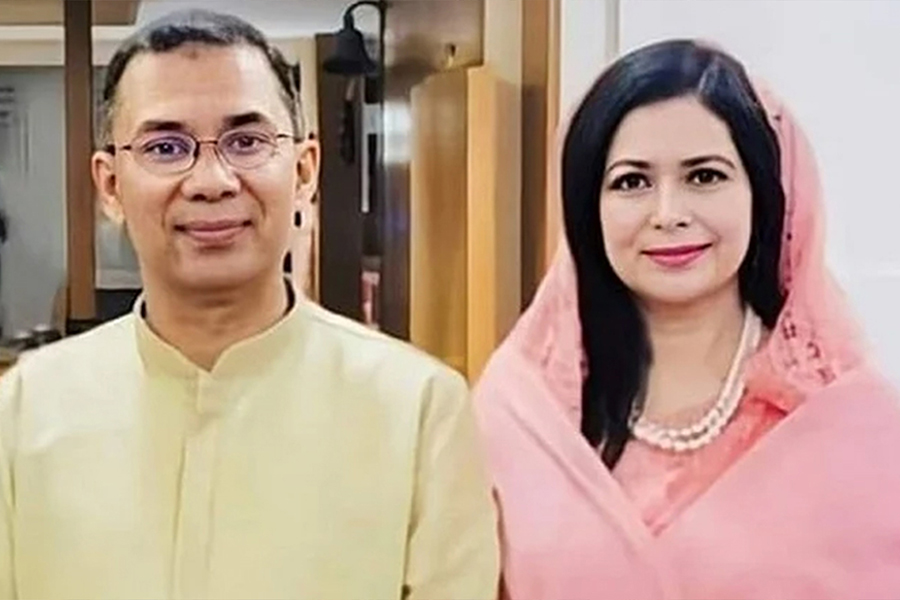
The sentence of Dr Zubaida Rahman, wife of the Acting Chairman of the Bangladesh Nationalist Party (BNP), Tarique Rahman, has been postponed for one year.

This information was confirmed in a notification issued by the Security Services Division of the Ministry of Home Affairs on Wednesday. The notice was signed by Deputy Secretary Mohammad Abu Saeed Mollah on behalf of the President, UNB reports.

The notification states that Dr Zubaida Rahman's request for a stay of her sentence was considered in light of the opinion of the Law, Justice, and Parliamentary Affairs Ministry’s legal department. Under Section 401(1) of The Code of Criminal Procedure (Act No. V of 1898), her sentence has been stayed for one year, contingent upon her surrendering to the court and filing an appeal as per the President's directive.​
 

EC declares BNP leader Shahadat mayor of Chattogram

1728435051785.png

Shahadat Hossain. Photo: Collected

The Election Commission (EC) today declared BNP leader Shahadat Hossain as the mayor of Chattogram City Corporation.

The EC issued a notification in this regard.

Earlier, on October 1, the Election Tribunal of Chattogram declared Shahadat Hossain the mayor of Chattogram City Corporation.

The tribunal gave this verdict following a case filed to cancel the results of the election held on January 27, 2021.

When asked for a reaction on the matter, EC Secretary Shafiul Azimtold The Daily Star, "After receiving the court's verdict, we have reviewed the legal aspects thoroughly. Based on that, we have issued a corrective notification regarding the mayoral position of Chattogram City Corporation."

The EC circular said, according to the Election Tribunal's order from October 1, the previous declaration of the winning mayoral candidate -- Rezaul Karim Chowdhury, representing the "boat" symbol -- was cancelled.

In his place, Shahadat Hossain, the candidate representing "sheaf of paddy" symbol, was declared as the elected mayor.

As a result, in the gazette dated January 31, 2021, "Shahadat Hossain" will replace "Rezaul Karim Chowdhury", and "Bangladesh Nationalist Party (BNP)" will replace "Bangladesh Awami League".

Shahadat filed a lawsuit on February 24, 2021, challenging the results of the election.

He said the election officials had manipulated the outcome of the Chattogram City Corporation election held on January 27, 2021. In his lawsuit, he demanded the cancellation of the results and called for a re-election.

In the lawsuit, Shahadat further claimed that although initially zero votes were shown in three polling centres, three days later, the number of polling centres showing zero votes increased to 28, which he deemed unbelievable and unimaginable.​
 

Ousted Hasina, her cohorts still hatching conspiracies: Farroque
Published :
Oct 08, 2024 22:14
Updated :
Oct 08, 2024 22:14

1728438616380.png


BNP Chairperson's Adviser and former Chief Whip Zainul Abdin Farroque has urged the interim government to remain alert as ousted Prime Minister Sheikh Hasina was maintaining contact with the cohorts of Awami League (AL) who were hatching conspiracy against the country.

“Sheikh Hasina and her cohorts especially those who are working in the secretariat are hatching conspiracy against the country,” he said while speaking at a protest rally of Bangladesh Youth Forum in front of the Jatiya Press Club on Tuesday, BSS reports.

Farroque urged the government to public a ‘white paper’ on those who helped the past AL government’s ministers and MPs to flee the country as those people should be brought to book.

He also urged the government to make the officers in charge (OCs) responsible for recovering the illegal arms as the OCs of 460 police stations across the country know where Chhatra League-Jubo League have kept their illegal arms hiding.

He said BNP leader Elias Ali had been disappeared at the directive of Sheikh Hasina. The speeches of Sheikh Hasina and her son Sajeeb Wazed Joy were published in the media now but the speeches of BNP Chairperson Khaleda Zia and BNP Acting Chairman Tarique Rahman were not allowed to be published in media during the autocratic regime of Sheikh Hasina, he added.

“We want election within a logical time as BNP Acting Chairman Tarique Rahman has already said the interim government will have to be extended all cooperated so that it can hold a free, fair and neutral election,” he added.

Bangladesh Youth Forum President Md. Saidur Rahman chaired the rally while Bangladesh People’s Party Chairman Dr Fariduzzaman Farhad, BNP’s Swechchhasebak affairs secretary Mir Sharafat Ali Safu, former convener of Olama Dal Nesarul Haque, Matsajaby Dal member Ismail Hossain Sheraji, among others, also spoke at the meeting.​
 

Rizvi cautions against BNP’s fair-weather friends returning from abroad
Staff Correspondent 12 October, 2024, 00:06

1728695408888.png

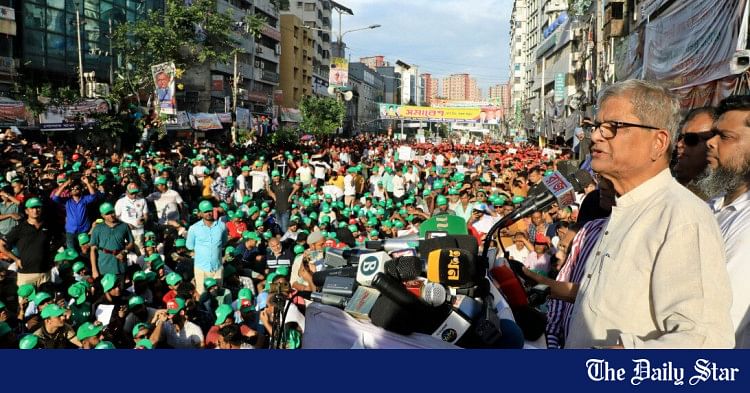
Ruhul Kabir Rizvi (centre). | Focus Bangla photo

Bangladesh Nationalist Party senior joint secretary general Ruhul Kabir Rizvi warned the administration, business community and media houses against the opportunists posing as BNP people after returning from abroad.

Rizvi’s cautionary remarks came while addressing a press briefing at the party’s Naya Paltan central office in Dhaka.

‘Some people lived abroad and enjoyed happy life when the BNP was passing hard time. Now they are returning home and trying to influence the administration, business community, and media houses in their interest.’

‘I want to tell the authorities concerned about such fortune hunters—they do not represent BNP in any way,’ he said.

Rizvi said that many of his party people sacrificed their lives, became crippled and lost their sight during the last 16-year regime of the fascist government, while the party lost many leaders, and many became refugees in their own country, losing their houses, jobs and businesses.

‘After August 5, as they are encouraged at the thought that opportunities for golden future are lying ahead, we should be cautious about some opportunists and fortune seekers who are trying to dictate the business community and media houses for their own gains,’ he also added.

The BNP leader also said, ‘During the bad time of the party, a vested quarter left party, party comrades and the country, got settled abroad, and led life in comfort. After the fall of the fascist government, those people are once again reappearing in the scene and trying to infiltrate in different offices by dictating the administration.’

Party standing committee member Selima Rahman, meanwhile, urged the interim government to hold elections soon as possible.

She made the call while addressing an event held to mark the third anniversary of Bangladesh Jatiyatabadi Nagorik Parishad at the Dhaka Reporters Unity.

‘Dr Yunus is the pride of Bangladesh. We believe that the interim government will organise a fair election by bringing the necessary reforms,’ she said.

She also criticised the government for letting Detective Branch former joint commissioner Harunur Rashid flee the country.

The ghosts of Awami League were still haunting and wanted to create unrest in various ways, including the garment industry, said the BNP leader.

‘The key goal of Bangladesh is to ensured democracy, good governance and voting rights. We still have a lot of work to do,’ she continued.

‘Our mothers, sisters and children were martyred in the student-led mass uprising, but our goal was not achieved,’ said the standing committee member.

‘The day when we can re-establish a democratic Bangladesh through fair elections that will be our auspicious day, and the sacrifices of the martyrs and ours will at last bear fruit for Bangladesh,’ she added.

BNP chairperson’s advisory council member Zainul Abedin Farroque on Friday at a programme urged the government to publish a white paper on those who fled the country after the student-led mass uprising.

‘The government must publish a white paper on those who have left the country, particularly explaining how the individuals responsible for the death of many mothers’ children in Bangladesh managed to escape to India,’ he said,

Farroque, also a former opposition chief whip in the parliament, alleged that India tried to subdue Bangladesh with the aid of Sheikh Hasina.

The Jatiotabadi Ganatantrik Party organised the programme in front of the National Press Club in Dhaka, demanding the withdrawal of all the false cases against opposition leaders and activists.

People now expected the interim government to fulfil their desire by announcing a date for the election within a reasonable timeframe, he said.

He also demanded the immediate withdrawal of the cases filed against opposition party leaders during the previous government’s tenure.​
 

BNP slams govt for failure to arrest AL cadres involved in student shootings

1728863450642.png

Ruhul Kabir Rizvi. File photo

BNP Senior Joint Secretary General Ruhul Kabir Rizvi has expressed grave concerns over the government's failure to arrest the 'cadres' of the Awami League and its associate bodies, who were involved in shooting students during mass protests against Sheikh Hasina's regime.

"Why have the Chhatra League and Jubo League cadres and activists, who shot at students, still not been arrested?" he questioned the interim government today.

Talking to reporters at the BNP founder Ziaur Rahman's grave, the BNP leader said it is incomprehensible why the government is unable to track down those responsible for the deaths of Abu Sayed, Mir Mahfuzur Rahman Mugdho and many other innocent students.

The BNP leader warned that if the culprits involved in the mass killings during the student-led uprising are not brought to justice, they may resort to even more destructive acts of sabotage.

Rizvi, accompanied by MA Malek, the president of the UK chapter of the BNP, who returned home after a long time, visited Zia's grave and placed a wreath there, paying homage to the BNP founder.

Rizvi noted that many influential AL leaders crossed into India after the mass uprising without facing any challenges or barriers at the border.

"India did not check their passports. They didn't even need visas. But the ordinary people of Bangladesh need passports and visas when they go to India," he observed.

The BNP leader recalled that BNP leader Salauddin Ahmed was illegally dropped by the Rab and Police on Indian territory after making him disappear for nearly two months.

"He (Salahuddin) had to face the case there and had to go to jail."

He questioned whether India, as a close neighbour and a democratic nation, sees Bangladesh through a biased lens.

"They ignore the people of Bangladesh and its independence and sovereignty, choosing instead to accept the world's most repressive and murderous politician, Sheikh Hasina, as a guest," said the BNP leader.

Rizvi said the celebration of the Hindu Community's largest religious festival Durga Puja ended smoothly in such a beautiful calm manner as the government was sincere and democratic parties, especially BNP, guarded the puja mandaps day and night.

"But the Indian media was spreading false propaganda in various forms, though to no avail. Bangladesh has been an exceptionally peaceful country with a long history of communal harmony. It's only Sheikh Hasina who has tarnished the nation's image by repeatedly attacking temples through her agents," he alleged.

The BNP leader said Indian policymakers often echo the rhetoric of the AL, giving an impression that they do not need the friendship of the people of Bangladesh. "They rely on the friendship of Sheikh Hasina and Obaidul Quader to maintain their dominance over Bangladesh. Now let the people of India see how the people of Bangladesh peace-loving democracy are.

MA Malek, president of the UK BNP and advisor to the party chairperson, returned home today after 19 years.​
 

BNP must get its house in order
Persistence of unruly activities by party members is alarming

1729039391292.png

VISUAL: STAR

After having weathered a difficult 15 years in the opposition camp, it is natural that there would be chaos in a big party like BNP as it goes about reorganising its house with an eye on the next election. But after over two months since the fall of Awami League, BNP still seems nowhere close to establishing internal discipline. Rather, reports of widespread extortion, infighting, and other illegal and unruly activities by party members are overshadowing its pro-people messages to become the dominant narrative surrounding the party. If morning shows the day, then critics are perhaps right to wonder if a BNP regime would be significantly different from the one it helped to oust.

This concern has again come to the fore after a report by Prothom Alo revealed how two BNP leaders, including the convener of BNP's recently-dissolved Dhaka North unit, have taken over extortion operations at key transportation hubs in Dhaka, including the Mohakhali bus terminal, where over a million taka is allegedly collected every day. After August 5, they took control of the Dhaka Road Transport Owners' Association. They also established control over local businesses and even mosques in areas previously controlled by Awami League's inner circle. At the terminals, extortion is taking place in various forms, such as charging fees for using illegally set facilities like toilets and showers, entry or exit fees for long-distance buses, etc. Clearly, little has changed in terms of abuse of power after the regime power.

This is despite what appears to have been a large-scale purge within the party. To date, according to another report by Prothom Alo, some 1,023 leaders have faced various disciplinary actions over the past two months—with 523 receiving show-cause notices, 437 expelled, 24 suspended, 35 warned, and four served notice for breaching party discipline. There have been even instances of dissolution of entire committees. Despite all such measures, the persistence of unruly activities by party members points to deep-seated structural issues within the BNP that need to be resolved first.

The time has come for a critical rethink by the BNP leadership. They must recognise that the stakes now are higher than ever. If BNP cannot get its house in order, it risks alienating not just the reformists within the party but the broader population who expect real change after decades of political instability and corruption in the country. So, besides ensuring sustained disciplinary actions, BNP must find out what's emboldening errant party members and undertake comprehensive reforms by placing ethical and democratic conduct at the heart of its operations.​
 

Fix a specific date for election: BNP leader Farroque

1729122243374.png

Zainul Abedin Farroque. File photo

BNP Chairperson's Adviser Zainul Abedin Farroque today demanded the interim government fix a date to hold the next general election.

"Time has not gone away. You have to fix a specific date for the election," he said while taking part in a discussion.

National Peoples' Party (NPP), one of the major ally of the like-minded Jatiyatabadi alliance, organised the discussion at Jatiya Press Club around this noon.Farroque, a senior BNP leader, said many individuals are making excuses regarding the election saying that the election will be held after making necessary reforms in various institutions.

"Election schedule has to be announced alongside bringing the reforms. You have to hold a fair election, in which the people's representatives will come to power and go to the parliament," he said.Farroque said the country would be run by experienced people and the constitution would be amended in the Jatiya Sangsad of elected representatives and that is the desire of the people.

Mentioning that the interim government had assumed office to fulfil the hopes and aspirations of the people, he questioned, "Are the expectations being accomplished?" Farroque alerted that they have to take to the streets again if the ghosts of the Awami League will come to power again for taking time to make reforms.

"We don't want to siege the road again. We desire to ensure a peaceful environment for the people. We want to return democracy to the people.

"We don't want to see the cohorts of Sheikh Hasina in power again," he added.

"Why are you making delay in fixing the election date in the name of reforms? Reforms and arrests will go on simultaneously. You have to bring back Hasina," he said.

The BNP leader demanded immediate cancellation of the names of the organisations, which had been named after Sheikh Hasina and Sheikh Mujibur Rahman, in the last 17 years.

"Rename the organisations after the names of the martyrs," he said.​
 

BNP petitions SC to restore caretaker govt system
Staff Correspondent 16 October, 2024, 23:46

1729125106340.png


Bangladesh Nationalist Party secretary general Mirza Fakhrul Islam Alamgir on Wednesday filed a petition with the Appellate Division seeking a review of the court’s 2011 verdict that declared the non-party caretaker government system unconstitutional.

Justice Md Rezaul Haque of the Appellate Division granted Fakhrul permission to file the review petition, although Fakhrul was not a party to the original writ or appeal that led to the system’s abolition.

In his petition, Fakhrul called for the restoration of the caretaker government system, his lawyer, Shishir Manir, confirmed to New Age.

This action comes in the wake of the student-led uprising that ousted Sheikh Hasina government on August 5, leading to her flight to India and the subsequent formation of an interim government under professor Muhammad Yunus on August 8.

Shishir Manir further noted that five citizens—Sushashoner Jonno Nagorik (Sujan) president M Hafizuddin Khan, Sujan secretary Badiul Alam Majumder, local government expert Tofail Ahmed, and citizens Md Jobirul Hoque and Zahrah Rahman—also filed similar petitions. These are set to be heard once the court reopens on October 20.

The Appellate Division, led by former Chief Justice ABM Khairul Haque, had declared the 13th Amendment to the Constitution, which introduced the non-party caretaker government system, unconstitutional in a landmark 2011 judgment.

However, the court allowed for two more general elections—of the 10th and 11th parliaments—to be held under the caretaker government framework, barring the involvement of a retired chief justice.

In the full text of his verdict, delivered after his retirement on September 16, 2012, Justice Khairul Haque retracted his earlier observation that two further elections could be held under the caretaker system.

The verdict cancelling the 13th Amendment came following a 1999 writ by Supreme Court lawyer M Salimullah challenging its legality.

The High Court initially dismissed the writ on August 4, 2004, but the verdict was challenged at the Appellate Division in 2005.

Fakhrul’s lawyer Shishir stated in the petition that the 2011 judgment significantly undermined the democratic and constitutional rights of citizens, resulting in flawed elections in 2014, 2018, and 2024, and depriving citizens of their right to free and fair elections.​
 

Tarique urges interim govt to eliminate market syndicates
Staff Correspondent 19 October, 2024, 00:44

1729298860271.png

Tarique Rahman. | File photo

Bangladesh Nationalist Party acting chairman Tarique Rahman on Friday urged the interim government to prioritise the elimination of market syndicates established during the Awami League regime.

The party senior joint secretary general Ruhul Kabir Rizvi, on the other hand, said on the day that the government should bring deposed prime minister Sheikh Hasina back to Bangladesh from India as a warrant for her arrest had been issued by a court in Dhaka.

The remarks from the two senior BNP leaders were made in separate programmes in Dhaka.

Joining a discussion organised by the Ziaur Rahman Foundation at the Institution of Engineers, Bangladesh, to mark the organisation’s silver jubilee, Tarique also urged the government to take pragmatic steps as a priority to control the skyrocketing prices of essential commodities.

The BNP leader suggested an increase in the size of the advisory council, if necessary.

‘People, particularly those in low-income groups and operate small businesses, are enduring financial hardships due to the unusual price hike of essential commodities,’ he said.

‘It may be challenging to dismantle the business syndicates established during the previous regime, but it is not impossible if there is proper will and appropriate interventions,’ he said.

Tarique also warned that the aides of the deposed despotic regime were still conspiring to create difficulties for the government.

He also said that the government’s disarray had become evident and they had failed to establish a clear priority agenda.

The BNP leader said that the conflicting statements from different advisers regarding the next general election had caused confusion among the people.

BNP senior joint secretary general Ruhul Kabir Rizvi, talking to reporters after placing a wreath at the grave of former president and BNP founder Ziaur Rahman on Friday, said that Bangladesh had signed an extradition treaty with India and the interim government should take steps to bring Hasina back home through diplomatic efforts as a warrant for her arrest had been issued by a court in Dhaka.

‘The issue of her extradition can be resolved through diplomatic discussions. If that is not done, top terrorists will get opportunities to take shelter in India and other countries, he said.

Rizvi also alleged that India was supporting crimes and pampering killers by providing Sheikh Hasina with shelter.

‘Our neighbouring country yesterday (Thursday) clearly said that Sheikh Hasina was there. Their statement seems to be behaving like a “Big Brother”,’ he said.

Indian external affairs ministry spokesperson Randhir Jaiswal at a media briefing on Thursday told journalists that ‘former Bangladesh prime minister Sheikh Hasina had come to India for safety reasons; she continues to be here (India).’

Criticising the demand for proportional representation, Rizvi also urged the government not to create complications over the issue of proportional representation and said that the system had failed in many countries.

Besides, BNP Chairperson’s advisory council member Zainul Abedin Farroque said that the prices of essentials would not increase if the Awami League government could bring the culprits to book during their rule.

He said this while addressing a symbolic sit-in programme organised by an organisation ‘Protibad’ demanding the withdrawal of all cases field against BNP acting chairman Tarique Rahman and his wife Zubaida Rahman.​
 

Members Online

No members online now.

Latest Posts

Latest Posts