Bangladesh Defense
Saif
Senior Member
- Joined
- Jan 24, 2024
- Messages
- 21,222
- Likes
- 9,688
- Nation

- Residence
- Axis Group


‘If Nahid did not respect the president, why did he take the oath?’ Khosru asks
Finance minister tells parliament, NCP MP’s criticism of President Shahabuddin is contradictory
‘If Nahid did not respect the president, why did he take the oath?’ Khosru asks
Finance minister tells parliament, NCP MP’s criticism of President Shahabuddin is contradictory
Star Online Report
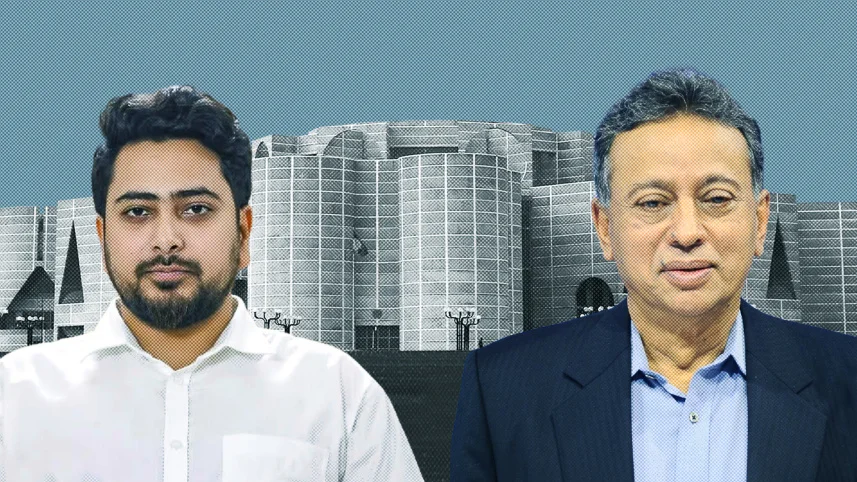
Illustration: Anwar Sohel/Star Digital Graphics
Finance Minister Amir Khosru Mahmud Chowdhury today said anyone who believes in constitutional democracy must respect its institutions, noting that the president himself is one such institution.
While speaking on the thanksgiving motion on the president's address in the House, Khosru said he does not have any personal affection for President Mohammed Sahahabuddin.
Referring to NCP MP Nahid Islam, the finance minister said another member has made several remarks about the president. “But the president is an institution -- he is not merely an individual.”
“Take Nahid, for example. He took his oath of office from the president. If he did not respect the president, why did he take the oath?” Khosru asked.
“If you became a minister by swearing in before the president, then you acknowledged the institution. I give you credit for that; you did the right thing, because you respected the institution,” the minister added.
“Now that you are no longer a minister and are sitting in the opposition, you are once again denying the president the respect owed to his office as an institution. That contradiction is clear in your statements,” Khosru said.
“Such comments are unacceptable. If you believe in constitutional democracy, you must respect its institutions. This is not about individuals, it is about respecting the institutions of constitutional democracy. That respect must be ensured,” he added.
The July Charter, BNP’s 31-point outline for reforms, and the party's election manifesto are fully aligned, he said.
July Charter is the “mother agreement.” The subsequent developments are like its sons and grandsons. “But instead of focusing on the mother agreement, you spend all day talking about the sons and grandsons,” he said.
“Secondly, based on this charter, BNP aligned its manifesto, campaigned, and went to the people. The people endorsed us with a two-thirds majority,” the finance minister added.
“The parliament is sovereign. At the end of the day, all roads lead to the parliament. Decisions must be made here,” he said.
“We came with a mandate. The July Charter itself says that whichever party wins will implement its decisions. That is exactly what we are doing -- nothing more, nothing less.”
After talking about the grim economic condition that they inherited form previous governments, the finance minister warned that the next two years will be difficult. “Many decisions will have to be made, and many measures taken that may not be popular. To overcome this tough situation, hard choices are unavoidable.”
The finance minister sought the opposition’s cooperation. “This is in the interest of the country, in the interest of all. To lift the economy up, we must work together in unity. Our leadership is sound, our captain is sound, and I believe the captain’s vision is sound -- he is working from a position of fairness and justice,” he said.
He noted at present, non-performing loans are over 30 percent. When defaults exceed 30 percent, the economy almost grinds to a halt. In 2005, this figure was 13 percent.
On the issue of rescheduling BNP leaders’ loans, the finance minister clarified that loan rescheduling is a normal process in business and banking culture. “BNP did not invent it. From the day banking systems began in the world, loan rescheduling has existed -- and it will continue in the future,” he said.
Finance minister tells parliament, NCP MP’s criticism of President Shahabuddin is contradictory
Star Online Report
Illustration: Anwar Sohel/Star Digital Graphics
Finance Minister Amir Khosru Mahmud Chowdhury today said anyone who believes in constitutional democracy must respect its institutions, noting that the president himself is one such institution.
While speaking on the thanksgiving motion on the president's address in the House, Khosru said he does not have any personal affection for President Mohammed Sahahabuddin.
Referring to NCP MP Nahid Islam, the finance minister said another member has made several remarks about the president. “But the president is an institution -- he is not merely an individual.”
“Take Nahid, for example. He took his oath of office from the president. If he did not respect the president, why did he take the oath?” Khosru asked.
“If you became a minister by swearing in before the president, then you acknowledged the institution. I give you credit for that; you did the right thing, because you respected the institution,” the minister added.
“Now that you are no longer a minister and are sitting in the opposition, you are once again denying the president the respect owed to his office as an institution. That contradiction is clear in your statements,” Khosru said.
“Such comments are unacceptable. If you believe in constitutional democracy, you must respect its institutions. This is not about individuals, it is about respecting the institutions of constitutional democracy. That respect must be ensured,” he added.
The July Charter, BNP’s 31-point outline for reforms, and the party's election manifesto are fully aligned, he said.
July Charter is the “mother agreement.” The subsequent developments are like its sons and grandsons. “But instead of focusing on the mother agreement, you spend all day talking about the sons and grandsons,” he said.
“Secondly, based on this charter, BNP aligned its manifesto, campaigned, and went to the people. The people endorsed us with a two-thirds majority,” the finance minister added.
“The parliament is sovereign. At the end of the day, all roads lead to the parliament. Decisions must be made here,” he said.
“We came with a mandate. The July Charter itself says that whichever party wins will implement its decisions. That is exactly what we are doing -- nothing more, nothing less.”
After talking about the grim economic condition that they inherited form previous governments, the finance minister warned that the next two years will be difficult. “Many decisions will have to be made, and many measures taken that may not be popular. To overcome this tough situation, hard choices are unavoidable.”
The finance minister sought the opposition’s cooperation. “This is in the interest of the country, in the interest of all. To lift the economy up, we must work together in unity. Our leadership is sound, our captain is sound, and I believe the captain’s vision is sound -- he is working from a position of fairness and justice,” he said.
He noted at present, non-performing loans are over 30 percent. When defaults exceed 30 percent, the economy almost grinds to a halt. In 2005, this figure was 13 percent.
On the issue of rescheduling BNP leaders’ loans, the finance minister clarified that loan rescheduling is a normal process in business and banking culture. “BNP did not invent it. From the day banking systems began in the world, loan rescheduling has existed -- and it will continue in the future,” he said.