[🇧🇩] The U.S.A.---A Strategic Partner of Bangladesh

[🇧🇩] The U.S.A.---A Strategic Partner of Bangladesh
211
9K
More threads by Saif

G Bangladesh Defense

US cotton plan considers Bangladesh a key market

Refayet Ullah Mirdha

1780272612582.webp


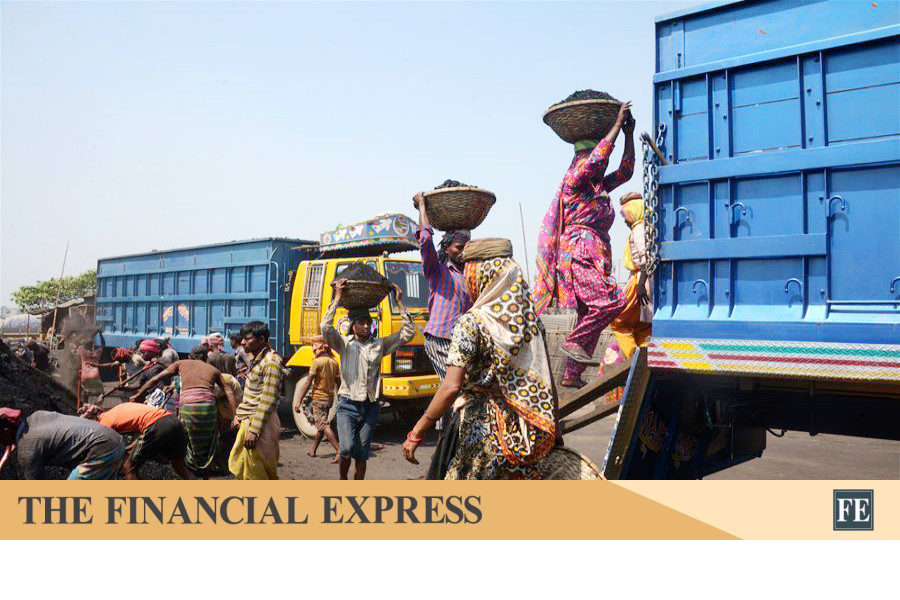
Bangladesh is expected to play a significant role in a new US initiative aimed at boosting American cotton exports, as the Trump administration links potential tariff benefits for Bangladeshi apparel exports to the use of US cotton and textile inputs.

The United States Department of Agriculture (USDA) last week launched the Great American Cotton Plan to revitalise the cotton farm economy in the US.

“USDA and USTR secured commitments from Indonesia and Bangladesh that will support future US cotton purchases and textile production using American cotton,” the plan states.

Under the plan, Bangladesh could receive tariff reductions on apparel produced using US cotton and textile inputs, alongside other tariff-related concessions.

A Bangladesh-US reciprocal trade agreement signed on February 9 commits Washington to establishing a mechanism allowing certain Bangladeshi textile and apparel goods to enter the US at a zero reciprocal tariff rate.

However, the volume eligible for this benefit will be tied to Bangladesh’s imports of US-produced cotton and man-made fibre inputs. The US has yet to clarify the textile clause of the deal.

Showkat Aziz Russell, president of Bangladesh Textile Mills Association (BTMA), said American cotton’s share of Bangladesh’s nearly $4.0 billion annual cotton import bill has been growing steadily, with local spinners, millers, and traders increasingly turning to US suppliers. He has already held talks with senior US officials on the bilateral cotton trade.

Russell flagged two key obstacles to scaling up US cotton use: the Rules of Origin (RoO) requirements and the long shipping distance between the two countries.

He noted that while American cotton offers superior quality, greater clarity is needed on the tariff benefits available to Bangladeshi exporters.

During discussions with US officials, Russell sought clarification on the RoO requirements governing the use of US cotton and man-made fibre in garments eligible for tariff concessions.

Based on discussions with US officials, he said the reduced tariff facility may apply only to a specified quota rather than all exports.

Russell also stressed the need for warehouse facilities in Bangladesh to store and market US cotton. Imports from neighbouring countries require much shorter lead times, while shipments from the US can take more than 45 days, potentially affecting exporters’ competitiveness.

Faisal Samad, a director of the Bangladesh Garment Manufacturers and Exporters Association (BGMEA), said the association will meet officials from the US Embassy in Dhaka next week to discuss the RoO requirements for garments made from US cotton and man-made fibre.

BGMEA leaders had previously sought clarification on the issue during meetings with visiting US Trade Representative (USTR) officials, but were told that work on the framework was still underway.

The US currently accounts for nearly 9 percent of Bangladesh’s annual cotton imports, which are valued at nearly $4.0 billion.

US goods trade with Bangladesh totalled an estimated $11.8 billion in 2025.

American imports from Bangladesh reached $9.5 billion -- up 13.3 percent from 2024 -- while US exports to Bangladesh were $2.3 billion.

The resulting trade deficit stood at $7.1 billion, a 17.9 percent increase from the previous year. Garments account for 86 percent of Bangladesh’s exports to the US.​
 

Does US concern over forced labour reflect reality?

Atiqul Kabir Tuhin

Published :
Jun 06, 2026 23:39
Updated :
Jun 06, 2026 23:39

1780791223934.webp


The ready-made garment (RMG) industry of Bangladesh is beset with a host of labour rights-related problems, ranging from low wages and long working hours to restrictions on forming unions, job insecurity, and so on. But the U.S. Trade Representative's Office (USTR) has recently moved to penalise Bangladesh over an issue that appears to have little to do with the RMG industry. Citing the failure to enforce laws prohibiting goods made with "forced labor," the USTR has proposed imposing a new 10 to 12.5 per cent tariff on Bangladesh, and 59 other countries.

The proposed tariff could hardly come at a worse time for Bangladesh. The country's export sector is already grappling with global economic uncertainties, weakening demand in key markets, and mounting competitive pressures. Against this backdrop, the USTR's decision threatens to further undermine the competitiveness of Bangladeshi products in the US market. Economists warn that invoking forced labour provisions without clear evidence of systematic forced labour practices could impose significant economic costs while doing little to address the broader labour rights challenges facing the RMG sector.

According to estimates by the Centre for Policy Dialogue (CPD), Bangladeshi exports to the United States could face a cumulative tariff burden of around 44 per cent, comprising a 15 per cent general tariff, an additional 19 per cent reciprocal duty, and the newly proposed 10 per cent tariff linked to alleged forced labour concerns.

The International Labour Organization (ILO) defines forced labour as "All work or service which is exacted from any person under the menace of any penalty and for which the said person has not offered himself voluntarily." In other words, while poor working conditions, low wages, or long hours are serious labour rights concerns, those do not constitute forced labour. Rather, forced labour occurs when workers are deprived of the freedom to make a voluntary and informed choice about their employment because of coercion, intimidation, or other forms of undue pressure.

It is worth recalling that Bangladesh's garment industry has successfully addressed labour-related concerns raised by the United States in the past. The issue of child labour in the RMG sector came to the forefront following the introduction of the Child Labor Deterrence Act of 1993 by US Senator Tom Harkin. In response, the Bangladesh government, in collaboration with the ILO and local NGOs such as BRAC and Gono Shahajjo Sangstha, launched a comprehensive rehabilitation programme for child workers. Under the "earn and learn" scheme, children withdrawn from factories were enrolled in NGO-run schools while receiving financial support. Rather than simply removing children from workplaces, the initiative focused on their rehabilitation and education. The programme is widely regarded as a success, leading to the elimination of child labour from the export-oriented garment sector and demonstrating that labour rights challenges can be addressed through cooperation and targeted interventions rather than punitive measures alone.

Child labour, however, still exist in sectors such as brick kilns and the informal economy. Its persistence is driven largely by poverty, inadequate social protection, and household economic hardship rather than systematic forced labour as defined by international conventions. According to Bangladesh Bureau of Statistics estimates, millions of children remain engaged in informal economic activities to support themselves and their families. Addressing such realities requires a nuanced understanding of the socioeconomic conditions that drive child labour. Viewing these challenges solely through the lens of labour law enforcement risks oversimplifying a complex problem and may ultimately hinder effective solutions.

Therefore, if the US's objective is genuinely to strengthen labour standards and eliminate exploitative practices, then technical assistance, capacity-building programmes, and targeted support for vulnerable workers would likely prove more effective than punitive trade measures. Effective labour reform is best achieved through cooperation, not through measures that may ultimately punish the very workers they are intended to protect.​
 

US envoy for deeper trade ties with Bangladesh

Star Business Report

The core objective of the recently signed trade agreement between Bangladesh and the United States is to build a more balanced, sustainable and mutually beneficial economic partnership, creating new opportunities for businesses and consumers in both countries, said US Ambassador to Bangladesh Brent T Christensen yesterday.

Speaking on the Bangladesh-United States Agreement on Reciprocal Trade (ART), he said public debate and scrutiny are natural parts of policymaking and that views on the agreement may differ.

He stressed the need to address non-tariff barriers and improve the regulatory and business environment to support stronger economic engagement.

The envoy also called for continued dialogue between governments and the private sector to resolve trade challenges and develop practical solutions.

Christensen made the remarks during a visit to the International Chamber of Commerce, Bangladesh (ICCB) secretariat in Dhaka, where he held an exchange meeting with ICCB President Mahbubur Rahman and members, focusing on strengthening Bangladesh-US economic and commercial relations.

He also highlighted the importance of adapting to evolving global trade dynamics and shifting market requirements.

According to a statement from ICCB, the envoy lauded Bangladesh’s strong economic progress over recent decades, describing it as one of the world’s fastest-growing economies, and underscored expanding opportunities for deeper cooperation with the US in trade, investment and business development.

ICCB President Rahman highlighted the longstanding economic partnership between Bangladesh and the US, stressing the need to expand trade, investment and private-sector cooperation.

He noted that the US remains one of Bangladesh’s key trade and investment partners and described the ART as an important step towards a more balanced and mutually beneficial economic relationship.

He said Bangladesh has undertaken major commercial purchases from the US, including Biman Bangladesh Airlines’ order for 14 Boeing aircraft, increased imports of agricultural commodities and cotton, and long-term commitments in the energy sector.

Rahman also highlighted rising demand for US cotton and stressed the need to strengthen supply-chain traceability and sustainability in the apparel sector, adding that greater use of US cotton could enhance Bangladesh’s competitiveness and compliance in global markets.

Rupali Chowdhury, president of Foreign Investors’ Chamber of Commerce and Industry (FICCI), said governance and regulatory challenges exist to varying degrees across both developing and developed economies.

She noted the market access opportunities offered by major trading partners, including the European Union, and expressed hope for deeper Bangladesh–US trade and investment cooperation.

Rubana Huq, former president of Bangladesh Garment Manufacturers and Exporters Association (BGMEA), said Bangladesh remains a leading global sourcing destination for apparel and textiles, adding that continued improvements in labour practices, transparency and sustainability would further strengthen its competitiveness.

Md Fazlul Hoque, former president of Bangladesh Knitwear Manufacturers and Exporters Association (BKMEA), said greater industrial self-reliance requires long-term planning, investment and policy support. He also highlighted the growing importance of man-made fibre (MMF)-based products in global markets, noting Bangladesh’s continued strength in cotton-based apparel.

He further stressed the need for increased US investment in cotton warehousing and distribution facilities in Bangladesh to improve access to high-quality cotton and strengthen supply-chain linkages between the two countries.

Among others, Eric Geelan, political and economic counsellor of the US Embassy to Bangladesh; Asif Ahmed, economic specialist; AK Azad and Naser Ezaz Bijoy, vice-presidents of ICCB; Muhammad A (Rumee) Ali, chairman of the ICCB Banking Commission; and Ataur Rahman, secretary general of ICCB, were also present.​
 

1781481031553.webp


HIDDEN ARCHITECTURE OF GSOMIA AND ACSA

Bangladesh’s strategic dilemma in the Bay of Bengal

Kollol Kibria

Sir Walter Raleigh wrote in the sixteenth century: “Whoever commands the sea commands the trade; whoever commands the trade commands the riches; and whoever commands the riches commands the world itself.” The 2026 Strait of Hormuz crisis showed how relevant that idea still is. Even the threat of a chokepoint closure was enough to shake energy markets, disrupt trade flows, and send shockwaves through the global economy.

A similar strategic corridor lies close to Bangladesh: the Strait of Malacca. Bangladesh sits at the northern edge of the Bay of Bengal, along key sea lanes linking the Indian Ocean with the Strait of Malacca and East Asia, routes vital to major Asian economies. These same routes also carry a significant share of energy exports from the Middle East, including Iranian oil destined for Asian markets, making the region important not only for trade but also for global energy security.

Washington has long viewed Bangladesh as strategically significant. Shortly after independence in 1971, the United States explored the possibility of a military presence in the region, but Bangladesh declined on a simple principle: A country born out of a struggle for sovereignty cannot safeguard that sovereignty by hosting a permanent foreign military base. Successive governments have broadly adhered to that principle.

Recently, discussions around GSOMIA (General Security of Military Information Agreement) and ACSA (Acquisition and Cross-Servicing Agreement) have gained momentum. GSOMIA would create a framework for classified information sharing with the United States, which could gradually narrow Bangladesh’s space for independent assessment and strategic neutrality. ACSA is more operational, allowing U.S. military aircraft and naval vessels to receive logistical support through Bangladeshi ports and airfields.

The United States has no direct military presence in the Bay of Bengal, a gap often described as the “missing link” between Diego Garcia and Singapore. With uncertainty over Diego Garcia due to the Chagos dispute, Bangladesh’s location could matter more as a connector for intelligence sharing, refuelling, and wider operations without a formal base. Over time, this kind of arrangement can pull local facilities into a wider military network, creating what strategists call a “soft base”, a node in an extended system that offers many of the advantages of a permanent presence without openly establishing one.

If Bangladesh moves towards deeper engagement with Washington through agreements such as GSOMIA and ACSA, the question may be less about intent than about how such a move is perceived by other partners. For decades, Bangladesh has sought to preserve a reputation for strategic balance and neutrality in its external relations. Such diplomatic space, once narrowed, is not easily restored.

China is likely to view such developments with concern. A substantial share of its trade, supply chains, and access to critical resources, including rare earths, depends on maritime routes that pass through the Bay of Bengal and onwards to the Strait of Malacca.

Iran’s oil exports also move largely towards China, which has become its biggest buyer after U.S. sanctions restricted access to many other markets. This adds another layer of dependence on the same wider maritime system, where energy flows are just as exposed as trade routes. China is itself heavily dependent on imported energy, making these sea lanes even more critical.

The Taiwan issue adds another layer to the strategic equation. China regards Taiwan as an integral part of its territory, while the United States continues to support Taiwan’s security under its long-standing policy. A stronger U.S. presence in the region would enhance Washington’s leverage in any Taiwan-related contingency and increase pressure on China. In that context, any expansion of U.S. military access in Bangladesh would likely be viewed in Beijing as part of a broader strategic framework aimed at shaping the regional balance of power.

Taiwan’s strategic importance also stems from its dominance in semiconductor manufacturing, led by TSMC, a company central to global AI, electronics, and defence supply chains. Like Japan and South Korea, Taiwan depends on secure maritime routes running through the South China Sea, the Strait of Malacca, the Bay of Bengal, and the Indian Ocean. The implications therefore extend well beyond China. Japan, South Korea, and Taiwan all rely heavily on these sea lanes for energy imports, trade, and industrial production.

Bangladesh is part of this same maritime network. It depends on these routes for imports such as fuel, cotton, machinery, industrial raw materials, and consumer goods. Any disruption in the Bay of Bengal would therefore directly affect Bangladesh’s economy through higher costs, supply shortages, and trade delays. It could also complicate relations with key economic partners such as China, Japan, and South Korea, which are among Bangladesh’s largest trading partners and have financed major infrastructure, energy, and development projects.

India’s position is more nuanced than it may initially appear. New Delhi is not opposed to U.S. engagement in the Indo-Pacific and is itself a member of the Quad (Quadrilateral Security Dialogue). Through the Andaman and Nicobar Islands, India already occupies a strategically advantageous position overlooking key maritime routes leading to the Strait of Malacca. Yet a deeper U.S. operational footprint in Bangladesh would introduce another external actor into what India has traditionally regarded as its immediate strategic neighbourhood. New Delhi is unlikely to be comfortable with any such development.

The United States has no direct military presence in the Bay of Bengal, a gap often described as the “missing link” between Diego Garcia and Singapore. With uncertainty over Diego Garcia due to the Chagos dispute, Bangladesh’s location could matter more as a connector for intelligence sharing, refuelling, and wider operations without a formal base. Over time, this kind of arrangement can pull local facilities into a wider military network, creating what strategists call a “soft base”, a node in an extended system that offers many of the advantages of a permanent presence without openly establishing one.

Across the border in Myanmar’s Rakhine State, the security environment has become increasingly complex. The Arakan Army now exercises de facto control over large parts of the region, leaving Bangladesh dealing not with a stable state authority but with a powerful non-state armed actor. Although Myanmar’s military junta remains the country’s formal governing authority, its control over large parts of the country has been steadily eroded by the civil war. The conflict has also drawn in external powers. Through the “Burma Act”, the United States has expanded engagement with elements of Myanmar’s wider opposition landscape. China, meanwhile, remains focused on safeguarding strategic interests, including the China-Myanmar Economic Corridor centred on Kyaukphyu and the oil and gas pipelines that provide an alternative route to the Strait of Malacca.

Russia remains an important strategic partner for Bangladesh, particularly in the energy sector. The Rooppur Nuclear Power Plant reflects the depth of this relationship, combining Russian technology, financing, and technical support in a long-term strategic project. As Bangladesh’s energy needs grow, preserving cooperation with Moscow while retaining diplomatic flexibility will remain important. Closer alignment with Washington could complicate relations with Russia, affecting trust, trade, and future cooperation.

Supporters of GSOMIA and ACSA often describe them as technical security arrangements. Yet agreements of this nature can have consequences that extend beyond operational cooperation. Over time, they can influence how states manage sensitive information, conduct external engagement, and distribute authority within government institutions. As cooperation with major powers deepens, military and intelligence organisations frequently become the principal channels for handling classified exchanges and security coordination. This can gradually concentrate influence in institutions that traditionally operate with less public scrutiny than civilian bodies.

Such shifts often emerge incrementally. First, security institutions, particularly the military, assume a larger role in managing sensitive external cooperation. As their responsibilities expand, so too do their access to resources, information, and influence. Second, elected governments may become increasingly reliant on these channels when making key foreign policy and defence decisions, moving parts of the decision-making process further away from regular public and parliamentary oversight. Third, as transparency declines, a gradual institutional distance can emerge between civilian leadership and security agencies. Over time, this gap may widen, making it more difficult to maintain effective civilian oversight and democratic accountability.

Pakistan offers a cautionary example. Shortly after independence, Pakistan entered into defence arrangements with the United States and joined alliances such as SEATO (the Southeast Asia Treaty Organization) and CENTO (the Central Treaty Organization). Over subsequent decades, the military and intelligence establishment expanded far beyond its conventional defence role and became deeply involved in politics, foreign policy, and national decision-making. Gradually, authority shifted away from elected institutions, with the military emerging as the country’s dominant centre of power.

If Bangladesh moves towards deeper engagement with Washington through agreements such as GSOMIA and ACSA, the question may be less about intent than about how such a move is perceived by other partners. For decades, Bangladesh has sought to preserve a reputation for strategic balance and neutrality in its external relations. Such diplomatic space, once narrowed, is not easily restored. Other partners may not react dramatically or immediately, but they may gradually adjust their approach. Investment decisions may become more cautious. Trade cooperation may slow. Long-term financing, infrastructure partnerships, and strategic projects may be reassessed through a different lens. None of these changes would necessarily occur at once, but together they could reduce Bangladesh’s flexibility and room for manoeuvre in an increasingly competitive geopolitical environment. Strategic autonomy is not optional for Bangladesh; it is fundamental to safeguarding its national interests.

Kollol Kibria is an advocate, human rights activist, and political analyst.​
 

Latest Posts

Back