Home Watch Videos Wars Movies Login

[🇧🇩] Pharmaceutical and Chemical Industry in Bangladesh

[🇧🇩] Pharmaceutical and Chemical Industry in Bangladesh
45
3K
More threads by Saif

G Bangladesh Defense

Renata wins EU nod for drug exports

FE REPORT
Published :
Jul 17, 2025 09:53
Updated :
Jul 17, 2025 09:53

1752796210720.webp


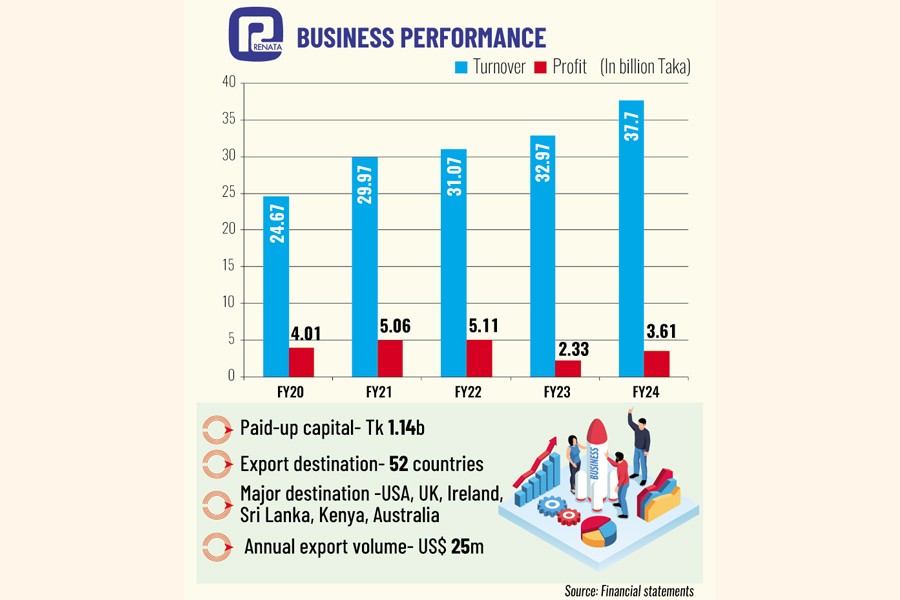
Renata's export horizon will expand further as it has secured approval of the European Union months after an audit by European auditors of one of its production units.

In a stock exchange filing on Wednesday, the listed drug maker disclosed that its Rajendrapur production unit had received European Union Good Manufacturing Practice (EU GMP) certification following a comprehensive audit by European authorities.

With that, Renata joins a small group of Bangladeshi pharma companies - Beximco Pharma, Incepta and Square Pharmaceutials -- that have EU GMP facilities.

Company officials said the certification had opened a door to the EU countries for exports of Renata's products.

Renata had already been exporting its products to the EU markets but on a limited scale in the absence of the certification. "Now, there is scope of getting approvals for a good number of our products by EU drug administrators," said Md. Jubayer Alam, company secretary of Renata.

The EU GMP certification confirms that the facility is compliant with strict European standards in manufacturing medicines, covering everything from hygiene, production, quality control, and documentation.

It is a mandatory requirement to export drugs to EU countries, which means Renata can now start expanding exports to Europe, adding a new revenue stream and increasing foreign exchange earnings for Bangladesh.

Conforming to the EU GMP usually involves significant investments in facilities, processes, and training. It pushes a company to improve its overall operational standards.

The same unit in Rajendrapur had secured access to the UK market and received approval of the US FDA, the world health organisation and the Brazilian Health Regulatory Agency.

The EU auditors conducted the audit in February and the company received the certificate of GMP Compliance on Tuesday.

The annual export volume of Renata is around $25 million at present.

"The company's export volume will increase following our easy entry into the EU market," Mr Alam said.

The certification by the EU authorities is also accepted by the countries of Latin America.

"So, it will facilitate our exports to the markets of Latin America," Mr Alam added.

EU GMP is one of the most respected quality standards globally. It enhances Renata's credibility with global partners, investors, and regulatory authorities.

Therefore, the access to the EU may lead to new partnerships, higher stock valuations, and greater trust of institutional investors.

Meanwhile, investors appeared enthusiastic about bidding up shares of Renata as the stock price moved up 0.39 per cent to Tk 490.20 per share by the end of the trading session on the Dhaka Stock Exchange on Wednesday.​
 
Analyze

Analyze Post

Add your ideas here:
Highlight Cite Respond

Heavy import reliance leaves pharma industry vulnerable
Drugmakers call for setting API production as a strategic priority


1753757079660.webp


Local medicine manufacturers can meet almost the entire domestic demand and export to as many as 160 countries, given that supplies of raw materials come from China and India.

But without these imported ingredients, the 45-year-old pharmaceutical industry cannot produce even something as basic as Esomeprazole—a commonly used tablet to treat heartburn.

Industry insiders say it is high time Bangladesh invested in the development of active pharmaceutical ingredients (APIs) to reduce its annual import bill of roughly $1.3 billion, improve resilience, and ensure long-term growth.

Meanwhile, health economists say delays in building API capacity could lead to patent-related issues. Bangladesh currently enjoys a patent waiver as a least developed country, but that exemption will end when the country graduates from the LDC club in November next year.

According to local drugmakers, around 85 percent of drug ingredients are still imported, mainly from China and India. Efforts to manufacture these locally are obstructed by gaps in the production ecosystem, regulatory hurdles, a shortage of skilled workforce, and limited access to finance.

To resolve these issues, they have called for an API policy to support local initiatives.

At least six domestic firms, including Square, Beximco, ACME and Incepta, currently produce 40 types of APIs worth Tk 2,500 crore.

Rabbur Reza, chief operating officer of Beximco Pharmaceuticals, said, "Bangladesh must stop treating API production as the responsibility of individual companies and instead prioritise it as a national strategic objective."

"Even when we try to manufacture APIs locally, there are approval delays of eight to nine months just to import the ingredients, as the process requires 18 separate clearances," said Reza.

"By the time we receive the go-ahead, global prices have shifted or competitors have beaten us to market," he said.

He said API byproducts from one industry feed another in China. "That is how they have built a cost-effective, integrated model. We need to replicate that thinking here."

To support the local pharmaceutical industry, the government has set up an API industrial park in the Gajaria area of Munshiganj. While land has been acquired and infrastructure developed, the site does not have a gas connection, making it an unattractive location for API ventures.

The Beximco pharma executive said that without coordination between agencies and a single-window clearance system, the API park could become another underused industrial zone.

"We are ready to invest, but policy must support viability," he commented.

Abdul Muktadir, president of the Bangladesh Association of Pharmaceutical Industries (Bapi), said, "We have made great strides in pharmaceutical formulations, but without local API capacity, our base remains fragile."

Referring to the API park, Muktadir said no chemical plant can run on LPG.

Besides, he said that access to affordable finance is another major challenge for API manufacturing.

According to the Bapi president, with bank interest rates hovering around 14 percent to 15 percent compared to 3 to 5 percent in India and China, API ventures in Bangladesh face unsustainable capital costs.

Muktadir also pointed to a shortage of local expertise in process chemistry and chemical engineering, both prerequisites for API manufacturing.

He said some progress has been made through training and hiring foreign consultants, but scaling up will require long-term policy backing.

The post-pandemic shift in global supply chains has opened a window of opportunity, as Western countries seek alternatives to Chinese API suppliers.

"This is our window," Muktadir said. "If we move fast, Bangladesh can become a credible second source."

The Bapi president urged the government to promote import substitution and export of APIs, and to strengthen public-private collaboration in research and development.

"We don't need subsidies," Muktadir said. "We need basic support such as energy and finance. The government should also recognise that API is a national infrastructure."

Syed Abdul Hamid, professor at the Institute of Health Economics at Dhaka University, said that once Bangladesh loses its LDC patent waiver, the cost and complexity of producing patented APIs will rise manyfold.

"Local firms currently depend on flexibility to produce or import APIs without patent barriers. After the graduation, licensing will be mandatory, making it harder and costlier to produce newer, high-priority drugs, especially for drug-resistant or emerging diseases."

Prof Hamid commented that Bangladesh's limited API production capacity leaves it vulnerable to supply shocks and price fluctuations in the global market.

"Without investment in domestic production and technology transfer, access to essential medicines could become unsustainable," he said.

Monjurul Alam Monju, chief executive officer of Beacon Medicare, said Bangladesh cannot feasibly produce all types of APIs domestically, especially those with limited demand.

He said, "API manufacturing is a long-term investment, especially for innovative molecules like cancer drugs. India and China can afford this due to their massive internal markets. Without access to global markets, such investments are not viable here."

However, Monju said some API products serving the local pharmaceutical industry could be produced profitably with the right policy support.

He also raised concerns about the high cost of setting up effluent treatment plants (ETPs), a mandatory requirement for API manufacturing.

"ETPs require a huge investment. Without government support, it is extremely difficult for local firms to comply," he said.

"If the government provides subsidies for R&D and environmental compliance, API manufacturing can become feasible," he added.​
 
Analyze

Analyze Post

Add your ideas here:
Highlight Cite Respond
  • Sad (0)
Reactions: Bilal9

Pharma must collaborate with academia to thrive in post-LDC era

1755140144716.webp

VISUAL: MONOROM POLOK

The pharmaceutical sector in Bangladesh stands at a turning point. From a heavily import-dependent industry in the 1980s, it now meets 98 percent of domestic medicine needs and exports to over 150 countries. In FY2024-25, export earnings from this sector reached $213 million. Its success has been largely driven by the Trade-Related Aspects of Intellectual Property Rights (TRIPS) waiver under the World Trade Organization (WTO), which allowed the production of generic versions of patented drugs.

However, with Bangladesh set to graduate from the Least Developed Country (LDC) category by November 2026, the TRIPS flexibilities and other international exemptions are set to come to an end. This shift could significantly limit local production of patented medicines, raise drug prices—especially for newer treatments—and reduce export potential. Public health programmes that rely on low-cost generics may come under budgetary strain. Meanwhile, the domestic pharmaceutical industry will need to meet stricter international regulatory standards like those of the US Food and Drug Administration, European Medicines Agency and World Health Organization-Good Manufacturing Practices (WHO-GMP), and compete in a more complex global market. Gaps in biotechnology, active pharmaceutical ingredient (API) production, and clinical trial infrastructure will further intensify these challenges.

To navigate the post-LDC era successfully, Bangladesh must transition from a volume-driven, generics-dominated model to one centred on innovation, quality, and global integration. This can be achieved by enhancing collaboration between industry and academia. Academic research in the country has traditionally remained disconnected from industry needs. Underfunded labs, outdated infrastructure, and limited engagement from the private sector have weakened universities' role as innovation hubs. The disconnect is evident in pharmaceutical education and research. Collaboration is hampered by theoretical research orientations, outdated curricula, and the absence of mechanisms like technology transfer offices. Applied research funding is scarce, and expertise in emerging fields like biotechnology, regulatory science, and clinical trials is limited.

Meanwhile, firms often avoid collaboration, focusing on short-term gains rather than long-term innovation. Many are reluctant to invest in joint research, curriculum development or workforce training. The lack of structured platforms for engagement, along with concerns over intellectual property and limited demand for high-end scientific expertise, further weakens cooperation.

A national strategy to bridge these divides is needed, along with investment in joint research initiatives that can drive pharmaceutical innovation and resilience.

Tertiary institutions, particularly departments of pharmacy, biochemistry and molecular biology, genetic engineering and biotechnology, microbiology, and health economics institutes, can partner with pharmaceutical companies to develop biosimilars and new drug formulations. Industry-supported clinical trials hosted in academic settings can reduce dependency on foreign labs, lower research and development (R&D) costs, and speed up product development. Faculty members should be incentivised to pursue industry-relevant research through consultancy, collaborative grants, and performance-based rewards.

Workforce readiness is another pressing issue. Many employers think graduates lack the skills they are looking for. University curricula should be redesigned in consultation with pharmaceutical firms to include regulatory science, bioequivalence studies, GMP compliance, data analytics, and advanced manufacturing practices. Internship and co-op programmes can offer students real-world industry exposure, while faculty exchanges with industry can help keep teaching aligned with evolving demands.

Creating centres of excellence (CoEs) focused on pharmaceutical innovation is another strategic option. Drawing from India's National Institute of Pharmaceutical Education and Research (NIPER) model, Bangladesh can establish CoEs dedicated to biotechnology, API manufacturing, clinical research, and regulatory affairs. These centres can help reduce reliance on imported APIs and strengthen the country's capacity for global-standard clinical trials. Public-private partnerships involving government, academia and industry could sustain these centres financially and institutionally.

The clinical trial infrastructure in Bangladesh remains significantly underdeveloped. Existing clinical research organisations (CROs) struggle with ethical approval delays, a lack of qualified principal investigators and biostatisticians, and difficulty recruiting trial volunteers. These shortcomings force companies to outsource trials abroad, increasing costs and delaying market entry. By investing in accredited research facilities and university-based ethical review boards, Bangladesh can localise clinical research. Additionally, industry-funded training programmes in trial design, regulatory compliance, and data management can strengthen research capacity.

Academia must also play a central role in evidence-based policymaking. As Bangladesh adapts to post-LDC trade and intellectual property (IP) requirements, academic institutions can assess the economic impacts of patent compliance, propose sustainable pricing models, and help design national strategies. Establishing formal "policy labs" that bring together academics, industry leaders, and regulators could facilitate coordinated, evidence-informed decision-making. In international forums, academic voices can also advocate for equitable IP policies and targeted transition support for countries like Bangladesh.

To realise these goals, structural reforms are urgently needed. Bureaucratic bottlenecks, mutual mistrust, and misaligned incentives must be replaced with a supportive national framework for industry-academia partnership. This framework should include tax incentives, R&D grants, and co-financing mechanisms for joint initiatives. Universities should be empowered to commercialise intellectual property and engage in contract research. Performance metrics for academic institutions must evolve to reward patents, industry impact, and product innovation alongside traditional publications. Clear policies for IP ownership and benefit-sharing can also help foster mutual trust and long-term cooperation.

If policymakers, academic leaders, and industry stakeholders act with urgency and coordination, Bangladesh can build on its pharmaceutical legacy and emerge as a global leader in affordable, innovative healthcare solutions. The core foundations are already in place; what's needed now is the shared commitment to build on them strategically.

Dr Syed Abdul Hamid is professor of Institute of Health Economics at the University of Dhaka, convener of Alliance for Health Reforms Bangladesh (AHRB), and initiator of the Network for Healthcare Excellence (NHE).​
 
Analyze

Analyze Post

Add your ideas here:
Highlight Cite Respond
Making essential drugs affordable


Published :
Jan 11, 2026 00:12
Updated :
Jan 11, 2026 00:12

1768113329805.webp

The government's decision to expand the list of essential medicines to 295 and bring all of them under price regulation comes at a time when the cost of basic treatment is increasingly outpacing the ability of ordinary families to pay. In this context, regulating prices offers a practical means of restoring fairness and predictability to an increasingly burdensome market. Essential medicines are not ordinary consumer goods. They are, by definition, the treatments that meet the vast majority of common health needs, which means they determine whether families can manage illness or are pushed into debt and distress. Over the past two to three years, the prices of many commonly used drugs have risen by 60 to 70 per cent, a pace far above income growth for most households. When lifesaving medicines become unaffordable, their very designation as essential loses meaning. Faced with this reality, the state carries both a moral and economic responsibility to ensure that the most widely used treatments remain affordable for ordinary citizens, especially given the high out-of-pocket health spending and limited insurance coverage.

At the same time, price regulation must account for the realities of pharmaceutical production. Bangladesh's drug manufacturers rely heavily on imported raw materials, particularly active pharmaceutical ingredients, and any sharp depreciation of the taka can sharply raise production costs. Even before the government's announcement, the Bangladesh Association of Pharmaceutical Industries (BAPI) had cautioned that rigid price controls could create difficulties for manufacturers amid rising import costs and currency fluctuations. An inflexible pricing formula could push some companies, particularly smaller firms, into financial losses, thereby threatening the continuity of supply. If manufacturers cannot cover costs while earning a reasonable margin, shortages may follow, harming patients as much as high prices would. Rational price setting, therefore, should be based on current data regarding input costs, exchange rates, compliance expenses and reasonable margins, rather than on arbitrary ceilings. The government's plan to phase in the new prices over four years appears to address these concerns pragmatically, giving companies time to adjust while keeping essential medicines affordable. Nevertheless, the fundamental principle of regulating these core lifesaving drugs remains non-negotiable, as leaving them entirely to market forces would perpetuate the very inequities that made intervention necessary.

What critically weakens the opposition to price regulation is the industry's own recent pattern of commercial behaviour. Evidence indicates that many pharmaceutical companies have chosen to prioritise production and marketing of non-essential drugs where prices can be hiked at will while simultaneously neglecting or underproducing essential medicines most widely needed by the public. Against this backdrop, claims that controlling prices on fewer than 300 essential drugs would threaten the viability of some companies are unconvincing. BAPI itself has noted that its members supply roughly 98 per cent of domestic demand, underscoring their significant market presence. This commanding position is difficult to reconcile with claims that regulating a limited, defined basket of essential drugs would destabilise the entire sector. Price control for these core medicines is a reasonable expectation against the backdrop of the broad commercial freedom companies otherwise enjoy, and it remains an essential measure for safeguarding public health.

Longer term, the sustainability of pharmaceutical sector can be strengthened by expanding domestic production of active pharmaceutical ingredients, thus reducing reliance on imports. This is an area where the government should actively support industry stakeholders through targeted incentives and coherent policy. Concurrently, stronger regulatory enforcement of quality standards will also protect reputable manufacturers from being undercut by substandard or illicit products. For now, however, a rational price fixation model mindful of cost inputs and a fair profit margin is the pragmatic path forward.​
 
Analyze

Analyze Post

Add your ideas here:
Highlight Cite Respond

API Park: The pharmaceutical lifeline still out of reach
The project, approved in 2008, was meant to anchor the industry’s next phase of growth. Nearly two decades later, the site remains largely idle.

By Jagaran Chakma

1769822333672.webp


A view of the API Industrial Park in Gajaria, Munshiganj, where neatly paved roads and utility corridors sit surrounded by overgrown jungle. The 200-acre site remains largely idle, with most allocated plots showing no signs of industrial activity. Photo: Rashed Shumon

On a quiet December 11 afternoon, entering the API (active pharmaceuticals ingredients) Industrial Park in Gajaria upazila of Munshiganj, located about 50 kilometres from Dhaka city along the Dhaka-Chattogram Highway, felt oddly nostalgic, like stepping into a forgotten picnic spot.

Neatly paved roads lined with mango trees led us in, but the illusion quickly faded.

Despite 26 plots being allocated to pharmaceutical companies, only a handful of buildings stood. The rest? Overgrown jungle. Most plots remain untouched, with minimal signs of construction or industrial activity. A few scattered workers could be seen, but the park was eerily silent – far from the hub of pharmaceutical innovation it was meant to be.

For the companies who poured money into the park hoping for a brighter future, the delay has only brought frustration.

“I invested in good faith. Now I’m under serious financial pressure,” said Md Halimuzzaman, managing director of Healthcare Formulations Ltd, which invested nearly Tk 500 crore in the park and is now having to pay hefty loan instalments of Tk 20 lakh per day.

The vision behind the park was clear: reduce Bangladesh’s dependency on imported raw materials by fostering local production of API – the raw materials needed to make medicines. But nearly two decades since the project was approved, progress remains minimal. While land development and roads are largely complete, basic utilities like gas are still missing.

1769822390421.webp

An aerial view of the park’s infrastructure, featuring the Tk 80 crore central effluent treatment plant. Designed to handle hazardous chemical waste for dozens of factories, the facility remains unused and deteriorating.

WHY API AND THE PARK MATTER

Bangladesh’s pharmaceutical industry, which now meets almost all domestic demand for finished medicines and exports to more than 150 countries, has long carried a structural weakness: low local production of APIs.

Currently, around 85 percent of APIs are imported, mainly from India and China.

For years, trade preferences and intellectual property flexibilities under LDC status softened the risks of import dependence. That protection is ending as Bangladesh graduates from least developed country (LDC) status later this year, which could fundamentally alter the cost structure and competitiveness of its pharmaceutical industry.

Bangladeshi firms have invested heavily in modern formulation plants, international compliance, and complex dosage forms over the past two decades.

Yet formulation alone does not ensure resilience. APIs account for a significant share of production costs. Import reliance exposes manufacturers to foreign exchange volatility, supply disruptions, and rising global prices.

After LDC graduation, local firms will also no longer freely produce patented medicines without licensing under TRIPS (Trade-Related Aspects of Intellectual Property Rights). This will increase costs and reduce margins, making domestic API production more critical than ever.

The state recognised the vulnerability early.

In 2008, the government approved a dedicated API Industrial Park in Gajaria, Munshiganj, to reduce import dependence and anchor backward integration. Nearly eighteen years later, the park has yet to come alive.

The API Park, spanning 200 acres, was designed to host 42 manufacturing plots with shared infrastructure: internal roads, drainage, a high-capacity electricity substation, and a central effluent treatment plant (CETP). Clustering API producers in one zone was intended to lower entry barriers, ensure environmental compliance, and make backward integration commercially viable.

More than two dozen pharmaceutical companies, including major players like Square, Beximco, Incepta, Acme, and Ibn Sina, applied for plots. Several began investing soon after allocation, borrowing from banks to construct factories and install equipment.

Despite the high ambition, the park failed to deliver. It is laid out with wide internal roads, boundary fencing and utility corridors, but most of the land remains undeveloped. Large plots stretch uninterrupted for hundreds of metres, covered in shrubs and tall grass. Power lines run along empty roads that lead nowhere.

Only a handful of buildings break the uniformity of the terrain, underscoring how little industrial activity has taken root nearly two decades after the project’s approval.

The most prominent structure in the park is the CETP, built at a cost of around Tk 80 crore. Environmental compliance is mandatory for API production, which generates hazardous chemical waste. The plant was designed to serve all factories in the park, reducing individual compliance costs and ensuring regulatory oversight.

The facility has never been used. With no factories operating, it sits idle, deteriorating in the open.

1769822468047.webp

Vines grow over rusting tanks at the API Industrial Park, a symbol of the stagnation facing the project.

NO GAS, NO PRODUCTION

The paramount failure for the park is not having access to gas, the one utility without which API production cannot function sustainably. API manufacturing is energy- and steam-intensive. Natural gas is essential for generating steam used in chemical synthesis, distillation and purification processes. Without gas, production costs rise four to five times more.

Healthcare Formulations is among the companies most affected by the delay.

The factory has been fully constructed and equipped. But production is yet to begin due to lack of necessary utilities.

“We invested based on the expectation that utilities would be provided,” said Halimuzzaman. The company planned to start by producing 20 API molecules and add at least four new formulations every year.

Operations have not begun because there is no gas connection.

Running the factory entirely on electricity, Halimuzzaman said, is not technically feasible and would be prohibitively expensive.

Other companies face similar constraints. Several factories are partially built or fully ready but remain idle due to the lack of utilities.

Abdul Muktadir, chairman and managing director of Incepta Pharmaceuticals, said Bangladesh’s pharmaceutical growth has been real but incomplete. “We have done well in formulation, but API remains our Achilles’ heel,” he said.

“Local production is still very limited compared to national demand.”

Bangladesh currently manufactures only 10 to 15 APIs domestically, out of around 200 considered essential. Incepta produces four and is developing more.

According to Muktadir, early attempts at API production in the 1990s focused on basic compounds such as paracetamol and ampicillin but failed to scale due to low demand and shortages of skilled manpower.

A shift began after 2010, as Bangladeshi firms entered regulated export markets and saw the strategic value of backward integration. Incepta invested heavily in scientific capacity, establishing a dedicated API research and development division in 2011 that now employs more than 100 scientists.

But scaling up small-molecule API production remains constrained by energy availability. “API manufacturing is steam-intensive,” Muktadir said. “Without gas, using diesel increases costs four to five times. You cannot compete globally under those conditions.”

He said the API Park was intended to resolve this bottleneck. “Instead, what we have is land and roads, but no gas, no steam and no functioning ecosystem.”

THE OTHER CONUNDRUMS

The timing of this failure is increasingly consequential. Bangladesh’s graduation from LDC status will end the TRIPS waiver that allows local companies to produce patented medicines without licensing.

Export incentives are already being reduced, from 10 percent to 5 percent this year, with further cuts expected.

Shawkat Haider, executive director of Beximco Pharmaceuticals, said these changes will place new pressure on the industry.

“After graduation, we won’t be able to make new molecules freely, and rising API prices will increase medicine costs,” he said.

Bangladesh’s dependence on imported APIs limits its ability to absorb these shocks. “The API Park was meant to reduce this dependence.”

Some industry figures argue that Bangladesh should adopt a more selective approach to API production.

Monjurul Alam Monju, former chief executive officer of Beacon Medicare, said producing every API domestically is unrealistic, particularly for specialised treatments such as cancer, where domestic demand is limited.

“Developing APIs requires heavy investment and long-term commitment,” he said. “Countries like India and China can do this because of their large markets.”

Instead, Monju suggested focusing on a limited range of APIs with consistent local demand, supported by targeted government incentives.

However, Mustafizur Rahman, distinguished fellow at the Centre for Policy Dialogue (CPD), said API backward linkage is essential for keeping our pharmaceutical sector competitive, noting the country imports around $1.2 billion worth of APIs annually.

Rahman pointed out that Bangladesh may face immediate impacts from losing preferential trade benefits if it cannot secure an extended TRIPS waiver, which was proposed but not accepted at the WTO in December 2024. “This is a critical issue,” he stressed.

Others see the problem as deeper than infrastructure. Rauful Alam, a former principal scientist at PTC Therapeutics in the United States, said Bangladesh lacks sufficient investment in drug discovery and medicinal chemistry.

“Our pharmaceutical industry is heavily focused on formulation,” he said. “Without building capacity in organic chemistry and non-clinical research, true self-reliance will remain out of reach.”

NO TIMELINE FOR GAS SUPPLY

Officials involved in the project acknowledge the delays but cite national energy constraints.

GM Rabbani Talukder, deputy general manager of the Bangladesh Small and Cottage Industries Corporation, said core infrastructure – roads, drainage, a 20 MVA substation and gas pipelines up to plot boundaries – has been developed.

“The problem is gas supply,” he said, adding that Titas Gas and the energy ministry have cited national shortages.

Alternative solutions, including sustainable energy options on adjacent land, are being explored.

Razib Kumar Saha, deputy managing director of Titas Gas Transmission and Distribution PLC, said “There is currently no timeline for supplying gas to the API Park due to insufficient reserves.”

A proposal for a coal-based power plant exists but remains at an early stage, he added.​
 
Analyze

Analyze Post

Add your ideas here:
Highlight Cite Respond

Allergy drugs emerge as Bangladesh's fastest-growing pharma category

8 February 2026, 00:16 AM

1770599856952.webp

Sales of prescription allergy drugs have surged more than any other types of medicine since the Covid-19 pandemic.

Revenues from these drugs climbed to around Tk 1,200 crore in the first nine months of last year, a 72 percent rise from the same period of 2021, according to IQVIA.

Growth peaked in 2024, when sales jumped 30 percent, shows data from IQVIA, a firm that tracks pharmaceutical sales covering 93 percent of outpatient prescriptions.

M Mohibuz Zaman, chief operating officer of ACI PLC, noted that the growing use of such medicines is closely linked to environmental degradation, particularly severe air pollution, which has increased the prevalence of allergic, lung, and skin diseases.

Meanwhile, Dr Gazi Md Salahuddin Mamun of health research institute icddr,b, noted that skin ailments have proliferated across South Asia since the pandemic.

“Although many people believe Covid-19 vaccines caused the rise in skin diseases, there is no evidence to support this,” he added.

Studies in several countries did report temporary upticks in inflammatory skin conditions after vaccination, but these resolved as immune systems recovered.

Bangladesh, however, faces a different threat of pathogen-related skin diseases.

A fungal infection called tinea, caused by Trichophyton indotineae, has been spreading across South Asia since before the pandemic, said Dr Mamun.

High hygiene standards during lockdowns temporarily slowed its advance. Now detected in Bangladesh, it resists standard antifungal treatments.

Overall, skin diseases have increased across the subcontinent over the last four to five years.

“Dust-laden air has triggered a surge in allergies across the country,” said Muhammad Halimuzzaman, deputy managing director and CEO of Healthcare Pharmaceuticals Limited.

“People are increasingly seeking quick relief from allergic discomfort, leading to frequent use of such medicines,” he said, adding that many patients also take overdoses or switch medicines without proper guidance, further boosting sales.

This pattern of self-medication, he noted, reflects growing public concern over air quality and its impact on health.

Other lifestyle drugs are booming too. During the January-September 2025 period, sales of cholesterol and hypertension medicines grew by more than 50 percent, while diabetic medicines rose by 37 percent.

ACI’s Zaman pointed out that while cholesterol-lowering drugs are used globally, the high incidence of hypertension and heart disease in Bangladesh is largely influenced by dietary habits alongside genetic factors.

“Increased protein intake over the past 10 to 20 years has contributed to rising cases of hypercholesterolemia and other cardiovascular conditions,” he said.

He cautioned that without greater public awareness about fatty food consumption and improved health education, these trends are likely to worsen in the future

Yet none match the dominance of gastric and ulcer treatments, which reached Tk 5,444 crore in the first nine months of last year, an 8 percent increase from the same period in 2024.

These account for roughly 15 percent of total pharmaceutical sales, a figure that says much about Bangladeshi eating habits.

The top three acid-suppressing medicines – Healthcare’s Sergel, Renata PLC’s Maxpro and Incepta Pharmaceutical’s Pantonix – together generated nearly Tk 1,900 crore in sales.

Sergel alone notched Tk 918 crore.

The trio has held the top spots for at least four years. Other leading names in the top 10, including Radiant Pharmaceutical’s Exium and Square Pharmaceutical’s Seclo and Nexum, also saw strong demand for similar conditions.

Beximco Pharmaceutical’s Napa and Bizoran, Square’s Sef-3, and ACME Laboratories’ Monas were additional top performers, each recording sales exceeding Tk 200 crore during this period.

“People’s eating habits are the main reason for the high demand for gastric and ulcer medicines,” said AM Shamim, founder and managing director of Labaid Group.

“Here, people prefer very spicy foods, which often cause gastric problems. Their meal routines are also irregular, so sales of gastric medicines are the highest in the country. We also see this trend in diagnostic centres.”

He added that people have become more health-conscious and now get tested whenever they feel unwell, which has led to more diagnoses of cholesterol problems.

Meanwhile, ACI’s Zaman noted that the unusually high consumption of hyper-acidity medicines is largely driven by food adulteration and the widespread intake of spicy and compromised food ingredients.

“These factors have made acidity-related conditions extremely common, leading to routine prescription and over-the-counter use of medicines such as ranitidine, omeprazole and esomeprazole for decades,” he said.

He recalls that even in the 1990s, international pharmaceutical companies were surprised by the volume of these drugs consumed locally.

After gastric medicines, antibiotics ranked second, with sales reaching Tk 2,255 crore, up 7 percent year-on-year.​
 
Analyze

Analyze Post

Add your ideas here:
Highlight Cite Respond

Members Online

Latest Posts

Back
 
G
O
 
H
O
M
E