[🇧🇩] Political Activities of Awami League after the fall of Hasina's Regime

[🇧🇩] Political Activities of Awami League after the fall of Hasina's Regime
28
2K
More threads by Saif

G Bangladesh Defense

AL can’t do politics until it admits mistakes: TIB
Staff Correspondent 10 February, 2026, 14:28

1770773643081.webp


Transparency International Bangladesh executive director Iftekharuzzaman on Tuesday said that the Awami League could not expect to return to meaningful political participation without admitting its mistakes and expressing remorse.Bangladesh cultural tours

Responding to a journalist’s question at a briefing on the release of the TI Corruption Perceptions Index report 2025, Iftekharuzzaman questioned the narrative of ‘inclusive elections’, adding that the AL had already chosen a clear position to stay outside the electoral process.

‘The party has openly declared an anti-election position. If a party boycotts an election on its own, how can it then be included?’

He also challenged the claims that Bangladesh lacked inclusive elections only now, asking why such concerns were not strongly raised over the past 16 years.

‘When we talk about inclusive elections today, we must ask what we did in the past 16 years,’ he said.

‘How many institutions or individuals had the courage to say at those times that elections were not inclusive?,’ he asked.

Iftekharuzzaman alleged that while the AL was officially boycotting the polls it was still influencing the electoral environment indirectly. ‘They are trying to obstruct the election by ways of violence and instability,’ he observed.

‘This is happening through their supporters, agents at home and abroad, and in some cases with encouragement from sheltering countries.’

He further claimed that many AL voters had already cast their votes while in jail, raising questions about the party’s real stance on electoral participation.

At the grassroots level, he said, AL leaders and activists are not contesting elections under the party banner but are instead joining or campaigning for other political parties.

Iftekharuzzaman stressed that no one else could restore the AL’s political legitimacy except the party itself.

‘If the AL wants to re-establish itself politically, it must take responsibility for its actions,’ he said. ‘The current situation of the party is primarily the result of decisions taken by its own leadership.’

He added that public acceptance was still possible if the party showed accountability.

‘If they accept responsibility, express remorse, and say “we were wrong”, I think the people of this country will accept them,’ he said. ‘But whether they would choose to do that or not is entirely up to them.’​
 

Awami League open to talks with Tarique, says Joy

bdnews24.com
Published :
Feb 14, 2026 14:08
Updated :
Feb 14, 2026 14:08

1771119461429.webp


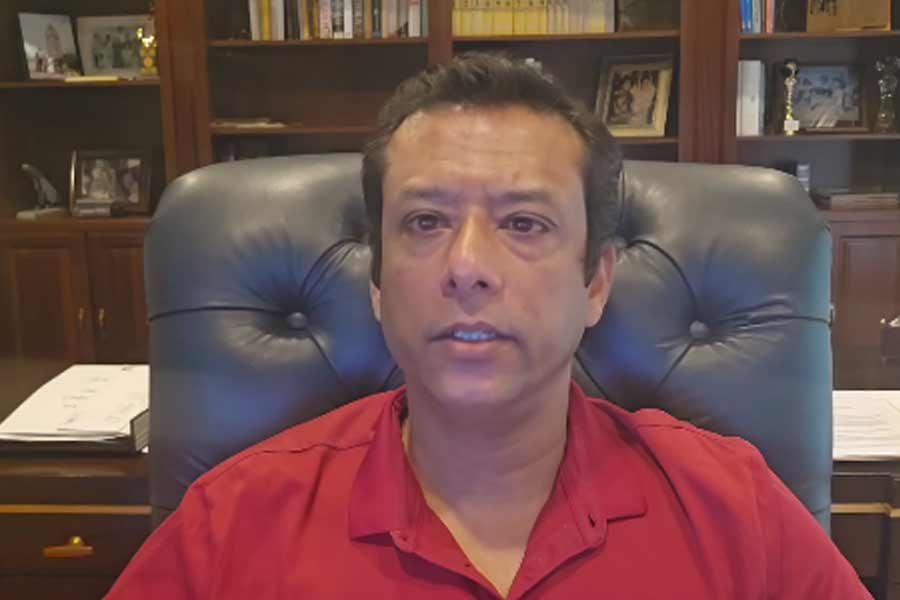
As Tarique Rahman prepares to lead a BNP government with a two-thirds majority, Sajeeb Wazed Joy says the Awami League would be willing to engage with him despite branding the Feb 12 election a “complete sham”.

In an interview with British broadcaster ITV, the son of deposed prime minister Sheikh Hasina signalled openness to dialogue with the BNP leader and said: “If he becomes prime minister -- I mean, it is a sham election -- but yes, if he becomes prime minister, then yes, of course, we will talk to him and deal with him.”

The Feb 12 vote resulted in a sweeping victory for the Bangladesh Nationalist Party (BNP), which secured 209 of 299 seats -- enough for a two-thirds majority in parliament -- while Jamaat-e-Islami emerged as the main opposition with 68 seats. The Awami League was barred from contesting.

Pressed further on whether he would personally work with Tarique, who is expected to become the next prime minister, Joy said he had “no interest in working in Bangladeshi politics whatsoeve”.

However, when asked whether he would be open to discussions aimed at improving relations between the two camps, he responded: “I am always open to it. I’m not a person who -- I’m a person who always believes in having a conversation, no matter how difficult or with whom. That is my strategy. That has always been my strategy in life.”

Joy also drew attention to what he described as inconsistencies in the treatment of convictions under successive governments.

Referring to past corruption cases against Tarique, many of which have since been overturned, he said: “You look at what’s happened, you look at Tarique Rahman -- he was convicted on evidence by the FBI. Now he’s likely to be prime minister. So these things don’t last forever.”

Asked whether he would make a plea to Tarique to dismiss charges against his own family if the BNP leader assumes office, Joy said the matter was not his to decide.

“That is not up to me. I don’t live in the country. That is really up to the party. They will decide what they want to do,” he said.

“The BNP is the other large party in Bangladesh. Of course, we should talk to them; I’ve always said that. The BNP should never have boycotted the elections.”

'COMPLETE SHAM'

Although he acknowledged the BNP’s electoral position, Joy rejected the legitimacy of the vote outright.

“[Thursday’s] election was a complete sham,” he said.

“You’ve had the largest party and all progressive parties barred from elections. You’ve had, essentially, a stage-managed election.”

He argued that banning the Awami League invalidated the process.

“How can you call an election where one of the two major political parties in the country are banned? … You cannot call that a free and fair election in any way.”

Calling the move “unprecedented”, he added: “It’s unprecedented, where a political party has been banned by a dictat from an unelected regime.”

He warned that the situation was unsustainable.

“This is not going to be sustainable. This is going to lead to more instability in the future.”

JAMAAT BAN UNDER AL 'FUNDAMENTALLY DIFFERENT'

When challenged by interviewer Mahatir Pasha that Jamaat-e-Islami had been barred from elections during the Awami League's rule, Joy rejected the comparisons.

“No, because they were banned because of a court ruling,” he said. “They were banned from participating because of a court ruling from an independent group, not from the government.”

He referred to the High Court verdict that declared Jamaat’s registration illegal, arguing that the issue lay in Jamaat’s constitution.

“The court ruled that Jamaat’s constitution, which recognises Shariah law above the Constitution of Bangladesh, conflicted with our Constitution. All Jamaat had to do was change their constitution and they could run again. There was no ban from the government on them.”

RIGGING ALLEGATIONS UNDER AL

The interviewer pressed Joy on whether his party had the moral standing to criticise elections, citing allegations of vote-rigging in the 2014, 2018 and 2024 elections.

“That’s not exactly true,” Joy said. “The last three times, the first and the third time the opposition boycotted.”

Regarding the 2018 election, he acknowledged problems but insisted they did not alter the outcome.

“If you look at the opinion polls leading up to the elections, the Americans did polling, and all the polls showed that our party would have a landslide majority. It was going to be a landslide for the Awami League.”

He conceded: “Unfortunately, the administration -- some people in the administration -- still took it upon themselves to commit irregularities. Those should have been investigated, they weren’t, but overall it wouldn’t have affected the result.”

Joy also defended the Awami League government’s security response in the lead-up to the 2014 polls, which the BNP boycotted.

“In the 2014 elections, there wasn’t a crackdown until our opposition started arson attacks on public transportation,” he said.

“Hundreds of people were burned alive in buses in arson attacks by the opposition because they chose to boycott the election. Awami League never banned anybody.”

SCEPTICAL OF OBSERVER ASSESSMENTS

The Election Commission said hundreds of international observers and foreign journalists monitored the Feb 12 polls. Asked if he would accept their verdict if they declared the election free and fair, Joy was dismissive of the process.

“You cannot accept -- I mean, again, you have a limited number of foreign observers in the country who are escorted by the regime,” he said.

“These foreign observers are not allowed to travel freely in the country, and frankly, it’s not even safe; the law and order situation is that bad. So, how much have these foreign observers really been allowed to observe?”

However, he added: “I will reserve my judgment until they make their statements.”

Returning to his central argument, he said: “If you’ve banned either the Democrats or the Republicans in the US, can you in any way call that election free and fair?”

'WITHOUT A DOUBT' MISTAKES WERE MADE

The conversation turned to the July–August 2024 student-led protests, which began over quota reforms and later escalated into a broader uprising that toppled the Awami League government on Aug 5.

Asked whether failings under his mother’s leadership contributed to her fall, Joy said: “Yes, without a doubt.”

“The protest started peacefully. They had a legitimate demand.

He argued that quotas had been reduced by the government in 2018 and later reinstated by a court ruling, which triggered renewed protests.

“Our government completely failed to communicate this; they completely failed to sit down with the student protesters,” he admitted.

But he accused Islamist groups of escalating violence.

“The Islamists, the Jamaat-e-Islami and their militant wing saw this as an opportunity to overthrow the government,” he said.

“They started the violence, and then the protest turned violent, and again, our government mishandled it; it should have never gone that far.”

DISPUTES UN FIGURE OF 1,400 DEATHS

The United Nations has estimated that around 1,400 people were killed between Jul 15 and Aug 15, 2024. Joy challenged both the figure and its attribution.

“The UN number… covers the period from the 15th of July until the 15th of August. Our government fell on the 5th of August. Yet the UN report still blames the continued killings on our government. I mean, how is that possible?” he said.

He argued that the total included police officers and Awami League activists.

“Also included in that number are police officers. There were hundreds of police officers killed, and during the protests themselves, hundreds of our activists were killed,” he said.

“We take full responsibility for the several hundred that were killed. Not 1,400, because half of those were police and our party activists.”

“Every single death is regrettable. We never wanted anyone to die.”

Asked directly whether he would apologise to families, he said: “My mother apologised to them immediately, during the protests, before our government fell. We met with them.”

He denied that Hasina had ordered lethal force against protesters.

“Lethal force was never authorised against protesters. My mother never ordered lethal force against anyone other than people attacking police, attacking other people. What else is a government supposed to do? It’s a government’s job to protect lives.”

He claimed that audio recordings suggesting otherwise were edited.

“You should listen to the full recordings… what was broadcast internationally was a little snippet taken out of context,” he said.

“In the conversation, they’re talking about militants attacking police stations. That is where lethal force was authorised.”

TULIP SIDDIQ'S RESIGNATION IN THE UK

The interview also touched on the resignation of his cousin, British MP Tulip Siddiq, who stepped down as a UK Treasury minister amid controversy linked to investigations in Bangladesh.

“She resigned to avoid embarrassment to the British government. That is the only reason,” Joy said.

He claimed British authorities had cleared her.

“The UK watchdog investigated her, they cleared her of any wrongdoings,” he said.

Asked whether it was fair that she resigned, he replied: “No, of course not. It’s not fair. I don’t think it’s fair at all.”

When asked whether the British prime minister had failed to defend her, Joy declined to comment.

“I cannot comment on British politics, unfortunately.”

'I COULD'VE BEEN PM A WHILE BACK'

The interviewer raised criticism that Bangladeshi politics has long been dominated by the families of Sheikh Mujibur Rahman and Ziaur Rahman.

“Is it dynastic politics because we choose to be in it, or is it because the grassroots keep voting for us in the party councils?” Joy responded.

Joy himself has been sentenced to five years in jail in Bangladesh. Asked when he might return, he noted he does not reside in the country.

“I don’t live in Bangladesh. I have spent a total of seven years of my entire life in Bangladesh. I’ve been settled in the US for over 30 years,” he said.

Asked directly whether he intended to go back, he replied: “Oh, I will go back at some point.”

However, he denied harbouring prime ministerial ambitions.

“No, I’ve never had political ambitions. If I had wanted to be prime minister of Bangladesh, I could have been prime minister a while back. My mother had been pushing me to run for elections… for over a decade.”

“I’ve never had a greed for power or money. I’m happy just to be comfortable.”

On whether reforms are on the agenda for the Awami League, he described the process as gradual.

“Reform is not a one-time process -- reform is a continuous ongoing process,” he said. “Over the last 10–15 years, we have had many younger leaders come up in the Awami League.”

HASINA'S EXILE, DEATH SENTENCE AND POSSIBLE RETURN

Hasina fled to India on Aug 5, 2024, as the mass uprising intensified and protesters converged on the capital, bringing an abrupt end to her 15-year rule.

Since then, she has been tried in absentia by the International Crimes Tribunal and sentenced to death for crimes against humanity linked to the violent crackdown on the July–August protests.

Hasina has remained in India under security protection, while the interim government has repeatedly sought her extradition.

Asked whether his mother would ever return to Bangladesh, Joy said he had “no doubt” she would.

“I have no doubt she will return someday,” he said.

He acknowledged, however, that the current environment makes that impossible.

“Right now, no. Not at all,” he said when asked if it was safe for her to return.

Joy expressed confidence in her safety in India and sharply criticised the legal proceedings against her in Bangladesh.

“Right now, she is in the safest place in the world that she can be,” he said. “The Indian government is providing her full security, and India has due process; the trials in Bangladesh do not anywhere near meet that standard.”

He questioned the speed and legitimacy of the judicial process that resulted in her death sentence.

“The trials against my family and my mother were completed in what, a month, month and a half?” he said, suggesting that such proceedings could not meet international standards of justice.

Despite her exile and conviction, Joy insisted that political fortunes in Bangladesh are cyclical and that the current order would not endure.

“None of this is going to last, none of this is sustainable,” he said.

He argued that the Awami League’s record in government would ultimately outweigh the circumstances of its fall.

“The one thing that is undeniable is that the 16 years of the Awami League's government, you also had the best economic development in Bangladesh’s history, the most infrastructure development, the most stability, you had the best law and order situation, and you had a complete stop to all terrorist activity,” he said.

Looking ahead, he predicted a reassessment of her legacy.

“I think within a very short time, people are going to say, well, despite all her shortcomings, the Awami League was the best government we had.”

He went further, asserting: “My mother’s time is going to be remembered in history as the best economic and security and stable time in Bangladesh’s history. I can guarantee you that.”​
 

Awami League's matter will be dealt with legally: Mirza Fakhrul Islam

Staff Correspondent
Dhaka
Published: 23 Feb 2026, 14: 09

1771850739450.webp


Mirza Fakhrul Islam Alamgir, the Secretary General of the BNP, speaks to journalists at the BNP central office in Naya Paltan in the capital. Prothom Alo

Mirza Fakhrul Islam Alamgir, the Secretary General of BNP and the Local Government Minister, stated that the issue of opening Awami League offices in various places would be addressed legally.

This statement was made by Mirza Fakhrul in response to journalists' questions at the BNP central office in Naya Paltan, Dhaka, on Monday morning.

Journalists asked about the government's stance on the opening of Awami League offices in different places.

In response, Mirza Fakhrul Islam Alamgir said, "We did not want this, and since it is legally stated that their activities are prohibited, it will be addressed in that manner everywhere."


After winning the 13th National Parliamentary Elections, it was the first time a BNP minister or senior leader visited this office.

The BNP Secretary General went to the Naya Paltan office at 10:30 AM, where the leaders and workers of the party greeted Mirza Fakhrul with flowers.

Later, while talking to journalists, Mirza Fakhrul mentioned that the most demonstrations and programmes were conducted from this BNP office in Naya Paltan, led by the late chairperson and former Prime Minister of BNP, Khaleda Zia.

Mirza Fakhrul stated that the programmes delivered from this office inspired the public.

In response to a question from journalists regarding local government elections, Mirza Fakhrul Islam Alamgir said that local government elections would be held on time following government regulations.

Mirza Fakhrul stated, "There are several governmental rules and practices. Some have a duration, and some have expired. We will consolidate them and arrange for holding these elections at the correct time from the government's side. However, priority will undoubtedly be given to these elections."

In response to a question about whom BNP will nominate for the reserved women's seats in the National Parliament, Mirza Fakhrul mentioned, "They must have connections with the people, must be connected with politics and the party. Priority will be given to those who are associated with the party on behalf of our party."​
 

Hints of activity amid ban, what Awami League is calculating
1772326807999.webp
 

Veteran AL leader Tofail Ahmed passes away
7 held after janaza at Dhanmondi

Staff Correspondent 01 June, 2026, 16:38

1780362723814.webp

Tofail Ahmed | File photo

Veteran politician and Awami League advisory council member Tofail Ahmed died while undergoing treatment at Square Hospital in Dhaka on Monday afternoon.

Tofail, 82, left behind his lone daughter to mourn his death.

‘My father breathed his last at the coronary care unit at around 3:30pm on Monday,’ Tofail’s daughter Taslima Akter Munni told New Age.

She added that her father would be buried at their family graveyard at Dakkhin Digholdi union in Bhola district today, following his second namaz-e-janaza at the Bhola Government High School ground after Zuhr prayers, where the late leader had studied.

Meanwhile, the police on Monday detained seven people after local leaders and activists of the party chanted slogan ‘Joy Bangla, Joy Bangabandhu’ when the vehicle carrying Tofail was heading towards Square Hospital.

The vehicle was going to the hospital after his first namaz-e-janaza was held at Takwa Masjid at the capital’s Dhanmondi after the Maghrib prayers.

1780362825804.webp

Police arrest several activists of Awami League, activities of which is banned, as they shout party slogan after the body of veteran politician Tofail Ahmed is brought at Taqwa Mosque at Dhanmondi for his namaz-e-janaza on Monday evening. — New Age photo

Dhanmondi police station officer-in-charge Muhammad Saiful Islam told New Age that they had detained seven people over the allegations of chanting slogans.

‘We have taken them to the police station. We are scrutinising their involvement and then we will decide the next course of action,’ the OC added.

Different sections of people, including politicians, attended the namaz-e-janaza held at Dhanmondi.

Tofail, a student leader of the Pakistan era and a prominent freedom fighter, had been suffering from prolonged illness and multiple age-related complications.

‘On September 24, at approximately 4:00pm, he was admitted to the Square Hospital with pneumonia-related respiratory distress, heart disease, and physical weakness. He was being treated under intensive care of ICU senior consultant Raihan Rabbani,’ said a press release issued by the Square Hospital Authority on Monday.

The immediate past Bangladesh interim government issued a gazette in 2025 imposing ban on all activities of the Bangladesh Awami League and its affiliated, associate, and like-minded organisations until the completion of the ongoing trial proceedings against the party’s leaders and activists at the International Crimes Tribunal.

Throughout his political career, Tofail Ahmed was elected Member of Parliament nine times — first to Pakistan’s National Assembly in 1970 and later to the Jatiya Sangsad of Bangladesh in 1973, 1986, 1991, 1996, 2008, 2014, 2018 and 2024.

He was elected a presidium member of the Awami League in 1992 and served in the position for 18 years.

In 2010, he became a member of the party’s advisory council.

Tofail Ahmed served as minister for commerce and industries from June 1996 to December 1999, and later continued as industries minister until 2001 during the AL ruling period.

From 2009 to 2013, he served as chairman of the Parliamentary Standing Committee on the industries ministry.

From January 2014 to December 2018, Tofail served as commerce minister.

Born to Azhar Ali and Fatema Khanam on October 22, 1943 at Koralia village under South Digholdi Union in Bhola district, Tofail Ahmed married Anwara Begum in 1964. She was the eldest daughter of Mofizul Haque Talukdar of Bhola town.

Tofail and Anwara’s only daughter, Taslima Akter Munni, is a physician.

Tofail Ahmed passed his matriculation examination from Bhola Government High School in 1960.

He obtained his intermediate and bachelor’s degrees in science from Brajamohan College in Barishal in 1962 and 1964 respectively.

Later, Tofail obtained a Master’s degree in soil science from the University of Dhaka.

He became actively involved in politics during his college life.

In 1962, he was elected sports secretary of the Brajamohan College Students’ Union and vice-president of the Ashwini Kumar Hostel union of the college.

During his university years, he was elected sports secretary of Iqbal Hall (now Seargent Zahurul Haque Hall) Students’ Union in 1964, vice-president of the department of soil science in 1965, and vice-president of Iqbal Hall Students’ Union in 1966-67.

Tofail Ahmed played an active role in the 1966 Six-Point Movement for autonomy of East Pakistan, led by Sheikh Mujibur Rahman, and took part in the 1969 Mass Uprising as a student leader.

He served as the vice-president of the Dhaka University Central Students’ Union – DUCSU -- from 1967 to 1969.

In 1969, Tofail was elected president of the Bangladesh Chhatra League and he joined the Awami League on June 2, 1970.

In the 1970 Pakistan general election, Tofail Ahmed was elected a member of the National Assembly for the Daulatkhan-Tazumuddin-Manpura constituency of Bhola at the age of 27.

During the 1971 War of Independence, he was one of the four regional commanders of the Mujib Bahini.

He was responsible for the western zone of the force, which included the districts of Barishal, Patuakhali, Khulna, Faridpur, Jessore, Kushtia, and Pabna.

After the country’s independence, Tofail took part in the constitution-drafting process for Bangladesh in 1972.

On January 14, 1972, he was appointed political secretary to prime minister Sheikh Mujibur Rahman with the status of a state minister and remained in the post until January 25, 1975.

After the introduction of the presidential form of government in Bangladesh on January 25, 1975, he was appointed special assistant to the president with the rank of state minister.

Later that year, when the Bangladesh Krishak Sramik Awami League – BAKSAL -- was formed by integrating all the country’s political parties, Tofail became general secretary of its youth wing, Jatiya Jubo League.

Following the assassination of Sheikh Mujibur Rahman on August 15, 1975, Tofail Ahmed was first placed under house arrest and later arrested on September 6.

While detained in Kushtia jail in 1978, he was elected organising secretary of the Awami League.

During the military-backed caretaker government in 2007, Tofail Ahmed was among the Awami League leaders who supported reform proposals that included the removal of party chief Sheikh Hasina from the leadership.

However, after the Awami League returned to power following the 2008 general election, he was not included in the cabinet despite being one of the party’s influential presidium members.​
 

Latest Posts

Back