โ˜• Support Us โ˜•
[๐Ÿ‡ง๐Ÿ‡ฉ] - Save the Rivers/Forests/Hills-----Save the Environment | Page 2 | PKDefense

[๐Ÿ‡ง๐Ÿ‡ฉ] Save the Rivers/Forests/Hills-----Save the Environment

Reply (Scroll)
Press space to scroll through posts
G Bangladesh Defense
[๐Ÿ‡ง๐Ÿ‡ฉ] Save the Rivers/Forests/Hills-----Save the Environment
495
12K
More threads by Saif


Afforestation and forest conservation
Md Zillur Rahaman | Published: 00:00, Apr 09,2024

1712616431606.png

โ€” UNB

HUMANS are mainly responsible for the current climate change and warming crisis in the world. So everyone has something to do to get rid of this crisis. Due to urbanisation, industrialisation and modernisation of agriculture, the environmental crisis is increasing alarmingly. But it is not at all possible to stop or reduce the speed of industrialization and urbanisation. So there is a need to try to maintain a balance between development and conservation. In this regard, forestry can play the most important and effective role. Every human can contribute to the conservation and growth of plants. So everyone should plant as many trees as possible around the house or in open spaces during the planting season every year. Only then will nature, the environment, and human life and health be good.

Many may remember that in May 2020, Super Cyclone 'Ampan' hit the coast, but the loss of life was minimal due to the Sundarbans, and it was a relief at that time. Earlier, Cyclone Bulbul on November 9, 2019, Cyclone Sidor on November 15, 2007, and Cyclone Aila on May 25, 2009, hit with devastating force but were weakened by the Sundarbans. The loss of life and property was much less than expected. The Sundarbans acted as shields and sentinels to protect the people of the south-western coast of the country and adjacent areas from natural calamities.

The Sundarbans of Bangladesh is the single largest mangrove forest in the world, located on the Bay of Bengal coast. Many say it is the Amazon of Bangladesh. Rich in biodiversity, the Sundarbans is one of the most attractive places for people all over the world. It is the favourite habitat of the Royal Bengal Tiger. The Sundarbans stands proudly after facing natural calamities like Cyclone Sidor, Aila, Fani and Bulbul. But the existence of this forest is becoming endangered. Those who have done research on this forest say that the sundarbans is one of the forces of biodiversity and environmental protection. However, the existence of the Sundarbans is threatened due to development projects and commercial activities in and around it.

Forestry protects us from the harmful effects of green house, provides essential food, supplies oxygen, keeps the environment clean by absorbing excess carbon dioxide from the air, protects the living world by purifying the harmful polluted air, provides cool shade, prevents soil erosion, organic matter in the soil, protects soil fertility by summing substance, retains adequate amount of water in the soil, provides fuel, supplies raw materials for valuable life-saving medicines, acts as a safe habitat for animals, birds and other wildlife, prevents natural disasters from storms and floods, helps in building houses and in making valuable furniture, prevents salinity, acts as an insurance in case of human accidents, keeps the soil pure and clean by absorbing harmful toxic substances from the soil, keeps the air clean, reduces the heat of the atmosphere and keeps the weather cool, absorbs air pollutants like carbon monoxide, sulfur dioxide, the leaves of the trees prevent the movement of storms and winds, create rain and prevent desertification, maintaining the balance of the natural environment as well as making nature magical and beautiful.

That is why more and more afforestation is very important and significant. Global warming is increasing day by day, desertification is increasing, carbon dioxide is increasing in the air, and the amount of chlorofluorocarbon, methane, and nitrous oxide, which is harmful to biodiversity, is among the problems we are constantly facing due to a lack of sufficient forest land and trees. Increasingly, the weight of the atmosphere is cracking, allowing harmful ultraviolet rays to reach Earth. Along with acid rain and rising temperatures, the sea level is rising due to the melting of ice in the polar regions and Antarctica. Bangladesh is among the most affected countries, and there is no alternative to massive afforestation.

For one, global warming has increased by 0.74 degrees Celsius over the past hundred years. If global warming continues like this, it is expected that the temperature of the earth will increase by 1.70 degrees Celsius by 2050. If the level of climate change increases like this, then nature, people and the environment will face many problems. People's rights to food security, clean water and natural resources, housing, and other infrastructure facilities will be threatened. Scientists fear that in the next 50 years, due to the increase in sea level, a large part of the coastal region of Bangladesh will disappear under the sea. Climate change will adversely affect Bangladesh's agriculture and food security, biodiversity, health, fresh water and coastal areas. Climate change will increase rainfall and floods, reduce food production by 30 per cent, increase the number of hungry and poor people, increase temperatures, and melt the Himalayan glaciers. We will face disaster.

The forest area under government control in Bangladesh is about 23 lakh hectares, which is about 15.58 per cent of the country's total area. Out of this, the amount of forest land controlled by the Forest Department is about 16 lakh hectares, which is about 10.74 per cent of the country's area. The government has time and again pledged to protect the forest land and raise it to more than 24 per cent by 2025. But, its actions speak otherwise, as the government has continued to disregard forests and the environment in its development policy. There are many instances where government agencies have grabbed forest land or allowed the construction of industries on forest land. As a result, the country's forests and wildlife are under threat today.

As the lives and livelihoods of people are directly connected with forest resources, the protection of biodiversity, nature and the environment is also inextricably linked with forest protection. For this reason, there is no alternative to extensive afforestation and the conservation of forest land.

Md Zillur Rahaman is a banker and columnist.​
 

Trees are Dhaka's saviours

1713047580777.png

PHOTO: FILE PHOTO

Rising temperature is now perceived as an existential threat to humans. In recent years, heatwaves in European countries such as Greece, Italy, Spain, France, and the UK have resulted in numerous deaths and wildfires. In Bangladesh, we experienced extreme heat last year, leading the government to shut down primary schools as temperatures surged over 40ยฐC in June. According to the Bangladesh Meteorological Department, the temperature broke a 58-year record in Dhaka city.

With heatwaves becoming more frequent and prolonged, there will be more severe impacts in cities like Dhaka where buildings are densely packed together and the number of trees and amount of greenery are dwindling.

Although the rising temperature has a global effect on liveability and poses threats to species worldwide, the impact of temperature increase in urban areas is likely to be magnified multiple times compared to other areas, due to the Urban Heat Island (UHI) effectโ€”a phenomenon characterised by higher temperatures in cities compared to surrounding rural areas.

According to an article published in Theoretical and Applied Climatology, temperatures in some areas of Dhaka are 3ยฐC higher than in its boundary areas, and the warmest and coldest temperatures in Dhaka city are approximately 7ยฐC and 5ยฐC higher than outside the city. This temperature difference is mainly attributed to the higher number of heat-absorbing surfaces, less tree coverage in the city, and anthropogenic waste heat (from industry, cars, cooling systems, and others).

Increasing tree canopies have been used the world over as a crucial tool to control urban heat by leveraging the natural characteristics of trees. Trees can help regulate temperature in two main ways: 1) by providing shade, which blocks direct sunlight from reaching the surface; and 2) through evapotranspiration, which acts as a cooling process. Therefore, maintaining a liveable and comfortable temperature in cities by increasing tree canopies and protecting existing ones should be a key concern for urban planners and policymakers
In efforts to protect and monitor trees, there is a need for a proper database of tree canopies.

Recently, the Geographic Research Unit of Bengal Institute undertook a pioneering initiative to map the tree canopies in Dhaka city, preparing a comprehensive and detailed database for all the tree canopies in the city. According to this study, the total canopy cover of Dhaka city is 4,169 hectares, accounting for 13.71 percent of the total area of the city. Tree canopy coverage is higher in areas under Dhaka North City Corporation, approximately 15.39 percent, while only 10.31 percent of trees are present in Dhaka South City Corporation areas.

Experts suggest that a minimum of 25 percent tree coverage is needed for a city to be considered liveable. Nearby mega-cities present disappointing figures as well. Kolkata has lost 30 percent of its tree coverage in just 10 years, leaving only 1.8 percent of tree coverage in 2021, as reported by The Times of India. For Bangkok, the percentage is nearly 5.2 percent, according to Global Forest Watch. If we look at European cities, those well-known for liveability have higher percentages of trees. For example, Oslo has 72 percent, Bern has 53 percent, Berlin has 44 percent, and Madrid, Brussels, and Vienna have 39 percent, 37 percent, and 34 percent, respectively, of tree coverage. Trees claim to have overwhelmingly positive effects on human health in these cities, where programmes to increase greenery, as well as efforts to maintain it, are operational.

Despite their significant environmental benefits, trees are facing the harshest blow in Dhaka city. With the increasing number of heat-absorbing surfaces (buildings, pavements, roads, and impervious surfaces), greenery is decreasing. Trees are being felled mercilessly to accommodate development activities in Dhaka and, on many occasions, for the commercial benefits of a few. In recent times, this cruelty towards trees has been evident on Satmasjid Road in the capital's Dhanmondi area, where hundreds of trees were reportedly felled for road divider renovation.

In May 2021, a similar incident occurred in the historic Suhrawardy Uddyan, where hundreds of old trees were cut down to make way for seven restaurants, a flower market, toilet facilities, and a children's parkโ€”all in the name of development and public service. While many believe that the design could have been altered to preserve trees in the area, commercial profits took precedence over the environment. This incident was protested by numerous environmental activist groups, and a writ petition was filed to halt the tree felling. However, reportedly there was a brazen flouting of the high court order, and the continued felling of trees persisted.

In some instances, deforestation is happening on a much bigger scale. According to the Bangladesh Environment Lawyers' Association (Bela), 1,100,000 trees have been cut to facilitate 2,000 plots at Purbachal, meaning an average of 550 trees of different sizes were felled to prepare a single plot. The majority of the trees cut were sal trees, and despite the requirement for special permission to cut sal trees, none was obtained during the tree felling for the plots.

The scenario does not look good for trees and the livability of Dhaka city, as deforestation is an ongoing process happening openly during daylight. The lack of initiative to protect greenery, coupled with negligence from the respective authorities, is likely to exacerbate the condition of greenery in Dhaka City. Things seem dire as people brace for the imminent fight against heat waves and air pollution. Infrastructure development at the cost of trees will not be sustainable and healthy. Among numerous problems in Dhaka city, trees could provide us with breathing space in this concrete forest, acting as lights at the end of the tunnel. The question now is: are we willing enough to reach that end, or will we simply lay back and witness the destruction of the trees, and turn this city into a hostile place to live?​

Bandhan Dhar and Sanjoy Roy are research and design associate and coordinator of the Geographic Research Unit (GRU) respectively, at the Bengal Institute for Architecture, Landscapes, and Settlements in Dhaka, Bangladesh.​
 

Forester's murder in Cox's Bazar: Mastermind among 2 arrested

1713307382554.png


Members of the Rapid Action Battalion (Rab) have arrested two people including the alleged mastermind behind the killing of forest officer Sazzaduzzaman in Cox's Bazar.

The arrestees are Kamal Uddin, 39, of Harinmara area in Cox's Bazar's Ukhiya upazila and Helal Uddin, 27, of Tuturbil area of the same upazila, reports our Cox's Bazar staff correspondent.

Kamal was arrested from Sitakunda of Chattogram while Helal was arrested from Kotbazar area of Ukhiya yesterday in separate drives, said Lt Col HM Sajjad Hossain, commanding officer (CO) of Rab-15 in a press briefing today.

Sajjad said the forest officer was killed in a pre-planned way. The arrestees plotted the murder as Sazzaduzzaman prevented them from cutting hills and selling soil.

During the primary interrogation, the arrestees revealed that a gang led by local Kamal, Helal, Gafur, and Babul in the Harinmara area has been illegally cutting hills of reserved forest lands and selling soil for a long time.

"There are about 10/12 dumpers and a few dredgers under the gang. They used to cut the hill in the dark of the night and sell it for Tk 900 to 1,200 per dump truck," the Rab official said.

"Sazzaduzzaman, a beat officer of Dochhari forest beat of Ukhiya range under Cox's Bazar South Forest Division, was known as a brave and honest officer. He conducted several drives, seized five earth-cutting dredgers and several dumpers, and filed several cases under the Forest Act against the criminals involved in the hill cutting" he added.

One of the seized dump trucks belonged to the arrested Kamal, said the official.

On March 31, Sazzaduzzaman tried to stop a dump truck carrying stolen earth from a razed hill at Harinmara reserve forest in Ukhiya of Cox's Bazar when the truck ran over him and left him dead on the spot.​
 

Climate change: Apathy and cluelessness
AFSAN CHOWDHURY
Published :
Apr 15, 2024 21:48
Updated :
Apr 16, 2024 21:23
1713394518797.png

Most human beings are unaware of most of the potential disasters that may wipe out mankind. This is natural because human beings don't think they are responsible for their own actions and consider nature as separate. It's perceived as external.

Thus humans are unable to comprehend complex disasters like climate change caused by their own cumulative actions. Earthquakes, floods, heat waves etc., are much easier to grasp by their simple mind. It's beyond their capacity to understand that those very disasters could be caused by causes more complex than the so-called "natural "causes". The result has been global disregard for the issue of climate change and impending disaster. People don't even know what it is and how it impacts on their life, let alone create political pressures for their collective survival.

Not that it matters as ruling classes everywhere consider themselves immune to the baneful effects of climate change. Thus we have a lot of words, including those churned out at the global level, but not much else. The UN Climate chief has recently said that there are only two years left to take actions before the window for acting against global disaster shuts. One supposes it's time to get ready for the "end of the world" as we know it and which we never expect to happen.

The UN Chief's words are important but reflect the position of leaders who speak without power and represent the ineffectual. Simon Stiell, Executive Secretary of the United Nations Framework Convention on Climate Change has said that the next two years are "essential in saving our planet". Otherwise the climate changes status and future scenario. And he was addressing politicians, business leaders and the rest of those who are supposed to matter unlike the UN.

Scientists say halving climate-damaging greenhouse gas emissions by 2030 is crucial to stop a rise in temperatures of more than 1.5 Celsius that would unleash more extreme weather and heat. However, last year, the world's energy-related CO2 emissions increased to a record high. Current commitments to fight climate change would be grossly inadequate to manage global emissions by any count by the critical year of 2030.

All hope is not entirely lost but time has certainly run out. "We still have a chance to make greenhouse gas emissions tumble, with a new generation of national climate plans. But we need these stronger plans, now, "Simon said. So where does the problem lie? It's very simple. Only 20 leading economic powers are responsible for 80 per cent of global emissions and that sort of explains the entire scenario. And they don't have to listen to anyone.

These 20 countries basically run the world and decide what is going to happen and where. These super countries if you will have all the power in the world whether it's the US or China and they are hardly about to think about to back down let alone try to figure out how it's done. It's not about a good state or a bad state but preserving its status and capacity and it doesn't matter how that has to be done.

The UN keeps setting priorities which the world happily ignores. But it's not just bad intentions or selfishness but also inability to know how it's done. Nobody has any practical ideas about how to retain or reach prosperity without increasing carbon gasses and that is driving the reality of global policy application.

Many are asking why the UN's climate change reduction policies aren't working. The UN's principal objective is for its members to agree to a new target for climate finance "to support developing countries struggling to invest in shifting away from fossil fuels and fighting climate change."

The UN says that objectives can be achieved through several means such as debt relief, cheaper financing for economically weaker countries, developing new sources of financing such as tax on emissions reforms of international financial institutions such as the World Bank and International Monetary Fund.

"Every day finance ministers, CEOs, investors, and climate bankers and development bankers direct trillions of dollars. It's time to shift those dollars," said the UN climate change related boss. He has been pushing for reforming capital requirements and expansion of its use of Climate Resilient Debt Clauses, which suspends debt repayments in the event of natural disasters in the WB and the IMF.

So far none have paid much attention and there is no evidence to show that they are likely to listen to the UN soon.

The situation may not be particularly different at the national level whether Bangladesh or elsewhere. Researchers and activists have pointed out the woefully inadequate management of projects and priorities.

Governments are more active at the international level seeking funds which goes to the ministries. But what happens at the operational level is rarely discussed other than blanket statements about "projects completed". Nor does anyone say about the impact of completion.

Once as a media panel member of a major anti-corruption outfit, we saw incredible levels of corruption in this sector. It basically means that projects are funded but they are not really useful except for making a lot of money by some.

However, it bothers none as the powerful behave locally and internationally the same way. As a result the situation has become unchangeable and the damages in many cases irreversible. There is little evidence that the situation is about to change.

Like it or not, we are seeing the same power-gain model at work. The powerful countries ignore the plight of the poorer countries, and in the poorer countries, the top elite ignores the powerless.​
 

Climate change to wreck global income by 2050: study

1713479342071.png

Photo: Deutsche Welle

A study by the Potsdam Institute for Climate Impact Research (PIK) published in the scientific journal Nature on Wednesday claimed that climate change is poised to wipe out some 20% of global GDP by 2050.

Researchers at PIK said their calculations were based on the prospect of countries such as Germany achieving their emissions-cutting goals. Currently, most countries look unlikely to achieve these targets, meaning the financial impact could be greater still than the drastic damage projected.

According to the study's calculations, the economic burden of climate change could reach $38 trillion (โ‚ฌ35.6 trillion) annually, a sum six times higher than the estimated cost of limiting global temperatures to 2 degrees Celsius above pre-industrial levels.

Those least at fault will be hit hardest

The study points out that despite damage affecting different regions to different degrees, poorer regions and those contributing least to global warming will be hit hardest.

"Countries least responsible for climate change are predicted to suffer income loss that is 60% greater than the higher-income countries and 40% greater than higher-emission countries," said Anders Levermann, a senior PIK scientist.

Researchers projected, for instance, that the industrial economies of Germany and the United States would shrink by roughly 11% by mid-century (13% for France), even if climate action is successfully taken.

PIK scientists analyzed 40 years of climate data collected across more than 1,600 regions for the study, they excluded, however, the cost of damage caused by natural disasters such as storms and fires, which have also intensified with climate change. These would drive damages significantly higher.

"High-income losses are projected for most regions, including North America and Europe, with South Asia and Africa being the hardest hit," according to Maximilian Kotz, one of the study's authors. "These losses are caused by a wide range of economically relevant effects of climate change, such as consequences for agricultural yields, labor productivity and infrastructure."

Inaction still costs more โ€” 60% of GDP by 2100

Fellow researcher Leonie Wenz underscored the danger of complacency, noting that the current calculations dealt with the effects of carbon already released into the atmosphere, pointing out that society quickly needs to find ways to mitigate the impact of climate change.

"In addition, we must drastically and immediately reduce our CO2 emissions โ€” otherwise the economic losses will be even higher in the second half of the century and will amount to a global average of up to 60% by the end of the century," she said.

According to the World Bank, global GDP surpassed $100 trillion in 2022 and would double by 2050 โ€” if not for the drag of climate change.

Observers say the PIK estimate is likely an undercount of the actual economic impact.

Others pointed out that the new study appears to confirm conclusions similar to those in the so-called Stern Report, which was produced by economist Nicholas Stern in 2006 at the behest of the UK government.

Stern, too, projected that climate change would take a 20% bite out of global GDP by the middle of the century, as well as arguing that the cost of combatting climate change was far less than the cost of dealing with the damage it would cause.​
 

Chattogram keeps losing its hills to greed
What are the relevant agencies doing about it?

1713651400256.png

Visual: Star

A photo on the front page of this paper yesterday showed the brutal and indiscriminate destruction of Nagin Pahar, a large hill in Chattogram. Chopped off from the top by local influentials, it has lost a large chunk of its height to make way for the construction of residential buildings. This relentless hill cutting in Chattogram has been going on for decades, destroying the natural beauty of this scenic city with devastating consequences. Apart from the loss of greenery and the habitat of hundreds of birds and plant species, when hills are cut the risk of landslides is increased, often leading to human deaths.

The spree of real estate development has taken a heavy toll on these precious hills cleared away for construction. In the last four decades, around 120 hills out of 200 have disappeared from Chattogram city. So how is this killing spree of hills being allowed to go on unabated? In 2012, despite multiple court orders to protect the hills of Chattogram area, one of which specifically mentioned those in the Akbar Shah area, a hill was cut. In 2023, a councillor of Chattogram City Corporation destroyed parts of a hill to build a primary school in the Akbar Shah area. According to a report in this paper, over several years he made plots by cutting the hills and selling them to people. He did this without any permission from the Department of Environment (DoE) which is mandatory. The DoE has filed cases against the councillor for destroying the hills. But the question is, how did he get away with it for so many years?

Unfortunately, the government bodies responsible for protecting these hills, have done precious little to prevent their demise. The Chattogram City Corporation, district administration, and the DoE seem to instead have allowed influentials to carry on cutting one hill after another. Thus, despite the persistent endeavours of environmental activists to stop hill cutting and in spite of the court's orders, the killing of hills continues.

Unless the government takes serious steps to enforce the law and hold its agencies responsible for enforcing it accountable, as well as appropriately punishes violators, we may have to witness Chattogram city being reduced to a flat land with concrete high-rises all over the skyline where once there were lush green hills.​
 

Don't dump on the environment

1713651593352.png

Visual: Star

It is highly disappointing that Chattogram's Banshkhali municipality authorities are building a garbage dumping station by destroying two hills, putting the environment of the area in danger in the process. Almost 10,000 square feet of the two hills have reportedly been cut. Two excavators were spotted razing the hills, while three dump trucks were seen transferring the soil by a reporter of this daily. According to sources, these hills have been cut down over the previous three to six months. A local municipality councillor has even claimed that the mayor has chosen the hilly area over other alternative sites so that the hillocks can be razed and the soil can be sold for a profit. If true, this is not only alarming, but downright horrific.

Local leaders should not be able to misuse their power in such a manner, especially when it is common knowledge that the action will cause damage to the environment on a grand scale. The mayor's alleged actions are criminal, and must be dealt with by the authorities as such. The applicable fines and imprisonments should apply to the person(s), no matter their proximity to power.

We are also appalled by the sheer callousness shown by the various relevant authorities regarding this matter. Cutting a hill without the approval of the Department of Environment (DoE) is prohibited under the Bangladesh Environment Protection Act, 1995 (amended in 2000), but this is still a common practice even after years of protests and activism on this issue. As per data from the Bangladesh Environment Forum, 120 hills disappeared from Chattogram city over the last four decades. The port city had 32.37 square kilometres of hills in 1976, which has declined to 14.02 square kilometres in 2008. According to the statistics, there were 200 hills in the port city 40 years ago, and 60 percent of those have now vanished. This raises the question of whether this is just callousness or a case of criminal negligence by the local administration and the DoE.

Unscrupulous parties have been destroying the natural beauty of Chattogram city for personal gains for a long time. This needs to be stopped immediately. The Department of Environment (DoE) needs to step in and assert its authority to stop this onslaught on the environment. The local administration also has the duty to intervene to curb this blatant abuse of power by the politically influential quarters. In this case, the local UNO said that the mayor had promised to take legal action against those involved in the illegal act. But the question remains: why were steps not taken earlier, before the hills were cut down?

Even if the DoE charges the parties responsible for cutting down the hills with fines, it is unlikely that the larger trend of hill cutting for financial gains will stop in the port city. Though many businesses have been fined by the DoE already, razing still goes on unabated. It is clear that something more comprehensive is necessary to stop this hill-cutting spree in Chattogram. The local administration as well as the government must prove their political commitment to work together to protect the environment of the city.​
 

Dying rivers in independent Bangladesh
Pavel Partha 07 April, 2024, 21:55

1714000375414.png


DURING the liberation war, people of this land chanted, '[The River] Padma, Meghna, Jamuna is our destiny (Padma, Meghna, Jamnuna, tomar amar thikana'). Bangladesh โ€” the birth of the nation and the struggle for its independence were inspired by the rivers of this land. As we celebrate 53rd Independence Day, do we dare to ask how the rivers that bore witness to the heroic struggles and sacrifices of our freedom fighters and carried the dead bodies of ordinary citizens when families were not allowed to bury their dead are doing? Are streams of our rivers enjoying the freedom of flowing freely in an independent nation? Has the geography of the rivers been evolving without any hindrances in the past decades? The environmentally insensitive anti-river development policy has paved the way for the slow death of many rivers. Many rivers are now part of forgotten history. Every day, almost every day, newspapers are burdened with stories of their deaths. The silent cries of dying rivers are ringing, but the state remains unperturbed. Rivers are stolen in plain sight. Barely anyone cares. No brave environmental court is there to speak for the rights of the dying rivers.

Have we always been an anti-river nation? Vernacular history does not say so. Historically, our lives revolved around the rivers of Bangladesh. Yet, a recent report by the National River Conservation Commission says that of the 770 rivers that historically flowed through the country, only 405 have survived. More than 100 rivers have been lost since independence. How did it happen? On Independence Day, we must raise the river question to understand the lost love for our rivers. Why are rivers disappearing? It is because economic development is happening at the cost of our ecological integrity. The neo-liberal development model that successive governments adopted failed to recognise the historical significance of the river for Bangladesh and its people. Sadly, the government celebrates the country's graduation from the least developed country to a developing nation, standing on the graves of many rivers.

NATURE, ecosystem, life-philosophy, economy, and politics in our country evolved around the river system. All the rivers โ€” Brahmaputra, Padma, Surma, Teesta, Meghna, Karnaphuli, Naaf, Sitalakhya, Mogra, Feny, Dakatia, Monu, Rakti, Kopotakhya, Langla, Dhaleshweri, Karotoa, Ichamoti, Raymangal, Sangkha, Halda, Kangsha, Titas, Piyan, Ubdakhali, Jadukata, Simsang, Boral, Baleswar, Garai, Turag and many more โ€” are either dying or struggling to maintain their mark on our national map.

In the river basins, different forms of production systems developed. The development of capital and the expansion of trade relations also followed the river basins. In 1722, almost 300 years ago, the construction work of the Kantajee temple began in Dinajpur. The terracotta on the walls of this temple has scenes from many boat journeys. Not too far from this temple is the River Tepa, which is now in really bad shape. The way the River Ganga is the god of water, Khoyaz Khizir and Badar Gazi are similarly the prophets of water. This is how the river remains central to the belief system of the subaltern lives. The history of Muslin and Zamdani is intrinsically linked with the river basins of Buriganga and Sitalakhya. Many weaving traditions in Bangladesh โ€” Pabna taat, Tangtail taat, Bana taat of Hajongs and many weaving techniques from the Chittagong Hill Tracts โ€” are also dependent on the local rivers. Many varieties of paddy and diverse agricultural traditions are embedded in the history of the river in Bangladesh. The saying that Bengalis live on rice and fish ('Mache-bhate Bangali') is situated in this unique history.

The neoliberal development process has defied the natural growth and life of a river and disrupted the economy dependent on the river system in Bangladesh. In the 1960s, Norman Ernest Borlaug, an American agronomist, was awarded the Noble Peace Prize for his discovery of high-yield crops, which then prompted what is now known as the Green Revolution. This mode of agriculture is technology-dependent and encourages groundwater extraction and the use of chemical fertilizers. In the long run, this mode of agriculture has proven to be harmful for the farmland and ecology in general. Before the introduction of high-yielding agricultural systems, farmers were dependent on rivers, ponds, rainwater, and other forms of natural sources of water. People were following the grammar and philosophy of nature. However, in independent Bangladesh, successive governments uncritically adopted the philosophy and technology of the green revolution, discrediting farmers' knowledge, silencing the voices of subaltern people, and killing their relationship with the river and their surrounding nature. In the name of food security, through the farming of high-yield crops, subsidised access to chemical fertilisers poisoned the farm land, and the unregulated extraction of groundwater depleted water resources. When rivers and other water bodies are considered the lifeline of forests and biodiversity, the agricultural policy of the government launched an implicit and explicit destructive campaign.

ONE after another, industrial units are established. The largest multinational corporate apparel units, such as Adidas, Hilfiger, Philip Maurice, and Nike, supplied from Bangladesh. These factories serve the profit-seeking interests of the global and local business elite but have no regard for our rivers as they are discharging their industrial waste into rivers. The tanneries in Hazaribagh were responsible for the death of the River Buriganga. The shrimp industry in the north-western region destroyed the river system in the region. The commercial tea gardens, tobacco farming, aggressive acacia and eucalyptus gardens, and farming of hybrid corn contributed to the slow death of our rivers. All these were continued in the name of economic development.

All economic and industrial sectors โ€” agriculture, fishery, apparel โ€” one way or another are responsible for the death of our rivers. Such is the state policy. No one is made accountable; no one is brought to justice. As if the death of rivers would liven up our economy and improve our GDP. And the calculation of GDP follows the logic of capitalism. In the way neo-liberal corporate capital penetrates our economy, it invades our development philosophy with an anti-river mentality.

THE origins of the main rivers of Bangladesh are in India, Myanmar, Tibet, or China. Hence, the violence against rivers is not restricted within national boundaries. Neighbouring countries are equally oppressive and violent towards transboundary rivers. The Farkka barrage, the Teesta barrage, the Tipaimukh dam, and many hydropower projects in India have obstructed river flows, caused flash floods, or contributed to serious water crises in Bangladesh. The corporate-sponsored unplanned coal mining in north-eastern India also influenced our river system, particularly in the Sylhet division. Yet, river diplomacy in Bangladesh is not river-friendly. The state takes pride in not signing the UNECE Convention on the Protection and Use of Transboundary Watercourses and International Lakes (the Water Convention) and promotes pro-dam development policy.

Scientific studies now confirm that the arbitrary withdrawal of water upstream across the border by India is slowly but steadily killing Bangladesh's two major rivers and associated socio-economic and aquatic systems. Recent research conducted by a group of national and international researchers observed that the river's health has progressively deteriorated since the opening of the Farakka Barage across the River Ganga in India. In the past decades, the water flow in the river Padma has decreased by 26 per cent and the river's permanent water area has shrunk by 50 per cent during the dry season. The study conducted on a 70-kilometre area of the Padma from Godagari to Sarada in Rajshahi concluded that nearly one-third of the native fish species that were available in 1982 had disappeared. The permanent water area and the depth of the river have also significantly reduced, from 140 square kilometres in 1984 to 70 square kilometres in 2019. India has diverted an increased proportion of flow to the river Hooghly through the Farakka Barrage, which has contributed to the declining river health in Bangladesh.

The anti-river neoliberal development psyche of the state must be challenged. The tide and ebb of a river is its natural right to live that a state must protect. The rivers of Bangladesh can liven up Bangladesh's sovereign, self-reliant economy. Rivers are not private property or any form of material property that can be owned, but the state's indifference towards the ecological life of rivers has allowed vested quarters to feast on rivers. There is a High Court directive declaring rivers as legal entities and assigning the National River Protection Commission as the legal guardian to act as their parents in protecting the rights of waterbodies, canals, beels, shorelines, hills, and forests. Yet, violence against rivers continues unabated.

In riverine Bangladesh, how much more injustice to our river should we tolerate? We need real ecological emancipation of our rivers. In this struggle for emancipation, in which the ecological and environmental integrity of the nation will be treated as equally significant as the national economy, we must commit to the cause of our rivers. On the occasion of the 53rd Independence Day of Bangladesh, if we want to remain true to the historic slogan, 'Padma, Meghna, Jamuna (also Karnaphuli, Simsung) is where we belong', we must commit to the cause of rivers and resist any violence against our rivers.

Pavel Partha is a writer and researcher. Translated from Bangla by Anmona Zoardar.​
 

Dhaka seeks global urgent actions to cut carbon emissions

1714174267333.png

The photo is taken from BSS.

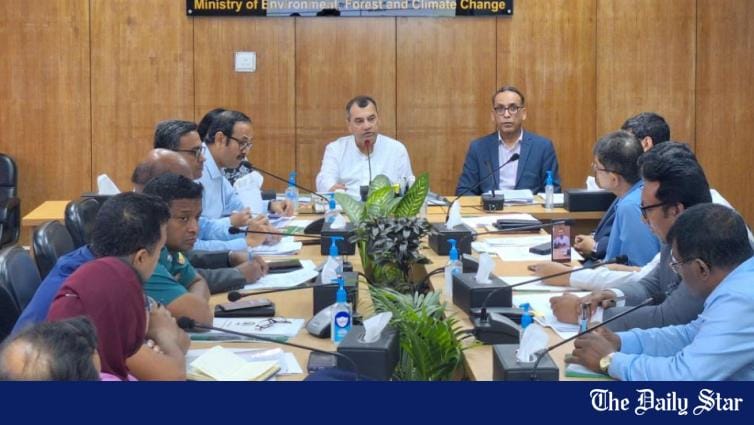
Environment, Forest, and Climate Change Minister Saber Hossain Chowdhury has held a meeting with Dr Jรถrg Kukies, State Secretary for Economic, Finance and European Affairs at the German Federal Chancellery.

The meeting was held in Berlin on the sidelines of Petersberg Climate Dialogue yesterday, focusing on key issues related to environmental sustainability and climate change adaptation and mitigation, according to a message received in Dhaka today.

During the meeting, Minister Saber Hossain Chowdhury and Dr Jรถrg Kukies exchanged valuable insights and ideas on various initiatives aimed at addressing the pressing challenges induced by climate change.

They underscored the need for collaborative efforts between government entities and international partners in implementing effective strategies to combat climate change and protect natural resources.

Minister Saber Chowdhury emphasised the urgent need for concerted action to reduce carbon emissions, promote renewable energy sources, and conserve biodiversity.

He commended Dr Jรถrg Kukies for his commitment to advancing environmental priorities within the Federal Chancellery and expressed optimism about future collaboration between their respective offices.

Dr Jรถrg Kukies reiterated the German government's unwavering commitment to environmental stewardship and climate resilience.

He highlighted the significance of bilateral cooperation in advancing sustainable development goals and reaffirmed Germany's support for initiatives aimed at preserving global ecosystems.

The meeting concluded with both parties expressing their mutual dedication to fostering closer cooperation and sharing best practices in the field of environmental conservation and climate change adaptation.​
 

To protect Dhaka's future, balance urbanisation with greenscapes

1714259477162.png

Imagine a Dhaka where integrated greenways, adorned with trees, shrubs, and native plants, would offer respite from the concrete jungle that it is today. FILE PHOTO: NAIMUR RAHMAN

Rapid urbanisation, soaring temperatures, and the urgent need for sustainable solutionsโ€”are what currently defines the city of Dhaka, the capital of Bangladesh. The recent temperature surge in the city has been unprecedented. In April, it witnessed its second-highest temperature ever recorded, at 40.2 degrees Celsius. The highest temperature in Dhaka's history remains 42.3 degrees Celsius, recorded in April 1960. Heatwaves during the dry month of Chaitra, the Bangla calendar month that coincides with the period of mid-March to mid-April, intensified the discomfort, urging for a rethink of the country's urban strategies.

The intense heat absorbed by building walls and roofs from direct sunlight exposure can significantly raise temperatures, especially for top-floor flats in multistorey buildings in a city like Dhaka. Inadequate shade exacerbates this issue, leading to prolonged air conditioner use for comfort, resulting in higher energy consumption. The escalating demand for cooling devices has surged in Dhaka due to rising temperatures, which have increased by around three degrees Celsius over the past two decades, according to the Institute of Planning and Development (IPD).

This overuse of air conditioners has led to increased energy consumption both at the household and national levels. Studies have highlighted that a significant portion of electricity consumption in residential buildings is attributed to cooling purposes, with the latter noting that 38 percent of consumption is for cooling comfort provided by electric fans. According to a World Bank analysis in 2010, the majority of urban households in Dhaka consumed between 100 and 400 kWh of power per month, with wealthier households using over 400 kWh primarily due to increased air conditioner usage. This is ironic as air conditioners contribute to global warming.

Dhaka has been transforming into a city of roads, flyovers, and high-rises. Unfortunately, this development has come at the cost of widespread tree loss. Trees, crucial for heat mitigation, are being uprooted during road and flyover construction. Foliage gives way to concrete, and the microclimate within the city diverges significantly from rural surroundings. Dhaka's outdoor temperature registers 1-1.5 degrees higher than the adjacent regions. While development is essential for progress, preserving trees is equally critical. These natural air conditioners absorb heat, release moisture, and maintain ecological balance. Striking the balance between urban growth and safeguarding green spaces is vital for Dhaka's resilience against extreme temperatures and ensuring a sustainable future.

The metro rail system has emerged as a popular mass transit solution for Dhaka. Its expansion promises efficient connectivity and reduced traffic congestion. Integrating metro lines with greenways and blue nodes can revolutionise urban mobility. Imagine a network where metro stations seamlessly blend with green corridors. These integrated greenways, adorned with trees, shrubs, and native plants, would offer respite from the concrete jungle. At strategic points, blue nodes, natural water bodies, or revitalised canals become urban oases. Imagine strolling along a tree-lined path with glimpses of shimmering water, a harmonious blend of nature and infrastructure.

These authors conducted several studies on the plausible impact of integrated greenways in ameliorating street canyon microclimates of residential Dhaka, ensuring pedestrian thermal comfort for the urbanites, between 2016 and 2023. These studies revealed that Dhaka's street canyons are thermally uncomfortable for pedestrians with raised air temperature (TA), mean radiant temperature (MRT), reduced relative humidity (RH), and wind speed (WS) during hot summer days. The authors steered field investigation in 13 points of eight street canyons for bare (no tree) and green or greenway (large green trees on either side of the roads) canyons. The field investigation showed that the greenway identical street canyons showed lower TA by 0.73-1.34 degrees and higher RH up to 0.44-1.58 percent than the bare canyons.

Dhaka's roads are mostly categorised into primary, secondary, and tertiary levels. While tertiary roads mostly serve as residential access routes, primary and secondary roads can be strategically integrated with greenways. Transforming selected roads into greenways while preserving the alternative ones for vehicular access enhances thermal comfort. Even tertiary roads, transformed into partial or half greenways or fully orthodox pedestrian greenways, effectively moderate temperatures.

Outside Dhaka, cities following similar development trajectories should reevaluate their strategies. Preservation should take precedence over relentless construction. While development is important and inevitable, it should be harnessed for climatic advantage. Incorporating blue and green networks during planning ensures a sustainable future. Reducing reliance on air coolers and promoting natural ventilation by keeping windows open enhances comfort. Transforming hard surfaces into softscapes, such as porous pavements, improves the microclimate. These materials allow for evapotranspiration, cooling the surroundings. Cool pavements, including PICP, can tremendously reduce daytime TA and MRT.

Edifices can contribute significantly to temperature reduction. Green roofs act as insulators, absorbing excess heat and providing additional green space. Vertical green walls enhance aesthetics, improve air quality, and reduce heat absorption. Urbanisation does not need to come at the cost of green spaces; rather, it should harmonise with them.

With the support of the UK-based Wellcome Trust, Griffith University, the University of Sydney, BMT, and Buet jointly conducted a three-year research project on the escalating heat exposure at garment factories in Bangladesh and its impact on workers. Workers at RMG factories endure physical discomfort from excessive heat exposure exacerbated by global warming, significantly reducing their productivity. This reduction is projected to reach five percent of the workers' total work hours by 2030.

Bangladesh is predicted to experience an increase of temperature by two degrees Celsius by 2050, which will lead to more frequent heatwaves, posing challenges for RMG factories. Increased reliance on air conditioners, as well as coal and gas for power generation, exacerbate the situation. However, proactive measures can reduce temperatures by two to three degrees through natural heat control methods, preserving work hours and minimising worker discomfort. A pilot project implementing climate change heat reduction recommendations can pave the way for sustainable solutions.

Dhaka thrives as a city of possibilities, a place where progress aligns with nature, ensuring comfort, resilience, and well-being for all. Its destiny hinges on all urbanites' collective commitment to sustainable urbanisation. Let Dhaka be a city where progress coexists harmoniously with nature, a beacon of sustainable urban living, ensuring comfort, resilience, and well-being for all.

Dr Md Ashikur Rahman Joarder is professor of environment and energy at the Department of Architecture, Bangladesh University of Engineering and Technology (Buet).​
 

Members Online

Latest Posts

Latest Posts