Donate ☕
201 Military Defense Forums
[🇧🇩] - Save the Rivers/Forests/Hills-----Save the Environment | Page 87 | PKDefense
Home Post Alerts Inbox Watch Videos

[🇧🇩] Save the Rivers/Forests/Hills-----Save the Environment

Reply (Scroll)
Press space to scroll through posts
G Bangladesh Defense
[🇧🇩] Save the Rivers/Forests/Hills-----Save the Environment
521
12K
More threads by Saif


Hilsa threatened by microplastics

Atiqul Kabir Tuhin
Published :
Jun 19, 2025 00:01
Updated :
Jun 19, 2025 00:01

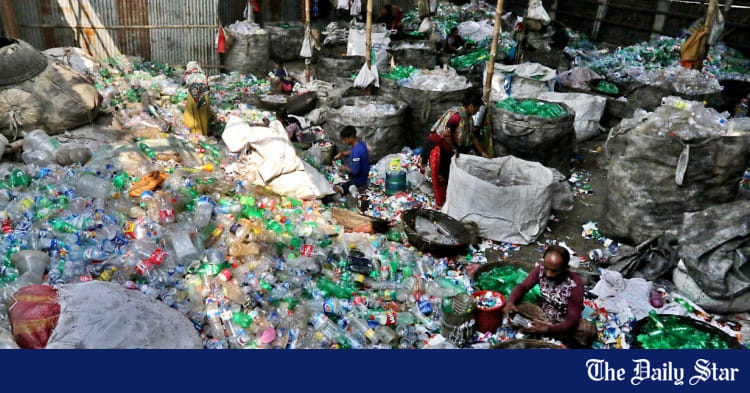
1750288030375.webp


The hilsa is a gourmet's delight for its unique taste, distinctive flavour and high nutritional value. It is not just a great delicacy but a symbol of national pride, feted as the national fish. Bangladesh takes pride as the world's largest hilsa-producing country, with this aquatic treasure largely being exclusive to the region's rivers and coastal waters. But how would you feel if this most sought-after and beloved fish species falls victim to pollution? Deeply shocked and dismayed? Well, that's precisely what has happened. Researchers from the University of Dhaka and Shahjalal University of Science and Technology found microplastic particles in hilsa caught at river mouths in Bangladesh. Moreover, they also detected harmful heavy metals like cadmium, lead, mercury, and arsenic in the fish. This poses not only a serious existential threat to the hilsa population but also a grave risk to human health and national food security.

Led by Professor Gawsia Wahidunnessa Chowdhury of Dhaka University, the study found plastic particles smaller than 5 millimetres - known as microplastics - lodged in the intestines, liver, and even muscle tissues of the fish. These particles originate from common plastic waste such as bags, bottles, synthetic clothing fibres, tyre residue, and even cosmetics. Once they enter rivers and oceans, fish ingest them either directly or through the food chain.

Contamination of hilsa lends credence to the United Nation's warning that without urgent action microplastics will infiltrate every ecosystem on Earth, including the human body. Currently, the world produces approximately 350 million tonnes of plastic waste each year, and an estimated 12 million tonnes of this plastic ends up in the ocean. And the UN warns that without immediate action, the amount of plastic entering the ocean annually could reach 37 million metric tonnes by 2040. So, apart from climate change, plastic pollution is considered the worst form of environmental threat globally. Considering the gravity of the problem, this year the World Environment Day was observed with the theme of "Ending Plastic Pollution."

In Bangladesh, plastic pollution is growing fast driven by factors such as population growth, urbanisation, and changes in consumer behaviour. According to World Bank study in 2021, Bangladesh's annual per capita plastic consumption in urban areas has tripled from 3.0 kg in 2005 to 9.0 kg in 2020. The rising use of plastic contributes to increased plastic waste, including single-use plastics (SUPs), which easily break down into microplastics and are often dumped into drains, canals, and rivers. This not only blocks drainage systems and causes flooding or waterlogging, but also poses a significant risk to aquatic ecosystems and biodiversity.

To tackle the growing plastic pollution, polythene and polypropylene bags were banned over two decades ago. However, the ban was never strictly enforced. Stakeholders have often cited the lack of alternatives, public unawareness, black-market activity, and weak regulatory enforcement as key reasons for the failure to ban single-use plastic. The interim government has made a renewed attempt to impose a ban on polythene bags in supermarkets from October 1, 2024, and set a phased target to eliminate other single-use plastics. While the government's initiative is commendable, enforcement remains a critical challenge. Laws alone cannot solve the problem. What is urgently needed is the large-scale production and marketing of alternative jute and paper bags, along with efforts to bring about behavioural change among the public.

In this regard, BRAC University's ambitious initiative to eliminate single-use plastic is not only worth-mentioning but highly commendable. The university aims to transform itself into a zero-waste, plastic-free campus through enhanced recycling programmes, the elimination of single-use plastics, and the promotion of sustainable alternatives. This proactive step by an educational institution serves as a powerful example. Other universities, as well as various public and private institutions, would do well to follow suit. They can promote a plastic-free work environment by banning single-use plastics and replacing them with sustainable alternatives such as glass, metal, or paper products. Chief Adviser's office has already adopted such practice, setting a positive example for others to follow.

However, the solution does not solely rest on individual or institutional goodwill. The government should effect a paradigm shift in its approach to waste management, recycling infrastructure, and the production of sustainable alternatives. Institutional capacity in these areas will significantly influence the broader economy, investor confidence, and consumer habits.

At present, only a small fraction of plastic waste is properly disposed of or recycled owing to inadequate collection systems, poor waste segregation, and insufficient recycling facilities. Experts are of the view that segregation at the source must be made mandatory, particularly in rapidly growing urban centres like Dhaka and Chattogram. Smart recycling hubs with integrated systems for collection, sorting, and reuse should be developed. Here, government policy, private innovation, and civic participation must go hand in hand.

Then, the financial institutions have a critical role to play to help accelerate the transition towards environmental sustainability. According to Bangladesh Bank, banks and financial institutions disbursed approximately Tk 1.17 trillion in sustainable financing during the April-June quarter of 2024, which is significantly more than what was disbursed in the previous quarter. If such financing is strategically channelled into eco-friendly, technology-driven, and plastic-alternative ventures, it could yield enormous social and environmental benefits. Here it is noteworthy that Small Industries Development Bank of India (SIDBI) provides easy access to finance for small entrepreneurs engaged in producing biodegradable products. Bangladesh could implement similar incentives through the SME Foundation and SME units of commercial banks.

In a word, individuals, families, communities, businesses, and governments all have a role to play in the fight against pollution. Failure to act will allow it to continue choking our rivers, endangering marine life, and threatening public health, where even the treasured national symbols, like the hilsa, become a casualty.

 
Analyze

Analyze Post

Add your ideas here:
Highlight Cite Fact Check Respond

WASH budget cut deepens inequality, threatens safe water access: Experts
Budget fell from Tk 182.28b in FY 23 to a proposed Tk 109.01b for FY 26


FE REPORT
Published :
Jun 18, 2025 09:02
Updated :
Jun 18, 2025 09:02

1750288772042.webp


Experts have warned that the declining budget allocation for Bangladesh's Water, Sanitation, and Hygiene (WASH) sector could severely undermine efforts to guarantee citizens' constitutional rights to safe water and sanitation.

The concern was raised during the launch of a joint policy brief by the Power and Participation Research Centre (PPRC) and WaterAid Bangladesh at a press conference held at the PPRC office in the capital's Dhanmondi area on Tuesday.

The policy brief highlighted a sharp fall in WASH allocations, dropping from a peak of Tk 182.28 billion in FY2022-23 to a proposed Tk 109.01 billion for FY2025-26.

Although the figure reflects a slight increase from the revised budget of Tk 91.41 billion in FY2024-25, experts say it remains insufficient given the country's mounting WASH challenges.

"The downward trend in allocation undermines the state's commitment to guaranteeing access to water and sanitation," said Dr Hossain Zillur Rahman, executive chairman of PPRC.

"Water and sanitation are not merely technical concerns; they are fundamental human rights, essential for health, dignity, and climate resilience."

Disparities in the proposed allocation also drew criticism.

Dhaka WASA alone is slated to receive over Tk 31.4 billion, while the Department of Public Health Engineering, tasked with ensuring national WASH coverage - especially in rural and underserved areas - faces a reduction in funds.

Only seven out of 12 city corporations received allocations in the proposed budget, leaving out major cities such as Rajshahi, Rangpur, Cumilla, and Sylhet.

Within urban areas, Dhaka North and Gazipur continue to receive disproportionately high shares, exacerbating intra-urban inequalities.

Partha Hefaz Shaikh, director of Programme and Policy Advocacy at WaterAid Bangladesh, said, "Despite commendable progress in eliminating open defecation, the WASH sector still faces inefficiencies in water quality, sanitation infrastructure, and the added burden of climate change."

While the budget includes promising signs for areas like Fecal Sludge Management (FSM) and climate adaptation, allocations for essential services such as water supply and sanitation infrastructure have declined.

Rural and hard-to-reach regions, including the chars, remain largely excluded from meaningful investment, the brief noted.

Representatives from various partner NGOs also attended the event and called for a more inclusive and equitable distribution of resources that reflects the scale of needs across both urban and rural Bangladesh.​
 
Analyze

Analyze Post

Add your ideas here:
Highlight Cite Fact Check Respond

An accurate forecast of global warming made 112 years ago

1750554399085.webp

The effect of carbon dioxide, the major greenhouse gas (GHG), is no longer “considerable.” It is out of control; it has thrown us into a feedback loop from which there is no exit. FILE PHOTO: Reuters

An August 14, 1912 article in the New Zealand newspaper The Rodney & Otamaeta Times contained a story about how burning coal might cause global warming by adding carbon dioxide to the atmosphere. The story reads, "The furnaces of the world are now burning about 2,000,000,000 tons of coal a year. When this is burned, uniting with oxygen, it adds about 7,000,000,000 tons of carbon dioxide to the atmosphere yearly. This tends to make the air a more effective blanket for the Earth and to raise its temperature. The effect may be considerable in a few centuries."

The effect of carbon dioxide, the major greenhouse gas (GHG), is no longer "considerable." It is out of control; it has thrown us into a feedback loop from which there is no exit. So we won't have to wait a "few centuries" for the Earth to become a furnace. Indeed, the prediction made more than 112 years ago essentially validates the seemingly bleak future that we are staring at with trepidation.

The concentration of carbon dioxide in the atmosphere, which serves as the most dependable measure of the global community's advancement towards a secure future, experienced the most significant annual rise from 421.1 ppm in 2023 to 424.6 ppm in 2024. The record increase in 2024 was fuelled by a variety of factors, including record-high GHG emissions, diminished carbon absorption by natural sinks like tropical forests, and the release of vast quantities of carbon dioxide due to wildfires.

The annual rate of increase over the past 60 years is nearly 100 times more rapid than previous natural increases that happened at the end of the last Ice Age, around 11,000 to 17,000 years ago. The concentration now exceeds 50 percent of the levels recorded before the Industrial Revolution in the 18th century, meaning the amount of carbon dioxide is now 150 percent of its value in 1750. For the first time, the global average concentration of carbon dioxide surpassed 430 ppm in May this year, according to the National Oceanic and Atmospheric Administration. The last time the planet had such high levels of carbon dioxide in the atmosphere was probably more than 30 million years ago, well before humans inhabited the Earth and during an era characterised by a significantly different climate.

The buildup of carbon dioxide and other GHGs—methane, nitrous oxide, and fluorinated gases—in the atmosphere has already elevated global temperatures to perilously high levels. The current global mean is around 15 degrees Celsius, encompassing the range from the coldest poles to the hottest deserts. The most relevant reference for the current warming trend is the more recent Pliocene Epoch, which spanned from 5.3 million to 2.6 million years ago. During the mid-Pliocene, atmospheric carbon dioxide levels were comparable to those of today, resulting in heat retention and an increase in global temperatures, about two to three degrees warmer than today.

In 2024, temperatures exceeded those of 2023, making it the hottest year on record. The ten warmest years on record since 1850 have all occurred in the last ten years. Thus, extreme weather events, elevated sea levels, intensified droughts, out-of-control wildfires, deadly storms, and devastating floods, along with detrimental effects on wildlife and critical natural ecosystems, reached unprecedented levels, highlighting the escalating risks of climate change. Besides, warmer temperatures are allowing invasive species and pests to spread, while putting pressure on animals that need a colder climate. Also, the ocean has absorbed enough carbon dioxide to reduce its pH by 0.1 units, resulting in a 30 percent rise in acidity.

An increasing number of climate scientists now believe that achieving the 1.5-degree-Celcius target by the end of this century, as specified in the 2015 Paris Agreement, is unattainable because of escalating carbon dioxide emissions. To provide a context, the temperature has already increased by at least 1.1 degrees Celsius since 1880.

The World Meteorological Organization predicts that the global mean surface temperature for each year from 2025 to 2029 will range from 1.2 to 1.9 degrees above the pre-industrial average. Researchers at the Irish Climate Analysis and Research Unit expect the probability of passing 1.5 degrees on a sustained basis by the late 2020s or early 2030s to reach 100 percent in the next two to three years.

A recent study published in Earth's Future, a transdisciplinary open-access journal, warns that a major effect of a projected rise of 1.5 degrees in global temperature, even temporarily, will be an irreversible shift in global rainfall patterns, potentially affecting nearly two billion people across equatorial regions. Some areas may become deluged while others, particularly Southeast Asia, Northeast Brazil, and parts of Africa, could see dramatic declines in rainfall. As a consequence, people who live in areas that rely on seasonal rainfall for hydroelectric power, drinking water, and farming will be at systemic danger. Delicate ecosystems that depend on regular seasonal moisture cycles, such as savannas and rainforests, are also at risk from the changes.

Ocean and atmospheric systems respond slowly, even in the event of a drop in global temperatures, opening the door to permanent changes. Agriculture, freshwater resources, and food security are increasingly at risk as rainfall becomes unpredictable and uneven across regions. This is a cascade situation that will impact the global food chain, public health, migration, and the energy supply. These systems are unlikely to recover once they are disturbed.

It is now a truism that global warming begets more warming. Hence, the effects of climate change will worsen with every fraction of a degree of warming. In fact, the rapid progression of climate change is driving our planet towards the edge of becoming uninhabitable. As a result, the challenges presented are varied, formidable, and interrelated, ranging from extreme heat to rising sea levels and increased storm surges along the coastal regions. Yet, instead of confronting the challenges posed by climate change, the majority of national governments, international organisations, private sector entities, and non-profit organisations are choosing to ignore the situation.

So, what does our future look like? If we want to keep our planet inhabitable, the most straightforward approach is to significantly reduce GHG emissions immediately, thereby averting the Earth's transition into a new climatic state that would have catastrophic effects on humanity. Otherwise, we will soon have a true glimpse of our overheated future―a world in which no one would want to live.

Dr Quamrul Haider is professor emeritus at Fordham University in New York, US.​
 
Analyze

Analyze Post

Add your ideas here:
Highlight Cite Fact Check Respond

Rizwana calls for constant efforts for normal flow of Dhaka canals
Bangladesh Sangbad Sangstha . Dhaka 22 June, 2025, 01:16

1750636896627.webp

Water resources and environment, forests and climate change adviser Syeda Rizwana Hasan inspects the cleaning drive conducted to restore the normal flow of the Ramchandrapur canal at Adabar in Dhaka on Saturday. | Press release photo

Water resources and environment, forests and climate change adviser Syeda Rizwana Hasan has called for continuing the ongoing efforts to ensure the normal flow of water in Ramchandrapur and other canals surrounding the capital city and increase public awareness on this issue.

She said this after inspecting the cleaning drive conducted to restore the normal flow of the Ramchandrapur canal at Adabar in Dhaka on Saturday.

On the concluding day of the two-day cleaning drive, Rizwana Hasan and DNCC administrator Mohammad Ejaz inspected the cleaning drive and encouraged the volunteers.

Mohammad Ejaz said that cleanliness was not just an activity but a civic responsibility. ‘Common people, voluntary organisations and government institutions must work together to protect the canals.’

Ejaz said that all the canals of the city, including the Ramchandrapur canal, were linked to existence of the people.

‘DNCC activities are not only limited to cleaning the canals but also building a sustainable management through curving pollution, beautification and involving the citizens with the activities,’ he said.

The Ramchandrapur Canal cleaning campaign is being implemented by the voluntary organisation Footstep. More than 300 volunteers and DNCC cleaning workers participated in the campaign, which was conducted under the supervision of the Ministry of Environment, Forest and Climate Change and Dhaka North City Corporation and in collaboration with IDLC Finance.​
 
Analyze

Analyze Post

Add your ideas here:
Highlight Cite Fact Check Respond

Can Bangladesh’s urban drainage survive climate change?

1750638930936.webp

The drainage blueprints still in use were designed decades ago for a different climate and a far smaller population. FILE PHOTO: FIROZ AHMED

The sky rips open, and within an hour, Dhanmondi is knee-deep—not just in puddles, but in a murky, swirling current that transforms familiar streets into treacherous rivers. The roar of car engines gives way to the slosh of water, and the vibrant life of Dhaka grinds to a halt. Just a few hours of rain, and our cities become aquatic ghost towns. Students, their hopes for exams drowned by the rising tide, stare despondently from waterlogged apartments. Rickshaw-pullers, their livelihoods quite literally afloat, huddle under makeshift shelters. Small businesses—the lifeblood of our communities—watch helplessly as their inventory succumbs to the invasive floodwaters. What happens when the monsoon truly peaks? More critically, what is the actual, agonising state of our drainage systems?

This recurring nightmare is no accident—it is the by-product of Bangladesh's rapid, unplanned urbanisation, where drainage infrastructure has failed to keep pace with city expansion. In Dhaka, Chattogram, Sylhet, and Barishal, even moderate rain now triggers widespread waterlogging. The roots of this crisis are threefold. First, rampant encroachment on canals, floodplains and wetlands—nature's own drainage systems—has throttled water flow, turning once-broad channels into clogged trickles. Second, the drainage blueprints still in use were designed decades ago for a different climate and a far smaller population. Today's intense rainfall and relentless concrete sprawl quickly overwhelm systems built for 25–30 mm per hour, while actual downpours often double that. Third, overlapping mandates among key agencies—WASA, city corporations and RAJUK—have created a maze of fragmented responsibilities. No one is fully accountable, and coordination is virtually absent. This toxic mix of encroachment, outdated design, and bureaucratic disarray turns every rainstorm into a disaster, drowning infrastructure and livelihoods alike.

The relentless urban flooding we witness today is not merely a consequence of poor planning—it is the unmistakable, undeniable face of climate change manifesting as urban chaos. Beyond the widely discussed threats of rising sea levels and coastal erosion, Bangladesh is now grappling with erratic rainfall patterns, sudden cloudbursts, and increasingly extreme weather events that overwhelm city infrastructure within minutes. Our metropolises, already strained by haphazard growth, are now confronting a new, intensified hydrological reality. Yet, despite Bangladesh consistently ranking among the most climate-vulnerable nations on the Global Climate Risk Index, national adaptation discourse remains disproportionately focused on rural resilience and coastal defences. Urban centres—dense with population and economic assets—remain dangerously under-prioritised. This blind spot in planning and policy is no longer just an oversight; it is a critical vulnerability that leaves millions exposed to cascading climate risks. Recognising the urban flood crisis as part of the climate emergency is not optional—it is long overdue.

If climate change is the accelerant, then poor governance is the kindling. Beneath the rising waters lies a tangle of institutional dysfunction and impunity that sabotages effective action. When Dhaka North goes underwater, blame ricochets from WASA to the City Corporation to RAJUK—yet no agency is held accountable. This bureaucratic merry-go-round ensures that drainage failures are met not with reform, but with finger-pointing. Despite ballooning budgets for drain cleaning and flood prevention, there is little transparency about where the money goes—and even less public trust in how it is spent. Meanwhile, unregulated construction continues to encroach on canals, wetlands and stormwater routes with near-total impunity. Developers routinely fill up vital water bodies, and legal enforcement is either toothless or non-existent. This systematic erasure of natural drainage not only worsens flooding—it cements it as a feature, not a flaw, of urban life. Until we fix who governs water, we will continue drowning in the consequences.

The grim reality demands not just recognition of the problem, but a swift and transformative shift towards comprehensive solutions. Crucially, this involves embracing nature-based solutions that work with, rather than against, our natural hydrology. This means aggressively reviving and restoring our choked canals, turning them back into functioning arteries for water flow instead of stagnant waste receptacles. Furthermore, we must actively pursue the creation of urban retention ponds and expand green spaces that can absorb excess rainfall, acting as vital sponges during deluges. Innovations such as green roofing and permeable pavements must become standard practice in urban development, allowing water to infiltrate the ground naturally rather than overwhelm drainage systems.

We do not need to reinvent the wheel; successful models exist globally. Singapore's ABC Waters Programme—which integrates water bodies into the urban landscape for both drainage and recreation—offers a powerful blueprint. What Bangladesh desperately needs is a Drainage Master Plan 2.0: a forward-looking strategy that not only updates archaic designs but fundamentally integrates the latest climate data and rigorously enforces wetland zoning laws. This cannot be a top-down directive. It requires active, regular dialogue and collaboration among urban planners, climate scientists, engineers and local communities—the very people who live and breathe these challenges. Only by working together can we design and implement a resilient drainage system capable of facing the climate realities of tomorrow.

The choice before us is stark. If we fail to fix our urban drainage systems now, the floods of the future will not merely damage property and disrupt daily life—they will systematically drown opportunity. They will wash away the entrepreneurial spirit of our small businesses and stifle economic growth. They will erode public health, fostering outbreaks of waterborne diseases. Most tragically, they will extinguish hope, leaving our citizens trapped in a cycle of despair and vulnerability. The time for action is not tomorrow, but today. Our collective future, and the very liveability of our cities, depends on it.

Nahian Rahman is research associate at Bangladesh Institute of Governance and Management (BIGM).​
 
Analyze

Analyze Post

Add your ideas here:
Highlight Cite Fact Check Respond

Members Online

⤵︎

Latest Posts

Latest Posts