[🇧🇩] Save the Rivers/Forests/Hills-----Save the Environment

[🇧🇩] Save the Rivers/Forests/Hills-----Save the Environment
645
26K
More threads by Saif

G Bangladesh Defense

What Bangladesh must demand

Md Babul Miah
1793149049435.webp


IN AUGUST 2024, floodwater rose through Feni, Noakhali and other eastern districts faster than most people could react. Families climbed onto rooftops and boats could not reach many villages for days. When the water receded, at least 74 people had died and losses exceeded Tk 14,000 crore. Bangladesh is a global example in cyclone early warning, yet this flood caught people largely unprepared.

That flood was not an isolated shock. April–May heat has become almost unbearable, hospitals fill up with heatstroke patients and schools close at short notice. In many villages of Satkhira and Khulna, tube-well water is now too salty to drink.

It is against this backdrop that the 31st UN Climate Change Conference opens in Antalya, Türkiye, on November 9. The environment ministry has already formed a technical committee to draft a position paper and explore joint positions with the Least Developed Countries Group, Nepal and Bhutan — a welcome step. But the real question is: what exactly should Bangladesh demand in Antalya?

This year’s conference comes at a turbulent time. After the US-Israel war on Iran broke out in early March, shipping through the Strait of Hormuz came to a near halt and Qatar suspended liquid natural gas deliveries. Around 72 per cent of our imported LNG comes from Qatar and the UAE. Within days, Bangladesh was buying spot LNG at nearly two and a half times the earlier price and the South Asian Network on Economic Modeling estimates that the shock could cut gross domestic product by up to 1.2 per cent.

The crisis is a reminder that dependence on imported fossil fuels is not just a climate risk, but an economic and national security risk too. Making rooftop solar easier for factories, government buildings and homes would advance energy security and emission cuts together.

The war is also taking a toll on climate finance. According to the Stockholm International Peace Research Institute, global military spending reached a record $2.89 trillion in 2025, rising 14 per cent in Europe alone. Meanwhile, developing countries received only $26 billion in international public adaptation finance in 2023 — less than one per cent of a single year’s military spending against needs estimated at $310–365 billion a year by 2035.

The UK has cut overseas aid to boost defence spending. At COP30, wealthy nations promised to triple adaptation finance; in June, at the UN climate talks in Bonn, several of them resisted committing to a plan to deliver it. There is never a shortage of money for weapons, yet the countries whose emissions created this crisis are dragging their feet when it comes to supporting those who suffer most.

According to the Global Climate Risk Index 2026, Bangladesh is the 13th most climate-vulnerable country in the world. But my bigger worry lies elsewhere. Our research, using multiple carbon neutrality scenarios, found that even after the world reaches carbon neutrality, the intensity of extreme rainfall in monsoon regions does not easily return to earlier levels. The risk of floods like Feni’s will stay high for a long time. The embankments, drainage systems and cities we plan today must therefore be designed for the rainfall of the future, not the past. And with high-resolution climate models and machine learning, such extreme rainfall can now be forecast much earlier than in 2024.

A key document for this preparation is the Nationally Determined Contribution 3.0, which sets an unconditional target of cutting emissions by 6.39 per cent by 2035, at an estimated cost of around $116 billion. Its costed chapter on ‘just transition’ is a strength, but the Centre for Policy Dialogue has shown that its power-sector target is weaker than in the previous NDC. Progress on the NDC and the National Adaptation Plan should also be made public every year; the moral weight of asking for money abroad depends on transparency at home.

Other gaps at home are just as clear. Ahmedabad in India reduced heat-related deaths through a heat action plan; why can’t Dhaka, Rajshahi or Chuadanga have one? The Sundarbans remain our strongest natural shield, as Cyclones Sidr and Aila proved, and deserve far more investment. And for people who lose their homes to river erosion and salinity and end up in urban slums, the 2021 national strategy on climate-induced displacement is barely visible on the ground.

At the UN General Assembly in September, prime minister Tarique Rahman spoke of climate justice, finance and adaptation support. In Antalya, these words must become concrete demands. First, a time-bound plan for tripling adaptation finance — as grants, not loans. Second, simpler access to the Fund for Responding to Loss and Damage. Third, international recognition for climate-displaced people. Fourth, support for a regional early warning system and real-time sharing of river and rainfall data with upstream countries; the 2024 floods showed how deadly the lack of such information can be. Bangladesh should also ask that the EU’s Carbon Border Adjustment Mechanism does not, as its scope expands, become a new burden on vulnerable countries’ exports. These demands will carry more weight if raised together with the LDC Group and other vulnerable nations.

For years, Bangladesh has been a familiar example of climate disaster on the global stage and we have received plenty of sympathy. But a wide gap remains between what is promised and what is delivered. To close it, we must put our own house in order and press firmly for what is rightfully ours — not as charity, but as a right.

What matters far more than who said what in Antalya is whether the next flood in Feni comes with a warning in time and whether a village in Satkhira finds drinking water a little easier to get. That is the yardstick by which COP31 should be judged.

Md Babul Miah is a PhD researcher in climate and ocean modelling at Jeonbuk National University, South Korea.​
 

Rising tourist numbers put Saint Martin’s Island at risk

Saint Martin’s was declared an Ecologically Critical Area in 1999. Lighting up the beach at night, making excessive noise and holding barbecues are prohibited. Various restrictions are also in place to protect the coastal vegetation and biodiversity.

Sujoy Chowdhury


1793319444396.webp

Under pressure from excessive tourist numbers, the country’s only coral island, St Martin’s, is facing a serious crisis. Sourav Das

To protect Saint Martin’s Island’s natural environment, the daily limit on visitors had been set at an average of 2,000. This year, the government has raised it to 3,500. The period during which tourists can stay overnight has also been extended from two months to four and a half months.

But questions have been raised over whether an updated scientific study has been conducted to determine how much additional pressure the island’s water resources, waste management systems and natural environment can withstand.

Saint Martin’s is an ecologically critical area. More tourists mean greater demand for drinking water, more sewage and rubbish, and heavier foot traffic on the beaches. Environmentalists have questioned whether these pressures were properly considered when the new limit was set.

They say the island still lacks adequate facilities to cope with the previous limit of 2,000 visitors a day. Allowing another 1,500 tourists could put its natural environment at further risk.

Under the government’s decision, tourists will be allowed to visit Saint Martin’s from 1 November to 15 March. Each visitor will have to pay an environmental conservation fee of Tk 100. Confusion over overnight stays prompted the Ministry of Environment, Forest and Climate Change to issue a new notification on Tuesday, clarifying the matter. It states that tourists can stay overnight from 1 November. Previously, overnight stays were allowed only in December and January.

Alongside restrictions on tourism, the interim government had also taken steps to create alternative livelihood opportunities for island residents. A project was launched to provide training for locals and financial assistance for two months to a selected number of families directly dependent on tourism.

Saint Martin’s was declared an Ecologically Critical Area in 1999. Lighting up the beach at night, making excessive noise and holding barbecues are prohibited. Various restrictions are also in place to protect the coastal vegetation and biodiversity. Questions have now arisen over whether enforcement of these restrictions will be strengthened alongside the increase in tourist numbers.


Photo shows the ‘UNO Resort’ being constructed in the southern part of Saint Martin’s Island in violation of the law on 9 August 2026. Prothom Alo

After 5 August 2024, the former interim government restricted tourist visits to Saint Martin’s. From November to January, a maximum of 2,000 tourists a day could visit the island through an online registration system.

For the rest of the year, the island remained almost free of tourists. Over the past two tourist seasons, 237,000 people visited the island—less than half the number recorded three years earlier. This also brought environmental benefits.

Alongside restrictions on tourism, the interim government had also taken steps to create alternative livelihood opportunities for island residents. A project was launched to provide training for locals and financial assistance for two months to a selected number of families directly dependent on tourism. A draft master plan for Saint Martin’s was also finalised, emphasising an approach to tourism that would be community-centred and environmentally friendly.

1793319615357.webp

A tourist ship on its way to Saint Martin's island. Prothom Alo

A senior source at the Ministry of Environment told Prothom Alo that shipowners and hotel and resort operators had sought permission for at least 6,000 tourists to visit the island each day. Following discussions, the proposed number was reduced to 3,500.

Attempts were made to contact Environment Minister Abdul Awal Mintoo for comment on the increase in tourist numbers, but he was unavailable due to a busy schedule.

Environmentalists say the island had begun to benefit from measures introduced by the interim government. With fewer tourists visiting, less rubbish was being dumped on the beaches.
Questions were also sent to Toffazzal Hossain, the ministry’s public relations officer, but no response was received. Ministry Secretary Fahmida Khanam is currently abroad. She was contacted via WhatsApp and sent written questions, but did not respond.

Concerns that the environmental gains could be lost

Decades of unplanned tourism and uncontrolled construction have damaged Saint Martin’s natural environment. During the Awami League government’s tenure in particular, hotels, resorts and cottages sprang up across the island. Many of these structures lacked environmental clearance and fire safety approval. There was also no limit on the number of tourists. As visitor numbers grew, so did plastic and other waste, polluting the beaches and surrounding sea.

Environmentalists say the island had begun to benefit from measures introduced by the interim government. With fewer tourists visiting, less rubbish was being dumped on the beaches.

Allowing 1,100 to 1,200 tourists a day would be reasonable, given the island’s environmental carrying capacity. Yet the daily limit has been raised to 3,500 without any significant improvement in drinking water supplies, waste management or essential infrastructure. Mohammad Kamal Hossain, Supernumerary Professor, Institute of Forestry and Environmental Sciences, Chittagong University.

Research also indicated that seawater quality had improved while tourism was suspended. The natural environment had begun to recover, at least to some extent, from years of pollution and unrestricted human activity.

Now, with the daily tourist limit increased by 75 per cent at a stroke, there are concerns about whether those gains can be sustained. More tourists will mean greater water consumption at hotels and resorts, along with more sewage, plastic bottles and food packaging.

Without adequate facilities to treat and dispose of waste, pollution could spread to the beaches and sea. Human activity will also increase around coral reefs and marine habitats.

Mohammad Kamal Hossain, supernumerary professor at the Institute of Forestry and Environmental Sciences at the University of Chittagong, told Prothom Alo that allowing 1,100 to 1,200 tourists a day would be reasonable, given the island’s environmental carrying capacity.

Yet the daily limit has been raised to 3,500 without any significant improvement in drinking water supplies, waste management or essential infrastructure. A scientific assessment of how much pressure the island could withstand should have been conducted before increasing visitor numbers, he said.

Highlighting the sensitivity of coral reefs and marine biodiversity, he said mass tourism might be suitable for Cox’s Bazar, but the same approach was in no way acceptable for Saint Martin’s. The island’s natural environment should not be put at risk for tourists’ entertainment. Increasing visitor numbers to satisfy people involved in the tourism business would only harm the environment, he added.

Less tourist pressure helps the environment recover

Saint Martin’s is Bangladesh’s only coral-rich island and an important habitat for the country’s marine biodiversity. According to the Department of Environment, the island was once home to around 1,076 species.

It provided a safe habitat for coral, sea turtles, algae, shells and various species of migratory birds. Over the past two decades, plastic pollution and unplanned construction have led to the loss of many species.

Recent research suggests that reducing tourist pressure can improve the island’s environment. A study published in the Journal of Environmental Management and Tourism in May 2026 found that dissolved oxygen levels in seawater increased significantly while tourism was suspended from February to October 2025. Researchers view this as a sign of improvement in the marine environment.

Syeda Rizwana Hasan, chief executive of the Bangladesh Environmental Lawyers Association (BELA), told Prothom Alo that the decision to increase tourist numbers had no scientific basis. In the past, relevant agencies, including the Department of Environment and the Bangladesh Oceanographic Research Institute, were involved in setting limits on visitor numbers and overnight stays.

This time, the number of tourists was increased at the request of resort owners and local political figures, she said.

In her view, environmental considerations could justify reducing tourist numbers, but not increasing them. She also said it was necessary to clarify how the Tk 100 collected from each tourist would be spent.

Syeda Rizwana Hasan, who served as environment adviser in the former interim government, said the administration had already struggled to enforce the previous limit of 2,000 tourists a day. Her question is: how will the authorities effectively monitor 3,500 visitors a day?​
 

Attachments

  • 1793319552613.webp
    1793319552613.webp
    89.5 KB · Views: 2

Threat to mangrove ecosystem

Gouranga Nandy


1793406397535.webp


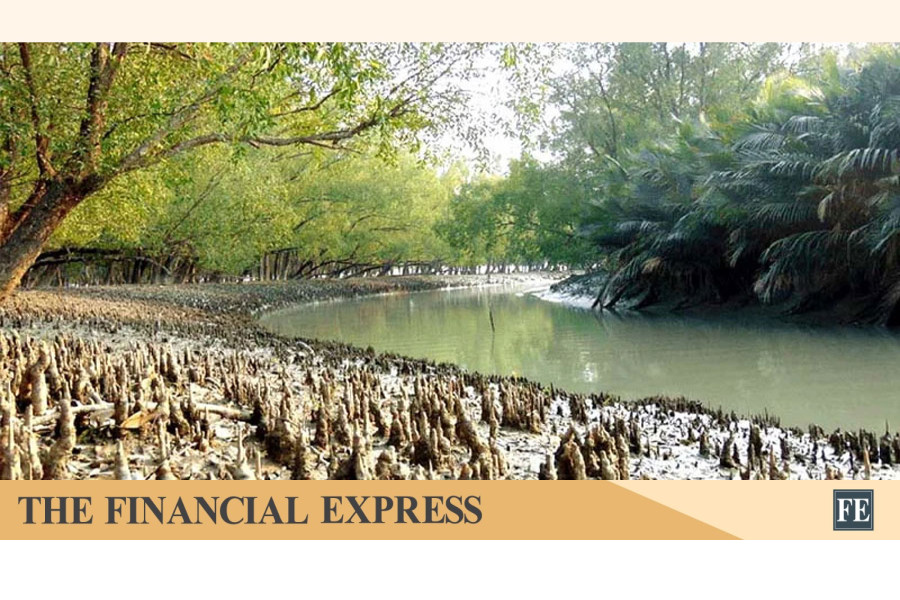
THE government is moving forward with plans to construct a floating storage and re-gasification unit terminal at Akram Point in the Sunderbans. Located in the lower reaches of the Ganges delta, Akram Point lies on the south of the Sunderbans. The world’s largest contiguous mangrove forest is a UNESCO world heritage site and a designated Ramsar site. The coastal estuarine environment is highly complex. The ecosystem supports significant global biodiversity, fisheries and coastal livelihood and provides for natural protection against cyclones, tidal surges and coastal erosion.

This is the location being considered for a floating storage and re-gasification unit terminal, which could facilitate the import of liquefied natural gas to be fed into the national grid. However, its viability cannot be assessed solely in terms of gas import logistics. It must be evaluated by considering the site’s ecological sensitivity, navigational and geotechnical conditions, vulnerability to extreme weather, the risk of accidents and the cumulative impact of the associated infrastructure. The question is: can a liquefied natural gas terminal be established at Akram Point without creating unacceptable risks for the Sunderbans and the communities living in the surroundings? Furthermore, what are the potential environmental and engineering risks associated with the establishment of such a terminal?

A floating storage and re-gasification unit is a specialised vessel that receives liquefied natural gas from carriers, stores it at the required temperature, re-gasifies it into natural gas and delivers that gas to the shore or into the national transmission network. A typical terminal requires several interconnected components. They include a floating storage and re-gasification unit vessel and a gas transfer system, mooring facilities, offshore berths or buoy-based mooring systems; a designated navigation channel and an approach route for vessels, gas pipelines, subsea connections and onshore receiving facilities, gas metering, pressure control, emergency shutdown systems and control infrastructure as well as supporting activities such as dredging, anchoring, maintenance and marine services. There are requirements for access routes, power supply, communication systems, and other onshore infrastructure.

The environmental impact of a terminal is, therefore, not limited to the floating vessel alone. It also encompasses the navigation routes, shipping channels, pipeline construction zones and all supporting facilities. Another critical technical aspect involves the use of seawater or heat from other sources for the re-gasification process, which can trigger various environmental responses.


Akram Point is situated at the confluence of the Passur and Shibsa rivers, the main channel leading to Mongla port, which cuts through the Sunderbans, with wildlife sanctuaries on both sides. These rivers serve as habitats for the endangered Ganges river and Irrawaddy dolphins.

The construction of the proposed terminal must take into account four key characteristics of the site: the tidal river system, where water levels, currents, sediment transport and salinity fluctuate with the tides and the seasons; mangrove-dependent ecological processes, which rely on specific sediment conditions, tidal exchange and functional root systems; aquatic and terrestrial wildlife, including fish, dolphins, birds, reptiles and forest mammals, which depend on interconnected habitats; and coastal protection functions: mangrove vegetation and the associated intertidal landscape help reduce erosion and the impact of waves.

According to UNESCO, large-scale industrial development in the vicinity of the Sunderbans could threaten the region’s outstanding universal value and natural environment. A primary potential environmental risk is damage to the mangrove forest and its root systems. The forest is home to mangrove species adapted to tidal inundation, saline water and waterlogged, silty soil. Industrial pipelines, access infrastructure, dredging and other activities could damage this forest and its vegetation. Construction projects could harm these specialised habitats. During pipeline construction, mangrove roots may be severed or buried underground. Sediment deposition and erosion patterns along riverbanks could be altered. Tidal drainage and water flow dynamics may also be disrupted, while the growth of seedlings and natural regeneration could be hindered.

Climate change and reduced freshwater flow from upstream have already increased salinity levels. If the specialised aerial roots of the mangroves are repeatedly buried, whether by construction activities or sediment, the mortality rate of the trees is likely to rise. The proposal to lay pipelines by excavating the surface within the mangrove forest is concerning. It is suggested that the pipelines will be installed by excavating the riverbed, which would pose a significant challenge to the saline, muddy environment essential for the mangroves.

Furthermore, large LNG-carrying vessels require sufficient water depth, adequate space for navigation and suitable conditions for manoeuvring and berthing. There is considerable doubt as to whether such vessels could reach Akram Point without extensive dredging, given the high rate of sediment deposition in the Meghna estuary and the areas to its west. Despite extensive and costly dredging in the Ramnabad channel of Payra port, it has not been possible to maintain normal vessel movement. Near Akram Point, downstream, at Hiron Point, the confluence of the Passur and Kunga rivers, the rate of sediment deposition is exceptionally high. Regular dredging is essential to keep the navigation channel operational. However, the dredging process re-suspends fine sediments, increasing the turbidity of the river water. This reduces light penetration, which harms aquatic plants and microscopic algae. Bottom-dwelling life, molluscs and fish spawning habitats can get buried or suffocated. Furthermore, pollutants previously trapped in the riverbed sediments are released back into the water column. Dredging also alters the channel’s geometry, local current patterns, riverbank erosion rates, and sediment deposition dynamics. There is often no alternative to dispose of the dredged material either within the river itself or inside the Sunderbans. Consequently, continuous dredging can become a significant environmental burden.

The increased movement of carriers, the operation of tugboats, dredging activities and underwater noise will disrupt the natural rhythms of aquatic wildlife. Key risks include dolphins being injured or killed by vessel collisions or propeller strikes. Underwater noise interferes with the dolphins’ ability to communicate, navigate and locate prey. Shallow-water foraging habitats may be damaged or degraded. Additionally, fish, including their eggs and larvae, as well as benthic organisms, face an increased risk of injury or mortality. Both Ganges river dolphins and Irrawaddy dolphins rely heavily on acoustic information to navigate their turbid riverine environments; while underwater noise may go unnoticed by humans above the surface, it is profoundly significant for these aquatic animals.

While construction-related noise is typically temporary, the noise generated by operational vessels can persist for decades. The frequency of vessel traffic, along with the specific routes and speeds of these ships, poses a serious danger to the aquatic fauna inhabiting the area.

Re-gasification is another significant factor. Converting liquefied natural gas, stored at about -162°C, back into its gaseous state requires the application of heat. If seawater is used as a heat source, large volumes of chilled water would be discharged back into the sea, altering local temperatures. This would place stress on temperature-sensitive aquatic organisms, potentially harming fish eggs, larvae, and plankton.

The actual risks depend largely on the re-gasification technology employed. Carriers and support vessels carry fuels, lubricants, hydraulic fluids and other operational materials. Accidental spills, leaks during refuelling, or improper waste disposal could contaminate the estuary. This process would further exacerbate the pollution already caused by the routine waste discharge from vessels calling at Mongla port.

Floating oil can alter plant tissues and harm fish, crustaceans, molluscs, birds, and other wildlife. Some impacts may persist even after the visible oil has disappeared.

Other potential sources of pollution include bilge water and oily wastewater from vessels; cleaning agents and maintenance chemicals; antifouling substances and corrosion-control products; as well as sewage and solid waste discharged from ships. While liquefied natural gas is volatile, a leak could still pose a risk of severe fires or the formation of hazardous vapour clouds.

Furthermore, the presence of terminal lighting, machinery, watercraft, service vehicle traffic, and pipeline-related activities can disturb wildlife inhabiting riverbanks, forest edges and adjacent waterways. Potential impacts include the disruption of wildlife movement between feeding and resting areas. Noise and human activity may disturb the lives of tigers, deer, wild boars and other mammals. Artificial lighting could alter the behaviour of nocturnal species. Pipelines or access infrastructure may create barriers, leading to the fragmentation of habitats. Furthermore, as work sites draw people into forested areas, the frequency of human-wildlife encounters is likely to increase. Even without large-scale forest clearing, persistent disturbance can force animals to alter how they use their habitat.

Many coastal households, which rely, directly or indirectly, on fishing, crab harvesting, the collection of forest resources or river-based transport, will face significant losses. If the availability of aquatic resources declines due to dredging, vessel traffic, habitat degradation, or pollution, local communities, particularly fishers, will see a reduction in their catch and, consequently, a drop in their income. Small boats will be unable to access the terminal area and will be forced to take alternative routes, resulting in increased travel time and costs. Small-scale fishers, low-income households, and those with limited livelihood alternatives are the most vulnerable to such economic setbacks.

It goes without saying that environmental impacts and engineering risks are closely intertwined. The failure of anchoring equipment, a pipeline, or a ship-transfer system could trigger a pollution incident. Conversely, poor engineering decisions regarding dredging or coastal protection measures could cause long-term environmental damage.

A key engineering question is whether the site can safely accommodate a vessel under realistic tidal and weather conditions. This involves assessing factors such as the vessel’s draft, under-keel clearance, tidal windows, channel width, the geometry of the turning basin, and the availability of sufficient manoeuvring space for emergency situations. A mere nominal depth is insufficient for the construction of this type of terminal. Due to siltation, vessels may become stranded on shoals, come into contact with the seabed, or collide with navigational infrastructure.

Grounding may occur, and access could be restricted during adverse weather conditions; consequently, this may lead to disruptions in LNG supply.

Although a floating storage and re-gasification unit is a floating vessel, the associated infrastructure may require foundations, anchors, piles, pipelines, and onshore facilities. The deltaic sediment surrounding the Sunderbans varies significantly in terms of thickness, strength, and composition. It is also unclear whether the seabed and riverbanks can adequately support the proposed structures. Potential risks include low load-bearing capacity or uneven ground subsidence; instability or reduced holding capacity of anchors; and issues with pipelines, such as subsidence, unsupported spans, or excessive bending. Other risks include erosion around piles, anchors, or water intake and discharge structures; slope instability and bank erosion near pipelines; and damage to subsurface infrastructure caused by sediment migration.

The coastal region is prone to cyclones, storm surges, strong currents, and extreme weather conditions. A moored floating storage and re-gasification unit must remain stable under combined forces of wind, waves, currents, vessel motion, and the influence of passing ships. Mooring lines, chains, and anchors must be capable of withstanding extreme stress; otherwise, components of the mooring system could fail. In extreme weather, the vessel might shift from its position, potentially damaging gas transfer arms or flexible hoses. There is also a risk of collision between the unit and carriers or support vessels. Furthermore, adverse weather could hinder safe access for emergency responders. During the design phase, it is essential to ensure that the infrastructure can withstand not only normal operational conditions but also extreme environmental stresses. Furthermore, specific measures must be in place ahead of a cyclone, such as halting gas transfers, disconnecting transfer equipment, relocating personnel to safety, and securing the terminal. Gas is transferred from carriers to the unit using specialised equipment. The process could be disrupted, potentially causing accidents, due to equipment malfunction, improper connections, excessive vessel movement or human error. It is worth noting that a fire incident occurred at the Maheskhali terminal in July.

A leak can result in the release of an extremely cold liquid and the rapid formation of a vapour cloud. Depending on prevailing conditions, this cloud could disperse, accumulate in a specific area, or ignite upon contact with a source of fire.

The pipeline connecting Akram Point to Mongla, or any other receiving facility, introduces additional engineering and environmental risks. They include corrosion, material degradation, and defects in welds or joints. Other risks involve external damage caused by anchors, dredgers, or maritime activities; shifting or subsidence of the seabed or riverbed; excessive bending or stress on the pipeline while crossing channels; damage during the crossing of coastal areas or riverbanks; and leaks or breaches in valves, joints, or pressure-control installations. Furthermore, there is the risk of delays in detecting leaks in remote areas. The release of gas under high pressure could also lead to fires or explosions.

The establishment of a floating storage and re-gasification unit terminal will increase the movement of large vessels within a river system influenced by tides. Collisions or groundings could occur due to factors such as poor visibility, strong currents, equipment failure, human error, inadequate channel geometry, or unforeseen incidents involving other vessels. This will increase risks for fishing boats and other small vessels.

Above all, there is a significant legal issues surrounding the terminal proposed for Akram Point. There is no legal provision for authorising the construction of facilities or projects that could adversely affect the Sunderbans. Simply obtaining environmental clearance does not render the project legally valid. The government must establish the legal viability of this project. If UNESCO deems the project or facility unacceptable, the nation’s reputation will be at risk. Before finalising this proposal, which poses serious concerns for the mangrove ecosystem, the environmental and engineering risks must be carefully considered. Should we implement such a project in such a sensitive area?

Gouranga Nandy is an independent journalist and writer on environmental issues.​
 

Must the Sundarbans pay for our energy needs?


1794005058150.webp


Energy shortages make governments impatient, and impatient governments often turn to quick fixes without giving enough thought to their long-term consequences. Unfortunately, the government's search for quick solution has now brought the Sundarbans into consideration as a possible site for new LNG terminal. According to recent media reports, the government is considering building a liquefied natural gas terminal at Akram Point where the Shibsa and Passur rivers meet. Another possible site is near Nalian village on the Shibsa river, right beside the forest. Both spots sit periliously close to protected zones which raises serious red flags. Akram Point is inside the Sundarbans and less than two kilometres from the South and East Wildlife Sanctuaries, both part of the UNESCO World Heritage Site. Nalian, although outside the forest, is also less than two kilometres from another wildlife sanctuary and falls within the 10-kilometre Ecologically Critical Area surrounding the Sundarbans. In other words, whichever site is eventually chosen, a major industrial facility would end up being built next to protected habitats that are already under pressure from human activity.

It is not difficult to see, though, why these locations catch the eye of policymakers under pressure to deliver. The confluence of the Shibsa and Passur rivers has sufficient depth to accommodate large LNG carriers, making it a handy spot for terminal. But the real attraction may well be the availability of land. Akram Point is state forest with no human settlements, so there would be no families to relocate, no compensation to pay and no private landowners to negotiate with. For a ministry racing against time, this must look like zero-cost real estate just waiting to be claimed. This mindset also explains why the Sundarbans keeps popping up as a target for big industrial projects no matter who is in power. The previous Awami League government, for instance, pushed ahead with the Rampal coal fired power plant despite years of objections from environmentalists and UNESCO over the harm it could do to the world's largest mangrove forest. Those warnings did little to change the government's course then, and the same temptation has returned under the new leadership.

There is no walking around the fact that the country desperately needs a steady flow of energy. Industries depend on gas, power plants need fuel and shortages hold back economic growth. But that does not mean every proposed location for energy infrastructure is necessarily suitable. The stakes are particularly high when a project is planned in an ecologically sensitive area where the consequences of an accident, pollution or even routine operations could reach far beyond the project site. The terminal itself may take up little land, but running it means a steady stream of large ships, pipelines and constant dredging to keep channels open. All of this reaches straight into the surrounding waterways and changes the forest's wider environment.

Right out of the gate, the 23-kilometre pipeline needed to pump gas from Akram Point to Mongla poses an immediate threat. If it runs through the forest, laying it could damage the very root systems that keep the mangroves alive. This is because mangrove trees have specialised breathing roots that rise above the mud to absorb oxygen. Conventional digging to install the pipeline could sever these roots, putting large numbers of trees including the iconic sundari at risk of dying. Tunnelling beneath the root systems could help avoid such damage, but that would come at a considerably higher cost. History offers little reason to believe that ecological concerns will take precedence when cheaper alternatives are available.

The pipeline is just the tip of the iceberg. Large LNG carriers would be a regular sight on the surrounding rivers, bringing more noise, vibration and the risk of pollution. The Sundarbans has already seen the ugly side of such mishaps. In December 2014, an oil tanker accident in the Shela river sent thousands of tonnes of fuel oil spreading through the forest's waterways. The fallout from a disaster like that never stays locked down at the crash site. Tides and currents carry pollutants deep into creeks and canals, affecting fish, aquatic plants and the animals that depend on them. More ship movements would raise the odds of such accidents while routine discharges and waste would add to the strain on an ecosystem that is already vulnerable.

Running an LNG terminal brings its own set of headaches depending on the tech involved. Regasification turns the liquid gas back into vapor and some systems need huge amounts of water for cooling or heating. Pulling water from the river and dumping it back at a different temperature could upset aquatic life, especially fish eggs and larvae that need stable conditions to survive.

The Sundarbans is already under pressure from several directions, and environmental groups have been sounding the alarm for years. The UNESCO's World Heritage Centre has urged more detailed research into the threats facing the forest, as well as a strategic environmental management plan to protect it. The danger is not only ecological. Forest and river pirates run rampant in the region creating an atmosphere of fear for fishermen, honey collectors and others who make their living there. Extortion, threats, kidnapping and blocked transport are part of life for these people day after day. Coastal communities have repeatedly called for action against these criminal groups and their powerful backers, but the response so far has fallen far short of what is needed.

Nor are the waters spared, since illegal fishing with pesticides and liquid poison can leave creeks and canals barren for years. Deer poaching, meanwhile, continues to threaten one of the forest's most important species. With so many problems already facing the Sundarbans, the government's decision to bring a major energy project into the picture makes zero sense. There is simply too much at stake to put the world's largest mangrove forest at risk for the sake of short-term energy gains. Any economic relief such a project might bring would pale before the damage it would inflict. The sooner the government recognises this, the better for the forest, the people who live off it and the country at large.​
 

COP31: challenges and opportunities

Md Zahirul Haque

COP31 is going to be held in Turkey in November 9–20. Murat Kurum, Turkiye’s environment minister, will preside over the conference, which has been held every year since 1995 to assess the progress of actions and commitments by the parties.

I want to remember the Copenhagen summit, held in December 2009, that drew 100 heads of state and more than 40,000 participants, including scientists, activists and policymakers. The International media reported on December 18 that the ‘Copenhagen accord was in disarray.’ I want to draw attention to that event which was dominated by the United States, China, India, Brazil and South Africa. The United States recommended this agreement as a meaningful one where most member states made a debate on its legal obligation and did not unanimously adopt it. Despite a series of debates on the document drafted, every member acknowledged that climate change is one of the greatest challenges for human survival on the planet and agreed to keep average temperature increase below 2°C.

Development is an indispensable activity for human civilisation. But, it sometimes become complementary and sometimes hostile players. Uncontrolled anthropogenic activities, rapid, unregulated urban expansion, environmental degradation and poverty are key drivers that create disaster risks. The most important human actions that determine degrees of greenhouse gas emissions are the frequent use of explosives, as in wars, unregulated luxury lives, as in the use of air-conditioners and motor vehicles, the use of gases for cooking, etc. Developed countries must share responsibilities with a less accusation against poor, under-developed countries that have less choice than to adapt to the consequences created in the name of development.

Almost every year, Bangladesh face either cyclones, flooding or water surge, or drought. Bangladesh must, on the one hand, fight the disasters and remain, on the other hand, compatible with international rules and regulations, legal aspects needed for climate change. A government study shows that the country lost more than 400,000 people in the 1970 cyclone that hit coastal areas. Other disasters that occurred in 1991, 2007, 2009 were of magnitude, but loss was negligible in the number of lives and property. It was because the people proved their inherent quality of survival against the nature. Bangladesh has gained its quality to sit on the driver’s seat to hold the steering when the issue of disaster management comes.

Bangladesh suffers from devastating tropical cyclones repeatedly because of its unique geographic location. The funnel-shaped northern portion of the Bay of Bengal intensifies the storm flow to tropical cyclones. This geographical location and land characteristics, rivers with silted bottom, have set this country vulnerable to natural disaster. Its monsoon climate causes natural disasters almost every year, sometimes more than once a year.

A factory emits carbon but creates employment when it produces useful things for people whereas a factory also emits carbon when it produces missiles that kill humanity, destroy development, environment and civilisation. Most of global warming is driven largely by anthropogenic activities mainly done by developed countries causing emissions of greenhouse gases. We must focus on the areas to keep our planet a safe habitat.

The Kyoto protocol 1997 commits state parties to reduce greenhouse gas emissions, The Cancun agreements 2010 agreed to reduce greenhouse gas emissions and to help developing nations protect themselves from climate impacts and build their own sustainable futures. the Paris agreement 2016 covers climate change mitigation, adaptation and finance.

The United Nations Framework Convention on Climate Change was established in June 1992 and Bangladesh ratified it in April 1994. Bangladesh introduced regulatory provisions not before 2012 to create public awareness and develop early warning systems. But, it started the construction of cyclone shelter-cum-schools in cyclone-prone areas after the Bhola Cyclone of 1970, the erection of embankments to protect floods, etc. As a result, the number of death and damage fell to a very negligible magnitude in 1990, 2007 and 2009.

We are all aware of the fact that climate change has occurred after a long-term shift in temperature and weather patterns. But since the 1800s, human activities have been the main driver of climate change, primarily because of the burning of fossil fuels such as coal, oil and gas. Burning fossil fuels generate greenhouse gas that act like a blanket wrapped around the earth, trapping the sun’s heat and raising temperature. Bangladesh ratified all agreements/protocols hoping to prevent climate change to protect the earth. It has developed awareness, preventive measures and worked out rules and made laws to comply with UN policies.

The geographical location of Bangladesh has exposed this small country to risks. It has become more vulnerable whenever the issue of financial ability comes. Despite all the compliance by the government such as the enactment of the Disaster Management Act 2012, the Nationally Determined Contributions, the National Plan for Disaster Management, how far we are reassured about disasters. The United Nations Framework Convention on Climate Change is trying to protect the earth, but the climate is worsening and the global temperature is rising every year. There have been 30 COP sessions till 2025. The world, especially developing countries, is taking adaptation measures. How long will this continue? What is way forward? How can we stop climate change? Bangladesh is taking effective measures and the world leaders recognised its credibility. If we evaluate properly the Emission Trade and Gratification Traps, Bangladesh has been put in a complex situation where it must develop effective adaptation efficiency and no other way forward.

Our great concern is to assess properly our strength such as the establishment of the United Nations Framework Convention on Climate Change in 1992 as the principal global treaty for coordinating international responses to climate change; weaknesses such as our negligence to assess nature’s virulent behaviour; opportunities such as agreements to limit carbon emissions; and threat such as the ego of militarily powerful countries. COP31 might address these areas.

There has always been great concern about the effectiveness of all measures taken by the United Nations Framework Convention on Climate Change to stop greenhouse gas emissions. Emissions trade and gratification traps are major challenges for country such as Bangladesh.

Md Zahirul Haque is a retired civil servant.​
 

Water, work and women: The climate costs COP31 must count

Asad Islam

I grew up in a village in Khulna, near the Sundarbans. My village, Dhamrail, lies at the edge of Paikgachha, where Koyra begins, with Assasuni in neighbouring Satkhira across the Kapotaksha River. I completed my primary and secondary schooling in the village and often travelled through Koyra, Assasuni and Shyamnagar to visit relatives. I knew these places long before I encountered them in climate research.

Water defined our landscape, yet safe freshwater was never guaranteed. As a child, my family drank pond water because there was no alternative. We waited for the sediment to settle, even though clearer water was rarely safe. Today, I still see households relying on ponds and rainwater. Better-off families, including my own now, can buy bottled water or pay for van- and truck-based deliveries. For most of our neighbours, buying water every day remains impossible.

The disparity is not just about what people drink. It is about who must search for water, carry it home and bear the burden of scarcity. That physical burden falls almost entirely on women and girls. When a pond turns saline, a local tube well fails or stored rainwater runs dry, women’s unpaid labour fills the gap.

Wealth does not eliminate the region's water crisis, but it determines how a family endures it. Affluent households can buy and store water to shield themselves from immediate disruption. Poorer families pay in a different currency altogether: hours lost walking and waiting, chronic exposure to extreme heat and contaminated water, dangerous informal livelihoods, and time taken from rest, work and girls' schooling.

As Bangladesh prepares for COP31, our delegation must ask an urgent question: will incoming climate finance actively ease this invisible labour, or will it continue to treat it as an endless, free shock absorber?

After Cyclone Aila, my colleagues and I investigated household recovery in Khulna and Satkhira. Our findings showed that a family’s recovery depended heavily on whether their wider social network of relatives and neighbours had also been wiped out. Other research found that political patronage skewed the distribution of reconstruction grants, leaving the most vulnerable behind. Although those studies did not explicitly measure women’s unpaid care work, they highlighted one enduring reality: when public support and disaster relief fall short, women are forced to make up the difference.

1794096639384.webp

Momotaj Begum and her neighbours return home carrying water from a pond in Satkhira’s Gabura union. They walk more than a kilometre to collect drinking water, reflecting the daily burden of water scarcity on coastal women. Photo: Md Rahamatullah

The work behind water

A 2023 UNICEF–WHO report found that women and girls in Bangladesh spent more than ten times as long fetching household water as men. Water insecurity is not simply a shortage measured in litres. It is a claim on women’s working day.

The seasons change the problem rather than reliably resolving it. Monsoon rainfall can refill ponds and rainwater tanks. But flooding and waterlogging can contaminate sources and make earthen roads difficult to use. Rainwater harvesting also requires a suitable roof, adequate storage and money for maintenance.

During the dry season, stored rainwater runs out, ponds shrink and freshwater becomes harder to obtain. Women may face longer journeys, longer queues and greater exposure to heat. An hour spent obtaining water cannot be spent resting, studying or earning an income. Rest and control over one’s day have value in their own right; women’s time should not matter only when it can be converted into more production.

Cyclone Aila caused more than immediate destruction. Saline inundation following embankment breaches also prolonged the water and livelihood crisis beyond the emergency.

Yet it would be misleading to blame climate change alone for every salty pond or failed crop. Reduced river flows, damaged embankments, blocked tidal movement, poorly maintained water systems and saline aquaculture also shape the crisis. Newspaper reporting from Satkhira in December 2025 described embankments being breached to admit saline water for shrimp cultivation, contributing to the salinisation of surrounding farmland and freshwater ecosystems.

Climate change acts as an amplifier. Rising seas and extreme heat add to the pressures that cyclones, storm surges and rainfall variability place on already vulnerable water systems. Recognising the role of poor water management and unequal public services does not reduce the urgency of climate action. It shows where public policy can intervene now.

When coping becomes exposure

Some women in coastal communities collect shrimp fry, crabs and small fish, or work in shrimp enclosures as agricultural livelihoods have narrowed. Their earnings help families survive, but that contribution should not make hazardous conditions acceptable.

Qualitative research in Shyamnagar documents women’s accounts of skin and menstrual health difficulties amid water scarcity, dehydration during extreme heat and distress over water collection and household finances. These experiences warrant clinical attention. However, they do not establish whether salinity, contamination, heat or other factors caused the symptoms. Poor sanitation, poverty and limited access to treatment can compound these risks.

Drinking saline water is a separate exposure. A multinational review in BMJ Global Health linked higher drinking-water salinity to elevated blood pressure. Its hypertension findings were less certain in a sensitivity analysis. These observational findings strengthen the case for safe water and preventive care but do not establish the cause of an individual illness.


1794096713979.webp

Shrimp and soft-shelled crab farm owners breach embankments to divert saline river water into their farms, increasing soil salinity, damaging agricultural land and contaminating freshwater sources. Photo: Md Rahamatullah

Heat makes water collection and outdoor work more physically demanding while increasing the need for hydration. Advice to drink more water means little when finding safe water already takes up much of the day.

Girls can lose time, too. The NGO Helvetas records a girl’s account from Koyra in which collecting water and caring for siblings disrupted her school attendance. One account cannot show how widespread the problem is, but it does point to a pathway that adaptation programmes should investigate and measure.

The educational cost may appear as lateness, missed lessons or reduced study time, not necessarily immediate dropout. When household income falls after a cyclone or failed harvest, demands for care work or income-generating activities can also increase.

Women are not a single category, nor are they simply victims. Their exposure and options differ according to income, land ownership, disability, family structure and social position. They manage water, earn income, organise communities and develop practical solutions. But endurance does not prove that adaptation is working. Calling women resilient must not become an excuse for relying on their continued sacrifice.

What COP31 should deliver

COP31 will be held in Antalya, Türkiye, from 9 to 20 November 2026. Türkiye will host the conference, and Australia will lead the negotiations. The Belém Gender Action Plan already provides a framework for gender-responsive climate action through 2034. The challenge is implementation.

For a woman in Koyra, Paikgachha, Assasuni or Shyamnagar, what would a successful COP31 change: the distance to water, its price, its safety, or none of these?

Frameworks do not carry water. Four changes are needed.

First, measure what women experience. Counting water facilities is not enough. Governments and climate funds should track whether water remains safe and affordable year-round, how long collection takes, who bears the time cost and whether girls continue attending school and learning. National averages can mask severe local shortages and large differences among households.

Second, adaptation that provides essential public services should receive grant support rather than depend on commercial returns. Safe water, preventive healthcare and school protection rarely generate enough revenue to repay loans. Affordable charges may cover day-to-day operations, but poor households should not be excluded because of their inability to pay. Funding must cover water testing, repairs and long-term maintenance, not merely construction and launch ceremonies.

Third, adaptation must connect water, livelihoods, health, education and social protection. Women need viable alternatives to prolonged work in saline water and confidential assessment and treatment for occupational and reproductive health concerns. Girls need support to continue learning when transport, household income or care arrangements are disrupted. Cash or practical assistance ahead of a forecast cyclone can help families protect food, assets and schooling, preventing the hazard from becoming a deeper economic crisis.

Finally, climate finance must become fairer and more accessible locally. National institutions should create transparent small-grant mechanisms so local governments, women’s cooperatives and community organisations can access funding and technical support. Eligibility rules should be public. Communities need accessible complaint and appeal mechanisms, implementation support and independent checks on how funds are used.

1794096756719.webp

Residents of Kalabogi village in coastal Khulna rely on ponds maintained by the Forest Department for drinking water. Shortages worsen during the dry season, placing additional burdens on women responsible for collecting water. Photo: Habibur Rahman

Bangladesh should not wait for international finance to improve accountability. The Department of Public Health Engineering and local authorities should identify who operates each publicly funded water scheme, who pays for repairs and where residents can file complaints when a scheme fails. These arrangements should be public, with protections for households unable to afford charges.

Women should influence budgets and the location and design of services, but they should not be the default unpaid workforce responsible for maintaining them. Programmes must also encourage men and boys to share responsibility for water collection and care.

Success should be judged by household outcomes: reliable water, reduced collection time, safer livelihoods, access to treatment, uninterrupted schooling and women’s control over resources. Money committed and infrastructure built matter, but neither alone shows whether daily life has become more secure.

When I return to Dhamrail, my family’s ability to buy water reminds me how differently neighbours experience the same environmental pressures. Climate finance should narrow that gap, not depend on poorer households making ever-greater sacrifices.

Women in southwestern Bangladesh have been adapting for decades. They have carried water, worked in saline rivers and held families together through cyclones and livelihood losses. They do not need another celebration of their resilience. Climate policy and climate finance must now begin adapting to their lives.

Asad Islam is professor of Economics at Monash Business School and a Professorial Fellow with the Centre for Pacific Action for Climate Transitions (PACT), Monash University.​
 
Back
Top