[🇧🇩] Save the Rivers/Forests/Hills-----Save the Environment

Post a Reply — Share your thoughts or reply to this thread...
Reply
Quick Reply âś“ Posted!
[🇧🇩] Save the Rivers/Forests/Hills-----Save the Environment
653
26K
More threads by Saif

G Bangladesh Defense

PM urges 50pc climate finance for adaptation
He says vulnerable nations need grants, not loans

1794524524115.webp


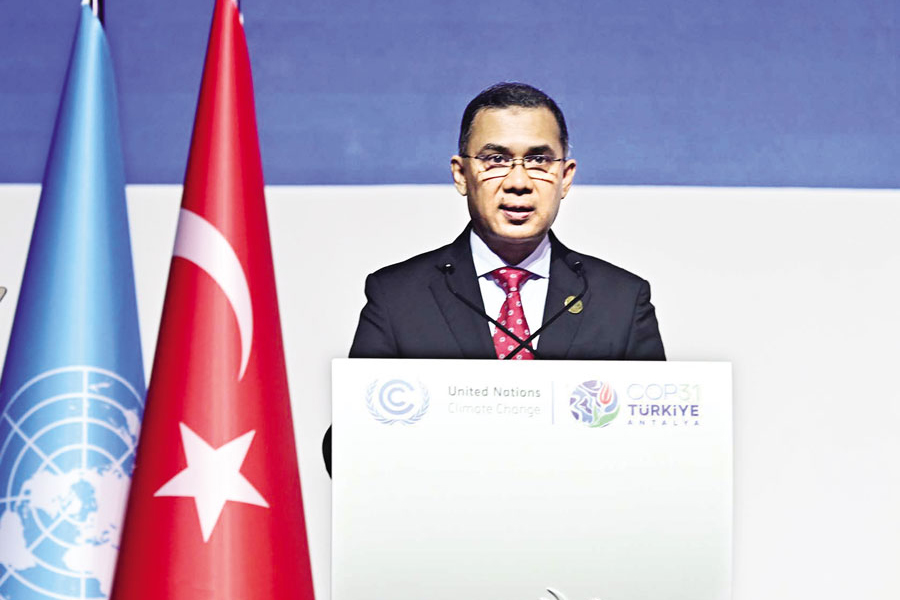
Prime Minister Tarique Rahman addresses the High-Level Segment of the 31st UN Climate Change Conference (COP 31) in Antalya, Turkey, on Thursday. — PID

Prime Minister Tarique Rahman on Thursday called on the world to ensure at least 50 per cent of international climate finance for adaptation and to provide grants instead of loans to climate-vulnerable countries.

"Climate-vulnerable countries need grants, not more loans that increase their debt," he said while addressing the High-Level Session of the UN Climate Change Conference (COP 31) in Antalya, Turkey.

Presiding over the session, the COP 31 president was joined by heads of state and government from around the world.

Tarique thanked the government of Turkey for hosting the summit and Australia for leading the negotiation process.

Stating that Bangladesh was at the forefront of climate change despite contributing less than 0.5 per cent of global greenhouse-gas emissions, the prime minister said his government, elected by popular vote and inspired by the philosophy of "Bangladesh First", was committed to building a one-trillion-dollar climate-resilient and sustainable economy, where economic growth and environmental protection would complement each other.

Outlining Bangladesh's climate actions, he said the government had set a target to meet 20 per cent of electricity demand from renewable sources by 2030 to achieve net zero in line with the Paris Agreement.

With special tax incentives, Bangladesh was working to produce 4,000 megawatts of solar power and promote waste-to-energy projects, he said.

He also said Bangladesh was promoting green industries, including nearly 300 LEED-certified garment factories, advancing electric vehicles, expanding eco-friendly products such as jute bags, and developing a national framework for carbon trading.

The prime minister announced a plan to plant 250 million trees in the next five years, implement the Padma Barrage and Teesta Barrage Master Plans, and dredge 20,000 km of rivers and canals to retain water, reduce flood risk, revive wetlands, and raise groundwater levels.

The government was also restoring mangroves on reclaimed coastal land to protect communities, he said.

Pointing out that the global climate finance system was inadequate and did not consider the priorities of developing nations, he said climate-induced loss and damage, rising debt servicing, and limited fiscal space were putting heavy pressure on economies like Bangladesh.

In this context, guided by the principle of Common but Differentiated Responsibilities and Respective Capabilities (CBDR-RC), he placed five urgent demands.

He said at least 50 per cent of international climate finance must be allocated for adaptation based on country priorities, alongside mitigation.

The prime minister demanded urgent debt relief for climate-vulnerable countries, including Climate-Resilient Debt Clauses and Debt-for-Climate Swaps.

He also demanded fair access to climate-friendly technologies and support for technology transfer to developing countries.

Tarique demanded acceleration of renewable energy transition through affordable finance, skills development and a just energy transition.

The Prime Minister later left Antalya for Istanbul en route to Dhaka, concluding his three-day official visit to Turkiye.

"A Turkish Airlines flight carrying the prime minister, his wife Dr Zubaida Rahman and members of his entourage departed Antalya Airport for Istanbul at 4:30pm local time," said PM's Deputy Press Secretary Hasan Shiplu.

Senior Turkish Foreign Ministry official and Ambassador Subutay Yuksel saw him off at the airport.

After a stopover in Istanbul, the prime minister was scheduled to leave for Dhaka on another Turkish Airlines flight at 7:30pm local time. The flight is expected to land at Hazrat Shahjalal International Airport at around 6:00 am.​
 

COP31 & global climate compact


1794524787308.webp

COP31 starts in Antalya, Türkiye on November 9 2026 —Agency Photo

Three decades of climate summits have produced an extraordinary architecture of agreements, declarations, targets and financing commitments.Yet the distance between what governments promise and what societies experience remains troublingly wide. The world has become remarkably proficient at negotiating climate ambition, but far less effective at translating it into tangible results.

As delegates gather for COP31, the central question is no longer simply whether governments can agree on more ambitious targets. It is whether they can build the institutional, financial and operational capabilities needed to deliver on commitments already made. [Officially, COP31 stands for the 31st meeting of the Conference of the Parties (COP) to the UN Framework Convention on Climate Change (UNFCCC), a landmark international treaty agreed in 1992, and parent treaty to the 2015 Paris Agreement. COP31 is taking place in Antalya, TĂĽrkiye from 9 to 20 November 2026.]

Climate change does not respond to declarations. It responds to changes in the real economy: fossil-fuel dependence reduced, electricity grids modernised, forests protected, infrastructure made resilient and communities better prepared for extreme weather.

The next frontier of global climate action is therefore not another declaration. It is delivery.

The Paris Agreement was a diplomatic breakthrough. It established a common framework for national climate commitments and mechanisms for progressively increasing ambition. Since then, renewable energy technologies have advanced dramatically, clean-energy investment has expanded and climate considerations have entered mainstream economic policymaking.

Yet progress remains insufficient. The United Nations Environment Programme's 2026 Emissions Gap Report warns that existing policies could lead to approximately 2.8°C of warming within this century. Even full implementation of current national commitments would leave a substantial gap between ambition and the Paris temperature goals.

Meanwhile, climate impacts are intensifying. Extreme heat threatens productivity and public health. Floods destroy infrastructure and livelihoods. Droughts undermine food security. Melting glaciers create new risks for mountain communities and downstream populations.

The challenge is no longer confined to reducing future emissions. Countries must simultaneously transform their energy systems and protect their economies against climate disruptions already unfolding.

Both require something that international climate diplomacy has consistently underestimated: implementation capacity.

Consider what happens after a government announces an ambitious renewable energy target. Land must be secured, transmission networks expanded, regulations aligned, financing structured, environmental safeguards addressed, contracts awarded and projects constructed. Each stage requires specialised expertise, effective institutions and coordinated decisions.

A climate commitment may take minutes to announce. Delivering the investments behind it can take years.

Much of the international climate debate revolves around two questions: how ambitious should national commitments be, and how much finance should developed countries provide?Both are essential. But between commitments and financing lies a neglected institutional challenge: converting policy objectives into executable programmes.

Many developing countries have ambitious climate strategies but limited pipelines of investment-ready projects. Responsibilities are fragmented across ministries. Regulatory uncertainty discourages investors. Procurement processes can be prolonged or poorly structured. Public agencies lack specialised technical capacity. Financing arrangements are often negotiated before implementation risks have been adequately addressed.

The result is a paradox. Climate finance can remain underutilised even where investment needs are enormous. This is not simply a shortage of money. It is a shortage of systems capable of deploying money effectively.

Experience with large infrastructure and development programmes offers an important lesson: successful implementation depends less on individual announcements than on sustained institutional discipline. Clear responsibilities, credible project preparation, realistic schedules, transparent procurement, proactive risk management and continuous performance monitoring determine whether investments deliver their intended benefits.

Climate action needs the same discipline.

COP31 should therefore advance a Global Climate Implementation Compact: a practical agreement linking climate commitments to financing, institutional accountability, implementation milestones and independently verifiable outcomes.

The compact should not create another international bureaucracy or reopen the Paris Agreement. Instead, it should strengthen existing mechanisms through five mutually reinforcing commitments.

First, every participating country should develop a costed national climate implementation roadmap. Nationally Determined Contributions and National Adaptation Plans must be translated into prioritised investment programmes with clearly identified projects, financing requirements, responsible institutions and delivery schedules.

These roadmaps should integrate mitigation and adaptation with national development strategies, public investment programmes and fiscal planning. Climate action cannot remain an isolated responsibility of environment ministries.

Second, climate finance must be linked to credible investment pipelines. Multilateral development banks, development finance institutions and bilateral partners should work with governments to prepare projects before financing becomes the binding constraint.

This requires greater investment in feasibility studies, project structuring, guarantees, regulatory reform and risk-sharing instruments. Private capital will not flow merely because a project is labelled green. It follows credible revenue models, predictable regulation and manageable risks.

Third, implementation capacity must become a central climate priority. Project preparation, procurement, contract management, engineering standards and institutional coordination deserve the same attention as financing commitments.

Governments need dedicated climate delivery capabilities that can resolve bottlenecks across ministries and implementing agencies. International partners should support these capabilities over sustained periods rather than relying primarily on fragmented technical assistance.

Fourth, accountability must shift from announcements to outcomes. Climate progress should be measured not only by financing pledged or policies adopted, but by investments completed, emissions actually reduced, resilience strengthened and people protected.

Transparent public dashboards could track implementation milestones, disbursements, delays, costs and verified results. Independent assessments would strengthen credibility and allow successful approaches to be replicated.

Fifth, international cooperation must become more operational. Technology partnerships, regional electricity markets, resilient infrastructure corridors and cross-border disaster-warning systems require coordinated investment and implementation arrangements.

Climate risks do not respect national boundaries. Neither should the mechanisms designed to address them.

The compact's central purpose is to move from climate finance to climate performance. This requires a fundamental change in how international institutions assess success.

For too long, development finance has often been judged by commitments and approvals rather than completed investments and sustained outcomes. Climate finance risks reproducing this weakness on a much larger scale.

Mobilising a billion dollars is important. Ensuring that it produces functioning infrastructure, affordable clean energy or measurable protection against climate hazards is more important.

This distinction matters particularly for developing countries, where limited fiscal space makes implementation failures exceptionally costly.

The compact must also recognise differentiated responsibilities. Countries with limited institutional and financial capacity cannot be expected to deliver ambitious transitions without predictable international support. Equally, international assistance should strengthen domestic institutions rather than create permanent dependence on external consultants. The objective must be lasting national delivery capability.

COP31 is not starting from zero. COP30 launched the Global Implementation Accelerator and the Belém Mission to 1.5. The COP31 Presidency has introduced the Climate Implementation Bridge (BRIDGE) to connect national climate priorities with investment opportunities, financing partners and implementation capabilities.

These are encouraging developments. Indeed, the Climate Implementation Bridge already addresses several of the problems identified here, including project preparation, investment pipelines and institutional coordination.

The proposed compact would build on these initiatives by establishing a common discipline for country-level implementation: costed national roadmaps, defined responsibilities, financing partnerships, measurable milestones and transparent reporting through existing climate mechanisms.

Participating countries could publish initial roadmaps within twelve months, establish annual implementation reviews and use subsequent climate summits to assess delivery against agreed milestones. Multilateral development banks could align country programmes with these roadmaps and report jointly on financing and implementation progress.

The compact would not replace negotiations over emissions reductions, adaptation finance or climate justice. It would make existing commitments more credible by establishing how they will be implemented.

The ultimate test of climate diplomacy is not the number of agreements signed or the scale of promises announced. It is whether economies become less carbon-intensive, infrastructure more resilient and societies better protected.

COP31 offers an opportunity to shift the centre of gravity of international climate cooperation from negotiating intentions to delivering results.

The world does not need to abandon climate ambition. It needs to make ambition executable.

The legacy of COP31 should not be another declaration of urgency, but a compact for delivery. The climate will not judge our promises. It will reveal the consequences of our actions.

Manmohan Parkash is a former Senior Advisor in the Office of the President and former Deputy Director General for South Asia at the Asian Development Bank (ADB).​
 

Bangladesh Pavilion draws unprecedented attention on COP31 opening day


1794612310733.webp


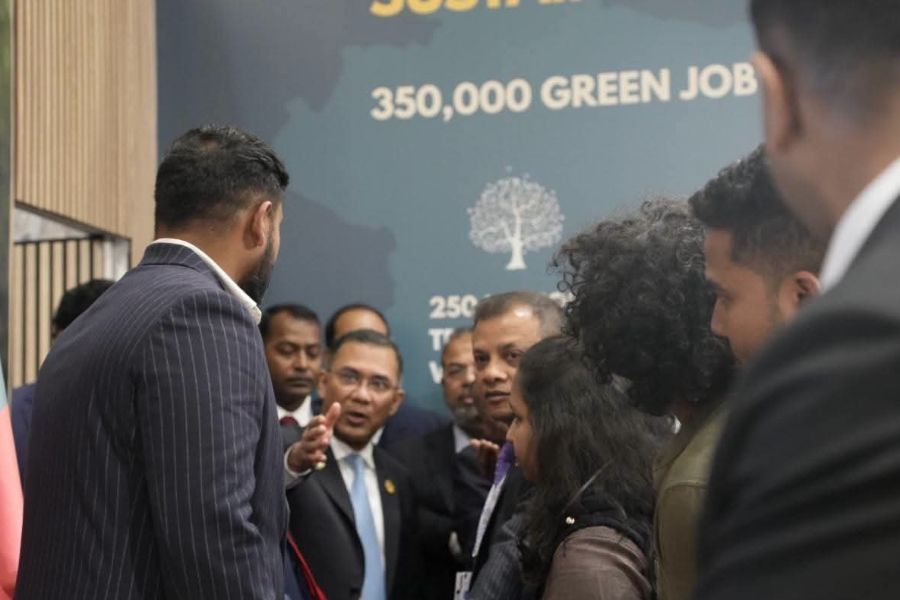
The Bangladesh Pavilion witnessed an unusually vibrant and packed atmosphere on the opening day of COP31 in Antalya, TĂĽrkiye, marking a significant shift from previous years when the country's national pavilion often received limited attention.

Under the leadership of the Ministry of Environment, Forest and Climate Change, Bangladesh has introduced several significant changes to its national pavilion this year, with a renewed focus on public engagement, innovation and international visibility.

The pavilion features interactive wall designs, souvenir distribution and immersive virtual reality experiences. Visitors can experience the realities faced by aid workers in flood-affected communities and a virtual journey highlighting the contrast between the natural beauty of Cox's Bazar and growing environmental challenges.

The pavilion was inaugurated by Minister Abdul Awal Mintoo and State Minister Dr Shaikh Faridul Islam.

For the first time, Bangladesh is participating with two national pavilions at COP31.​
 

From Kalabogi to COP31: The case for developed-nation responsibility

Naim-Ul-Karim Sanchaya


1794617168712.webp

A COP31 logo is pictured near the venue ahead of the United Nations climate change conference, known as COP31, in Antalya, Turkey, 8 November, 2026. REUTERS

The village of Kalabogi sits on the Shibsa River in the Dacope sub-district of Bangladesh's southwestern coastal Khulna region. It is effectively a natural experiment: a coastal community where the effects of a changing climate can be observed not in projections but in practice—where climate change is not a forecast or a distant projection, but a daily, lived reality.

Known as a "hanging" or "floating village," Kalabogi homes stand on thatched and bamboo structures that must be relocated several times a year due to regular river erosion driven by climate change.

During my recent visit to the village, I witnessed their plight firsthand, as climate change—coupled with saltwater intrusion, frequent cyclones, and shifting weather patterns—continues to reshape their lives.

In Kalabogi and many other severely climate-vulnerable areas across Bangladesh, South Asia, and beyond, the water does not wait for conference decisions. It comes. It takes the land. It forces families to move their bamboo and tin shacks again and again—sometimes several times a year. Climate-vulnerable people in Bangladesh and elsewhere in the region and beyond do not speak the language of carbon budgets and mitigation targets. They speak the language of erosion and other climate-induced calamities. They know the rivers that once gave them fish and passage now take their homes.

As delegates gather in Antalya for COP31, the central question is not whether climate change is real. It is who bears responsibility for fixing it. The answer is unambiguous: developed nations, whose historical emissions created this crisis, must take primary responsibility. Not as charity, but as justice

The science is not complicated. Countries like the United States and the wealthy nations of Europe grew rich by burning fossil fuels. They filled the atmosphere with greenhouse gases over centuries. Bangladesh, a country of over 170 million people, contributes less than 0.5 percent of global emissions. Yet it sits on the frontlines of sea-level rise, salinity intrusion and increasingly violent cyclones. The people of Kalabogi are not responsible for the crisis swallowing their village. They are victims of a problem created elsewhere.

When a farmer in Khulna loses his land to erosion, he is paying for the industrial revolutions of Manchester and Pittsburgh. When a mother in Dacope struggles to find safe drinking water because of salinity intrusion, she is bearing the cost of decades of emissions from factories and automobiles in countries she will never visit. This is not a matter of generosity. It is a matter of historical accountability.

The United States, which has again declined to attend the negotiations, cannot ignore its role as the world's largest historical emitter. China and other emerging economies have responsibilities too, but their obligations differ in scale and timing. They are still developing. They have a right to grow. But the first debt is owed by those who became rich first.

At COP31, delegates from developing nations are again urging wealthy countries to honour their financial commitments. Bangladesh's environment minister has made clear that poorer countries are paying the heaviest price for emissions largely generated by rich nations. The demand is not charity. It is justice. Developed countries promised to mobilise $300 billion a year by 2035 to help vulnerable nations adapt. But promises made at climate summits have a way of evaporating when the cameras leave.

Climate finance that flows into government ministries and large infrastructure projects may never reach a family in Kalabogi whose embankment has crumbled. Adaptation projects designed in capital cities may not reflect the reality of a village that must relocate every monsoon. The gap between pledge and delivery is not an accident of bureaucracy; it is a consequence of a system that treats climate finance as discretionary aid rather than an enforceable obligation.


1794617227869.webp

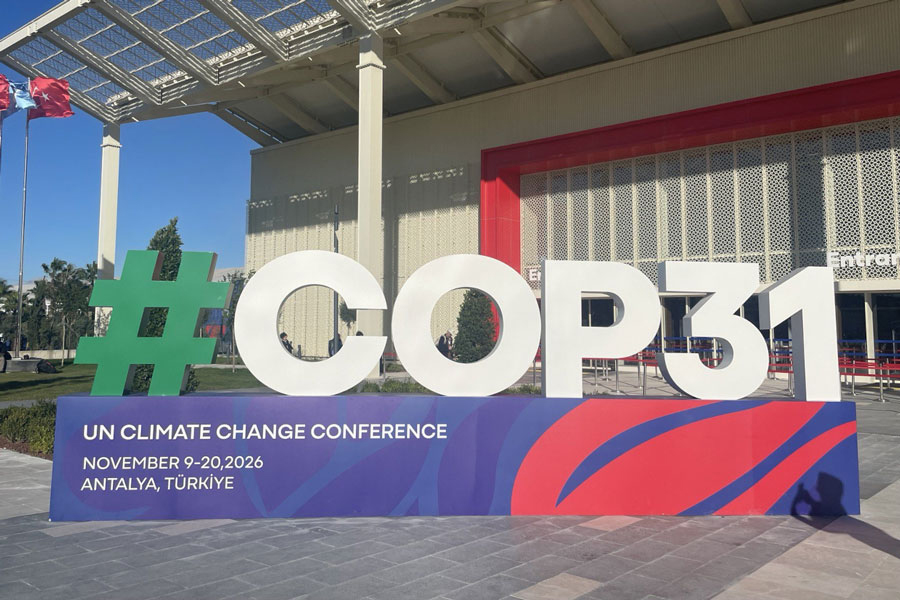
People walk past a #COP31 sign near the entrance to the Antalya Expo Center on 8 November, 2026, ahead of the opening of the UN climate conference. Turkey will host the COP31 climate talks from 9 November to 20 in the Mediterranean resort city of Antalya, with Australia presiding over the negotiations. AFP

The absence of direct victims from Kalabogi and other vulnerable parts of the world in the COP31 process is not an accident. It is a structural flaw. Official delegations include bureaucrats, ministers and negotiators. They include representatives from international organisations and NGOs. But the people who have lost their homes, their farmland and their children's futures are rarely given a seat at the table.

Their stories are reduced to anecdotes in side events—if they are mentioned at all. This matters because the solutions being discussed in Antalya will only work if they reach the people who need them most. Without the direct participation of affected communities, climate action becomes an abstraction. A negotiation conducted entirely in the language of percentages and timelines cannot capture what it means to lose a homestead to the river, to watch salt creep into the soil that once fed a family, to send children away because there is no longer land to inherit. Participation is not a courtesy; it is a condition of effective policy.

The question of responsibility extends beyond emissions to the broader structure of global inequality. Developed nations have not only contributed most to the problem—they have also shaped the global economic system that leaves countries like Bangladesh vulnerable. Trade rules, debt structures and intellectual property regimes often work against the interests of developing nations seeking to build climate resilience. When Bangladesh seeks to access green technology, it faces barriers created by wealthy nations protecting their industries.

When it seeks loans for adaptation, it faces interest rates that deepen its debt burden. The very countries that caused the climate crisis are profiting from the solutions to it. The World Bank's 2022 assessment warned that climate variability and extreme weather events could cost Bangladesh one-third of its agricultural GDP by 2050. Food security depends not only on restoring agricultural production but also on wages, functioning markets and whether families can afford to plant crops again. A new crop variety may be suitable for saline soil, but remain beyond the reach of a farmer who has exhausted his savings and cannot afford to risk another failed harvest. Technology transfer, in other words, means little if it arrives as a product to be purchased rather than a resource to be shared.

This is where developed nations must step up. They must provide grants, not loans. They must transfer technology, not hoard it. They must fund locally led adaptation, not impose top-down solutions. And they must commit to loss and damage support that reaches the most vulnerable, not just the most connected. Bangladesh should pursue stronger international commitments while also advancing specific, actionable funding proposals. Its National Adaptation Plan provides an important starting point. The task is to identify priorities that clearly demonstrate who is at risk, what interventions are needed, how much they will cost and how they will be maintained over time.

Dr Saimum Parvez, the Prime Minister's Special Assistant on Environment, Forest and Climate Change, has said Bangladesh wants to take a leadership role in advocating for the rights of climate-vulnerable nations worldwide. Speaking at COP31, he noted: "Bangladesh is not merely highlighting its own climate crisis; it wants to take a leadership role in advocating for the rights of climate-vulnerable nations worldwide." This leadership is welcome, but it cannot substitute for the action that wealthy nations must take.


1794617307961.webp

Floods File Photo

The world must recognise that climate justice is not an abstract concept. It is about a mother in Kalabogi wondering where her children will sleep tonight after the river takes another piece of land

Bangladesh has shown remarkable resilience and innovation—its early warning systems, community-based disaster preparedness and adaptive agricultural practices are models for the world. But resilience has limits. The people of Kalabogi cannot adapt indefinitely to repeated losses. They need real support—not loans that deepen their debt, but grants that restore their lives.

COP31, like the summits before it, will likely end with declarations and commitments. But for the families of Kalabogi, what matters is not what is signed in Antalya but what reaches their crumbling embankments, their saline fields and their displaced homes. The world must recognise that climate justice is not an abstract concept. It is about a mother in Kalabogi wondering where her children will sleep tonight after the river takes another piece of land. It is about a farmer who cannot afford to plant crops because the salt has poisoned his soil. It is about a community that has contributed almost nothing to global emissions yet bears the heaviest burden of the climate crisis.

Developed nations bear a primary responsibility in this collective endeavor. They must ensure that climate finance is accessible, support locally led adaptation efforts, and deliver loss and damage assistance in a manner that reaches those most in need. Absent these commitments, our promises risk appearing hollow. A summit that does not heed the voices of those affected by climate change would be a summit that has fallen short before it has even begun.

* The writer is a senior journalist and columnist.​
 
Back
Top