[🇧🇩] Save the Rivers/Forests/Hills-----Save the Environment

[🇧🇩] Save the Rivers/Forests/Hills-----Save the Environment
551
17K
More threads by Saif

G Bangladesh Defense

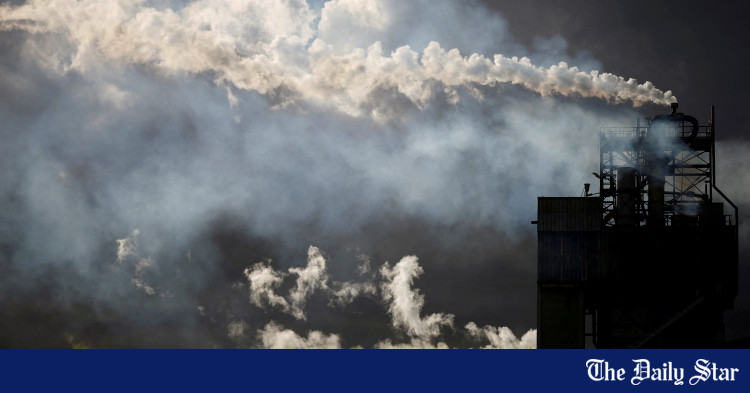
Bangladesh should endorse the fossil fuel non-proliferation treaty

1731718133673.webp

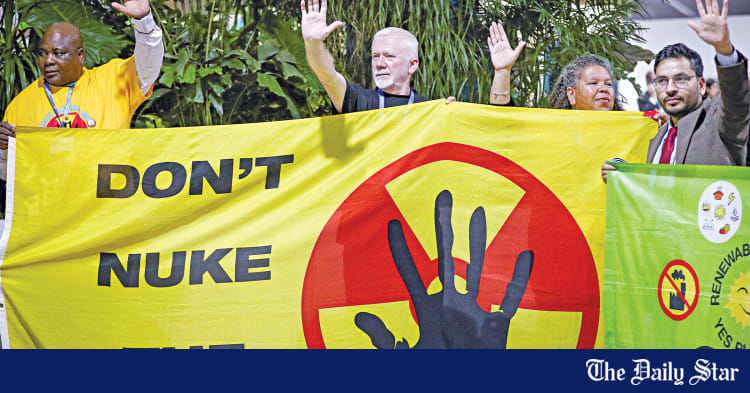
The climate movement in Bangladesh has been calling for justice and rights. PHOTO: REUTERS

Bangladesh is currently in a crucial transition period with reform initiatives taken in a number of areas. Urgent reform in the energy sector is also needed. As a climate justice activist, I have been advocating for a fossil fuel non-proliferation treaty since 2021, around the same time that Professor Muhammad Yunus—now the head of the interim government in Bangladesh—first endorsed the proposal for a global treaty to manage a fast and fair transition away from coal, oil and gas extraction.

Bangladesh is a country particularly vulnerable to the impacts of climate change. Being a low-lying delta, we are highly susceptible to sea-level rise, which is causing coastal erosion, displacement of communities, and saltwater intrusion into agricultural lands. Our nation is prone to cyclones, floods, and droughts, which have devastating consequences for its population and economy. The primary contributor to climate change causing such catastrophes in Bangladesh is the fossil fuel industry.

The fossil fuel industry is not only at the heart of climate change but it is also intertwined with decades of corruption in Bangladesh. The wave of corruption cases increasingly shows the role of the fossil fuel industry in an era of deception and misconduct. Fossil fuel industries have monopolised the energy sector through unnecessary power plant constructions, contract extensions, inflated service charges on fuel imports, and excessive capacity payments. Because of the former government's policy, the Bangladesh Power Development Board (BPDB) had to buy electricity from privately owned fossil fuel-based companies at inflated prices. Although a large part of the power generation capacity remains unused throughout the year. Even when there is no electricity production by these companies, BPDB still has to pay capacity charges to the power plants. Additionally, the country has been left in a bad state due to electricity imports from an Indian company. As a result, our dependence on fossil fuels makes us more vulnerable to price fluctuations and supply disruptions.

All these indicate that we need to reform our energy sector—one that is free of fossil fuels. If we are bringing change, we need to depend on a new system, to stop the dependency on fossil fuel imports, and avoid market monopolisation by fossil fuel lobbyists. For that, we are calling on the current government to join the bloc of countries seeking to negotiate a fossil fuel non-proliferation treaty.

The proposals in the fossil fuel non-proliferation treaty align with Bangladesh's national climate change strategy, which aims to reduce vulnerability to climate change and promote sustainable development. Supporting the treaty and a fast and fair transition away from fossil fuels can attract investment in renewable energy projects, creating jobs and boosting the economy.

The climate movement in Bangladesh has been calling for justice and rights. Our work is not over even after a successful mass resistance and protest against injustice and the silencing of rights of Bangladeshi people. Now begins the more difficult work of creating actual, lasting reform.

Global treaties have historically proven effective in addressing worldwide threats such as the ozone layer depletion and phasing out landmines. The fossil fuel non-proliferation treaty would provide a similar international framework to phase out fossil fuels based on three pillars: i) non-proliferation—ending the expansion of new coal, oil and gas fields; ii) a fair phase out—transitioning away from existing production in line with 1.5C global temperature threshold, with wealthy countries shifting first and fastest; iii) a global just transition—support and financing a global shift to renewables in which no worker, community, or country like ours is left behind.

Favourably, the proposals in the fossil fuel non-proliferation treaty align with Bangladesh's national climate change strategy, which aims to reduce vulnerability to climate change and promote sustainable development. Supporting the treaty and a fast and fair transition away from fossil fuels can attract investment in renewable energy projects, creating jobs and boosting the economy.

As a youth champion of the treaty, I urge the interim government to take the initiative to endorse it during the ongoing COP29 UN climate summit in Baku. By endorsing the fossil fuel non-proliferation treaty, Bangladesh, under Dr Yunus's leadership, can demonstrate its commitment to addressing climate change and protecting its population from the devastating impacts of global warming. We could take the lead as the first nation in South Asia to back this bold, powerful, and historic proposal.

Farzana Faruk Jhumu is a climate activist and a co-founder of Kaathpencil.​
 

Burnt bricks in govt construction to be stopped by 2025: Rizwana
FE Online Desk
Published :
Nov 15, 2024 20:23
Updated :
Nov 15, 2024 20:23

1731720757764.webp


Environment, Forest and Climate Change Adviser Syeda Rizwana Hasan said the use of burnt bricks will be stopped in all government constructions by 2025.

“Letter has been sent to the government offices informing to stop using burnt bricks in any construction works as government is the biggest consumer of bricks for various construction works like roads and buildings and bricks are used in large constructions,” she told BSS in an interview.

The adviser said the government should adopt an alternative of burnt bricks and it can be resolved if the government issues a demand letter.

Noting that brick kilns are one of the causes of environmental pollution, Rizwana said the government is on strict stance to stop it.

New brick kilns in the country will not be given clearance as operations of 3,491 brick kilns have been shut due to lack of environmental clearance, she said.

About environmental pollution caused by the use of polythene, she said that the action against banned polythene or polypropylene shopping bags has been started since November 3. Various activities have also been taken to stop the use of polythene in various shopping malls in the capital, she said.

Noting that vehicle honking is a threat to public health, she said it’s a national duty to her to stop the sound of horn.

Because many people are becoming deaf due to this honking, their physical ailments are increasing, she said adding such activities are unacceptable in any middle income country.

Vehicle honking has been banned at Hazrat Shahjalal International Airport and its adjacent areas and these areas have been declared as horn-free areas.

The adviser said in January 2025, 10 roads of the capital Dhaka will be declared horn-free. Horn-free silent zones will be announced in phases across the country.

From next December to January, the government will launch a campaign with the participation of school-college students to stop the honking horn, she said.

She, however, called for raising mass awareness to this end.

About the country’s only coral island, St. Martin’s, the adviser said, the government has taken various initiatives and plans to protect St. Martin’s and the tourism industry together.

Referring to experts’ opinions about St. Martin’s, she said no one can build a military base on that soft land. Now those who are waging movement over St. Martin’s are ship owners and hotel owners and they are inciting the local people there, she said.

“There is no confusion over St. Martin’s. These confusions are political and ill-motivated,” she said.

About river pollution, the adviser said that the DCs had been asked to free at least one river from pollution in 64 districts of the country within two months.

About the COP29 conference, she said the government’s position on this conference is very clear. Bangladesh has called for meeting the target of 100 billion dollars, because they have given a quarter of funds from this target, she said.​
 

Green steps in 100 days earn public praise
FE Online Desk
Published :
Nov 15, 2024 20:08
Updated :
Nov 15, 2024 20:08

1731720859773.webp


Protecting Saint Martin from degradation and making the government offices completely free from polythene have earned huge appreciation from common people as the interim government has taken multifaceted actions plans and initiatives in the field of environment during its first 100 days since assuming office on August 8.

The initiative of declaring some areas of the city horn-free zones was also appreciated as a major step in line with the people’s long expectations, reports BSS.

The Ministry of Environment, Forest and Climate Change has taken an initiative to stop the use of single-time plastic in all government offices including the Bangladesh Secretariat.

Environment, Forest and Climate Change Adviser Syeda Rizwana Hasan sent demi official letter to the Cabinet Division in this regard and encouraged alternative use.

In view of this, the Cabinet Division gave directives to all ministries, departments, offices and field-level offices to stop using listed Single Use Plastics (SUP) and use alternatives.

Action against banned polythene has begun in different areas of Dhaka city with fining 26 companies. Mobile courts have geared up raids against the production, sale, supply and marketing of polythene across the country.

The government is working to stop the use of polythene shopping bags in megamalls and chain shopping malls in the capital from November 3. Monitoring committees were set up for regular monitoring of the execution of the initiative of the ministry.

Leaflets are being distributed making people aware of the health risks of using polythene in their everyday life.

A campaign has been launched to curb the use of polythene in ten kitchen markets in the capital.

The use, production, sale, and transportation of polythene bags are banned under the Bangladesh Environmental Protection Act, 1995 (Amendment 2002).

The environment ministry’s decision to stop vehicle honking in various part of the city has also drawn much appreciation. The government has prohibited honking of vehicles at Hazrat Shahjalal International Airport and adjacent areas from October 1.

In January 2025, 10 streets of the capital Dhaka will be declared horn-free. Later horn free silence zones will be declared across the country.

The ministry has embarked upon a massive campaign to make people aware on environmental issue in different ways.

Bangladesh Air Force, Ministry of Civil Aviation and Tourism, Dhaka North City Corporation, Dhaka Traffic, Roads and Highways, Department of Environment, APBN, Bangladesh Truck and Covered Van Owners Association, Dhaka Road Transport Owners Association, teacher-student representatives and volunteers have joined hand to support the ministry’s initiative for environment causes.

The government has decided to fine Taka 500 for excessive horn blowing in the initial stage. The existing law will be reformed from December to January.

The Ministry recovered 700 acres of reserve forest, which was allocated by the previous government for setting up Bangabandhu Sheikh Mujib Academy of Public Administration Training Institute (for Public Administration Academy) in Cox’s Bazar.

Under the National Air Quality Management Plan (NAQMP) steps were taken to stop hill cutting. Divisional commissioners of Dhaka, Chattogram, Sylhet and Mymensingh and the district administrators of 19 districts have taken steps to prevent hill cutting.

In order to boost social forestry and to sustain the creation of forest resources, an initiative has been taken to revise the existing Social Forestry Rules.

Measures were undertaken for forest conservation, biodiversity, and improvement of the quality of life of 6000 forest-dependent communities of Madhupur Shalban area.

The government has taken various initiatives to protect the country’s only coral island St. Martin’s and the tourism industry together.

St. Martin is being protected to prevent coral bleaching, including protecting the island’s nature and wildlife. The government has limited the tourism to the island to protect its natural balance and livelihood of local people as well.

An updated list of establishments has been prepared in order to free St. Martin Island from single-use plastic and stop construction of hotels, motels, restaurants and establishments illegally.

The entry fee of the National Botanical Gardens under the Forest Department has been rationally re-fixed.

Steps were taken to cancel the environmental clearance of Forest Department on 9466.93 acres of land in Sonadip in Cox’s Bazar district, causing damage to the environment and surroundings.​
 

Overcrowding, pollution, food stalls: Suhrawardy Udyan under threat
1731802586589.webp

Once celebrated as the “lungs of Dhaka”, Suhrawardy Udyan, a haven for nature lovers and history enthusiasts, is now under siege by illegal vendors, turning it into a chaotic, polluted shadow of its former self. Overcrowding, pollution, and illegal food stalls now threaten the park’s tranquility and environmental integrity. The photos were taken recently. Photo: Palash Khan/Star

As far as the eye can see, food stalls crowd every nook and corner, offering everything from "bhaja puras" to Chinese dishes. Tea vendors jostle for space alongside hawkers selling women's ornaments at bargain prices.

But this is no carnival, this is not a fairground--it's Suhrawardy Udyan!

Once celebrated as the "lungs of Dhaka", Suhrawardy Udyan, a haven for nature lovers and history enthusiasts, is now under siege by illegal vendors, turning it into a chaotic, polluted shadow of its former self.

Overcrowding, pollution, and illegal food stalls threaten the park's tranquility and environmental integrity.

1731802620590.webp

Photo: Palash Khan/Star

SURGE IN ILLEGAL VENDORS

Since August 5, the park has seen an influx of over 200 makeshift food stalls, up from around 50 previously. Displaced vendors from the nearby Dhaka University campus have capitalised on weak law enforcement, particularly near the Raju Memorial Sculpture, Shikha Chiranton, and Ramna Kali Mandir.

The stalls, concentrated around main entrances, have turned the park into a noisy, crowded hub, much to visitors' dismay.

LOSS OF SCENERY

Aisha Siddiqua Mim, a long-time visitor, said, "It used to be a place to relax, but now it feels like a noisy fairground."

Aqib Hasan added, "This park was once ideal for quiet walks. This is unthinkable now. There are food stalls everywhere, attracting hundreds. This is ruining the natural beauty and raising environmental concerns.

ENVIRONMENTAL TOLL

The surge in vendors has significantly worsened littering and pollution.

Food wrappers, plastic cups, and leftovers are strewn across the park, with waste often left uncollected.

"The trash piles up, and the smell of rotting food is unbearable," said Mehedi Hasan Khan Pavel, a student activist.

"Smoke from grills and stoves has also affected air quality, while habitat loss threatens birds and other wildlife. "

"Birds and animals are losing their habitat due to pollution and reduced green spaces," he added.

Student groups have written to the Public Works Department, demanding the removal of illegal vendors and the park's restoration.

However, vendors argue they are merely trying to survive.

Shamim Patwary, a stall owner for over 20 years, said, "Many of us were forced to move here after being evicted from Dhaka University. If we're removed again, how will we support our families?"

PWD'S INACTION

The PWD, tasked with managing the park, has yet to take decisive action.

Executive Engineer Abul Kalam Azad did not respond to queries, but an official admitted, "We've warned the vendors, but they've resisted. Stronger measures are under consideration to restore the park's environment."​
 

Bangladesh could fetch US$1bn annually from carbon market, says World Bank official
M AZIZUR RAHMAN From Baku, Azerbaijan
Published :
Nov 16, 2024 18:25
Updated :
Nov 16, 2024 18:56

1731805080954.webp

Representational image Photo : Reuters

Bangladesh has the potential to fetch around US$1.0 billion annually from the global carbon market, said global lead for carbon markets and finance of the World Bank Chandra Shekhar Sinha on Saturday.

He said the country needs to expedite the process of learning to bag the opportunities as offered globally under carbon trading.

Mr Sinha was speaking at a discussion on the sidelines of COP29 conference in Baku, the capital city of Azerbaijan.

“Bangladesh has the ability to facilitate the opportunity to grab the carbon market,” Mr Sinha added.

The Infrastructre Development Company Ltd (IDCOL) organised the event titled “Bangladesh Journey in Article 6: Pioneering Carbon Market Opportunities” at Bangladesh Pavilion.

Secretary of the Ministry of Environment, Forest and Climate Change (MoEFCC) Dr Farhina Ahmed was the chief guest at the discussion. IDCOL executive director and chief executive officer (CEO) Alamgir Morshed moderated the discussion.

Speaking on the occasion, the MoEFCC secretary stressed that the Bangladeshi private sector's greenery and afforestation should be considered as forest too, as the country is a land-scarced one.

The MoEFCC secretary said that every person can take advantage of carbon trading having proper knowledge and information over the carbon market.

“This knowledge is very important,” she said, adding, “All the citizens and private sectors should be aware and have knowledge on what the carbon market is.”

She hoped that Bangladesh would jump in with efficiency and knowledge to grab the opportunity of the global carbon market.

The MoEFCC will extend all-out cooperation to the private sector to gain successes in carbon trading, she assured.

IDCOL executive director Alamgir Morshed said the company has so far implemented projects worth US$1.60 billion.

“We got approval to implement projects worth $2.6 billion but are yet to implement projects worth US$1.0 billion due to shifting the policy to Article 6 from clean development mechanism (CDM).”

Carbon trading expert Shymal Barmon said the market price per tonne of carbon might increase by 50 per cent to US$30 from $20.

He said Bangladesh has the potential to trade 40 million tons of carbon now.

Deputy Director of the Department of Environment Md Harun Or Rashid in his keynote presentation said Bangladesh has already set out a list of actions to achieve Article 6 for entering into the potential carbon markets with more efficiency.

Bangladesh has a target to reduce its green house gas (GHG) emission by 27.56 million tonne carbon-dioxide (MtCO2e) by 2030, or 6.73 per cent below business as usual (BAU) emission; unconditionally, reduce an additional 61.9 MtCO2e, or 15.12 per cent below BAU emission, by 2030, conditionally subject to international support.

Bangladesh has included Article 6 international carbon market mechanism as an opportunity to enhance its targets.

Potentially around 70 per cent of the nationally determined contributions (NDC) conditional commitment can be brought under the Article 6 carbon market mechanism, he said.

Bangladesh has already developed the legal foundations of A6 designated national authorities (DNA).

Institutional arrangements and operational procedures and infrastructure for the pilot activity between the carbon initiative for development (Ci-Dev) and IDCOL are in place, he said, adding that a list of priority areas has already been presented in the NDC.

A great opportunity for international carbon credit buyers and countries interested in internationally transferred mitigation outcomes (ITMOs) to develop carbon projects or buy carbon credits from Bangladesh to meet their commitments—NDC fulfillment requirements.

Md Enamul Karim Pavel, head of renewable energy at IDCOL, also spoke on the occasion.

Sources said the value of the global carbon market reached a record high of US$949 billion in 2023.

Carbon trade is the buying and selling of credits that permit a company or other entity to emit a certain amount of carbon dioxide or other greenhouse gases.

The carbon credits and the carbon trade are authorised by governments with the goal of gradually reducing overall carbon emissions and mitigating their contribution to climate change.

Carbon trading is also referred to as carbon emissions trading.

After much deliberation, rules for a global carbon market were established at the Glasgow COP26 climate change conference in November 2021, enacting a globally unified approach first laid out at the 2015 Paris Climate Agreement.

The agreed-upon framework, known as Article 6, will comprise a centralised system and a separate bilateral system.

The centralised system is for the public and private sectors, while the bilateral system is designed for countries to trade carbon offset credits, helping them meet their emission targets.

Under the new agreement, those who create carbon credits will deposit 5.0 per cent of proceeds generated into a fund to help developing countries tackle climate change.

There is no fixed price of carbon worldwide—prices fluctuate by jurisdiction and by market supply and demand. Benchmark EUA Futures prices on July 24, 2024 ranged from €66.10 to €76.10.14

The aim of Article 6 international carbon markets is to allow for enhanced ambition of climate actions for implementation of nationally determined contributions (NDCs) and to promote sustainable development and environmental integrity.

Parties that have successfully met their own emissions reduction targets can sell their extra reduction credits to finance enhanced climate action. This can move investments to areas and sectors where emissions reductions can be achieved as efficiently as possible.

Article 6 establishes an international carbon market with multilateral governance under the UNFCCC, setting common global standards and guidance for development and trading in emission reductions and Internationally Transferred Mitigation Outcomes.

While there is no global marketplace for carbon trading, several regional jurisdictions have created their own markets for the exchange of carbon credits. The state of California operates its own cap-and-trade program.

Several other US states and Canadian provinces got together to create the Western Climate Initiative.

In July 2021, China started a long-awaited national emissions-trading programme.

In 2021, China launched the world’s largest market for carbon emissions trading. Firms representing 40 per cent of the country’s carbon output will be able to trade their emissions rights.

Another major carbon trade market is the European Union’s Emissions Trading System (ETS).

The EU’s trading market is still considered the benchmark for carbon trading.​
 

Climate adaptation governance requires local voices

1731889847336.webp

Top-down governance approaches that fail to include local voices risk perpetuating inequality and reducing the effectiveness of adaptation efforts. FILE PHOTO: STAR

Bangladesh is one of the most climate-vulnerable countries globally, with its unique geography and socio-economic conditions leaving it particularly exposed to the impacts of rising sea levels, salinity intrusion, cyclones, and unpredictable weather patterns. However, beyond these environmental challenges lies a critical factor that shapes the country's response to climate change: governance.

As the global focus shifts from merely mitigating climate change to adapting to its inevitable consequences, Bangladesh faces a survival challenge. Adaptation is not just about policy but about ensuring that governance structures are robust, inclusive, and equitable to allow for effective climate resilience. Governance is the key to how well Bangladesh can navigate the climate crisis.

Governance encompasses the processes, institutions, and actors that determine how decisions about public matters are made and implemented. When it comes to climate change adaptation, it involves multiple levels of governance—local, regional, national, and international. In Bangladesh, managing these levels of authority effectively is a significant challenge, as national policies are often disconnected from the realities of local communities.

Bangladesh has made substantial progress in establishing climate governance frameworks, including the Bangladesh Climate Change Resilience Fund (BCCRF) and the Bangladesh Climate Change Strategy and Action Plan (BCCSAP). Numerous representatives from the Bangladeshi government, civil society organisations (CSOs), and the private sector are actively contributing to the global climate adaptation policy dialogue. These efforts reflect a strong commitment to addressing climate risks. However, the true measure of effective governance lies in the translation of these policies into tangible local actions, particularly in vulnerable rural and coastal regions like the Sundarbans mangrove forest region and coastal districts, such as Cox's Bazar.

The Sundarbans is one of Bangladesh's most climate-vulnerable regions, home to the Munda indigenous communities. These communities rely on fishing, agriculture, and forest products for their livelihoods. The region has already experienced the devastating effects of climate change, including rising sea levels, salinity intrusion, and frequent cyclones. For the Munda people, adapting to these changes is not just a necessity but vital for preserving their culture and livelihoods.

Despite their vulnerability, marginalised communities like the Munda often find themselves excluded from decision-making processes that directly affect them. Top-down governance approaches that fail to include local voices risk perpetuating inequality and reducing the effectiveness of adaptation efforts. This gap between policy formulation and implementation is a major issue in Bangladesh's adaptation governance.

Multi-level governance recognises that no single entity—national governments or local authorities—can address climate change adaptation on its own. Instead, adaptation requires coordination between various stakeholders, including local governments, civil society, NGOs, and community leaders. In Bangladesh, this is particularly important due to the diversity of ecosystems and the economic disparities between regions.

Local governments, especially union parishads (the lowest administrative unit in rural areas), play a critical role in implementing climate adaptation strategies. However, many of these local bodies lack the resources, technical capacity, and autonomy needed to design and execute comprehensive plans. This disconnect between local needs and national priorities can be seen in disaster management practices. While cyclone shelters may be built, they are often poorly located or inadequately equipped due to insufficient local input and coordination.

At the national level, governance frameworks often operate in silos, with limited integration between climate adaptation policies and other critical sectors such as disaster risk reduction, livelihoods, and infrastructure. A lack of policy coherence hampers the effectiveness of adaptation efforts, as conflicting goals across sectors can lead to resource misallocation. While the National Adaptation Programme of Action (NAPA) and the BCCSAP offer essential policy guidance, their success depends on how well they are implemented locally, particularly in areas like the Sundarbans.

To address these governance gaps, it is essential to value community-based adaptation and indigenous knowledge systems. The Munda people and other indigenous communities in the Sundarbans have lived there for generations, developing traditional knowledge and practices that help them withstand climate shocks. These practices include managing saline soils, sustainable fishing techniques, and disaster preparedness systems.

However, the integration of indigenous knowledge into formal governance frameworks remains limited. Community-based adaptation empowers local populations and ensures that strategies are context-specific and culturally appropriate. Local governance structures must be more inclusive, allowing indigenous communities to have a say in decision-making processes. This requires moving away from a purely technocratic approach to one that values the lived experiences and knowledge of vulnerable communities.

A major concern in climate change adaptation governance is equity and justice. In Bangladesh, climate change disproportionately impacts the poor and marginalised, who often lack the resources needed to recover from climate shocks. As the country advances its adaptation agenda, it is essential to ensure that adaptation efforts are equitable.

Distributive justice requires that vulnerable communities receive adequate support, both financially and in terms of policy attention. This can be achieved through targeted financial mechanisms such as grants or subsidies for climate-resilient agriculture, infrastructure, or livelihood diversification. At the same time, procedural justice ensures that marginalised groups are involved in adaptation planning and decision-making, enhancing the legitimacy and effectiveness of adaptation strategies.

As Bangladesh navigates the complex challenges of climate change adaptation, governance will be the deciding factor in whether these efforts succeed or fail. While the country has made significant strides in developing climate policies, the real challenge lies in bridging the gap between national frameworks and local realities. Achieving this will require stronger multi-level governance, improved policy coherence, and a commitment to equity, inclusion, and justice. Integrating indigenous knowledge, empowering local communities, and grounding adaptation strategies in the specific contexts of each region can help Bangladesh foster a more resilient future for all its citizens. Ultimately, effective governance is about more than just policies and institutions. It is about creating systems where every voice is heard and every community is empowered to thrive in a changing climate.

Nazrul Islam is a development analyst and former Bangladesh country director of Relief International. The views expressed in this article are his own.​
 

Hills destroyed in Chittagong for land business
Pronab Bal
Chattogram
Published: 17 Nov 2024, 13: 41

1731893739832.webp

Plots have been developed by cutting hills. The photo was taken recently in the Boroibagan area of Ruposhi hill in the western Khulshi region of Chattogram city.Jewel Shill

The nearly 40 feet high Ruposhi Hill in the western Khulshi area of Chattogram city has been cut along its ridges and foothills and at least eight plots have been developed there.

The plots have been divided by constructing pillars of steel rods and cement, with brick walls that are 3-4 feet high.

From the top of the hill, one can see vegetable fields, while the middle of the hill has been cut flat.

Ruposhi Hill is located in the Boroibagan and Kathalbagan areas of western Khulshi. In the Boroibagan area, temporary structures have been erected at various spots along the hill’s ridges and foothills, where owners or their people reside. One of them said that plots are being created here and sold, with ownership constantly changing.

In the past one year (up to June), the department of environment in Chittagong has filed 12 cases against hill cutting. In the previous year (2022-23), there were 22 such cases, and over the last 20 years, more than a hundred cases have been filed. Hills have been cut in areas like Akbarshah, Bayezid, Khulshi, and Beltali Ghona. Many cases of hill cutting remain unnoticed.

Even as the plot trade continues in the Boroibagan area of Rupshi Hill, it seems as if no one is paying attention. Hill cutting has been going on here since before the political shift on 5 August. Construction work for dividing plots with boundary walls on the cut hills continued until just a few days ago. However, no one was seen working on the site during a recent field visit.

A road about 20 feet wide has been constructed at the foot of the hill. As a result, the price of plots has increased, according to locals.
They said that plots are sold for Tk 2 million to Tk 3 million per katha. However, locals are reluctant to speak about who is creating or selling these plots.

One of the workers, Shahidul Islam, was working on the fields at the top of the hill. He said, "There are many owners here. The ownership changes every day." He was unable to name the current owners of the hill or the plots.

The department of environment recently issued a notice to another structure not far away from the western Khulshi where plots are being created.

A signboard for an institution called 'ITSS Buddhist Monastery and Bhavana Centre' was displayed in a fenced area made of tin, located on the hillside. A notice was issued to this institution.

When asked, senior chemist at the Department of Environment, Rubayet Tahreem Saurav, said that a complaint had been received regarding this institution. The notice was issued after the inspection.

He also noticed the creation of plots at the foothills of the mountain.

He said, "We have initially learned that these areas are classified as 'shankhola' (barren land). If the land is classified as hill or hillock, we can take immediate action. In the case of shankhola, we inform the land office."

Sources said that there is no provision under environmental law to take action in areas classified as shankhola. However, there is a scope of verbal directives for action to be taken in case of visible hills.

The plot trading and hill cutting is not limited to just Boroibagan. Similar activities are ongoing in various parts of western Khulshi, including Kathalbagan, Boroibagan, and Mazar Road. Hills are being cut, and boundary walls are being erected to create plots. Residential colonies such as Krishnachura Residential Area, Paharika Residential Area, and Mukti Joddha Residential Area have been developed in these areas.

When asked, Monira Parveen, the coordinator of the Chattogram unit of the Bangladesh Environmental Lawyers Association (BELA), said, "We have been receiving complaints about hill cutting in several parts of the city. Whenever we receive such complaints, we conduct field inspections and inform the administration. For instance, we held a meeting with the owners in the Akbarshah area last Monday to discuss stopping hill cutting. A similar meeting is planned in western Khulshi."

Hill cutting increases in two areas

A study by professor Sirajul Haque, titled 'Hill Cutting in and Around Chittagong City' shows that in 2000, the area of hill cutting in Chattogram city was 679 hectares. After a decade, this had increased to 1,295 hectares. The research analyzed Google Earth images from 2000 and 2012.

Over the last 45 years, the largest amount of hill destruction has occurred in the Bayezid and Pahartali (now divided into Akbarshah) areas. In Sirajul Haque's 2012 research, it was noted that in 1976, there were 32.37 square kilometers of hills across five police stations of the city. By 2008, this had decreased to just 14.02 square kilometers. The Bayezid and Pahartali areas saw the most hill cutting, with 5 square kilometers cut in Bayezid and 4 square kilometers in Pahartali during this period.

The cutting of hills involves powerful people, including politicians from both the ruling and opposition parties, police officers, and government and private officials.

Despite repeated cases being filed, these activities have not been stopped. Residential buildings are being constructed by cutting hills, and these buildings are often built through legal loopholes, where land classifications are altered.​
 

Cut the theatrics
UN climate chief tells nations at deadlocked COP29 summit

1731976635736.webp


The UN's climate chief yesterday told countries at the deadlocked COP29 summit to "cut the theatrics", as pressure mounts on G20 leaders to deliver a breakthrough.

As the UN climate talks limp into a second week in Azerbaijan, the world is no closer to a finance deal for poorer countries that will determine the success or failure of COP29.

UN climate boss Simon Stiell said that "bluffing, brinkmanship and premeditated playbooks burn up precious time and run down the goodwill needed".

"Let's cut the theatrics and get down to business," he told delegates assembled in a cavernous football stadium in Azerbaijan's capital Baku.

COP29 President Mukhtar Babayev, a former oil executive turned ecology minister, urged countries to "refocus and pick up the pace".

Government ministers at the negotiating table have until Friday to break the impasse over how to raise $1 trillion a year for developing countries to cope with global warming.

With the clock ticking, pressure is mounting on G20 leaders to throw their weight behind the stalled process in Baku when they meet in Brazil for their annual summit that began yesterday.

"A successful outcome at COP29 is still within reach, but it will require leadership and compromise, namely from the G20 countries," UN Secretary-General Antonio Guterres said Sunday in Rio de Janeiro, where he is attending the G20 summit of the world's biggest economies.

"The spotlight is naturally on the G20. They account for 80 percent of global emissions," Guterres said, calling on the group to "lead by example."

In a sign that a solution could emerge from Rio, the head of the Brazilian delegation to COP29, Andre Aranha Correa do Lago, left Baku to prepare for the G20.

Besides the finance impasse, a fight is also brewing at COP29 over whether countries should recommit to last year's landmark pledge to move the world away from fossil fuels.​
 

Latest Posts

Back