[🇧🇩] Textile & RMG Industry of Bangladesh

[🇧🇩] Textile & RMG Industry of Bangladesh
475
21K
More threads by Saif

G Bangladesh Defense
Competition from India and Indonesia is a non-issue (or less of an issue at the very least) when one considers the amount of factory shifts that are taking place from mainland China to avoid export tariffs to the US from China.

Neither India nor Indonesia has the labor cost advantage Bangladesh has on apparel and other things like Toys and Footwear. In the case of India, red tape is even more of a barrier for exports.

This is the elephant in the room no one wants to talk about, but is very real.
Good observation, Bilal bhai:)
 

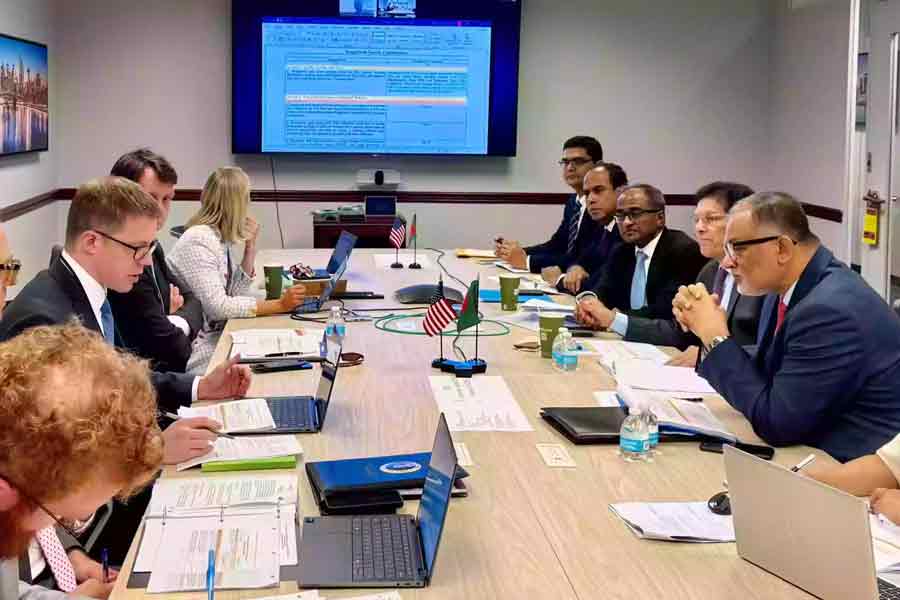
Why the US tariff cut matters for Bangladesh’s apparel industry

SHARIF ZAHIR
Published :
Aug 01, 2025 19:05
Updated :
Aug 01, 2025 19:05

1754093178346.webp


The recent reduction in US tariffs on Bangladeshi apparel exports marks a significant turning point for our industry—and perhaps one of the most promising windows of opportunity we’ve seen in recent years.

Initially, the proposed 35 per cent tariff was nothing short of alarming. It threatened to undercut our competitiveness in our single most important export market. But thanks to timely diplomatic engagement and strong government efforts, the tariffs have now been reduced to around 20 per cent—a rate that, while still substantial, restores a degree of balance to the global trade playing field.

This revised rate allows us to remain competitive. At Ananta Apparels, which exports over $465 million annually—$170 million of which goes to the United States—we see this decision as a lifeline. Without this adjustment, the consequences could have been disastrous. Now, Insha’Allah, we are confident that we can continue serving our American partners without major disruption.

Some may argue that Bangladesh should shift its focus to other markets. But let us be clear: the US market is irreplaceable. It is vast, stable, and has been the foundation upon which much of the apparel success of countries like China and Vietnam has been built. Now that Chinese apparel faces tariffs exceeding 34 per cent—including the existing 30 per cent—we may be witnessing a reordering of global sourcing patterns. Bangladesh stands to benefit significantly.

To seize this opportunity, however, we must be ready. Bangladesh’s apparel industry is mature. We have decades of experience, deep-rooted infrastructure, and a growing capability in producing value-added goods. Where countries like China and Vietnam once dominated niche categories such as sportswear, performance apparel, and high-end outerwear, we now have a chance to step up and fill that gap.

But capitalising on this shift will require strategic thinking beyond the factory floor. Trade is no longer just about product and price—it is increasingly shaped by geopolitics and long-term policy alignment. For example, if part of a broader trade strategy involves importing LNG from the United States, I see that not as a liability but as a form of strategic engagement. The same applies to aircraft procurement. Boeing aircraft deliveries take at least six years. These are not transactional purchases; they reflect long-term diplomatic partnerships. Bangladesh’s decision to purchase 25 Boeing aircraft aligns with this broader vision, as do similar decisions by countries like India.

Even in agriculture, US products—whether corn, wheat, or cotton—tend to command a premium due to their quality. We have seen this in our operations. US cotton, while slightly more expensive, offers consistent and superior quality, making it ideal for premium garments and performance textiles.

What is even more relevant now is the US government’s new policy supporting its cotton farmers. American retailers are now eligible for duty waivers if they use at least 20 per cent US cotton in their garment sourcing. That means buyers can enjoy zero tariffs on a portion of their FOB value if US cotton is used. This is a game-changer—especially for Bangladesh, which can position itself as a high-quality, duty-advantaged sourcing destination if we align smartly with such programmes.

In short, the recent tariff reduction is not just a relief—it is an inflexion point. But to turn it into long-term growth, we must act decisively. That means improving value addition, strengthening compliance and sustainability standards, negotiating better trade facilitation, and deepening strategic ties with key partners such as the United States.

The future of our RMG sector will not be determined solely by volume—it will be shaped by our ability to adapt, align, and lead. The opportunity is here. The question is: are we ready to rise to it?

Sharif Zahir is the Managing Director of Ananta Apparels and Chairman of United Commercial Bank Limited.​
 

Bangladeshi makers get huge response at Texworld NYC
Bangladesh Sangbad Sangstha . Dhaka 01 August, 2025, 23:22

Bangladeshi companies witnessed huge responses from buyers at the ‘Texworld NYC 2025’, and the representatives of the companies were busy during the show with trade inquiries from USA and other countries.

Texworld NYC, Apparel Sourcing, and Home Textiles Sourcing - the largest textile and apparel sourcing shows on the East Coast - concluded successfully at the Javits Centre in New York City, USA, from July 23 to 25, said a press release on Friday.

The event hosted over 424 international exhibitors from 26 countries and emphasized ethical sourcing, sustainable fabrics, and innovation across the textile, apparel and home textile industries.

This summer’s exhibition featured a wide array of global exhibitors from major sourcing regions, offering attendees direct access to premium apparel and textiles.

From cutting-edge materials to sustainable sourcing solutions, the show floor was designed to empower industry professionals with the resources and connections needed to succeed in today’s fast-evolving global market.

Three Bangladeshi companies - 24/7 Sourcing Private Limited, GenXt International and Just James BD Ltd - took part in the exhibition, showcasing the country’s strengths in fashion apparel and denim.

Their participation underscored Bangladesh’s expanding footprint in the global textile industry, driven by a strong focus on innovation, quality and cost-effective manufacturing.

Bangladeshi exhibitors presented a diverse range of fashion products and joined leading manufacturing nations such as Pakistan, China, India, South Korea, Taiwan, Uzbekistan, Turkey, Vietnam and Sri Lanka on the global stage.

Bangladesh’s presence at Texworld NYC Summer 2025 reaffirmed its potential as a competitive and reliable sourcing destination, with a strong focus on sustainability, innovation, and high production standards.

Rakib, CEO of 24/7 Sourcing Pvt Ltd, said he was happy with the fair and glad to meet many buyers.

Rizvana Hredita, CEO of GenXt International, also shared that the fair went well and they were pleased with the buyer response.​
 

New tariff can be a gateway to a resilient export future: BGMEA
Staff Correspondent Dhaka
Updated: 02 Aug 2025, 19: 21

1754179462759.webp

Bangladesh Garment Manufacturers and Exporters Association (BGMEA) President Mahmud Hasan Khan Collected

Bangladesh Garment Manufacturers and Exporters Association (BGMEA) President Mahmud Hasan Khan welcomed the recent reduction in US tariffs on Bangladeshi exports, calling it a "critical relief" for the country’s apparel industry amid rising global competition.

At a press conference held today at the BGMEA conference room, the newly appointed president expressed gratitude to the interim government of Bangladesh, especially the commerce and security advisors, for their leadership during the tough negotiations.

Their teams helped Bangladesh avert what could have been a major crisis for our export sector, he noted.

The United States has reduced its additional import tariff on Bangladeshi products from 35 per cent to 20 per cent, bringing it closer to the rates imposed on Bangladesh's major competitors, including China (30 per cent) and India (25 per cent).

This adjustment creates a more balanced playing field for Bangladesh, he added.

The BGMEA chief highlighted that the journey to this outcome was fraught with challenges.

On 2 April, the US had announced a new tariff regime under the "Liberation Day Tariff," initially setting Bangladesh’s rate at 37 per cent, significantly higher than India’s 26 per cent and Pakistan’s 30 per cent. The proposed tariffs were to be implemented from 9 April, but were later deferred by 90 days following diplomatic engagements.

While the deferment allowed for further negotiations, uncertainty loomed until mid-July. On 2 July, when the US slashed Vietnam’s tariff from 46 per cent to 20 per cent, concerns deepened in Bangladesh, especially after an initial US offer of only a 2 per cent reduction for Bangladesh. Subsequent talks finally resulted in the recent adjustment.

He said throughout the negotiation period, BGMEA engaged with stakeholders, government bodies, and even began talks with US-based lobbying firms despite limited access due to ongoing NDAs between the two governments.

The government unofficially informed the private sector to engage lobbyists as the second round of talks between the US and Bangladesh authorities on 9-11 July saw little progress. Later, BGMEA started primary discussion with a lobbyist farm.

“The new 20 per cent additional tariff comes on top of the existing 16.5 per cent MFN duty, bringing the effective average rate to 36.5 per cent. However, an important exception has been made if at least 20 per cent of a product’s raw materials originate from the US — such as American cotton — the additional tariff may not apply to that portion of the product's value,” he said.

BGMEA President also added that Bangladesh must continue diplomatic talks to further reduce the tariff.

“We don’t have any room for complacency, since the US executive order indicates further negotiations with other countries are ongoing and may result in even lower tariffs for them. Bangladesh must continue diplomatic and trade talks to remain competitive.”

Khan called for renewed focus on backward linkage investments, design innovation, and product and market diversification.

“The US is not just our largest market — it’s a long-term trade partner. We are committed to deepening this partnership,” he added.

The BGMEA President urged the government to provide continued policy support, especially for small and medium-sized factories that are vulnerable to rising production costs.

“At a time when the industry is already struggling, the tariff increase will undoubtedly raise our production cost. The government must come forward especially ensuring that small and medium-sized factories that are vulnerable to rising production costs don’t get harmed.

“We hope all policy supports by the government will continue at the interest of industry and country as a whole, efficiency of all relevant offices including NBR will increase, customs-related policies will become industry-friendly, Chattogram port’s handing would be more efficient, and industries will get uninterrupted electricity and gas supplies,” the BGMEA President added.

He asserted that BGMEA will continue to provide data-driven insights and engage in regular consultations with stakeholders to enhance competitiveness.

“If we work together with a shared vision, this tariff can become the gateway to a stronger, more resilient export future for Bangladesh,” he concluded.​
 
Pran RFL one of the leading business houses in Bangladesh has taken over a textile mill situated in Rajshahi from BTMC. This particular textile mill got shut down 22 years ago. Currently, Pran RFL has created 2 thousand jobs in the factory but aiming at creating 12 thousand jobs in the future. Right now, the Rajshahi textile mill is producing various kinds of bags and shoes. This is a big news for Rajshahi.


RMG exports to US see 25pc growth in Jan-Jun
Staff Correspondent 06 August, 2025, 23:34

1754531253704.webp

Representational image. | New Age file photo

The readymade garment exports to the United States from Bangladesh witnessed a robust growth of 25.13 per cent to $4.25 billion in the first half of 2025, from January to June.

According to the latest data published by the US Office of Textiles and Apparel, Bangladeshi exporters exported RMG items worth $3.4 billion in the same period of 2024.

During the first half of 2025, Bangladesh outpaced almost all its major competitors in terms of export growth rates in the US — the country›s single largest export destination.

Exporters stated that the announcement of the revised US reciprocal tariff of 20 per cent was a positive signal for export earnings from the US.

They also stated that the shift of orders from China to Bangladesh, due to the trade war with the US, has accelerated exports.

In single month of June 2025, US imported RMG items worth $722.54 million from Bangladesh, a 45 per cent higher from $496.64 million in June of 2024.

According to the Otexa data, the North American country’s RMG imports from its global suppliers also witnessed a positive growth of 6.76 per cent to $38.15 billion in January-June of 2025, higher from $35.74 billion in the same period of 2024.

In terms of volume, Bangladeshi RMG exports to the US also experienced positive growth of 23.81 per cent to 1.37 billion square metres in H1 of 2025, up from 1.12 billion square metres in the same period in 2024.

As the third-largest supplier to the US, Bangladesh’s market share in the North American country stood at 10.03 per cent as of May 2025.

Amid the ongoing trade war between the US and China, Vietnam remained the top exporter for the past several months, surpassing China.

In January-June, Vietnam›s apparel exports grew by 17.97 per cent, reaching $7.76 billion, surpassing the $6.58 billion recorded in the first half of 2025. Vietnam held a market share of 19.79 per cent.

As the second-largest exporter, China exported apparel items worth $5.73 billion during H1 of 2025, representing a 16.14 per cent decline from $6.83 billion in the same period of 2024, and capturing a market share of 18.88 per cent.

Followed by Bangladesh, India secured the fourth position in the US market by exporting RMG items worth $2.84 billion in January-June of 2025, registering a positive growth of 16.26 per cent compared with that of $2.44 billion in the same period of 2024, with a market share of 6.23 per cent in the US market.

RMG exports from Indonesia and Cambodia were $2.25 billion and $1.99 billion in the first half of 2025, with a market share of 5.63 per cent and 5.11 per cent, respectively, making them the fifth and sixth largest RMG suppliers.

On July 31, the Trump administration revised the reciprocal tariff on Bangladeshi goods to 20 per cent, following a series of discussions.

Earlier, on July 8, it was declared 35 per cent, following the 37 per cent announced on April 2.

Talking to New Age, Inamul Haq Khan, senior vice president of the Bangladesh Garment Manufacturers and Exporters Association, said that the exports to US increased due to the shifting of orders from China.

‘China’s share and export at US market gradually declining due to trade war and tariff issues, and the orders are shifting to other manufacturing countries,’ he added.

He also said that as Bangladesh can manufacture shifting orders along with buyers’ confidence, exports are increasing.

Echoing a similar sentiment, former BGMEA director Mohiuddin Rubel said that US buyers have always trusted Bangladeshi products.

‘As Trump administration announced new tariff, we have opportunity to do more well in the coming years,’ he added.

If a similar situation persists for China, one day, Bangladesh could outpace them in market share in the US market, he added, urging adequate policy support from the government and manufacturers to focus on diversified and high-value products.

According to the OTEXA data, Bangladesh’s apparel exports to the US in 2024 were $7.34 billion, and in 2023, they were $7.29 billion.​
 

BGMEA, Amfori to collaborate on sustainability
Staff Correspondent 06 August, 2025, 23:31

1754531392349.webp


In a significant move towards sustainable development in Bangladesh’s readymade garment industry, the Bangladesh Garment Manufacturers and Exporters Association and the global business association Amfori have pledged to collaborate on building a more transparent and efficient supply chain.

In this regard, John Stellansson, head of Business Development and Network at Amfori, and BGMEA Acting president Inamul Haq Khan met on Wednesday at the BGMEA Complex in the capital, according to a press release.

Amfori is considered as a leading global business association dedicated to promoting sustainable trade.

It also supports companies worldwide in making their supply chains more ethical, transparent, and environmentally responsible.

According to the press release, the meeting focused on developing a harmonised standard to streamline sustainability practices and audit procedures in the apparel sector.

Sharing the new strategic approaches of Amfori, Stellansson emphasised the transfer of responsibility for sustainable development directly to suppliers and manufacturers.

He also said that the shift would enable factories and their brand partners better to evaluate both supply chain performance and lead times.

One of the initiative’s core objectives was to minimise audit duplication across the supply chain, thereby reducing financial and administrative burdens on manufacturers, he added.

He also stated that the company aimed to encourage producers to take on active and leadership roles in both social and environmental compliance processes.

BGMEA’s acting president Inamul Haq Khan (senior vice president) said that the BGMEA is committed to establishing an integrated sustainability framework for the sector.

He stressed the need for a unified audit structure to eliminate redundancy and enhance operational efficiency for the RMG producers.

He also lauded Amfori’s manufacturer-centered approach and expressed keen interest in collaborative efforts to boost industry-wide capacity, share knowledge, and identify opportunities for improvement within factories.

They also agreed that closer cooperation and knowledge exchange would be critical in making audit processes more effective, cost-efficient, and transparent.

They also consented to explore potential pilot programmes to identify productive areas of collaboration.​
 

Beximco Textiles may resume operations as Japanese company shows interest

bdnews24.com
Published :
Aug 08, 2025 00:18
Updated :
Aug 08, 2025 00:18

1754611279110.webp


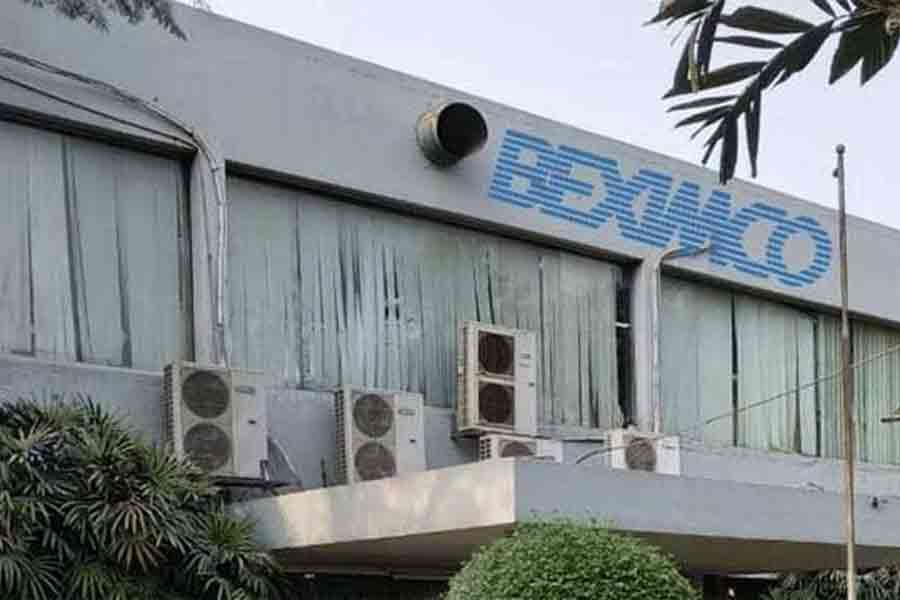
Beximco Group’s Textiles and Apparel Division, BexTex, which has been closed amid financial pressure, may resume operations under a lease agreement with Japanese apparel firm Revival Project Limited.

The company has agreed to take over the factory as part of a government-backed initiative.

Beximco has issued a comfort letter supporting the lease arrangement.

Revival Project, which has prior experience in the apparel sector, plans to invest $20 million or around Tk 2.5 billion into the operation.

A tripartite agreement involving Revival Project, BexTex and lender Janata Bank is expected to be signed this August.

Though initially hesitant, Beximco is now on board to restart the unit through the lease deal.

Bangladesh Bank, Janata Bank and the government are working to provide policy support.

The labour and employment ministry is coordinating on behalf of the government.

A senior Bangladesh Bank official, speaking on condition of anonymity, told bdnews24.com: “The Japanese company has assured it will bring in capital at the time of purchase order.

“Details will be finalised when the agreement is signed.”

To ensure full financial transparency and loan repayment from export earnings, stakeholders say the Japanese firm may appoint Deloitte as auditor.​
 

Latest Posts

Back