Home Watch Videos Wars Movies Login

[🇧🇩] Textile & RMG Industry of Bangladesh

Latest Posts Countries Wars Q&A

[🇧🇩] Textile & RMG Industry of Bangladesh
436
18K
More threads by Saif

G Bangladesh Defense
Garment exports to US grew 15% in Jan-Oct

Show US Department of Commerce data


11 January 2026, 00:00 AM
By Refayet Ullah Mirdha

1768115321689.webp

Garment.jpg

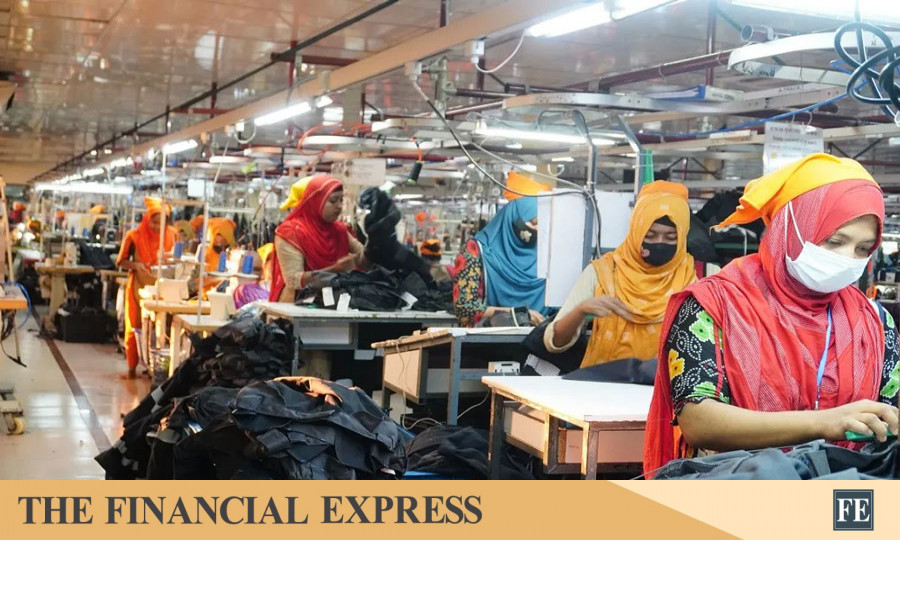
Bangladesh’s readymade garment exports to the United States, the country’s largest single-market destination, grew more than 15 percent year-on-year to $7.08 billion in the January-October period, according to US government data.


Local apparel makers say the surge was largely driven by front-loaded shipments ahead of the Trump administration’s reciprocal tariff enforcement.


A temporary 10 percent baseline tariff was applied by the US from part of April to the entire July before higher country-specific rates took effect on August 7 last year. It added with the existing 16 percent, taking the total rate to around 26 percent.

During the low baseline tariff period, local apparel makers say American buyers brought in larger-than-usual consignments. Apparel exporters said this rush pushed overall shipments in the January-October window above normal levels, somewhat masking the basic trend for the rest of the year.


For Bangladesh, a punishing 35 percent reciprocal rate was initially announced in April last year. It was later revised to 20 percent after bilateral negotiations.

The growth came amid a largely flat US apparel market. Total imports from the world by the United States declined 0.61 percent year-on-year to $66.63 billion during the January-October period last year, according to the Office of Textiles and Apparel (OTEXA), an agency under the US Department of Commerce.

Similar to Bangladesh, most other major exporting countries also saw positive growth in the American market during the period.


Vietnam’s exports to the US rose 11.5 percent to $14.16 billion, India’s 8.6 percent to $4.39 billion, Pakistan’s 12.3 percent to $2.02 billion, Indonesia’s 10.1 percent to $3.98 billion, and Cambodia’s 25.5 percent to $4.04 billion.

China was the exception, with exports to the US falling 32.4 percent to $9.49 billion.


During the period, unit prices of Bangladeshi garments declined slightly, reflecting intense competition and cautious buying by US retailers, according to OTEXA data.

The unit price for Bangladeshi items declined 0.63 percent. The decline for Vietnam was 0.46 percent and 10.47 percent for China. Cambodia’s price declined by 7.26 percent, Pakistan’s 6.85 percent and Indonesia’s 2.72 percent, show OTEXA data.

In the case of India, the unit price increased by 1.57 percent during January-October.

Despite the strong headline growth, exporters said momentum began to ease after August. Shipments weakened in October and November, following the enforcement of the higher tariffs.

Anwar-ul Alam Chowdhury (Parvez), former president of the Bangladesh Garment Manufacturers and Exporters Association (BGMEA), said the January-October figures do not fully reflect the year’s underlying trend.

“The growth was concentrated in the early months, when shipments were rushed ahead of tariff enforcement,” he said.

Parvez added that export performance slowed after August but expects shipments to stabilise after Bangladesh’s general election next month, as international buyers are likely to place full work orders once the heated political atmosphere cools off.

Meanwhile, retail sales in the United States posted solid year-on-year growth in November, with early holiday-season activity keeping results on track to meet the National Retail Federation’s (NRF) 2025 spending forecast, the organisation said in a statement recently.

It means the retail buying is likely to consume the fashion inventory, prompting the US buyers to place fresh orders.

“Retail sales showed healthy year-over-year gains in November, while month-on-month data was largely flat,” NRF President and CEO Matthew Shay said.

For large apparel manufacturers like Bangladesh, it is positive news on the export front.

Shay said, “Shoppers looking for online deals may have held back a bit until Cyber Monday, which fell in December this year due to a late Thanksgiving, likely shifting some spending. Consumers are focusing on value and spending carefully during the holiday period, and retailers are offering products at competitive prices to fit every budget.”

“We remain confident in our holiday forecast as well as our retail sales projections for the full year,” he concluded.

 
Analyze

Analyze Post

Add your ideas here:
Highlight Cite Respond
Khaleda Zia played pioneering role in RMG growth: BGMEA leaders

By Star Business Report

1768268137744.webp


Khaleda Zia, a three-time prime minister of Bangladesh, played a pioneering role in the growth of the country’s ready-made garment (RMG) sector, according to leaders of the Bangladesh Garment Manufacturers and Exporters Association (BGMEA).


The leaders recalled her contributions at a doa mahfil held yesterday at the trade body’s office in Uttara, Dhaka, attended by several hundred garment entrepreneurs.


In 1991, recognising the potential of the garment industry, Khaleda Zia introduced an innovative policy that allowed BGMEA to issue the crucial Utilisation Declaration (UD) and Utilisation Permission (UP) certificates.

The UD permits the production of a certain quantity of imported fabrics under the bonded warehouse system, while the UP allows the import of raw materials for the export-oriented garment sector.


Before this change, these certificates were issued by the government’s Export Promotion Bureau (EPB), often causing delays that led international clothing brands to shift orders to other countries.

Khaleda Zia’s decision to delegate this authority to BGMEA streamlined the process, supporting private entrepreneurs and accelerating exports.

Thanks to her pragmatic decisions, Bangladesh’s apparel exports crossed the $1 billion mark for the first time during her tenure, BGMEA leaders recalled.


The sector, which had struggled since its inception in 1978 due to limited government support, gained momentum under her leadership.

Khaleda Zia also introduced a high percentage of cash incentives, further enhancing the country’s competitiveness in global markets.


Today, Bangladesh is the world’s second-largest apparel exporter after China, with nearly 8 percent of the global market share.

Over the past five decades, the RMG industry has employed over four million workers, empowered women, contributed 13 percent to the national GDP, and attracted combined investments of $75 billion -- $23 billion in primary textiles and $52 billion in garments.

At the event, Salim Rahman, acting president of BGMEA, said Khaleda Zia played a crucial role during the phase-out of the World Trade Organization’s Multifibre Arrangement in 2004, which ended the quota system on garment exports. She formed the National Coordination Committee and took critical steps to help the industry adjust to the new global trading environment.

“She facilitated ease of doing business, reduced costs, and provided stipends for female education. These decisions brought significant societal changes,” he added.

The event also featured a video documentary highlighting Khaleda Zia’s contributions to reviving the economy, promoting democracy, empowering women, and developing the garment sector.

BGMEA Senior Vice-President Inamul Haq Khan and former president Quazi Moniruzzaman also spoke at the programme.

During Khaleda Zia’s tenure, Bangladesh was ranked the 11th fastest-growing country globally in 2005, and an estimated 1.8 crore people were lifted above the poverty line, BGMEA leaders said, adding that her VAT reforms were widely recognised.​
 
Analyze

Analyze Post

Add your ideas here:
Highlight Cite Respond
Bangladesh to showcase global textile leadership at Heimtextil 2026

BSS
Published :
Jan 13, 2026 22:05
Updated :
Jan 13, 2026 22:05

1768351113636.webp

Bangladesh is set to reinforce its position as a global powerhouse in the textile sector by participating in Heimtextil 2026, the world’s largest trade fair for home and contract textiles.

Scheduled to take place from January 13–16, 2026, in Frankfurt, Germany, the event serves as a critical platform for setting the year’s design trends and fostering international business growth.

As a key supplier in the global textile market, Bangladesh’s participation is strategically designed to help exporters engage with European buyers, explore new markets, and gain insights into emerging international trends.

The fair provides a global stage to highlight the country’s skill and quality, ranging from traditional products like towels and bedding to specialized items such as carpets, bath products, and sun-protection materials.

The Bangladeshi delegation will consist of a robust mix of direct exhibitors and companies supported by the Export Promotion Bureau (EPB).

The direct exhibitors include leading industry names such as ACS Textile (Bangladesh) Limited, Artisan House BD Ltd, Debonair Padding & Quilting Solution Ltd, Hossain Dyeing and Printing Mills Ltd (Unit-2), Karupannya Rangpur Ltd, Naheed Fine Tex Ltd, Noman Terry Towel Mills Ltd, Shabab Fabrics Ltd, Towel Tex Ltd and Zaber & Zubair Fabrics Limited / NICE Group.

Additionally, Jaantex Industries Ltd, Maanuri Textile Mills, and Stylus Towels Ltd will participate under the support of the EPB, ensuring a comprehensive representation of the nation’s textile diversity.

Heimtextil 2026 will not only focus on finished goods but also on the future of manufacturing.

Bangladeshi companies will have the opportunity to align with new technologies, including AI-assisted design and sustainable production methods, which are increasingly vital for maintaining a competitive edge in the global market.

This participation is expected to strengthen Bangladesh’s global presence, allowing local manufacturers to connect with new customers and demonstrate the high-quality craftsmanship that defines the nation’s textile industry.​
 
Analyze

Analyze Post

Add your ideas here:
Highlight Cite Respond
Bangladesh's textile machinery sector blends strong domestic manufacturing (S. Alam Group, Square Textile) with significant international imports (Rieter, Picanol), driven by its massive RMG industry, creating high demand for machinery in spinning, weaving, dyeing, and garment production, with trends towards automation and smart tech for efficiency. The market is expanding rapidly, positioning the nation as a key hub for both machine sales and modern textile production, notes Fabric Lagbe and SUNTECH Textile Machinery.

Key Aspects of Machinery Production & Supply
  • Domestic Manufacturers: Local companies like S. Alam Group, Square Textile, Textech Industries, and Pacific Associates provide machinery tailored to local needs.
  • International Suppliers: Global leaders such as Rieter, Trützschler, Toyota, Picanol, and Loptex supply advanced technology, ensuring competitiveness.
  • Key Players/Suppliers: Other significant entities include Roots Sourcing, Viyellatex Group, and local dealers listed on platforms like Textile Infomedia.
  • Market Growth: The machinery market is experiencing significant growth (around 20% annually), driven by increased productivity demands and shifts in global apparel production.
Industry Demand & Trends
  • High Demand: The booming Ready-Made Garment (RMG) sector creates substantial demand for all types of textile machinery, from yarn to finished garments, notes sagartexbd.net and afshanrehman.com.
  • Automation & Industry 4.0: Bangladesh is increasingly adopting smart technologies, data analytics, and automation to boost efficiency in spinning and other processes.
  • Integrated Solutions: Vertical integration (from yarn to garment) is common, with companies like Viyellatex Group handling multiple stages.
Market Dynamics
  • Import Reliance: While local production exists, Bangladesh relies heavily on imported, advanced machinery to stay competitive globally, according to Posh Garments Ltd. and China Bangla Engineers & Consultants Ltd.
  • Export Hub: The country's status as the world's second-largest apparel exporter underpins a vast need for machinery, attracting global tech providers, according to SUNTECH Textile Machinery.
 
Analyze

Analyze Post

Add your ideas here:
Highlight Cite Respond
Garment exporters see brighter outlook as election nears

By Refayet Ullah Mirdha

1768525974331.webp

Garment workers make their way to work amid foggy weather. The picture was taken recently at Ulail Bus Stop on Dhaka-Aricha Highway in the Bank Town area of Savar. Photo: Palash Khan

American buyers are tapping the shoulder of Bangladeshi apparel makers. While exchanging new year greetings, Canadian buyers are also asking them how things are going. Local manufacturers say they are receiving phone calls and emails from buyers in Europe as well.


With less than a month to go before the national elections scheduled for February 12, local garment exporters say big business may be around the corner, as the polls are expected to calm frayed political nerves and improve overall law and order.


“Of course, the election is a major factor in restoring buyers’ confidence, as political stability is expected after the polls,” said Mostofa Q Sobhan Rubel, chairman of Dragon Group.

Rubel said his company is seeing a rise in inquiries, particularly from US and Canadian buyers for sweater items.


He said orders are increasingly shifting from China to Bangladesh after US reciprocal tariffs on Chinese goods climbed to nearly 50 percent.

Meanwhile, global conditions are also showing signs of improvement as inflation eases and supply chains gradually normalise. Rubel said he expects his exports to grow by about 30 percent this year, up from $20 million in 2025.

Exporters say prolonged political uncertainty, labour unrest in industrial zones months after the uprising and lingering aftershocks pushed many international buyers into a wait-and-see stance, delaying or trimming orders. With the election now in sight, those deferred orders are slowly resurfacing.


That tentative return of buyer interest comes after a subdued year for the local apparel sector.

In the recently concluded 2025, the country’s garment exports rose by just 0.88 percent to $38.82 billion, from $38.48 billion a year earlier, according to the Export Promotion Bureau (EPB). The slight increase reflects the combined impact of domestic disruptions and weak global demand.


The improving outlook is also being shaped by easing global pressures.

Inflation in major economies has cooled, and supply chains are stabilising after years of disruption caused by the Covid-19 pandemic, the Russia-Ukraine war and ongoing conflicts in the Middle East, which had dampened apparel demand worldwide.

According to exporters, Bangladesh’s position in global sourcing has strengthened further due to tariff differences in the US market.

The reciprocal tariff on Bangladeshi garments currently stands at 20 percent, lower than rates imposed on some competitors, including India and China, where duties have climbed close to 50 percent.

Even so, shipments to the US, Bangladesh’s largest single country export destination, slowed during the peak months of September to November last year, when orders usually rise ahead of the Christmas season.

Exporters linked the slowdown to a front-loading of shipments earlier in the year.

Between January and April last year, before revised tariff rates took effect, the average duty on Bangladeshi garment exports to the US was around 16.5 percent.

Anticipating higher tariffs later, exporters rushed consignments during that period. Many US retailers then pared back imports in the second half of the year as inventories piled up.

Tariff uncertainty eased after negotiations with Washington. The reciprocal duty was scaled down to 20 percent, restoring a degree of predictability for buyers and suppliers.

Against this backdrop, apparel manufacturers are upbeat about the 2026 export outlook.

MA Jabbar, managing director of DBL Group, said the formation of an elected government would help rebuild confidence across the supply chain, from factory owners to global retailers and investors.

DBL exported $506 million worth of garments in 2025 and is targeting about 10 percent growth in 2026, after exports slipped from $520 million in 2024.

Industry leaders, however, also said that political stability alone will not guarantee a sustained rebound.

Humayun Rashid, chairman of Energypac Fashions Ltd, said persistent challenges in energy supply, port and logistics efficiency, banking sector health and international connectivity continue to weigh on competitiveness.

He added that concerns over Bangladesh’s global image also remain an issue for some buyers.

Addressing ease of doing business is critical if the sector is to turn this short-term recovery into long-term growth, Rashid said.

Faisal Samad, a director of the Bangladesh Garment Manufacturers and Exporters Association (BGMEA), said international retailers and brands are likely to scale up orders once political stability returns, but structural reforms will determine how durable that recovery proves to be.​
 
Analyze

Analyze Post

Add your ideas here:
Highlight Cite Respond

Bangladesh's garment exports to Europe exceed €18 billion, growing over 7.5 per cent

UNB
Published :
Jan 17, 2026 20:03
Updated :
Jan 17, 2026 20:03

1768696172898.webp


The European Union’s apparel import market witnessed a significant reshuffling in 2025, as Bangladesh’s exports to the bloc climbed to €18.06 billion despite a broader trend of falling unit prices and aggressive competition from China.

According to the latest Eurostat data for the period of January to November 2025, the EU's total apparel imports grew by 3.93 per cent, reaching a total value of €82.94 billion. While the market saw a robust 11.60 per cent increase in volume, the average unit price for garments fell by 6.88 per cent, signaling a highly competitive, price-sensitive environment for global suppliers.

Bangladesh, the EU's second-largest apparel supplier, saw its export value rise from €16.78 billion in 2024 to €18.06 billion in the first eleven months of 2025—a growth of 7.65 per cent. This value growth was largely volume-driven, with an 11.26 per cent increase in the quantity of goods shipped, even as the country faced a 3.25 per cent decrease in unit prices.

However, data from the end of the period suggests a cooling trend. A comparison between November 2024 and November 2025 reveals a sharp 10.87 per cent drop in export value and a 12.27 per cent decline in unit prices, highlighting the mounting pressure on Bangladeshi manufacturers to lower costs.

The report highlights a strategic pivot by China. Facing ongoing challenges in the United States market, China has intensified its focus on Europe. Chinese apparel exports to the EU reached €24.42 billion, marking a 6.55 per cent growth in value. Most notably, China saw a massive 15.73 per cent surge in export volume, supported by a 7.93 per cent reduction in unit prices.

The sourcing landscape across Asia showed varying results.

Vietnam recorded a healthy 10.10 per cent growth, reaching €4.02 billion. Unlike its neighbors, Vietnam saw a 4.19 per cent increase in unit price, likely reflecting a shift toward higher-value garments.

Turkey struggled significantly, facing an 11.31 per cent decline in exports to the EU, totaling €7.66 billion.

India, Pakistan, and Cambodia all showed substantial growth rates, contributing to the overall volume surge in the European market.

"The data reflects a complex environment where volume is up, but margins are being squeezed," noted Mohiuddin Rubel, Managing Director of Bangladesh Apparel Exchange Ltd.

"While Bangladesh remains a key player, the aggressive pricing strategies from competitors like China and the recent dip in November figures suggest that staying competitive will require a careful balance of volume and value-addition," he said.​
 
Analyze

Analyze Post

Add your ideas here:
Highlight Cite Respond

Tech push, buyer taste reshaping Bangladesh's apparel industry

Smart manufacturing, green investments gain pace


Jasim Uddin
Published :
Jan 17, 2026 23:37
Updated :
Jan 17, 2026 23:37

1768696713591.webp


Apparel exporters are accelerating investment in advanced technologies to modernise production, raise productivity and strengthen long-term sustainability and global competitiveness Bangladesh's ready-made garment (RMG) industry in the fast-changing economic milieus.

From automation and robotics to AI-driven inspection and renewable energy, the industry is undergoing a quiet, but significant, transformation that minimizes manual work.

Industry insiders say the shift is being driven by rising compliance requirements in key export markets, tighter sustainability standards set by global brands, and the need to control costs in an increasingly competitive environment.

These trends were evident at Garment Technology Bangladesh (GTB) 2026, the country's largest garment-technology exhibition.

Entrepreneurs and technology suppliers shared their views with The Financial Express on the sidelines of the four-day event that began in the city last Wednesday.

President of BGAPMEA Md Shahriar said apparel manufacturers were increasingly aligning production processes with the sustainability targets of global brands and buyers.

"As a result, many factories are investing heavily in energy-efficient and automated technologies, including robotics and RFID system, to cut emissions, improve energy efficiency and boost productivity."

Referring to his own company, Mr Shahriar said two factories had recently been relocated to the firm's industrial park in Dhamrai, on the outskirts of the capital, Dhaka.

The facilities are housed in LEED-certified buildings and equipped with solar panels to expand the use of renewable energy and reduce carbon emissions.

Technology adoption is also transforming inventory and logistics management.

Managing director of r-pac (Bangladesh) Limited Imtiaz Ahmed Kamiss said his company introduced a scanning-based inventory -management solution in 2024 to help RMG exporters reduce shipment errors and avoid unnecessary costs.

So far, 34 companies, including Fakir Group, Pioneer Group and Palmal Group, have adopted the system.

Mr Kamiss also highlighted a newer application using RFID chips embedded in fan T-shirts for sports teams. The technology allows brands to share team videos and activities directly with fans, enhancing engagement.

He notes that Bangladesh has strong potential to use this technology, given its large-scale production of fan apparel for international sporting events, while countries such as Vietnam and China have already adopted similar solutions.

General Manager of AUTOMAC Technology Ltd Md Shofiqur Rahman says his company has introduced advanced automatic fabrics-cutting machines, with the latest models featuring built-in repeat-cutting facilities that significantly reduce processing time.

At the textile level, robotics and artificial intelligence are gaining ground despite higher upfront costs.

Kutubuddin Ahmed, founder-chairman of Envoy Textiles, the world's first LEED-certified denim mill, says the company has long used robotic machinery to improve efficiency, competitiveness and product quality.

"Envoy is now in discussion to import AI-driven technologies to enhance transparency across production lines," he told the FE.

Similarly, says Fazlee Shamim Ehsan, CEO of Fatullah Apparels Ltd, the company is importing an AI-enabled automatic cutting machine costing around $0.2 million to optimise fabrics usage and reduce waste.

The firm is also set to install an AI-driven fabrics- inspection machine from China, priced about $0.05 million, which will use sensors to ensure faster and more accurate quality control, replacing manual inspection processes.​
 
Analyze

Analyze Post

Add your ideas here:
Highlight Cite Respond

Transformation of RMG industry

Published :
Jan 19, 2026 23:35
Updated :
Jan 19, 2026 23:35

1768869626241.webp


A quiet technological revolution is taking place in the country's garment industry. The industry's journey from its tentative beginning in the late 1970s to the current number one position in terms of leadership in energy and environment design (LEED)-certified factories is long and arduous. Its transformation from the humble beginning into the world's second-largest exporter after China has witnessed ups and downs. Fire tragedies at Tajreen Fashion and several other garment factories were capped by the Rana Plaza collapse. But the ready-made garment industry seems to have come off spectacularly from those nightmarish days. Now the country has reasons to be proud of its 268 LEED-certified or green RMG buildings, highest number in the world, that adhere to stringent energy efficiency and high environmental standards as set by the US Green Building Council (USGBC). The country ought to be grateful to the two major workplace safety initiatives apparel buyers undertook in the form of the Europe-led Accord and US-led Alliance following the Rana Plaza tragedy.

While the safety issues have been addressed, the garment industry now faces fresh challenges from emerging technological leap to add a new dimension to the existing ones. The four-day exhibition of garment accessories and advanced technologies called Garment Technology Bangladesh (GTB) arranged by the Bangladesh Garments Accessories and Packaging Manufacturers and Exporters Association (BGAPMEA) has given an indication of the fast-changing trends of the RMG industry. It is good to know that RMG factories here are investing heavily in automation through introduction of cutting-edge technology. This has become a compulsion for apparel factories to stay in competition in the changing landscape of manufacturing and quality control. Introduction of energy-efficient, automation-driven technologies is redefining not only the production system but also the economies of scale. The factories are opting for such technologies to improve energy efficiency, cut carbon emissions and boost productivity. With manual inspection, inventory and logistics becoming dispensable, however, more and more workers and employees will become unemployed.

Much as the growing unemployment may be undesirable, there is no way technological march ahead can be resisted. In a global village, human capital is bound to prove irrelevant unless this vital element in the production system is upskilled. With the country's graduation from the status of a least developed country to a middle-income one this year, a technological leap for the number one foreign exchange earner becomes incumbent. There is hardly any option other than introduction of chip-based apps of the latest version. Robotics is already there to take from manual function and completing tasks precisely and at a much faster pace.

Bangladesh cannot lag behind its rivals in adoption of advanced technology not only in the garment sector but also in other manufacturing and exporting areas. Quite a number of LEED factories have already introduced advanced automatic fabric-cutting machines with built-in repeat cutting facilities. Robotics and Artificial Intelligence (AI) have started their presence in the textile industry which serves now as a backward linkage sector to the RMG. Clearly, such radical transformation is way ahead from retrofitting initiatives. But the retrofitting is the backbone of the subsequent transitions. The 4th industrial revolution (4IR) will bring about many more changes in the production system not only in the garment sector but also in other manufacturing sectors. In the interest of diversifying the production and export base, the latest technologies can be highly useful tools.​
 
Analyze

Analyze Post

Add your ideas here:
Highlight Cite Respond

Members Online

No members online now.

Latest Posts

Back
 
G
O
 
H
O
M
E