Bangladesh Defense
Saif
Senior Member
- Jan 24, 2024
- 21,655
- 9,794
- Nation

- Residence
- Axis Group


Christmas apparel shipments slow on weak demand
Christmas apparel shipments from Bangladesh to major Western markets have slowed this season as weak consumer demand abroad and energy shortages at home disrupt factory production.
Christmas apparel shipments slow on weak demand
Refayet Ullah Mirdha
Christmas apparel shipments from Bangladesh to major Western markets have slowed this season as weak consumer demand abroad and energy shortages at home disrupt factory production.
The slowdown comes as garment exports to both Europe and the United States continue to decline.
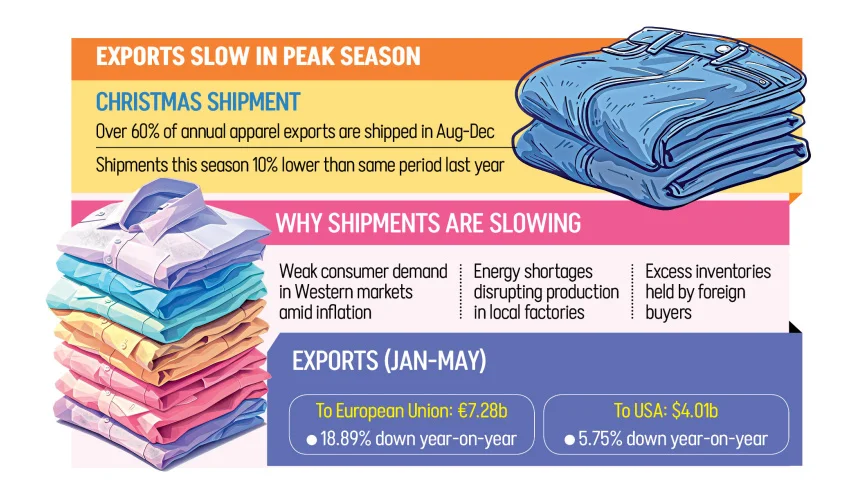
Christmas shipments are at least 10 percent lower than during the same period last year, according to a local exporter that mainly supplies the US market.
The Christmas season is one of the busiest periods for the country’s readymade garment industry, with more than 60 percent of annual apparel exports shipped between August and the first week of December.
Exporters said high inflation in Western markets, fuelled by energy shocks linked to the Middle East conflict, has weakened consumer demand. They also blamed the export slowdown on excess inventories held by major international buyers.
At home, low gas pressure and frequent power outages are reducing production. The long-running gas shortage worsened after an accident at a floating LNG terminal in Cox’s Bazar. The disruption became so severe that many factories across the Gazipur garment belt sent workers on a four-day leave last week, as gas supply was expected to improve around Monday.
Anwar-Ul Alam Chowdhury Parvez, chairman and managing director of Evince Group, said the industry has been struggling with low gas pressure and the energy crisis for several months, severely affecting factory production.
Major international buyers and retail clients of Evince include Levi’s, Armani, Zara, H&M and C&A.
Parvez, a former president of the Bangladesh Garment Manufacturers and Exporters Association (BGMEA), said buyers “were a bit cautious in placing the work orders as it happens in times of general elections in any country”.
Bangladesh held its national election in February. Official data show exports to both the European Union, Bangladesh’s largest export market, and the United States, its largest single-country market, recorded negative growth during the January-May period.
Eurostat data showed Bangladesh’s garment exports to the EU fell 18.89 percent year-on-year to €7.28 billion in January-May.
For the fiscal year 2025-26, apparel exports to the EU declined 3.31 percent to $19.06 billion, according to the Export Promotion Bureau (EPB).
The US market also showed a downward trend.
Garment exports to the United States fell 5.75 percent year-on-year to $4.01 billion during January-June, according to the US Office of Textiles and Apparel (OTEXA). However, exports to the US rose 5.74 percent year-on-year to $763.57 million in June alone.
Kutubuddin Ahmed, chairman of Envoy Legacy and Sheltech Group, said the slowdown is affecting all major garment-exporting countries because demand in Western markets has weakened.
“Because of the slowdown in export trend, the Christmas shipment will also be low this season to some extent,” he said.
Sharif Zahir, chairman of Ananta Group, said shipments of woven garments are normal this season, but demand for knitwear is lower.
Ramzul Seraj, managing director of Elite Garments Ltd, which exports to the United States, said his company has been facing at least 10 percent lower exports this season than during the same period last year because buyers delayed placing work orders.
BGMEA President Mahmud Hasan Khan said he expects exports by the end of the current fiscal year to match or slightly exceed last year’s level, although shipments have slowed in recent months.
“Because it is expected that the gas supply situation will improve soon. And the factories will be able to go into production in full swing as the government has been taking measures. The government’s stimulus package will also play a positive role in the business,” said Mahmud.
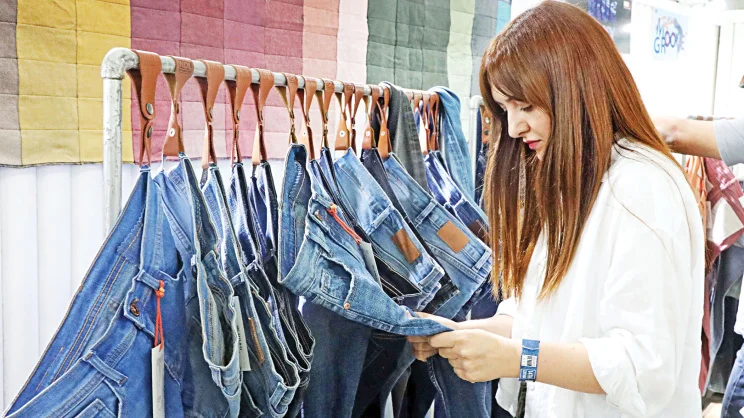
Photo: star/file
Requesting anonymity, a major European buyer recently suggested Bangladesh shift from producing basic garments to higher-value products and diversify its product range.
The buyer said Bangladesh’s top five products, including T-shirts, trousers, formal shirts, sweaters and underwear, account for 78 percent of the country’s garment exports.
Md Fazlul Hoque, managing director of Plummy Fashions Ltd, said, “Following the Trump tariff, competition in the global supply chain has become more intense as all the major global players such as China, Vietnam, Indian and Pakistan are sending the same goods to the same markets.”
Mostafa Q Sobhan Rubel, chief executive officer of Dragon Group, said shipments to North American markets, including the United States and Canada, are normal, but exports to Europe have slowed this season.
Refayet Ullah Mirdha
Christmas apparel shipments from Bangladesh to major Western markets have slowed this season as weak consumer demand abroad and energy shortages at home disrupt factory production.
The slowdown comes as garment exports to both Europe and the United States continue to decline.
Christmas shipments are at least 10 percent lower than during the same period last year, according to a local exporter that mainly supplies the US market.
The Christmas season is one of the busiest periods for the country’s readymade garment industry, with more than 60 percent of annual apparel exports shipped between August and the first week of December.
Exporters said high inflation in Western markets, fuelled by energy shocks linked to the Middle East conflict, has weakened consumer demand. They also blamed the export slowdown on excess inventories held by major international buyers.
At home, low gas pressure and frequent power outages are reducing production. The long-running gas shortage worsened after an accident at a floating LNG terminal in Cox’s Bazar. The disruption became so severe that many factories across the Gazipur garment belt sent workers on a four-day leave last week, as gas supply was expected to improve around Monday.
Anwar-Ul Alam Chowdhury Parvez, chairman and managing director of Evince Group, said the industry has been struggling with low gas pressure and the energy crisis for several months, severely affecting factory production.
Major international buyers and retail clients of Evince include Levi’s, Armani, Zara, H&M and C&A.
Parvez, a former president of the Bangladesh Garment Manufacturers and Exporters Association (BGMEA), said buyers “were a bit cautious in placing the work orders as it happens in times of general elections in any country”.
Bangladesh held its national election in February. Official data show exports to both the European Union, Bangladesh’s largest export market, and the United States, its largest single-country market, recorded negative growth during the January-May period.
Eurostat data showed Bangladesh’s garment exports to the EU fell 18.89 percent year-on-year to €7.28 billion in January-May.
For the fiscal year 2025-26, apparel exports to the EU declined 3.31 percent to $19.06 billion, according to the Export Promotion Bureau (EPB).
The US market also showed a downward trend.
Garment exports to the United States fell 5.75 percent year-on-year to $4.01 billion during January-June, according to the US Office of Textiles and Apparel (OTEXA). However, exports to the US rose 5.74 percent year-on-year to $763.57 million in June alone.
Kutubuddin Ahmed, chairman of Envoy Legacy and Sheltech Group, said the slowdown is affecting all major garment-exporting countries because demand in Western markets has weakened.
“Because of the slowdown in export trend, the Christmas shipment will also be low this season to some extent,” he said.
Sharif Zahir, chairman of Ananta Group, said shipments of woven garments are normal this season, but demand for knitwear is lower.
Ramzul Seraj, managing director of Elite Garments Ltd, which exports to the United States, said his company has been facing at least 10 percent lower exports this season than during the same period last year because buyers delayed placing work orders.
BGMEA President Mahmud Hasan Khan said he expects exports by the end of the current fiscal year to match or slightly exceed last year’s level, although shipments have slowed in recent months.
“Because it is expected that the gas supply situation will improve soon. And the factories will be able to go into production in full swing as the government has been taking measures. The government’s stimulus package will also play a positive role in the business,” said Mahmud.
Photo: star/file
Requesting anonymity, a major European buyer recently suggested Bangladesh shift from producing basic garments to higher-value products and diversify its product range.
The buyer said Bangladesh’s top five products, including T-shirts, trousers, formal shirts, sweaters and underwear, account for 78 percent of the country’s garment exports.
Md Fazlul Hoque, managing director of Plummy Fashions Ltd, said, “Following the Trump tariff, competition in the global supply chain has become more intense as all the major global players such as China, Vietnam, Indian and Pakistan are sending the same goods to the same markets.”
Mostafa Q Sobhan Rubel, chief executive officer of Dragon Group, said shipments to North American markets, including the United States and Canada, are normal, but exports to Europe have slowed this season.