[🇧🇩] Textile & RMG Industry of Bangladesh

[🇧🇩] Textile & RMG Industry of Bangladesh
531
24K
More threads by Saif

G Bangladesh Defense

Christmas apparel shipments slow on weak demand

Refayet Ullah Mirdha
1786060042883.webp


Christmas apparel shipments from Bangladesh to major Western markets have slowed this season as weak consumer demand abroad and energy shortages at home disrupt factory production.

The slowdown comes as garment exports to both Europe and the United States continue to decline.

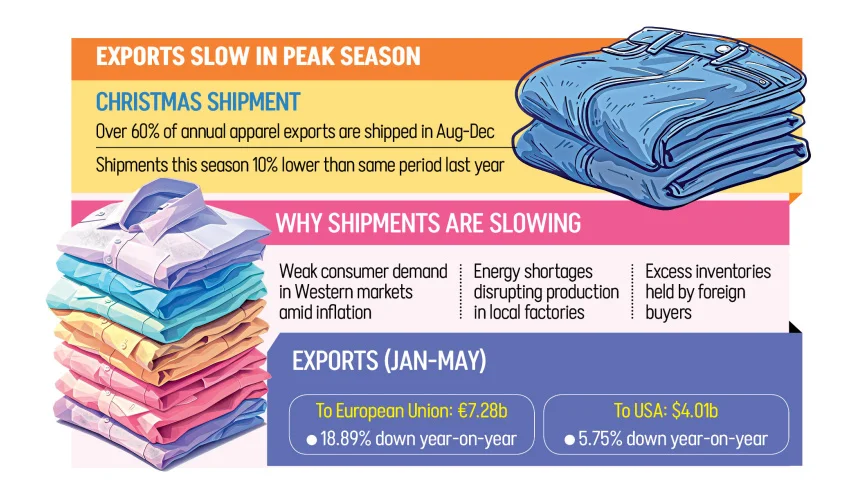
Christmas shipments are at least 10 percent lower than during the same period last year, according to a local exporter that mainly supplies the US market.

The Christmas season is one of the busiest periods for the country’s readymade garment industry, with more than 60 percent of annual apparel exports shipped between August and the first week of December.

Exporters said high inflation in Western markets, fuelled by energy shocks linked to the Middle East conflict, has weakened consumer demand. They also blamed the export slowdown on excess inventories held by major international buyers.

At home, low gas pressure and frequent power outages are reducing production. The long-running gas shortage worsened after an accident at a floating LNG terminal in Cox’s Bazar. The disruption became so severe that many factories across the Gazipur garment belt sent workers on a four-day leave last week, as gas supply was expected to improve around Monday.

Anwar-Ul Alam Chowdhury Parvez, chairman and managing director of Evince Group, said the industry has been struggling with low gas pressure and the energy crisis for several months, severely affecting factory production.

Major international buyers and retail clients of Evince include Levi’s, Armani, Zara, H&M and C&A.

Parvez, a former president of the Bangladesh Garment Manufacturers and Exporters Association (BGMEA), said buyers “were a bit cautious in placing the work orders as it happens in times of general elections in any country”.

Bangladesh held its national election in February. Official data show exports to both the European Union, Bangladesh’s largest export market, and the United States, its largest single-country market, recorded negative growth during the January-May period.

Eurostat data showed Bangladesh’s garment exports to the EU fell 18.89 percent year-on-year to €7.28 billion in January-May.

For the fiscal year 2025-26, apparel exports to the EU declined 3.31 percent to $19.06 billion, according to the Export Promotion Bureau (EPB).

The US market also showed a downward trend.

Garment exports to the United States fell 5.75 percent year-on-year to $4.01 billion during January-June, according to the US Office of Textiles and Apparel (OTEXA). However, exports to the US rose 5.74 percent year-on-year to $763.57 million in June alone.

Kutubuddin Ahmed, chairman of Envoy Legacy and Sheltech Group, said the slowdown is affecting all major garment-exporting countries because demand in Western markets has weakened.

“Because of the slowdown in export trend, the Christmas shipment will also be low this season to some extent,” he said.

Sharif Zahir, chairman of Ananta Group, said shipments of woven garments are normal this season, but demand for knitwear is lower.

Ramzul Seraj, managing director of Elite Garments Ltd, which exports to the United States, said his company has been facing at least 10 percent lower exports this season than during the same period last year because buyers delayed placing work orders.

BGMEA President Mahmud Hasan Khan said he expects exports by the end of the current fiscal year to match or slightly exceed last year’s level, although shipments have slowed in recent months.

“Because it is expected that the gas supply situation will improve soon. And the factories will be able to go into production in full swing as the government has been taking measures. The government’s stimulus package will also play a positive role in the business,” said Mahmud.
1786060091919.webp

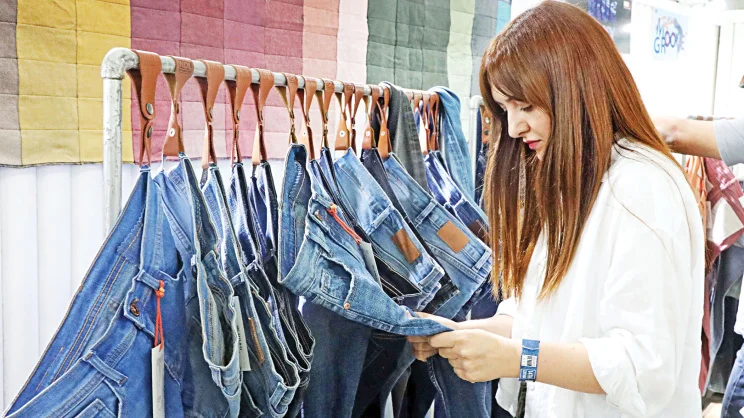
Photo: star/file

Requesting anonymity, a major European buyer recently suggested Bangladesh shift from producing basic garments to higher-value products and diversify its product range.

The buyer said Bangladesh’s top five products, including T-shirts, trousers, formal shirts, sweaters and underwear, account for 78 percent of the country’s garment exports.

Md Fazlul Hoque, managing director of Plummy Fashions Ltd, said, “Following the Trump tariff, competition in the global supply chain has become more intense as all the major global players such as China, Vietnam, Indian and Pakistan are sending the same goods to the same markets.”

Mostafa Q Sobhan Rubel, chief executive officer of Dragon Group, said shipments to North American markets, including the United States and Canada, are normal, but exports to Europe have slowed this season.​
 

RMG exports to US: China rapidly losing market share, Bangladesh unable to capitalise

Shuvongkor Karmakar
Dhaka

1786234499105.webp

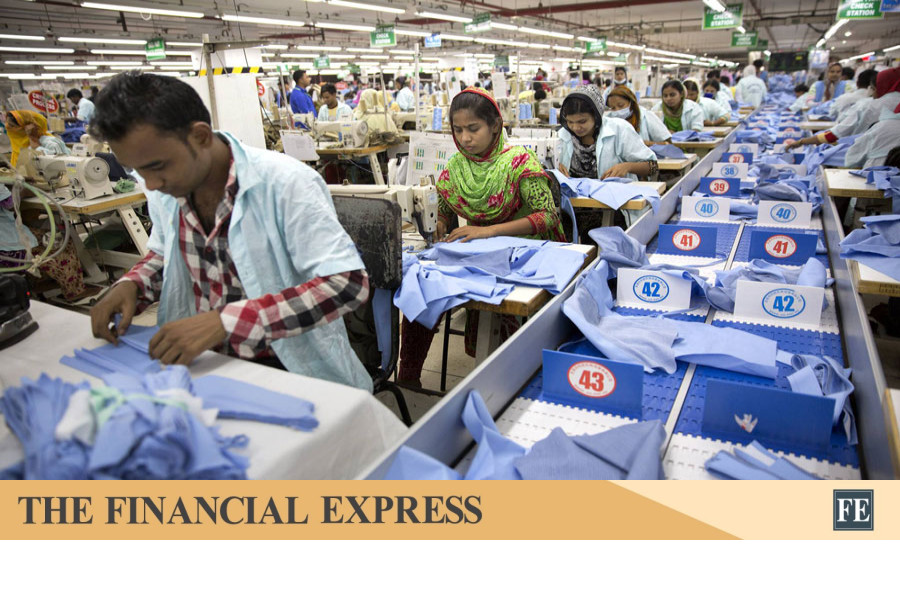
Workers at a readymade garment factory Prothom Alo file photo

China lost nearly $2 billion worth of readymade garment exports to the United States in the first six months of this year (January–June) compared with the same period last year.

However, Bangladesh failed to capture a significant portion of that lost market. Instead, competitors such as Vietnam, Cambodia and Indonesia increased their exports and took advantage of the opportunity.

According to data from the US Office of Textiles and Apparel (OTEXA), the United States imported readymade garments (RMG) worth $35.09 billion during the first half of the year, down 8 per cent from the same period last year.

Although overall US garment imports declined, Bangladesh's exports fell by a comparatively smaller 5.75 per cent. Imports from China, India, Mexico, Pakistan and Honduras also declined during the same period. In contrast, imports from Vietnam, Indonesia and Cambodia increased.

Local entrepreneurs in Bangladesh's garment industry say demand for apparel in the US has been slowing since reciprocal tariffs came into effect last year.

According to them, while purchase orders have been shifting rapidly away from China, a large share has gone to Vietnam, with Indonesia and Cambodia also benefiting.

They said Bangladesh has received comparatively fewer orders because much of the business moving out of China consists of man-made fibre garments, an area where Bangladesh's capacity remains relatively limited. In addition, Bangladesh continues to lag behind in fast-fashion orders due to its longer lead times.

Bangladesh's exports decline

The United States is the single largest export market for Bangladeshi readymade garments. In February this year, Bangladesh overtook China to become the second-largest apparel exporter to the US market. Although it retained that position at the end of June, exports during the January–June period fell by 5.75 per cent.

Bangladesh exported RMG worth $4.01 billion to the United States during the six-month period.

Fazlee Shamim Ehsan, executive president of the Bangladesh Knitwear Manufacturers and Exporters Association (BKMEA), told Prothom Alo that Bangladesh's capability in non-cotton garments remains relatively weak. As a result, the country is not buyers' first choice for such products.

He also said Vietnam and Indonesia are able to deliver products with lead times of around one month. Bangladesh's exports have declined mainly because of weaker sourcing and logistics, he added.

Last year, however, Bangladesh's readymade garment exports to the US market grew by nearly 10.5 per cent to reach $8.2 billion.

Who is taking over China's lost market?

The US-China trade war began before the Covid-19 pandemic. Since then, China's garment exports to the US market have been declining. The decline accelerated further after the United States imposed retaliatory tariffs last year.

During the first half of this year, China exported RMG worth $3.57 billion to the United States, a decline of 37.69 per cent compared with the same period last year. In the first half of last year, China exported garments worth $5.73 billion. That means China's exports declined by $2.16 billion in just one year.

Most of China's lost market has been captured by Vietnam, Indonesia and Cambodia. During the first half of this year, Vietnam exported RMG worth $7.85 billion to the United States, posting growth of 1 per cent. Indonesia exported $2.33 billion worth of garments and Cambodia exported $2.13 billion. Their export growth rates were 3 per cent and 12 per cent respectively.

Entrepreneurs see opportunities ahead

The reciprocal tariffs imposed by US President Donald Trump were declared illegal by the US Supreme Court in February this year. Following that ruling, Trump announced a new 10 per cent tariff on products from all countries under the Trade Act of 1974. The law allows such tariffs to remain in effect for 150 days, and that period expired last month.

Last month, the Trump administration imposed additional tariffs of 10 per cent and 12.5 per cent on products from 60 countries, including Bangladesh, alleging they had failed to adequately enforce restrictions on goods produced through forced labour.

A 10 per cent tariff has been imposed on products from Bangladesh, Cambodia, Honduras, Indonesia, Mexico, Pakistan and Sri Lanka, while products from Vietnam, Turkey and China face a 12.5 per cent tariff. As a result, Bangladesh now enjoys a lower tariff rate than several competing countries.

Shovon Islam, managing director of Sparrow Group of Industries, told Prothom Alo, "We now have a 2.5 percentage-point tariff advantage. So although we performed poorly in the first half of the year, there is a good possibility of doing better in the coming months. We have already received two major purchase orders from US buyers. Both orders are shifting to Bangladesh from Vietnam. Many other manufacturers like us may also receive similar orders."

However, Shovon Islam expressed concern over the energy crisis.

"If the energy crisis remains at a tolerable level, it will not create major problems. But production has already started to be disrupted, and foreign buyers have also expressed concern over the situation," he said.​
 

Garment industry running out of time to go green: CPD

Star Business Report

1786925226392.webp


Bangladesh’s garment industry must accelerate its shift to cleaner energy as rising power costs, dwindling gas supplies and tougher climate rules increasingly threaten the sector’s competitiveness, according to a new study by the Centre for Policy Dialogue (CPD).

Greater use of renewable energy and more efficient machinery could help factories cut energy costs while meeting growing environmental requirements in key export markets, the study found. The findings were presented yesterday at a national dialogue on industrial decarbonisation at BRAC Centre Inn in Dhaka.

The study drew on data from 350 RMG factories and 65 types of machinery across eight production categories.

It identified rooftop solar as a clear opportunity, which can potentially lower electricity costs and reduce factories’ exposure to volatile fossil fuel prices.

Average monthly energy expenditure among surveyed factories stood at Tk 9.98 lakh. Meeting 30 percent of energy needs through solar could cut costs to Tk 8.46 lakh, a 15.7 percent saving, the study found.

Machinery upgrades offer another opportunity, it noted. Cutting machines represent only 5.5 percent of installed capacity but could generate 27 percent of potential replacement savings. Sewing machines account for about 85 percent of machine stock but offer less than 3 percent savings potential. Smaller factories, however, face financing constraints and older machinery.

Speaking at the event, Asif Shahriar, assistant vice-president of Infrastructure Development Company Ltd (IDCOL), said limited financing capacity, a shortage of capable renewable energy service companies and the absence of standardised investment assessments are holding back industrial adoption.

Smaller factories often struggle to access financing because individual projects are too small for conventional financing models. He suggested grouping several small projects and financing them together.

Asif also backed operating expense, or OPEX-based, models in which third parties install and operate renewable energy systems while factories pay for the service, reducing the need for large upfront investments.

Fazle Shamim Ehsan, executive president of the Bangladesh Knitwear Manufacturers and Exporters Association, said European decarbonisation requirements leave Bangladesh with little room for delay.

He noted that Bangladesh is already behind several competing garment-producing countries in renewable energy use.

He said incentives often look better on paper than they work in practice. Even his LEED-certified platinum factory has not received the full benefit of a promised tax incentive because of how income tax is collected and adjusted.

“If the incentive does not reduce the actual tax burden, then what is the point of giving it?” he asked.

He also cautioned against assuming every industrial process can simply be electrified. New industrial zones should instead be planned around shared energy infrastructure, including steam generated as a by-product of power plants.

For existing factories, rooftop solar and efficient machinery offer quicker options, but both require financing and regulatory changes. “Funds are available, but they are not accessible enough,” Fazle Shamim said.

Mostafa Al Mahmud, president of the Bangladesh Solar and Renewable Energy Association, also criticised taxes on solar panels, batteries and other equipment.

Bangladesh now needs an emergency response in the energy sector, said Khondaker Golam Moazzem, research director at CPD.

Gas reserves are nearing depletion, while new exploration has not kept pace with demand. Industries will therefore need alternatives for gas-dependent boilers, diesel-based transport and irrigation.

The challenge extends beyond factories and financiers, pointed out Shamim Munir Uddin, director of the Ethical Trading Initiative.

Workers should also be involved in improving energy and resource efficiency through training and greater awareness at the factory level, he said, calling for closer scrutiny of how automation is affecting energy consumption.

Google News LinkFor all latest news, follow The Daily Star's Google News channel.
Policy remains a critical piece of the puzzle. Shamim Munir Uddin pointed out that factories importing renewable energy equipment are subject to around 15 percent VAT and 2 percent advance tax, creating a combined burden of roughly 17 percent.

Such measures can work against the government’s own renewable energy goals, he said.

Vidiya Amrit Khan, vice-president of BGMEA, said Bangladesh’s garment industry risks losing competitiveness if it fails to become more sustainable.

European regulations increasingly require detailed reporting on carbon emissions, energy use, water consumption and chemical discharge. Such requirements are expected to become more consequential for exporters by 2030, she said.

The biggest obstacle may be policy rather than technology, Vidiya said, with high financing costs, collateral requirements and proposed charges on open-access renewable power potentially making clean energy more expensive than conventional power. That could discourage investment, she added.​
 

Bangladesh, Netherlands sign MoU to advance circular economy in textile sector


1787010837704.webp


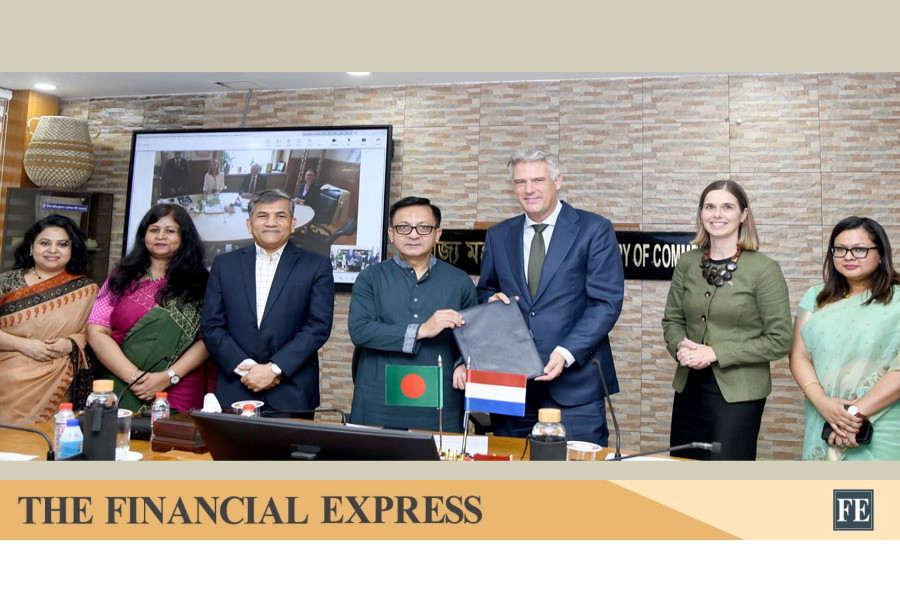
Bangladesh and the Netherlands have signed a memorandum of understanding (MoU) to strengthen cooperation on the circular economy, with a focus on promoting sustainable production, efficient resource use and green transition in the apparel and textile sector.

The agreement is expected to expand cooperation between the two countries in areas including resource efficiency across the textile value chain, waste reduction, recycling, sustainable production systems and green industrialisation.

The MoU was signed at a ceremony titled “MoU Signing on Cooperation in the Field of Circular Economy” held at the Ministry of Commerce on Monday.

Commerce Minister Khandaker Abdul Muktadir said adopting sustainable production systems and circular economy practices in the global textile industry had become an urgent necessity.

“As Bangladesh’s apparel and textile supply chain is deeply integrated with the global market, international cooperation in this sector needs to be further strengthened,” he said.

He said Bangladesh and the Netherlands had long been working as partners based on mutual trust, shared values and strong economic cooperation.

The Netherlands is one of Bangladesh’s important development and trade partners in areas including water management, agriculture, logistics and sustainable industrial development, he said.

“This MoU is an important milestone in taking our partnership towards a greener, more resilient and future-oriented economy,” the commerce minister said.

“Circular economy is not merely about environmental protection. It is directly linked to strengthening the long-term competitiveness of Bangladesh’s export sector, ensuring optimum use of resources, attracting sustainable investment, creating green jobs and responding to emerging demands in international markets,” he said.

The minister said Bangladesh was on the path to graduating from the least developed country (LDC) category.

Against this backdrop, strengthening industrial sustainability, adopting environmentally friendly production systems and complying with international standards would help enhance Bangladesh’s competitiveness in global trade, he said.

Khandaker Abdul Muktadir said the transition to a circular economy could not be achieved by any single stakeholder.

“It requires coordinated efforts involving the government, industries, financial institutions, development partners, research institutions and consumers,” he said.

The MoU places emphasis on multi-stakeholder cooperation and knowledge sharing, which would help bring about the structural changes required in the textile sector, he added.

The minister expressed gratitude for the Netherlands government’s continued support and constructive engagement, saying the partnership could become a successful example of international cooperation for sustainable industrial development and climate action.

The MoU was signed between Bangladesh’s Ministry of Commerce and the Netherlands’ Ministry of Economic Affairs and Climate Policy.

Khandaker Abdul Muktadir signed the agreement on behalf of Bangladesh, while Stientje van Veldhoven, the Netherlands’ Minister for Climate and Green Growth, signed on behalf of her country.

The two ministers joined the ceremony virtually and signed the agreement on behalf of their respective governments.

Stientje van Veldhoven said expanding the circular economy had become increasingly important, but no country could complete the transition on its own.

“International cooperation, commercial partnerships and coordinated initiatives are required across the entire supply chain,” she said.

She said officials from the two countries had already discussed priority areas for action and stressed the need to translate those discussions into concrete measures quickly.

She also expressed interest in Bangladesh and the Netherlands working together at international forums alongside bilateral cooperation, while voicing hope that collaboration between the two countries would become more effective and result-oriented.

Commerce Ministry Secretary Md Ataur Rahman Khan, Bangladesh Ambassador to the Netherlands Faiyaz Murshid Kazi and Dutch Ambassador to Bangladesh Joris van Bommel were present at the ceremony.

The MoU is expected to create new opportunities for adopting green technologies, promoting innovation and sustainable production, and enhancing the competitiveness of Bangladesh’s textile and apparel sector in international markets.

It is also expected to contribute to making Bangladesh’s industrial sector more climate-resilient and better prepared for the evolving global trading environment.​
 

Latest Posts

Back