Home Watch Videos Wars Movies Login

[🇧🇩] Textile & RMG Industry of Bangladesh

[🇧🇩] Textile & RMG Industry of Bangladesh
543
25K
More threads by Saif

G Bangladesh Defense

BGMEA, BKMEA want import ban on knit fabric withdrawn


1788650234968.webp


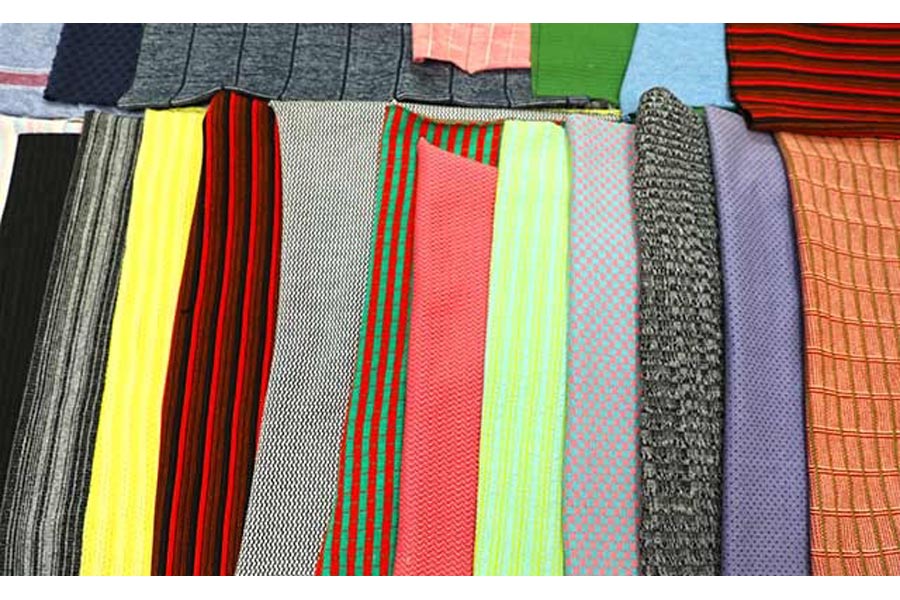
Two leading apparel trade bodies—the Bangladesh Garment Manufacturers and Exporters Association (BGMEA) and the Bangladesh Knitwear Manufacturers and Exporters Association (BKMEA)—have demanded the cancellation or suspension of a provision restricting knit fabric imports under the country's new import policy.

In separate letters sent to the Ministry of Commerce, the trade associations stated that Sub-clause 12 of Clause 25 of the Import Policy Order 2026–2029 stipulates that "knit fabrics shall not be eligible for import."

Both organisations requested the suspension or withdrawal of this restriction, emphasizing its potential negative impact on the normal operations and global competitiveness of the export-oriented readymade garment (RMG) sector, reports UNB.

In a letter sent to the Commerce Minister on September 1, BGMEA President Mahmud Hasan Khan explained that international buyers' demands constantly evolve, requiring product diversification, adherence to specific quality standards, custom designs, and rapid delivery. Meeting these buyer-driven requirements frequently necessitates sourcing specific varieties of fabric from international suppliers.

BGMEA noted that restricted import access could disrupt regular factory operations, as specialized grades, colors, textures, and designs required by global buyers are often unavailable in the local market.

BKMEA President Mohammad Hatem also urged the suspension or repeal of the provision, highlighting that imported knit fabrics of various types have already arrived at Chittagong Port under open-air storage, while many exporters have already completed import formalities.

The BKMEA warned that the new policy creates severe complications in clearing these shipments and executing scheduled export orders. He added that the restriction further compounds operational pressures on factories already struggling with production disruptions caused by ongoing gas shortages.​
 
Analyze

Analyze Post

Add your ideas here:
Highlight Cite Respond

BKMEA urges repeal of knit fabric import ban


1788650517442.webp


The Bangladesh Knitwear Manufacturers and Exporters Association (BKMEA) has urged the government to immediately withdraw a provision in the new Import Policy Order for 2026-29 that bans the import of knit fabrics.

In a letter to the Commerce Minister on September 2, signed by BKMEA President Mohammad Hatem, the trade body expressed concern over sub-clause 12 of provision 25 of the policy, which states: “Knit fabrics shall not be importable.”

According to the letter, during previous consultations with industry stakeholders, the authorities acknowledged that the restrictive provision had been included inadvertently and assured the industry that it would be removed.

However, the restriction was retained in the official gazette published by the ministry on August 24, 2026.

The BKMEA president said the ongoing severe gas crisis has significantly disrupted domestic textile mills and fabric production.

Local manufacturers are currently unable to meet the volume requirements, specialised technical standards and design variations demanded by international buyers, making the import of raw materials unavoidable.

Moreover, several garment exporters had already opened letters of credit (LCs) for raw knit fabrics before the gazette was published. Many of the shipments have already arrived at Chittagong Port, while others are still in transit, the letter said.

The BKMEA warned that enforcement of the ban would halt customs clearance, causing shipment delays, financial losses and cancellations of export orders.

To maintain production and meet buyers’ commitments, the association urged the government to immediately suspend or repeal the provision.​
 
Analyze

Analyze Post

Add your ideas here:
Highlight Cite Respond

Bangladesh retains No 2 spot in US apparel exports

Refayet Ullah Mirdha

1788651899855.webp


Bangladesh retained the second position in garment exports to the US in the January-July period as China’s apparel shipments to the American market recorded their steepest decline.

Bangladesh first overtook China in January-February as the Trump administration imposed higher tariffs on Chinese garment imports.

It retained the position in January-July despite a 6.50 percent year-on-year decline in garment exports to the US to $4.66 billion, mainly due to weaker demand for locally made apparel, according to data from the Office of Textiles and Apparel (OTEXA), the US provider of global apparel import data.

In July alone, Bangladesh’s garment exports to the US fell 10.73 percent.

Overall, US apparel imports declined 8.65 percent year-on-year to $41.83 billion in January-July.

China’s apparel shipments to the US fell 34.21 percent to $4.55 billion, while India’s declined 25.77 percent to $2.45 billion and Pakistan’s 5.60 percent to $1.26 billion.

Vietnam’s shipments fell 1.03 percent to $9.36 billion, while Indonesia and Cambodia posted growth of 2.76 percent and 10.48 percent to $2.74 billion and $2.62 billion, respectively.

Vietnam remained the largest apparel exporter to the US, followed by Bangladesh and China.

Bangladesh is in a relatively better position than some other apparel-exporting countries in terms of tariffs, which is helping boost shipments to the US market, said Shovon Islam, managing director of Sparrow Group.

“Although exports are in a good position, prices declined in January-July as local exporters had to bear part of the reciprocal tariff,” he said.

If the energy crisis is resolved, Bangladesh could perform even better in the US market, Shovon added.

“China is losing market share, and Bangladesh may be able to perform better in the future. In fact, Vietnam is taking more of China’s market in the US, while Bangladesh is taking a smaller share,” said Anwar Ul Alam Chowdhury Parvez, chairman and managing director of Evince Group, which ships a significant portion of its garments to the US.

However, Bangladesh’s ability to retain the position could be challenged by the ongoing energy crisis, he said.

“We are concerned whether Bangladesh can retain this position in the US market as the energy crisis persists in industrial units. Buyers are also well aware of the energy situation,” Anwar said. If the country can ensure adequate energy supplies, Bangladesh may sustain the positive trend, he added.

Mohammad Hatem, president of the Bangladesh Knitwear Manufacturers and Exporters Association (BKMEA), said Bangladesh could benefit further as China loses market share in the US, but sustaining growth will require lower production costs and reliable gas and power supplies.

Mahmud Hasan Khan, president of the Bangladesh Garment Manufacturers and Exporters Association (BGMEA), said the outlook for garment exports to the US was positive as work orders were rebounding following the finalisation of effective tariff rates for individual countries by the US government.

However, the industry’s focus should not be on export volume alone, but also on how much value local manufacturers retain, he said.

“Obtaining letters of credit from international buyers should not be the main target, as many exporters cannot make even a minimum profit because of high import costs for raw materials such as fabrics and chemicals,” Mahmud said.

Many exporters are also shipping goods below production cost in the hope of making profits later, he said. The BGMEA wants the industry to achieve a retention value of $20 billion if Bangladesh exports $50 billion worth of garments a year, Mahmud added.

The US is Bangladesh’s single largest garment export destination.

In February, Bangladesh and the US signed the Agreement on Reciprocal Trade (ART), which includes a textile clause. Under the clause, garments made in Bangladesh using US-sourced cotton and man-made fibres could qualify for duty-free access to the US market.

The provision could further strengthen Bangladesh’s competitiveness in the US market if implemented properly.​
 
Analyze

Analyze Post

Add your ideas here:
Highlight Cite Respond

How Bangladesh can regain its second position in garment exports


1789107788874.webp


Recent reports state that Vietnam has overtaken Bangladesh as the world's second-largest ready-to-wear exporter. This is a structural result of a static growth model rather than an unanticipated macroeconomic shock. For decades, the ready-made garment ecosystem in Bangladesh has operated on a logic of static comparative advantage, relying on low labour costs, economies of scale in basic cotton, and unilateral trade preferences such as the EU's Everything but Arms (EBA) initiative.

However, the dynamics of global trade have fundamentally shifted from labour-intensive commodity production to high-speed, technology-enabled supply chains. Treating this structural weakness as a temporary post-pandemic or inflationary blip is a misdiagnosis of the economy's underlying state.

Vietnam's rise is a systemic shift towards a dynamic competitive advantage based on product complexity, deep trade integration, and logistical agility, not just a story of export growth. The core of Bangladesh's strategic blind spot is an internal political paradox that deliberately blocks industrial development.

Bangladesh accounts for only 5 per cent of this lucrative market, although synthetic and polyester fibres account for around 60 per cent of the global garment trade. This imbalance is mainly due to the friction of national legislation rather than a lack of entrepreneurial initiative. Import duties on synthetic raw materials, such as polyester resins and polyesters, indirectly tax producers seeking to expand beyond cotton.

Political paralysis is also caused by institutional disputes between primary textile producers, who want protectionist import restrictions on free-range fabrics, and clothing exporters, who want flexibility in raw materials. This is because protectionist policies that safeguard upstream capacity prevent downstream garment exporters from adjusting to shifting global demand.

The difference between Bangladesh and Vietnam goes even deeper in terms of trade architecture: Vietnam is aggressively pursuing bilateral and regional trade agreements (EU-Vietnam FTA, Comprehensive and Progressive Agreement on Trade) that offer its exporters institutional predictability, zero-tariff access, and flexible rules of origin, and are set to be eroded with the impending graduation of the LDCs.

Compared to regional competitors, the export sector is vulnerable to significant tariff shocks if it relies on short-term transitional periods after graduation without obtaining reciprocal EPAs. The elasticity of lead times has surpassed unit labour costs as the main factor influencing sourcing decisions in today's global retail environment. Vietnam's logistical efficiency, direct shipping routes, and quick customs clearance help international buyers lower the risk of inventory hoarding.

However, the financial burden of operational inefficiencies at Chattogram Port, where container ships spend about half their time anchored or waiting to be berthed, affects lead times. These delays reduce Bangladesh's remaining cost advantage, alongside ongoing disruptions to electricity or energy supply and the fragmentation of internal transport networks.

Unlike the integrated, design-capable supply networks in Vietnam, the industry's historical reliance on simple Cut, Make and Cut production further limits local value capture. Bangladesh needs to implement an integrated macroeconomic and industrial strategy to overcome the volume trap and regain competitiveness.

To match local incentives with changes in global demand, fiscal policy must first and foremost rationalise import tariffs on all non-cotton fibres and synthetic inputs. Policymakers must broker a strategic compromise between primary textile spinners and garment exporters, replacing strict import restrictions with targeted financial incentives for domestic MMF production. Ultimately, economic diplomacy should shift quickly from seeking LDC preferences to negotiating reciprocal free-trade agreements in key target markets, and from low-cost bulk assembly to an integrated, high-value garment ecosystem. Industry leaders need to invest in port automation, ocean-based shipping routes, high-value design capabilities, and an expanding base of green-certified plants. Only then can Bangladesh maintain its position as a global trade hub.

Ananta Proshad Chakraborty is a postgraduate of Nalanda University and a research intern at the Society for Asian Circular Innovation Network (SACIN).​
 
Analyze

Analyze Post

Add your ideas here:
Highlight Cite Respond
  • Like (+1)
Reactions: Bilal9

Tighter controls on yarn imports to save millions, create jobs
Textile millers back new import rules

Staff Correspondent . Dhaka 13 September, 2026, 00:00

1789256861215.webp


Restrictions on imports of 10-count to 30-count cotton yarn could save millions of dollars from import bills annually and could create jobs in the textile sector following the revival of closed or partially shut factories, the industry people has said.

Citing data from the commerce ministry and the Bangladesh Trade and Tariff Commission, they have also said that Bangladesh’s import bills for cotton is over $1.6 billion annually, a big portion of it could be saved by strengthening primary textile supply chain.

On September 7, the government issued a notification tightening the rules for duty-free yarn imports under the bond facility.

Textile millers said that the move could also help revive the textile and spinning industries, restore jobs lost in recent years and create new employment opportunities, potentially generating jobs for nearly 1.5 million people.

Bangladesh Textile Mills Association president Showkat Aziz Russell said recently that restarting closed and semi-closed textile factories across the country could create employment opportunities for around 1.5 million people.

The employment impact of the spinning industry was not confined to factory workers but extended to cotton handling, transport, warehousing, packaging, engineering and maintenance, power and utility services, banking, insurance, and the supply of chemicals and spare parts.

Moreover, according to ASYCUDA data attached to a commerce ministry letter, yarn imports under HS headings 5205, 5206 and 5207 nearly doubled in two years, rising from 350.8 million kilograms in FY23 to 697.1 million kg in FY25. The imports were valued at more than Tk 26,000 crore in FY25, according to the data.

BTMA claimed that in FY26, the country’s total yarn import bill rose to around Tk 30,000 crore, of which about 65 per cent comprised yarn with counts ranging from 10 to 30.

Textile millers said the suspension of imports of 10-count to 30-count yarn under the bond facility could reduce the import bill and help revive closed and struggling textile mills.

A commerce ministry official said that following a BTTC report on January 5, the ministry advised the National Board of Revenue on January 12 to curb yarn imports to promote local industries and employment.

After the national election, the elected government held two meetings on the issue, on July 29 and August 20, before the NBR issued a notification tightening the rules for duty-free yarn imports under the bond facility on September 7.

Exporters, however, can import the yarn under a conditional arrangement by providing bank guarantees, which will be released after repatriation of export proceeds.

The decision was aimed at protecting domestic textile and spinning industries while ensuring that genuine exporters could procure raw materials, according to the notification.

After the national election, the elected government committed to creating 10 million jobs during its tenure.

Textile millers said the move would help support that goal by strengthening local backward-linkage industries and improving export competitiveness over the long term.

Many yarn-manufacturing factories are operating at only 50 to 60 per cent of their installed capacity, said the BTMA, adding that claiming that around 114 yarn-manufacturing enterprises and 244 textile mills had closed operations since 2019, with lakhs of spindle sitting idle.

Reviving these closed factories of the $32 billion dollar- industry across the country could create employment opportunities for a mentionable number of workers.

Chowdhury Mohammad Hanif, director of Salma Group said on Saturday that local mills had long struggled with low capacity utilisation due to an influx of cheap foreign shipments.

When local production lines sit idle because of unchecked imports, the entire backward linkage ecosystem suffers immensely, said Hanif, also a BTMA director.

Textile millers have also long alleged that a portion of duty-free raw materials imported under the bond facility ends up in the local market.

They said greater oversight of the import-production-export chain under the new bank guarantee system could help reduce the risk of such misuse.

As Bangladesh prepares to graduate from the least developed country category, the capacity of the local textile industry is becoming increasingly important, they said.

Md Badsha Mia, chairman and managing director of Badsha Group of Industries, said the BTTC had reviewed import data and recommended keeping 10-count to 30-count yarn outside the bond facility to protect domestic spinning mills from what he described as unfair competition.

Textile millers also said that the import of cotton might increase in the coming months.

In the ‘Cotton: World Market and Trade’ report, the United Staes Department of Agriculture forecast that Bangladesh could import 7.4 million bales of cotton in marketing year 2026-27, which might increase following the governmental decision.

Garment exporters, however, strongly opposed the move, saying the additional financing requirements would raise production costs and make Bangladesh’s apparel sector less competitive.

They sent a joint letter to the commerce ministry opposing the decision.​
 
Analyze

Analyze Post

Add your ideas here:
Highlight Cite Respond

RMG shipments to US jumped 25% in August

Star Business Report

1789535172270.webp

Photo: star/file

Bangladesh’s garment exports to the US rose 25.65 percent to $806.46 million in August from July, according to Export Promotion Bureau (EPB) data, as shipments picked up following the settlement of tariff to the American market.

In the July-August period, Bangladesh’s garment exports to the US brought in $1.61 billion, up 11.42 percent from $1.44 billion in the same two months a year earlier, according to the EPB.

The two-month total was equivalent to 20.8 percent of the $7.74 billion earned from garment exports to the US in fiscal year 2025-26.

If the current 11.42 percent year-on-year growth is maintained through FY2026-27, garment exports to the US could reach around $8.62 billion, compared with $7.74 billion in FY2025-26.

The monthly average so far this fiscal year stands at $806.46 million, well above the $645.38 million monthly average based on last year’s full-year exports.

Most of the increase, however, came in August, when exports jumped 25.65 percent. In July, they fell 0.18 percent.​
 
Analyze

Analyze Post

Add your ideas here:
Highlight Cite Respond

Textile, apparel bodies seek urgent gas rebalancing

Four trade groups propose zone-based rationing to ease supply shortages

1789701328271.webp


Four leading textile and apparel trade bodies have urged the Gas Transmission Company Limited (GTCL) to urgently rebalance gas supplies and introduce zone-based rationing.

They warned that severe shortages in the Titas Gas franchise area are disrupting production at the heart of the country's export-oriented textile industry.

The trade bodies are: Bangladesh Garment Manufacturers and Exporters Association (BGMEA), Bangladesh Knitwear Manufacturers and Exporters Association (BKMEA), Bangladesh Textile Mills Association (BTMA) and Bangladesh Terry Towel and Linen Manufacturers and Exporters Association (BTTLMEA).

In a joint letter to the GTCL managing director on September 16, they presented data detailing acute regional supply disparities, highlighting the importance of Titas area. Titas supplies gas to the vast majority of textile infrastructure, housing about 6,500 factories, or 94.05 per cent of the national total, employing 12 million workers, or 91.99 per cent, and contributing nearly $52 billion in annual exports.

According to figures cited in the letter, signed by the presidents of the trade bodies, the total approved industrial and captive gas load across all distribution companies in Bangladesh stands at 1,961 million cubic feet per day (MMCFD).

Of this, the Titas franchise area alone accounts for 1,488 MMCFD, representing 75.88 per cent of the national approved load.

The remaining five gas distribution companies combined have an approved load of 473 MMCFD, or 24.12 per cent, according to the letter.

However, an assessment of average supply data between September 5 and September 9 found that Titas received significantly less than its proportional share.

While GTCL allocated a daily average of 980.20 MMCFD to Titas, actual receipts averaged only 883.20 MMCFD, leaving a daily deficit of 97 MMCFD against the allocation, it showed.

Out of the total actual daily supply of 1,256.80 MMCFD distributed nationwide during that period, Titas received 70.28 per cent, or 883.20 MMCFD, instead of its proportional share of 75.88 per cent, or 953.57 MMCFD.

On the other hand, the other five distribution companies received 373.60 MMCFD, which was 70.37 MMCFD above their proportional share of 303.23 MMCFD, it argued.

To prevent further harm to national production and export shipments, the apparel and textile leaders placed a three-point demand before the GTCL authority.

They urged the immediate review and reallocation of surplus, reassigned gas from other distribution regions to the Titas Gas area, while maintaining the minimum operational and technical requirements of other regions.

Priority measures must be undertaken to ensure both adequate gas volumes and the required operational gas pressure in the Titas zone to enable efficient factory operations.

They also proposed a zone-based weekly rationing system, saying that instead of subjecting all industrial belts to widespread low pressure simultaneously, GTCL should introduce a weekly zonal rationing scheme.

Major industrial belts should be divided into distinct zones under a specific weekly roster, they said, adding that each zone would receive full gas flow and the required pressure for five days, while gas demand would be planned and restricted for two days to boost pressure in other areas.

The letter stressed that the rationing schedule must take into account continuous production units, boiler- and process-heat-dependent facilities, export deadlines, labour laws and factory safety.

According to the letter, the proposed arrangement aims to ensure equitable and economically optimal resource utilisation without depriving any region.​
 
Analyze

Analyze Post

Add your ideas here:
Highlight Cite Respond

The $5 billion opportunity Bangladesh is failing to see

Nishat Tasnim

On the cutting floor of a garment factory in Gazipur, as a worker cuts around a shirt panel, a piece of fabric can become worthless within seconds. The excess that falls to the floor is too small for the export order, too irregular to become another shirt, and no longer useful to the factory that bought the fabric. It looks like waste.

But before the day is over, it may be swept into a sack, sold to a trader, carried to a sorting cluster and separated by colour, composition and quality. A larger piece may be reused. A cotton scrap may move towards recycling. Another piece may be sold again, perhaps several times, before reaching its next destination.

The factory has finished with it. However, the economy has not.

1789705052589.webp

The cutting floor at Mawna Fashion. Cutting floors across Bangladesh’s garment industry are where pre-consumer textile waste is generated before much of it enters the jhut economy. Photo: Dharmachandra Tonchongya, International Centre for Climate Change and Development (ICCCAD)

This is ‘jhut’: a term derived from the Urdu word ‘jhuta’, meaning waste. It has become Bangladesh's vast, largely informal market for post-industrial textile waste. An estimated 195,000 to 214,000 workers earn their livelihoods across 18,400 to 22,000 informal enterprises linked to this trade, according to field research across twelve districts by Reed Consultancy Bangladesh and Circle Economy.

Most of the sorting is done manually, predominantly by women. Research cited by the Thomson Reuters Foundation estimates that women account for roughly 70 percent of jhut sorters. The Daily Star has reported from a Gazipur facility where workers, most of them women aged between 20 and 50, had remained in the trade for five to twenty years. Their work is largely invisible in official statistics and almost absent from the language of climate action. Yet they are doing something that the global circular economy now considers highly valuable: keeping materials in circulation.

The arithmetic of a scrap

Bangladesh's garment industry generates an estimated 400,000 to 577,000 tonnes of pre-consumer textile waste every year. The strange part is not simply how much waste we produce. It is how much value leaves with it. Less than 5 percent is reportedly recycled domestically into value-added textile products, while more than half is exported for recycling and other forms of processing. The numbers become more striking when viewed in the context of the global market.

A 2024 study by GIZ and H&M estimated that Bangladesh could generate an additional $4 billion to $5 billion annually by developing a stronger circular textile industry. Industry leaders have since placed the potential even higher. In 2026, a BGMEA vice-president said that recycling the country's RMG waste could support a circular economy worth nearly $8 billion annually.

The scrap on the cutting-room floor is not economically insignificant. It is feedstock. It is raw material. It is unnoticed cash.
These figures are projections, not money Bangladesh is currently earning. But they point towards something important. The scrap on the cutting-room floor is not economically insignificant. It is feedstock. It is raw material. It is unnoticed cash. And Bangladesh is increasingly being asked to see it that way. The question is: what happens to the people who have been seeing it that way all along?

Informal jhut economy

For decades, the informal jhut economy has performed the work of circularity without calling itself a circular economy.

Traders collect the waste. Workers sort it, make it business-grade and resell it. Recyclers then transform some of it into new materials, while some larger textile pieces are reused or remanufactured, and smaller cotton scraps become recycled fibre or yarn.

The system is messy, fragmented and often exploitative. However, it is also remarkably persistent.

1789705105157.webp

Women sort colourful garment offcuts by hand at a jhut recycling facility, separating the scraps into piles before they move to the next stage of the recycling process. Photo courtesy: Chowdhury Lamia Tarik

Research published by Lone Riisgaard in Circular Economy and Sustainability describes Bangladesh's informal textile-waste system as an established form of circularity. The researcher found that existing networks already recover and reuse substantial quantities of apparel production leftovers, while formal recycling capacity remains limited.

This creates an uncomfortable paradox.

Bangladesh is now preparing to build the circular economy that its informal workers have already been operating. The difference is that the new version comes with traceability, certification, investment, international buyers, and potentially billions of dollars.

That changes the question from whether waste has value to who gets to capture that value.

When circularity becomes formal

Global brands increasingly want textile waste that can be traced, measured and verified. Large recyclers therefore have an incentive to source cleaner, higher-value scraps directly from factories rather than through the fragmented networks that have traditionally handled jhut, according to the same Riisgaard study.

From an industrial perspective, this is understandable. Direct sourcing can improve traceability. Formal recycling can improve environmental standards. Better technology can produce higher-quality recycled fibres. But formalisation has a blind spot.

What happens to the workers and small businesses whose livelihoods depend on the informal chain?

A 2026 study warns of what it calls “green value appropriation”: the transition towards formal circularity can allow larger global value-chain actors to capture the new economic value associated with sustainability, while existing informal workers lose access to the materials that have sustained their livelihoods.

A factory can become greener while a sorting worker becomes poorer. A recycled yarn can carry a sustainability certificate while the hands that separated its original fibres remain unprotected.

The danger is not that formal recycling is inherently harmful. It is that we may mistake formalisation for progress. A factory can become greener while a sorting worker becomes poorer. A recycled yarn can carry a sustainability certificate while the hands that separated its original fibres remain unprotected. An industry can close its material loop while opening a new social gap.

Who owns the next life?

This is where Bangladesh's circular transition becomes a question of justice. The country does need better recycling infrastructure. At the same time, it also needs investment, technology, traceability and policies that make domestic recycling economically viable. It needs to ensure that valuable textile material is not lost because of a fragmented recovery system.

But it also needs to recognise the economy that already exists. That means treating informal waste workers not as obstacles to modernisation, but as participants in it. It means bringing occupational safety, social protection and fairer working conditions into the circular-economy conversation. It means designing formal systems that connect existing workers and enterprises to new markets rather than simply routing around them. Otherwise, the transition could repeat an old pattern. The material stays. The value moves. And the people doing the work are left behind.


1789705170372.webp

An uncovered shredding machine operates amid textile dust and shredded fabric inside a dim jhut processing shed, with little protection for workers from the machinery or airborne particles. Photo courtesy: Chowdhury Lamia Tarik

A scrap of fabric does not become valuable because a policy document calls it a resource. It was already valuable. Someone simply had to see it. And, for decades, someone did.

The real question facing Bangladesh is therefore not whether it has a circular economy. It does. The question is what happens when an economy built by invisible workers becomes valuable enough for everyone else to notice. If Bangladesh counts the recycled yarn but not the hands that sorted the waste, it may succeed in closing the loop for materials while leaving the people who built that loop outside it.

The future of Bangladesh's circular economy may begin on a cutting-room floor. But who owns that future will be decided somewhere else.

Nishat Tasnim is a research officer at the International Centre for Climate Change and Development (ICCCAD), where her work focuses on Just Transition and Loss and Damage (L&D) related to Climate Change.​
 
Analyze

Analyze Post

Add your ideas here:
Highlight Cite Respond

Latest Posts

Back
 
G
O
 
H
O
M
E