Home Watch Videos Wars

[🇧🇩] Trump's Victory/Tariff/ Bangladesh

[🇧🇩] Trump's Victory/Tariff/ Bangladesh
209
6K
More threads by Saif

G Bangladesh Defense

Bangladesh shouldn’t respond knee jerk reaction to US tariff measures: Debapriya
FE ONLINE DESK
Published :
May 17, 2025 15:16
Updated :
May 17, 2025 15:16

1747527165461.webp


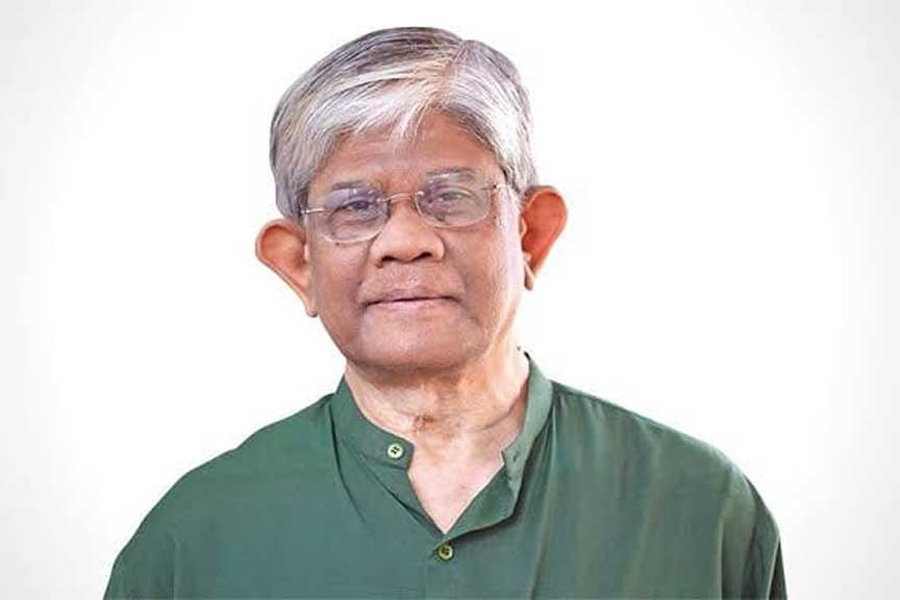
Bangladesh should not respond to the US reciprocal tariff move with a knee-jerk reaction rather view it as an opportunity.

Dr. Debapriya Bhattacharya said this at a seminar in Dhaka on Saturday.

Jointly organised by the Dhaka Chamber of Commerce and Industry (DCCI) and Business Initiative Leading Development (BUILD), Dr. Bhattacharya said that as the US focusses on China and Vietnam, Bangladesh has a window of opportunity—particularly in the garments sector.

He also said that beyond readymade garments, Bangladesh could tap into export opportunities in the leather and pharmaceutical sectors to strengthen its trade relationship with the US.

Commerce Secretary Mahbubur Rahman and International Chamber of Commerce Bangladesh (ICC Bangladesh) President Mahbubur Rahman spoke at the seminar as special guests.​
 
Analyze

Analyze Post

Add your ideas here:
Highlight Cite Fact Check Respond

Trump tariff highlights the need for diversifying exports: special assistant to CA
He says this at a discussion organised by the International Business Forum of Bangladesh

1747530337213.webp


The Trump tariff serves as a wake‑up call for Bangladesh, said Anisuzzaman Chowdhury, special assistant to Chief Adviser Professor Muhammad Yunus.

"In the current circumstances, we must diversify our exports to meet this challenge and, at the same time, move toward value addition," he said at a discussion yesterday.

The International Business Forum of Bangladesh (IBFB) organised the discussion, styled "Revamping USA-Bangladesh Trade", at the IBFB office in the capital.

Recently, US President Donald Trump announced reciprocal tariffs and later suspended them for three months.

"International circumstances have changed, and we must build self-confidence while focusing on diversifying our export markets," Chowdhury said.

The government plans to establish a specialised trade negotiation body ahead of Bangladesh's graduation from least-developed country (LDC) status, he added.

M Humayun Kabir, former ambassador and vice-president of the Bangladesh Enterprise Institute, said there is a trust deficit in the United States toward Bangladesh when it comes to negotiations on such trade matters.

"We must work on how to build and sustain that trust," he said.

Zaidi Sattar, chairman of the Policy Research Institute of Bangladesh, in his keynote presentation, highlighted the importance of engaging with the USA to negotiate tariff reductions on key export items such as agricultural products and machinery.

He recommended focusing on low-revenue items and reducing tariffs on non-garment goods to help curb anti-export bias.

Bangladesh could benefit from trade diversification, particularly considering China's growing tariff burden, he said, adding that collaboration with international buyers is needed to share increased costs, stressing that Bangladesh's limited bargaining power makes flexible pricing arrangements essential.

Prof Mustafizur Rahman, distinguished fellow at the Centre for Policy Dialogue, said Bangladesh needs to strengthen its trade negotiation capacity.

He said signing a free trade agreement or preferential trade agreement with the United States is possible, but Bangladesh is still not ready for that.

Rahman also said that although US tariffs are described as reciprocal, in reality, they are irrational and one-sided.

He highlighted the importance of raising the tariff issue within the TICFA (Trade and Investment Cooperation Forum Agreement) platform but acknowledged that Bangladesh is not yet adequately prepared for such discussions.

Syed Ershad Ahmed, president of the American Chamber of Commerce in Bangladesh, said there are not only tariff barriers in Bangladesh but many non‑tariff barriers as well.

For example, he said that clearing imported goods from the customs department requires 17 signatures and takes 7 to 8 days.

"Although it takes a long time to clear cargo here, in Vietnam it takes less than a day. As a result, we're losing out in competition. In this situation, modernising the customs department is very essential," he said.

Lutfunnisa Saudia Khan, president of the IBFB, said the suspension of the Generalised System of Preferences (GSP) benefits, along with the rise of protectionist trade policies in recent years, has affected Bangladesh's competitiveness in vital sectors such as garments, leather, and light manufacturing.

The suspension of GSP has slowed export growth, hindered job creation, and dampened investor confidence.​
 
Analyze

Analyze Post

Add your ideas here:
Highlight Cite Fact Check Respond

Trump tariffs could be a defining moment for Bangladesh
Muhammad Mahmood

Published :
May 25, 2025 00:37
Updated :
May 25, 2025 00:37

1748128435990.webp


On April 2, what was labelled as "liberation day", US President Donald Trump launched his global tariff war against every country in the world, including the uninhabited Heard and McDonald Islands off the coast of Antarctica. His tariffs were labelled as "reciprocal" despite they bore no relationship to any tariffs or other trade barriers these countries imposed on US exports.

Nothing like Trump tariffs have ever been imposed before, they outstrip by far, even the Smoot-Hawley tariffs imposed by the US in the 1930s. Those tariffs ultimately led to the Great Depression and social devastation culminating in Worl War II. Trump tariffs are an economic absurdity raised to new heights disrupting the rule based global trading system with serious implications for developing countries like Bangladesh and their economic future.

Trump imposed a 37 per cent reciprocal tariff (RT) on imports from Bangladesh on that very day chiefly affecting ready-made garments (RMG),triggering alarm among exporters. Washington maintains that the step is taken, because what the US administration calls the effective rate of tariff (a term that encompasses both taxes and regulatory compliance costs) that Bangladesh charges is 74 per cent on US goods.

1748128455750.webp


But Bangladesh also faces disproportionately high taxes on clothing and footwear imports into the US already. Bangladeshi imports into the US were subject to an average tariff of 15.7 per cent. The Trump tariff rate for Bangladesh is higher than for its RMG competitors India (27 per cent) and Pakistan (30 per cent) but less than Cambodia (49 per cent), Sri Lanka (44 per cent), and China (40 per cent).

In fact, Bangladesh remains the most protected economy in the South Asian region and relatively tariff protected compared to other countries in the world, with a significant portion of its tariff lines not bound, meaning the government has the flexibility to raise applied tariff rates. This practice of trade mercantilism also creates uncertainty in market access for manufactured goods. Currently the average nominal tariff rate for imports into Bangladesh stands at 28 per cent and the total tax incidence (TTI) (including all taxes importers pay) is 54 per cent.

It is to be noted that tariffs are a tax that a country imposes on itself as it imposes costs in the same way that a tax on domestic products imposes costs. Tariffs can also harm trading partners, but that doesnot change the fact that the main victim is generally the country imposing tariffs.

There are several taxes that are imposed on imports in Bangladesh, and they include Customs Duty (CD)Value Added Tax (VAT), Supplementary Duty (SD), Regulatory Duty (RD) Advance Income Tax (AIT) and Advance Trade VAT (ATV). Tariffs (CD) are a significant source of government revenue, which greatly complicates efforts to lower tariff rates.

Up until "reciprocal tariffs" (RT) were introduced, Bangladeshi exports faced an average tariff of about 15.7 per cent. If the new tariff eventually come into effect, the average tariff rate could jump to 52.7 per cent.In 2024, Bangladesh exported goods worth nearly $8.4 billion to the US, of which US$7.34 billion were readymade garments (RMG). More than four million people work in the RMG industry in Bangladesh, and most of those workers are women and most of them?live pay check to pay check-are also facing increasing job insecurity. The Trump tariffs could force factory closures ?and workers being laid off, as such the stakes are not only?economic but also existential.

In fact, the impact of RT goes far beyond the RMG industry and people directly and indirectly associated with it. The flow on effects of any declining export earnings will negatively impact macroeconomic stability of the country, could further exacerbate the balance of payments crisis.

As Bangladesh deals with this latest trade shock, it is becoming increasingly clearer that?the US is being remade by rising American economic nationalism under the banner of "Make America Great Again" (MAGA). But for Bangladesh, this is not merely a matter of the after-effects of US policy - it is?a question of national survival.

Since taking over the rein of the country the interim government headed by Nobel Laureate Mohammad Yunus has faced numerous challenges, from high inflation and unemployment to delays in implementing crucial reforms across the judiciary, political system and economy, primarily due to ongoing law and order issues. Also, there is a growing concern that members of the criminal syndicate run by ousted Hasina are regrouping.

Till now the economic and political situation in Bangladesh remains fragile and fluid. Under such circumstances Trump tariffs are an alarming news for the country because the US is Bangladesh's single largest export destination accounting for about 17 per cent of the country's exports. It is estimated that about 86 per cent of total exports to the US are RMGs. Other goods include leather footwear, leather goods, home textiles.

If Bangladesh wishes to continue to rely on RMG exports, the industry needs to keep pace with technological progress and innovate to remain a relevant player in global apparel trade. Now the future of the RMG industry depends on robotics and AI technologies which will begin to reshape the RMG industry as already happened in most other industries already.

Immediately after the imposition of the tariffs, Head of Bangladesh's interim government Muhammad Yunus has written to US President Donald Trump requesting a three-month pause on a 37 per cent tariff on imports from Bangladesh, citing efforts to boost imports from the US. To reduce the US$6.2 billion trade surplus with the US in 2024, Bangladesh has pledged to add 100 American products to its duty-free list, according to the commerce advisor. "We hope the letter will have a positive impact. Our main goal is to narrow the trade gap," he further added.

On May 7, in a letter to the Commerce Adviser, USTR Jamieson Greer stated that the US administration acknowledges the response from the Bangladesh government and is prepared to begin trade negotiations within the framework of President Trump's "reciprocal tariffs" policy. The US will cooperate closely to address bilateral trade imbalances.

However, on May 16, Trump said U.S. trading partners should expect individual letters from Treasury Secretary Scott Bessent and Commerce Secretary Howard Lutnick "at a certain point over the next two to three weeks," in which they would be "telling people what they will be paying to do business in the United States." He did not specify which countries would receive letters telling them what they would pay, and which countries still could negotiate.

It is likely that many smaller, poorer countries, not considered to be of great importance to US economic relations, but which were hit by heavy tariffs, will get a letter reimposing the April 2 measures.

One of the objectives of RT is to expand market access for US agricultural products to bridge the trade gap. In fact, Bangladesh mostly imports agricultural products from the US among others. Any trade negotiation with the US to bridge the trade gap will mostly likely involve Bangladesh agreeing to import more agricultural products.

In 2023, the share of agriculture in Bangladesh's gross domestic product (GDP) was 11 per cent, but the sector is a significant employer, with approximately 45 per cent of the total labour force engaged in agricultural activities. The sector is beset with various challenges such as unsafe work environments, low wages, and long working hours. Also, a high proportion of rural women are engaged in farm activities.

Therefore, importation of highly subsidised US farm products could pose a threat to the livelihood of marginal to small farmers and farm labourers notwithstanding the impact on country's drive to attain food grain self-sufficiency. Therefore, if Bangladesh agrees to import more subsidised agricultural products it must make it clear to the US administration that any subsidised agricultural products may be subject to Countervailing duties (CVD), also known as anti-subsidy duties.

CVDs are tariffs on imported goods that are imposed to offset subsidies by the exporting country's government. CVDs help offset any negative domestic impacts that producers of the same good might experience due to competition from foreign subsidised products, in this case subsidised US agricultural products. The WTO permits CVDs to be charged only after proper investigation has been conducted by the importing country into the subsidised exports.

The interim government has already expressed its desire to start negotiations with the Office of the US Trade Representative (USTR) and is reviewing Bangladesh's own?tariffs on American imports in a bid to resolve the standoff. Now in view of Trump's declaration on May 16, it is not clear whether Bangladesh will receive a letter unilaterally deciding the tariff rate for Bangladesh or will be able to negotiate.

In either case, Bangladesh's trade relationship with the US is unlikely to undergo any drastic changes soon, but the Bangladesh government needs to approach the trade imbalance issue very carefully and strategically to ensure that the interest of Bangladeshi farmers are safeguarded.

Bangladesh could also build coalitions with similarly affected countries like Cambodia, Pakistan, Vietnam and Sri Lanka to jointly raise concerns at the WTO-- however symbolic that might be given the WTO has been rendered ineffective by the US.

But the process of bringing about changes in tariff schedules and changes in trade policy in Bangladesh is slow and complicated because of longstanding vested interests who have been benefitting from the current trade regime. Also, the political and bureaucratic systems are deeply corrupt and socially patronage culture is very widespread. As such governance issues thwart the development of a competitive economy in Bangladesh. And Bangladesh can only ignore addressing these issues at its own peril. Business as usual will take Bangladesh nowhere as has been exemplified by the mega projects implemented under the kleptocratic Hasina regime.

Bangladesh ranks 131st out of 167 countries in the Economic Complexity Index, indicating a less diverse economy. Bangladesh is ranked 143rd out of 195 countries in the world for nominal GDP per capita which is around US$2,651, making it a lower-middle-income country.

Trump tariffs now could be a defining moment for Bangladesh keeping in view the current state of the economy. A thorough reimagining of the economy could create new opportunities and spark a long-overdue economic transformation.​
 
Analyze

Analyze Post

Add your ideas here:
Highlight Cite Fact Check Respond

Trump begins tariff letter delivery
Dhaka still tries for deal to avert tariff hike

USTR to share Tariff Exemption Schedule with BD in tow days

Jasim Uddin
Published :
Jul 04, 2025 22:56
Updated :
Jul 04, 2025 22:56

1751671997141.webp


Bangladesh is still trying for a deal to avert prohibitive tariffs on exports to the US market while President Trump, basking in “legislative victory”, Friday began delivering tariff-hike letters to countries.

Commerce Secretary Mahbubur Rahman said Thursday’s meeting proved to be “fruitful”.

Following that meeting the USTR is going to share the country’s Tariff Exemption Schedule with Bangladesh within two to three days - possibly by July 8 and 9.

Quoting USTR officials, the commerce secretary also expressed the hope that Bangladesh would be in a good position compared to its competitors on the USA market.

About President Trump’s reciprocal tariff finalisation before the schedule, the USTR representative replied “they do not hope so”, the secretary added.

Another commerce ministry official also hinted that “the deal with Bangladesh is likely to be delayed as the ongoing dialogue takes time”.

The officials also hope that the reciprocal tariffs may get another extension following the previous 90 days.

The commerce secretary was scheduled to fly for the US on July 6 (early morning), but he may need to reschedule his flight as the USTR is going to share a Tariff Exemption Schedule in coming days.

Talking with the FE, economist Dr Masrur Reaz said, “As per our knowledge, the big deal is highly focused on the USA’s internal tariffs.”

He hopes that it will not impact Bangladesh’s trade.​
 
Analyze

Analyze Post

Add your ideas here:
Highlight Cite Fact Check Respond

US lowers Bangladesh tariff to 35% from 37%
Failure to secure a more favourable bilateral agreement by the Aug 1 deadline would be a significant blow to the country's export-oriented economy.

1751934776684.webp

VISUAL: ANWAR SOHEL

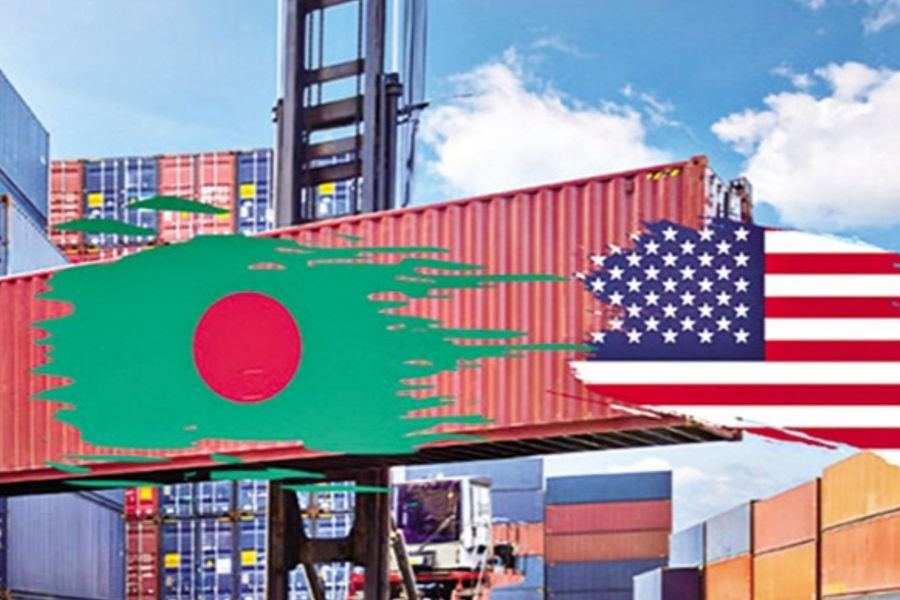
The US has announced a plan to impose a 35 percent trade tariff on Bangladesh, a slight reduction from the 37 percent rate initially proposed, according to a Reuters report, as the August 1 extended deadline approaches.

While the new rate offers some relief, it falls well short of the 20 percent tariff that officials in Dhaka expected. The government has argued it deserves more favourable terms than competitors such as Vietnam, which recently secured a 20 percent rate.

A Bangladeshi delegation remains in Washington for last-ditch talks with the US Trade Representative's office.

Failure to secure a more favourable bilateral agreement by the deadline would see the 35 percent tariff imposed, a significant blow to the country's export-oriented economy.

President Donald Trump yesterday began telling trade partners -- from powerhouse suppliers like Japan and South Korea to minor players -- that sharply higher US tariffs will start on August 1, marking a new phase in the trade war he launched earlier this year.

The 14 countries sent letters so far, which included smaller exporters like Bangladesh, Serbia, Thailand and Tunisia, hinted at opportunities for additional negotiations while at the same time warning that any reprisal steps would be met with a like-for-like response.

Bangladesh's 35 percent tariff places it among the countries facing the highest rates in the latest round of US trade actions. In an identical letter sent to all 14 nations and released on his Truth Social platform, President Donald Trump warned against any retaliation.

Addressing Chief Adviser Muhammad Yunus, he wrote: "If for any reason you decide to raise your Tariffs, then, whatever the number you choose to raise them by, will be added onto the 35% that we charge."​
 
Analyze

Analyze Post

Add your ideas here:
Highlight Cite Fact Check Respond

Members Online

Latest Posts

Back
 
G
O
 
H
O
M
E