Bangladesh Defense
Saif
Senior Member
- Jan 24, 2024
- 21,479
- 9,743
- Nation

- Residence
- Axis Group

Reforms must for real competitiveness
Bangladesh's main export-oriented apparel industry cautiously welcomes the US decision lowering the steep reciprocal tariff on imports from Bangladesh-from 35 per cent to 20 per cent-as entrepreneurs in the sector now stress deep reforms for real market competitiveness. While this is a significant
Tariff relief a welcome break
Reforms must for real competitiveness
Jasim Uddin
Published :
Aug 03, 2025 09:33
Updated :
Aug 03, 2025 09:33

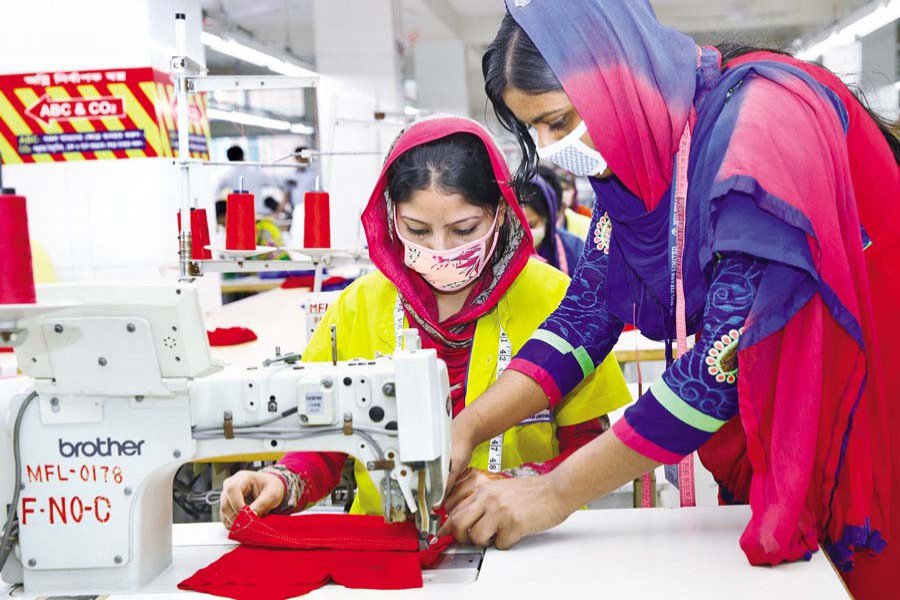
Bangladesh's main export-oriented apparel industry cautiously welcomes the US decision lowering the steep reciprocal tariff on imports from Bangladesh-from 35 per cent to 20 per cent-as entrepreneurs in the sector now stress deep reforms for real market competitiveness.
While this is a significant shift in trade diplomacy and potentially restores some competitiveness in the country's single -largest export market, industry leaders warn this is no time for complacency.
The revised tariff regime now places Bangladesh on a more level playing field with key competitors such as Vietnam (20 per cent), Indonesia (19 per cent), and Pakistan (19 per cent). It offers a fairer footing-but still falls short of ideal conditions, particularly when the total effective tariff, including base duties and charges, nears 36 per cent.
"We are relieved," says Shovon Islam, Managing Director of Sparrow Group, which exports products worth nearly $300 million annually-half of which goes to the United States. "But 20 per cent is still a heavy load. The effective tariff remains burdensome when all costs are considered."
Islam also underscores the urgency of structural reforms at home-citing inefficiencies in energy supply and port operations, corruption, and infrastructure. "Privatisation and export-friendly policies are crucial. We cannot expect tariffs alone to determine our future."
Mahmud Hasan Khan Babu, President of the Bangladesh Garment Manufacturers and Exporters Association (BGMEA), describes the development as "a relief" and credits the outcome to months of behind-the-scenes negotiations. "But the government must now fulfil the conditions agreed during those talks-particularly around customs procedures and import facilitation," he told The Financial Express.
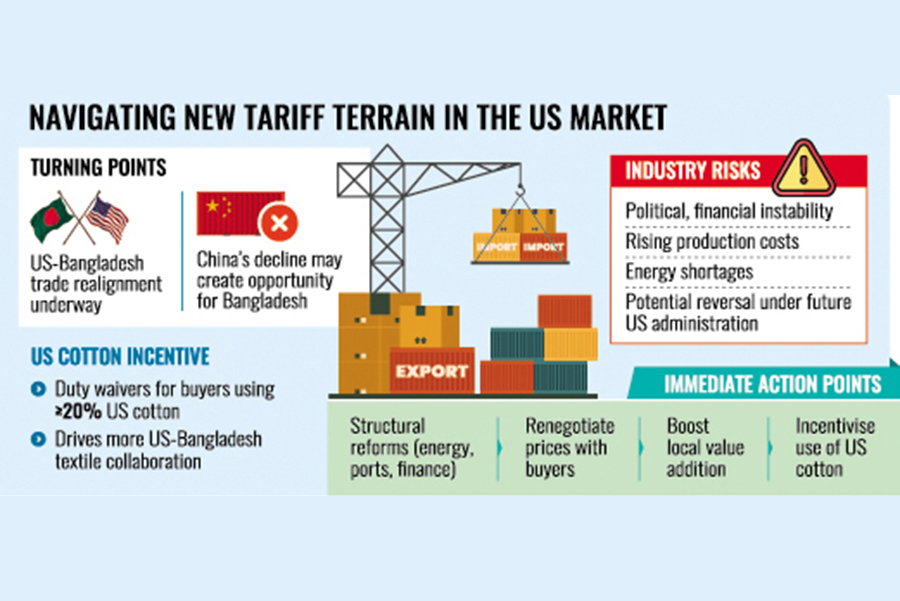
Sharif Zahir, Managing Director of Ananta Apparel, with annual exports exceeding $465 million (around $170 million to the US), sees a broader vista of opportunity emerging. "China's apparel exports now face more than 34 per cent in tariffs. As sourcing shifts away from China, Bangladesh stands to gain-but we must scale up fast to seize the window," he said.
Zahir hints at a larger strategic trade alignment between Bangladesh and the US. "Whether it's LNG, aircraft, or agricultural commodities like corn and wheat-these purchases are not just transactions, they are part of a broader trade equation."
He also points to a unique incentive tied to U.S. cotton. "If buyers use at least 20-percent U.S. cotton, they qualify for duty waivers. This creates a new incentive for U.S. brands to source from Bangladesh using American raw materials," Zahir added.
The decision is also applauded by Fazlee Shamim Ehsan, CEO of Fatullah Apparel Ltd. "Tariffs in the 19-20-percent range ensure we remain globally competitive. But there may be short-term bumps-retail prices could rise, and buyers might try to squeeze prices. We must invest in local value addition and production capacity," he says.
Ehsan points to a critical gap in the supply chain. "Most of our inputs still come from China and India. In product segments like sneakers and sportswear, local value addition remains minimal." He has called for more accessible export finance and robust industrial incentives from Bangladesh Bank.
BTMA President Showkat Aziz Russell, speaking from the US, where he was part of the negotiating delegation, credited BTMA Adviser SK Bashir Uddin for playing a pivotal role in the talks. "Bashir pushed for a 75-percent narrowing of our trade deficit with the US-an unprecedented and bold stance in bilateral negotiations," he said.
"No other country has made such assertive demands of the US. This gives Bangladesh a unique position going forward," Russell added, hinting at potential future breakthroughs.
Mohiuddin Rubel, Additional Managing Director of Denim Expert Ltd and former BGMEA Director, terms the decision "strategically important." With India and China now facing higher tariff barriers, Bangladesh is relatively better placed. "Yes, retail prices may rise temporarily in the U.S., but our industry has already demonstrated resilience through COVID-19 and global inflation shocks."
However, Rubel cautions that domestic political and economic stability is essential to sustaining investor confidence and buyer commitment. "That is the key to long-term competitiveness," he stresses.
From a broader geopolitical perspective, BGMEA Director Faisal Samad has highlighted the significance of the original tariff hike in April by US President Donald Trump. "That moment was a game changer-it altered the global trade narrative. Governments scrambled. Our initial response may have been slow, but it eventually delivered results," he says.
Samad urges the industry and government to now focus on three priorities: renegotiating prices with buyers, managing production costs, and identifying new growth opportunities. "This is not the time to sit back and celebrate. China is already adjusting its strategy-they won't stay idle for long."
He also called for the formation of a national coalition-bringing together academia, policymakers, civil society, labour representatives, and trade bodies. "If we can articulate our national trade position collectively, this could be a turning point for Bangladesh."
Echoing these sentiments, Mohammad Hatem, President of the Bangladesh Knitwear Manufacturers and Exporters Association (BKMEA), called the 20-percent tariff a "win-win" outcome. He praised the negotiating team, led by the Trade Adviser, for their relentless efforts. While the initial hope was for a lower rate, Hatem believes that securing a reduction from the proposed 35 per cent represents a strategic success.
With Vietnam and India facing tariffs of 20 per cent and 25 per cent respectively, Bangladesh now occupies a relatively advantageous position. But Hatem warns that the situation remains volatile. "President Trump could make further announcements anytime-altering India's tariff rate or changing Vietnam's trade status. We must stay alert and proactive," he says.
He also urges exporters to remain firm so that buyers do not try to pass the cost of tariffs onto manufacturers. "There is no reason for panic. Tariffs have risen for everyone. And right now, buyers do not have any viable alternatives to Bangladesh," he notes.
Hatem points to China's declining export volumes as an opportunity for Bangladesh and India to step in. "Vietnam may struggle due to its dependency on Chinese inputs. Combined tariffs on Chinese-origin goods could reach up to 64 per cent-buyers will definitely look elsewhere."
He urges the Commerce Adviser to advocate for duty-free access for garments made with U.S. raw materials in future negotiations. "This would deepen bilateral ties and further benefit Bangladesh's textile sector, which already relies heavily on U.S. cotton."
However, Hatem cautions that several domestic challenges could hinder progress. These include persistent gas and electricity shortages, instability in the banking sector, and a fragile financial system.
"If we fail to address these problems-especially the energy crisis and policy instability-Bangladesh will miss the opportunity to capture orders shifting out of China," he alerts. "Much of this crisis has been caused by flawed monetary policy by Bangladesh Bank over the past two years, which has severely disrupted industrial output."
Hatem has called for urgent, targeted policy reforms. "Without a strong and supportive policy environment, we will not be able to fully capitalise on the emerging opportunities in global trade."
Reforms must for real competitiveness
Jasim Uddin
Published :
Aug 03, 2025 09:33
Updated :
Aug 03, 2025 09:33
Bangladesh's main export-oriented apparel industry cautiously welcomes the US decision lowering the steep reciprocal tariff on imports from Bangladesh-from 35 per cent to 20 per cent-as entrepreneurs in the sector now stress deep reforms for real market competitiveness.
While this is a significant shift in trade diplomacy and potentially restores some competitiveness in the country's single -largest export market, industry leaders warn this is no time for complacency.
The revised tariff regime now places Bangladesh on a more level playing field with key competitors such as Vietnam (20 per cent), Indonesia (19 per cent), and Pakistan (19 per cent). It offers a fairer footing-but still falls short of ideal conditions, particularly when the total effective tariff, including base duties and charges, nears 36 per cent.
"We are relieved," says Shovon Islam, Managing Director of Sparrow Group, which exports products worth nearly $300 million annually-half of which goes to the United States. "But 20 per cent is still a heavy load. The effective tariff remains burdensome when all costs are considered."
Islam also underscores the urgency of structural reforms at home-citing inefficiencies in energy supply and port operations, corruption, and infrastructure. "Privatisation and export-friendly policies are crucial. We cannot expect tariffs alone to determine our future."
Mahmud Hasan Khan Babu, President of the Bangladesh Garment Manufacturers and Exporters Association (BGMEA), describes the development as "a relief" and credits the outcome to months of behind-the-scenes negotiations. "But the government must now fulfil the conditions agreed during those talks-particularly around customs procedures and import facilitation," he told The Financial Express.
Sharif Zahir, Managing Director of Ananta Apparel, with annual exports exceeding $465 million (around $170 million to the US), sees a broader vista of opportunity emerging. "China's apparel exports now face more than 34 per cent in tariffs. As sourcing shifts away from China, Bangladesh stands to gain-but we must scale up fast to seize the window," he said.
Zahir hints at a larger strategic trade alignment between Bangladesh and the US. "Whether it's LNG, aircraft, or agricultural commodities like corn and wheat-these purchases are not just transactions, they are part of a broader trade equation."
He also points to a unique incentive tied to U.S. cotton. "If buyers use at least 20-percent U.S. cotton, they qualify for duty waivers. This creates a new incentive for U.S. brands to source from Bangladesh using American raw materials," Zahir added.
The decision is also applauded by Fazlee Shamim Ehsan, CEO of Fatullah Apparel Ltd. "Tariffs in the 19-20-percent range ensure we remain globally competitive. But there may be short-term bumps-retail prices could rise, and buyers might try to squeeze prices. We must invest in local value addition and production capacity," he says.
Ehsan points to a critical gap in the supply chain. "Most of our inputs still come from China and India. In product segments like sneakers and sportswear, local value addition remains minimal." He has called for more accessible export finance and robust industrial incentives from Bangladesh Bank.
BTMA President Showkat Aziz Russell, speaking from the US, where he was part of the negotiating delegation, credited BTMA Adviser SK Bashir Uddin for playing a pivotal role in the talks. "Bashir pushed for a 75-percent narrowing of our trade deficit with the US-an unprecedented and bold stance in bilateral negotiations," he said.
"No other country has made such assertive demands of the US. This gives Bangladesh a unique position going forward," Russell added, hinting at potential future breakthroughs.
Mohiuddin Rubel, Additional Managing Director of Denim Expert Ltd and former BGMEA Director, terms the decision "strategically important." With India and China now facing higher tariff barriers, Bangladesh is relatively better placed. "Yes, retail prices may rise temporarily in the U.S., but our industry has already demonstrated resilience through COVID-19 and global inflation shocks."
However, Rubel cautions that domestic political and economic stability is essential to sustaining investor confidence and buyer commitment. "That is the key to long-term competitiveness," he stresses.
From a broader geopolitical perspective, BGMEA Director Faisal Samad has highlighted the significance of the original tariff hike in April by US President Donald Trump. "That moment was a game changer-it altered the global trade narrative. Governments scrambled. Our initial response may have been slow, but it eventually delivered results," he says.
Samad urges the industry and government to now focus on three priorities: renegotiating prices with buyers, managing production costs, and identifying new growth opportunities. "This is not the time to sit back and celebrate. China is already adjusting its strategy-they won't stay idle for long."
He also called for the formation of a national coalition-bringing together academia, policymakers, civil society, labour representatives, and trade bodies. "If we can articulate our national trade position collectively, this could be a turning point for Bangladesh."
Echoing these sentiments, Mohammad Hatem, President of the Bangladesh Knitwear Manufacturers and Exporters Association (BKMEA), called the 20-percent tariff a "win-win" outcome. He praised the negotiating team, led by the Trade Adviser, for their relentless efforts. While the initial hope was for a lower rate, Hatem believes that securing a reduction from the proposed 35 per cent represents a strategic success.
With Vietnam and India facing tariffs of 20 per cent and 25 per cent respectively, Bangladesh now occupies a relatively advantageous position. But Hatem warns that the situation remains volatile. "President Trump could make further announcements anytime-altering India's tariff rate or changing Vietnam's trade status. We must stay alert and proactive," he says.
He also urges exporters to remain firm so that buyers do not try to pass the cost of tariffs onto manufacturers. "There is no reason for panic. Tariffs have risen for everyone. And right now, buyers do not have any viable alternatives to Bangladesh," he notes.
Hatem points to China's declining export volumes as an opportunity for Bangladesh and India to step in. "Vietnam may struggle due to its dependency on Chinese inputs. Combined tariffs on Chinese-origin goods could reach up to 64 per cent-buyers will definitely look elsewhere."
He urges the Commerce Adviser to advocate for duty-free access for garments made with U.S. raw materials in future negotiations. "This would deepen bilateral ties and further benefit Bangladesh's textile sector, which already relies heavily on U.S. cotton."
However, Hatem cautions that several domestic challenges could hinder progress. These include persistent gas and electricity shortages, instability in the banking sector, and a fragile financial system.
"If we fail to address these problems-especially the energy crisis and policy instability-Bangladesh will miss the opportunity to capture orders shifting out of China," he alerts. "Much of this crisis has been caused by flawed monetary policy by Bangladesh Bank over the past two years, which has severely disrupted industrial output."
Hatem has called for urgent, targeted policy reforms. "Without a strong and supportive policy environment, we will not be able to fully capitalise on the emerging opportunities in global trade."