Home Watch Videos Wars Movies Login

[🇧🇩] Trump's Victory/Tariff/ Bangladesh

[🇧🇩] Trump's Victory/Tariff/ Bangladesh
216
6K
More threads by Saif

G Bangladesh Defense

US tariff negotiations enter final day
Staff Correspondent 12 July, 2025, 00:32

1752282707472.webp


The talks between Bangladesh and the United States over tariff issues began in the US capital Washington for the third day on Friday.

The talks started at 9:00am (Washington time) where Dhaka was trying to lower the tariff rate announced by US president Donald Trump, according to a message received in Dhaka.

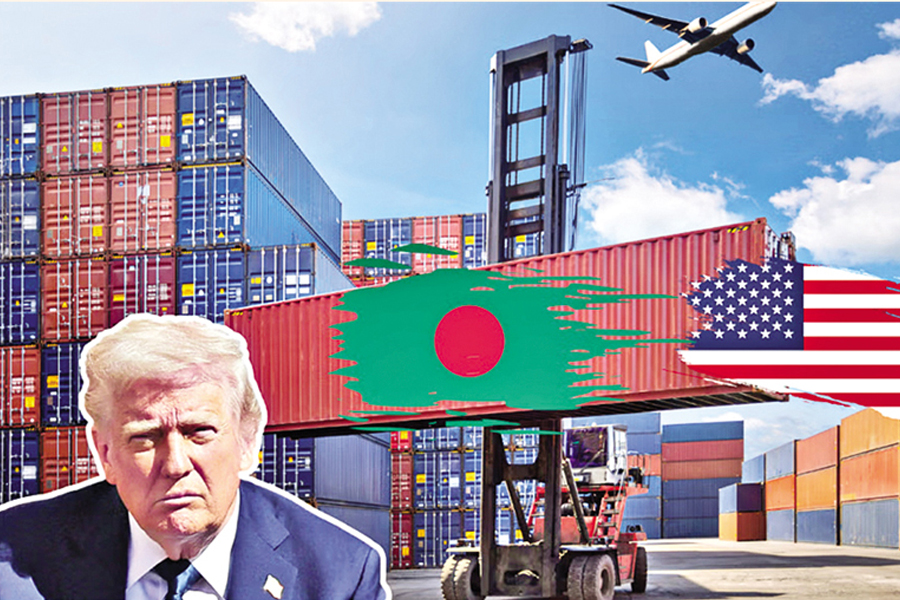
On July 8, Trump imposed 35 per cent tariff on Bangladeshi export products, effective from August 1, on top of sectoral tariffs of up to 15 per cent.

Friday was the concluding day of the second round of negotiations between the two nations over the issue.

Commerce adviser Sk Bashir Uddin was leading the Bangladesh side with the negotiations with the United States Trade Representative, the agency responsible for promoting US foreign trade policies.

Economists and businesses said that the increased rate of tariff would reduce Bangladeshi exporters’ competiveness against their competitors in other countries.

Bangladesh has already assured the USTR of addressing the US concern over the trade deficit.

In 2024, Bangladesh exported to the US goods worth about $8.4 billion, of which $7.34 billion accounted for readymade garments. In the year, the country imported US goods worth $2.2 billion.

During the past two days’ negotiations, Dhaka said that measures had already been taken to reduce duties and value-added tax on certain products, including wheat, soya bean, aircraft and machinery, Bangladesh imported from the US.

Dhaka is also actively considering placing an order for buying Boeing aircraft soon.

On the second day of talks on July 10, the commerce adviser met with US trade representative ambassador Jamieson Greer at the latter’s office, according to a release issued by the chief adviser’s press wing.

The two dignitaries discussed issues of mutual interest with particular focus on Bangladesh-US trade, commerce, and the ongoing tariff negotiations.

National security adviser Khalilur Rahman and the chief adviser’s special assistant on ICT and telecommunications, Faiz Ahmed Tayeb, joined the meeting virtually from Dhaka.

Earlier on April 3, the US had imposed a steep 37 per cent ‘reciprocal’ tariff on Bangladeshi exports, but on April 9, the US president declared a pause on the tariff for three months.

After the announcement of the pause, Bangladesh had held the first round of negotiations with the US over the tariff rate.​
 
Analyze

Analyze Post

Add your ideas here:
Highlight Cite Respond

Bangladesh-US agree for more negotiation over 35pc tariff issue
Staff Correspondent 12 July, 2025, 09:30

1752367203643.webp


The second-round negotiation between Bangladesh and United States over tariff issue ended on Friday at about 4:00pm in the US capital Washington DC keeping several issues unresolved.

Washington wanted Dhaka to keep distance with companies under the sanctioned-hit list from the US while Dhaka sought necessary time to meet the US demands, said an official who attended the meeting.

Both the parties agreed to carry on negotiation to solve the unresolved issues, added the official.

The second-round negotiation was convened following the US president Donald Trump’s announcement of imposition of 35 per cent tariff on Bangladeshi export goods from August 1.​
 
Analyze

Analyze Post

Add your ideas here:
Highlight Cite Respond

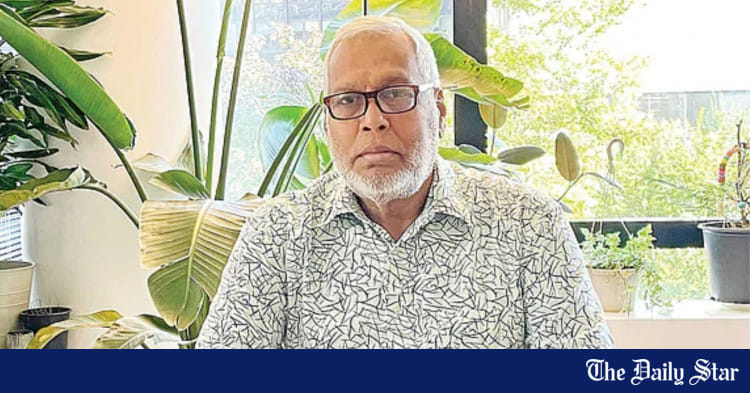
US sends list of items, seeking zero duty

1752454497922.webp

Photo: Collected

The US has demanded zero duty facility for a large number of its products from Bangladesh.

Commerce Secretary Mahbubur Rahman said the United States Trade Representative (USTR) sent a list of these products to him yesterday via email.

He spoke to The Daily Star over the phone last night upon his return from the US after participating in the talks in Washington, DC. Commerce Adviser Sk Bashir Uddin also returned to Dhaka after the talks with the chief trade negotiation body of the American government.

"Both the countries have agreed on almost all the issues, except a few things during the negotiations with the USTR in Washington, DC," he said.

Speaking about the products for which the US demanded the zero duty facility, Mahbubur could not specify a number immediately but said the list is "very long".

He said Bangladesh has already been providing zero duty benefit to many American goods over many years. For instance, the import of cotton, wheat, soybean seeds and oil and other agricultural products from the US is free of duty.

But adding more products to the list does not solely depend on the commerce ministry, so a meeting will be held next Saturday to take the opinions of the other ministries, Mahbubur said.

Later, Bangladesh will hold another important meeting with the US to finalise the tariff rate before the 35 percent announced by Trump takes effect on August 1.

During the talks in the US, Bangladesh requested tariff rates between 10 percent and 20 percent. The next meeting is also scheduled to take place in Washington, DC.

After Trump announced reciprocal tariffs on April 2, Bangladesh offered zero duty facility for many American goods and also promised to increase import volume of products such as aircraft, LNG, cotton, wheat, soybean and other agricultural products.

The US is the single largest export destination for Bangladesh, which shipped goods worth more than $8 billion to the US and imported $2 billion American products last year.

FRAMEWORK DEAL

Power and Energy Adviser Fouzul Kabir Khan yesterday said that before engaging in further talks on tariff and non-tariff issues, the US is first looking to sign a framework agreement with Bangladesh, which would include a range of matters, including its security concerns.

The adviser said the tariff talks with the US extended beyond the scope of trade negotiations.

"Not just tariffs, there have been discussions on non-tariff barriers as well. They [the US] are prioritising their national security," Fouzul told reporters at a press conference on NBR reforms at the energy ministry.

According to him, the US was assessing how Bangladesh interacts bilaterally with other countries. "A framework is being worked out in this regard, and​
 
Analyze

Analyze Post

Add your ideas here:
Highlight Cite Respond

Second round of tariff talks with US ‘encouraging’: Sk Bashir

Published :
Jul 14, 2025 21:05
Updated :
Jul 14, 2025 21:05

1752534103704.webp


Commerce Adviser Sk Bashir Uddin on Monday described the second round of tariff policy discussions between Bangladesh and the United States as ‘encouraging’.

“We returned from the US yesterday (Sunday) after concluding the second round of talks. Today, we briefed our stakeholders on various aspects of the discussions,” he told reporters following a meeting at the Ministry of Commerce.

Sk Bashir shared insights into the draft Reciprocal Tariff Agreement currently under negotiation between the two countries and confirmed that preparations are already underway for the third round of discussions, reports UNB.

“We are preparing to visit the United States again this month. We’re hopeful of a positive outcome,” he said.

Referring to the latest round of talks held in Washington, the adviser said, “The discussions were quite engaging and overall encouraging. I also had a meeting with the US Secretary of Commerce. We interacted with 35 to 40 people directly involved in the negotiations from their side. A number of useful suggestions came out of those engagements. We’re optimistic that through this dialogue, the US will agree to a rational tariff rate for our exports.”

He said Bangladesh has maintained a strong presence in the US market for nearly a decade.

“We have been doing business in the US since 2015, paying tariffs. Our enterprises rely on their own capabilities. As long as there’s no discriminatory treatment, our businesses will continue to perform successfully,” Sk Bashir said.

When asked what Bangladesh considers a ‘rational tariff rate’, he responded simply, ‘zero’.​
 
Analyze

Analyze Post

Add your ideas here:
Highlight Cite Respond

US tariff challenge and BD's exports

Syed Fattahul Alim
Published :
Jul 14, 2025 23:11
Updated :
Jul 14, 2025 23:11

1752535119047.webp


Industry leaders in the Readymade Garment (RMG) sector should have been elated by the fact that in the last financial year (FY2024-25), export of their products to the USA registered a sharp rise by 14 per cent compared to the previous fiscal (FY24). But at the moment, they may not be in the mood to rejoice at the latest development. The reason is, the tariff talks with the USA, the single biggest market for Bangladeshi woven garment products, have not produced any positive results so far. Notably, the Trump administration, in addition to the existing 15 per cent, has imposed another 35 per cent as reciprocal tariff on Bangladesh's exports to the USA. Now it is also demanding a 40 per cent local value addition to our RMG products to qualify for 'Made-in-Bangladesh' label. But this condition, if not relaxed, is going to deal a heavy blow to the woven garment's export to the US market. Bangladesh's trade delegation in Washington, D.C. has been holding negotiations with the Office of the US Trade Representative (USTR) seeking relaxation of the Rules of Origin (RoO) requirement related to the condition of 40 per cent local value addition. The problem with this particular requirement is that 70 per cent of the fabric for the woven sector is imported from China. Obviously, that is a big issue for Washington, as it is at the moment in a trade war with China. The Trump administration's policy is to reduce global value chain's reliance on Chinese raw materials. According to the Export Promotion Bureau (EPB), in the fiscal year 2024-25, Bangladesh exported RMG products worth USD7.54 billion to the US market. It marked a substantial volume of apparel goods shipment to that country. So, it is not hard to understand the challenge Bangladesh is now faced with. And of that US bound apparel goods, woven garment was the dominant component. To reduce Bangladesh's dependence on China-origin fabric for its woven sector, domestic capacity is required to be developed for meeting the US's condition of local value addition. Since developing the necessary backward linkages to produce the fabric (for woven garment) domestically, Bangladesh would be hard put to meet USTR's RoO requirements. Since Bangladesh-US tariff talks have also their geopolitical dimensions, the team conducting the negotiations led by commerce adviser Sk Bashiruddin may require additional diplomatic support.

It is worthwhile to note here that according to a Bloomberg report, India, which is also holding tariff talks with the USA might win a below 20 per cent reduction in the proposed tariff, which will be lower than what Vietnam has secured (20 per cent tariff) from the USA. In that case, Bangladesh risks losing its competitive edge vis-a-vis its regional competitors.

Unless the tariff is reduced, or the RoO is relaxed, the high US tariffs on Bangladesh-origin RMG products will make those very expensive leading US retailers to look for alternative sources like India or Pakistan whose products would be cheaper due lower rate of US tariff imposed on them. According to industry insiders, some importers of our RMG products in the USA, have already put their purchase orders on hold. Suppliers to the Walmart, too, are learnt to have suspended some orders from Bangladeshi manufacturers. These are definitely not a good omen for Bangladesh's exports to the US market. Meanwhile, some quarters including the international media have been portraying a bleak future for Bangladesh's RMG sector. There are also reports of how the garment workers are now in fear of losing their jobs.

No doubt US market is important for Bangladesh. But that is not the end of the world.

In the circumstances, Bangladesh should continue its tariff negotiations with the USA. At the same time, the search should be on to look for alternative markets for Bangladesh's RMG exports. It is also time the country intensified its efforts to further widen and diversify its export basket.​
 
Analyze

Analyze Post

Add your ideas here:
Highlight Cite Respond

Bangladesh to further negotiate US tariff: Commerce secretary
Special Correspondent Dhaka
Updated: 14 Jul 2025, 18: 27

1752537837023.webp

Commerce adviser Sk Bashir Uddin also attended a meeting with the country’s business leaders and economists at the commerce ministry on Monday. Collected

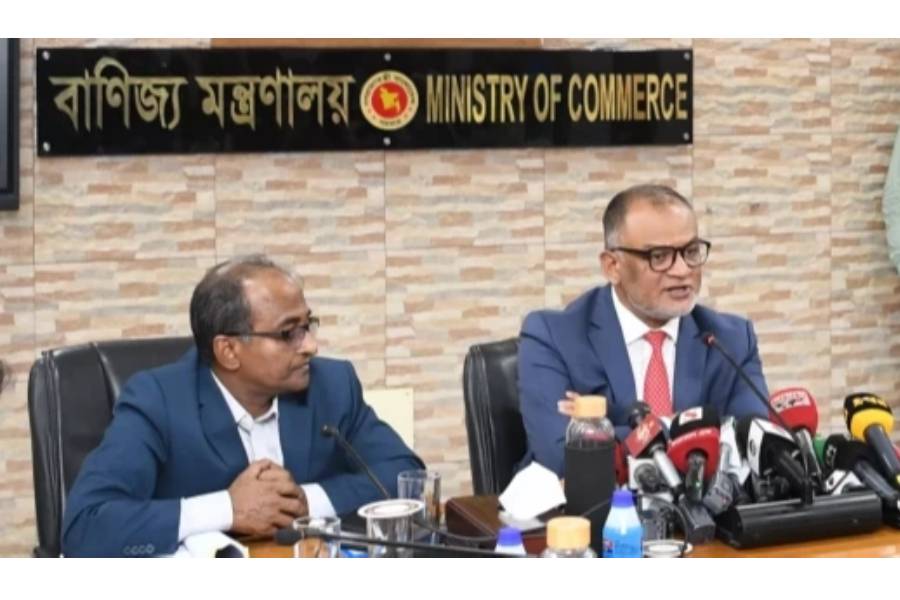
Commerce secretary Mahbubur Rahman said that Bangladesh has sought time from the US to negotiate the tariff issue further.

He made these remarks while addressing a press briefing at the conference room of the commerce ministry on Monday.

The briefing was organised on his recent official visit to Washington, DC, for three-day negotiations on Bangladesh-US tariff.

The commerce secretary in his welcome speech said, "We have return to Bangladesh from the US on Sunday after the negotiations on tariff. We have sought time for negotiations for the 3rd phase and we are still exchanging views through e-mail."

Mahbubur Rahman said, "We have held a meeting with business leaders and economists. We have got advice from them. We hope we will be able to reach a positive decision by 1 August."

"We know that US tariff will have a negative impact on our export. So We are working with utmost priority," he added.

Commerce adviser Sk Bashir Uddin also attended the meeting with the country’s business leaders and economists.

Mahmud Hasan Khan Babu, president of Bangladesh Garment Manufacturers and Exporters Association (BGMEA); Mohammad Hatem, president of Bangladesh Knitwear Manufacturers and Exporters Association (BKMEA); Anwar-ul Alam Chowdhury Parvez, president of Bangladesh Chamber of Industries; Syed Nasim Manzur, managing director of Apex Footwear; Selim Raihan, executive director of South Asian Network on Economic Modelling (SANEM); M Masrur Reaz, chairman of Policy Exchange Bangladesh; and Mohammad Abdur Razzaque, chairman of RAPID, were present at the meeting. Besides additional secretary Nazneen Kauser Chowdhury was also present.

Earlier, the second round of tariff negotiations between Bangladesh and the US concluded in Washington DC on 11 July 2025, with several issues still unresolved.

On 8 July, US President Donald Trump announced a 35 per cent reciprocal tariff on Bangladeshi goods, which is set to come into effect from 1 August, sparking concern among Bangladeshi exporters with active trade links to the US.

Data from National Board of Revenue (NBR) shows 2,377 companies exported 1-100 per cent of their products to the US during the 2024–25 fiscal.

Among them, 801 companies sent more than 50 per cent of their total exports to the US, making them particularly vulnerable due to their overreliance on a single market.

US total goods trade with Bangladesh was an estimated $10.6 billion in 2024. US goods exports to Bangladesh in 2024 were $2.2 billion, down 1.5 per cent ($34.0 million) from 2023.

US goods imports from Bangladesh totalled $8.4 billion in 2024, up 1.1 per cent ($89.3 million) from 2023. The US goods trade deficit with Bangladesh was $6.2 billion in 2024, a 2 per cent increase ($123.2 million) over 2023, according to the Office of the United States Trade Representative (USTR).

For Bangladesh, export of ready-made garments to US alone accounted USD 7.59 billion in last fiscal.​
 
Analyze

Analyze Post

Add your ideas here:
Highlight Cite Respond

BNP pledges support to government on US tariff challenges, business leaders warn of market losses

Published :
Jul 15, 2025 22:10
Updated :
Jul 15, 2025 22:10

1752622844788.webp


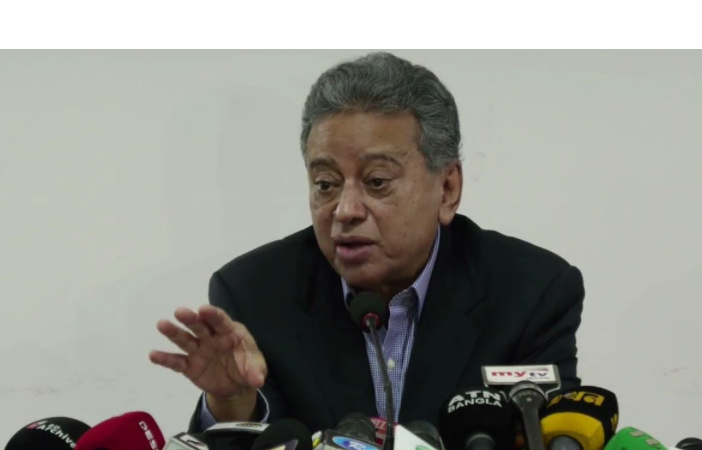
Senior BNP leader Amir Khosru Mahmud Chowdhury on Tuesday said that his party will offer coordinated cooperation to the government on US tariff and security issues, to help address the tariffs imposed by the United States.

Chowdhury made the remarks during a briefing to journalists at a hotel in Banani, following an exchange of views with business leaders concerning the US tariffs, UNB reports.

The BNP Standing Committee member emphasized that the livelihoods of 15- 16 lakh people are linked to exports to the US market, so the tariff issue is a serious matter for Bangladesh.

Khosru said business leaders fear that the recent US tariff impositions will severely impact Bangladesh's trade and commerce.

Therefore, the BNP is prepared to cooperate with the government in the ongoing tariff discussions with the United States, aiming to achieve a pragmatic solution for Bangladesh.

In response to a question, Amir Khosru pointed out that India and Vietnam are Bangladesh's direct competitors in the international garment export market.

If Bangladesh fails to reach a solution regarding the tariffs, these competitor countries will gain a significant advantage in exporting to the US, causing great concern among local exporters.

He warned that Bangladesh cannot afford to bear the risk of millions of job losses, the closure of industrial factories, and thousands of backward linkage industries due to unresolved tariff issues.

BGMEA President Mahmud Hasan Khan, BKMEA President Mohammad Hatem, former President of FBCCI AK Azad, Chairman of Apex Tannery Ltd

Syed Nasim Monzur, Chairman of Bangladesh Chamber of Industries (B I) Anwar-ul-Alam Chowdhury Parvez, Chairman of Prank RFL Group Ahsan Khan Chowdhury, among others joined in the meeting.​
 
Analyze

Analyze Post

Add your ideas here:
Highlight Cite Respond

Facing an uphill battle over Trump tariffs

Wasi Ahmed
Published :
Jul 15, 2025 22:56
Updated :
Jul 15, 2025 22:56

1752623140523.webp


In the light of the latest US tariff salvo on Bangladesh exports, questions are being raised over what Bangladesh can realistically offer to lower the steep duties imposed by the Trump administration. Although US officials have said that negotiation channels remain open for discussions on reciprocal tariff parity, prospects of a significant turnaround appear slim, under the circumstances.

Following the imposition of a 37 per cent reciprocal tariff on April 3, Bangladesh proposed to lower import duties on a range of US-origin products. However, the move evidently fell short of meeting the Trump administration's expectations. A subsequent revision of the proposed sectoral tariff to 35 per cent also failed to shift the dynamics. For Bangladeshi exporters, who already face around 15 per cent tariff when shipping to the US -- the country's largest export destination-the newly announced 35 per cent surcharge would take the total duty to 50-51 per cent, effective from August.

Finance Adviser Dr. Salehuddin Ahmed, speaking to the press following the announcement, stated that the proposed 35 per cent tariff was not yet final and that a resolution could still be achieved through direct bilateral negotiations. Meanwhile, the Commerce Adviser, who led a small delegation for talks with the USTR earlier this week, informed the media yesterday that some time had been secured from the U.S. side to work towards a mutually acceptable position. It remains to be seen what strategic options Bangladesh has at its disposal to steer the situation in its favour.

What has complicated matters is the comparative advantage granted to Vietnam -- a key competitor in the garment sector -- which has secured a flat 20 per cent tariff on its exports to the US. This gives Vietnam a pronounced edge over Bangladesh in the American market. The trade imbalance between Bangladesh and the US currently stands at approximately $6.2 billion, while Vietnam's trade surplus with the US is a staggering $125 billion. Yet, Washington has agreed to a favourable deal with Hanoi. One likely reason is the US-Vietnam agreement that pairs the 20 per cent tariff on garments with zero-duty access for American goods into Vietnam. Additionally, while transshipment of Chinese goods through Vietnam would attract a 40 per cent tariff, this still undercuts the rates Bangladesh might face if negotiations collapse.

Other countries such as Indonesia and South Africa also appear to have struck more favourable terms than Bangladesh. Among the 14 countries listed in the latest US tariff announcements, only four are in a weaker position. Some observers argue that Bangladesh government squandered the three-month window following the initial April announcement to negotiate a better outcome. Professor Mustafizur Rahman, distinguished fellow at the Centre for Policy Dialogue (CPD), has voiced disappointment, noting that although Bangladesh was the first to begin discussions with the USTR, the outcome has been disappointing. He pointed out that negotiations have only managed a 2-percentage point reduction in the additional tariff -- an outcome that could severely damage export competitiveness.

This raises a critical question: what, if anything, can Bangladesh offer to further reduce the tariff to a more reasonable level? If, as speculated, the US is seeking to increase its exports of aircraft, cotton, food grains, LNG, and military hardware to Bangladesh in a bid to bridge the trade gap, is Dhaka prepared to respond affirmatively or take steps in that direction?

In 2024, Bangladesh exported about $8.4 billion worth of goods to the US, of which $7.34 billion came from the readymade garment sector. On the other hand, US exports to Bangladesh stood at just $2.2 billion, leaving a trade gap of $6.2 billion. Would a pledge from Bangladesh to import more American goods suffice? Could the government consider granting zero-tariff access to US exports across the board?

The Vietnam deal is attractive on paper. But the fact remains Vietnam cannot meet the total demand for garments in the US. Bangladesh, unlike Vietnam, has pursued negotiations under a multilateral framework, hoping to secure lower duties based on WTO's Most Favoured Nation (MFN) principles. However, the US appears more inclined towards bilateral deals that blend trade considerations with strategic partnerships.

If the worst-case scenario unfolds and Bangladesh is subjected to an effective tariff rate exceeding 50 per cent, many suppliers -- who currently export between 40 and 80 per cent of their output to the US -- could be pushed to the brink. With profit margins in the apparel industry already wafer-thin and operational costs steadily rising, such a tariff hike would make it increasingly difficult for many exporters to sustain their businesses. At the current 15 per cent rate, the apparel sector already pays over $1.0 billion annually in tariffs. A hike to more than 50 per cent could result in significantly higher losses -- not just for Bangladeshi exporters, but also for US brands and consumers. Higher costs at the retail end could trigger inflationary pressures and supply chain disruptions.

It is important to recognise that this is not just a trade negotiation -- it is entangled with geopolitics. The limited political engagement between Dhaka and Washington may be working against Bangladesh's interests. Without closer ties to the Trump administration's core political constituencies, trade negotiations alone may not suffice. Bangladesh must urgently recalibrate its strategy. This includes leveraging US-based lobby groups, engaging American retailers, and reaching out to sourcing associations who rely on Bangladeshi goods. Business diplomacy needs to work in tandem with traditional diplomacy to navigate this complex situation.

At a time when global trade dynamics are shifting and geopolitical alliances are reshaping trade policies, Bangladesh cannot afford to be reactive. The stakes are high, and the time to act decisively is now.​
 
Analyze

Analyze Post

Add your ideas here:
Highlight Cite Respond

Members Online

Latest Posts

Back
 
G
O
 
H
O
M
E