Home Login Watch Videos Wars

[🇧🇩] UN investigation into enforced disappearances /deaths of students/citizens at the hands of security agencies

[🇧🇩] UN investigation into enforced disappearances /deaths of students/citizens at the hands of security agencies
95
3K
More threads by Saif

G Bangladesh Defense

Enforced Disappearance: Commission finds Indian involvement
Staff Correspondent 16 December, 2024, 00:34

The Commission of Inquiry on Enforced Disappearance has found prima facie evidence of the involvement of Indian authorities in the system of enforced disappearance in Bangladesh.

In its first interim report titled Unfolding the Truth submitted to chief adviser Professor Muhammad Yunus on Saturday, the commission stated that it came to the conclusion after recording statements of victims, their families and members law enforcement agencies.

The commission recommended the Ministry of Home Affairs and Ministry of Foreign Affairs to extend their best efforts to identify any Bangladeshi citizens who might still remain in India, according to a part of the report shared by chief adviser’s press wing on Sunday.

More detailed analysis will be required to fully understand the extent of the involvement of the Indian authorities and its implications for both the countries, said the report.

‘There is a persistent suggestion in law enforcement circles that some prisoners may still remain in Indian jails,’ the report said, adding that it was beyond the jurisdiction of the commission to follow this trail outside Bangladesh.

‘We have found Indian authority’s involvement in enforced disappearances. Some victim families also told us about the matter,’ said commission member Nur Khan Liton, also a human rights activist.

Some Bangladeshi people may be still in Indian jails, he said without providing further details.

He said that they submitted their recommendations to the interim government’s chief adviser and they would send it to the ministries concerned.

Officials of foreign ministry’s South Asia wing and the home ministry could not be reached for comments.

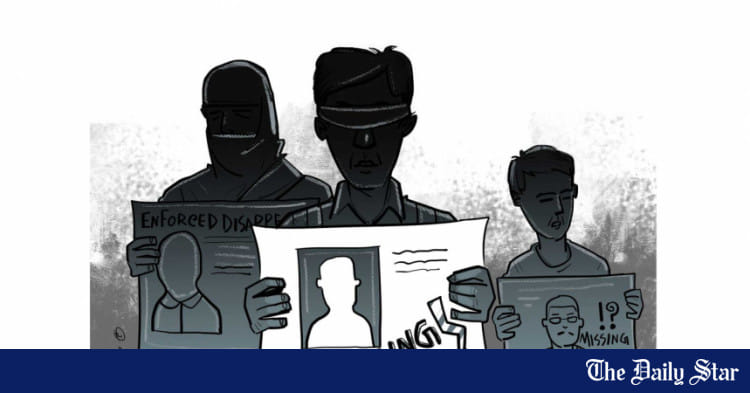
The formal nature of the handover of victims of enfroced disappearence in the presence of suspected Bangladeshi and Indian security personnel, all wearing ‘jom tupi’ (a type of disguise that covers the entire head) to avoid recognition, well inside Indian territory, underscores the high level of coordination between the two governments and their respective security forces, the report said.

There are two highly publicised cases that provide valuable insights into how such operations were carried out: the case of Shukhranjan Bali, abducted from Bangladesh Supreme Court premises who resurfaced subsequently in an Indian jail, and that of the Bangladesh Nationalist Party leader Salahuddin Ahmed, said the report.

Besides these incidents, Hummam Quader Chowdhury describes hearing Hindi-speaking people outside his cell with a number of inquiries such as ‘when was he picked up, has he given any information, what interrogation has been done yet’.

BNP leader Salahuddin Ahmed’s case exemplifies certain practices of the Bangladesh India rendition system, the report said.

Detained while hiding at Uttara in 2015, he recounts being imprisoned in a barren cell, where a hole in the ground served as a toilet.

The blanket provided to him bore the letters ‘TFI’, indicative of ‘Task Force for Interrogation’.

‘During that period, the only operational TFI centre that we know of was managed by the Rapid Action Battalion Intelligence Wing working under the aegis of RAB headquarters, although it was located within a walled compound inside RAB 1 battalion headquarters at Uttara in Dhaka’ the report said.

The commission has visited this location and confirmed that the RAB Intelligence Wing was still controling access to it, including holding the keys thereof.

The commission recommended disbanding the RAB and on December 10, 2021, the United States Treasury Department imposed sanctions on the RAB for human rights abuse.

Commission member Sazzad Hossain told New Age that the case of BNP leader Salahuddin and Shukhranjan Bali could be defined the involvement of Indian authorities.

‘We are yet to know the whereabouts of Shukhranjan Bali. We are trying to contact his family. The home ministry and the foreign ministry should contact the Indian authorities about the detained Bangladeshis,’ said Sazzad.

He said that they had found involvement of the Indian Border Security Force and the RAB Intelligence Wing in sending people from Bangladesh to India crossing the border.

‘We are yet to find any direct involvement of Border Guard Bangladesh,’ he said.

Interviews with soldiers deputed to the RAB Intelligence Wing have yielded further information about the practice of captive exchanges between the two countries and the possible subsequent fate of the detainees, the report said.

One soldier described being present on two occasions in 2011 when the RAB Intelligence Wing received three captives from India via the Tamabil border in the presence of uniformed Indian Border Security Force personnel.

On one occasion, two captives were received and subsequently killed by the side of the road after the exchange.

On the other occasion, one captive was received and handed over alive to another team inside Bangladesh, said the report.

In return, RAB Intelligence Wing handed over two captives from Bangladesh to India, it said.

The commission in its first interim report found prima facie evidence of involvement of the deposed prime minister Sheikh Haisna and some high-ranking officials of security forces and her government, including her defence adviser retired Major General Tarique Ahmed Siddique in enforced disappearances.

The commission also found involvement of former National Telecommunication Monitoring Centre director general and sacked Major General Ziaul Ahsan, senior police officers, including former Special Branch chief Monirul Islam and former Dhaka Metropolitan Police detective branch chief Md Harun-Or-Rashid, in several incidents of enforced disappearance.

The second method of target selection appears to involve direct orders from politically connected or otherwise influential figures, the report said.

For example, in the notorious seven-murder case in Narayanganj, the accused Tareque Sayeed Mohammad (former RAB 11 Commanding Officer) stated in his confession under section 164 of the Code of Criminal Procedure that he had received the go-ahead signal from Ziaul Ahsan (hen RAB additional director for general operations), it said.

according to the report, enforced disappearance victim Hummam Quader Chowdhury, recounted being told at the point of his release, ‘The honourable prime minister is giving you a second chance, but there are certain conditions. You must refrain from politics, leave the country, and return only when the situation improves. Understand that the honourable prime minister is granting you a second chance in life..’

The commission said that they already recorded 1,676 complaints of enforced disappearances, while 758 complaints were already scrutinised.

The commission estimates the number of enforced disappearances in the country would cross 3,500.

Of the 758 scrutinised disappearances 27 per cent of the victms were still missing and 73 per cent reappeared alive later, the report said.​
 
Analyze

Analyze Post

Add your ideas here:
Highlight Cite Fact Check Respond

Ensure justice for the disappeared
Arrest and try those involved in such heinous crimes

1734393019910.webp

VISUAL: STAR

Ousted Prime Minister Sheikh Hasina's direct involvement in cases of enforced disappearance, as revealed in the finding of the inquiry commission's preliminary report, confirms our foreboding that these gross human rights violations were state-sponsored, with orders coming from the highest echelon of power. Otherwise, this heinous crime could not have continued for so long without any perpetrator ever being tried.

The inquiry commission, formed on August 27 to investigate cases of enforced disappearances from 2009 to August 5, 2024, also found prima facie evidence against Hasina's defence adviser Maj Gen (retd) Tarique Ahmed Siddique, former director general of the National Telecommunication Monitoring Centre Maj Gen Ziaul Ahsan, and senior police officers Monirul Islam and Md Harun-Or-Rashid. Of the four, Tarique, Monirul and Harun are still absconding. The commission's report detailed how trained professionals in forces, including Rab, DGFI, DB, CID, and CTTC, "deliberately designed the system of enforced disappearances over 15 years in a fashion calculated to avoid detection and attribution of responsibility."

In fact, the commission estimates that the actual number of enforced disappearances might exceed 3,500—more than double the 1,676 complaints they received so far. To date, the commission has examined 758 complaints, and in 27 percent of the cases, the victims never returned. The report revealed how many victims were executed mercilessly and evidence buried. The victims' families have the right to know details including the locations of the execution. Another interim report will be published by the commission in three months, but the final report will take at least another year. While it is necessary to take as much time as needed for a proper investigation, the concerns of the families and rights activists that much evidence might be lost or destroyed during this time should also be taken seriously. The government must ensure that no perpetrator goes free because of any lapse in collecting and preserving evidence or delay in starting the trial process. It is, therefore, imperative to unearth and preserve all the Aynaghars, which, according to the latest findings, now total nine.

Meanwhile, we welcome the commission's recommendation to enact a new law criminalising enforced disappearance and amend the Anti-Terrorism Act 2009, which has been used as a weapon to victimise many innocents. The commission's recommendation to disband Rab, which was found involved in 172 cases of enforced disappearance, should be considered and weighed against the alternative of extensive reform. Most of all, everyone, including Sheikh Hasina, must be held accountable for their involvement in enforced disappearances, which not only traumatised surviving victims for life but broke many families who, not knowing the fate of their loved ones, cannot get closure.​
 
Analyze

Analyze Post

Add your ideas here:
Highlight Cite Fact Check Respond

Enforced Disappearance: Victims killed or jailed in fictitious cases
Staff Correspondent 18 December, 2024, 23:43

1734566749737.webp


The Commission of Inquiry on Enforced Disappearance in its first interim report has found that most victims were either killed or ended up in jail implicated in fictitious cases.

A tiny minority of the victims have been released without any charges. Some of the victims were released after August 5 changeover, according to the commission’s first interim report titled ‘Unfolding the truth’ submitted to chief adviser Professor Muhammad Yunus on Saturday.

The report said that the commission had received some verified documents detailing the methods of execution for those who were killed.

‘In cases where bodies were recovered, post-mortem examinations revealed that the victims had been shot in the head and disposed of in rivers with cement bags tied to their bodies,’ said a part of the report shared by the chief adviser’s press wing on Sunday, quoting military officers who had served in the Rapid Action Battalion as a standard procedure to ensure that the bodies would sink.

Specific sites of killing and disposal include the River Buriganga, Kanchon Bridge, and Postogola Bridge. The Postogola Bridge location, in particular, had a boat—confiscated during a raid on a pirate hideout in the Sundarbans—that was modified for use in these nefarious operations, said the report, adding that officers of law enforcement and security agencies ofen actively participated in these executions.

One witness, himself a RAB battalion commander, recounted an ‘orientation’ session conducted by the then head of its intelligence wing, during which two victims were shot on a bridge in front of him as part of his initiation into the elite force.

Another soldier, previously deputed to RAB intelligence, described a victim attempting to escape by jumping into the river.

He retrieved the victim who was immediately executed on the spot.

The commission said that they already recorded 1,676 complaints of enforced disappearances, while 758 complaints were already scrutinised.

It estimates the number of enforced disappearances would cross 3,500.

Of the 758 scrutinised disappearances 27 per cent of the victims remain still missing and 73 per cent reappeared alive later, the report said.

Commission member and human rights activist Sazzad Hossain said that their inquiries found a pattern of killings.

‘We have found majority of the victims either killed or framed in cases. But the number of those framed in cases is higher than those killed,’ said Sazzad.

The report also revealed sordid ways followed to dismember victims’ bodies, including placing body to the rail tracks.

One soldier reported to have been ordered to carry a body to a railway line in Dhaka, where it was placed on the tracks.

The officers and soldiers waited in their vehicle until a train passed, dismembering the body.

In another instance, a surviving victim said that he was shoved onto a highway in front of an oncoming vehicle by a police officer. But the driver swerved and avoided hitting him and drove on.

The officer did not make a second attempt, sparing the victim’s life.

The commission in its reports infers that the methods of execution were varied with a common intent to eliminate the victims and, in some cases, dispose of their remains in ways that would prevent recovery or identification.

Disproving claims of being the work of rogue officers, the systemic nature of these practices, involving multiple locations and agencies, highlights the coordinated efforts behind these crimes, it observes, suggesting an in-depth investigation is required to fully uncover the scale and specifics of these operations.

Many disappeared individuals were later handed over to the police or produced in courts under baseless allegations made using various laws, including the Anti-Terrorism Act, 2009, Arms Act, 1878, Explosive Substances Act, 1908, Special Powers Act, 1974, and the Digital Security Act, 2018 (replaced by the Cyber Security Act, 2023), the report says.

The commission also said that the accounts of torture they documented were both profoundly brutal and disturbingly methodical.

A notable distinction has emerged between the premises under the management of military officers and those overseen by civil forces, said the report.

For example, in 2010, a young man was abducted by the Rapid Action Battalion from Dhanmondi.

The victim reported that he was taken to a room where his lips were immediately sewn without the use of any anaesthetic.

In a separate incident eight years later, a middle-aged man recounted that his genitals and ears were electrocuted.

This torture also took place at a RAB facility.

The commission found prima facie evidence of involvement of deposed prime minister Sheikh Haisna and some high-ranking officers of security forces and her government, including her defence adviser retired Major General Tarique Ahmed Siddique in enforced disappearances.

The commission also recommended the disbanding of RAB.​
 
Analyze

Analyze Post

Add your ideas here:
Highlight Cite Fact Check Respond

Mobile surveillance used in pinpointing victims’ location: Commission
BSS
Published :
Dec 22, 2024 20:00
Updated :
Dec 22, 2024 20:00

1734914856304.webp


The Commission of Inquiry on Enforced Disappearance has found that the mobile surveillance system was used in pinpointing the location of the victims of the enforced disappearance prior to picking them up secretly.

“Interviews with the victims and the members of the Armed Forces confirm that mobile technology was integral to the surveillance process. In interviews, RAB and military officers indicated that ‘silent pick-ups’—unobtrusive abductions—were virtually impossible without mobile surveillance to pinpoint the victim’s location with precision,” said the Commission report.

The five-member commission, led by retired justice Mainul Islam Chowdhury, recently presented the report, titled "Unfolding the Truth," to Chief Adviser Professor Muhammad Yunus at the state guest house Jamuna.

Prior to the establishment of the National Telecommunication Monitoring Centre (NTMC) as an independent agency, the report said that the mobile surveillance was conducted through its predecessor, the National Monitoring Centre (NMC), which was housed within the DGFI (Directorate General of Forces Intelligence) Headquarters.

The DGFI provided dedicated surveillance systems, which were also used by other forces, such as RAB and DB, it said.

A former DG of DGFI also confirmed to the Commission that his organization provided logistics support related to surveillance to various law enforcement teams whilst NMC was housed at the DGFI Headquarters.

However, preliminary reports suggest that some surveillance capabilities still reside within individual forces.

The extent of these capabilities remains an active line of inquiry, particularly because there appears to be no judicial oversight on the surveillance process, the Commission report said.

“Despite the lack of judicial oversight, several victims reported signs of surveillance prior to their abductions,” it said.

For example, the report said that one victim revealed that his captors referenced a private phone conversation about his wife’s dental treatment, suggesting that mobile surveillance had been conducted beforehand.

Other victims described receiving suspicious phone calls shortly before their abductions, during which no one spoke at the other end of the line, it also said.

“These calls were presumably used to pinpoint the victim’s location,” it added.

In another instance, the report said that eyewitnesses recounted how the security forces entered a room, instructed the occupants to place their phones in a line, and, when a call came to one of the phones, detained the individual who claimed it.

“That person was never seen again,” it said.​
 
Analyze

Analyze Post

Add your ideas here:
Highlight Cite Fact Check Respond

Another victim of enforced disappearance returns home from India
Staff Correspondent 23 December, 2024, 10:55

Another enforced disappearance victim returned home allegedly from India on Saturday, one

year four months after he was picked up by people identifying themselves as Rapid Action Battalion members on August 29, 2023.

The victim is Rahmatullah, an electrician who was picked up from his own house in Dhamrai, human rights organisation Odhikar revealed in a statement issued on Sunday.

His family searched RAB offices, various Detective Branch offices and police stations but all law enforcement agencies denied picking Rahmatullah up.

Rahmatullah was blindfolded and threatened in various places in Bangladesh for nine months and later was taken to India where he was held in Dum Dum jail for ‘illegal entry’, the statement said.

He had been in India for seven months.

The statement read that Indian Border Security Force sent Rahmatullah back to Bangladesh through the Mahananda River on Saturday night.

After entering the country, he arrived at Gomastapur police station in Chapainawabganj from where police contacted his family.

The family later went there and rescued him.

The statement cited examples of Sukharanjan Bali and Bangladesh Nationalist Party leader Salahuddin Ahmad being relocated to India after abduction.

Such incidents prove that Indian authorities were involved in the system of enforced disappearance in Bangladesh, Odhikar said in its statement.

The Commission of Inquiry on Enforced Disappearance recently revealed that they found prima facie evidence of the India’s involvement in the system of enforced disappearance.

According to Odhikar, 721 people have fallen victim to enforced disappearances from 2009 till September 2024. Of them, 158 people were still not found.

Odhikar believe that there is a possibility that more victims may be held in Indian jails after being disappeared from Bangladesh.

The human rights body said that the government should immediately check the information of all Bangladeshis imprisoned in Indian jails to determine if there are any enforced disappearance victims.

It demanded compensation for Rahmatullah and punishment for those involved in his disappearance.​
 
Analyze

Analyze Post

Add your ideas here:
Highlight Cite Fact Check Respond

Members Online

Latest Posts

Back
PKDefense
G
O
 
H
O
M
E