
 War Archive
Saif
Senior Member
- Jan 24, 2024
- 21,479
- 9,743
- Nation

- Residence
- Axis Group

Hormuz won’t reopen without US meeting our demands: Iran
Agence France-Presse . Tehran, Iran 10 August, 2026, 00:08
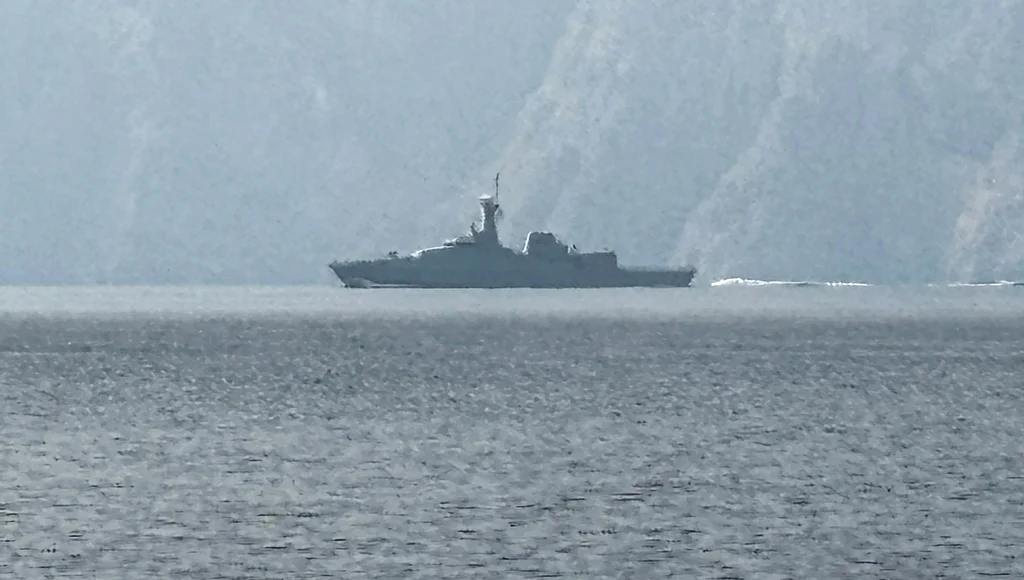
Strait of Hormuz. | File photo
Iran’s Revolutionary Guards said on Sunday that they would not reopen the Strait of Hormuz until the United States complied with a list of demands, including paying compensation for war damage.
Iran has effectively blockaded the crucial energy conduit since the United States and Israel attacked it in late February, and wants to charge tolls for passage, striking ships it accuses of attempting to circumvent its preferred route.
Attacks in the waterway, which was free to transit before the war, led to the collapse of an April ceasefire, and mediators have urged both sides to return to the terms of a subsequent June memorandum that set out a path for peace talks.
Iran’s security chief Mohammad Bagher Zolghadr had laid out on Saturday a list of conditions for reopening the strait, including an end to the ‘war and aggression against Iran and its allies in Lebanon, Palestine, Yemen and Iraq’.
He also demanded the lifting of a US counterblockade of Iranian ports, the end of sanctions, the release of frozen assets and compensation for wartime damage, the Tasnim news agency reported.
Iran’s Revolutionary Guards on Sunday said their strategy was to maintain the closure ‘until the enemy accepts all our conditions the strait is now actually a theatre of war for us and not just a waterway’.
Foreign minister Abbas Araghchi, who had also said the reopening of Hormuz was subject to conditions, denied on Sunday that Iran was negotiating with the US, saying they were merely ‘exchanging messages’ via intermediaries.
Traffic through Hormuz has dropped significantly amid the ongoing attacks.
The United Arab Emirates on Saturday accused Iran of striking a tanker belonging to its national oil company as it transited the strait.
And later on Saturday, the United Kingdom Maritime Trade Operations said a ship was hit by a projectile off Oman, though it was unclear whether they were referring to the same ship.
Oman’s foreign ministry on Saturday condemned ‘repeated attacks on vessels transiting the Strait of Hormuz’, without naming Iran.
It also said ‘ongoing negotiations regarding navigation arrangements in the Strait of Hormuz are proceeding’, and warned against any actions that might jeopardise the progress.
The June Iran-US deal had said Tehran and Muscat would hash out future arrangements for the strait in discussion with other Gulf countries and ‘in line with the applicable international law’, which generally forbids tolling in such waterways.
Araghchi had said that discussions with Oman over management of the strait were ‘approaching the final stages’.
As Iran throttles traffic in Hormuz, its Houthi allies in Yemen have declared a parallel maritime blockade on Saudi ports in the Red Sea, the oil-exporting giant’s only other maritime route.
The Houthis announced on Sunday that they had struck a Saudi oil facility on the country’s Red Sea coast, after the Gulf kingdom said it had extinguished a fire at the site.
Saudi Arabia has long propped up Yemen’s internationally recognised government in its war against the Houthis, which was paused by a UN-backed 2022 accord that has appeared to break down since the rebels declared their blockade last month.
A medical source in government-held Mokha said three civilians and eight military personnel were killed and a further 32 people wounded on Sunday, with all the civilian casualties resulting from Houthi strikes on the Yemeni city’s port.
Houthi military spokesman Yahya Saree said the group had targeted ‘Saudi enemy’ troops and equipment in the area with missiles and drones.
The Middle East war has proven an unprecedented challenge to Saudi Arabia’s carefully cultivated reputation for stability and security, as well as its ambitious plans to diversify its economy away from reliance on petroleum.
On Friday, the kingdom signed a joint defence agreement with Turkey and Pakistan, including a NATO-style clause that considers any attack on one country as an attack on all.
Turkey’s foreign minister said on Saturday he expected Egypt to also join the pact, calling the country a ‘natural partner on all issues’.
‘We already act toward one another as if we were alliance members,’ foreign minister Hakan Fidan said in an interview.
A drone struck US assets at an Egyptian port on the Mediterranean last month, marking the first such attack on Egyptian territory since the outbreak of the Iran war.
Fidan said the agreement was not aimed at a specific country, while Pakistan’s foreign ministry said Friday that it was ‘intended to strengthen collective deterrence’.
Agence France-Presse . Tehran, Iran 10 August, 2026, 00:08
Strait of Hormuz. | File photo
Iran’s Revolutionary Guards said on Sunday that they would not reopen the Strait of Hormuz until the United States complied with a list of demands, including paying compensation for war damage.
Iran has effectively blockaded the crucial energy conduit since the United States and Israel attacked it in late February, and wants to charge tolls for passage, striking ships it accuses of attempting to circumvent its preferred route.
Attacks in the waterway, which was free to transit before the war, led to the collapse of an April ceasefire, and mediators have urged both sides to return to the terms of a subsequent June memorandum that set out a path for peace talks.
Iran’s security chief Mohammad Bagher Zolghadr had laid out on Saturday a list of conditions for reopening the strait, including an end to the ‘war and aggression against Iran and its allies in Lebanon, Palestine, Yemen and Iraq’.
He also demanded the lifting of a US counterblockade of Iranian ports, the end of sanctions, the release of frozen assets and compensation for wartime damage, the Tasnim news agency reported.
Iran’s Revolutionary Guards on Sunday said their strategy was to maintain the closure ‘until the enemy accepts all our conditions the strait is now actually a theatre of war for us and not just a waterway’.
Foreign minister Abbas Araghchi, who had also said the reopening of Hormuz was subject to conditions, denied on Sunday that Iran was negotiating with the US, saying they were merely ‘exchanging messages’ via intermediaries.
Traffic through Hormuz has dropped significantly amid the ongoing attacks.
The United Arab Emirates on Saturday accused Iran of striking a tanker belonging to its national oil company as it transited the strait.
And later on Saturday, the United Kingdom Maritime Trade Operations said a ship was hit by a projectile off Oman, though it was unclear whether they were referring to the same ship.
Oman’s foreign ministry on Saturday condemned ‘repeated attacks on vessels transiting the Strait of Hormuz’, without naming Iran.
It also said ‘ongoing negotiations regarding navigation arrangements in the Strait of Hormuz are proceeding’, and warned against any actions that might jeopardise the progress.
The June Iran-US deal had said Tehran and Muscat would hash out future arrangements for the strait in discussion with other Gulf countries and ‘in line with the applicable international law’, which generally forbids tolling in such waterways.
Araghchi had said that discussions with Oman over management of the strait were ‘approaching the final stages’.
As Iran throttles traffic in Hormuz, its Houthi allies in Yemen have declared a parallel maritime blockade on Saudi ports in the Red Sea, the oil-exporting giant’s only other maritime route.
The Houthis announced on Sunday that they had struck a Saudi oil facility on the country’s Red Sea coast, after the Gulf kingdom said it had extinguished a fire at the site.
Saudi Arabia has long propped up Yemen’s internationally recognised government in its war against the Houthis, which was paused by a UN-backed 2022 accord that has appeared to break down since the rebels declared their blockade last month.
A medical source in government-held Mokha said three civilians and eight military personnel were killed and a further 32 people wounded on Sunday, with all the civilian casualties resulting from Houthi strikes on the Yemeni city’s port.
Houthi military spokesman Yahya Saree said the group had targeted ‘Saudi enemy’ troops and equipment in the area with missiles and drones.
The Middle East war has proven an unprecedented challenge to Saudi Arabia’s carefully cultivated reputation for stability and security, as well as its ambitious plans to diversify its economy away from reliance on petroleum.
On Friday, the kingdom signed a joint defence agreement with Turkey and Pakistan, including a NATO-style clause that considers any attack on one country as an attack on all.
Turkey’s foreign minister said on Saturday he expected Egypt to also join the pact, calling the country a ‘natural partner on all issues’.
‘We already act toward one another as if we were alliance members,’ foreign minister Hakan Fidan said in an interview.
A drone struck US assets at an Egyptian port on the Mediterranean last month, marking the first such attack on Egyptian territory since the outbreak of the Iran war.
Fidan said the agreement was not aimed at a specific country, while Pakistan’s foreign ministry said Friday that it was ‘intended to strengthen collective deterrence’.


