Bangladesh Defense
Saif
Senior Member
- Jan 24, 2024
- 20,857
- 9,685
- Nation

- Residence
- Axis Group

Why Zia still matters today
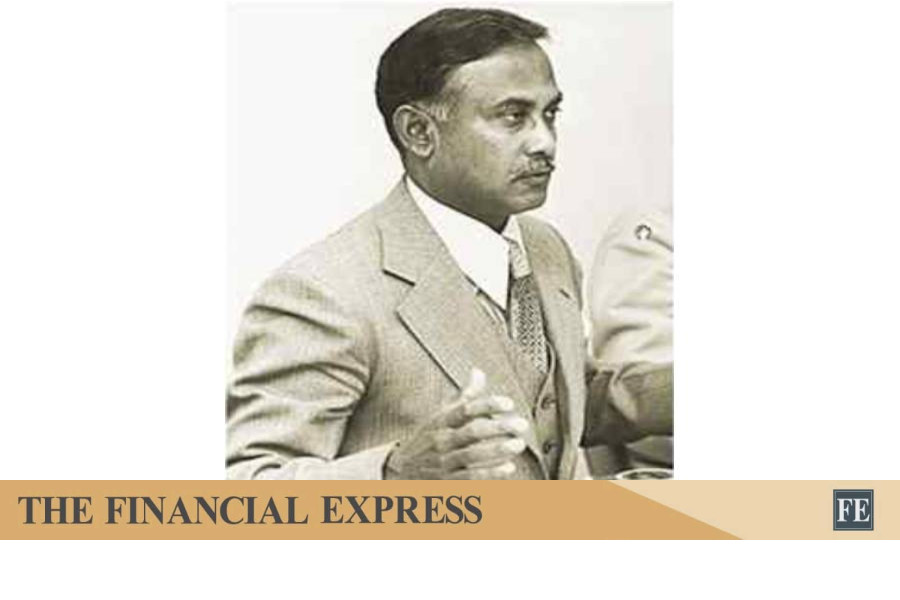
May 30 marks the 45th anniversary of the demise of Shaheed President Ziaur Rahman, a freedom fighter and nation builder who founded the Bangladesh Nationalist Party (BNP). The death of Shaheed Ziaur Rahman at the hands of those attempting to stage a coup in Chittagong not only meant the end of the
Why Zia still matters today
Serajul I. Bhuiyan
Published :
May 26, 2026 17:05
Updated :
May 26, 2026 17:05
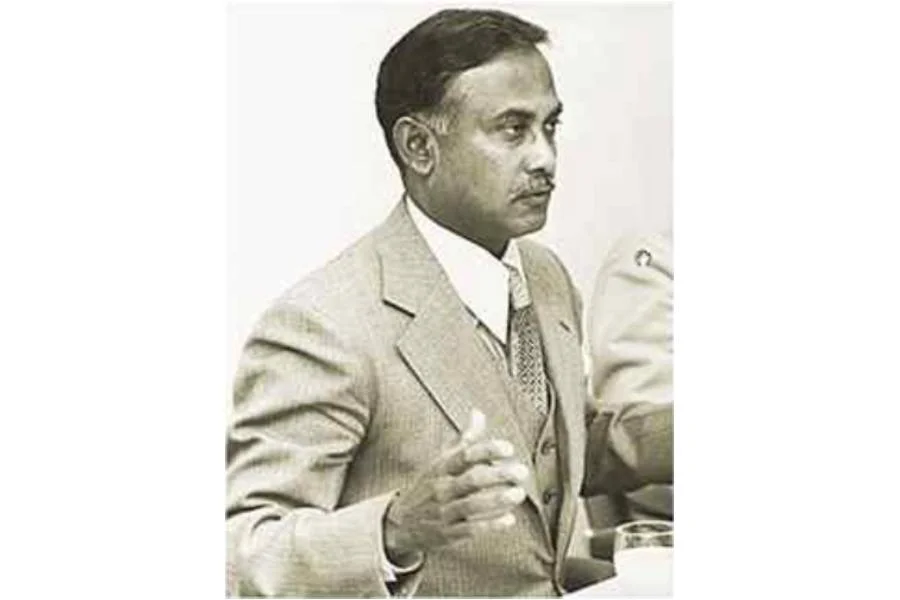
May 30 marks the 45th anniversary of the demise of Shaheed President Ziaur Rahman, a freedom fighter and nation builder who founded the Bangladesh Nationalist Party (BNP). The death of Shaheed Ziaur Rahman at the hands of those attempting to stage a coup in Chittagong not only meant the end of the life of the country’s president; it also meant the premature end of an amazing exercise in statecraft that tried to create a sovereign, pluralistic, and self-reliant country.
Therefore, commemorating Ziaur Rahman means not just celebrating him through ceremonies, but also recognizing that he came into existence at a time when Bangladesh, as an independent nation, needed someone to alter its destiny many times over.
The main contribution of President Ziaur Rahman is that he turned independence and sovereignty from vague constitutional notions into a working and practiced principle of statecraft. Ziaur Rahman’s political and administrative acumen taught us a very important lesson: once gained, independence cannot be taken as granted - it requires careful safeguarding through proper institutions and policy practices.
Unlike many post-colonial leaders and administrations across the globe who tended to use sovereignty and national independence as mere slogans, Shaheed Zia went much further by practicing what he preached. His vision of sovereignty was deeply practical, in the sense that the principle had to be incorporated into all activities and processes associated with governance,, including budgeting, foreign relations, domestic administration, economic development, and so forth.
It is especially worth noting the case of foreign policy in this regard. At a time when Bangladesh faced a high risk of strategic subordination in the region, Ziaur Rahman changed that perception and convinced the country’s leaders and citizens that a small state cannot afford to be obedient to survive and prosper. On the contrary, it must remain vigilant and active, ready to protect its sovereignty at any cost.
The Political Reinterpretation of Nationality: One more highly debated but extremely important legacy of Shaheed Ziaur Rahman is the reinterpretation of national identity. The latter was re-centered on sovereignty, territoriality, and political independence rather than language or religion. According to Ziaur Rahman, a national identity should be clearly defined so that there is no chance for external forces to exploit Bangladesh and shape its mentality through the manipulation of identity discourse.
It was a psychological liberation for the Bangladeshi society from the yoke of the colonial heritage and recognition of the unique character of their nation. Yet, for opponents of this concept, there was always a risk of marginalising some ethnic groups through denying them citizenship. Still, one should acknowledge that Ziaur Rahman’s reformulation of the nationality concept was instrumental in fostering strong notions of sovereignty among the Bangladeshi population.
Broadening of Foreign Relations Network: Ziaur Rahman’s foreign policy was completely different from previous ones and represented a breakthrough in the field. The former Prime Minister was very eager to expand Bangladesh’s diplomatic network outside of South Asia by reaching out to the Muslim world, non-aligned countries, Sub-Saharan Africa, East Asia, and various international institutions.
That was done by Ziaur Rahman for a very practical reason the narrowness of Bangladesh’s diplomatic connections might have led to national subordination, as powerful countries or groups could pressure the government. Thus, through a carefully constructed, broadened foreign policy, President Ziaur Rahman tried to make his country immune to such pressures and threats.
One of the problems that poses a particular danger to Bangladesh’s sovereignty is water security, particularly the issue of transboundary rivers. Being a lower riparian state, Bangladesh is heavily dependent on neighboring countries’ decisions regarding the use of rivers shared by Bangladesh and India.Ziaur Rahman recognized the problem and treated the issue of the transboundary river seriously. By refusing to be subordinated in water management and advocating equitable water sharing, particularly regarding the Farakka Barrage, Zia made clear that transboundary rivers are an inseparable part of water sovereignty. While the results of Zia’s efforts on the water issue are debatable, the approach he pursued will remain relevant given Bangladesh’s geographic vulnerability.
Conceptualisation of Regional Institution: Not only was he concerned with formulating effective foreign policies, but also with the creation of regional institutions, since the idea for the SAARC originated with him. By founding this organisation, the leader sought to resist power imbalances in South Asian politics through multilateralism and diplomacy. Since bilateral diplomatic approaches may work to the advantage of larger powers, SAARC offered a good opportunity for the region’s smaller states to level the playing field. Thus, SAARC stands as a good example of how diplomatic practices can be turned into instruments of strategic and political independence.
Drawing Boundaries: When addressing territorial issues, President Ziaur Rahman demonstrated strong determination and clarity. Namely, he considered any sort of vagueness concerning the demarcation of borders and other boundary problems as a weakness of a state that may become a source of external pressures. The rejection of India’s unilateral claims to South Talpatti Island clearly demonstrates the approach outlined above to borders. In fact, Ziaur Rahman was aware that such territorial disputes involve not only territorial issues but also national sovereignty. Given the realities of current geopolitics, including the development of corridors and negotiations over transit issues, Zia’s principles remain highly relevant today.
Development Policies for Sustainable Sovereignty: The importance of economic independence for sovereignty cannot be overstressed. This was well realized by Ziaur Rahman, who formulated a development program based primarily on economic sectors such as agriculture, rural development, irrigation, and decentralisation.
As far as these industries were concerned, Bangladesh succeeded in gaining its independence, not only politically but also geographically. The emphasis was put on the countryside; thus, they were empowered.
Moreover, in this way, the leader showed that dependency starts at home—it is not enough to be politically independent. Therefore, economic policies are as important for independence as foreign ones.
What Interrupted the Doctrine of Sovereignty?: The above analysis shows that Shaheed Ziaur Rahman played a significant role in advancing Bangladesh’s sovereignty. But there was no time to continue the implementation of his doctrines, the assassination interrupted the process halfway.
Thus, in the years that followed, we have seen many cases in which Zia’s ideas were set aside, and Bangladesh returned to its initial dependency. Narrow alliances and relations, conflicts over trade and water, and attempts at strategic asymmetry all came as a surprise for a new generation of politicians and analysts.
On the contrary, such an event highlighted the importance of Zia in history, as he was the one who set out the guiding principles. Whenever anything happens with regard to sovereignty, people speak of Zia.
What makes Shaheed Ziaur Rahman stand out is the high level of ethical behaviour in politics that characterized him throughout his leadership career. First of all, Zia had a great character, which made him able to lead people with confidence and authority. Besides, his strict approach to personal discipline made him earn high respect from society.
Finally, another feature that set him apart was Ziaur Rahman’s philosophy of inclusive politics. At a time when Bangladesh was divided into many fragments and faced serious challenges, the President managed to unite people and make them feel part of the state.
Adapting the doctrine to modern conditions: Today, the legacy of Shaheed Ziaur Rahman must be remembered and carried forward to achieve strategic autonomy in the world. To this end, several important factors must be considered.
First, economic policies have to be directed not at isolationism but at competitiveness. In other words, it is necessary to ensure Bangladesh’s sovereignty through its competitiveness in the global economy. This can be reached by increasing human capital and introducing innovations in production.
Second, as far as diplomatic relations are concerned, they must include a wide range of actors and involve a diversity of interactions to provide some flexibility. Thus, Bangladesh should continue to diversify its relations with many countries worldwide.
Third, institutional capacity and decentralization have to be increased to make the state less susceptible to external influences. Finally, people must play a major role in preserving Bangladesh’s sovereignty.
The commemoration of Ziaur Rahman would be futile unless his legacy continued. To make this possible, his philosophy of sovereignty must be modernised to suit contemporary Bangladesh.
In the modern, well-connected world, his concept of sovereign independence can best be explained through the theory of strategic autonomy. In the international community, it is imperative for Bangladesh to safeguard its decision-making power while maintaining its sovereignty amid globalisations.
In international relations, it means pursuing a comprehensive foreign policy to sustain independence and avoid interference. Regarding the economy, it means becoming more competitive through innovations, human capital development, and international business transactions. Decentralisation and accountability at the institutional level remain as important today as they were under Ziaur Rahman. An effective institutional setup is the foundation of independence. In its absence, sovereignty will be weak no matter what happens outside.
At the same time, sovereignty is not upheld solely by the state, it is sustained by its people. Ziaur Rahman succeeded in embedding this sense of sovereignty within the national consciousness. Preserving that awareness through education, civic engagement, and informed public discussion is essential. For the next generation of leaders, the lesson is clear: sovereignty is not a finished achievement but an ongoing process. It must be protected, negotiated, and renewed continuously.
Four and a half decades after the tragic assassination of Shaheed Ziaur Rahman, his influence has gone far beyond the pages of history and continues to live on. He is not just remembered—he is rediscovered again and again. Across generations, his vision of nation-building, grounded in sovereignty, dignity, and self-reliance, continues to inspire those who believe that Bangladesh must shape its own destiny.
There was much about Ziaur Rahman that made him less than ideal; no true transformative leader can be ideal. The distinguishing characteristic of him was his purposefulness. He stood his ground in uncertain times, was courageous when the country was weak, and was forward-looking in leading the new nation that was trying to find its footing. He achieved all of this in a short period, restoring democratic space, reviving the economy, and building Bangladesh into an influential nation in the international community.
The lesson to be derived from his legacy is that sovereignty cannot be achieved and then left at that; it is an ongoing struggle that demands alertness, robust institutions, and a common purpose.
Remembering Shaheed Ziaur Rahman, therefore, is not only about honouring the past—it is about accepting responsibility for the future. It is about understanding that independence must be practiced every day, defended in every decision, and preserved by every generation.
As the American statesman Thomas Jefferson once said: “The price of freedom is eternal vigilance.”
Serajul I. Bhuiyan
Published :
May 26, 2026 17:05
Updated :
May 26, 2026 17:05
May 30 marks the 45th anniversary of the demise of Shaheed President Ziaur Rahman, a freedom fighter and nation builder who founded the Bangladesh Nationalist Party (BNP). The death of Shaheed Ziaur Rahman at the hands of those attempting to stage a coup in Chittagong not only meant the end of the life of the country’s president; it also meant the premature end of an amazing exercise in statecraft that tried to create a sovereign, pluralistic, and self-reliant country.
Therefore, commemorating Ziaur Rahman means not just celebrating him through ceremonies, but also recognizing that he came into existence at a time when Bangladesh, as an independent nation, needed someone to alter its destiny many times over.
The main contribution of President Ziaur Rahman is that he turned independence and sovereignty from vague constitutional notions into a working and practiced principle of statecraft. Ziaur Rahman’s political and administrative acumen taught us a very important lesson: once gained, independence cannot be taken as granted - it requires careful safeguarding through proper institutions and policy practices.
Unlike many post-colonial leaders and administrations across the globe who tended to use sovereignty and national independence as mere slogans, Shaheed Zia went much further by practicing what he preached. His vision of sovereignty was deeply practical, in the sense that the principle had to be incorporated into all activities and processes associated with governance,, including budgeting, foreign relations, domestic administration, economic development, and so forth.
It is especially worth noting the case of foreign policy in this regard. At a time when Bangladesh faced a high risk of strategic subordination in the region, Ziaur Rahman changed that perception and convinced the country’s leaders and citizens that a small state cannot afford to be obedient to survive and prosper. On the contrary, it must remain vigilant and active, ready to protect its sovereignty at any cost.
The Political Reinterpretation of Nationality: One more highly debated but extremely important legacy of Shaheed Ziaur Rahman is the reinterpretation of national identity. The latter was re-centered on sovereignty, territoriality, and political independence rather than language or religion. According to Ziaur Rahman, a national identity should be clearly defined so that there is no chance for external forces to exploit Bangladesh and shape its mentality through the manipulation of identity discourse.
It was a psychological liberation for the Bangladeshi society from the yoke of the colonial heritage and recognition of the unique character of their nation. Yet, for opponents of this concept, there was always a risk of marginalising some ethnic groups through denying them citizenship. Still, one should acknowledge that Ziaur Rahman’s reformulation of the nationality concept was instrumental in fostering strong notions of sovereignty among the Bangladeshi population.
Broadening of Foreign Relations Network: Ziaur Rahman’s foreign policy was completely different from previous ones and represented a breakthrough in the field. The former Prime Minister was very eager to expand Bangladesh’s diplomatic network outside of South Asia by reaching out to the Muslim world, non-aligned countries, Sub-Saharan Africa, East Asia, and various international institutions.
That was done by Ziaur Rahman for a very practical reason the narrowness of Bangladesh’s diplomatic connections might have led to national subordination, as powerful countries or groups could pressure the government. Thus, through a carefully constructed, broadened foreign policy, President Ziaur Rahman tried to make his country immune to such pressures and threats.
One of the problems that poses a particular danger to Bangladesh’s sovereignty is water security, particularly the issue of transboundary rivers. Being a lower riparian state, Bangladesh is heavily dependent on neighboring countries’ decisions regarding the use of rivers shared by Bangladesh and India.Ziaur Rahman recognized the problem and treated the issue of the transboundary river seriously. By refusing to be subordinated in water management and advocating equitable water sharing, particularly regarding the Farakka Barrage, Zia made clear that transboundary rivers are an inseparable part of water sovereignty. While the results of Zia’s efforts on the water issue are debatable, the approach he pursued will remain relevant given Bangladesh’s geographic vulnerability.
Conceptualisation of Regional Institution: Not only was he concerned with formulating effective foreign policies, but also with the creation of regional institutions, since the idea for the SAARC originated with him. By founding this organisation, the leader sought to resist power imbalances in South Asian politics through multilateralism and diplomacy. Since bilateral diplomatic approaches may work to the advantage of larger powers, SAARC offered a good opportunity for the region’s smaller states to level the playing field. Thus, SAARC stands as a good example of how diplomatic practices can be turned into instruments of strategic and political independence.
Drawing Boundaries: When addressing territorial issues, President Ziaur Rahman demonstrated strong determination and clarity. Namely, he considered any sort of vagueness concerning the demarcation of borders and other boundary problems as a weakness of a state that may become a source of external pressures. The rejection of India’s unilateral claims to South Talpatti Island clearly demonstrates the approach outlined above to borders. In fact, Ziaur Rahman was aware that such territorial disputes involve not only territorial issues but also national sovereignty. Given the realities of current geopolitics, including the development of corridors and negotiations over transit issues, Zia’s principles remain highly relevant today.
Development Policies for Sustainable Sovereignty: The importance of economic independence for sovereignty cannot be overstressed. This was well realized by Ziaur Rahman, who formulated a development program based primarily on economic sectors such as agriculture, rural development, irrigation, and decentralisation.
As far as these industries were concerned, Bangladesh succeeded in gaining its independence, not only politically but also geographically. The emphasis was put on the countryside; thus, they were empowered.
Moreover, in this way, the leader showed that dependency starts at home—it is not enough to be politically independent. Therefore, economic policies are as important for independence as foreign ones.
What Interrupted the Doctrine of Sovereignty?: The above analysis shows that Shaheed Ziaur Rahman played a significant role in advancing Bangladesh’s sovereignty. But there was no time to continue the implementation of his doctrines, the assassination interrupted the process halfway.
Thus, in the years that followed, we have seen many cases in which Zia’s ideas were set aside, and Bangladesh returned to its initial dependency. Narrow alliances and relations, conflicts over trade and water, and attempts at strategic asymmetry all came as a surprise for a new generation of politicians and analysts.
On the contrary, such an event highlighted the importance of Zia in history, as he was the one who set out the guiding principles. Whenever anything happens with regard to sovereignty, people speak of Zia.
What makes Shaheed Ziaur Rahman stand out is the high level of ethical behaviour in politics that characterized him throughout his leadership career. First of all, Zia had a great character, which made him able to lead people with confidence and authority. Besides, his strict approach to personal discipline made him earn high respect from society.
Finally, another feature that set him apart was Ziaur Rahman’s philosophy of inclusive politics. At a time when Bangladesh was divided into many fragments and faced serious challenges, the President managed to unite people and make them feel part of the state.
Adapting the doctrine to modern conditions: Today, the legacy of Shaheed Ziaur Rahman must be remembered and carried forward to achieve strategic autonomy in the world. To this end, several important factors must be considered.
First, economic policies have to be directed not at isolationism but at competitiveness. In other words, it is necessary to ensure Bangladesh’s sovereignty through its competitiveness in the global economy. This can be reached by increasing human capital and introducing innovations in production.
Second, as far as diplomatic relations are concerned, they must include a wide range of actors and involve a diversity of interactions to provide some flexibility. Thus, Bangladesh should continue to diversify its relations with many countries worldwide.
Third, institutional capacity and decentralization have to be increased to make the state less susceptible to external influences. Finally, people must play a major role in preserving Bangladesh’s sovereignty.
The commemoration of Ziaur Rahman would be futile unless his legacy continued. To make this possible, his philosophy of sovereignty must be modernised to suit contemporary Bangladesh.
In the modern, well-connected world, his concept of sovereign independence can best be explained through the theory of strategic autonomy. In the international community, it is imperative for Bangladesh to safeguard its decision-making power while maintaining its sovereignty amid globalisations.
In international relations, it means pursuing a comprehensive foreign policy to sustain independence and avoid interference. Regarding the economy, it means becoming more competitive through innovations, human capital development, and international business transactions. Decentralisation and accountability at the institutional level remain as important today as they were under Ziaur Rahman. An effective institutional setup is the foundation of independence. In its absence, sovereignty will be weak no matter what happens outside.
At the same time, sovereignty is not upheld solely by the state, it is sustained by its people. Ziaur Rahman succeeded in embedding this sense of sovereignty within the national consciousness. Preserving that awareness through education, civic engagement, and informed public discussion is essential. For the next generation of leaders, the lesson is clear: sovereignty is not a finished achievement but an ongoing process. It must be protected, negotiated, and renewed continuously.
Four and a half decades after the tragic assassination of Shaheed Ziaur Rahman, his influence has gone far beyond the pages of history and continues to live on. He is not just remembered—he is rediscovered again and again. Across generations, his vision of nation-building, grounded in sovereignty, dignity, and self-reliance, continues to inspire those who believe that Bangladesh must shape its own destiny.
There was much about Ziaur Rahman that made him less than ideal; no true transformative leader can be ideal. The distinguishing characteristic of him was his purposefulness. He stood his ground in uncertain times, was courageous when the country was weak, and was forward-looking in leading the new nation that was trying to find its footing. He achieved all of this in a short period, restoring democratic space, reviving the economy, and building Bangladesh into an influential nation in the international community.
The lesson to be derived from his legacy is that sovereignty cannot be achieved and then left at that; it is an ongoing struggle that demands alertness, robust institutions, and a common purpose.
Remembering Shaheed Ziaur Rahman, therefore, is not only about honouring the past—it is about accepting responsibility for the future. It is about understanding that independence must be practiced every day, defended in every decision, and preserved by every generation.
As the American statesman Thomas Jefferson once said: “The price of freedom is eternal vigilance.”