War Archive
Saif
Senior Member
- Jan 24, 2024
- 21,100
- 9,688
- Nation

- Residence
- Axis Group

US-escorted tankers struck in Hormuz: Iran
Agence France-Presse . Tehran, Iran 01 August, 2026, 01:13
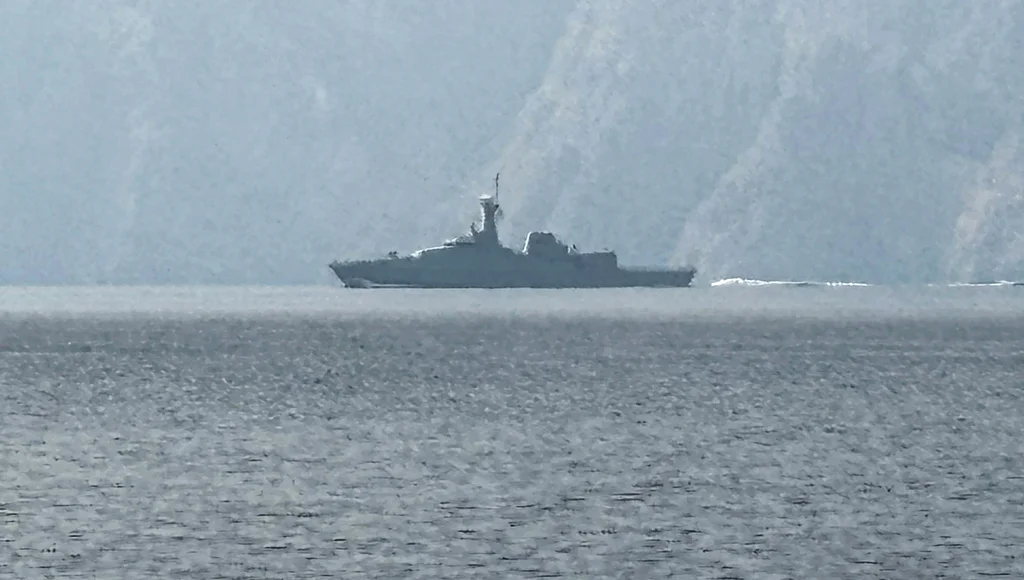
Strait of Hormuz. | File photo
Iran’s Revolutionary Guards said Friday that they had struck two tankers attempting to pass though the strategic Strait of Hormuz under the ‘air escort’ of the US military.
The IRGC said the ‘non-compliant oil tankers were struck and brought to a halt, while four other oil tankers quickly changed course and returned to their previous positions’.
The Guards said the tankers had attempted to pass the strait via ‘an undeclared route’, the US-backed alternative to Tehran’s designated waterway closer to its own shores.
Iran has effectively maintained control over navigation through Hormuz since the outbreak of the war on February 28, requiring vessels to obtain permission and pay transit fees before using the waterway.
On Thursday, the Guards said two oil tankers attempting to transit the Strait had turned back after one caught fire.
Iran’s military said on Friday it launched drone strikes targeting US military facilities in Kuwait, as fighting resumed between Washington and Tehran in the Middle East war after a nearly week-long lull.
The army said in a statement it targeted ‘fighter aircraft shelters, satellite communications systems and equipment storage facilities at Ahmad al-Jaber Air Base in Kuwait’.
There was no immediate comment from the US Central Command.
The Iranian army said the strikes came ‘in response to the recent aggression by the terrorist US military against our country and its brutal attack on a residential home on Qeshm Island’.
Local media reported on Thursday that three members of a family were killed in US strikes on Qeshm Island in the Strait of Hormuz waterway crucial for oil and gas trade.
The trade route normally carries around 20 per cent of global oil shipments and has been effectively closed by Iran since the outbreak of the war on February 28.
The US has carried out repeated strikes on Iran’s southern coastal provinces as it seeks to weaken Tehran’s control over the waterway.
Iranian state media said on Friday that the bodies of five members of the Islamic Revolutionary
Guard Corps killed in joint US-Saudi strikes in Iraq this week had been returned.
‘The bodies of five IRGC members killed in the recent US-Saudi attacks on Iraq were brought into the country through the Mehran border crossing,’ in western Ilam province, the IRNA state news agency reported.
The United States and Saudi Arabia said on Wednesday they had struck Iran-backed militants in Iraq in response to recent attacks on the Gulf kingdom.
The strikes targeted positions belonging to the Hashed al-Shaabi, an Iraqi armed coalition that includes several powerful pro-Iran groups, killing at least 20 militants, including the five Iranians.
The IRGC’s Quds Force oversees Iran’s operations abroad, and Guards members killed outside Iran are often affiliated with the unit. The United States killed the Quds Force’s commander Qasem Soleimani in an airstrike in Baghdad in 2020, along with Hashed al-Shaabi deputy leader Abu Mahdi al-Muhandis.
Agence France-Presse . Tehran, Iran 01 August, 2026, 01:13
Strait of Hormuz. | File photo
Iran’s Revolutionary Guards said Friday that they had struck two tankers attempting to pass though the strategic Strait of Hormuz under the ‘air escort’ of the US military.
The IRGC said the ‘non-compliant oil tankers were struck and brought to a halt, while four other oil tankers quickly changed course and returned to their previous positions’.
The Guards said the tankers had attempted to pass the strait via ‘an undeclared route’, the US-backed alternative to Tehran’s designated waterway closer to its own shores.
Iran has effectively maintained control over navigation through Hormuz since the outbreak of the war on February 28, requiring vessels to obtain permission and pay transit fees before using the waterway.
On Thursday, the Guards said two oil tankers attempting to transit the Strait had turned back after one caught fire.
Iran’s military said on Friday it launched drone strikes targeting US military facilities in Kuwait, as fighting resumed between Washington and Tehran in the Middle East war after a nearly week-long lull.
The army said in a statement it targeted ‘fighter aircraft shelters, satellite communications systems and equipment storage facilities at Ahmad al-Jaber Air Base in Kuwait’.
There was no immediate comment from the US Central Command.
The Iranian army said the strikes came ‘in response to the recent aggression by the terrorist US military against our country and its brutal attack on a residential home on Qeshm Island’.
Local media reported on Thursday that three members of a family were killed in US strikes on Qeshm Island in the Strait of Hormuz waterway crucial for oil and gas trade.
The trade route normally carries around 20 per cent of global oil shipments and has been effectively closed by Iran since the outbreak of the war on February 28.
The US has carried out repeated strikes on Iran’s southern coastal provinces as it seeks to weaken Tehran’s control over the waterway.
Iranian state media said on Friday that the bodies of five members of the Islamic Revolutionary
Guard Corps killed in joint US-Saudi strikes in Iraq this week had been returned.
‘The bodies of five IRGC members killed in the recent US-Saudi attacks on Iraq were brought into the country through the Mehran border crossing,’ in western Ilam province, the IRNA state news agency reported.
The United States and Saudi Arabia said on Wednesday they had struck Iran-backed militants in Iraq in response to recent attacks on the Gulf kingdom.
The strikes targeted positions belonging to the Hashed al-Shaabi, an Iraqi armed coalition that includes several powerful pro-Iran groups, killing at least 20 militants, including the five Iranians.
The IRGC’s Quds Force oversees Iran’s operations abroad, and Guards members killed outside Iran are often affiliated with the unit. The United States killed the Quds Force’s commander Qasem Soleimani in an airstrike in Baghdad in 2020, along with Hashed al-Shaabi deputy leader Abu Mahdi al-Muhandis.