Wars 2026 02/28 Israel-Iran War 3.0

Afghanistan Albania Algeria Andorra Angola Antigua Austria Azerbaijan Bahamas Bahrain Bangladesh Barbados Canada China Egypt Finland Germany India Iran Israel Japan Lebanon North Macedonia Pakistan Palestine Qatar Russia Syria Turkey Ukraine United Kingdom United States Yemen
Wars 2026 02/28 Israel-Iran War 3.0
294
4K
More threads by RayKalm

G War Archive

US-escorted tankers struck in Hormuz: Iran
Agence France-Presse . Tehran, Iran 01 August, 2026, 01:13
1785543206366.webp

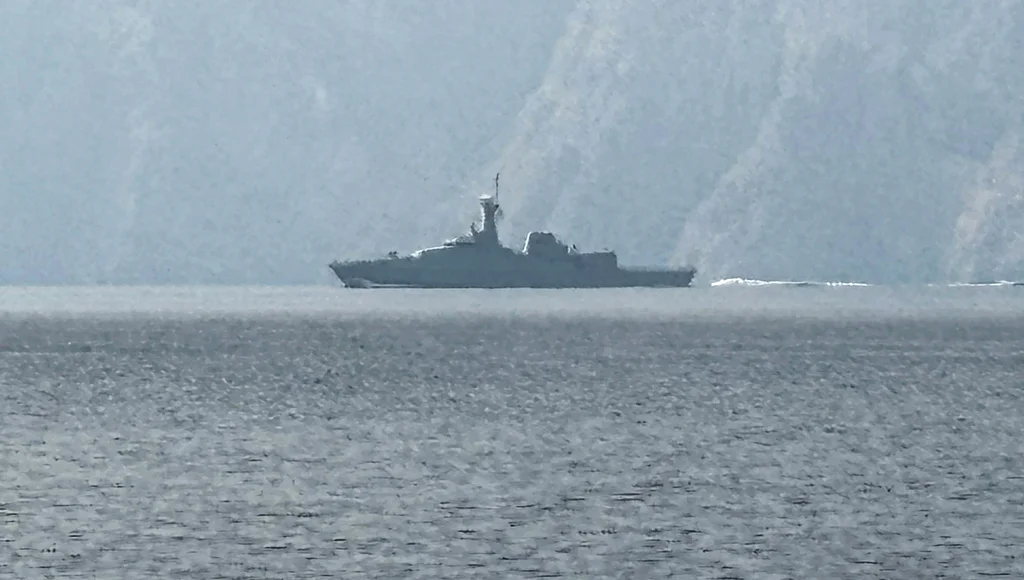
Strait of Hormuz. | File photo

Iran’s Revolutionary Guards said Friday that they had struck two tankers attempting to pass though the strategic Strait of Hormuz under the ‘air escort’ of the US military.

The IRGC said the ‘non-compliant oil tankers were struck and brought to a halt, while four other oil tankers quickly changed course and returned to their previous positions’.

The Guards said the tankers had attempted to pass the strait via ‘an undeclared route’, the US-backed alternative to Tehran’s designated waterway closer to its own shores.

Iran has effectively maintained control over navigation through Hormuz since the outbreak of the war on February 28, requiring vessels to obtain permission and pay transit fees before using the waterway.

On Thursday, the Guards said two oil tankers attempting to transit the Strait had turned back after one caught fire.

Iran’s military said on Friday it launched drone strikes targeting US military facilities in Kuwait, as fighting resumed between Washington and Tehran in the Middle East war after a nearly week-long lull.

The army said in a statement it targeted ‘fighter aircraft shelters, satellite communications systems and equipment storage facilities at Ahmad al-Jaber Air Base in Kuwait’.

There was no immediate comment from the US Central Command.

The Iranian army said the strikes came ‘in response to the recent aggression by the terrorist US military against our country and its brutal attack on a residential home on Qeshm Island’.

Local media reported on Thursday that three members of a family were killed in US strikes on Qeshm Island in the Strait of Hormuz waterway crucial for oil and gas trade.

The trade route normally carries around 20 per cent of global oil shipments and has been effectively closed by Iran since the outbreak of the war on February 28.

The US has carried out repeated strikes on Iran’s southern coastal provinces as it seeks to weaken Tehran’s control over the waterway.

Iranian state media said on Friday that the bodies of five members of the Islamic Revolutionary

Guard Corps killed in joint US-Saudi strikes in Iraq this week had been returned.

‘The bodies of five IRGC members killed in the recent US-Saudi attacks on Iraq were brought into the country through the Mehran border crossing,’ in western Ilam province, the IRNA state news agency reported.

The United States and Saudi Arabia said on Wednesday they had struck Iran-backed militants in Iraq in response to recent attacks on the Gulf kingdom.

The strikes targeted positions belonging to the Hashed al-Shaabi, an Iraqi armed coalition that includes several powerful pro-Iran groups, killing at least 20 militants, including the five Iranians.

The IRGC’s Quds Force oversees Iran’s operations abroad, and Guards members killed outside Iran are often affiliated with the unit. The United States killed the Quds Force’s commander Qasem Soleimani in an airstrike in Baghdad in 2020, along with Hashed al-Shaabi deputy leader Abu Mahdi al-Muhandis.​
 

Iran accuses US of escalating tensions
Agence France-Presse . Tehran, Iran 02 August, 2026, 01:11

1785632658451.webp

File photo

Iran’s military accused the United States of ‘escalating tensions’ in the Middle East on Saturday and warned countries in the region against cooperating with Washington during the ongoing conflict.

‘The United States is rapidly moving down the path of escalating tensions in the region,’ said Ali Abdollahi, head of Iran’s military central command.

‘Any country serving as defensive shield for criminal and aggressive America will be engulfed by the flames of war,’ he said in a statement read on state television.

The remarks came after US president Donald Trump reiterated threats to hit Iran ‘very hard’.

US media reported he was considering renewed heavy attacks as soon as this weekend, including against energy infrastructure targets.

This week, Iran and the US resumed overnight exchanges of fire after a days-long lull in fighting although there were no reported strikes overnight Friday to Saturday.

Meanwhile, US embassies in several Middle Eastern capitals warned American citizens to beware an ‘unforeseen escalation’ in the regional conflict and urged them to be ready to leave.

‘Americans in the region should consider departing, or be prepared to depart should there be escalation,’ said a security alert, versions of which were posted on social media by the US missions in Amman, Jerusalem, Muscat, Baghdad and Beirut.

The messages urged citizens to check flight details and to follow safety advice from local authorities.

‘Americans currently in the Middle East should exercise caution and heightened vigilance and should be prepared for flight cancellations, periodic airspace closures, and potential travel disruptions,’ it said.

Americans in Jordan were told not to visit US military bases there, which have recently come under Iranian missile attack, and in Israel they were urged to seek the location of the nearest bomb shelter.

‘The Iranian regime is unpredictable, as seen by its recent decisions to attack areas in the region without warning or provocations as well as to expand attacks to areas not previously targeted [such as Egypt],’ said a post on the US embassy Jerusalem site.

The US embassy in Beirut said that the mission remained on ‘ordered departure status’, meaning that non-emergency US government personnel were still relocated outside of Lebanon.

On Wednesday, a drone struck a US-owned gas vessel moored in an Egyptian port, causing a fire. Egypt is investigating but has not yet accused any group of launching the attack.

The Middle East war broke out on February 28 when the United States and Israel launched strikes on Iran, which has retaliated with missile and drone strikes across the region.​
 

Trump says he will hold off on fresh Iran attack in hope of quick deal

US president says he wants rapid deal on opening Strait of Hormuz. Iranian foreign minister had warned of 'proportionate response' to US attacks.

Reuters
Cairo
Published: 02 Aug 2026, 14: 54

1785713355118.webp

US President Donald Trump gives thumbs-up as he walks to board Marine One following his arrival aboard Air Force One at Morristown Municipal Airport in Morristown, New Jersey, US, 31 July, 2026. REUTERS

President Donald Trump said late on Saturday the US would hold off on a fresh attack on Iran as long as a deal could be reached quickly to halt Iran's nuclear ambitions and reopen the Strait of Hormuz.

Iran and other Middle Eastern countries asked for time to complete a deal that would lead to "the Immediate, Complete and Total" reopening of the vital strait and "an end to Iran's nuclear threat," Trump wrote on his Truth Social platform. He did not name the countries in the post, which followed a call with Crown Prince Mohammed bin Salman of Saudi Arabia, a US ally.

"Based on this request, I have agreed, for the future benefit of the WORLD and, likewise, the survival of a successful and prosperous Iran, to cancel the attack, subject to being able to rapidly make a DEAL," Trump wrote.

Israel "joins me in this commitment," he said. Israel did not immediately respond on Sunday to a request for comment on the US president's posts.

Saudi Prince Seeks Dialogue, Iran on High State of Readiness

In his call with Trump, the Saudi crown prince, widely known as MBS, stressed the "necessity of prioritising dialogue to de-escalate tensions" in the Middle East, according to Saudi Arabia's state news agency. A White House official told Reuters that the two had spoken but did not provide details.

Trump's apparent de-escalation after days of threats of new attacks from each side marked the latest turn in the war the US and Israel launched five months ago. Attacks have spread across the Gulf to the Red Sea and even a Mediterranean facility in Egypt.

Iran has largely closed the Strait of Hormuz, a conduit for 20 per cent of the world's oil and LNG before the war, causing energy prices to stir and stoking broader inflation.

Iran's semi-official Mehr news reported on Sunday that Iranian military officials, whom it did not identify, had dismissed Trump's claim that Tehran had sought to halt attacks as "a new lie" aimed at pressuring Gulf Arab states.

They said Iran's forces remained on the highest level of readiness whether the US escalated or withdrew, warning that if confrontation became unavoidable, the battlefield would determine the outcome.

Tehran had earlier warned the US against any “adventurous action” and said it would retaliate decisively to any fresh attacks on Iranian targets.

In his call with Trump, the Saudi crown prince, widely known as MBS, stressed the "necessity of prioritising dialogue to de-escalate tensions" in the Middle East, according to Saudi Arabia's state news agency. A White House official told Reuters that the two had spoken but did not provide details.

Pressure on Trump Grows as Oil Price Surges

Iranian Foreign Minister Abbas Araqchi told senior Turkish and Pakistani officials in phone calls on Saturday that Tehran would respond decisively to any "aggression" and discussed the consequences of “destabilising actions" by the US, as well as prospects for heightened regional insecurity, he posted on the Telegram messaging platform.

Hours earlier, Kuwait's army said it had destroyed hostile drones launched by Iran against several vital facilities.

Araqchi said he told Saudi Foreign Minister Prince Faisal bin Farhan that any attacks by the US and Israel or participation by regional countries in such actions would be met with a “proportionate response.”

At a cabinet meeting on Friday, Trump said he believed US negotiators, including his son-in-law Jared Kushner, special envoy Steve Witkoff and Secretary of State Marco Rubio, could reach a deal with Iran.

As an April ceasefire in the war unravelled last month, benchmark Brent crude futures jumped 24 per cent, and analysts polled by Reuters expect prices to rise further this year.

Trump has argued that his stated goal of keeping Iran from gaining nuclear weapons justifies higher fuel costs in the near term, but the economic pain has put political pressure on him to find a way to end the war.

Adding to the energy industry's concerns, Iran's Houthi allies in Yemen in recent days began threatening the Bab el-Mandeb, the strait at the other end of the Red Sea from the Suez Canal, another export route for Saudi crude.

The United Kingdom Maritime Trade Operations said on Saturday it had received reports of two maritime incidents off Oman. In one, an unknown projectile struck a tanker, damaging the engine room. In the other, the master of a tanker reported seeing a large splash and an explosion close to the vessel, though no damage was reported.​
 

Trump says new Iran talks to begin Monday after calling off strikes

AFP
Washington, US

1785799756991.webp

US President Donald Trump points a finger as he boards Air Force One at Morristown Municipal Airport in Morristown, New Jersey, US, 2 August, 2026. REUTERS

US President Donald Trump said that new negotiations with Iran will begin Monday after he decided to hold off on striking the Islamic republic to pursue a deal to end the war entering its sixth month.

Trump told reporters on Sunday that the talks would cover the Strait of Hormuz -- a route for global energy supplies that has become a key sticking point in the conflict -- and ultimately, the denuclearization of Iran.

For its part, Iran said it was nearing a deal with Oman over a new route through the strait, where a tanker reported an explosion nearby on Sunday, underscoring the continued volatility of the strategic waterway.

Oil prices fell on Monday at the opening of Asian trade after Trump announced the new negotiations, with West Texas Intermediate dropping 4.7 per cent to USD 80.72 per barrel.

Washington and Tehran have been at war since 28 February, when the US and Israel launched surprise strikes against Iran, though months of on-off diplomacy have led to periods of relative calm.

Following a return to strikes last month, fears had mounted that the fighting could escalate once again. Trump had threatened to hit Iran "very hard" and was reportedly considering renewed attacks including against energy infrastructure, with US embassies across the region on alert.

Trump pulled back from that threat Saturday, saying the "perimeters" of a deal were there.

"Now what we're doing is we're talking to them in the form of a negotiation. It begins tomorrow afternoon," Trump told reporters aboard Air Force One on Sunday, without providing details of the venue or participants in the talks.

The US president said he had been asked by Iran as well as US partners Saudi Arabia, the United Arab Emirates and Qatar to hold off on the strikes, which he claimed would have been "the biggest attack since World War II."

Iranian media denied that Tehran had asked Trump not to strike.

A previous ceasefire deal that included the reopening of the Strait of Hormuz fell through, and Iran has since tightened its control over the waterway.

The US president said at the start of the conflict that the war was necessary to deal with Iran's nuclear programme. Western nations accuse Iran of seeking a bomb, though Tehran insists the programme is entirely civilian in nature.

1785799802426.webp

Vessels in the Strait of Hormuz, as seen from Musandam, Oman, 31 July, 2026. REUTERS

'Exchange of views'

Iranian lawmaker Hassan Ghashghavi, spokesman for the parliament's national security commission, said on Sunday that mediators were trying to revive the US-Iran memorandum of understanding that was agreed in June.

That agreement was not intended as a final peace deal, but as a stepping stone to negotiations on a comprehensive agreement, though it did include provisions on Hormuz.

"They know that the main issue and, in fact, the key to the matter right now is the issue of the Strait of Hormuz, so yes, there is an exchange of views," Ghashghavi said.

Posting on X, Iranian President Masoud Pezeshkian said: "We must strive to compel the enemy to remain committed to what it has signed."

Iran deal with Oman?

Before the war, there was free passage for all vessels through the Strait of Hormuz, but Iran closed the strait during the war and now insists on retaining control and charging tolls, something the US rejects.

That dispute sparked the return to strikes last month, as Tehran refused to let ships travel any route other than one which hugs the Iranian coast.

On Sunday, Iranian foreign ministry spokesman Esmaeil Baqaei told state television that a deal was close with Oman, which sits on the other side of the strait, over a new route through it.

"We are now going to reach an understanding on a route acceptable to both sides -- neither the northern route nor the southern route -- but one that respects the sovereign rights of both sides and safeguards our national interests and security," he said.

He insisted though that such an agreement did not mean the reopening of the strait.

Maritime trade tracking firm Kpler said Friday that traffic through Hormuz had dropped sharply.

On Sunday, a tanker off the coast of Oman reported hearing an explosion near the vessel, the United Kingdom Maritime Trade Operations (UKMTO) Centre reported, adding that the vessel and crew were all safe.​
 

Hormuz strait not to return to pre-war status: Iran
New Age Desk 04 August, 2026, 00:33

1785801627543.webp

Strait of Hormuz. | File photo

Iranian foreign ministry spokesperson Esmaeil Baqaei said that the Strait of Hormuz will never return to the situation that existed before the war, stressing that agreement with Oman does not mean reopening of the strait, the Islamic Republic News Agency reported, citing a local broadcaster The Malaysian Reserve.

President Donald Trump lashed out Monday after Iran denied it was in negotiations with the United States, declaring in an angry social media post that a US military blockade will continue until there is a ‘Deal, or Total surrender.’

Calling Iran ‘duplicitous’ for ‘openly and proudly’ saying it was not negotiating, Trump wrote: ‘Whether Iran wants to admit it or not, we are, in fact, talking of a solution to a problem that they have caused, for decades,’ reports Agence France-Presse .

Speaking in a televised interview on Sunday night, Baqaei said that discussions between Tehran and Muscat over the future of the Strait of Hormuz had been underway for some time, with the aim of reaching a specific framework to ensure safe maritime navigation in the area.

‘Under no circumstances will the Strait of Hormuz return to the situation before the war February 28,’ Baqaei said.

He explained that Iran and Oman, as the two coastal states of the Strait of Hormuz, have a shared responsibility to cooperate on maritime security and safe navigation. According to him, talks between the two countries began immediately after the ceasefire on April 8, with several rounds of exchanges taking place.

Baqaei noted that the first foreign trip by Iran’s foreign minister Abbas Araghchi after the war was to Oman, where discussions with the Sultan of Oman and the country’s foreign minister included the issue of the Strait of Hormuz and the establishment of a secure maritime route.

The Iranian diplomat also referred to the provisions of the memorandum of understanding on ending the war, stating that under its fifth clause, the future management of the Strait of Hormuz should be carried out by Iran in consultation with Oman and through dialogue with regional countries.

‘During the first 22 or 23 days of implementing the agreement, the northern route of the Strait was completely secure, and ships were passing through it. However, before the end of the 30-day period envisioned for restoring maritime traffic to pre-war conditions, an act of aggression against Iran took place,’ he said.

Baqaei added that the future agreed route in the Strait of Hormuz would be neither the current northern route nor the current southern route but rather a new route to be determined through an agreement between Iran and Oman.

He emphasised that Tehran’s talks with Muscat are bilateral in nature and do not concern any third party.

‘We must ensure that the Strait of Hormuz cannot be misused by parties that have committed aggression against Iran. This requires a mechanism in which Iran’s sovereign rights are fully respected,’ Baqaei said.

In another part of his remarks, the Iranian foreign ministry spokesperson addressed threats by US officials against Iran, saying such statements were not new and that Tehran had already faced military actions.

‘We have faced more than threats. The United States has carried out two, and in a sense three, high-intensity military aggressions against Iran. We have gone through those stages,’ he said.

Baqaei stressed that Iran’s decisions are based on national interests and security considerations and would not be influenced by threats, intimidation, or media pressure.

Commenting on Trump’s claims that Iran had sought to stop attacks, Baqaei said such statements had repeatedly proven to be unfounded and described the use of social media as part of psychological and media warfare against Iran.

He added that past experience showed that threats and media pressure would not force Iran to abandon its positions.

‘Any assumption that threats and media pressure can make Iran retreat from its principled positions is inconsistent with past experience. We will continue to act based on what serves the country’s interests,’ he said.

Baqaei also said that Iran had received diplomatic contacts from Bulgaria, the United Kingdom, and Ukraine over the previous 24 hours.

He stated that Iran’s responsibility was to warn about the consequences of any possible new aggression or military escalation.

‘Any country that cooperates in an aggression against Iran or provides military bases, facilities, or logistical support to an aggressor will place itself among those responsible for the aggression and must accept the consequences of its actions,’ Baqaei said.

He described Iran’s position as being based on the right of self-defence and the principles of international law, arguing that countries have a responsibility to protect their national interests and security.

Baqaei concluded that any understanding between Tehran and Muscat regarding a new maritime route is separate from the issue of whether the Strait of Hormuz is reopened or remains restricted, adding that the future status of the waterway is linked to regional security developments and actions taken by the United States.​
 

US has used 'virtually all' of its long-range precision missiles during Iran war, sources say

1785884716827.webp

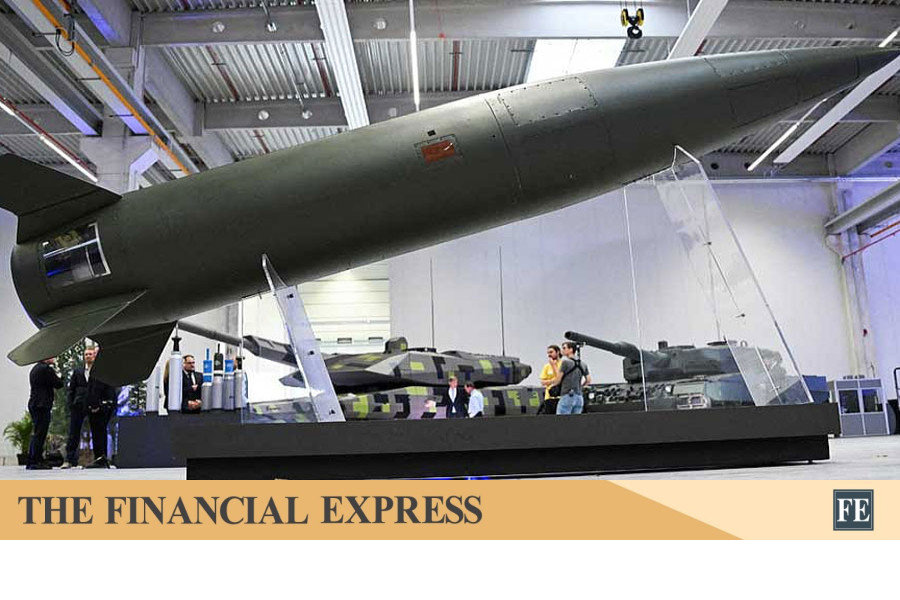
An Army Tactical Missile System (ATACMS) is displayed during the inauguration of a new artillery plant of ammunition maker Rheinmetall, in Unterluess, Germany Aug 27, 2025.
Source: REUTERS/Annegret Hilse/File Photo

The US Army has used up much of its stockpile of highly accurate long-range missiles during its five-month war with Iran, according to three people familiar with the data, raising concerns about the military's readiness for future conflicts.

The missiles are principally the Army's surface-to-surface weapons, known as Army Tactical Missile Systems (ATACMS) and Precision Strike Missiles (PrSM). The US has used "virtually all" of these weapons, according to two of the sources.

The degree to which the military is running out of ATACMS and Precision Strike Missiles has not been previously reported.

The long-range munitions – which cost more than $1 million each – are an important part of the military's arsenal, allowing accurate strikes from a safe distance. US-supplied ATACMS have played a key role in the war in Ukraine, allowing Ukrainian forces to attack targets inside Russia. The PrSM is a newer, more advanced generation that will replace the ATACMS, which have a shorter range.

The dramatic rundown in precision, long-range missiles means US President Donald Trump may have to rely more on riskier, piloted bombing missions if he relaunches large-scale attacks on Iran.

The sources declined to say how many of each munition the US had left.

Trump launched the Iran war jointly with Israel in February, predicting that the conflict would last a short time.

But as the war drags on, the three people familiar with the matter expressed worry that the falling missile supplies could limit the US ability to deter adversaries, including Russia and China.

A fourth person familiar with the matter said that while Central Command — which oversees US forces in the West Asia — has nearly used up the land-based missiles it had before the war began, it has been able to reload from US military supplies elsewhere in the world.

The sources interviewed for this story spoke on the condition of anonymity.

Asked for comment on the stockpile data, the White House issued a statement from Trump, saying the US had “far more munitions than anyone in the world" and "far more than we need."

"Our defence companies are, at this moment, making more munitions than they have ever made before, in addition to expanding their plants and equipment at record levels," Trump said.

Analysts agree that certain munitions, including artillery shells and several types of missiles, are being produced at record levels but caution that supplies might fall short of what is needed for a prolonged war.

Lockheed Martin, which makes the ATACMS and PrSMs, along with the anti-ballistic missile THAAD system, did not immediately respond to questions about Trump's statements or about supply levels. Raytheon, which makes Tomahawk missiles and Patriot interceptors, two important US weapons, also did not immediately respond.

Responding to a request for comment, chief Pentagon spokesperson Sean Parnell said: “America’s military is the most powerful in the world and has everything it needs to execute at the time and place of the President’s choosing. We have executed multiple successful operations across combatant commands while ensuring the US military possesses a deep arsenal of capabilities to protect our people and our interests.”

The supply figures have circulated inside the federal government over the last week during tense conversations inside the Trump administration about how much longer the US can continue striking Iran without drawing down the stockpile to levels that would limit the military's ability to respond to crises elsewhere.

Warnings Over Weapons Supplies

One of the sources said the drawdown of the ATACMS and PrSM stockpiles reflected a decision by the Trump administration to avoid riskier ways of attacking Iranian targets, such as by using piloted aircraft to drop bombs.

Because these weapons allow the military to attack targets from a distance, analysts say they would be valuable in a war against an adversary with strong air defences, such as China. They have been used to strike targets inside Iran, according to a March report by the Center for Strategic and International Studies (CSIS).

According to the report, PrSM stockpiles were low to start with, since it is a relatively new munition, but the US military has ordered a large number of them for 2027. The Army has said that ATACMS are being phased out and that production is shifting to the newer PrSM missiles.

Military leaders have for weeks warned the president that stockpiles of defensive weapons — including Patriot interceptors, which are effective against ballistic missiles — were dwindling, said two of the sources. Last week, several media outlets reported Trump had decided not to launch another massive offensive inside Iran in part because his military advisers had warned about the US stockpile.

A US official disputed those accounts, saying Trump chose not to move forward with another attack because of pressure from Gulf states.

The West Asia conflict has sparked intense debate about Trump's authority to prosecute hostilities against Iran without congressional authorisation. No request for a declaration of war or an authorisation to use military force has been submitted to Congress.

Defensive Weapon Stocks Are ALSO DIMINISHED

Last week, CSIS published a report estimating that between February and July about 65 percent of Patriot interceptors had been expended and that the number of THAAD ballistic missile interceptors in US stockpiles was at least 38 percent lower than at the start of the war. Patriots and THAADs are systems that detect and destroy incoming missiles and are among the most effective in the country's arsenal.

While Reuters has not seen the supply figures, those numbers match internal US data, two of the sources said.

The US also burned through a little less than half of its global supply of Tomahawk cruise missiles, which are generally launched from ships, since the start of the war, one of the sources said.

Reuters could not independently verify that number.

The Tomahawk is a Navy weapon, launched from destroyers, cruisers and submarines, and has long served as the sea service's principal means of striking heavily defended targets without risking pilots.

Raytheon, a unit of RTX, has reached a tentative multi-year agreement with the Pentagon aimed at boosting Tomahawk production, alongside increases in other munitions, as Washington races to rebuild stockpiles.​
 

Trump says Iran facing “last chance before decapitation”

AFP
Washington, United States

1785886082800.webp

Donald Trump BSS

US President Donald Trump said Monday that negotiations with Iran were ongoing despite Tehran's denials and the Islamic Republic was facing a "last chance before decapitation."

Trump, speaking to reporters at the White House, said he agreed to continue to pursue talks with Iran at the request of Saudi Arabia, the United Arab Emirates, Qatar and other countries.

Iran's foreign ministry denied on Monday that negotiations with Washington were taking place, but Trump insisted they were. "We are talking right now," he said.

"This is a last chance for them to sign a good document," the US president added. "I want to give them every last chance before decapitation."

The talks are focused on reopening the Strait of Hormuz, which Trump said could come "literally by tomorrow," and the denuclearisation of Iran, which he said could "take a little while."

Washington and Tehran have been at war since 28 February, when the United States and Israel launched surprise strikes against Iran, though months of on-and-off diplomacy have led to periods of relative calm.

More than five months later, Iran remains able to fire missiles and drones at US and allied targets in the region and retains its enriched uranium stockpiles.

Early Tuesday, Britain's maritime security agency UKMTO said that a cargo vessel was struck by an "unknown projectile" in the Strait of Hormuz off the coast of Oman.

The vessel, which was not named, reported being hit and authorities were investigating, UKMTO said, without giving specifics on damage or injuries.

Familiar pattern

In what has become a familiar pattern, Trump last week had threatened to hit Iran "very hard" -- potentially with renewed attacks against energy infrastructure -- only to pull back on Saturday, saying the "perimeters" of a deal were there.

Iran, for its part, said it is not currently negotiating with the United States.

"Our negotiations are with Oman to secure passage through the Strait of Hormuz," the critical oil corridor, foreign ministry spokesman Esmaeil Baqaei said.

Hormuz has been a major sticking point in efforts to end the war. Since a ceasefire broke down, Iran has reprised a blockade of the waterway that it first imposed early in the war, obstructing vessels attempting to pass and firing on commercial ships.

Calling Tehran "duplicitous" for "openly and proudly" saying it was not negotiating, Trump wrote on social media: "Whether Iran wants to admit it or not, we are, in fact, talking of a solution to a problem that they have caused, for decades."

He pointed to the United States' counter-blockade of Iranian ports, adding: "Nothing gets through to Iran, unless we want it to, and nothing will get through, unless a Deal, or Total Surrender, is accomplished."

Before the war, there was free passage through Hormuz, but Iran now insists on retaining control and charging fees, something the United States rejects.

Tehran has refused to let ships travel any route other than one that hugs the Iranian coast.

On Sunday, Baqaei told state television that a deal was close on managing Hormuz together with Oman, which sits on the other side of the narrow waterway.

"We are now going to reach an understanding on a route acceptable to both sides -- neither the northern route nor the southern route -- but one that respects the sovereign rights of both sides and safeguards our national interests and security," he said.

But he insisted that such an agreement did not mean the reopening of the strait.

Denuclearisation “has to happen”

The US president said at the start of the conflict that the war was necessary to deal with Iran's nuclear program and he repeated on Monday that "the denuclearisation of Iran has to happen."

Western nations accuse Iran of seeking a bomb, though Tehran insists the program is entirely civilian in nature.

Speaking to reporters on Air Force One over the weekend, Trump said he had been asked by Iran as well as regional US partners to hold off on further strikes, which he claimed would have been "the biggest attack since World War II."

Iranian media denied that Tehran had asked Trump not to strike.

A previous ceasefire deal fell through last month. It was supposed to open the Strait of Hormuz to ships carrying vital energy exports from the Gulf to feed the global economy.​
 

Latest Posts

Back