Home Watch Videos Wars Movies Login

Wars 2026 01/03 USA War with Venezuela

Wars 2026 01/03 USA War with Venezuela
70
1K
More threads by Egyptian

G War Archive
US oil companies pledged to invest $100b for Venezuela: Trump

AFP Washington, United States
Published: 09 Jan 2026, 17: 01

1768007991850.webp


US President Donald Trump AFP file photo

US president Donald Trump said Friday the world’s biggest oil companies pledged to invest $100 billion to revive Venezuela’s oil sector as he prepared for a meeting with top industry executives.

US forces seized Venezuelan president Nicolas Maduro in a sweeping military operation on 3 January, with Trump making no secret that control of Venezuela’s oil was at the heart of his actions.

“At least 100 Billion Dollars will be invested by BIG OIL, all of whom I will be meeting with today at The White House,” Trump wrote on his social media platform ahead of the gathering, where he was expected to convince the oil heads to support his plans in Venezuela.


The Trump administration has repeatedly said that it is running Venezuela, with Energy Secretary Chris Wright on Wednesday asserting that Washington will control the country’s oil industry “indefinitely.”

Venezuelan interim President Delcy Rodriguez, who was Maduro’s deputy, has said that her government remains in charge, with the state-run oil firm saying only that it was in negotiations with the United States on oil sales.

In his social media post, Trump said he cancelled a second wave of strikes on Venezuela due to what he called “cooperation” from the country.

He noted Venezuela began releasing political prisoners this week and said the countries are “working well together, especially as it pertains to rebuilding... their oil and gas infrastructure.”

US outlet NBC News reported that the heads of Exxon Mobil, Chevron and ConocoPhillips are expected at the White House meeting.

“It’s just a meeting to discuss, obviously, the immense opportunity that is before these oil companies right now,” Trump’s spokesperson Leavitt told reporters Wednesday.

Chevron is the only US company that currently has a license to operate in Venezuela. Exxon Mobil and ConocoPhillips left the country in 2007, after refusing then-president Hugo Chavez’s demand that they give up a majority stake in local operations to the government.

Suffering under sanctions

Sanctioned by Washington since 2019, Venezuela sits on about a fifth of the world’s oil reserves and was once a major crude supplier to the United States.

But it produced only around one percent of the world’s total crude output in 2024, according to OPEC, having been hampered by years of underinvestment, sanctions, and embargoes.

Trump sees the country’s massive oil reserves as a windfall in his fight to further lower US domestic fuel prices, a major political issue.

But he could face an uphill task convincing the major US oil companies to invest in Venezuela due to uncertainty about governance post-Maduro, security and the massive expense of restoring production facilities.

‘Controlled by me’

On Tuesday, Trump said that Venezuela’s interim government would deliver up to 50 million barrels of oil to the United States, and that the proceeds “will be controlled by me.”

“The Interim Authorities in Venezuela will be turning over between 30 and 50 MILLION Barrels of High Quality, Sanctioned Oil, to the United States of America,” Trump posted on his Truth Social platform.

“This oil will be sold at its market price, and that money will be controlled by me, as President of the United States of America, to ensure it is used to benefit the people of Venezuela and the United States.”

He later added that the proceeds spent by Venezuela would be used solely to purchase US products.

US Energy Secretary Wright has downplayed concerns about the investments required to ramp up Venezuelan production, saying it should be possible to increase output by several hundred thousand barrels a day in the short- to medium-term.

He admitted, however, that it would require “tens of billions of dollars and significant time” to bring production back to historic highs of more than three million barrels per day.

In his first term, Trump imposed an oil embargo aimed at economically suffocating Venezuela, which heavily depends on exports of the commodity.

When he returned for his second term, he also ended most of the licenses allowing oil and gas multinationals to operate in the country, with the exception of Chevron.

Washington now says it is “selectively rolling back sanctions” to enable the sale and transport of Venezuelan crude oil on global markets.

Wright said that the Trump administration would also help major US oil companies to establish a long-term presence.

Venezuelan crude is known to be viscous and difficult to refine.

The US Department of Energy is already planning to ship light oil to be mixed with Venezuelan crude in order to make that process easier.

It also plans to authorise the shipment of equipment and experts to the country to upgrade infrastructure.​
 
Analyze

Analyze Post

Add your ideas here:
Highlight Cite Respond
China: the indispensable partner of Maduro’s Venezuela
The purchases offered a crucial lifeline to Maduro’s government, keeping the state apparatus afloat in the face of increasing pressure from Washington and simmering domestic unrest.

AFPBeijing
Published: 09 Jan 2026, 16: 46

1768008153661.webp


A crude oil tanker is pictured docking in the Maracaibo Lake in Maracaibo, Venezuela, on 8 January 2026 AFP

China was the dominant buyer of Venezuelan oil under deposed president Nicolas Maduro, the fulcrum of a symbiotic partnership that propped up the South American economy and gave Beijing regional influence.

But after a US military operation seized the Venezuelan leader and president Donald Trump pledged to take over the country’s decrepit crude production facilities, China’s future with Caracas is murky.

Here are the key questions:

How much oil was China buying?
China imported around 400,000 barrels per day of Venezuelan oil last year, according to data compiled by intelligence firm Kpler.

That accounted for more than half of all crude exported from the country, estimates show.

Much of the Venezuelan oil ending up in China is transferred from one ship to another in waters off Malaysia or through other third countries -- a way of disguising the commodity under tight US sanctions.

The purchases offered a crucial lifeline to Maduro’s government, keeping the state apparatus afloat in the face of increasing pressure from Washington and simmering domestic unrest.


How is it used?

Venezuelan crude is sludgy and “sour”, indicating high sulfur content that requires intensive processing.

In China, the dirty job is handled mainly by small, independent refineries concentrated near the eastern shore known as “teapots”.

1768008266981.webp

Infographic chart showing Venezuela oil exports, according to data compiled by trade analysis firm Kpler AFP

In contrast to state-owned giants, teapots are scrappy, profit-driven outfits that collectively are the main buyers of discounted, sanctioned oil, including from Venezuela and Iran.

As well as contributing to China’s domestic energy production, Venezuelan oil is also a source of bitumen, or asphalt, used for paving roads and roofing buildings.

What did Beijing gain?

China relies on imports from a strategically diverse range of suppliers for its own energy security.

Just a small part of that equation, Venezuela was the source of roughly four to five percent of Chinese crude imports last year, according to estimates.

Many oil shipments have been transacted as repayment for hefty investment from Beijing in Venezuelan development projects over recent decades.

Caracas still owes around $10 billion in debt for Chinese loans that totalled about $60 billion in 2023, according to the Center on Global Energy Policy at Columbia University.

China holds “hope that Latin America, including Venezuela, will be an important node for its Belt and Road Initiative,” Eurasia Group’s China Director Dan Wang told AFP, referring to President Xi Jinping’s signature overseas investment drive.

Beijing has been seeking to “unite the Global South”, said Wang, noting “important progress” it has made with “a few friendly countries” in the region, including Venezuela.

Can China keep buying?

Washington’s military intervention is likely to strangle the oil flows in the near future.

But soon after Maduro’s ouster, Trump said that US firms will eventually sell “large amounts” to global buyers -- including “many... who are using it now” -- once the crumbling local industry is rebuilt.

In the meantime, China’s “purchases could be easily directed to other oil suppliers”, said Wang.

China’s oil imports from Russia and Saudi Arabia dwarfed those from Venezuela last year.

However, Venezuela has the largest proven reserves in the world, with 303.2 billion barrels, according to OPEC. That puts it ahead of Saudi Arabia and Iran.

In the long run, Wang said she anticipates China will continue buying Venezuelan oil.

Trump “wants a deal”, she said.

How are US-China ties affected?

China’s foreign ministry has strongly condemned Trump’s military action against Maduro, bashing it as a “clear violation” of “basic norms in international relations”.

Despite the harsh rhetoric, experts say that the fundamental interests and challenges in the relationship haven’t changed.

Xi is preparing to host Trump for a state visit to China in April, a closely watched diplomatic engagement as the world’s top two economies navigate a shaky trade war truce reached late last year.

“Both sides have made enough efforts to make sure that meeting happens,” Wang told AFP, adding that she does not expect Washington’s recent moves in Venezuela to change the outlook for the China visit.

Still, commentators -- and Trump himself -- have increasingly framed US policy through the lens of a revived “Monroe Doctrine”, a worldview that carves the globe into spheres of influence dominated by major powers.

“Under President Trump, certainly, China’s political influence in the region will decrease,” said Wang.​
 
Analyze

Analyze Post

Add your ideas here:
Highlight Cite Respond
Trump signs emergency order to protect US-held revenue from Venezuela oil

AFP Washington
Published: 11 Jan 2026, 10: 36

1768113991687.webp


Donald Trump Reuters file photo

US President Donald Trump has signed an executive order protecting US-held money derived from sales of Venezuelan oil, after the ouster of Nicolas Maduro, the White House said.

In an order signed Friday, Trump -- who has made clear that tapping Venezuela's vast oil reserves was a key goal in the US ouster of Maduro -- is acting "to advance US foreign policy objectives," the White House said in a fact sheet accompanying the order.

The action follows a meeting Friday in Washington where Trump pressed top oil executives to invest in Venezuela, and was met with a cautious reception -- with the chief executive of ExxonMobil describing the country as "uninvestable" without sweeping reforms.


ExxonMobil and ConocoPhillips exited in 2007 after refusing demands by then-president Hugo Chavez to cede majority control to the state. They have been fighting to recoup billions of dollars they say Venezuela owes them.

Chevron is currently the only US firm licensed to operate in Venezuela.

Trump's executive order signed Friday declares a national emergency "to safeguard Venezuelan oil revenue held in US Treasury accounts from attachment or judicial process," the White House fact sheet said.

In effect, it places those revenues under special protection in order to prevent them from being seized by courts or creditors. The action is decreed to be necessary for US national security and foreign policy.

"President Trump is preventing the seizure of Venezuelan oil revenue that could undermine critical US efforts to ensure economic and political stability in Venezuela," the fact sheet said.

Sanctioned by Washington since 2019, Venezuela sits on about a fifth of the world's oil reserves and was once a major crude supplier to the United States.

But it produced only around one percent of the world's total crude output in 2024, according to OPEC, having been hampered by years of underinvestment, sanctions and embargoes.

Trump sees the country's massive oil reserves as a windfall in his fight to further lower US domestic fuel prices.

The executive order comes one week after US forces seized authoritarian leader Maduro in a nighttime operation in the Venezuelan capital that killed dozens of Venezuelan and Cuban security forces.​
 
Analyze

Analyze Post

Add your ideas here:
Highlight Cite Respond
Greenland says it should be defended by NATO

REUTERS
Published :
Jan 12, 2026 22:47
Updated :
Jan 12, 2026 22:47

1768265473274.webp


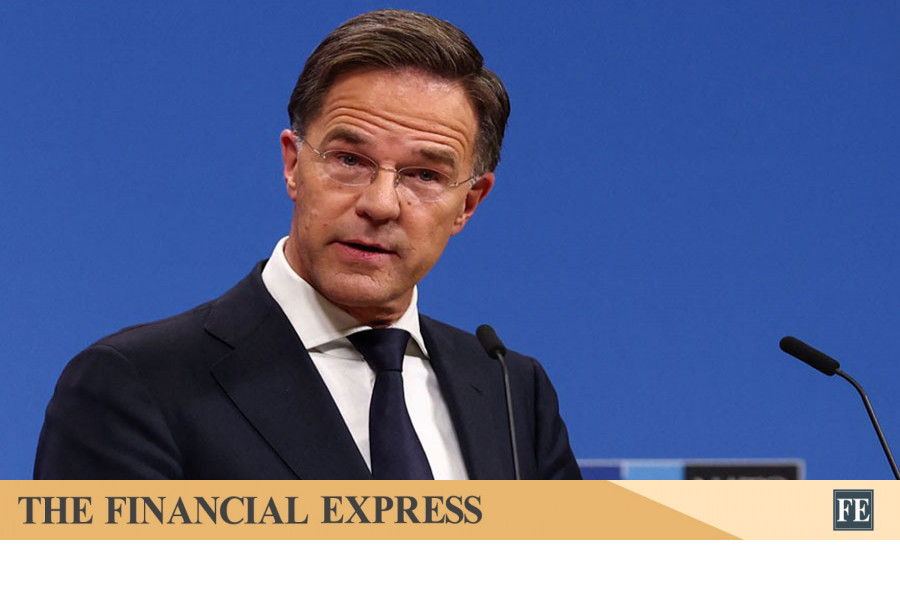
NATO Secretary-General Mark Rutte holds a press conference, ahead of a meeting of NATO Defence Ministers in Brussels, Belgium October 16, 2024. Photo : REUTERS


Greenland's government said on Monday it will increase its efforts to ensure that the defence of the Arctic territory takes place under the auspices of NATO, and again rejected US President Donald Trump's ambition to take over the island.

Trump has said the United States must own Greenland, an autonomous part of the Kingdom of Denmark, to prevent Russia or China occupying the strategically located and minerals-rich territory in the future.

"All NATO member states, including the United States, have a common interest in the defence of Greenland," the island's coalition government said in a statement.

The European Union's Commissioner for Defence and Space Andrius Kubilius warned on Monday that a US military takeover of Greenland would be the end of NATO.​
 
Analyze

Analyze Post

Add your ideas here:
Highlight Cite Respond
Why the fate of Venezuela matters to us all
13 January 2026, 13:00 PM


By Anu Muhammad

1768353636298.webp

The US accuses Maduro of running a “narco-terrorist” regime, a claim he denies, and no credible evidence has been presented either. FILE PHOTO: REUTERS

Earlier last week, the Trump administration carried out a military assault on Venezuela, abducting President Nicolás Maduro and his wife, Cilia Flores, and taking them to New York. There, a series of cases was filed against them, and a judicial farce is being staged in the name of justice. The spectacle of attacking the capital of a sovereign country and forcibly removing its elected president has stunned the world. It offers a chilling glimpse into the kind of global disorder we are living in. Donald Trump’s statements in this context sound less like those of a head of state and more like the threats of a neighbourhood bully. He shows no respect for independent countries or elected governments, not even for the citizens of his own country.


The citizens of the United States are grappling with deep and widening crises. Tens of millions have no health insurance, hunger is rising, and many are forced to rely on food stamps to survive. Wealth is increasingly concentrated in the hands of the top one percent, and inequality continues to grow. This top one percent—closely tied to oil companies, banking, and the military-industrial complex—controls nearly 90 percent of the economy. The Trump administration consistently acts in its own interests, while bearing no real responsibility towards the remaining 99 percent of the population. It is precisely to protect the interests of this small but powerful oil-and-arms-linked segment that the attack on Venezuela has been launched.


The conflict between the US and Venezuela dates back to the late 1990s, beginning with the election of Hugo Chávez as president. Before that, power in Venezuela alternated between two parties, both loyal to Washington. As a result, US companies exercised near-total control over Venezuela’s oil resources. The vast revenues generated from oil helped a wealthy elite population grow wealthier. This elite group became the main pillar of US imperial influence in the country.

Both multinational oil corporations and Venezuela’s domestic elites found themselves in trouble when Hugo Chávez began taking steps to establish national control over oil resources. He started the Bolivarian Revolution. In 2002, an attempt was made to overthrow him through a military coup and install an alleged puppet government. After Chávez was detained, mass resistance erupted. This was an alleged US-backed project that collapsed, and Chávez was subsequently freed, returning to power stronger than before.


Under the leadership of Chávez, oil revenues were channelled into education, healthcare, and broader public welfare, while millions of poor Venezuelans found a path towards a more dignified life. This trajectory suffered a major setback with Chávez’s death. The Bolivarian Revolution was then carried forward by Nicolás Maduro. Time and again, attempts were made to remove him. Military threats were escalated in neighbouring countries. Having failed on other fronts, the US has now resorted to the disgraceful act of invading a sovereign nation and abducting its president and his wife.

However, the question of Nicolás Maduro being an autocrat and Venezuela being devoid of democracy cannot be ignored, especially since he is widely seen by opponents within his country as well as by foreign governments as having illegitimately won Venezuela’s 2024 election.

The US accuses Maduro of running a “narco-terrorist” regime, a claim he denies, and no credible evidence has been presented either. However, he has frequently been accused of repressing opposition groups and silencing dissent in Venezuela, at times with the use of violence. The danger of speaking out against Maduro is still very real within Venezuela, as the National Assembly—which is dominated by Maduro loyalists—passed a law a few weeks ago declaring anyone who expresses support for US naval blockades a “traitor,” reports BBC.


Nonetheless, for the US, attacking weaker states, carrying out massacres, and assassinating national leaders is nothing new. Since the end of World War II in 1945, the US has led the capitalist world, relying on aggression, mass violence, occupation, and intimidation to expand imperial dominance. Iraq was torn apart during the presidency of George H. W. Bush. Libya met a similar fate under Barack Obama. Earlier administrations carried out interventions across Asia, Africa, and Latin America. More than a million people were killed in Vietnam, and similar atrocities occurred in Indonesia. Chile offers another stark example where an elected president, Salvador Allende, was overthrown in a US-backed military coup and died fighting. What followed was a decade of brutal rule under General Augusto Pinochet, marked by killings, disappearances, and torture.

On the other hand, some of the world’s most notorious dictators have flourished under US protection, looting national wealth and unleashing brutal repression on their people. Whenever countries have attempted to chart an independent economic and political path outside the US imperial orbit, they have been attacked under one pretext or another. This pattern has persisted across successive US administrations, but under Donald Trump, it has reached an extreme.


A convicted Honduran drug lord was recently released from a US prison to counter anti-imperialist leftist forces in that country. In Ecuador, too, drug traffickers and smugglers have been granted various forms of protection and benefits. María Corina Machado, a Nobel Peace Prize laureate, has openly stated that US companies stand to make enormous profits from Venezuela’s resources, and that if she comes to power, all such opportunities will be handed over to them.

If global drug networks, aggression, and mass killings were to be put on trial, US leaders would be the first to face justice. Donald Trump should be prosecuted for war crimes, the escalation of violence, abductions, and sowing chaos across multiple countries. Instead, the Trump administration is putting Maduro on trial, thereby pushing the entire world towards greater disorder.

What is particularly alarming is that the United Nations has become an ineffective institution. At moments when decisive action was required, it failed. The European Union, too, appears spineless, reduced to a subordinate of the US. Yet there is a source of hope: across the world, countless people have taken to the streets in protest. This popular resistance remains our greatest hope today. It matters for Bangladesh as well, where hegemonic forces are also laying their traps. This is a global struggle, and it demands that all of us remain alert, informed, and actively engaged.

Anu Muhammad is a former professor of economics at Jahangirnagar University.​
 
Analyze

Analyze Post

Add your ideas here:
Highlight Cite Respond

US completes first sale of Venezuelan oil
Agence France-Presse . Washington 17 January, 2026, 00:15

1768612895945.webp


View of the refinery El Palito in Puerto Cabello, Carabobo state, Venezuela, January 11, 2026. | AFP photo

The United States has finalised a sale of Venezuelan oil — the first since Washington took control of the sector following the toppling of president Nicolas Maduro, a US official told AFP on Thursday.

According to the official, who did not identify the buyer, the deal is worth $500 million, and additional sales could take place in the coming days or weeks.

‘President Trump brokered a historic energy deal with Venezuela, immediately following the arrest of narcoterrorist Nicolas Maduro, that will benefit the American and Venezuelan people,’ said White House spokesman Taylor Rogers.

Last week, Trump announced on his Truth Social platform ‘the Interim Authorities in Venezuela will be turning over between 30 and 50 MILLION Barrels of High Quality, Sanctioned Oil, to the United States of America.’

He added: ‘This Oil will be sold at its Market Price, and that money will be controlled by me, as President of the United States of America.’

He has also urged major oil companies to move aggressively to invest in the vast reserves of the South American country.

He said that oil companies are prepared to invest at least $100 billion in Venezuela.

Under the White House plan, Caracas would have no say over the exploitation of its own underground resources.

Addressing oil executives last week, Trump said: ‘You’re dealing with us directly and not dealing with Venezuela at all. We don’t want you to deal with Venezuela.’

Trump also signed an emergency order granting special protection to Venezuelan assets held in the United States, including oil revenues, a move aimed at shielding them from potential seizure by courts or creditors.

‘President Trump is protecting our Western Hemisphere from being taken advantage of by narcoterrorists, drug traffickers, and foreign adversaries,’ said Rogers.​
 
Analyze

Analyze Post

Add your ideas here:
Highlight Cite Respond

Venezuela’s new leader moves to tighten her grip on power

REUTERS
Published :
Jan 17, 2026 20:59
Updated :
Jan 17, 2026 20:59

1768696033428.webp


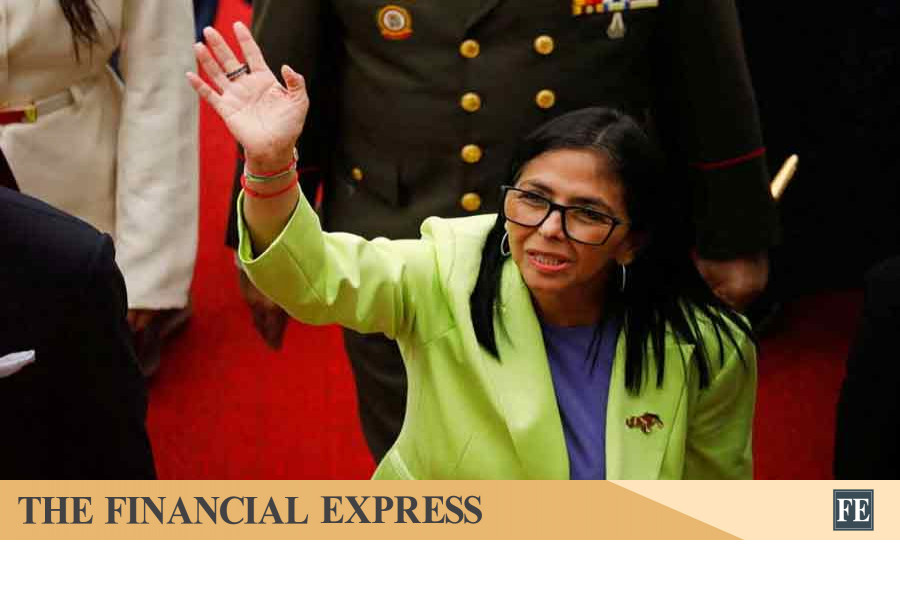
In the 12 days since the US seized Venezuelan President Nicolas Maduro, interim President Delcy Rodriguez has been working to consolidate her own power, installing loyalists in key positions to protect herself from internal threats while meeting US demands to boost oil production.

Rodriguez, 56, a quiet but rigorous technocrat who was vice president and oil minister, has named a central banker to help run the economy, a presidential chief of staff and, crucially, a new head of Venezuela’s feared DGCIM, the military counterintelligence agency built over decades with Cuban assistance.

Major General Gustavo Gonzalez, 65, will now head the agency, a move three sources with knowledge of the government described as an early gambit by Rodriguez to counter what many in Venezuela say is the biggest threat to her leadership: Diosdado Cabello, Venezuela's hardline interior minister with close ties to the security services and the dreaded “colectivos” motorcycle gangs which have killed opposition supporters.

"She is very clear that she doesn't have the capacity to survive without the consent of the Americans," said one source close to the government. "She's already reforming the armed forces, removing people and naming new officials."

Interviews with seven sources in Venezuela, including diplomats, business people and politicians, reveal in previously unreported detail the fault line at the heart of Venezuela's government and the risks it poses to Rodriguez as she tries to consolidate internal control while meeting Trump administration dictates on oil sales. The sources spoke on the condition of anonymity for fear of retribution.

The tightrope Rodriguez is attempting to walk was evident in her first major speech since taking office. Addressing parliament in a national annual address on Thursday, she called for unity, stressed her bona fides as Maduro’s loyal deputy, and vowed to forge a new chapter in Venezuela’s politics with increased oil investment.

Venezuela’s communications ministry, which handles all press inquiries for the government and individual officials, did not respond to a request for comment for this story.

The White House responded to emailed questions from Reuters by referring the news agency to recent comments made by Trump. In an interview with Reuters on Wednesday, Trump said Rodriguez "has been very good to deal with" and that he expected her to visit Washington at some point.

AN INTERNAL RIVALRY

Rodriguez - nicknamed "the tsarina" for her business connections - has broad influence over the country's civilian levers of power, including the crucial oil industry, and now also enjoys the backing of the United States. That backing appeared to be reemphasised on Thursday when Rodriguez met with CIA director John Ratcliffe in Caracas.

The other main faction is led by Cabello.

Cabello, who also heads the ruling PSUV socialist party, is a former soldier with a weekly four-hour show on state television, which has run for 12 years. His first public act after Maduro's capture was to appear on screen dressed in a flak jacket and surrounded by armed guards as he led a chant of, "To doubt is to betray.”

Officials in the Trump administration had contact with Cabello months before the operation to seize Maduro and have also been in communication with him since, four sources familiar with the matter told Reuters, warning him against using the security services or colectivos to target the opposition.

Cabello, who was jailed in Venezuela for backing eventual socialist President Hugo Chavez in a failed 1992 coup, is under indictment in the US and has a $25 million reward for his capture.

So far Cabello has been conciliatory towards Rodriguez, saying they are “very united” and he arrived at Thursday's national address alongside Rodriguez and her brother Jorge, the head of the national assembly. But sources with knowledge of their relationship told Reuters that Cabello remains the biggest threat to her ability to govern.

In Caracas, security forces are skittish. A few hours after Rodriguez was sworn in, there was a brief burst of anti-aircraft fire outside the presidential palace that some feared could be another US attack. Instead, reports suggest it was a miscommunication between police and the presidential guard, which shot down police drones. The government said the craft were spy drones, without explaining who they belonged to.

Across the country, people are reeling from the shock of Maduro’s capture and unsure whether to be hopeful or scared. In some places, local socialist party branches have asked members to spy on their neighbours and report anyone celebrating Maduro’s downfall, according to three party members who spoke on condition of anonymity.

In this tense environment, Rodriguez must persuade party loyalists that she is not a US puppet who betrayed Maduro. She must also stabilise an economy that saw prices for basic goods soar in the days since the US attack, as well as wrestle some degree of control over the sprawling military-linked patronage networks that have developed over decades of Chavismo rule.

Venezuela has as many as 2,000 generals and admirals, more than double the number in the United States, a military superpower with 20 times more active duty and reserve troops. Senior and retired officers control food distribution, raw materials and the state oil company PDVSA, while dozens of generals sit on the boards of private firms.

Many officials are able to run their regional fiefdoms as they see fit - ordering patrols or checkpoints by soldiers under their command - and some parts of the country and capital Caracas have seen increased activity by security services since Maduro's capture.

REPRESSION ‘ALREADY HAS A NAME’

Gonzalez, the new head of the military counterintelligence agency DGCIM, has over his long career in Venezuela’s government worked closely with Cabello, particularly during two stints as head of the separate civilian spy agency.

Yet it is to Rodriguez that Gonzalez owes his most recent posts. In 2024, Rodriguez tapped Gonzalez for a top job at the state oil company, Venezuela’s most important company and the engine of the country’s economy.

Questions still remain over how much control Gonzalez will be able to exert over DGCIM. Cabello's allies within the agency could undermine him, the three sources with knowledge of the government said.

One source with knowledge of the inner workings of the security services said Gonzalez's DGCIM predecessor General Javier Marcano struggled to control the agency.

"The role of boss of repression already has a name… Diosdado," this person said. "Marcano was coordinating with (civilian) militias and with the colectivos, but he had serious difficulties controlling DGCIM because his designation was nominal."

Reuters could not reach Marcano directly and all formal communication with officials in Venezuela is handled through the communications ministry, which did not respond to a list of questions related to this story.

The colectivos, closely connected to Cabello, could also make the country ungovernable by implementing a so-called "anarchization" strategy, which was first designed to fend off US intervention but could be directed against Rodriguez, the source close to the government told Reuters. That strategy would mobilise the intelligence services and colectivos to plunge Caracas into disorder and chaos.

Cabello could also slow the pace of prisoner releases that have been hailed by Trump. They have been proceeding much more slowly than demanded by families and rights groups, creating a potential pressure point for Rodriguez.

Outside of Venezuela, however, pressure on Cabello continues to mount.

"For the Trump administration to achieve a real transition in Venezuela, sooner or later Diosdado Cabello must face US justice," US Representative Maria Elvira Salazar said on X this month. "When Diosdado is brought to justice, it will be a decisive step toward a democratic transition in Venezuela and the release of all political hostages."​
 
Analyze

Analyze Post

Add your ideas here:
Highlight Cite Respond

Members Online

No members online now.

Latest Posts

Back
 
G
O
 
H
O
M
E