Donate ☕
Wars - 2026 01/03 USA War with Venezuela | Page 5 | PKDefense

Wars 2026 01/03 USA War with Venezuela

⤵︎
Reply (Scroll)
Press space to scroll through posts
G War Archive
Wars 2026 01/03 USA War with Venezuela
67
667
More threads by Egyptian

Oil sinks as US ups pressure on Venezuela over crude supplies

Crude has seen wild swings since Trump ordered the toppling of Nicolas Maduro


1767835510662.webp

Photo: AFP

Oil prices fell further today after President Donald Trump said Venezuela would turn over millions of barrels to the United States.


Meanwhile, equities wobbled after a record-breaking start to the year.


Crude has seen wild swings since Trump ordered the toppling of Nicolas Maduro, his counterpart in Caracas, on Saturday and said Washington would run the country while demanding "total access" to its oil.

Both main oil contracts dropped today, having already lost ground yesterday, after Trump announced the latest development.


"The Interim Authorities in Venezuela will be turning over between 30 and 50 MILLION Barrels of High Quality, Sanctioned Oil, to the United States of America," he wrote on his Truth Social platform.

"This oil will be sold at its market price, and that money will be controlled by me, as President of the United States of America, to ensure it is used to benefit the people of Venezuela and the United States."

US Energy Secretary Chris Wright said Wednesday that Washington will control sales of Venezuelan oil "indefinitely".


Analysts said the shipments lowered the risk that Caracas would have to cut output owing to its limited storage capacity, easing supply concerns.

But they added that the outlook for the commodity pointed to lower prices, as the market remains well stocked after OPEC+ agreed to boost output.

Venezuela sits on about a fifth of the world's oil reserves, but observers pointed out that a quick ramp-up of output would be hamstrung by several issues, including its creaking infrastructure, low prices, and political uncertainty.

Crude prices only briefly picked up after US forces seized a Russian-flagged oil tanker in the North Atlantic for alleged sanctions violations, before sinking again.

US forces said they also seized another tanker in the Caribbean.

In equities trading, the Dow initially edged higher from a record close on Tuesday, but then turned lower.

"US job openings falling to their lowest level since December 2020 and modest -- below expectations -- US private sector jobs growth dampened the bullish mood," said IG trading platform analyst Axel Rudolph.​
 
Analyze

Analyze Post

Add your ideas here:
Highlight Cite Fact Check Respond
Venezuela's decisions to be 'dictated' by US: White House

It says US has maximum leverage over Venezuela's interim authorities

1767835695827.webp


White House Press Secretary Karoline Leavitt speaks during the daily briefing in the Brady Briefing Room of the White House in Washington, DC, on January 7, 2026. (Photo by Mandel NGAN / AFP)

The United States has "maximum leverage" over Venezuela's interim authorities following the capture of Nicolas Maduro and will dictate any decision they make, the White House said Wednesday.


"We're continuing to be in close coordination with the interim authorities, and their decisions are going to continue to be dictated by the United States of America," Press Secretary Karoline Leavitt told a briefing.​
 
Analyze

Analyze Post

Add your ideas here:
Highlight Cite Fact Check Respond
Is the Venezuela operation part of a US–China power struggle?

8 January 2026, 06:59 AM
UPDATED 8 January 2026, 13:12 PM


1767920837507.webp


The US military operation carried out overnight on Jan. 3 in Venezuela unfolded with striking speed. Within roughly three hours, it was effectively over. President Nicolas Maduro was secured, and the mission concluded without US casualties. More than 150 aircraft moved in coordinated waves. Intelligence from the ground, air and space anticipated Venezuelan military responses before they fully formed. Gen. Dan Caine, the chair of the Joint Chiefs of Staff, later described the mission as a well-oiled machine that could have failed had even a single element gone wrong.


The official justification was straightforward: The stated goal was to detain Maduro on allegations of drug trafficking into the United States, allegedly facilitated through cooperation with China. Almost immediately, analysts offered a different explanation. The fundamental objective, they argued, was oil, specifically Washington's effort to reclaim influence over Venezuela's vast reserves from China. The operation's extreme precision reinforced a third interpretation. It was also a demonstration of American technological power, underscoring the role of artificial intelligence and advanced semiconductors in modern warfare and, by extension, in strategic competition with Beijing. Together, these explanations placed the US-China rivalry squarely at center stage.


Yet they miss a deeper and more consequential layer of that rivalry, one that helps explain why Washington chose to act in Venezuela at this moment.

1767920877774.webp


A still image from video, posted on the White House’s Rapid Response 47 account on X, shows Venezuelan President Nicolás Maduro being escorted in custody down a hallway at the US Drug Enforcement Administration headquarters in New York City on Saturday. Photo: Reuters
Strategic actions by great powers are rarely single-purpose. Beneath the surface motives lies a structural concern that has increasingly preoccupied Washington: the durability of dollar dominance in a world where China is testing its limits.

For decades, the Middle East has been central to this system. The United States and China are now competing not only for influence over oil supply but also over the settlement architecture that surrounds it. The dollar's global power rests in large part on its role as the medium of settlement for energy trade. For much of the postwar period, Saudi Arabia and the Gulf states anchored this arrangement. The US-Saudi security relationship functioned not only as a military alliance, but also as a monetary infrastructure, reinforcing dollar-based oil trade worth trillions of dollars each year.

That arrangement is under growing strain. China is now the world's largest marginal buyer of oil, importing more than 10 million barrels a day, and has become a central trading partner for Gulf producers. Beijing has not sought a sudden break with the dollar. Instead, it has pressed for flexibility by encouraging limited yuan-denominated energy transactions and promoting discussions within the BRICS grouping about alternative settlement arrangements using the yuan.

1767920906714.webp


Photo: Collected

This dynamic leaves the United States in a delicate position in the Middle East. Washington continues to provide security. China increasingly provides demand. Saudi Arabia, the de facto anchor of OPEC, has little incentive to choose decisively between them. Hedging is rational.

Venezuela sits at the edge of this system. It is an oil producer outside OPEC discipline, aligned with China and other alternative blocs, yet located firmly within America's historic strategic perimeter. By reasserting influence over Venezuela, the United States gains leverage over global oil supply, reducing OPEC's ability and Saudi Arabia's central role within it to shape prices independently.

The operation in Venezuela was therefore about more than drugs, oil, or technological prowess. It was a reminder that the most consequential contest between Washington and Beijing is not only over chips and algorithms, but also over the monetary and energy systems that still set the rules of the global economy. The chip war dominates headlines because it is visible and measurable. The struggle over the dollar unfolds quietly through oil contracts, reserve choices and security guarantees. Venezuela matters because it sits where these systems intersect, at the front line of a rivalry that is ultimately about currency, energy and power.

Sung Soo Eric Kim is an adjunct professor at Yonsei University and a Distinguished Guest Associate Professor at Keio University. The article was first published in The Korea Herald on January 8, 2026. The original title of the article was US-China War Behind Venezuelan Operation.​
 
Analyze

Analyze Post

Add your ideas here:
Highlight Cite Fact Check Respond
 
Analyze

Analyze Post

Add your ideas here:
Highlight Cite Fact Check Respond
US oil companies pledged to invest $100b for Venezuela: Trump

AFP Washington, United States
Published: 09 Jan 2026, 17: 01

1768007991850.webp


US President Donald Trump AFP file photo

US president Donald Trump said Friday the world’s biggest oil companies pledged to invest $100 billion to revive Venezuela’s oil sector as he prepared for a meeting with top industry executives.

US forces seized Venezuelan president Nicolas Maduro in a sweeping military operation on 3 January, with Trump making no secret that control of Venezuela’s oil was at the heart of his actions.

“At least 100 Billion Dollars will be invested by BIG OIL, all of whom I will be meeting with today at The White House,” Trump wrote on his social media platform ahead of the gathering, where he was expected to convince the oil heads to support his plans in Venezuela.


The Trump administration has repeatedly said that it is running Venezuela, with Energy Secretary Chris Wright on Wednesday asserting that Washington will control the country’s oil industry “indefinitely.”

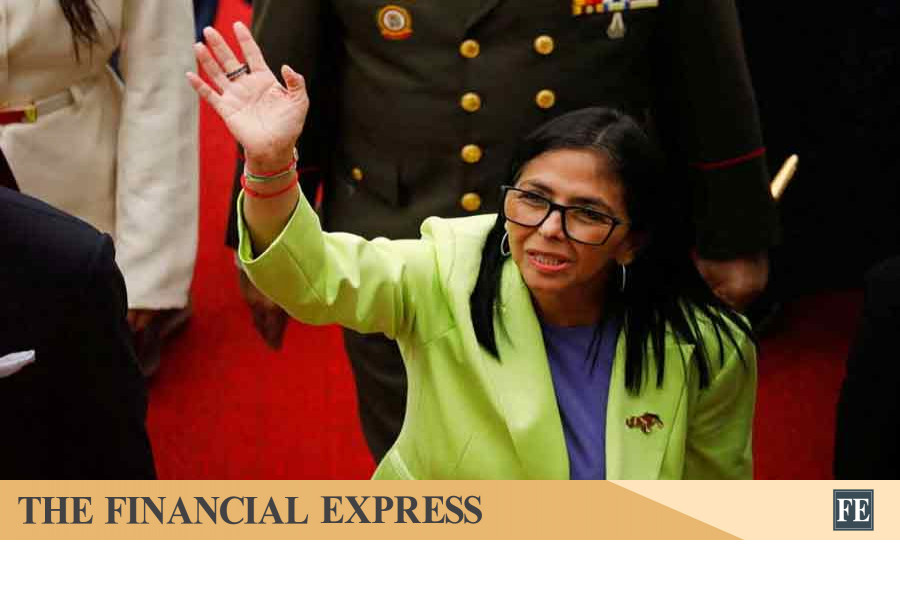
Venezuelan interim President Delcy Rodriguez, who was Maduro’s deputy, has said that her government remains in charge, with the state-run oil firm saying only that it was in negotiations with the United States on oil sales.

In his social media post, Trump said he cancelled a second wave of strikes on Venezuela due to what he called “cooperation” from the country.

He noted Venezuela began releasing political prisoners this week and said the countries are “working well together, especially as it pertains to rebuilding... their oil and gas infrastructure.”

US outlet NBC News reported that the heads of Exxon Mobil, Chevron and ConocoPhillips are expected at the White House meeting.

“It’s just a meeting to discuss, obviously, the immense opportunity that is before these oil companies right now,” Trump’s spokesperson Leavitt told reporters Wednesday.

Chevron is the only US company that currently has a license to operate in Venezuela. Exxon Mobil and ConocoPhillips left the country in 2007, after refusing then-president Hugo Chavez’s demand that they give up a majority stake in local operations to the government.

Suffering under sanctions

Sanctioned by Washington since 2019, Venezuela sits on about a fifth of the world’s oil reserves and was once a major crude supplier to the United States.

But it produced only around one percent of the world’s total crude output in 2024, according to OPEC, having been hampered by years of underinvestment, sanctions, and embargoes.

Trump sees the country’s massive oil reserves as a windfall in his fight to further lower US domestic fuel prices, a major political issue.

But he could face an uphill task convincing the major US oil companies to invest in Venezuela due to uncertainty about governance post-Maduro, security and the massive expense of restoring production facilities.

‘Controlled by me’

On Tuesday, Trump said that Venezuela’s interim government would deliver up to 50 million barrels of oil to the United States, and that the proceeds “will be controlled by me.”

“The Interim Authorities in Venezuela will be turning over between 30 and 50 MILLION Barrels of High Quality, Sanctioned Oil, to the United States of America,” Trump posted on his Truth Social platform.

“This oil will be sold at its market price, and that money will be controlled by me, as President of the United States of America, to ensure it is used to benefit the people of Venezuela and the United States.”

He later added that the proceeds spent by Venezuela would be used solely to purchase US products.

US Energy Secretary Wright has downplayed concerns about the investments required to ramp up Venezuelan production, saying it should be possible to increase output by several hundred thousand barrels a day in the short- to medium-term.

He admitted, however, that it would require “tens of billions of dollars and significant time” to bring production back to historic highs of more than three million barrels per day.

In his first term, Trump imposed an oil embargo aimed at economically suffocating Venezuela, which heavily depends on exports of the commodity.

When he returned for his second term, he also ended most of the licenses allowing oil and gas multinationals to operate in the country, with the exception of Chevron.

Washington now says it is “selectively rolling back sanctions” to enable the sale and transport of Venezuelan crude oil on global markets.

Wright said that the Trump administration would also help major US oil companies to establish a long-term presence.

Venezuelan crude is known to be viscous and difficult to refine.

The US Department of Energy is already planning to ship light oil to be mixed with Venezuelan crude in order to make that process easier.

It also plans to authorise the shipment of equipment and experts to the country to upgrade infrastructure.​
 
Analyze

Analyze Post

Add your ideas here:
Highlight Cite Fact Check Respond
China: the indispensable partner of Maduro’s Venezuela
The purchases offered a crucial lifeline to Maduro’s government, keeping the state apparatus afloat in the face of increasing pressure from Washington and simmering domestic unrest.

AFPBeijing
Published: 09 Jan 2026, 16: 46

1768008153661.webp


A crude oil tanker is pictured docking in the Maracaibo Lake in Maracaibo, Venezuela, on 8 January 2026 AFP

China was the dominant buyer of Venezuelan oil under deposed president Nicolas Maduro, the fulcrum of a symbiotic partnership that propped up the South American economy and gave Beijing regional influence.

But after a US military operation seized the Venezuelan leader and president Donald Trump pledged to take over the country’s decrepit crude production facilities, China’s future with Caracas is murky.

Here are the key questions:

How much oil was China buying?
China imported around 400,000 barrels per day of Venezuelan oil last year, according to data compiled by intelligence firm Kpler.

That accounted for more than half of all crude exported from the country, estimates show.

Much of the Venezuelan oil ending up in China is transferred from one ship to another in waters off Malaysia or through other third countries -- a way of disguising the commodity under tight US sanctions.

The purchases offered a crucial lifeline to Maduro’s government, keeping the state apparatus afloat in the face of increasing pressure from Washington and simmering domestic unrest.


How is it used?

Venezuelan crude is sludgy and “sour”, indicating high sulfur content that requires intensive processing.

In China, the dirty job is handled mainly by small, independent refineries concentrated near the eastern shore known as “teapots”.

1768008266981.webp

Infographic chart showing Venezuela oil exports, according to data compiled by trade analysis firm Kpler AFP

In contrast to state-owned giants, teapots are scrappy, profit-driven outfits that collectively are the main buyers of discounted, sanctioned oil, including from Venezuela and Iran.

As well as contributing to China’s domestic energy production, Venezuelan oil is also a source of bitumen, or asphalt, used for paving roads and roofing buildings.

What did Beijing gain?

China relies on imports from a strategically diverse range of suppliers for its own energy security.

Just a small part of that equation, Venezuela was the source of roughly four to five percent of Chinese crude imports last year, according to estimates.

Many oil shipments have been transacted as repayment for hefty investment from Beijing in Venezuelan development projects over recent decades.

Caracas still owes around $10 billion in debt for Chinese loans that totalled about $60 billion in 2023, according to the Center on Global Energy Policy at Columbia University.

China holds “hope that Latin America, including Venezuela, will be an important node for its Belt and Road Initiative,” Eurasia Group’s China Director Dan Wang told AFP, referring to President Xi Jinping’s signature overseas investment drive.

Beijing has been seeking to “unite the Global South”, said Wang, noting “important progress” it has made with “a few friendly countries” in the region, including Venezuela.

Can China keep buying?

Washington’s military intervention is likely to strangle the oil flows in the near future.

But soon after Maduro’s ouster, Trump said that US firms will eventually sell “large amounts” to global buyers -- including “many... who are using it now” -- once the crumbling local industry is rebuilt.

In the meantime, China’s “purchases could be easily directed to other oil suppliers”, said Wang.

China’s oil imports from Russia and Saudi Arabia dwarfed those from Venezuela last year.

However, Venezuela has the largest proven reserves in the world, with 303.2 billion barrels, according to OPEC. That puts it ahead of Saudi Arabia and Iran.

In the long run, Wang said she anticipates China will continue buying Venezuelan oil.

Trump “wants a deal”, she said.

How are US-China ties affected?

China’s foreign ministry has strongly condemned Trump’s military action against Maduro, bashing it as a “clear violation” of “basic norms in international relations”.

Despite the harsh rhetoric, experts say that the fundamental interests and challenges in the relationship haven’t changed.

Xi is preparing to host Trump for a state visit to China in April, a closely watched diplomatic engagement as the world’s top two economies navigate a shaky trade war truce reached late last year.

“Both sides have made enough efforts to make sure that meeting happens,” Wang told AFP, adding that she does not expect Washington’s recent moves in Venezuela to change the outlook for the China visit.

Still, commentators -- and Trump himself -- have increasingly framed US policy through the lens of a revived “Monroe Doctrine”, a worldview that carves the globe into spheres of influence dominated by major powers.

“Under President Trump, certainly, China’s political influence in the region will decrease,” said Wang.​
 
Analyze

Analyze Post

Add your ideas here:
Highlight Cite Fact Check Respond
Trump signs emergency order to protect US-held revenue from Venezuela oil

AFP Washington
Published: 11 Jan 2026, 10: 36

1768113991687.webp


Donald Trump Reuters file photo

US President Donald Trump has signed an executive order protecting US-held money derived from sales of Venezuelan oil, after the ouster of Nicolas Maduro, the White House said.

In an order signed Friday, Trump -- who has made clear that tapping Venezuela's vast oil reserves was a key goal in the US ouster of Maduro -- is acting "to advance US foreign policy objectives," the White House said in a fact sheet accompanying the order.

The action follows a meeting Friday in Washington where Trump pressed top oil executives to invest in Venezuela, and was met with a cautious reception -- with the chief executive of ExxonMobil describing the country as "uninvestable" without sweeping reforms.


ExxonMobil and ConocoPhillips exited in 2007 after refusing demands by then-president Hugo Chavez to cede majority control to the state. They have been fighting to recoup billions of dollars they say Venezuela owes them.

Chevron is currently the only US firm licensed to operate in Venezuela.

Trump's executive order signed Friday declares a national emergency "to safeguard Venezuelan oil revenue held in US Treasury accounts from attachment or judicial process," the White House fact sheet said.

In effect, it places those revenues under special protection in order to prevent them from being seized by courts or creditors. The action is decreed to be necessary for US national security and foreign policy.

"President Trump is preventing the seizure of Venezuelan oil revenue that could undermine critical US efforts to ensure economic and political stability in Venezuela," the fact sheet said.

Sanctioned by Washington since 2019, Venezuela sits on about a fifth of the world's oil reserves and was once a major crude supplier to the United States.

But it produced only around one percent of the world's total crude output in 2024, according to OPEC, having been hampered by years of underinvestment, sanctions and embargoes.

Trump sees the country's massive oil reserves as a windfall in his fight to further lower US domestic fuel prices.

The executive order comes one week after US forces seized authoritarian leader Maduro in a nighttime operation in the Venezuelan capital that killed dozens of Venezuelan and Cuban security forces.​
 
Analyze

Analyze Post

Add your ideas here:
Highlight Cite Fact Check Respond
Greenland says it should be defended by NATO

REUTERS
Published :
Jan 12, 2026 22:47
Updated :
Jan 12, 2026 22:47

1768265473274.webp


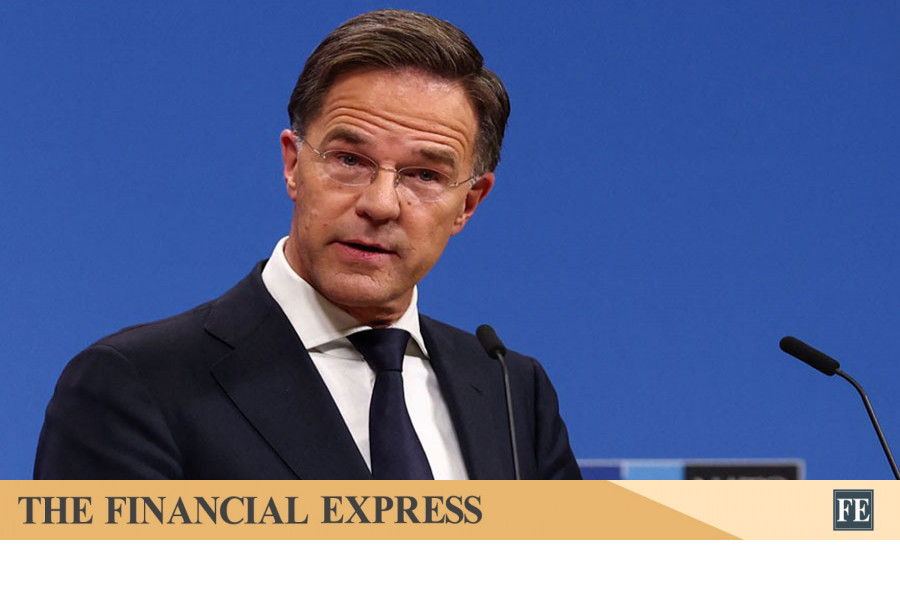
NATO Secretary-General Mark Rutte holds a press conference, ahead of a meeting of NATO Defence Ministers in Brussels, Belgium October 16, 2024. Photo : REUTERS


Greenland's government said on Monday it will increase its efforts to ensure that the defence of the Arctic territory takes place under the auspices of NATO, and again rejected US President Donald Trump's ambition to take over the island.

Trump has said the United States must own Greenland, an autonomous part of the Kingdom of Denmark, to prevent Russia or China occupying the strategically located and minerals-rich territory in the future.

"All NATO member states, including the United States, have a common interest in the defence of Greenland," the island's coalition government said in a statement.

The European Union's Commissioner for Defence and Space Andrius Kubilius warned on Monday that a US military takeover of Greenland would be the end of NATO.​
 
Analyze

Analyze Post

Add your ideas here:
Highlight Cite Fact Check Respond

Members Online

Latest Posts

Latest Posts

Post