War Archive
Saif
Senior Member
- Joined
- Jan 24, 2024
- Messages
- 21,159
- Likes
- 9,688
- Nation

- Residence
- Axis Group


US oil companies pledged to invest $100b for Venezuela: Trump
US president Donald Trump said Friday the world’s biggest oil companies pledged to invest $100 billion to revive Venezuela’s oil sector as he prepared for a meeting with top industry executives. US forces seized Venezuelan president Nicolas Maduro in a sweeping military operation on 3 January...
 en.prothomalo.com
US oil companies pledged to invest $100b for Venezuela: Trump
AFP Washington, United States
Published: 09 Jan 2026, 17: 01

US President Donald Trump AFP file photo
US president Donald Trump said Friday the world’s biggest oil companies pledged to invest $100 billion to revive Venezuela’s oil sector as he prepared for a meeting with top industry executives.
US forces seized Venezuelan president Nicolas Maduro in a sweeping military operation on 3 January, with Trump making no secret that control of Venezuela’s oil was at the heart of his actions.
“At least 100 Billion Dollars will be invested by BIG OIL, all of whom I will be meeting with today at The White House,” Trump wrote on his social media platform ahead of the gathering, where he was expected to convince the oil heads to support his plans in Venezuela.
The Trump administration has repeatedly said that it is running Venezuela, with Energy Secretary Chris Wright on Wednesday asserting that Washington will control the country’s oil industry “indefinitely.”
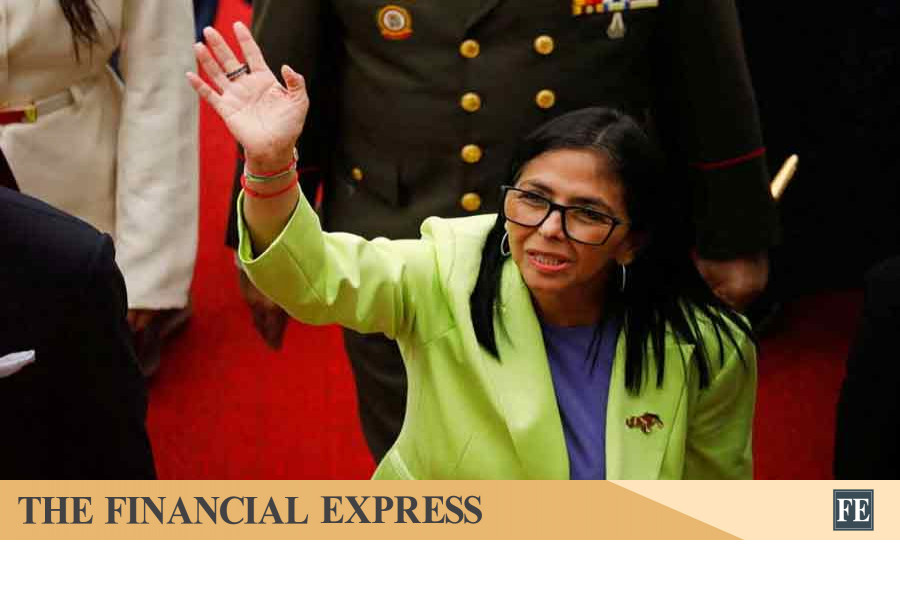
Venezuelan interim President Delcy Rodriguez, who was Maduro’s deputy, has said that her government remains in charge, with the state-run oil firm saying only that it was in negotiations with the United States on oil sales.
In his social media post, Trump said he cancelled a second wave of strikes on Venezuela due to what he called “cooperation” from the country.
He noted Venezuela began releasing political prisoners this week and said the countries are “working well together, especially as it pertains to rebuilding... their oil and gas infrastructure.”
US outlet NBC News reported that the heads of Exxon Mobil, Chevron and ConocoPhillips are expected at the White House meeting.
“It’s just a meeting to discuss, obviously, the immense opportunity that is before these oil companies right now,” Trump’s spokesperson Leavitt told reporters Wednesday.
Chevron is the only US company that currently has a license to operate in Venezuela. Exxon Mobil and ConocoPhillips left the country in 2007, after refusing then-president Hugo Chavez’s demand that they give up a majority stake in local operations to the government.
Suffering under sanctions
Sanctioned by Washington since 2019, Venezuela sits on about a fifth of the world’s oil reserves and was once a major crude supplier to the United States.
But it produced only around one percent of the world’s total crude output in 2024, according to OPEC, having been hampered by years of underinvestment, sanctions, and embargoes.
Trump sees the country’s massive oil reserves as a windfall in his fight to further lower US domestic fuel prices, a major political issue.
But he could face an uphill task convincing the major US oil companies to invest in Venezuela due to uncertainty about governance post-Maduro, security and the massive expense of restoring production facilities.
‘Controlled by me’
On Tuesday, Trump said that Venezuela’s interim government would deliver up to 50 million barrels of oil to the United States, and that the proceeds “will be controlled by me.”
“The Interim Authorities in Venezuela will be turning over between 30 and 50 MILLION Barrels of High Quality, Sanctioned Oil, to the United States of America,” Trump posted on his Truth Social platform.
“This oil will be sold at its market price, and that money will be controlled by me, as President of the United States of America, to ensure it is used to benefit the people of Venezuela and the United States.”
He later added that the proceeds spent by Venezuela would be used solely to purchase US products.
US Energy Secretary Wright has downplayed concerns about the investments required to ramp up Venezuelan production, saying it should be possible to increase output by several hundred thousand barrels a day in the short- to medium-term.
He admitted, however, that it would require “tens of billions of dollars and significant time” to bring production back to historic highs of more than three million barrels per day.
In his first term, Trump imposed an oil embargo aimed at economically suffocating Venezuela, which heavily depends on exports of the commodity.
When he returned for his second term, he also ended most of the licenses allowing oil and gas multinationals to operate in the country, with the exception of Chevron.
Washington now says it is “selectively rolling back sanctions” to enable the sale and transport of Venezuelan crude oil on global markets.
Wright said that the Trump administration would also help major US oil companies to establish a long-term presence.
Venezuelan crude is known to be viscous and difficult to refine.
The US Department of Energy is already planning to ship light oil to be mixed with Venezuelan crude in order to make that process easier.
It also plans to authorise the shipment of equipment and experts to the country to upgrade infrastructure.
AFP Washington, United States
Published: 09 Jan 2026, 17: 01
US President Donald Trump AFP file photo
US president Donald Trump said Friday the world’s biggest oil companies pledged to invest $100 billion to revive Venezuela’s oil sector as he prepared for a meeting with top industry executives.
US forces seized Venezuelan president Nicolas Maduro in a sweeping military operation on 3 January, with Trump making no secret that control of Venezuela’s oil was at the heart of his actions.
“At least 100 Billion Dollars will be invested by BIG OIL, all of whom I will be meeting with today at The White House,” Trump wrote on his social media platform ahead of the gathering, where he was expected to convince the oil heads to support his plans in Venezuela.
The Trump administration has repeatedly said that it is running Venezuela, with Energy Secretary Chris Wright on Wednesday asserting that Washington will control the country’s oil industry “indefinitely.”
Venezuelan interim President Delcy Rodriguez, who was Maduro’s deputy, has said that her government remains in charge, with the state-run oil firm saying only that it was in negotiations with the United States on oil sales.
In his social media post, Trump said he cancelled a second wave of strikes on Venezuela due to what he called “cooperation” from the country.
He noted Venezuela began releasing political prisoners this week and said the countries are “working well together, especially as it pertains to rebuilding... their oil and gas infrastructure.”
US outlet NBC News reported that the heads of Exxon Mobil, Chevron and ConocoPhillips are expected at the White House meeting.
“It’s just a meeting to discuss, obviously, the immense opportunity that is before these oil companies right now,” Trump’s spokesperson Leavitt told reporters Wednesday.
Chevron is the only US company that currently has a license to operate in Venezuela. Exxon Mobil and ConocoPhillips left the country in 2007, after refusing then-president Hugo Chavez’s demand that they give up a majority stake in local operations to the government.
Suffering under sanctions
Sanctioned by Washington since 2019, Venezuela sits on about a fifth of the world’s oil reserves and was once a major crude supplier to the United States.
But it produced only around one percent of the world’s total crude output in 2024, according to OPEC, having been hampered by years of underinvestment, sanctions, and embargoes.
Trump sees the country’s massive oil reserves as a windfall in his fight to further lower US domestic fuel prices, a major political issue.
But he could face an uphill task convincing the major US oil companies to invest in Venezuela due to uncertainty about governance post-Maduro, security and the massive expense of restoring production facilities.
‘Controlled by me’
On Tuesday, Trump said that Venezuela’s interim government would deliver up to 50 million barrels of oil to the United States, and that the proceeds “will be controlled by me.”
“The Interim Authorities in Venezuela will be turning over between 30 and 50 MILLION Barrels of High Quality, Sanctioned Oil, to the United States of America,” Trump posted on his Truth Social platform.
“This oil will be sold at its market price, and that money will be controlled by me, as President of the United States of America, to ensure it is used to benefit the people of Venezuela and the United States.”
He later added that the proceeds spent by Venezuela would be used solely to purchase US products.
US Energy Secretary Wright has downplayed concerns about the investments required to ramp up Venezuelan production, saying it should be possible to increase output by several hundred thousand barrels a day in the short- to medium-term.
He admitted, however, that it would require “tens of billions of dollars and significant time” to bring production back to historic highs of more than three million barrels per day.
In his first term, Trump imposed an oil embargo aimed at economically suffocating Venezuela, which heavily depends on exports of the commodity.
When he returned for his second term, he also ended most of the licenses allowing oil and gas multinationals to operate in the country, with the exception of Chevron.
Washington now says it is “selectively rolling back sanctions” to enable the sale and transport of Venezuelan crude oil on global markets.
Wright said that the Trump administration would also help major US oil companies to establish a long-term presence.
Venezuelan crude is known to be viscous and difficult to refine.
The US Department of Energy is already planning to ship light oil to be mixed with Venezuelan crude in order to make that process easier.
It also plans to authorise the shipment of equipment and experts to the country to upgrade infrastructure.