Home Watch Videos Wars Movies Login

Wars 2026 01/03 USA War with Venezuela

Wars 2026 01/03 USA War with Venezuela
70
1K
More threads by Egyptian

G War Archive
China calls on US to 'immediately release' Venezuela's Maduro

AFP Beijing
Updated: 04 Jan 2026, 14: 06

1767576092049.webp

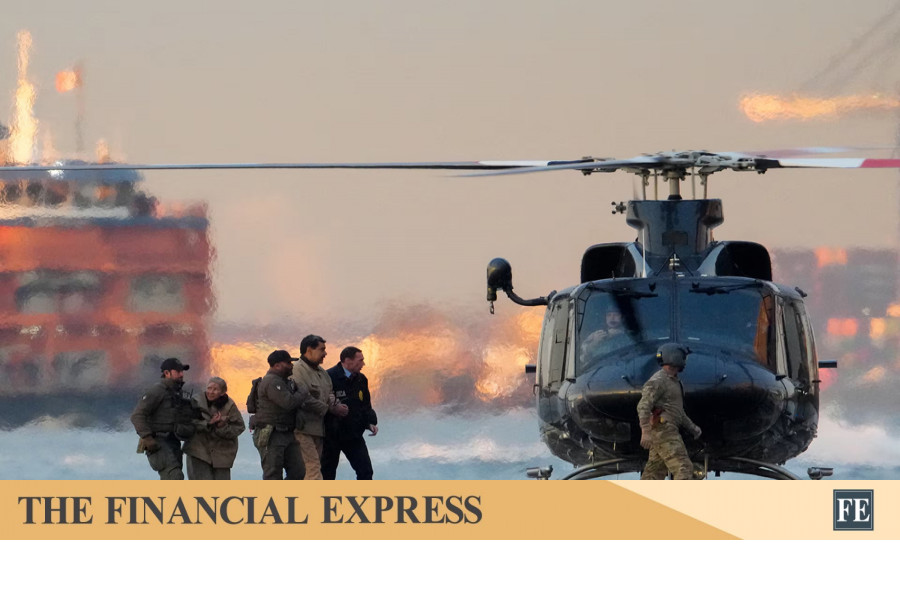
This screengrab taken from the X account of Rapid Response 47, the official White House rapid response account, shows Venezuelan President Nicolas Maduro (C) escorted by DEA agents inside the headquarters of the US Drug Enforcement Administration (DEA) in lower Manhattan, New York, on 3 January, 2026. AFP

China called on the United States on Sunday to immediately release Venezuelan President Nicolas Maduro after Washington carried out a strike on Caracas and captured the leader.

"China calls on the US to ensure the personal safety of President Nicolas Maduro and his wife, release them at once, stop toppling the government of Venezuela," the Chinese foreign ministry said in a statement, calling the strike a "clear violation of international law".​
 
Analyze

Analyze Post

Add your ideas here:
Highlight Cite Respond
 
Analyze

Analyze Post

Add your ideas here:
Highlight Cite Respond
The Venezuelan dilemma

SYED FATTAHUL ALIM
Published :
Jan 06, 2026 00:24
Updated :
Jan 06, 2026 00:24

1767660411914.webp

The sitting president of Venezuela has been, what the US said, 'captured' along with his wife, son and other officials as a fugitive evading law. Venezuela is a oil-and-mineral-rich country of the South American continent lying along the coast of North Atlantic Ocean and bordering the Caribbean Sea. If Venezuela is a sovereign nation, then it defies common sense as to how its president could be fugitive in the eyes of another sovereign country? But Nicolas Maduro, the president of Venezuela, has been 'arrested' by the US through a military operation carried out on Saturday (January 3, 2026) night. From the standpoint of the US military might, it was a meticulous and successful operation, as there was no bloodshed and no US service personnel died during the operation. However, the media is yet to come up with any detailed report on Venezuelan casualties during the US military offensive. It is reported that President Maduro is 'in custody' and will have to face trial on charge of what reports say, narco-terrorism conspiracy, cocaine importation conspiracy and weapons offensive. His wife Cilia Flores, their son Nicolas Maduro Guerra and other Venezuelan officials held during the operation would also face various charges under the US law.

As a power vacuum has been created in Venezuela following Maduro's forcible capture, the US president Donald Trump said US would henceforth 'run' the country. It also baffles the mind how another country might run a sovereign country. For the time being, the vice president of the country, Delcy Rodriguez, who is known to be a pro-Chavez (Hugo Chavez, a revolutionary and former president of the country) will be in charge. So, she is also pro-Maduro by default as they both bear the same legacy of Hugo Chavez. So, when faced with the question of her cooperation with the US in administering the country, Trump said she (Delcy Rodriguez) had little choice (but to cooperate). One wonders what makes Trump so confident. For Trump has not yet said if the Venezuelan opposition leader, a darling of the US and the West, and winner of Nobel Peace Prize, Maria Corina Machado, would be in charge to fill Venezuela's present administrative vacuum. Ironically though, Trump reportedly insinuated that she (Machado) didn't have the gravitas to potentially lead the country. If the report is true, then Trump's suggestion that Venezuela's vice president Delcy Rodriguez has no choice makes sense.

But some uncomfortable questions still remain unanswered: How could US Delta Force carry out its covert mission to dislodge President Maduro from power and abduct him, his wife, son and others practically without any resistance from the Venezuelan army? How could Venezuela's military fail to protect its president? What was the country's intelligence department doing as their president was being taken captive by outside forces? Were they then sleeping or looking the other way? Even if the odds stacked against the military brigade responsible for immediate security of the president, the Presidential Honor Guard, were overwhelming, why, as it appears, did they not fire even a single shot to protect their president? It all sounds surreal! Was it then a set-up about which President Maduro was quite clueless and a helpless victim?

Many such unanswered questions would haunt the curious observers of Venezuelan politics for some time. However, what is clear is that the Venezuelan ruling elites-some members of the army, the bureaucracy and the political leadership both in power and in the opposition-can be bought. It seems the ideology of Bolivarianism and socialism of the 21st century, which lately became the governing ideology of Chavismo (named after Hugo Chavez, initiator of Bolivarianism) has meanwhile run out of steam. Whatever the case, the world is now witnessing a peacemaker president Trump turning into a warmongering one! Other global powers-Russia and China-who are known to be the allies of the country's erstwhile ruling regime, are yet to react meaningfully to the latest development in Venezuela and the Caribbean region.​
 
Analyze

Analyze Post

Add your ideas here:
Highlight Cite Respond
War on sovereignty of Venezuela not narcotics

Wasi Ahmed
Published :
Jan 06, 2026 23:28
Updated :
Jan 06, 2026 23:28

1767746584935.webp


DEA (Drug Enforcement Administration) agents captured Venezuelan President Nicolas Maduro and his wife Cilia Flores out of a helicopter in New York City, January 5. — REUTERS


The U.S. military operation resulting in the capture of Venezuelan President Nicolás Maduro and his wife represents a defining moment in the Trump administration's fight against alleged drug trafficking. The administration swiftly framed the action as a lawful criminal enforcement against narco-terrorism. Almost simultaneously, senior officials announced plans for the United States to assume a supervisory role over Venezuela's governance and to divert the country's oil revenues to offset the costs of the operation.

Independent legal experts have been nearly unanimous in their denunciation of the operation as unlawful under both U.S. and international law. The forcible seizure of a sitting head of state on foreign soil is widely regarded as a grave violation of national sovereignty. Such actions, critics warn, establish a dangerous precedent that erodes the already fragile norms restraining the use of force in international relations. By cloaking a military incursion in the language of criminal justice, the administration has blurred distinctions that are foundational to the international legal order.

The operation has also triggered serious constitutional concerns at home. The unilateral use of force occurred without explicit Congressional authorisation, raising questions about the executive branch's adherence to the separation of powers. Members of Congress from across the political spectrum have objected to the absence of legislative oversight, noting that no declaration of war or comparable authorisation was sought or granted. For many lawmakers, the episode exemplifies a troubling expansion of presidential war-making authority, one that sidesteps the constitutional role of Congress in matters of war and peace.

Central to the administration's public defence has been the claim that military action against Venezuela is necessary to combat drug trafficking. President Trump has repeatedly described Venezuela as a hub of narcotics smuggling and has cited strikes on alleged trafficking infrastructure as evidence of resolve against transnational crime. Yet, independent data sharply undermine this narrative. Venezuela is not a principal source of drugs entering the United States. Cocaine production is overwhelmingly concentrated in Colombia, Peru, and Bolivia, with the bulk of that supply transiting through Central America and Mexico before reaching U.S. markets. The most acute contemporary drug threat to the United States -- synthetic opioids such as fentanyl -- originates largely in clandestine laboratories in the United States and Mexico, not in Venezuela.

Despite these realities, the Trump administration has designated Venezuelan entities, including the so-called "Cartel of the Suns," as terrorist organisations, thereby invoking extraordinary legal authorities. This move stands in stark contrast to U.S. policy towards far more significant drug trafficking challenges closer to home. Mexico and Colombia, long acknowledged as central nodes in global narcotics flows, have never been subjected to comparable unilateral U.S. military intervention. Instead, Washington has relied for decades on cooperation -- intelligence sharing, extradition treaties, and joint law enforcement operations. The abandonment of these established counter-narcotics frameworks in Venezuela, in favour of kinetic military action, reveals a striking inconsistency in how anti-drug rhetoric is applied.

Equally revealing is the administration's selective invocation of democracy and human rights. Trump's portrayal of Maduro as a dictator has been a central justification for intervention. Yet this posture sits uneasily alongside the administration's cordial relationships with other leaders widely recognised as authoritarian, some of whom have been welcomed as honoured guests at the White House. The absence of comparable pressure or punitive measures against these regimes undermines claims that the intervention in Venezuela is grounded in defence of democratic norms.

Further complicating the administration's narrative are intelligence findings that contradict its most alarming allegations. A declassified U.S. intelligence memorandum concluded that there was no credible evidence that Maduro personally directed Venezuelan criminal gangs to operate inside the United States. This assessment weakens the factual basis for portraying the Venezuelan state as an extension of transnational organised crime and calls into question the necessity of such an extreme response.

Regional leaders have been especially forthright in articulating what they see as the true drivers of U.S. policy. Colombian President Gustavo Petro has argued that Washington's pressure campaign against Venezuela is motivated less by anti-narcotics concerns than by a desire to control the country's vast oil reserves. This critique gained additional force when President Trump himself suggested that U.S. involvement could be financed through Venezuelan oil revenues-an unintended admission of economic motivation. Such statements reinforce long-standing suspicions in Latin America that greed for resource, rather than humanitarian or security imperatives, lies at the heart of the U.S. intervention. Taken together, these point to a military incursion that is less about combating drug trafficking than about asserting control over a resource-rich state led by a government inconvenient to U.S. geopolitical interests. The operation's dubious legality, its inconsistency with established counter-narcotics priorities in countries like Mexico and Colombia, and the breadth of international condemnation suggest a policy driven by strategic self-interest rather than the enforcement of law or a commitment to democracy.

The intervention can reasonably be termed as an imperial aggression masquerading as narcotics enforcement. By undermining international law, bypassing domestic constitutional safeguards and inflaming regional mistrust, the operation risks destabilising hemispheric security and deepening scepticism of U.S. intentions in Latin America for years to come.​
 
Analyze

Analyze Post

Add your ideas here:
Highlight Cite Respond
Oil sinks as US ups pressure on Venezuela over crude supplies

Crude has seen wild swings since Trump ordered the toppling of Nicolas Maduro


1767835510662.webp

Photo: AFP

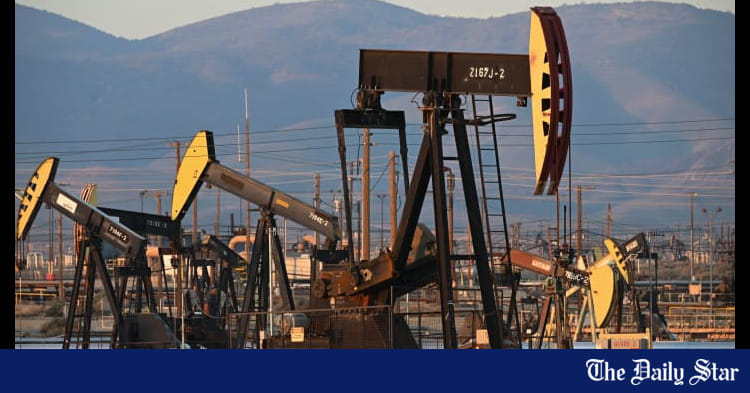
Oil prices fell further today after President Donald Trump said Venezuela would turn over millions of barrels to the United States.


Meanwhile, equities wobbled after a record-breaking start to the year.


Crude has seen wild swings since Trump ordered the toppling of Nicolas Maduro, his counterpart in Caracas, on Saturday and said Washington would run the country while demanding "total access" to its oil.

Both main oil contracts dropped today, having already lost ground yesterday, after Trump announced the latest development.


"The Interim Authorities in Venezuela will be turning over between 30 and 50 MILLION Barrels of High Quality, Sanctioned Oil, to the United States of America," he wrote on his Truth Social platform.

"This oil will be sold at its market price, and that money will be controlled by me, as President of the United States of America, to ensure it is used to benefit the people of Venezuela and the United States."

US Energy Secretary Chris Wright said Wednesday that Washington will control sales of Venezuelan oil "indefinitely".


Analysts said the shipments lowered the risk that Caracas would have to cut output owing to its limited storage capacity, easing supply concerns.

But they added that the outlook for the commodity pointed to lower prices, as the market remains well stocked after OPEC+ agreed to boost output.

Venezuela sits on about a fifth of the world's oil reserves, but observers pointed out that a quick ramp-up of output would be hamstrung by several issues, including its creaking infrastructure, low prices, and political uncertainty.

Crude prices only briefly picked up after US forces seized a Russian-flagged oil tanker in the North Atlantic for alleged sanctions violations, before sinking again.

US forces said they also seized another tanker in the Caribbean.

In equities trading, the Dow initially edged higher from a record close on Tuesday, but then turned lower.

"US job openings falling to their lowest level since December 2020 and modest -- below expectations -- US private sector jobs growth dampened the bullish mood," said IG trading platform analyst Axel Rudolph.​
 
Analyze

Analyze Post

Add your ideas here:
Highlight Cite Respond
Venezuela's decisions to be 'dictated' by US: White House

It says US has maximum leverage over Venezuela's interim authorities

1767835695827.webp


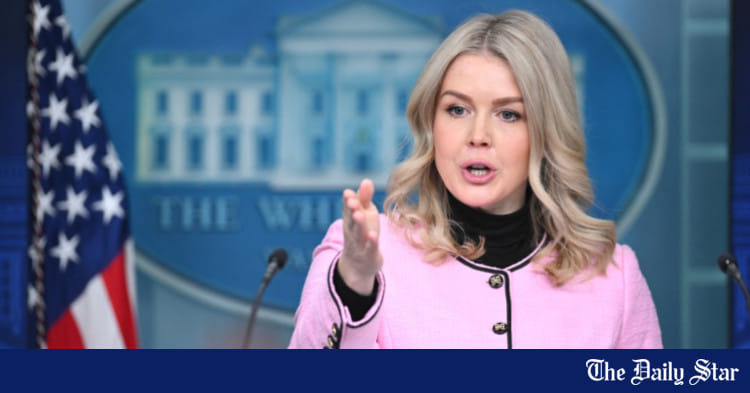
White House Press Secretary Karoline Leavitt speaks during the daily briefing in the Brady Briefing Room of the White House in Washington, DC, on January 7, 2026. (Photo by Mandel NGAN / AFP)

The United States has "maximum leverage" over Venezuela's interim authorities following the capture of Nicolas Maduro and will dictate any decision they make, the White House said Wednesday.


"We're continuing to be in close coordination with the interim authorities, and their decisions are going to continue to be dictated by the United States of America," Press Secretary Karoline Leavitt told a briefing.​
 
Analyze

Analyze Post

Add your ideas here:
Highlight Cite Respond
Is the Venezuela operation part of a US–China power struggle?

8 January 2026, 06:59 AM
UPDATED 8 January 2026, 13:12 PM


1767920837507.webp


The US military operation carried out overnight on Jan. 3 in Venezuela unfolded with striking speed. Within roughly three hours, it was effectively over. President Nicolas Maduro was secured, and the mission concluded without US casualties. More than 150 aircraft moved in coordinated waves. Intelligence from the ground, air and space anticipated Venezuelan military responses before they fully formed. Gen. Dan Caine, the chair of the Joint Chiefs of Staff, later described the mission as a well-oiled machine that could have failed had even a single element gone wrong.


The official justification was straightforward: The stated goal was to detain Maduro on allegations of drug trafficking into the United States, allegedly facilitated through cooperation with China. Almost immediately, analysts offered a different explanation. The fundamental objective, they argued, was oil, specifically Washington's effort to reclaim influence over Venezuela's vast reserves from China. The operation's extreme precision reinforced a third interpretation. It was also a demonstration of American technological power, underscoring the role of artificial intelligence and advanced semiconductors in modern warfare and, by extension, in strategic competition with Beijing. Together, these explanations placed the US-China rivalry squarely at center stage.


Yet they miss a deeper and more consequential layer of that rivalry, one that helps explain why Washington chose to act in Venezuela at this moment.

1767920877774.webp


A still image from video, posted on the White House’s Rapid Response 47 account on X, shows Venezuelan President Nicolás Maduro being escorted in custody down a hallway at the US Drug Enforcement Administration headquarters in New York City on Saturday. Photo: Reuters
Strategic actions by great powers are rarely single-purpose. Beneath the surface motives lies a structural concern that has increasingly preoccupied Washington: the durability of dollar dominance in a world where China is testing its limits.

For decades, the Middle East has been central to this system. The United States and China are now competing not only for influence over oil supply but also over the settlement architecture that surrounds it. The dollar's global power rests in large part on its role as the medium of settlement for energy trade. For much of the postwar period, Saudi Arabia and the Gulf states anchored this arrangement. The US-Saudi security relationship functioned not only as a military alliance, but also as a monetary infrastructure, reinforcing dollar-based oil trade worth trillions of dollars each year.

That arrangement is under growing strain. China is now the world's largest marginal buyer of oil, importing more than 10 million barrels a day, and has become a central trading partner for Gulf producers. Beijing has not sought a sudden break with the dollar. Instead, it has pressed for flexibility by encouraging limited yuan-denominated energy transactions and promoting discussions within the BRICS grouping about alternative settlement arrangements using the yuan.

1767920906714.webp


Photo: Collected

This dynamic leaves the United States in a delicate position in the Middle East. Washington continues to provide security. China increasingly provides demand. Saudi Arabia, the de facto anchor of OPEC, has little incentive to choose decisively between them. Hedging is rational.

Venezuela sits at the edge of this system. It is an oil producer outside OPEC discipline, aligned with China and other alternative blocs, yet located firmly within America's historic strategic perimeter. By reasserting influence over Venezuela, the United States gains leverage over global oil supply, reducing OPEC's ability and Saudi Arabia's central role within it to shape prices independently.

The operation in Venezuela was therefore about more than drugs, oil, or technological prowess. It was a reminder that the most consequential contest between Washington and Beijing is not only over chips and algorithms, but also over the monetary and energy systems that still set the rules of the global economy. The chip war dominates headlines because it is visible and measurable. The struggle over the dollar unfolds quietly through oil contracts, reserve choices and security guarantees. Venezuela matters because it sits where these systems intersect, at the front line of a rivalry that is ultimately about currency, energy and power.

Sung Soo Eric Kim is an adjunct professor at Yonsei University and a Distinguished Guest Associate Professor at Keio University. The article was first published in The Korea Herald on January 8, 2026. The original title of the article was US-China War Behind Venezuelan Operation.​
 
Analyze

Analyze Post

Add your ideas here:
Highlight Cite Respond
 
Analyze

Analyze Post

Add your ideas here:
Highlight Cite Respond

Members Online

No members online now.

Latest Posts

Back
 
G
O
 
H
O
M
E